
2199 Results for "

damage

" in MedChemExpress (MCE) Product Catalog:
Products (2199)

2199 Results for "damage" in MCE Product Catalog:

Cat. No.: HY-N8693
CAS No.: 362472-81-9
Withanoside IV is an orally active, blood-brain barrier-permeable withanolide derivative. Withanoside IV specifically binds to the Sudlow I site of HSA, induces secondary structural changes in HSA, and forms stable HSA complexes. Withanoside IV inhibits the enzymatic activity of COX-2. Withanoside IV induces axonal regeneration, peripheral nervous system myelination and increased axonal density in spinal cord tissue, reduces reactive gliosis-related changes, and improves hindlimb motor function. Withanoside IV binds to amyloid-β 1-42 to inhibit its aggregation, induces neurite outgrowth and synapse reconstruction, repairs damaged axons and dendrites, enhances mitochondrial biogenesis, exerts neuroprotective effects via the BDNF and SIRT1 signaling pathways, reduces ROS production and neuronal apoptosis, and ameliorates memory deficits. Withanoside IV inhibits the activity of the SARS-CoV-2 main protease. Withanoside IV can be used in research related to spinal cord injury, Alzheimer's disease, and coronavirus disease 2019 (COVID-19) .
loading...
    loading...
Cat. No.: HY-P3009
CAS No.: 9002-05-5
Bovine Factor Xa is a serine protease that plays a central role in blood coagulation, with prothrombin as its physiological substrate. Bovine Factor Xa catalyzes the conversion of prothrombin to thrombin, activates factor VIII, and hydrolyzes peptide, thioester, and amide substrates. Bovine Factor Xa cleaves protease-activated receptors 1 and 2 to activate intracellular signal transduction. Bovine Factor Xa regulates multiple cellular pathways, mediates various cellular activities, tissue remodeling and cancer cell migration, and inhibits apoptosis in some cancer cells. Bovine Factor Xa protects hippocampal neurons against glutamate-induced damage. Bovine Factor Xa participates in embryonic vascular development and regulates immune hematopoiesis; its activity is inhibited by soybean trypsin inhibitor, and cannot be enhanced by phospholipids. Bovine Factor Xa regulates immune responses and macrophage polarization, and participates in fibrosis, vascular remodeling and tumor progression through non-coagulant effects. Bovine Factor Xa can be used in research related to atherosclerosis, fibrosis, asthma, cancer, thromboinflammation, sepsis, etc .
loading...
    loading...
Cat. No.: HY-P3009A
CAS No.: 9002-05-5
Canine Factor Xa is a serine protease that plays a central role in blood coagulation, with prothrombin as its physiological substrate. Canine Factor Xa catalyzes the conversion of prothrombin to thrombin, activates factor VIII, and hydrolyzes peptide, thioester, and amide substrates. Canine Factor Xa cleaves protease-activated receptors 1 and 2 to activate intracellular signal transduction. Canine Factor Xa regulates multiple cellular pathways, mediates various cellular activities, tissue remodeling and cancer cell migration, and inhibits apoptosis in some cancer cells. Canine Factor Xa protects hippocampal neurons against glutamate-induced damage. Canine Factor Xa participates in embryonic vascular development and regulates immune hematopoiesis; its activity is inhibited by soybean trypsin inhibitor, and cannot be enhanced by phospholipids. Canine Factor Xa regulates immune responses and macrophage polarization, and participates in fibrosis, vascular remodeling and tumor progression through non-coagulant effects. Canine Factor Xa can be used in research related to atherosclerosis, fibrosis, asthma, cancer, thromboinflammation, sepsis, etc .
loading...
    loading...
Cat. No.: HY-P3009B
CAS No.: 9002-05-5
Porcine Factor Xa is a serine protease that plays a central role in blood coagulation, with prothrombin as its physiological substrate. Porcine Factor Xa catalyzes the conversion of prothrombin to thrombin, activates factor VIII, and hydrolyzes peptide, thioester, and amide substrates. Porcine Factor Xa cleaves protease-activated receptors 1 and 2 to activate intracellular signal transduction. Porcine Factor Xa regulates multiple cellular pathways, mediates various cellular activities, tissue remodeling and cancer cell migration, and inhibits apoptosis in some cancer cells. Porcine Factor Xa protects hippocampal neurons against glutamate-induced damage. Porcine Factor Xa participates in embryonic vascular development and regulates immune hematopoiesis; its activity is inhibited by soybean trypsin inhibitor, and cannot be enhanced by phospholipids. Porcine Factor Xa regulates immune responses and macrophage polarization, and participates in fibrosis, vascular remodeling and tumor progression through non-coagulant effects. Porcine Factor Xa can be used in research related to atherosclerosis, fibrosis, asthma, cancer, thromboinflammation, sepsis, etc .
loading...
    loading...
Cat. No.: HY-P3009C
CAS No.: 9002-05-5
Porcine Factor Xa is a serine protease that plays a central role in blood coagulation, with prothrombin as its physiological substrate. Porcine Factor Xa catalyzes the conversion of prothrombin to thrombin, activates factor VIII, and hydrolyzes peptide, thioester, and amide substrates. Porcine Factor Xa cleaves protease-activated receptors 1 and 2 to activate intracellular signal transduction. Porcine Factor Xa regulates multiple cellular pathways, mediates various cellular activities, tissue remodeling and cancer cell migration, and inhibits apoptosis in some cancer cells. Porcine Factor Xa protects hippocampal neurons against glutamate-induced damage. Porcine Factor Xa participates in embryonic vascular development and regulates immune hematopoiesis; its activity is inhibited by soybean trypsin inhibitor, and cannot be enhanced by phospholipids. Porcine Factor Xa regulates immune responses and macrophage polarization, and participates in fibrosis, vascular remodeling and tumor progression through non-coagulant effects. Porcine Factor Xa can be used in research related to atherosclerosis, fibrosis, asthma, cancer, thromboinflammation, sepsis, etc .
loading...
    loading...
Cat. No.: HY-P3009D
CAS No.: 9002-05-5
Rat Factor Xa is a serine protease that plays a central role in blood coagulation, with prothrombin as its physiological substrate. Rat Factor Xa catalyzes the conversion of prothrombin to thrombin, activates factor VIII, and hydrolyzes peptide, thioester, and amide substrates. Rat Factor Xa cleaves protease-activated receptors 1 and 2 to activate intracellular signal transduction. Rat Factor Xa regulates multiple cellular pathways, mediates various cellular activities, tissue remodeling and cancer cell migration, and inhibits apoptosis in some cancer cells. Rat Factor Xa protects hippocampal neurons against glutamate-induced damage. Rat Factor Xa participates in embryonic vascular development and regulates immune hematopoiesis; its activity is inhibited by soybean trypsin inhibitor, and cannot be enhanced by phospholipids. Rat Factor Xa regulates immune responses and macrophage polarization, and participates in fibrosis, vascular remodeling and tumor progression through non-coagulant effects. Rat Factor Xa can be used in research related to atherosclerosis, fibrosis, asthma, cancer, thromboinflammation, sepsis, etc .
loading...
    loading...
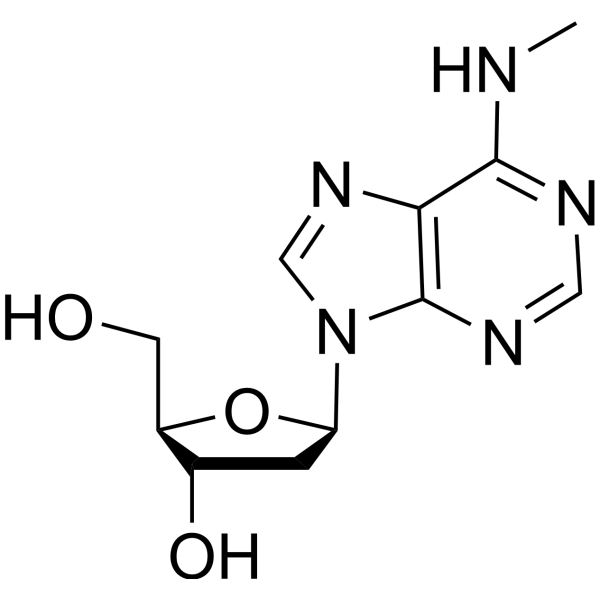
Cat. No.: HY-W011725
CAS No.: 2002-35-9
Synonyms: m6dA
N-6-Methyl-2-deoxyadenosine (m6dA) is an adenine nucleoside analogue. N-6-Methyl-2-deoxyadenosine targets nuclear processes and DNA replication machineries including WER, SATB1, TFAM, Jumu, SSBP1, DNA polymerase η and phage polymerase Gp90 exo −. N-6-Methyl-2-deoxyadenosine acts as a multifunctional epigenetic regulator that modulates transcription, DNA damage response, cell cycle, transposon silencing, stress adaptation, epigenetic crosstalk, and nucleosome organization in both prokaryotes and eukaryotes. N-6-Methyl-2-deoxyadenosine regulates mitochondrial epigenetic inheritance and is required for fear extinction memory in mice. N-6-Methyl-2-deoxyadenosine exhibits dysregulated levels in cancers. N-6-Methyl-2-deoxyadenosine can be used for the research of glioblastoma, triple negative breast cancer, and conditioned fear (fear extinction impairment) .
loading...
    loading...
Cat. No.: HY-W015777
CAS No.: 105-13-5
Synonyms: P-Methoxy-benzyl alcoho; (4-Methoxyphenyl)methanol
4-Methoxybenzyl alcohol (P-Methoxy-benzyl alcoho; (4-Methoxyphenyl) methanol) is a naturally derived volatile aromatic compound. 4-Methoxybenzyl alcohol upregulates the phosphorylation level of PI3K/Akt pathway proteins, downregulates the expression of pro-inflammatory factors, increases the content of tight junction proteins occludin and claudin-5, and alleviates structural damage to the blood-brain barrier. 4-Methoxybenzyl alcohol improves the decrease in viability and NO level of cerebral microvascular endothelial cells induced by oxygen-glucose deprivation/reperfusion, and reduces the release of lactate dehydrogenase. 4-Methoxybenzyl alcohol serves as a substrate in the two-phase persulfate-mediated electro-oxidation system, where it is directionally oxidized to p-anisaldehyde. 4-Methoxybenzyl alcohol acts as a substrate for wild-type fungal aryl alcohol oxidase. 4-Methoxybenzyl alcohol can be used in studies related to ischemic stroke, as well as in research across various fields such as chemical synthesis, including the synthesis of fragrances and flavorings .
loading...
    loading...
Cat. No.: HY-W016409R
CAS No.: 3943-89-3
Synonyms: Protocatechuic acid ethyl ester (Standard)
Ethyl 3,4-dihydroxybenzoate (Standard) (Protocatechuic acid ethyl ester (Standard)) is the analytical standard of Ethyl 3,4-dihydroxybenzoate (HY-W016409). This product is intended for research and analytical applications. Ethyl 3,4-dihydroxybenzoate (Protocatechuic acid ethyl ester) is an orally effective, blood-brain barrier-permeable, competitive prolyl hydroxylase (PHD) inhibitor that inhibits the hydroxylation modification of hypoxia-inducible factor (HIF) by PHD. Ethyl 3,4-dihydroxybenzoate stabilizes HIF-1α by inhibiting PHD, activates downstream pathways to induce autophagy and apoptosis of tumor cells, and regulates inflammatory responses, inhibits the NF-κB pathway, improves vascular permeability, and promotes osteoblast differentiation. Ethyl 3,4-dihydroxybenzoate has anti-tumor, anti-hypoxic injury, and bone metabolism regulation effects. It can also be used in the research of cardiovascular protection (such as reducing myocardial ischemic damage), bone tissue engineering (promoting osteogenesis/inhibiting osteoclast differentiation), and prevention and treatment of high-altitude cerebral edema .
loading...
    loading...
Cat. No.: HY-W778057
CAS No.: 1330195-40-8
Synonyms: Protocatechuic acid ethyl ester-13C3
Ethyl 3,4-Dihydroxybenzoate- 13C3 (Protocatechuic acid ethyl ester- 13C3) is the 13C-labeled Ethyl 3,4-dihydroxybenzoate (HY-W016409). Ethyl 3,4-dihydroxybenzoate (Protocatechuic acid ethyl ester) is an orally effective, blood-brain barrier-permeable, competitive prolyl hydroxylase (PHD) inhibitor that inhibits the hydroxylation modification of hypoxia-inducible factor (HIF) by PHD. Ethyl 3,4-dihydroxybenzoate stabilizes HIF-1α by inhibiting PHD, activates downstream pathways to induce autophagy and apoptosis of tumor cells, and regulates inflammatory responses, inhibits the NF-κB pathway, improves vascular permeability, and promotes osteoblast differentiation. Ethyl 3,4-dihydroxybenzoate has anti-tumor, anti-hypoxic injury, and bone metabolism regulation effects. It can also be used in the research of cardiovascular protection (such as reducing myocardial ischemic damage), bone tissue engineering (promoting osteogenesis/inhibiting osteoclast differentiation), and prevention and treatment of high-altitude cerebral edema .
loading...
    loading...
Cat. No.: HY-L101
3,003 compounds

Liver cancer is one of the leading malignancies which occupies the second position in cancer deaths worldwide, becoming serious threat to human health. Hepatocellular carcinoma (HCC), also known as hepatoma is the most common type accounting for approximately 90% of all liver cancers.

Current evidence indicates that during hepatocarcinogenesis, two main pathogenic mechanisms prevail: (1) cirrhosis associated with hepatic regeneration after tissue damage caused by hepatitis infection, toxins or metabolic influences, and (2) mutations occurring in single or multiple oncogenes or tumor suppressor genes. Both mechanisms have been linked with alterations in several important cellular signaling pathways. These include the RAF/MEK/ERK pathway, PI3K/AKT/mTOR pathway, WNT/b-catenin pathway, insulin-like growth factor pathway, c-MET/HGFR pathway , etc.

MCE offers a unique collection of 3,003 compounds with identified and potential anti-liver cancer activity. MCE anti-liver cancer compound library is a useful tool for anti-liver cancer drugs screening and other related research.

Cat. No.: HY-L034
7,771 compounds

Aging is a complex biological process characterized by functional decline of tissues and organs, structural degeneration, and reduced adaptability and resistance, all of which contribute to an increase in morbidity and mortality caused by multiple chronic diseases, such as Alzheimer's disease, cancer, and diabetes. Many theories, which fall into two main categories: programmed and error theories, have been proposed to explain the process of aging, but neither of them appears to be fully satisfactory. The programmed theories imply that aging relies on specific gene regulation, and the error theories emphasize the internal and environmental damages accumulated to living organisms. The damage theories proposed the nine hallmarks that were generally considered to contribute to the aging process: genomic instability, telomere attrition, epigenetic alterations, loss of proteostasis, deregulated nutrient-sensing, mitochondrial dysfunction, cellular senescence, stem cell exhaustion, and altered intercellular communication.

MCE Anti-Aging Compound Library contains 7,771 compounds, mainly targeting Sirtuin, mTOR, IGF-1R, AMPK, p53, Telomerase, Mitophagy, Mitochondrial Metabolism, COX, Cytochrome P450, Oxidase, etc. This library is a useful tool for anti-aging research.

Cat. No.: HY-173309
P53/TLR2 modulator-1 (Compound Z9) is a modulator that targets both the P53 pathway and TLR2 simultaneously, exhibiting anti-radiation activity. P53/TLR2 modulator-1 reduces apoptosis by inhibiting the radiation-induced expression of P53 and Bax. At the same time, it activates the TLR2 pathway, upregulates the expression of downstream proteins MyD88 and P65, and promotes the secretion of cytokines such as IL-6, thus exerting an anti-radiation effect. P53/TLR2 modulator-1 shows significant anti-radiation activity against both AHH-1 cells and HUVECs. It can also increase the survival rate of C57BL/6J mice irradiated with a lethal dose of radiation and reduce the damage to their hematopoietic system, the villous structure of the small intestine, and the spleen caused by radiation. P53/TLR2 modulator-1 can be used in the research of radiation injury-related diseases .
loading...
    loading...
Cat. No.: HY-B0377R
CAS No.: 76824-35-6
Synonyms: MK-208 (Standard)
Famotidine (Standard) (MK-208 (Standard)) is the analytical standard of Famotidine (HY-B0377). This product is intended for research and analytical applications. Famotidine (MK-208) is an orally active and highly selective histamine H2 receptor antagonist. It inhibits gastric acid secretion by blocking the Gs signaling pathway, and regulates intracellular cAMP and ERK pathways. Famotidine inhibits TLR3-mediated inflammatory pathways, and reduces the expression of various inflammatory mediators and interferon-related genes. Famotidine scavenges DPPH and nitric oxide free radicals, alleviates oxidative stress damage in gastric tissue, inhibits proMMP-9, improves vascular endothelial permeability, and restores the normal physiological functions of neutrophils and eosinophils. Famotidine crosses intestinal epithelial cells via facilitated diffusion and passive diffusion, blocks paracellular cation transport, and increases intestinal transepithelial electrical resistance. Famotidine reduces serum levels of transaminases and alkaline phosphatase, exerts analgesic effects and gastric protective effects simultaneously. Famotidine can be used in studies related to COVID-19, liver injury and acute gastric ulcer .
loading...
    loading...
Cat. No.: HY-B0377S1
Synonyms: MK-208-13C
Famotidine- 13C (MK-208- 13C) is the 13C-labeled Famotidine (HY-B0377). Famotidine (MK-208) is an orally active and highly selective histamine H2 receptor antagonist. It inhibits gastric acid secretion by blocking the Gs signaling pathway, and regulates intracellular cAMP and ERK pathways. Famotidine inhibits TLR3-mediated inflammatory pathways, and reduces the expression of various inflammatory mediators and interferon-related genes. Famotidine scavenges DPPH and nitric oxide free radicals, alleviates oxidative stress damage in gastric tissue, inhibits proMMP-9, improves vascular endothelial permeability, and restores the normal physiological functions of neutrophils and eosinophils. Famotidine crosses intestinal epithelial cells via facilitated diffusion and passive diffusion, blocks paracellular cation transport, and increases intestinal transepithelial electrical resistance. Famotidine reduces serum levels of transaminases and alkaline phosphatase, exerts analgesic effects and gastric protective effects simultaneously. Famotidine can be used in studies related to COVID-19, liver injury and acute gastric ulcer .
loading...
    loading...
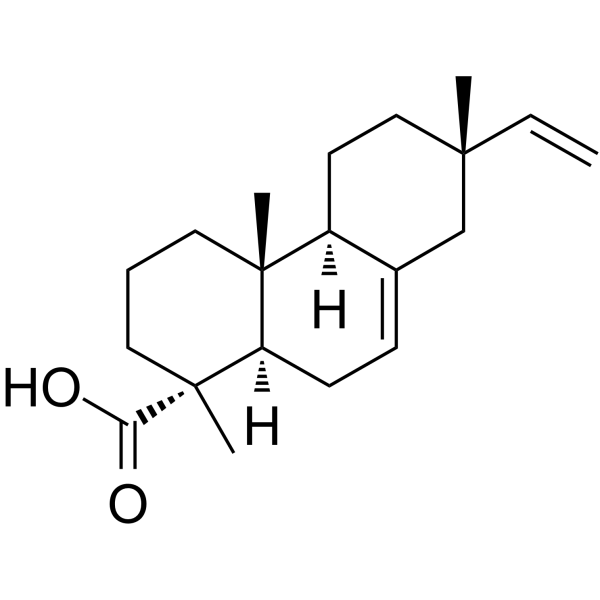
Cat. No.: HY-N3463
CAS No.: 5835-26-7
Isopimaric acid is a coniferous tree defense compound. Isopimaric acid binds to AKT and inhibits mTOR phosphorylation, thereby regulating the AKT/mTOR pathway. Isopimaric acid inhibits oxidative stress, inflammation, microglial migration, apoptosis, autophagic flux, ornithine decarboxylase activity, breast cancer proliferation and metastasis, and fungal spore germination. Isopimaric acid also induces M2 microglial polarization, mitochondrial damage, ROS accumulation, starvation-induced colon cancer cell apoptosis, and breast cancer cell cycle arrest. Isopimaric acid activates potassium channels, regulates sodium channels and calcium channels, reduces myocardial excitability, and improves arrhythmia. Isopimaric acid acts as an oxidative substrate for CYP6BW1/3, down-regulates PINK1/Parkin, and regulates calcium homeostasis, oxidative phosphorylation, EMT, and the Wnt pathway. Isopimaric acid exhibits activity against drug-resistant Staphylococcus aureus, repels feeding, and promotes the growth of rice seedlings. Isopimaric acid is suitable for research related to epilepsy, tumors, drug-resistant bacterial infections, atrial fibrillation, hypertension, hyperlipidemia, pulmonary tuberculosis, etc .
loading...
    loading...
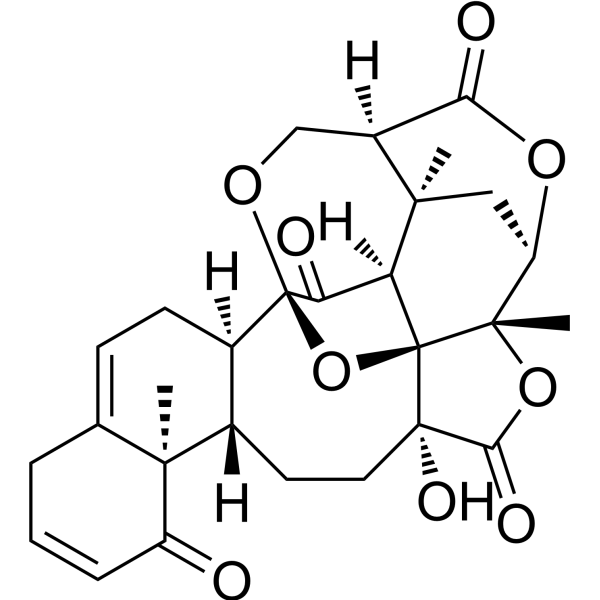
Cat. No.: HY-N7695
CAS No.: 23133-56-4
Physalin B is an orally active anti-inflammatory and anticancer agent. Physalin B can be isolated from Physalis alkekengi L. var. Franchetii. Physalin B inhibits the activation of the NF-κB, NLRP3 inflammasome, STAT3, PI3K/Akt and Hedgehog signaling pathways, regulates the phosphorylation levels of GSK-3β, p38 MAPK, ERK1/2 and JNK, and promotes the nuclear translocation of NRF2. Physalin B reduces the levels of pro-inflammatory cytokines and factors, induces mitochondrial reactive oxygen species (mito-ROS) production, Apoptosis, G2/M cell cycle arrest and incomplete Autophagy, alters cytoskeleton structure and alleviates oxidative stress. Physalin B reduces cancer cell viability, ameliorates liver and lung tissue damage and alleviates liver fibrosis. Physalin B can be used in research related to ulcerative colitis, breast cancer, acute lung injury, colon cancer, non-alcoholic steatohepatitis, liver fibrosis, lung cancer, pancreatic cancer, lymphoma, ovarian cancer, sarcoma and leukemia .
loading...
    loading...
Cat. No.: HY-W1143867
CAS No.: 2226-71-3
4’-Phosphopantetheine is an orally active coenzyme A (CoA) precursor. 4’-Phosphopantetheine is membrane-permeable and acts as a CoA precursor, a prosthetic group, and a reactive oxygen species (ROS) inhibitor. 4’-Phosphopantetheine binds covalently to rat liver fatty acid synthase, modifies the conserved serine residue in the PKS/NRPS carrier protein domain, and serves as a substrate for CoA synthase and PPAT. 4’-Phosphopantetheine undergoes non-catalytic exchange on rat liver fatty acid synthase, with a faster turnover rate than that of the enzyme complex, and restores intracellular CoA levels in cells with impaired de novo biosynthesis. 4’-Phosphopantetheine rescues phenotypes induced by CoA deficiency, normalizes PKAN-related biomarkers, restores mitochondrial enzyme activity, and alleviates vascular endothelial damage. 4’-Phosphopantetheine shows biological stability in serum, acts as a prosthetic group and degradation product of ACP, and inhibits the formation of atherosclerotic plaques. 4’-Phosphopantetheine can be used in the research of brain iron accumulation neurodegenerative diseases, pantothenate kinase-associated neurodegeneration, CoASY protein-associated neurodegenerative diseases, coronary heart disease, and atherosclerosis .
loading...
    loading...
Cat. No.: HY-W707517
CAS No.: 2707433-64-3
Synonyms: MK-208-d4
Famotidine-d4 (MK-208-d4) is the deuterated-labeled Famotidine (HY-B0377). Famotidine (MK-208) is an orally active and highly selective histamine H2 receptor antagonist. It inhibits gastric acid secretion by blocking the Gs signaling pathway, and regulates intracellular cAMP and ERK pathways. Famotidine inhibits TLR3-mediated inflammatory pathways, and reduces the expression of various inflammatory mediators and interferon-related genes. Famotidine scavenges DPPH and nitric oxide free radicals, alleviates oxidative stress damage in gastric tissue, inhibits proMMP-9, improves vascular endothelial permeability, and restores the normal physiological functions of neutrophils and eosinophils. Famotidine crosses intestinal epithelial cells via facilitated diffusion and passive diffusion, blocks paracellular cation transport, and increases intestinal transepithelial electrical resistance. Famotidine reduces serum levels of transaminases and alkaline phosphatase, exerts analgesic effects and gastric protective effects simultaneously. Famotidine can be used in studies related to COVID-19, liver injury and acute gastric ulcer .
loading...
    loading...
Cat. No.: HY-W777002
CAS No.: 1185241-48-8
Synonyms: MK-208-13C3
Famotidine- 13C3 (MK-208- 13C3) is the 13C3-labeled Famotidine (HY-B0377). Famotidine (MK-208) is an orally active and highly selective histamine H2 receptor antagonist. It inhibits gastric acid secretion by blocking the Gs signaling pathway, and regulates intracellular cAMP and ERK pathways. Famotidine inhibits TLR3-mediated inflammatory pathways, and reduces the expression of various inflammatory mediators and interferon-related genes. Famotidine scavenges DPPH and nitric oxide free radicals, alleviates oxidative stress damage in gastric tissue, inhibits proMMP-9, improves vascular endothelial permeability, and restores the normal physiological functions of neutrophils and eosinophils. Famotidine crosses intestinal epithelial cells via facilitated diffusion and passive diffusion, blocks paracellular cation transport, and increases intestinal transepithelial electrical resistance. Famotidine reduces serum levels of transaminases and alkaline phosphatase, exerts analgesic effects and gastric protective effects simultaneously. Famotidine can be used in studies related to COVID-19, liver injury and acute gastric ulcer .
loading...
    loading...

