2199 Results for "

damage

" in MedChemExpress (MCE) Product Catalog:
Products (2199)

2199 Results for "damage" in MCE Product Catalog:

Cat. No.: HY-P990955
CAS No.: 2839652-75-2
Synonyms: ADX-097

Target:  

CD3 Complement System

Research Areas:  

Inflammation/Immunology

Ebribafusp alfa (ADX-097) comprising a humanized anti-C3d monoclonal antibody linked to two moieties of the first five consensus repeats of factor H (fH1-5). Ebribafusp alfa binds C3d and related fragments, catalyzes AP convertase dissociation, acts as a factor I co-factor for C3b cleavage, and delivers fH1-5 moieties to C3d-deposited tissues for local complement inhibition without systemic blockade. Ebribafusp alfa reduces glomerular C3 deposition, proteinuria, urine albumin-creatinine ratios, and urine soluble C5b-9 levels, preserves podocyte foot-process architecture, inhibits skin complement activation, and localizes to UVB-damaged primate skin. Ebribafusp alfa can be used for the research of membranous nephropathy, bullous pemphigoid, discoid lupus erythematosus, C3 glomerulopathy, IgA nephropathy, and lupus nephritis .
loading...
    loading...
Cat. No.: HY-W002004S
CAS No.: 97461-87-5
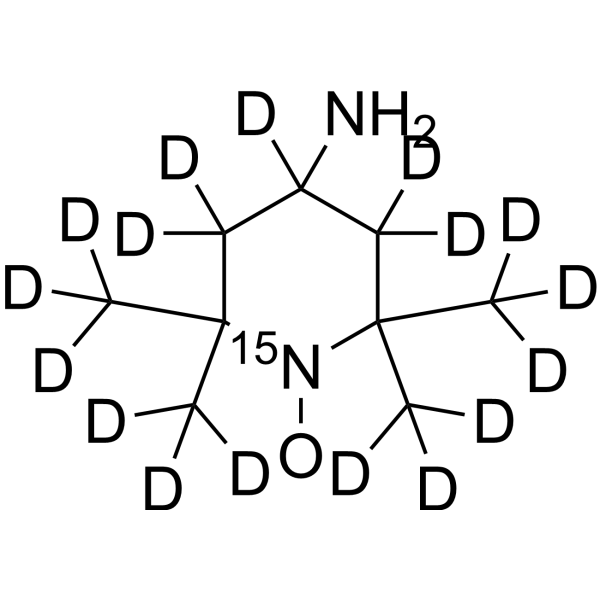
Synonyms: 4-Amino-2,2,6,6-tetramethylpiperidine-1-oxyl-d17,15N
4-Amino-TEMPO-d17, 15N (4-Amino-2,2,6,6-tetramethylpiperidine-1-oxyl-d17, 15N) is the deuterium labeled 4-Amino-TEMPO-d17 (HY-W002004S1). 4-Amino-TEMPO (4-Amino-2,2,6,6-tetramethylpiperidine-1-oxyl) is a stable nitroxide radical and N-nucleophile based on TEMPO. 4-Amino-TEMPO has superoxide dismutase-mimetic activity, can protect cells from oxidative damage, and has radioprotective effects. 4-Amino-TEMPO is widely used in fields such as biomedicine, materials science, and industrial production. 4-Amino-TEMPO can be used as a spin label to detect free radicals, an oxidation catalyst in industrial production, and an antioxidant stabilizer for polymers, among others .
loading...
    loading...
Cat. No.: HY-W011168
CAS No.: 13389-03-2
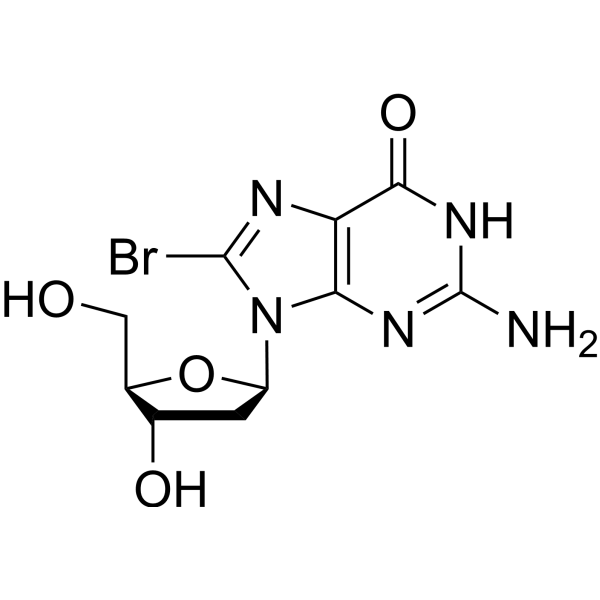
8-Bromo-2'-deoxyguanosine is an inflammation-related DNA halogenated adduct and an early biomarker of inflammation-induced oxidative tissue damage. The formation of 8-Bromo-2'-deoxyguanosine precedes that of oxidative and nitrative products, and it can be generated via the MPO-H2O2-Cl --Br - system. 8-Bromo-2'-deoxyguanosine serves as the immunogen for preparing the monoclonal antibody mAb8B3, which can be used to detect early DNA modifications in preclinical models; its urinary level also increases significantly in inflammatory disease models. 8-Bromo-2'-deoxyguanosine can also be produced in the dermis of UV-B irradiated mice, and the extract of Coprinus comatus significantly reduces its level. 8-Bromo-2'-deoxyguanosine finds applications in studies related to inflammatory diseases, diabetes, hepatocellular carcinoma, and UV-B induced skin inflammation .
loading...
    loading...
Cat. No.: HY-W012846R
CAS No.: 2418-52-2
D-Threitol (Standard) is the analytical standard of D-Threitol (HY-W012846). This product is intended for research and analytical applications. D-Threitol is a naturally occurring four-carbon sugar alcohol and an α-glucosidase (α‑glucosidase) inhibitor with an IC50 of 49 mM against yeast α-glucosidase, and it is orally active. D-Threitol modulates gut microbiota composition, increases microbial diversity, enriches beneficial bacterial genera, and restores fecal short-chain fatty acid levels. D-Threitol reduces body weight gain and fat accumulation, improves glucose tolerance and insulin sensitivity, and alleviates liver, kidney, and pancreatic tissue damage. D-Threitol inhibits hepatic accumulation of ceramides and diacylglycerols. D-Threitol preserves glomerular morphology and islet structure in diabetes models. D-Threitol is also a low-calorie sweetener. D-Threitol serves as a cryoprotective polyol that stabilizes protein structure at low temperatures. D-Threitol is used in research on type 2 diabetes and as an antifreeze agent for the Alaskan beetle .
loading...
    loading...
Cat. No.: HY-L161
1,416 compounds

Cytokines are a kind of low molecular soluble proteins synthesized and secreted by immunogen, mitogen or other factors. They have functions of regulating innate and adaptive immune responses, promoting hematopoiesis, stimulating cell activation, proliferation and differentiation. The process of releasing a large number of cytokines is also called “Cytokine storm”, which can cause damage to many tissues and organs in the body. Cytokine is involved in the pathogenesis of many human diseases, including cancer, diabetes, chronic inflammatory diseases and so on. Cytokine inhibitors are a class of essential compounds that act by directly inhibiting the synthesis and release of cytokine or blocking the binding of cytokine to their receptors. Cytokine inhibitors are important compounds for the study of tumor and autoimmune diseases.

MCE designs a unique collection of 1,416 cytokine inhibitors, mainly targeting the receptor interleukin (IL), colony-stimulating factor (CSF), interferon (IFN), tumor necrosis factor (TNF), growth factor (GF) and chemokine, which is an effective tool for development and research of anti-cancer, anti-chronic inflammatory diseases and anti-autoimmune diseases compounds.

Cat. No.: HY-108652R
CAS No.: 1343364-54-4
Research Areas:  

Inflammation/Immunology

α,β-Methylene-ATP trisodium (Standard) is the analytical standard of α,β-Methylene-ATP (trisodium) (HY-108652). This product is intended for research and analytical applications. α,β-Methylene-ATP trisodium is an agonist of P2X1 and P2X3 receptors and can cross the blood-brain barrier. α,β-Methylene-ATP trisodium can trigger a reflex pressor response by activating P2X receptors in peripheral muscles and the central locus coeruleus (LC); this effect can be blocked by the P2X antagonist PPADS (HY-108960). α,β-Methylene-ATP trisodium also activates noradrenergic neurons in the central locus coeruleus, mediating antinociceptive effects; this effect can be attenuated by the locus coeruleus damaging agent DSP-4 (HY-103210/HY-121602). α,β-Methylene-ATP trisodium can be used to study the pathological mechanisms of neuropathic pain, cardiovascular reflex regulation, and antinociceptive effects of the central nervous system .
loading...
    loading...
Cat. No.: HY-121337R
CAS No.: 61213-25-0
Synonyms: R-40244 (Standard)
Flurochloridone (Standard) (R-40244 (Standard)) is the analytical standard of Flurochloridone (HY-121337). This product is intended for research and analytical applications. Flurochloridone (R-40244) is an orally active herbicide and an inducer of ER stress, apoptosis, and cytotoxicity. Flurochloridone upregulates GRP78 and activates the PERK-eIF2α-ATF4 UPR axis, ATF6, CHOP, Bax, and Bim. Flurochloridone decreases Akt, p-Akt, GSK3β, and p-GSK3β levels, and induces ROS, oxidative stress, γ-glutamyl cycle activation, and GSH accumulation. Flurochloridone inhibits mitochondrial respiration and ATP production while enhancing glycolysis and cell viability inhibition. Flurochloridone inhibits spermatogonial proliferation, spermatocyte meiosis, and sperm mitochondrial membrane potential, and induces Sertoli cell apoptosis and mitochondrial damage. Flurochloridone non-competitively binds phytoene desaturase, blocking phytoene desaturation and carotenoid synthesis, leading to leaf bleaching and phytotoxicity. Flurochloridone can be used for research on male reproductive toxicity, hepatotoxicity, and as a herbicide .
loading...
    loading...
Cat. No.: HY-124421R
CAS No.: 260443-89-8
Synonyms: NSC-703786 (Standard)
5F-203 (Standard) (NSC-703786 (Standard)) is the analytical standard of 5F-203 (HY-124421). This product is intended for research and analytical applications. 5F-203 (NSC-703786) is an aryl hydrocarbon receptor (AhR) agonist and the active moiety of the water-soluble benzothiazole prodrug Phortress (HY-103223). 5F-203 binds to cytosolic AhR and induces CYP1A1 and CYP1B1 expression. 5F-203 activates AhR signaling to induce DNA damage, cell cycle arrest, apoptosis, caspase-3/-7 activation, lysosomal membrane permeabilization, and Cathepsin B release. 5F-203 induces CYGB and pro-apoptotic protein expression and NAG-1 mRNA/protein induction through RNA stabilization. 5F-203 is used in research related to cancers such as triple-negative breast cancer and colorectal cancer .
loading...
    loading...
Cat. No.: HY-148062
CAS No.: 2769753-48-0
Purity:  99.85%
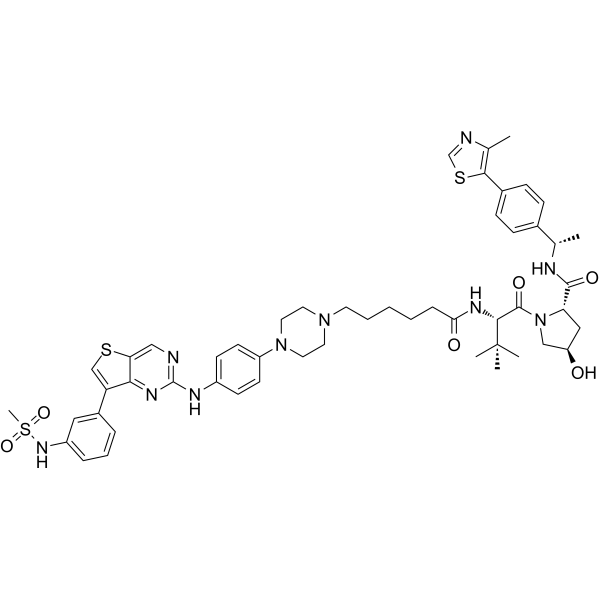
RSS0680 is a small noncoding RNA (sRNA) targeting the mRNA ribosome binding site (RBS) and a PROTAC. RSS0680 competitively binds to RBS through the conserved CCUCCUCCC anti-Shine-Dalgarno (aSD) sequence and inhibits the translation initiation of target genes. RSS0680 can interact with the DUF1127 protein CcaF1, regulate its own stability and participate in bacterial oxidative stress defense, enhancing the host's resistance to heat shock and oxidative damage by affecting pathways such as C1 metabolism and pyruvate dehydrogenase complex. RSS0680 degrades AAK1, CDK1, CDK16, CDK2, CDK4, CDK6, EIF2AK4, GAK, LATSl, LIMK2, MAPK6, MAPKAPK5, MARK2, MARK4, MKNK2, NEK9, RPS6KB1, SIK2, SNRK, STK17A, STK17B, STK35, and WEEl. RSS0680 can be used to study diseases or disorders mediated by aberrant kinase activity and regulatory mechanisms of noncoding RNAs in α-proteobacteria[1][2].
loading...
    loading...
Cat. No.: HY-150270
CAS No.: 1239578-79-0
NP-1815-PX is an orally active dual inhibitor of P2X4 and prostaglandin TP receptors, with an IC50 of 0.26 μM against human P2X4 receptors. NP-1815-PX specifically inhibits ATP-mediated prostaglandin production, TP receptor-induced calcium elevation, and the canonical/non-canonical NLRP3 inflammasome signaling pathway. NP-1815-PX selectively blocks smooth muscle contractions induced by ATP, U46619 (HY-108566) and prostaglandin F2α. NP-1815-PX not only produces anti-allodynic effects in vivo, but also significantly alleviates symptoms of DNBS (HY-W324435)-induced colitis (such as weight loss and tissue damage). NP-1815-PX exerts anti-inflammatory effects by downregulating IL-1β levels and Caspase-1 activity. NP-1815-PX is used in studies related to asthma and inflammatory bowel disease (colitis) .
loading...
    loading...
Cat. No.: HY-150270A
CAS No.: 1239578-80-3
Purity:  99.62%
NP-1815-PX sodium is an orally active dual inhibitor of P2X4 and prostaglandin TP receptors, with an IC50 of 0.26 μM against human P2X4 receptors. NP-1815-PX sodium specifically inhibits ATP-mediated prostaglandin production, TP receptor-induced calcium elevation, and the canonical/non-canonical NLRP3 inflammasome signaling pathway. NP-1815-PX sodium selectively blocks smooth muscle contractions induced by ATP, U46619 (HY-108566) and prostaglandin F2α. NP-1815-PX sodium not only produces anti-allodynic effects in vivo, but also significantly alleviates symptoms of DNBS (HY-W324435)-induced colitis (such as weight loss and tissue damage). NP-1815-PX sodium exerts anti-inflammatory effects by downregulating IL-1β levels and Caspase-1 activity. NP-1815-PX sodium is used in studies related to asthma and inflammatory bowel disease (colitis) .
loading...
    loading...
Cat. No.: HY-160229
Synonyms: R-1075 sodium
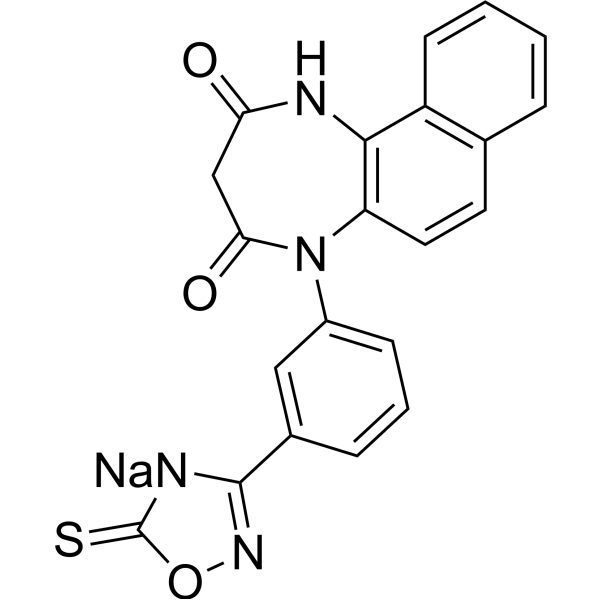
ssRNA40 sodium (R-1075 sodium) is a single-stranded RNA40 derived from HIV-1. ssRNA40 sodium activates the TLR7, TLR8, TLR2, RIG-I, MDA5, MyD88, Caspase-3, IRE1α, NLRP3 inflammasome and IRF7 signaling pathways. ssRNA40 sodium alters mRNA expression in neutrophils, induces pro-inflammatory cytokines, ROS, autophagy (autophagy), pyroptosis (pyroptosis), neuronal death, neurodegeneration, aggregate formation and NK cell activation. ssRNA40 sodium activates the expression of CD62L, CD11b, CD69, MX1, OAS1, ATG7, LC3B and XBP1 in immune cell and neuronal populations. ssRNA40 sodium causes cortical neuron loss and axonal damage in mice in a TLR7-dependent manner. ssRNA40 sodium can be used in research on HIV-1 infection, neurodegeneration, COVID-19 and HIV-associated neurological disorders .
loading...
    loading...
Cat. No.: HY-177442
Synonyms: DS-3939
DS-3939a (DS-3939) is an anti-TA-MUC1 (tumor-associated mucin-1) antibody-drug conjugate (ADC). DS-3939a consists of a humanized anti-TA-MUC1 IgG1 monoclonal antibody Gatipotuzumab ( HY-P99634), a stable and cleavable tetrapeptide-based linker (Gly-Gly-Phe-Gly), and a DNA topoisomerase I inhibitor payload (DXd) (HY-13631D), and the drug-linker conjugate for ADC is Deruxtecan (HY-13631E). DS-3939a inhibits the growth of TA-MUC1-positive cancer cells (CFPAC-1, NCI-H2110) by inducing DNA damage and apoptosis. DS-3939a exhibits significant antitumor activity in a variety of TA-MUC1-expressing advanced solid tumors. DS-3939a can be used for the study of TA-MUC1-expressing advanced cancers .
loading...
    loading...
Cat. No.: HY-183357
CAS No.: 3128970-09-9
GABAAR/5-HT2AR modulator-1 is an orally active and brain-penetrant GABAAR agonist and 5-HT2AR antagonist with Kd values of 0.89 and 0.78 μM. GABAAR/5-HT2AR modulator-1 blocks 5-HT-stimulated IP1 accumulation, inducing a chloride current, reduces LPS (HY-D1056)-induced increases of ROS, NO, TNF-α, IL-6, IL-1β, iNOS, and COX-2 levels. Antidepressant agent 11 dihydrochloride inhibits NF-κB pathway activation by reducing IκBα and p65 phosphorylation and blocking p65 nuclear translocation. GABAAR/5-HT2AR modulator-1 alleviates depression-like behaviors in LPS-challenged and chronic restraint stress-challenged mice, and protects hippocampal neurons against inflammation-mediated damage .
loading...
    loading...
Cat. No.: HY-B0377G
CAS No.: 76824-35-6
Synonyms: MK-208 (GMP)
Famotidine GMP (MK-208 GMP) is Famotidine (HY-B0377) produced in GMP guideline. Famotidine is an orally active and highly selective histamine H2 receptor antagonist. It inhibits gastric acid secretion by blocking the Gs signaling pathway, and regulates intracellular cAMP and ERK pathways. Famotidine inhibits TLR3-mediated inflammatory pathways, and reduces the expression of various inflammatory mediators and interferon-related genes. Famotidine scavenges DPPH and nitric oxide free radicals, alleviates oxidative stress damage in gastric tissue, inhibits proMMP-9, improves vascular endothelial permeability, and restores the normal physiological functions of neutrophils and eosinophils. Famotidine crosses intestinal epithelial cells via facilitated diffusion and passive diffusion, blocks paracellular cation transport, and increases intestinal transepithelial electrical resistance. Famotidine reduces serum levels of transaminases and alkaline phosphatase, exerts analgesic effects and gastric protective effects simultaneously. Famotidine can be used in studies related to COVID-19, liver injury and acute gastric ulcer .
loading...
    loading...
Cat. No.: HY-FLB0377
CAS No.: 76824-35-6
Synonyms: MK-208 solution
Famotidine solution is mainly composed of Famotidine (HY-B0377). Famotidine (MK-208) is an orally active and highly selective histamine H2 receptor antagonist. It inhibits gastric acid secretion by blocking the Gs signaling pathway, and regulates intracellular cAMP and ERK pathways. Famotidine inhibits TLR3-mediated inflammatory pathways, and reduces the expression of various inflammatory mediators and interferon-related genes. Famotidine scavenges DPPH and nitric oxide free radicals, alleviates oxidative stress damage in gastric tissue, inhibits proMMP-9, improves vascular endothelial permeability, and restores the normal physiological functions of neutrophils and eosinophils. Famotidine crosses intestinal epithelial cells via facilitated diffusion and passive diffusion, blocks paracellular cation transport, and increases intestinal transepithelial electrical resistance. Famotidine reduces serum levels of transaminases and alkaline phosphatase, exerts analgesic effects and gastric protective effects simultaneously. Famotidine can be used in studies related to COVID-19, liver injury and acute gastric ulcer .
loading...
    loading...
Cat. No.: HY-N0430
CAS No.: 3486-66-6
Synonyms: Coptisin
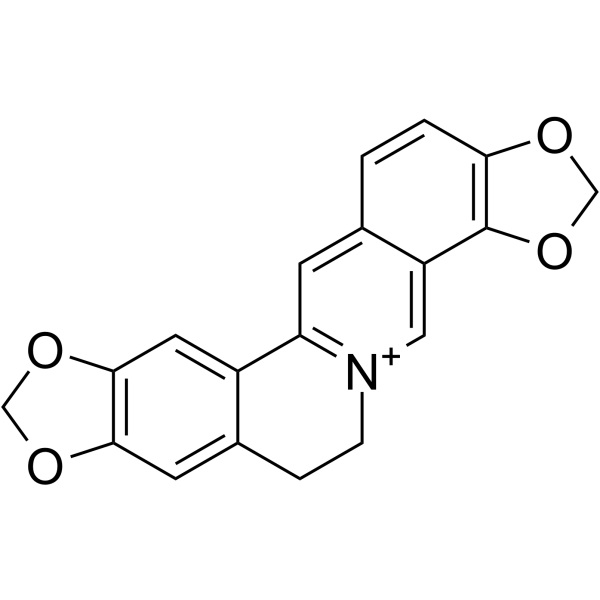
Coptisine is an orally active and brain-penetrant alkaloid found in Coptis chinensis. Coptisine is a reversible, uncompetitive IDO inhibitor with a Ki of 5.8 μM and an IC50 of 6.3 μM. Coptisine suppresses neuroinflammation, reduces Aβ plaque burden and shows neuroprotective activity. Coptisine shows anti-inflammation activity by blocking NF-κB, MAPK, and PI3K/Akt activation. Coptisine inhibits cancer cells proliferation, induces DNA damage, G2/M phase cell cycle arrest, apoptosis, ROS production and mitochondrial dysfunction. Coptisine inhibits Rho/ROCK pathway activation, reduces arrhythmia, limits cardiac injury marker release, reduces infarct size, and preserves cardiac function in rat myocardial ischemia/reperfusion models. Coptisine downregulates HMGCR and upregulates LDLR and CYP7A1 to modulate cholesterol metabolism, reduces abnormal serum lipid levels, and promotes fecal bile acid excretion. Coptisine can be used for the research of cancer, hypercholesterolemia, Alzheimer’s disease, inflammatory disorders and cardiovascular disease .
loading...
    loading...
Cat. No.: HY-N0442R
CAS No.: 84272-85-5
Synonyms: 4'-O-β-D-Glucosyl-5-O-methylvisamminol (Standard)
5-O-Methylvisammioside (4'-O-β-D-Glucosyl-5-O-methylvisamminol) (Standard) is the analytical standard of 5-O-Methylvisammioside. This product is intended for research and analytical applications. 5-O-Methylvisammioside is an orally active natural chromone glycoside and multiple biological activities. 5-O-Methylvisammioside inhibits ferroptosis by activating the Nrf2/HO-1 signaling axis. 5-O-Methylvisammioside alleviates intestinal barrier damage by inhibiting the ROS/NF-κB/NLRP3 pathway. 5-O-Methylvisammioside exerts a protective effect against acute liver injury by reducing ALT/AST, decreasing inflammatory infiltration, and inhibiting IκB-α phosphorylation and NF-κB nuclear translocation. 5-O-Methylvisammioside blocks the HMGB1/RAGE/MEK/ERK signaling axis to exert anti-tumor and anti-angiogenic effects. 5-O-Methylvisammioside improves depression-like behaviors by inhibiting Src kinase and the NF-κB pathway.
loading...
    loading...
Cat. No.: HY-N19083
Category:  

Extract

Target:  

Bacterial

Tecomella undulata Extract, also known as Rohida extract, is a valuable botanical extract derived from the bark and leaves of the Tecomella undulata plant native to the Indian Thar Desert and is rich in bioactive compounds such as flavonoids, quinones, triterpenoids, and other phytochemicals that contribute to its diverse therapeutic properties. This extract is widely recognized for its hepatoprotective effects demonstrated through its ability to protect against liver damage induced by toxins such as paracetamol and carbon tetrachloride by normalizing elevated liver enzyme levels reducing oxidative stress and improving liver function. Additionally, it exhibits significant anti-inflammatory activity comparable to standard drugs like indomethacin and has been used to treat conditions like ascites and hepatosplenomegaly while also showing immunomodulatory effects by enhancing both humoral and cell-mediated immune responses and possessing antimicrobial properties that make it effective against various pathogens. Recent research suggests that Tecomella undulata may have potential in managing nonalcoholic steatohepatitis (NASH) by reducing body weight insulin resistance and improving liver function markers making it a versatile natural remedy with significant applications in hepatoprotection anti-inflammation and immune support.
loading...
    loading...
Cat. No.: HY-N20682
CAS No.: 2866266-56-8
1-Hydroxy-4αH-1,10-secoeudesma-5(6),10(14),11(13)-trien-12,8β-olide is a neuroprotective agent. 1-Hydroxy-4αH-1,10-secoeudesma-5(6),10(14),11(13)-trien-12,8β-olide reduces the protein expression levels of iNOS and COX-2, blocks the DNA-binding activity of NF-κB, and inhibits nitric oxide production. 1-Hydroxy-4αH-1,10-secoeudesma-5(6),10(14),11(13)-trien-12,8β-olide promotes the polarization of microglia to the M2 phenotype by inducing the production of Arg-1, and alleviates cell damage induced by H2O2 and 6-Hydroxydopamine (HY-B1081) .
loading...
    loading...

