
233 Results for "

Purification

" in MedChemExpress (MCE) Product Catalog:
Products (233)

233 Results for "Purification" in MCE Product Catalog:

Cat. No.: HY-W588717
CAS No.: 3099388-13-0
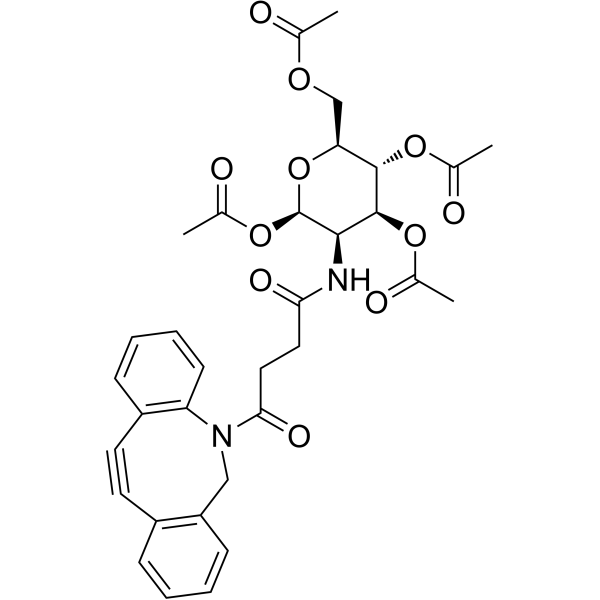
DBCO-Tetraacetyl mannosamine is an organic compound commonly used for chemical alteration and modification in biological research. It can be used to modify glycoproteins, cell surface molecules, and other biomolecules, and is widely used in biomarking and purification techniques. In addition, this compound is used as a carrier for drugs in certain drug controlled release systems. DBCO-Tetraacetyl mannosamine is a click chemistry reagent, it contains a DBCO group that can undergo strain-promoted alkyne-azide cycloaddition (SPAAC) with molecules containing Azide groups.
loading...
    loading...
Cat. No.: HY-P5112A
Synonyms: Azido-PEG3-FLAG TFA
Research Areas:  

Others

Azido-PEG3-DYKDDDDK (azide-PEG3-FLAG) TFA is a multifunctional fusion tag for the purification of recombinant proteins. Azido-PEG3-DYKDDDDK TFA is a click chemistry reagent, it contains an Azide group and can undergo copper-catalyzed azide-alkyne cycloaddition reaction (CuAAc) with molecules containing Alkyne groups. It can also undergo strain-promoted alkyne-azide cycloaddition (SPAAC) reactions with molecules containing DBCO or BCN groups .
loading...
    loading...
Cat. No.: HY-W250181
CAS No.: 148616-91-5
Synonyms: Octyl β-D-thiomaltopyranoside
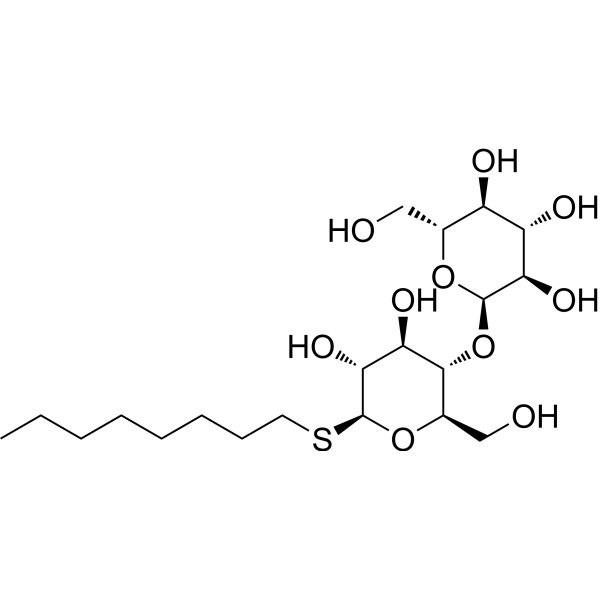
Octyl thiomaltoside (OTM) is a nonionic detergent commonly used in the purification and crystallization of membrane proteins. It belongs to the family of maltoside detergents and has a hydrophilic head group and a lipophilic tail group, enabling it to interact with water-soluble and membrane-bound proteins. OTMs are known for their ability to solubilize integral membrane proteins without disrupting their structure or function, making them an invaluable tool in biochemical and biophysical research. In addition to protein research, OTMs are used in a variety of other applications, including drug delivery systems, nanotechnology, and diagnostic analysis.
loading...
    loading...
Cat. No.: HY-W724290
CAS No.: 2965296-86-8
Synonyms: AP 6G-d36 bromide; Actiron 43-65-d36 bromide; Aliquat 100-d36 bromide
Tetrabutylammonium-d36 bromide (AP 6G-d36 bromide) is the deuterium labeled Tetrabutylammonium bromide (HY-D0172). Tetrabutylammonium bromide is an organic ammonium compound, which is often used in catalytic reactions and separation and purification processes. It has a significant catalytic effect in some organic synthesis reactions, and can be used as a surfactant, stabilizer and antibacterial agent, etc. In addition, in some laboratory studies, this compound has also been used as an ion exchanger, solvent extractant, etc.
loading...
    loading...
Cat. No.: HY-185414
CAS No.: 2724919-70-2
Research Areas:  

Others

KB05-Biotin is streptavidin-conjugated KB05 (HY-149461) that retains the site-specific cysteine covalent reactivity of KB05, enabling specific detection of target proteins via the biotin-streptavidin system. KB05-Biotin serves as a site-specific probe in ELISA-ABPP assays for screening electrophilic small molecules that bind to scout fragment-sensitive cysteines on target proteins in cell lysates, without the need for protein purification .
loading...
    loading...
Cat. No.: HY-W283166
CAS No.: 253678-67-0
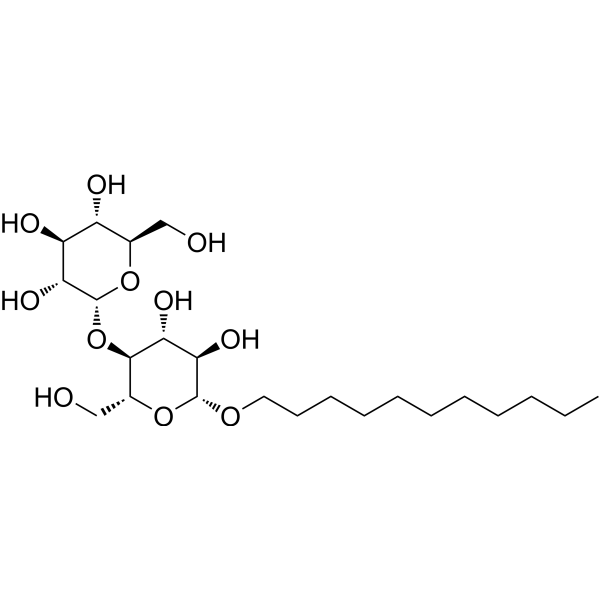
n-Undecyl β-D-maltopyranoside is an n-alkyl β-D-maltopyranoside detergent that can be used for solubilization and structural determination of membrane proteins. n-Undecyl β-D-maltopyranoside effectively solubilizes CST from Golgi-enriched fractions of Pichia pastoris, but fails to maintain the functional activity of CST during subsequent partial purification and reconstitution into proteoliposomes. n-Undecyl β-D-maltopyranoside is more suitable for structural analysis studies of membrane proteins rather than functional reconstitution experiments .
loading...
    loading...
Cat. No.: HY-Y0682R
CAS No.: 60-00-4
Synonyms: EDTA (Standard)
Ethylenediaminetetraacetic acid (Standard) is the analytical standard of Ethylenediaminetetraacetic acid. This product is intended for research and analytical applications. Ethylenediaminetetraacetic acid (EDTA) is a kind of metal chelating agent (binds to bivalent and trivalent metal cations, including calcium). Ethylenediaminetetraacetic acid has antibacterial, anti-inflammatory, antioxidant, anti-hypercalcemia and anticoagulant activities. Ethylenediaminetetraacetic acid decreases the metal ion-catalyzed oxidative damage to proteins, and allows maintenance of reducing environment during protein purification. Ethylenediaminetetraacetic acid can alleviate the liver fibrosis. Ethylenediaminetetraacetic acid can be used for coronary artery disease and neural system disease research [4] .
loading...
    loading...
Cat. No.: HY-151787
CAS No.: 2408993-39-3
Target:  

ADC Linkers

Research Areas:  

Others

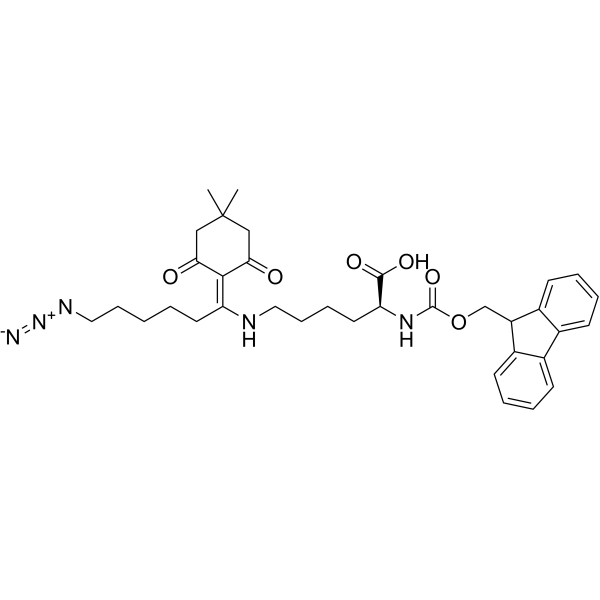
Fmoc-L-Lys(N3-Aca-DIM)-OH is a click chemistry reagent containing an azide group. Used as a SPPS building-block for the “helping hand” strategy for purification of highly insoluble peptides. Solubilizing residues are attached to the Lys side-chains using Click-chemistry. The solubilizing tag can be removed with 1M hydrazine or hydroxylamine solution . It contains an azide group and can undergo copper-catalyzed azide-alkyne cycloaddition (CuAAc) with molecules containing alkyne groups. It can also undergo ring strain-promoted alkyne-azide cycloaddition (SPAAC) with molecules containing DBCO or BCN groups.
loading...
    loading...
Cat. No.: HY-103006R
CAS No.: 1612756-29-2
Research Areas:  

Others

NAI-N3 (Standard) is the analytical standard of NAI-N3 (HY-103006). This product is intended for research and analytical applications. NAI-N3 is a RNA acylation reagent that enables RNA purification. NAI-N3 is a dual-function SHAPE (selective 2-hydroxyl acylation and profiling experiment) probe (RNA structure probe and enrichment) . It contains an azide group and can undergo copper-catalyzed azide-alkyne cycloaddition (CuAAc) with molecules containing alkyne groups. It can also undergo ring strain-promoted alkyne-azide cycloaddition (SPAAC) with molecules containing DBCO or BCN groups.
loading...
    loading...
Cat. No.: HY-129046I
CAS No.: 9001-99-4
Research Areas:  

Endocrinology Cancer

RNase A (Bovine pancreatic RNase) is a widely used Endonuclease in DNA purification by specifically hydrolyzing cytosine or uracil residues of RNA. RNase A degrades the RNA in the RNA/DNA duplex. RNase A catalyses the breakdown of 3',5'-phosphodiester linkages of single stranded RNA. RNase A family members in organisms are tightly involved in various physiological and pathological processes including cell growth and development, proliferation, differentiation and migration. Dysregulation of RNase A activity or expression level is closely related to pancreatic, ovarian, bladder and thyroid cancer. RNase A has tumor cell-killing ability. RNase A, Recombinant (animal free) is recombinant RNase A with no animal-derived components .
loading...
    loading...
Cat. No.: HY-151786
CAS No.: 2408993-33-7
Target:  

ADC Linkers

Research Areas:  

Others

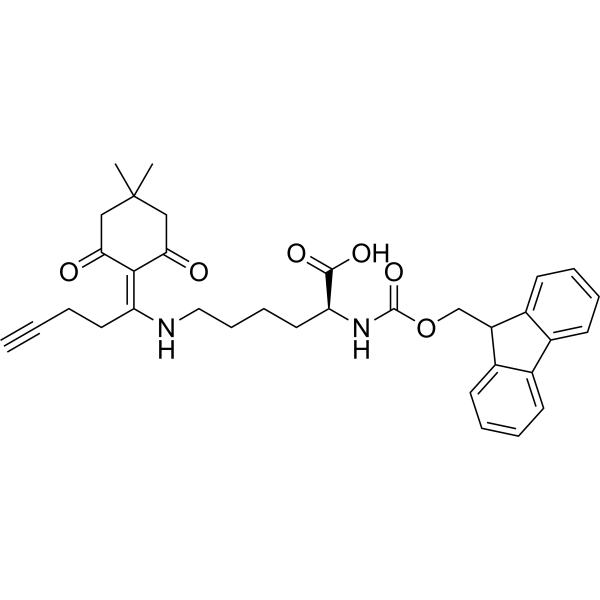
Fmoc-L-Lys(Pentynoyl-DIM)-OH is a click chemistry reagent containing an azide. Fmoc-L-Lys(Pentynoyl-DIM)-OH can be used as a SPPS building block for the “helping hand” strategy for purification of highly insoluble peptides. Solubilizing residues are attached to the Lys side-chains using Click-chemistry. The solubilizing tag can be removed with 1M hydrazine or hydroxylamine solution . It contains an azide group and can undergo copper-catalyzed azide-alkyne cycloaddition (CuAAc) with molecules containing alkyne groups. It can also undergo ring strain-promoted alkyne-azide cycloaddition (SPAAC) with molecules containing DBCO or BCN groups.
loading...
    loading...
Cat. No.: HY-160113E
Sodium phosphate buffer 0.1M, pH 8.0 is an aqueous sodium phosphate buffer with a concentration of 0.1M and a pH value of 8.0. Sodium phosphate buffer 0.1M, pH 8.0 can be used for the preparation of hydrated micellar membranes, the construction of pH-sensitive nanocarriers, and the maintenance of stable environmental conditions for pH-cleavable PEG-Hz-PE micelles. Sodium phosphate buffer 0.1M, pH 8.0 can also serve as a universal solvent, reaction medium and eluent, and is widely applied in experimental processes such as antibody thiolation, nanoparticle purification and cross-linking reactions .
loading...
    loading...
Cat. No.: HY-B1009R
CAS No.: 150-38-9
Synonyms: EDTA trisodium salt (Standard); Trisodium EDTA (Standard)
Ethylenediaminetetraacetic acid (trisodium salt) (Standard) is the analytical standard of Ethylenediaminetetraacetic acid (trisodium salt). This product is intended for research and analytical applications. Ethylenediaminetetraacetic acid trisodium salt (EDTA trisodium salt; Trisodium EDTA) is a kind of metal chelating agent (binds to bivalent and trivalent metal cations, including calcium). Ethylenediaminetetraacetic acid trisodium salt has antibacterial, anti-inflammatory, antioxidant, anti-hypercalcemia and anticoagulant activities. Ethylenediaminetetraacetic acid trisodium salt decreases the metal ion-catalyzed oxidative damage to proteins, and allows maintenance of reducing environment during protein purification. Ethylenediaminetetraacetic acid trisodium salt can alleviate the liver fibrosis. Ethylenediaminetetraacetic acid can be used for coronary artery disease and neural system disease research .
loading...
    loading...
Cat. No.: HY-W777365
CAS No.: 1215408-17-5
Synonyms: EDTA-13C4
Ethylenediaminetetraacetic acid- 13C4 (EDTA- 13C4) is the 13C-labeled Ethylenediaminetetraacetic acid (HY-Y0682). Ethylenediaminetetraacetic acid (EDTA) is a kind of metal chelating agent (binds to bivalent and trivalent metal cations, including calcium). Ethylenediaminetetraacetic acid has antibacterial, anti-inflammatory, antioxidant, anti-hypercalcemia and anticoagulant activities. Ethylenediaminetetraacetic acid decreases the metal ion-catalyzed oxidative damage to proteins, and allows maintenance of reducing environment during protein purification. Ethylenediaminetetraacetic acid can alleviate the liver fibrosis. Ethylenediaminetetraacetic acid can be used for coronary artery disease and neural system disease research .
loading...
    loading...
Cat. No.: HY-Y0682S2
CAS No.: 15251-22-6
Synonyms: EDTA-d4
Ethylenediaminetetraacetic acid-d4 (EDTA-d4) is the deuterium labeled Ethylenediaminetetraacetic acid (HY-Y0682). Ethylenediaminetetraacetic acid (EDTA) is a kind of metal chelating agent (binds to bivalent and trivalent metal cations, including calcium). Ethylenediaminetetraacetic acid has antibacterial, anti-inflammatory, antioxidant, anti-hypercalcemia and anticoagulant activities. Ethylenediaminetetraacetic acid decreases the metal ion-catalyzed oxidative damage to proteins, and allows maintenance of reducing environment during protein purification. Ethylenediaminetetraacetic acid can alleviate the liver fibrosis. Ethylenediaminetetraacetic acid can be used for coronary artery disease and neural system disease research .
loading...
    loading...
Cat. No.: HY-129046E
CAS No.: 9001-99-4
Synonyms: Ribonuclease A DNase & Protease Free, Recombinant
Research Areas:  

Endocrinology Cancer

RNase A (Bovine pancreatic RNase) is a widely used Endonuclease in DNA purification by specifically hydrolyzing cytosine or uracil residues of RNA. RNase A degrades the RNA in the RNA/DNA duplex. RNase A catalyses the breakdown of 3',5'-phosphodiester linkages of single stranded RNA. RNase A family members in organisms are tightly involved in various physiological and pathological processes including cell growth and development, proliferation, differentiation and migration. Dysregulation of RNase A activity or expression level is closely related to pancreatic, ovarian, bladder and thyroid cancer. RNase A has tumor cell-killing ability. RNase A (DNase & Protease Free), Recombinant is recombinant RNase A, which does not contain DNase and protease .
loading...
    loading...
Cat. No.: HY-P1576
CAS No.: 163560-19-8
Target:  

AMPK SnRK

Research Areas:  

Others

AMARA peptide is a synthetic peptide substrate of sucrose non-fermenting-1-related protein kinase 1 (SnRK1). AMARA peptide contains residues required for SnRK1 phosphorylation, retains the minimal motif recognized by SnRK1, and when this substrate is recognized by cauliflower SnRK1 HRK-A, the hydrophobic residues at the relative positions P-5 and P+4 of the phosphorylated serine require a critical spacing. AMARA peptide can serve as a control substrate in peptide phosphorylation assays for the detection of SnRK1 activity in Arabidopsis thaliana, potato tuber tissues, and during SnRK1 purification .
loading...
    loading...
Cat. No.: HY-W099581R
CAS No.: 14933-09-6
Synonyms: SB3-14 (Standard); DMAPS (Standard)
Sulfobetaine-14 (Standard) is the analytical standard of Sulfobetaine-14. This product is intended for research and analytical applications. Zwittergent 3-14 (DMAPS) is a zwitterionic detergent commonly used in biochemistry and molecular biology for the solubilization and purification of membrane-bound proteins and other hydrophobic biomolecules, which have both hydrophilic and hydrophobic moieties , so that it has good detergency properties, making it suitable for stabilizing membrane proteins in aqueous solutions. In addition, DMAPS has been used in various techniques such as electrophoresis and chromatography for the separation and analysis of biomolecules. The long The hydrocarbon chains provide it with good membrane penetration and solubilization capabilities, while the sulfonate and quaternary ammonium groups ensure water solubility and charge neutrality.
loading...
    loading...
Cat. No.: HY-Y0532R
CAS No.: 128-09-6
Synonyms: Succinchlorimide (Standard)
N-Chlorosuccinimide (Standard) (Succinchlorimide (Standard)) is the analytical standard of N-Chlorosuccinimide (HY-Y0532). This product is intended for research and analytical applications. N-Chlorosuccinimide (Succinchlorimide) is an oxidizing, hydrolyzable biochemical reagent with bactericidal and amoebicidal activities. N-Chlorosuccinimide can either form N-chloramines via concerted transfer of Cl + or hydrolyze in aqueous solution to produce hypochlorous acid/hypochlorite. N-Chlorosuccinimide is effective in killing Shigella dysenteriae, Escherichia typhi and cysts of Entamoeba histolytica. N-Chlorosuccinimide can be formulated into fast-dispersing, fully soluble water purification tablets. N-Chlorosuccinimide is used in studies related to bacterial infections and parasitic infections .
loading...
    loading...
Cat. No.: HY-129046B
CAS No.: 9001-99-4
Synonyms: Ribonuclease A DNase & Protease Free
Research Areas:  

Others Endocrinology Cancer

RNase A (Bovine pancreatic RNase) is a widely used Endonuclease in DNA purification by specifically hydrolyzing cytosine or uracil residues of RNA. RNase A degrades the RNA in the RNA/DNA duplex. RNase A catalyses the breakdown of 3',5'-phosphodiester linkages of single stranded RNA. RNase A family members in organisms are tightly involved in various physiological and pathological processes including cell growth and development, proliferation, differentiation and migration. Dysregulation of RNase A activity or expression level is closely related to pancreatic, ovarian, bladder and thyroid cancer. RNase A has tumor cell-killing ability. RNase A, Bovine Pancreas (DNase & Protease Free) is RNase A derived from bovine pancreas and does not contain DNase or protease .
loading...
    loading...

