2421 Results for "

decrease

" in MedChemExpress (MCE) Product Catalog:
Products (2421)

2421 Results for "decrease" in MCE Product Catalog:

Cat. No.: HY-120227
CAS No.: 1610546-52-5
Target:  

HSP Apoptosis Caspase ERK Akt CDK

Research Areas:  

Cancer

SM253 is an Hsp90 inhibitor that inhibits Hsp90-dependent protein folding. SM253 blocks chaperone function by binding to the N-middle linker region and the C-terminal M domain, reducing co-chaperone and client protein binding and activation. SM253 induces cancer cell apoptosis, activates caspase 3/7, causes cell cycle arrest and reduces cell proliferation, while decreasing Hsp90 client proteins such as AR, FKBP51, PSA, Cdk4, AKT, ERK, and p23, and reducing Hsp27/Hsp70 expression without inducing heat shock proteins. SM253 causes dose-dependent fibronectin loss in cells expressing LRP1. SM253 can be used for research on colon cancer, pancreatic cancer, and prostate cancer .
loading...
    loading...
Cat. No.: HY-123320S
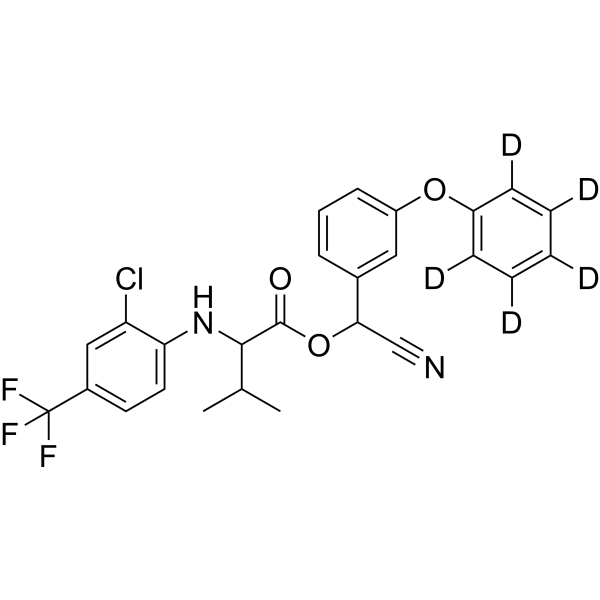
Fluvalinate-d5 is the deuterated-labeled Fluvalinate (HY-123320). Fluvalinate is an orally active acaricide classified as a sodium channel inhibitor. Fluvalinate delays sodium channel closure, prolongs cell membrane depolarization, inhibits the excitability of honeybee brain neurons, and exerts a central nervous system inhibitory effect. Fluvalinate negatively affects the learning ability, memory ability, sucrose responsiveness, and survival of honeybees. Fluvalinate potentiates pentobarbital-induced hypnosis, reduces spontaneous activity in mice, and decreases the total white blood cell count and absolute lymphocyte count in mice. Fluvalinate induces acute toxic symptoms in rats, acts as a cholinergic stimulant, and induces the production of hepatic enzymes in rats. Fluvalinate causes the death of Varroa jacobsoni sensitive to τ-Fluvalinate (HY-B2021). Fluvalinate can be used in studies related to mite pest control .
loading...
    loading...
Cat. No.: HY-133677S
CAS No.: 679789-43-6
Synonyms: MEHHP-d4
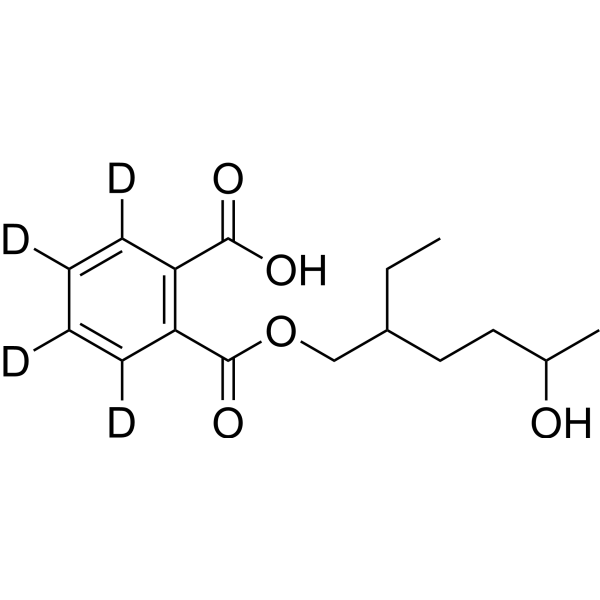
Mono(2-ethyl-5-hydroxyhexyl) phthalate-d4 (MEHHP-d4) is a deuterium labeled Mono(2-ethyl-5-hydroxyhexyl) phthalate (HY-133677). Mono (2-ethyl-5-hydroxyhexyl) phthalate is a biomarker for human exposure to DEHP (HY-B1945). By activating the tryptophan-kynurenine-aryl hydrocarbon receptor (AhR) pathway, mono (2-ethyl-5-hydroxyhexyl) phthalate significantly increases the viability of primary uterine leiomyoma cells and reduces cell apoptosis. Mono (2-ethyl-5-hydroxyhexyl) phthalate correlates with decreased sperm DNA damage. Mono (2-ethyl-5-hydroxyhexyl) phthalate can be used in studies related to uterine leiomyoma.
loading...
    loading...
Cat. No.: HY-137910R
CAS No.: 335104-84-2
Research Areas:  

Others

Tembotrione (Standard) is the analytical standard of Tembotrione. This product is intended for research and analytical applications. Tembotrione is a drug that may reduce the productivity of carrots. Tembotrione has the activity of reducing carrot stem mass. Tembotrione can be used to study the total productivity of carrot . Tembotrione is a herbicide belonging to the HPPD (dioxygenase) inhibitor class with crop selectivity. Tembotrione effectively controls a variety of weeds including broadleaf and gramineous species by disrupting carotenoid synthesis, which leads to chlorophyll degradation and leaf whitening. Mixing Tembotrione with isoxaflutole or adding surfactants optimizes its efficacy and reduces phytotoxicity, with no residual impact on subsequent cruciferous crops, thus helping to increase maize grain yield. The activity of Tembotrione decreases under drought conditions, and under specific conditions (such as double-dose treatment), it may cause reversible yellowing and even yield reduction in crops such as poppy .
loading...
    loading...
Cat. No.: HY-147240
CAS No.: 1824609-67-7
Purity:  99.92%
Synonyms: ADX-629
Target:  

Interleukin Related

Research Areas:  

Inflammation/Immunology

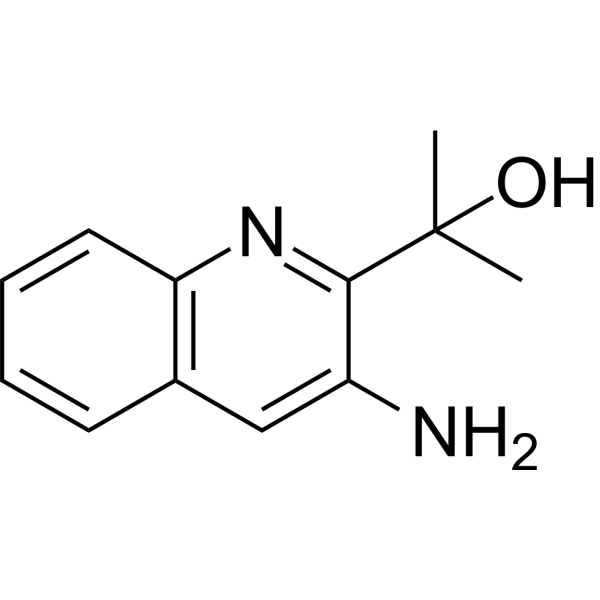
Acloproxalap (ADX-629) is an orally active reactive aldehyde species (RASP) inhibitor. Acloproxalap binds covalently to free aldehydes, sequesters reactive aldehyde species, malondialdehyde, acetaldehyde and preformed malondialdehyde-acetaldehyde adducts, and reduces elevated RASP levels. Acloproxalap decreases the formation of aldehyde adducts, reduces liver and serum triglyceride levels, hepatic fat accumulation, circulating anti-malondialdehyde-acetaldehyde adduct antibody levels, and inhibits the release of IL-6 and MCP-1. Acloproxalap improves cell viability of liver slices exposed to ethanol. Acloproxalap blocks ethanol-induced damage in animal models of alcoholic liver disease. Acloproxalap is applicable to research related to alcoholic liver disease, alcoholic fatty liver disease, non-alcoholic steatohepatitis, chronic cough, rheumatoid arthritis, ulcerative colitis and mild atopic asthma .
loading...
    loading...
Cat. No.: HY-14744B
CAS No.: 865430-76-8
Synonyms: (S)-Amlodipine hydrochloride; Levoamlodipine hydrochloride
Target:  

Calcium Channel MMP

Research Areas:  

Cardiovascular Disease

Levamlodipine ((S)-Amlodipine; Levoamlodipin) hydrochloride is an orally active L-type calcium channel blocker and MMP-9 modulator with high permeability and retention properties. Levamlodipine hydrochloride significantly enhances plaque stability and improves lipid profiles by reducing blood pressure, decreasing systolic blood pressure variability, and inhibiting MMP-9 expression in atherosclerotic plaques. Levamlodipine hydrochloride not only alleviates cardiac and aortic hypertrophy and prevents renal atrophy, but also produces synergistic effects in blood pressure reduction and organ protection when combined with bisoprolol (HY-129029). Levamlodipine hydrochloride exerts no significant inhibitory effect on abdominal aortic intimal hyperplasia. When excessively accumulated in the epidermis, Levamlodipine hydrochloride may induce changes in keratin structure, impair the skin barrier and trigger inflammation; long-term use further exacerbates skin irritation caused by local administration. Levamlodipine hydrochloride can be used in research related to hypertension and atherosclerosis .
loading...
    loading...
Cat. No.: HY-155666
CAS No.: 2952994-34-0
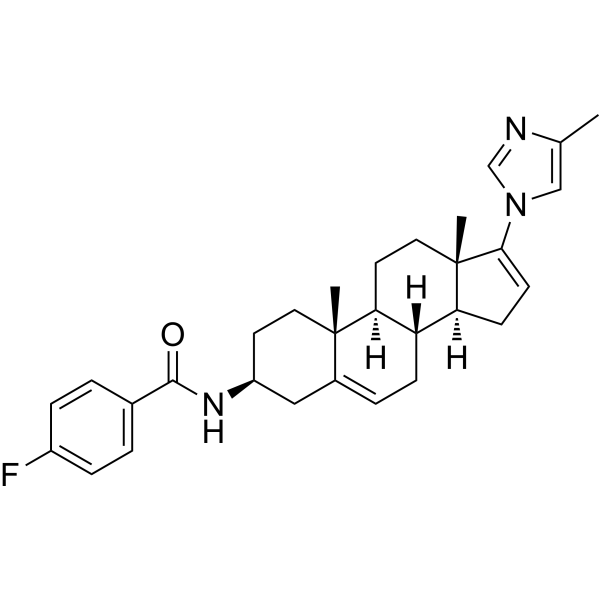
YXG‑158 is an orally active, anticancer bifunctional steroid analog with both androgen receptor (AR) degradation activity (DC50 = 1.28 μM) and CYP17A1 inhibitory activity (IC50 = 100 nM). YXG-158 reduces AR protein and mRNA expression via proteasome-dependent degradation, degrades AR-V7, and inhibits CYP17A1 enzymatic activity to block androgen biosynthesis. YXG-158 inhibits the activities of ERα and ERβ, as well as cancer cell proliferation. YXG-158 decreases the weight of androgen-sensitive organs in castrated rats treated with testosterone propionate, downregulates AR protein, reduces PSA levels, and suppresses tumor growth in Enzalutamide (HY-70002)-sensitive and -resistant xenograft models. YXG-158 can be used in prostate cancer-related research .
loading...
    loading...
Cat. No.: HY-16782R
CAS No.: 945614-12-0
Synonyms: ARRY-614 (Standard)
Pexmetinib (Standard) (ARRY-614 (Standard)) is the analytical standard of Pexmetinib (HY-16782). This product is intended for research and analytical applications. Pexmetinib (ARRY-614) is an orally active dual Tie-2 and p38 MAPK inhibitor. Pexmetinib binds to Tie-2 and p38 MAPK in a "DFG-out" conformation, attenuates the phosphorylation of p38, inhibits STAT3 activation, reduces the promoter-binding activity of NFATc1, and decreases the expression of MMPs. Pexmetinib inhibits leukemia cell proliferation, abrogates TNF-α-mediated myelosuppression of healthy hematopoietic stem cells, stimulates hematopoiesis in primary myelodysplastic syndrome (MDS) samples, inhibits RANKL-induced osteoclast formation and bone resorption, and suppresses migration, invasion and induced osteolysis of breast cancer cells. Pexmetinib can be used in research related to myelodysplastic syndrome, acute myeloid leukemia and breast cancer-induced osteolysis .
loading...
    loading...
Cat. No.: HY-168895A
CAS No.: 3125025-29-5
Target:  

Drug Isomer

Research Areas:  

Cancer

(E,E)-c-Fos-IN-1 is the active stereoisomer of c-Fos-IN-1 (HY-168895) in which both double bonds are in the trans configuration. c-Fos-IN-1 (Compound P16) is a c-Jun inhibitor, and decreases mRNA levels and protein levels of c-Fos. c-Fos-IN-1 also inhibits the phosphorylation activity of ERK and the transcriptional activity of AP-1. c-Fos-IN-1 shows anticancer activity by inhibiting ERK/c-Fos/Jun pathway. c-Fos-IN-1 inhibits the proliferation and migration of gastric cancer cells (IC50: 2.31 μM for MGC-803 cell). c-Fos-IN-1 arrests cell cycle at G2/M phase and induces cancer cell apoptosis. c-Fos-IN-1 inhibits gastric cancer tumor growth .
loading...
    loading...
Cat. No.: HY-169262
CAS No.: 1001957-60-3
Target:  

Phospholipase Apoptosis

Research Areas:  

Cancer

PLD-IN-1 (Compound 3r) is an orally active inhibitor for phospholipase D with an IC50 of 1.97 μM. PLD-IN-1 reduces the expression of CD24, CD47 and PD-L1, enhances the calreticulin expression, and thus modulates the immune evasion mechanism in lung cancer cells by promoting the phagocytosis of cancer cells by macrophages. PLD-IN-1 inhibits the cell viability of lung cancer cell A549, HCC44, H460 and HCC15 with IC50 of 18.44, 22.31, 24.85 and 21.45 μM, respectively. PLD-IN-1 can induce apoptosis and inhibits migration in cell A549. PLD-IN-1 enhances the level of pro-inflammatory M1 macrophages and decreases the level of anti-inflammatory M2 macrophages, exhibits antitumor efficacy in mouse model .
loading...
    loading...
Cat. No.: HY-169433
Naph-Se-TMZ is a PROTAC-like HDAC1 degrader. Naph-Se-TMZ induces ROS-dependent reduction in HDAC1 protein expression and total HDAC activity, and decreases cell viability in a dose-dependent manner. Naph-Se-TMZ exhibits activity in both TMZ-sensitive and TMZ-resistant glioma cells, and its cytotoxicity is reversed by the ROS scavenger N-acetylcysteine (HY-B0215). Naph-Se-TMZ can be used in studies related to glioblastoma .
Naph-Se-TMZ consists of a target protein ligand (red segment): Temozolomide (HY-17364), a DNA intercalator (blue segment): Nitro-Naphthalimide-C2-acylamide (HY-169437), and a molecular linker (black segment). Meanwhile, the activity control for the target protein ligand is Temozolomide-amino hydrochloride (HY-169439), and the DNA intercalator+linker is NNISC-2 (HY-169438).
loading...
    loading...
Cat. No.: HY-17357S
CAS No.: 1246814-53-8
Synonyms: AHR-9434-d5; AL-6515-d5
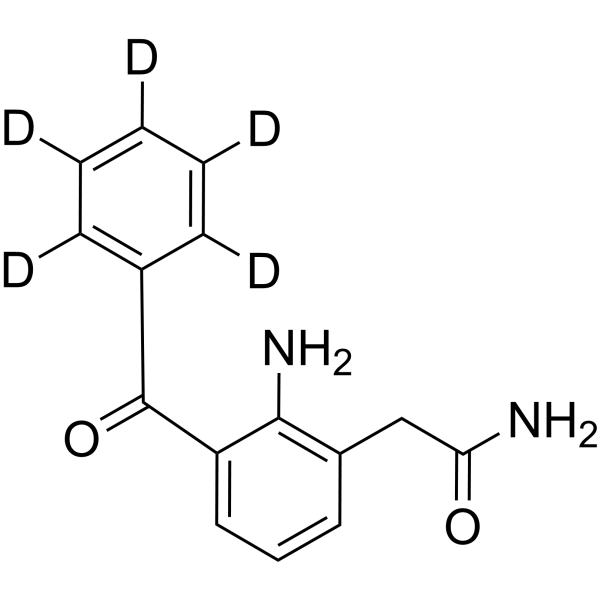
Nepafenac-d5 (AHR-9434-d5; AL-6515-d5) is the deuterium labeled Nepafenac (HY-17357). Nepafenac, a nonsteroidal anti-inflammatory agent, is a topically administered COX-2 inhibitor with an IC50 of 0.12 μM. Nepafenac exhibits only weak COX-1 inhibitory activity (IC50 = 64.3 μM). Nepafenac possesses unique prodrug properties, which enable it to rapidly convert into the active metabolite Amfenac (HY-17479) in the ocular tissues, thereby achieving high concentrations in the retina and choroid. Nepafenac reduces inflammation and pain by inhibiting the activity of cyclooxygenase (COX) enzymes and thereby decreasing the production of prostaglandin PGE₂. Nepafenac can delay the metastasis of uveal melanoma (UM) in rabbit eyes. Nepafenac is mainly used for pain management and inflammation control after ophthalmic surgeries.
loading...
    loading...
Cat. No.: HY-175087
Synonyms: Ins(1,2,4,5,6)P5 sodium salt; 1,2,4,5,6-IP5 sodium salt
Target:  

Calcium Channel

Research Areas:  

Others

D-myo-Inositol-1,2,4,5,6-pentaphosphate sodium salt (Ins (1,2,4,5,6) P5 sodium salt; 1,2,4,5,6-IP5 sodium salt) is a substrate of inositol polyphosphate 1/3-kinase and can be phosphorylated to form InsP6. D-myo-Inositol-1,2,4,5,6-pentaphosphate sodium salt exists as a relatively abundant Ins (1,2,4,5,6) P5/Ins (2,3,4,5,6) P5 pair in resting T lymphocytes, and the intracellular levels of this pair decrease after T cell receptor/CD3 stimulation. D-myo-Inositol-1,2,4,5,6-pentaphosphate sodium salt is involved in calcium signaling .
loading...
    loading...
Cat. No.: HY-176036
CAS No.: 3070323-06-4
MS1262 is a blood-brain barrier-permeable, selective inhibitor of histone methyltransferases G9a (EHMT2) and GLP (EHMT1), with an IC50 of 19 nM and a Kd of 74 nM against G9a, and an IC50 of 6 nM and a Kd of 19 nM against GLP. MS1262 reduces the dimethylation level of histone H3 lysine 9 and decreases the size of Aβ plaques. MS1262 restores hippocampal long-term potentiation (LTP) and miniature excitatory postsynaptic current (sEPSC) frequency, ameliorates spatial memory deficits, and reverses anxiety-like and depression-like behaviors in AD model mice. MS1262 reverses the expression/phosphorylation levels of early AD biomarkers, providing support for stage-specific diagnosis of AD. MS1262 reduces the risk of thrombus rupture. MS1262 can be used in research related to Alzheimer's disease, colorectal cancer, and triple-negative breast cancer .
loading...
    loading...
Cat. No.: HY-181576
CAS No.: 3115784-59-0
Target:  

ROCK

Research Areas:  

Inflammation/Immunology

ROCK2-IN-14 is an orally active, selective ROCK2 inhibitor (IC50=4.8 nM) with 212-fold selectivity over ROCK1 (IC50=1.01 μM). By inhibiting the ROCK2/S100A9 signaling pathway, ROCK2-IN-14 downregulates S100A9 expression, inhibits NM2 phosphorylation and restores cytoskeletal abnormalities. Furthermore, ROCK2-IN-14 reduces inflammatory cytokine levels, alleviates skin inflammation and exerts anti-inflammatory activity. ROCK2-IN-14 also significantly inhibits ear thickening in a mouse model of atopic dermatitis (AD), and decreases the levels of IgE, TNF-α, IL-6 and TSLP. ROCK2-IN-14 can be used for research on atopic dermatitis .
loading...
    loading...
Cat. No.: HY-181726
Research Areas:  

Cancer

BRAFV600E/ABL2-IN-2 is a dual BRAFV 600E and ABL2 kinase inhibitor, with an IC50 of 0.088 μM against human BRAFV 600E and an IC50 of 0.3 μM against human ABL2. BRAFV600E/ABL2-IN-2 reduces the phosphorylation levels of downstream ERK1/2 and CrkL in melanoma cells. BRAFV600E/ABL2-IN-2 decreases the expression of P-glycoprotein (P-glycoprotein) in melanoma cells. BRAFV600E/ABL2-IN-2 induces G1 cell cycle arrest and apoptosis (Apoptosis) in melanoma cells. BRAFV600E/ABL2-IN-2 is applicable to relevant research on melanoma .
loading...
    loading...
Cat. No.: HY-18234
CAS No.: 55123-66-5
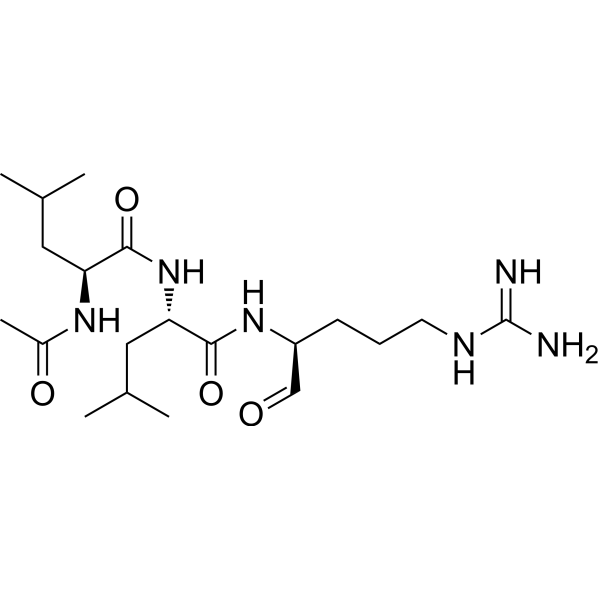
Leupeptin is a broad-spectrum protease inhibitor . By inhibiting the activation of the PTEN/PI3K/Akt/NF-κB/ERK1/2/p38 signaling pathway, Leupeptin significantly reduces LPS-induced NO and ROS production, mitochondrial membrane potential hyperpolarization, phagocytic activity, pro-inflammatory cytokine release, and M1 polarization in mouse peritoneal macrophages, and reverses autophagic flux impairment. It also decreases Concanavalin A (HY-P2149)-induced proliferation index of mouse splenic lymphocytes and the Th1/IL-10 and Th2/IL-10 cytokine ratios, thereby modulating innate and adaptive immune responses. Leupeptin inhibits blood coagulation and tumorigenesis in mouse skin. Leupeptin can be used in research on chronic inflammatory diseases and skin tumorigenesis .
loading...
    loading...
Cat. No.: HY-182366
EED-IN-5 is an orally active, EZH2-selective trisubstituted pyridine-based EED-H3K27me3 inhibitor and immunomodulator with anti-inflammatory activity. The IC50 value of EED-IN-5 against EED is 28.21 nM. In mouse models, EED-IN-5 preferentially and persistently accumulates in lymph nodes after oral administration. By reducing the H3K27me3 level of dendritic cells and inhibiting their migration, EED-IN-5 decreases the infiltration of specific dendritic cells, macrophages and T cells into the spinal cord and brain. EED-IN-5 exhibits hERG inhibitory activity, shows negative results in the Mini-Ames test, and causes no obvious toxicity upon long-term high-dose administration. EED-IN-5 can be used for the research of multiple sclerosis .
loading...
    loading...
Cat. No.: HY-182469
FuBIG is an iminoguanidine derivative with neuroprotective effects. FuBIGL inhibits L-LDH activation and reduces lactate production. FuBIGL exerts protective effects on inflammatory nerve cells, upregulates the expressions of AMPK, pAMPK and FOXO3, and activates the AMPK pathway in cells. FuBIG exerts anti-inflammatory effects by reducing pro-inflammatory cytokines (IL-6, IL-1β, TNF-α) and increasing the anti-inflammatory cytokine IL-10. FuBIG maintains mitochondrial membrane potential, alleviates mitochondrial dysfunction, reduces ROS production, and relieves oxidative stress. FuBIG upregulates Bcl-2, downregulates Bax and Caspase-3, and inhibits cell apoptosis (apoptosis). FuBIG improves metabolic disorders in diabetic mice, decreases the levels of LDL-C, ALT and AST, and increases HDL-C level simultaneously. FuBIG can be used in the research of diabetic neuroinflammation .
loading...
    loading...
Cat. No.: HY-183478
CAS No.: 39740-82-4
Leupeptin hydrochloride is a broad-spectrum protease inhibitor . By inhibiting the activation of the PTEN/PI3K/Akt/NF-κB/ERK1/2/p38 signaling pathway, Leupeptin hydrochloride significantly reduces LPS-induced NO and ROS production, mitochondrial membrane potential hyperpolarization, phagocytic activity, pro-inflammatory cytokine release, and M1 polarization in mouse peritoneal macrophages, and reverses autophagic flux impairment. It also decreases Concanavalin A (HY-P2149)-induced proliferation index of mouse splenic lymphocytes and the Th1/IL-10 and Th2/IL-10 cytokine ratios, thereby modulating innate and adaptive immune responses. Leupeptin hydrochloride inhibits blood coagulation and tumorigenesis in mouse skin. Leupeptin hydrochloride can be used in research on chronic inflammatory diseases and skin tumorigenesis .
loading...
    loading...

