
237 Results for "

ionizable

" in MedChemExpress (MCE) Product Catalog:
Products (237)

237 Results for "ionizable" in MCE Product Catalog:

Cat. No.: HY-153737
Purity:  ≥98.0%
113-N16B is an ionizable cationic lipid that can be used for the synthesis of lipid nanoparticles. 113-N16B delivers mRNA to pulmonary endothelial cells. 113-N16B can be formulated as a component into hybrid lipid nanoparticles for lung-specific delivery of mRNA (including MFSD7C mRNA and luciferase mRNA) in mice. 113-N16B is applicable to research related to lymphangioleiomyomatosis, sickle cell disease, and hemolysis-induced lung injury .
loading...
    loading...
Cat. No.: HY-171900
Target:  

Liposome

Research Areas:  

Inflammation/Immunology

Lipid 114 is an ionizable cationic lipid with a pKa of approximately 6.8. Lipid 114 can be used to generate lipid nanoparticles (LNP) to deliver siRNA in vitro as well as in vivo. Lipid 114 LNPs encapsulating siRNA that targets IL-1β can reduce IL-1β expression in macrophages. Lipid 114 LNPs encapsulating siRNA that targets IL-1β also reduces hepatic and renal expression of IL-1β, as well as decreasing hepatic inflammation in mouse model with LPS-induced acute liver failure .
loading...
    loading...
Cat. No.: HY-159709
CAS No.: 2765519-47-7
Target:  

Liposome

Research Areas:  

Metabolic Disease

VL-422 is an ionizable cationic lipid. VL-422 delivers CRISPR complementary single-guide RNA (sgRNA) and Cas9 mRNA to enable in vitro and in vivo gene editing. LNPs containing VL-422 loaded with Cas9 mRNA and sgRNA targeting the ANGPTL3 gene induce the deletion of premature stop codons within the ANGPTL3 gene in the liver of cynomolgus monkeys. Loss-of-function of ANGPTL3 leads to decreased levels of LDL, HDL and cholesterol in plasma. The VL-422 delivery system can be used for the research of gene editing strategies targeting lipid metabolism diseases .
loading...
    loading...
Cat. No.: HY-185751
CAS No.: 2760467-77-2
Target:  

Liposome

Research Areas:  

Cancer

10A1P16 is an ionizable phospholipid composed of a tertiary amine, a phosphate group and three hydrophobic tails. As a spleen-selective RNA delivery vector, 10A1P16 successfully transfects approximately 30% of splenic macrophages and 6% of splenic B cells in vivo. 10A1P16 can be used to prepare spleen-selective 10A1P16-MDOA lipid nanoparticles, which effectively mediate mRNA delivery and gene editing in mouse models. This delivery system retains potent spleen-targeted mRNA delivery efficacy and can be applied to ovarian cancer research .
loading...
    loading...
Cat. No.: HY-185760
Target:  

Liposome

Research Areas:  

Others

F-L319 is an ionizable lipid and spleen-targeting mRNA delivery vector. F-L319 can be formulated into lipid nanoparticles (LNPs) to drive spleen-restricted reporter protein expression in mice. F-L319 modulates mRNA encapsulation efficiency, cellular uptake efficiency, and delivery efficiency, with effects varying depending on the composition of LNP formulations. When prepared as pure LNPs, F-L319 shows poor mRNA delivery efficiency in cells; in contrast, hybrid LNPs containing F-L319 and L319 significantly enhance mRNA delivery efficiency in cells .
loading...
    loading...
Cat. No.: HY-126359
CAS No.: 27098-24-4
Purity:  ≥98.0%
Synonyms: SLPC; 18:0-18:2 PC
1-Stearoyl-2-linoleoyl-sn-glycero-3-phosphocholine (SLPC; 18:0-18:2 PC) is an endogenous phospholipid marker molecule in the glycerophospholipid metabolic pathway. 1-Stearoyl-2-linoleoyl-sn-glycero-3-phosphocholine is a core component of the phospholipid bilayer of biological membranes and a key responsive lipid for radiation injury and cardiometabolic diseases. 1-Stearoyl-2-linoleoyl-sn-glycero-3-phosphocholine constitutes the phospholipid bilayers of cell membranes and high-density lipoprotein (HDL), and regulates the core activity of lipoprotein functional homeostasis. The content of 1-Stearoyl-2-linoleoyl-sn-glycero-3-phosphocholine in mouse serum shows a significant dose-dependent decrease with increasing ionizing radiation dose, and its level in human HDL also decreases significantly in metabolic syndrome. 1-Stearoyl-2-linoleoyl-sn-glycero-3-phosphocholine can serve as a biological dosimeter marker for ionizing radiation injury, and is used for rapid and accurate assessment of radiation absorbed dose in exposed individuals. 1-Stearoyl-2-linoleoyl-sn-glycero-3-phosphocholine can also act as a lipidomics research target for cardiometabolic diseases such as lipid metabolic syndrome and early-onset coronary heart disease .
loading...
    loading...
Cat. No.: HY-160096
CAS No.: 1360628-91-6
Research Areas:  

Cancer

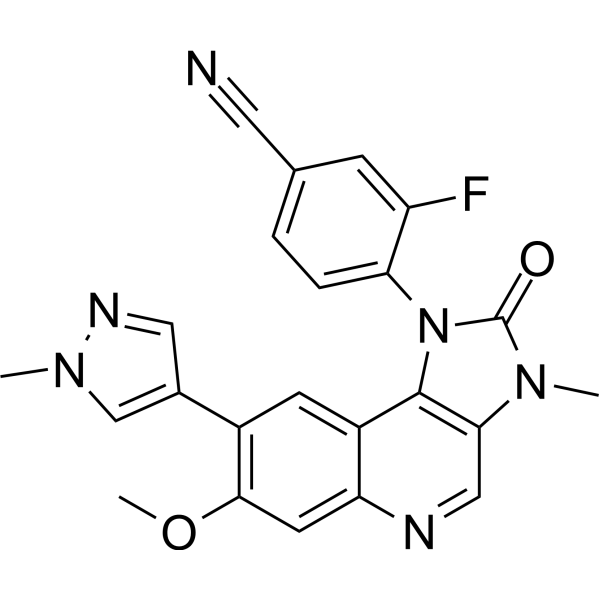
M3541 is an orally effective DNA-dependent protein kinase (DNA-PK) inhibitor . M3541 inhibits ionizing radiation-induced ATM autophosphorylation and phosphorylation of downstream substrates (KAP1, CHK2, p53), blocks DSB end resection and homologous recombination repair, and simultaneously induces non-homologous end joining, G2-M phase arrest, polyploidization, and cell death. M3541 can be used for research on solid tumors, acute myeloid leukemia, non-small cell lung cancer, triple-negative breast cancer, etc. .
loading...
    loading...
Cat. No.: HY-W016352
CAS No.: 96-97-9
Synonyms: Anilotic acid, 99%
Research Areas:  

Others

2-Hydroxy-5-nitrobenzoic acid, 99% (Anilotic acid, 99%) is a basic chemical raw material and organic synthesis intermediate that can be used to synthesize Mesalamine (HY-15027). 2-Hydroxy-5-nitrobenzoic acid, 99% is a matrix for ultraviolet matrix-assisted laser desorption/ionization (UV-MALDI) mass spectrometry. 2-Hydroxy-5-nitrobenzoic acid, 99% can also serve as an HPLC analytical standard, pH indicator, and heavy metal detection agent. 2-Hydroxy-5-nitrobenzoic acid, 99% can also be used to study the oxidation of phenolic compounds .
loading...
    loading...
Cat. No.: HY-185984
Research Areas:  

Others

a12k4E-Ca is a C-terminal glutamate-modified peptidogenic ionizable lipid that can be used for the preparation of lipid nanoparticles (LNPs). a12k4E-Ca preferentially accumulates in the spleen in vivo, acts as a carrier to mediate spleen-selective mRNA delivery, and enables spleen-specific Cre recombinase-mediated gene editing. a12k4E-Ca restores serum biochemical parameters and cytokines/chemokines. a12k4E-Ca can be used in studies related to LNP preparation .
loading...
    loading...
Cat. No.: HY-185985
CAS No.: 3113145-60-8
Target:  

Liposome

Research Areas:  

Neurological Disease

Am-Ka12K4 is a weakly positively charged peptide-based ionizable lipid. Am-Ka12K4 induces membrane disruption under endosomal pH conditions and possesses high lipid fusion capacity. Am-Ka12K4 forms tightly packed, stable lipid nanoparticles. Am-Ka12K4 mediates in vivo mRNA delivery, exhibits inherent liver tropism, and can be modified to adjust organ tropism, enabling selective mRNA delivery to the spleen, lung, or thymus. Am-Ka12K4 is applicable to research related to repetitive mild traumatic brain injury .
loading...
    loading...
Cat. No.: HY-W391671
CAS No.: 1333317-99-9
Research Areas:  

Others

Poly[bis(4-phenyl)(2,4,6-trimethylphenyl)amine] is a poly(triarylamine) that is an organic p-type semiconductor with hole mobilities ranging from 10 3 to 10 2 cm 2/V/s, which significantly improves carrier mobility. This stable, glassy polymer has an ionization potential suitable for thick film diodes. Committed to providing green alternatives that meet one or more of the 12 principles of green chemistry, this material falls into the enabling category of green alternatives, in line with the principle of "energy efficient design". In addition, while hole transport organic materials like these ensure optimal energy level alignment with the absorber layer for efficient charge collection, they can be susceptible to degradation under ambient conditions.
loading...
    loading...
Cat. No.: HY-169478
CAS No.: 2924606-55-1
Target:  

Liposome

Research Areas:  

Cancer

Lipid N2-3L is an ionizable cationic lipid (pKa = 8.99) that can be used to generate supramolecular lipid nanoparticles (SMLNPs) for mRNA delivery. Lipid nanoparticles formed by encapsulating a luciferase reporter gene with Lipid N2-3L were detected to accumulate in the lymph nodes of mice, indicating that they can effectively enter the mouse immune system. Lipid nanoparticles formed by encapsulating ovalbumin mRNA and the TLR7/8 agonist Resiquimod (HY-13740) with Lipid N2-3L were able to reduce tumor volume and increase survival in the MC-38-OVA mouse colon cancer model. Lipid N2-3L can be used in the research of drug delivery for cancer-related therapies .
loading...
    loading...
Cat. No.: HY-176798
CAS No.: 1964516-64-0
NCI-006 is an orally active lactate dehydrogenase (LDH) inhibitor (LDHA IC50 = 0.06 μM; LDHB IC50 = 0.03 μM). NCI-006 inhibits intratumoral LDH activity, lactate production, and tumor growth in a mouse pancreatic cancer model. NCI-006 inhibits glycolysis and induces apoptosis in vitro. NCI-006 enhances the radiosensitivity of glycolytic tumor cell lines while sparing non-glycolytic/normal cells (1522, skin fibroblasts) in combination with ionizing radiation (IR). NCI-006 exhibits synergistic antitumor effects in combination with IACS-010759 (HY-112037) against colorectal and gastric cancers. NCI-006 targets glycolysis by inhibiting lactate dehydrogenase impairs tumor growth in an Ewing sarcoma model .
loading...
    loading...
Cat. No.: HY-132893
CAS No.: 2830555-70-7
Target:  

TAM Receptor

Research Areas:  

Neurological Disease Cancer

AZ14145845 is an orally active dual-target type 1½ kinase inhibitor of Mer/Axl, which inhibits Mer kinase (pIC50 = 9.0) and Axl kinase (pIC50 = 7.9) with high selectivity over Flt3 and Tyro3. AZ14145845 suppresses Mer- and Axl-dependent proliferation in Ba/F3 cells and inhibits efferocytosis in macrophages. AZ14145845 reduces the phagocytosis of photoreceptor outer segments by polarized human retinal epithelial cells. AZ14145845 inhibits tumor growth and induces tumor regression in vivo, and its combination with anti-PD1 antibody and ionizing radiation improves the survival rate of mice with colorectal cancer. AZ14145845 causes retinal degeneration in mice, with pathological changes similar to those in MERTK loss-of-function models. AZ14145845 can be used in studies related to retinal degeneration, lymphoma and colorectal cancer .
loading...
    loading...
Cat. No.: HY-169480
CAS No.: 3003022-09-8
Target:  

Liposome

Research Areas:  

Infection Cancer

Lipid C2 is an ionizable cationic lipid that has been used in the formation of lipid nanoparticles (LNP) for mRNA delivery in vivo. LNPs containing Lipid C2 and encapsulating an mRNA reporter selectively accumulate in the liver and spleen but not the heart, lungs, or kidneys in mice. LNP containing Lipid C2 and encapsulating mRNA encoding the Epstein-Barr virus (EBV) protein latent membrane protein 2 (LMP-2), in combination with an anti-programmed cell death protein 1 (PD-1) antibody, decrease tumor volume and reverse T cell exhaustion, as well as increase the percentage of CD3 +CD8 + central and CD3 +CD8 + effector memory T cells and decrease the percentage of CD3 + T cells expressing Pd-1, in the spleen in a CT26 murine EBV-infected colon cancer model .
loading...
    loading...
Cat. No.: HY-154974
CAS No.: 2408140-60-1
Purity:  ≥95.0%
Target:  

Liposome

Research Areas:  

Cancer

LNP Lipid-8 (11-A-M) is an ionizable single-tail multi-head lipid that can be used as a lipid nanoparticle (LNP) to deliver siRNA to T cells without targeting ligands. LNP Lipid-8 is more selective for T cells than other cell types such as hepatocytes. LNP Lipid-8 selectively delivers siRNA/sgRNA to T cells (especially CD8+ T cells) through endogenous lipid transport pathways, and can enter cells and release RNA through endocytosis to achieve gene silencing. LNP Lipid-8 loaded with GFP siRNA (siGFP) significantly led to GFP gene silencing in mouse models. LNP Lipid-8 showed good efficacy and safety in both cells and animals, without obvious liver targeting and toxicity. LNP Lipid-8 can be used for RNA delivery research in the fields of tumor immunotherapy and T cell-mediated autoimmune diseases .
loading...
    loading...
Cat. No.: HY-W016352R
CAS No.: 96-97-9
Synonyms: Anilotic acid, 99% (Standard)
2-Hydroxy-5-nitrobenzoic acid, 99% (Anilotic acid, 99%) Standard is the analytical standard of 2-Hydroxy-5-nitrobenzoic acid, 99% (HY-W016352 ). This product is intended for research and analytical applications. 2-Hydroxy-5-nitrobenzoic acid, 99% (Anilotic acid, 99%) is a basic chemical raw material and organic synthesis intermediate that can be used to synthesize Mesalamine (HY-15027). 2-Hydroxy-5-nitrobenzoic acid, 99% is a matrix for ultraviolet matrix-assisted laser desorption/ionization (UV-MALDI) mass spectrometry. 2-Hydroxy-5-nitrobenzoic acid, 99% can also serve as an HPLC analytical standard, pH indicator, and heavy metal detection agent. 2-Hydroxy-5-nitrobenzoic acid, 99% can also be used to study the oxidation of phenolic compounds .
loading...
    loading...