2413 Results for "

paraoxon-induced cholinergic toxicity

" in MedChemExpress (MCE) Product Catalog:
Products (2413)

2413 Results for "paraoxon-induced cholinergic toxicity" in MCE Product Catalog:

Cat. No.: HY-183805
Target:  

5-HT Receptor FAAH

Research Areas:  

Neurological Disease

5-HT6R/FAAH modulator 2 is a dual 5-HT6R antagonist and FAAH inhibitor with human 5-HT6R pKi 7.24, human FAAH pIC50 5.47, and blood-brain barrier penetration.5-HT6R/FAAH modulator 2 modulates serotonergic signaling, blocks 5-HT6R function, inhibits endocannabinoid degradation via FAAH catalytic activity suppression.5-HT6R/FAAH modulator 2 exhibits neuroprotective effects against mitochondrial dysfunction, amyloid-β, and glutamate-induced toxicity, reverses memory deficits.5-HT6R/FAAH modulator 2 shows reduced cytotoxicity relative to oxygen-containing lead compounds.5-HT6R/FAAH modulator 2 can be used for the research of Alzheimer's disease .
loading...
    loading...
Cat. No.: HY-B1165R
CAS No.: 41354-29-4
Cyproheptadine hydrochloride sesquihydrate (Standard) is the analytical standard of Cyproheptadine hydrochloride sesquihydrate (HY-B1165). This product is intended for research and analytical applications. Cyproheptadine hydrochloride sesquihydrate acts as a p38 MAP kinase activator, CHK2 activator, histamine H1 receptor inhibitor and serotonin receptor inhibitor. Cyproheptadine hydrochloride sesquihydrate mediates cell cycle arrest via G1 phase arrest, G1/S transition arrest, G0/G1 phase arrest, reduced expression of cyclins D1/D2/D3, upregulated expression of HBP1, p16, p21, p27, and decreased phosphorylation of retinoblastoma protein. Cyproheptadine hydrochloride sesquihydrate induces Apoptosis by increasing PARP and cleaved PARP, as well as activating the mitochondrial caspase pathway. Cyproheptadine hydrochloride sesquihydrate inhibits tumor growth with extremely low toxicity to normal cells. Cyproheptadine hydrochloride sesquihydrate can be used in research related to hepatocellular carcinoma, multiple myeloma and acute myeloid leukemia .
loading...
    loading...
Cat. No.: HY-N7435R
CAS No.: 54814-64-1
Synonyms: (±)-Massoia lactone (Standard)
Massoia lactone (Standard) ((±)-Massoia lactone (Standard)) is the analytical standard of Massoia lactone (HY-N7435). This product is intended for research and analytical applications. Massoia lactone ((±)-Massoia lactone) is a natural lactone-based biosurfactant with antifungal (fungal), antibiofilm, and cytotoxic activities. Massoia lactone inhibits fungal hyphal growth and spore germination, and induces fungal cell necrosis by forming membrane pores, reducing ergosterol, elevating ROS, and causing leakage of intracellular components. Massoia lactone inhibits the viability and proliferation of tumor cells. Massoia lactone degrades the extracellular polymeric substances of polymicrobial biofilms, penetrates the biofilm matrix, inhibits the growth of planktonic oral bacteria (bacterial), and reduces surface tension through its amphiphilic properties. Massoia lactone is a low-toxicity, biodegradable food additive with a coconut cream aroma, which can be used for flavor improvement and also serves as a quality control marker for Cs-4 mycelium. Massoia lactone can be used for research on Fusarium head blight, malignant tumors, and oral polymicrobial biofilm-associated dental diseases .
loading...
    loading...
Cat. No.: HY-W154247
CAS No.: 103313-38-8
Target:  

Bacterial

Research Areas:  

Infection

IP6C is a specific inhibitor and phage sensitizer targeting type II Thoeris systems. IP6C competitively binds to histidine in the catalytic pocket of ThsB, blocks the production of the His-ADPR alarm signal and inhibits ThsA activation, thereby relieving bacterial stasis of phage replication. IP6C selectively resensitizes drug-resistant bacteria carrying type II Thoeris systems (such as Pseudomonas aeruginosa) to phage lysis, without affecting other bacteria, and shows no toxicity to mice and human cell lines. IP6C significantly improves the survival rate of infected mice, and can be used to overcome bacterial phage defense mechanisms and study Pseudomonas aeruginosa infections .
Thoeris system: (named after the Egyptian goddess of fertility and protection), is a widespread anti-phage immune defense system in bacteria and archaea. Thoeris system belongs to the "Abortion Infection (Abi)" mechanism of bacteria: when an individual bacterium detects phage invasion, it initiates a suicide program and dies, thereby blocking phage replication and spread, and protecting the surrounding bacterial population from infection.
loading...
    loading...
Cat. No.: HY-W745430
Synonyms: Cyproheptadine HCl-d3
Cyproheptadine hydrochloride-d3 (Cyproheptadine HCl-d3) is the d3-labeled Cyproheptadine (hydrochloride) (HY-B0366A). Cyproheptadine hydrochloride (Cyproheptadine HCl) acts as a p38 MAP kinase activator, CHK2 activator, histamine H1 receptor inhibitor and serotonin receptor inhibitor. Cyproheptadine hydrochloride mediates cell cycle arrest via G1 phase arrest, G1/S transition arrest, G0/G1 phase arrest, reduced expression of cyclins D1/D2/D3, upregulated expression of HBP1, p16, p21, p27, and decreased phosphorylation of retinoblastoma protein. Cyproheptadine hydrochloride induces Apoptosis by increasing PARP and cleaved PARP, as well as activating the mitochondrial caspase pathway. Cyproheptadine hydrochloride inhibits tumor growth with extremely low toxicity to normal cells. Cyproheptadine hydrochloride can be used in research related to hepatocellular carcinoma, multiple myeloma and acute myeloid leukemia .
loading...
    loading...
Cat. No.: HY-L220
91 compounds

Biotoxins, also referred to as natural toxins, are chemical substances produced by plants, animals, or microorganisms that exert toxic effects on other living organisms. Due to unique biological activities, biotoxins have been widely applied in molecular biology, physiology, pharmacology, and the clinical diagnosis and treatment of various human diseases, becoming an important source of natural drug development. Biotoxins can specifically bind to and interfere with intracellular signaling molecules or receptors, thereby altering cellular signaling processes. Leveraging this characteristic, biotoxins can be used to study the regulatory mechanisms of cellular signaling pathways. For example, neurotoxins such as snake venom peptides can be used to investigate the functional regulation of neurotransmitter receptors and ion channels. Additionally, biotoxins have demonstrated significant potential in drug development across various fields, including neurological diseases, cardiovascular diseases, anticoagulation, and anti-cancer therapies. With advancements in high throughput screening, structural optimization, and antibody-toxin conjugation technologies, numerous biotoxins or their structural analogs have been successfully brought to market, such as Ziconotide, Captopril, Bivalirudin, and Eptifibatide.

MCE offers 91 types of biotoxins, including neurotoxins, cardiotoxins, mycotoxins, and more.

Cat. No.: HY-L036
1,618 compounds

Small molecule covalent inhibitors, or irreversible inhibitors, are a type of inhibitors that exert their biological functions by irreversibly binding to target through covalent bonds. Compared with non-covalent inhibitors, covalent inhibitors have obvious advantages in bioactivity, such that covalent warheads can target rare residues of a particular target protein, thus leading to the development of highly selective inhibitors and achieving a more complete and continued target occupancy in living systems. In recent years, the distinct strengths of covalent inhibitors in overcoming drug resistance had been recognized. However, toxicity can be a real challenge related to this class of therapeutics due to their potential for off-target reactivity and has led to these drugs being disfavored as a drug class. The drug design and optimization of covalent inhibitors has become a hot spot in drug discovery.

MCE covalent inhibitor library contains 1,618 small molecules including identified covalent inhibitors and other bioactive molecules having common covalent reactive groups as warheads, such as acrylamides, activated terminal acetylenes, Sulfonyl fluorides/esters, cloracetamides, alkyl halides, epoxides, aziridines, disulfides, etc.

Cat. No.: HY-122670
CAS No.: 1627962-21-3
Research Areas:  

Cancer

VS-II-173 is a pan-Pim kinase inhibitor with IC50 values ​​of 0.07 μM and 0.02 μM for Pim1 and Pim3, respectively, and a residual activity of 46% for Pim2 at 1 μM. VS-II-173 also inhibits kinases such as HIPK2, PRK2, RSK1, DYRK1a and AMPKα1, selectively inhibiting acute myeloid leukemia (AML) cells with significantly lower toxicity to non-malignant cells (EC50 > 30 μM). VS-II-173 weakens the phosphorylation of substrates such as Stat5 (Y694), MDM2 (S166), Bad (S112), and 4E-BP1 (T37/46) by inhibiting Pim kinase-mediated signaling pathways, blocking pro-survival signals in AML cells and inducing apoptosis. VS-II-173 synergistically enhances anti-AML activity when combined with Daunorubicin (HY-13062A). VS-II-173 can be used in AML research, especially for AML with FLT3-ITD mutations and NPM1 mutations .
loading...
    loading...
Cat. No.: HY-141878A
CAS No.: 2767983-77-5
Research Areas:  

Neurological Disease

di-Ellipticine-RIBOTAC TFA is a RNase recruiting chimera (RIBOTAC) degrader, capable of specifically binding and degrading expanded G4C2 RNA repeat (r(G4C2) exp). di-Ellipticine-RIBOTAC TFA selectively binds the three-dimensional (3D) structure formed by r(G4C2) exp and that recruits an endogenous ribonuclease (RNase) to cleave r(G4C2) exp. di-Ellipticine-RIBOTAC TFA selectively degrades the mutant chromosome 9 open reading frame 72 (C9orf72) allele and reduces quantities of toxic dipeptide repeat proteins (DPRs) translated from r(G4C2) exp. di-Ellipticine-RIBOTAC TFA significantly improves the pathological phenotype of amyotrophic lateral sclerosis/ frontotemporal dementia (c9ALS/FTD) in cells and mouse models. di-Ellipticine-RIBOTAC TFA can be used for the study of amyotrophic lateral sclerosis (ALS) and frontotemporal dementia (FTD) .
loading...
    loading...
Cat. No.: HY-182759
MN33-47 is a multi-target anti-tumor compound with broad-spectrum anti-proliferative activity. MN33-47 relieves the inhibition of the mitochondrial apoptosis pathway by downregulating the anti-apoptotic protein Bcl-2, while activating caspase-3 and inhibiting Topoisomerase I activity, thereby promoting its degradation through the ubiquitin-proteasome and autophagy-lysosome pathways. MN33-47 can also induce DNA cross-linking and G2/M cell cycle arrest, inhibit cancer cell migration and activate the mitochondrial apoptosis pathway, thus exerting potent anti-tumor effects. MN33-47 can improve the water solubility of SN-38 (HY-13704), and exhibits dose-dependent tumor growth inhibition effects in CT26 tumor-bearing mouse models without obvious toxic and side effects. MN33-47 can be used in related studies on colorectal adenocarcinoma, cervical adenocarcinoma, hepatocellular carcinoma, alveolar basal epithelial adenocarcinoma, gastric cancer and colon cancer .
loading...
    loading...
Cat. No.: HY-N2896
CAS No.: 465-00-9
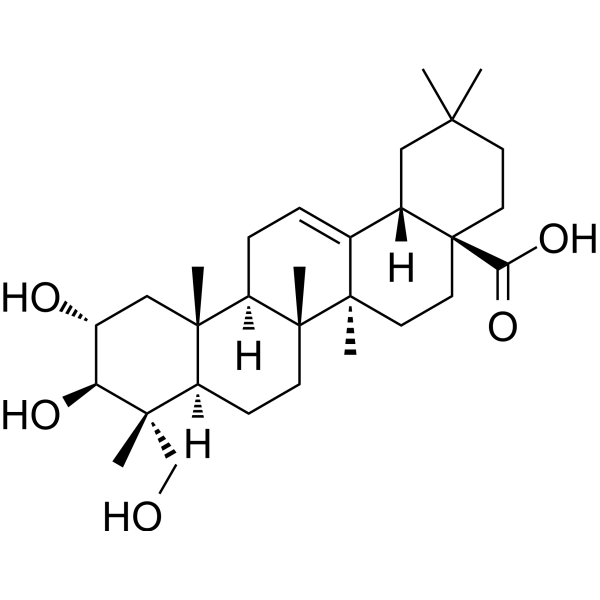
Arjunolic acid is an orally active, multifunctional bioactive compound. Arjunolic acid exhibits free radical scavenging activity, as well as fungal and bacterial activities. Arjunolic acid induces apoptosis (Apoptosis) in various cancer cells. Arjunolic acid protects hepatocytes against induced oxidative stress and apoptosis by reducing reactive oxygen species and inhibiting NF-κB activation. Arjunolic acid regulates pancreatic dysfunction in type 2 diabetic rats by blocking the activation of the TLR-4/MyD88 and canonical Wnt pathways. Arjunolic acid inhibits neuroinflammation and ameliorates depressive behaviors via the SIRT1/AMPK/Notch1 signaling pathway in microglia. Arjunolic acid improves Crohn's disease-like colitis by restoring gut microbiota composition and inhibiting TLR4 signaling. Arjunolic acid suppresses osteosarcoma progression by inhibiting Wnt3a-mediated M2 polarization of macrophages. Arjunolic acid ameliorates diabetic retinopathy via the autophagy pathway regulated by AMPK/mTOR/HO-1. Arjunolic acid is applicable to research related to type 2 diabetes, organ toxicity, depression, Crohn's disease, osteosarcoma, diabetic retinopathy, and testicular dysfunction .
loading...
    loading...
Cat. No.: HY-P990688
CAS No.: 2559056-68-5
Synonyms: AMG-509

Target:  

CD3

Research Areas:  

Cancer

Xaluritamig (AMG-509) is a bispecific T cell engager and cytolytic agent with a Kd of 27.6 nM for human CD3ε. Xaluritamig binds to CD3ε via an anti-CD3 single-chain variable fragment (scFv) domain, and to STEAP1 via a bispecific anti-STEAP1 antigen-binding fragment (Fab) domain, thereby recruiting and activating T cells and forming a bridge between T cells and STEAP1-expressing cancer cells. Xaluritamig induces T cell-mediated redirected cytotoxicity, tumor cell lysis, cytokine release, CD8 + T cell activation and expansion, as well as tumor stasis or regression. Xaluritamig contains an Fc domain with no effector function, which prolongs serum half-life, exhibits only minimal activity against cells with low STEAP1 expression and normal cells, and shows extremely low target-related off-tumor toxicity in cynomolgus monkeys. Xaluritamig is used in STEAP1×CD3 XmAb 2+1 immunotherapy and in research on metastatic castration-resistant prostate cancer and Ewing sarcoma .
loading...
    loading...
Cat. No.: HY-W014937S
CAS No.: 93496-64-1
Synonyms: 4HBP-d4
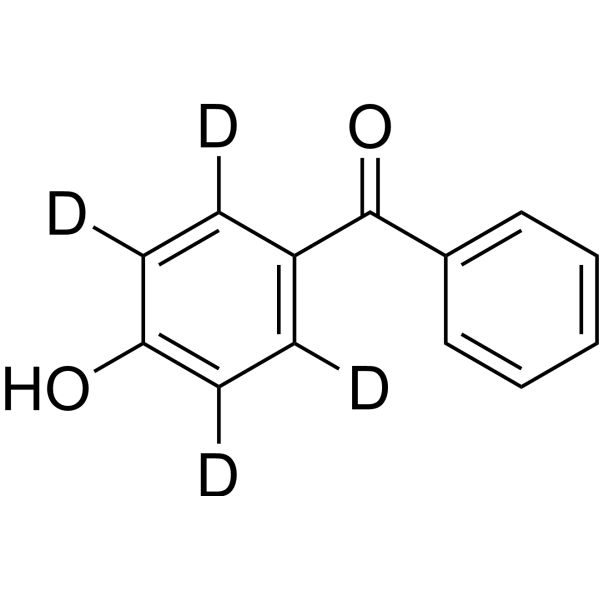
4-Hydroxybenzophenone-d4 (4HBP-d4) is the deuterated-labeled 4-Hydroxybenzophenone (HY-W014937). 4‑Hydroxybenzophenone (4HBP) is a major metabolite of Benzophenone (HY-Y0546) and is orally active. 4-Hydroxybenzophenone triggers endoplasmic reticulum stress and activates the PERK-eIF2α-ATF4-CHOP and IRE1α-XBP1s pathways, and inhibits IκB translation. 4-Hydroxybenzophenone induces endoplasmic reticulum stress, unfolded protein response activation, protein homeostasis imbalance, protein aggregation, oxidative stress, ROS accumulation, mitochondrial membrane potential decrease, ATP depletion, and cytotoxicity. 4-Hydroxybenzophenone induces neural stem cell apoptosis (apoptosis) and affects neuronal differentiation. 4-Hydroxybenzophenone promotes malignant proliferation of hepatocellular carcinoma cells and xenograft tumor growth in nude mice. 4-Hydroxybenzophenone can be used in research related to neurodevelopmental toxicity and hepatocellular carcinoma .
loading...
    loading...
Cat. No.: HY-W014937S1
CAS No.: 76478-47-2
Synonyms: 4HBP-d5
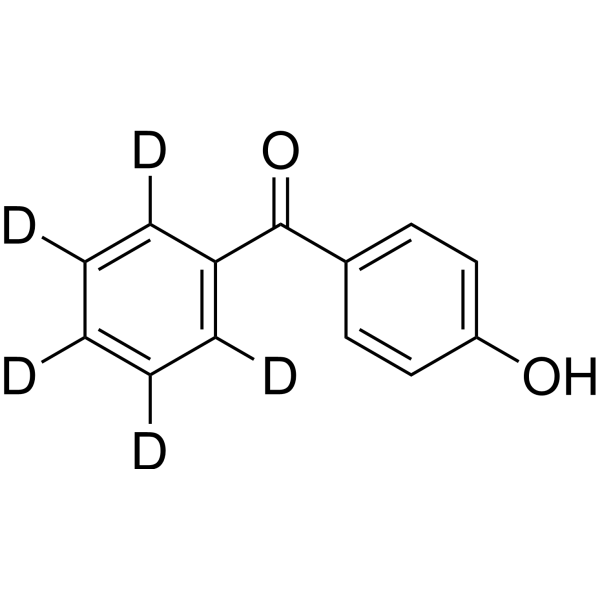
4-Hydroxybenzophenone-d5 (4HBP-d5) is the deuterated-labeled 4-Hydroxybenzophenone (HY-W014937). 4‑Hydroxybenzophenone (4HBP) is a major metabolite of Benzophenone (HY-Y0546) and is orally active. 4-Hydroxybenzophenone triggers endoplasmic reticulum stress and activates the PERK-eIF2α-ATF4-CHOP and IRE1α-XBP1s pathways, and inhibits IκB translation. 4-Hydroxybenzophenone induces endoplasmic reticulum stress, unfolded protein response activation, protein homeostasis imbalance, protein aggregation, oxidative stress, ROS accumulation, mitochondrial membrane potential decrease, ATP depletion, and cytotoxicity. 4-Hydroxybenzophenone induces neural stem cell apoptosis (apoptosis) and affects neuronal differentiation. 4-Hydroxybenzophenone promotes malignant proliferation of hepatocellular carcinoma cells and xenograft tumor growth in nude mice. 4-Hydroxybenzophenone can be used in research related to neurodevelopmental toxicity and hepatocellular carcinoma .
loading...
    loading...
Cat. No.: HY-W075770
CAS No.: 1313-99-1
Synonyms: Nickel monoxide
Nickel(II) oxide (nickel monoxide) is a chemical warfare agent that can enter the body through the respiratory tract and other routes, distributing to organs such as the lungs and testes. The nanoparticle form of nickel(II) oxide (NiO NPs) exhibits antibacterial, anti-leishmanial, anti-diabetic, and anti-cancer activities. NiO NPs can be activated by ultraviolet and visible light, generating reactive oxygen species (ROS). Nickel(II) oxide induces oxidative stress by generating reactive oxygen species, activating the TGF-β1-mediated MAPK and PI3K/AKT pathways, disrupting the MMPs/TIMPs balance, and upregulating the expression of inflammatory factors (IL-1β, IL-6) and apoptosis-related molecules (Bax, caspase-3, p53), while inhibiting the activity of the anti-apoptotic molecule Bcl-2. Nickel(II) oxide induces cytotoxicity, promotes fibrosis, triggers inflammatory responses, and causes apoptosis. Nickel(II) oxide can be applied in research on the safety assessment of nanomaterials, such as in the context of pulmonary fibrosis and reproductive system toxicity .
loading...
    loading...
Cat. No.: HY-Y0850U5
CAS No.: 9002-89-5
Synonyms: Polyvinyl alcohol (Mw 27000, 98-99% hydrolyzed, ~600 polymerization); Poly(Ethenol) (Mw 27000, 98-99% hydrolyzed, ~600 polymerization)
PVA (Polyvinyl alcohol) (Mw 27000, 98-99% hydrolyzed, ~600 polymerization) is a nonionic ethanol homopolymer with hydrophilicity, water solubility and biodegradability. PVA (Mw 27000, 98-99% hydrolyzed, ~600 polymerization) exhibits biocompatibility, non-toxicity and non-carcinogenicity, as well as antibacterial activity against Gram-positive bacteria, Gram-negative bacteria and fungal strains. PVA (Mw 27000, 98-99% hydrolyzed, ~600 polymerization) can serve as a solubilizer, stabilizer, mucoadhesive agent and sustained-release agent, and has a synergistic solubilizing effect on voriconazole/sulfobutyl ether β-cyclodextrin complexes. By stabilizing such complexes, PVA (Mw 27000, 98-99% hydrolyzed, ~600 polymerization) forms freeze-thaw hydrogels with high mucoadhesion, sustained drug release and ex vivo corneal permeability. When compounded with hyaluronic acid hydrogels, PVA (Mw 27000, 98-99% hydrolyzed, ~600 polymerization) supports chondrocyte growth in vitro, and also forms complexes with Cu 2+, Co 2+, Ni 2+ and Zn 2+ ions. PVA (Mw 27000, 98-99% hydrolyzed, ~600 polymerization) can be used in studies related to fungal keratitis, bacterial infections and fungal infections .
loading...
    loading...
Cat. No.: HY-L214
227 compounds

Liposomes are spherical or multilayered spherical vesicles formed by the self-assembly of diacyl chain phospholipids (lipid bilayers) in aqueous solutions, which can be made from natural or synthetic phospholipids and exhibit good biocompatibility and low toxicity. They can serve as delivery carriers for various bioactive substances (such as drugs, proteins, nucleic acids, etc.) and are widely used in biomedical and chemical research. The main advantages of liposomes include 1) Protective effect: Their bilayer structure can protect encapsulated molecules from enzymatic degradation, oxidation, and other influences, extending stability and activity; 2) Active targeting: Surface modifications enable active targeting, enhancing the concentration of drugs or molecules in specific tissues or cells; 3) Customizability: The composition and structure of liposomes can be adjusted according to needs, such as altering phospholipid types or adding targeting ligands. These properties make liposomes highly valuable in developing novel drug delivery systems, serving as nucleic acid carriers for gene transfection, studying cellular uptake mechanisms and drug release kinetics, as well as developing functional food additives to improve the bioavailability of nutritional components.

MCE contains 227 liposome compounds, which is a good tool for drug delivery-related studies.

Cat. No.: HY-L133
446 compounds

Copper is an important co-factor of all biological enzymes, but if the concentration exceeds the threshold of maintaining the homeostasis mechanism, copper will lead to cytotoxicity. This death mechanism has been named "Cuproptosis".

The mechanism of cuproptosis distinct from all other known mechanisms of regulated cell death, including apoptosis, pyroptosis, necroptosis, and ferroptosis.

Copper combine with the lipoylated components of the tricarboxylic acid cycle (TCA), leading to lipoylated protein aggregation and subsequent loss of iron-sulfur cluster proteins, ultimately resulting in protein toxicity stress and cell death. Studies have shown that the necessary factors for cuproptosis include the presence of glutathione, mitochondrial metabolism of galactose and pyruvate, and glutamine metabolism.

Targeted regulation of cuproptosis is a potential choice to treat cancer, rheumatoid arthritis, and other diseases. For example, up-regulation of LIPT1 may inhibit the occurrence and development of tumors by destroying TCA in mitochondria and then inducing cuproptosis.

MCE supplies a unique collection of 446 cuproptosis-related compounds, all of which act on the targets or signaling pathways related to cuproptosis and may have in inhibitory or activated effect on cuproptosis. MCE Cuproptosis Library is a useful tool for drug research related to cancer, rheumatoid arthritis, and other diseases.

Cat. No.: HY-L908
1,244 compounds

Small molecule covalent inhibitors, or irreversible inhibitors, are a type of inhibitors that exert their biological functions by irreversibly binding to target through covalent bonds. Compared with non-covalent inhibitors, covalent inhibitors have obvious advantages in bioactivity, such that covalent warheads can target rare residues of a particular target protein, thus leading to the development of highly selective inhibitors and achieving a more complete and continued target occupancy in living systems. In recent years, the distinct strengths of covalent inhibitors in overcoming drug resistance had been recognized. However, toxicity can be a real challenge related to this class of therapeutics due to their potential for off-target reactivity and has led to these drugs being disfavored as a drug class. The drug design and optimization of covalent inhibitors has become a hot spot in drug discovery.

MCE Lead-like Covalent Screening Library offers a valuable resource of 1,049 lead-like compounds with commonly used covalent warheads. These warheads, such as acrylamide, activated terminal alkyne, acyloxymethyl ketone, and boronic acid, are capable of reacting with specific amino acid residues, including cysteine, lysine, serine, and histidine. The inclusion of these reactive warheads in the library allows researchers to explore the potential of covalent inhibition, a powerful approach in drug discovery.

Cat. No.: HY-L251
93 compounds

Ionizable lipids are a class of specialized, functional lipid molecules with pH-sensitive charge characteristics. They are primarily divided into two major categories: ionizable cationic lipids and ionizable anionic lipids, though the term typically specifies ionizable cationic lipids within the biomedical field. Structurally, these lipids consist of an ionizable hydrophilic headgroup, a biodegradable linker, and hydrophobic tails. Their primary application is serving as the key delivery vehicle in lipid nanoparticles (LNPs) to encapsulate negatively charged nucleic acid macromolecules, such as mRNA vaccines, siRNA therapeutics, and CRISPR gene-editing components. In a physiological, neutral environment, they remain electrically neutral to minimize systemic toxicity and prolong circulation time. Upon entering the acidic microenvironment of cellular endosomes, however, they undergo protonation to become positively charged, thereby inducing membrane fusion and enabling the highly efficient intracellular release of the nucleic acid cargo. Consequently, they serve as the technological cornerstone for bringing nucleic acid therapies into clinical application.

To accelerate the translational process of cutting-edge nucleic acid drugs, MCE has meticulously constructed an ionizable lipid compound library containing 93 high-performance molecules, aiming to provide researchers and pharmaceutical professionals with a high-throughput, multi-dimensional lipid screening platform.

