263 Results for "

glutamic

" in MedChemExpress (MCE) Product Catalog:
Products (263)

263 Results for "glutamic" in MCE Product Catalog:

Cat. No.: HY-154792
CAS No.: 115621-24-4
Synonyms: PCA
Pyrrolidone carboxylic acid (PCA) is one of the main components (accounting for approximately 12%) of natural moisturizing factors (NMF) in the mammalian epidermal stratum corneum, and it is produced by the degradation of filaggrin. It exhibits multiple biological activities such as skin moisturization, central GABA release, anxiolysis, and auxiliary ethanol metabolism. The content of Pyrrolidone carboxylic acid correlates with the clinical severity of atopic dermatitis lesions, skin barrier function, and inflammation levels, and shows a negative correlation with the expression of TNF-α and IL-13. Pyrrolidone carboxylic acid can serve as a key skin biomarker for skin barrier function and health .
loading...
    loading...
Cat. No.: HY-N15464
CAS No.: 127842-89-1
Antihepatotoxic agent-1 is a cerebroside present in Lycium chinense Fruits with antihepatotoxic activity. Antihepatotoxic agent-1 exerts a protective effect by blocking the release of alanine aminotransferase and sorbitol dehydrogenase from primary cultured rat hepatocytes intoxicated with carbon tetrachloride. Antihepatotoxic agent-1 can be used in studies related to liver injury .
loading...
    loading...
Cat. No.: HY-184739
CAS No.: 3120799-14-3
Research Areas:  

Others

SMP-70067-L (DL10) is a conjugate of a toxic molecule and a linker, in which the toxin moiety is Exatecan (HY-13631) and the linker moiety is SMP-93566-4-Leu-Cit-PAB-Glu (Ac) (HY-184740). SMP-70067-L can be used to synthesize the ADC SMP-70067-X .
loading...
    loading...
Cat. No.: HY-137683A
Synonyms: GDPβS trisodium
Target:  

Adenylate Cyclase

Research Areas:  

Cardiovascular Disease

Guanosine 5'-O-(2-thiodiphosphate) trisodium (GDPβS trisodium) is a non-hydrolyzable derivative of GDP. Guanosine 5'-O-(2-thiodiphosphate) trisodium acts as an inhibitor of adenylyl cyclase (AC) with a Ki value of 600 nM. In the absence of glutamic-pyruvic transaminase (GPT) in cerebral cortex membranes of rodent models, Guanosine 5'-O-(2-thiodiphosphate) trisodium partially activates AC with an EC50 of 400 nM. Guanosine 5'-O-(2-thiodiphosphate) trisodium prevents norepinephrine-induced nitric oxide release in ventricular myocytes .
loading...
    loading...
Cat. No.: HY-184849
CAS No.: 7219-59-2
Research Areas:  

Others

Glu-Arg is a dipeptide linked by L-glutamic acid and L-arginine. Glu-Arg contributes to the construction of the hydrophobic network and maintenance of stability of mouse cAMP-dependent protein kinase; it acts as a core hub connecting the activation segment and the GHI subdomain in eukaryotic protein kinases, and promotes signal transmission between elements and within enzymes. As a salt bridge, Glu-Arg regulates the formation and unfolding rates of α-helices, and its optimized spatial conformation is conducive to the stability and folding rate of α-helices. Glu-Arg induces concentration-dependent intracellular calcium changes in cultured human fungiform taste bud cells .
loading...
    loading...
Cat. No.: HY-N13356
CAS No.: 5652-48-2
Synonyms: gamma-Glutamylthreonine; H-γ-Glu-Thr-OH; γ-Glu-Thr
L-gamma-Glutamyl-L-threonine (gamma-Glutamylthreonine; H-γ-Glu-Thr-OH; γ-Glu-Thr) is a dipeptide obtained through the formal condensation of the L-glutamic acid side chain carboxyl group and the L-threonine amino group. L-gamma-Glutamyl-L-threonine is present in high concentrations in human urine and exhibits antibacterial activity against Gram-negative bacterial. L-gamma-Glutamyl-L-threonine is also a flavor compound. Gamma-Glutamylthreonine is a metabolite catalyzed by γ-glutamyl transpeptidase and is associated with immune regulation. Gamma-Glutamylthreonine can be used in research on inflammation and bacterial infections .
loading...
    loading...
Cat. No.: HY-P5479
CAS No.: 221216-83-7
Target:  

Inhibitory Antibodies

Research Areas:  

Others

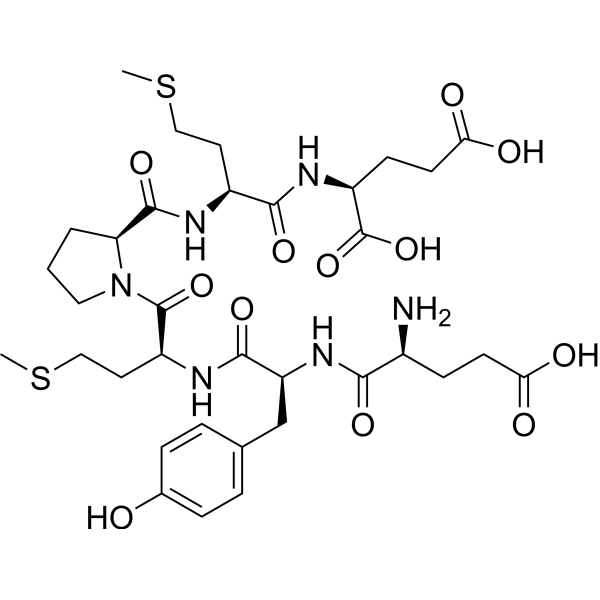
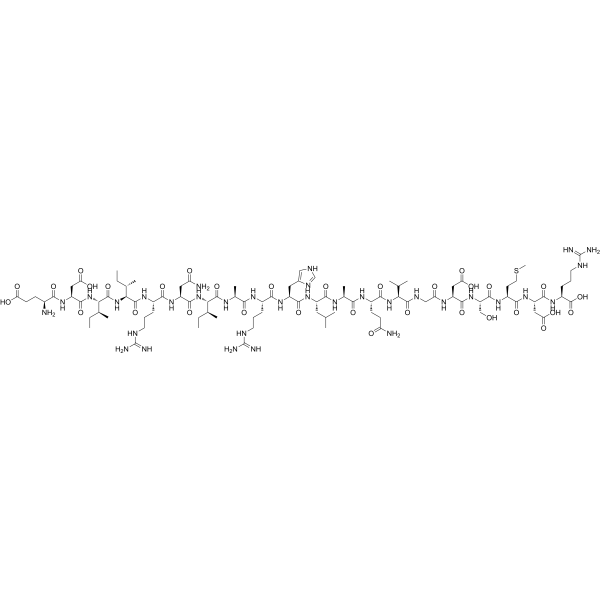
EE epitope is a biological active peptide. (This peptide is a 314 to 319 amino acids fragment of the middle T antigen of mouse polymavirus. Glu-Glu epitope peptide is widely used as an epitope tag.Pyroglutamyl (pGlu) peptides may spontaneously form when either Glutamine (Q) or Glutamic acid (E) is located at the sequence N-terminus. The conversion of Q or E to pGlu is a natural occurrence and in general it is believed that the hydrophobic γ-lactam ring of pGlu may play a role in peptide stability against gastrointestinal proteases. Pyroglutamyl peptides are therefore considered a normal subset of such peptides and are included as part of the peptide purity during HPLC analysis.)
loading...
    loading...
Cat. No.: HY-121120
CAS No.: 77900-75-5
Isosulfazecin (iSZ) is a novel β-lactam antibiotic produced by Pseudomonas acidophilus sp., synthesized in a nutrient solution supplemented with glycerol and sodium thiosulfate under aerobic conditions in parallel with bacterial growth. It is purified by chromatography and crystallization from aqueous methanol. Physicochemical analysis determined its molecular formula to be C12H20N4O9S, showing a structure with a β-lactam ring, methoxyl and sulfonate groups. Acid hydrolysis yields L-alanine and D-glutamic acid. iSZ is a diastereomer of sulfadiazine and exhibits moderate activity against both gram-positive and gram-negative bacteria, but potent activity against bacteria resistant to β-lactam antibiotics .
loading...
    loading...
Cat. No.: HY-W020940
CAS No.: 12012-95-2
Research Areas:  

Others

Allylpalladium(II) chloride dimer is a palladium catalytic precursor that serves as a catalyst for the Heck reaction. Allylpalladium(II) chloride dimer is also a transition metal allyl complex .
loading...
    loading...
Cat. No.: HY-P5429
CAS No.: 146064-85-9
Target:  

Inhibitory Antibodies

Research Areas:  

Others

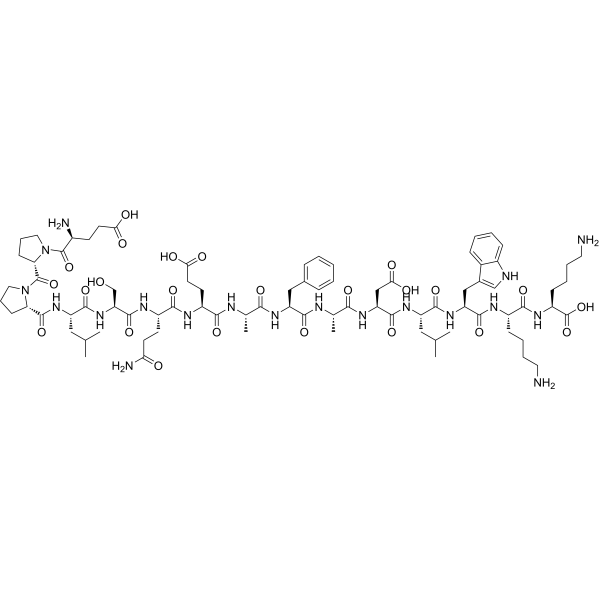
DNA-PK Substrate is a biological active peptide. (A substrate for DNA-dependent protein kinase (DNA-PK), phosphorylation. DNA-PK is essential for the repair of DNA double-strand breaks. This peptide corresponding to 11–24 amino acids of human p53 with threonine 18 and serine 20 changed to alanine is used as a substrate for the assay of DNA-PK activityPyroglutamyl (pGlu) peptides may spontaneously form when either Glutamine (Q) or Glutamic acid (E) is located at the sequence N-terminus. The conversion of Q or E to pGlu is a natural occurrence and in general it is believed that the hydrophobic γ-lactam ring of pGlu may play a role in peptide stability against gastrointestinal proteases. Pyroglutamyl peptides are therefore considered a normal subset of such peptides and are included as part of the peptide purity during HPLC analysis.)
loading...
    loading...
Cat. No.: HY-P5439
Target:  

PKC MARCKS

Research Areas:  

Others

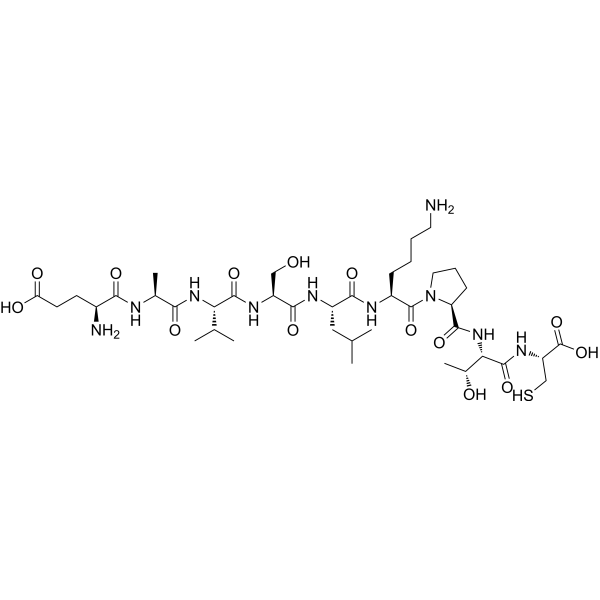
Epsilon-V1-2, Cys-conjugated is a biological active peptide. (This peptide is the εPKC specific inhibitor. Its inhibitory activity is based on εPKC translocation and MARCKS phosphorylation. This peptide interferes with εPKC interaction with the anchoring protein εRACK. This peptide contains a cysteine residue added to the C-terminus for potential S-S bond formation with a carrier protein.Pyroglutamyl (pGlu) peptides may spontaneously form when either Glutamine (Q) or Glutamic acid (E) is located at the sequence N-terminus. The conversion of Q or E to pGlu is a natural occurrence and in general it is believed that the hydrophobic γ-lactam ring of pGlu may play a role in peptide stability against gastrointestinal proteases. Pyroglutamyl peptides are therefore considered a normal subset of such peptides and are included as part of the peptide purity during HPLC analysis.)
loading...
    loading...
Cat. No.: HY-P5471
CAS No.: 204060-45-7
Synonyms: [Leu27]-Melan-A, MART-1 (26-35)
Target:  

Inhibitory Antibodies

Research Areas:  

Others

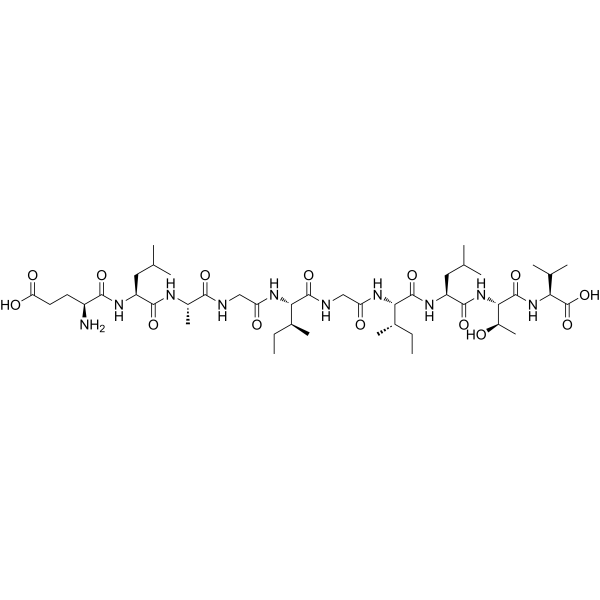
Melan-A/MART-1 analog ([Leu27]-Melan-A, MART-1 (26-35)) is a biological active peptide. (This Melan-A (26-35) analog, Leu substituted for Ala at position 27, shows better HLA-A*0201 binding properties as well as better immunogenicity and antigenicity than the natural Melan-A (26-35).Pyroglutamyl (pGlu) peptides may spontaneously form when either Glutamine (Q) or Glutamic acid (E) is located at the sequence N-terminus. The conversion of Q or E to pGlu is a natural occurrence and in general it is believed that the hydrophobic γ-lactam ring of pGlu may play a role in peptide stability against gastrointestinal proteases. Pyroglutamyl peptides are therefore considered a normal subset of such peptides and are included as part of the peptide purity during HPLC analysis.)
loading...
    loading...
Cat. No.: HY-P75177
Purity:  ≥ 90%, as determined by reducing SDS-PAGE.
Synonyms: GAD2; Glutamate Decarboxylase 65 KDa Isoform; Glutamate Decarboxylase 2; GAD-65; GAD65; Glutamate Decarboxylase 2 (Pancreatic Islets And Brain, 65kD); 65 KDa glutamic Acid Decarboxylase; Glutamate Decarboxylase-2 (Pancreas); Glutamate Decarboxylase 2 (Pan
Species:  
Mouse
Source:  
Sf9 insect cells
loading...
    loading...
Cat. No.: HY-N14093
CAS No.: 57744-69-1
Aspulvinone H is an orally active inhibitor of AChE, pancreatic lipase, glutamic-oxaloacetic transaminase 1, and α-glucosidase, with IC50 values of 25.95 μM, 47.06 μM, 5.91/6.91 μM, and 4.6 μM, respectively. It has a Ka of 2.14 μM against GOT1 and a Ki of 6.58 μM against α-glucosidase. Aspulvinone H inhibits cancer cell proliferation, interferes with glutamine metabolism, elevates ROS levels, and induces cell apoptosis and S-phase arrest. Aspulvinone H exhibits antibacterial activity against Staphylococcus aureus. Aspulvinone H inhibits the growth of pancreatic ductal adenocarcinoma xenografts. Aspulvinone H reduces postprandial blood glucose in mice. Aspulvinone H can be used in research related to pancreatic ductal adenocarcinoma, diabetes, and Staphylococcus aureus infection .
loading...
    loading...
Cat. No.: HY-P5325
CAS No.: 505070-05-3
Target:  

Bcl-2 Family

Research Areas:  

Others

Bid BH3 (80-99) is a biological active peptide. (BID is a pro-apoptotic member of the 'BH3-only' (BOPS) subset of the BCL-2 family of proteins that constitute a critical control point in apoptosis. Bid is the first of the BOPs reported to bind and activate Bcl-2, Bax, and Bak. Bid serves as a death-inducing ligand that moves from the cytosol to the mitochondrial membrane to inactivate Bcl-2 or to activate Bax.Pyroglutamyl (pGlu) peptides may spontaneously form when either Glutamine (Q) or Glutamic acid (E) is located at the sequence N-terminus. The conversion of Q or E to pGlu is a natural occurrence and in general it is believed that the hydrophobic γ-lactam ring of pGlu may play a role in peptide stability against gastrointestinal proteases. Pyroglutamyl peptides are therefore considered a normal subset of such peptides and are included as part of the peptide purity during HPLC analysis.)
loading...
    loading...
Cat. No.: HY-P5325A
Target:  

Bcl-2 Family

Research Areas:  

Others

Bid BH3 (80-99) acetate is a biological active peptide. (BID is a pro-apoptotic member of the 'BH3-only' (BOPS) subset of the BCL-2 family of proteins that constitute a critical control point in apoptosis. Bid is the first of the BOPs reported to bind and activate Bcl-2, Bax, and Bak. Bid serves as a death-inducing ligand that moves from the cytosol to the mitochondrial membrane to inactivate Bcl-2 or to activate Bax.Pyroglutamyl (pGlu) peptides may spontaneously form when either Glutamine (Q) or Glutamic acid (E) is located at the sequence N-terminus. The conversion of Q or E to pGlu is a natural occurrence and in general it is believed that the hydrophobic γ-lactam ring of pGlu may play a role in peptide stability against gastrointestinal proteases. Pyroglutamyl peptides are therefore considered a normal subset of such peptides and are included as part of the peptide purity during HPLC analysis.)
loading...
    loading...
Cat. No.: HY-P75179
Purity:  ≥ 90%, as determined by reducing SDS-PAGE.
Synonyms: GAD2; Glutamate Decarboxylase 65 KDa Isoform; Glutamate Decarboxylase 2; GAD-65; GAD65; Glutamate Decarboxylase 2 (Pancreatic Islets And Brain, 65kD); 65 KDa glutamic Acid Decarboxylase; Glutamate Decarboxylase-2 (Pancreas); Glutamate Decarboxylase 2 (Pancreatic Islets And Brain, 65kDa); Glutamate Decarboxylase
Species:  
Human
Source:  
Sf9 insect cells
loading...
    loading...
Cat. No.: HY-P75180
Purity:  ≥ 90%, as determined by reducing SDS-PAGE.
Synonyms: GAD1; Glutamate Decarboxylase 67 KDa Isoform; Prev. GAD; Glutamate Decarboxylase 1 Isoform 2; Glutamate Decarboxylase 1 (Brain, 67kDa); CPSQ1; 67 KDa glutamic Acid Decarboxylase; DEE89; GAD-67; GAD67; Glutamate Decarboxylase 1 (Brain, 67kD); SCP; Glutamat
Species:  
Human
Source:  
Sf9 insect cells
loading...
    loading...
Cat. No.: HY-P86884
Synonyms: 67 kDa glutamic acid decarboxylase antibody; CPSQ1 antibody; DCE1 antibody; DCE1_HUMAN antibody; EC 4.1.1.15 antibody; FLJ45882 antibody; GAD 67 antibody; GAD antibody; GAD-67 antibody; GAD1 antibody; 67 kDa glutamic acid decarboxylase antibody; CPSQ1 antibody; DCE1 antibody; DCE1_HUMAN antibody; EC 4.1.1.15 antibody; FLJ45882 antibody; GAD 67 antibody; GAD antibody; GAD-67 antibody; GAD1 antibody; Glutamate decarboxylase 1 (brain, 67kDa) antibody; Glutamate decarboxylase 1 antibody; Glutamate decarboxylase 1 brain 67kD antibody; Glutamate decarboxylase 1 brain 67kDa antibody; Glutamate decarboxylase 67 kDa isoform antibody; Glutamate decarboxylase, brain, 67-KD antibody; OTTHUMP00000041055 antibody; SCP antibody;

Host:  

Mouse

Application:  

WB, IHC-P, IHC-F, IF-Tissue

Reactivity:  

Mouse, Rat

loading...
    loading...
Cat. No.: HY-Y1269D
CAS No.: 12125-02-9
Synonyms: Salmiac, for molecular biology
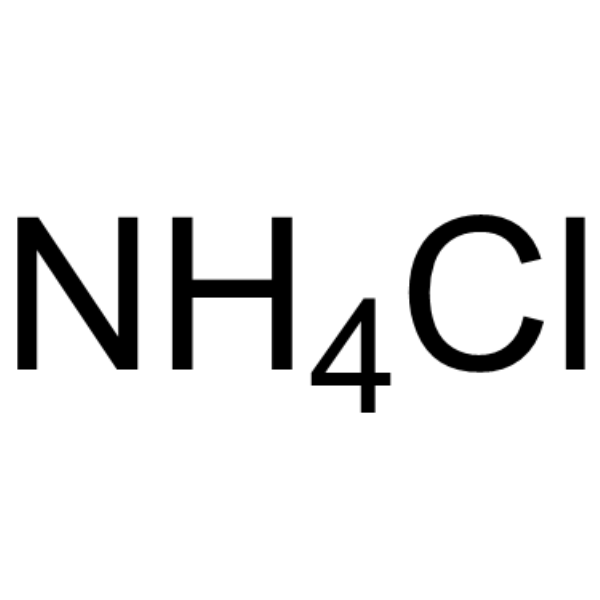
Ammonium chloride (Salmiac), for molecular biology is an inhibitor of Slc26a4 and SMAD2. Ammonium chloride, for molecular biology reduces the protein expression level of Slc26a4 in lung tissue, and attenuates ozone-induced increases in proinflammatory cytokines, inflammatory cells, pulmonary resistance, goblet cell hyperplasia, peribronchial inflammation and thiocyanate levels in mouse tissues and bronchoalveolar lavage fluid. Ammonium chloride, for molecular biology decreases the level of phosphorylated SMAD2, inhibits autophagy by reducing autophagy-related proteins, and enhances Cisplatin (HY-17394)-induced cancer cell apoptosis and DNA double-strand breaks. Ammonium chloride, for molecular biology also inhibits the TCA cycle, reduces ATP production, increases glucose utilization, regulates the levels of lactic acid, glutamic acid and ATP, and induces morphological degeneration of neuroblastoma cells. Ammonium chloride, for molecular biology can be used in studies related to ozone-induced airway injury, hepatocellular carcinoma, human cervical cancer, hepatic encephalopathy, Reye syndrome, epilepsy and neurodegenerative diseases .
loading...
    loading...

