2840 Results for "

intermediate.

" in MedChemExpress (MCE) Product Catalog:
Products (2840)

2840 Results for "intermediate." in MCE Product Catalog:

Cat. No.: HY-W015229R
CAS No.: 830-96-6
Synonyms: Indole-3-propionic acid (Standard); 3-IPA (Standard)
3-Indolepropionic acid (Standard) is the analytical standard of 3-Indolepropionic acid. This product is intended for research and analytical applications. 3-Indolepropionic acid is shown to be a powerful antioxidant and has potential in the treatment for Alzheimer’s disease. In Vitro: 3-Indolepropionic acid is shown to be a powerful antioxidant and has potential in the treatment for Alzheimer’s disease . 3-Indolepropionic acid is a more potent scavenger of hydroxyl radicals than melatonin. Similar to melatonin but unlike other antioxidants, 3-Indolepropionic acid scavenges radicals without subsequently generating reactive and pro-oxidant intermediate compounds . It is also suggested that indolepropionic acid, a gut microbiota-produced metabolite, is a potential biomarker for the development of type 2 diabetes (T2D) that may mediate its protective effect by preservation of β-cell function .
loading...
    loading...
Cat. No.: HY-W244412
CAS No.: 133081-27-3
Research Areas:  

Cancer

2,5-Dioxopyrrolidin-1-yl 6-hydrazinylnicotinate hydrochloride is an intermediate of a radionuclide molecular probe targeting the CD4 receptor. 2,5-Dioxopyrrolidin-1-yl 6-hydrazinylnicotinate hydrochloride serves as an imaging agent for heart transplant rejection. This CD4 probe is prepared by mixing leukocyte differentiation antigen 4 monoclonal antibody with a solution of 6-hydrazinylnicotinoyl succinimide ester hydrochloride, followed by extraction and reaction to obtain 6-hydrazinylnicotinate-leukocyte differentiation antigen 4 monoclonal antibody; this antibody is then mixed with N-tris (hydroxymethyl) glycine, stannous chloride and technetium for an oscillatory reaction. This CD4 probe exhibits high affinity for CD4 + T lymphocytes, along with the characteristics of high sensitivity and high specificity, enabling early diagnosis of acute rejection .
loading...
    loading...
Cat. No.: HY-W585865
CAS No.: 112710-84-6
Synonyms: UDP-3-O-(3-hydroxytetradecanoyl)-N-acetylglucosamine Tris
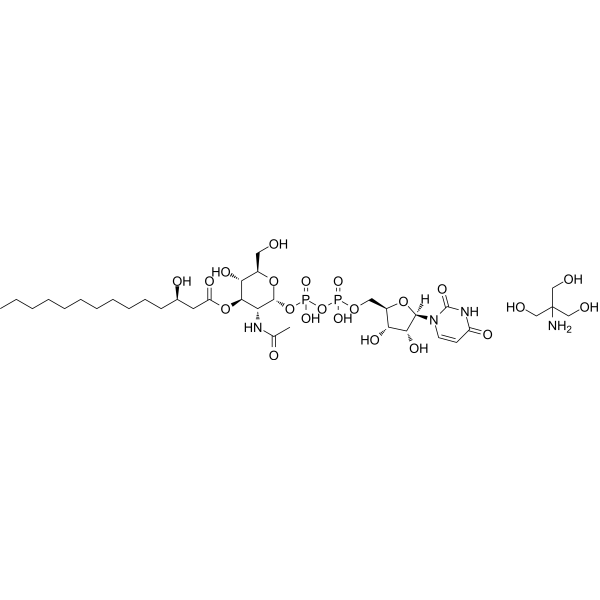
UDP-3-O-acyl-GlcNAc Tris (UDP-3-O-(3-hydroxytetradecanoyl)-N-acetylglucosamine Tris) serves as a deacetylation substrate and biosynthetic intermediate in the biosynthetic pathways of lipid A and Kdo2-lipid A in Escherichia coli. UDP-3-O-acyl-GlcNAc Tris undergoes enzymatic deacetylation via LpxC to produce UDP-3-O-[(R)-3-hydroxymyristoyl]glucosamine and release acetate. UDP-3-O-acyl-GlcNAc Tris accumulates in Escherichia coli extracts in the absence of [(R)-3-hydroxymyristoyl]-acyl carrier protein. UDP-3-O-acyl-GlcNAc Tris can be used in studies related to Gram-negative shock .
loading...
    loading...
Cat. No.: HY-W599279
CAS No.: 2761170-84-5
ABS-752 is an orally active prodrug targeting CRBN-modulating molecular glue with selectivity in protein degradation. ABS-752 preferentially degrades GSPT1 and induces cytotoxicity through this degradation, while it also degrades NEK7, SALL4 and CK1α, with weaker degradation potency against CK1α. As a prodrug, ABS-752 requires metabolic activation to ABT-002 to form the active complex; VAP-1 mediates its conversion to an aldehyde intermediate. ABS-752 induces cell death, reduces cell viability, and exhibits antitumor activity, leading to regression and inhibition of tumor growth. ABS-752 shows no cytotoxicity in primary human hepatocytes. ABS-752 can be used in the research of hepatocellular carcinoma .
loading...
    loading...
Cat. No.: HY-W738639
CAS No.: 379-68-0
Synonyms: 18-OH-DOC; 11-Deoxy-18-hydroxycorticosterone
18-Hydroxy-11-deoxy corticosterone (18-OH-DOC) is a mineralocorticoid whose synthesis is regulated by adrenocorticotropic hormone (ACTH) and angiotensin II. 18-Hydroxy-11-deoxy corticosterone is an intermediate in the metabolism of progesterone and plays an important role in regulating blood pressure and water-salt balance. Continuous infusion of 18-Hydroxy-11-deoxy corticosterone can increase systolic blood pressure in rats, and plasma levels of 18-Hydroxy-11-deoxy corticosterone are significantly elevated in the db/db mouse model of type 2 diabetes, suggesting its potential involvement in metabolic dysregulation and diabetes-related regulation. 18-Hydroxy-11-deoxy corticosterone holds promise for research in areas such as hypertension, diabetes, and other related fields .
loading...
    loading...
Cat. No.: HY-W998347
CAS No.: 2922884-90-8
ABS-752 hydrochloride is an orally active prodrug targeting CRBN-modulating molecular glue with selectivity in protein degradation. ABS-752 hydrochloride preferentially degrades GSPT1 and induces cytotoxicity through this degradation, while it also degrades NEK7, SALL4 and CK1α, with weaker degradation potency against CK1α. As a prodrug, ABS-752 hydrochloride requires metabolic activation to ABT-002 to form the active complex; VAP-1 mediates its conversion to an aldehyde intermediate. ABS-752 hydrochloride induces cell death, reduces cell viability, and exhibits antitumor activity, leading to regression and inhibition of tumor growth. ABS-752 hydrochloride shows no cytotoxicity in primary human hepatocytes. ABS-752 hydrochloride can be used in the research of hepatocellular carcinoma .
loading...
    loading...
Cat. No.: HY-L123
6,767 compounds

Human metabolism is an integral part of cellular function that reflects individual differences in health, disease, diet, and lifestyle. Many health conditions such as obesity, diabetes, hypertension, heart disease, and cancer are associated with abnormal metabolic states. In the pathological state of the human body, metabolic pathways are significantly altered, resulting in aberrant levels of intermediates or end-products that can be viewed as potential diagnostic biomarkers or even therapeutic targets. Therefore, detection, identification and quantification of human metabolites are very important for drug metabolism research in drug development.

MCE offers a unique collection of 6,767 human metabolites, including endogenous metabolites and exogenous metabolites, covering multiple structure types, such as lipids, amino acids, nucleic acids, carbohydrates, organic acids, biogenic amines, vitamins,. MCE Human Metabolites Library is a helpful tool for studying the relationship between diseases and metabolism.

Cat. No.: HY-113259S
CAS No.: 2260669-17-6
Purity:  ≥98.0%
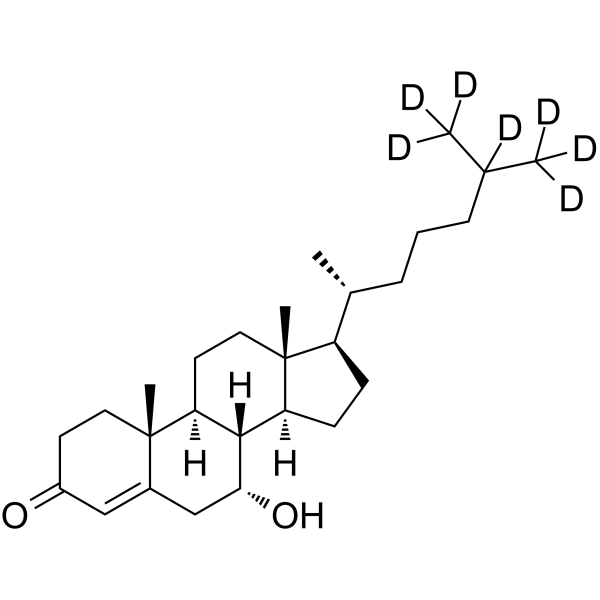
7α-Hydroxy-4-cholesten-3-one-d7 is the deuterium labeled 7α-Hydroxy-4-cholesten-3-one. 7α-Hydroxy-4-cholesten-3-one is an intermediate in synthesis of bile acids from cholesterol. 7α-Hydroxy-4-cholesten-3-one is a pregnane X receptor (PXR) agonist. 7α-Hydroxy-cholest-4-en-3-one is a biomarker for bile acid loss, irritable bowel syndrome, and other diseases associated with defective bile acid biosynthesis. 7α-Hydroxy-cholest-4-en-3-one is the physiological substrate for CYP8B1 .
loading...
    loading...
Cat. No.: HY-135700
CAS No.: 19115-49-2
Purity:  ≥98.0%
Mevalonolactone is an intermediate metabolite in the eukaryotic mevalonate pathway, serving as the stable δ-lactone form of mevalonate with oral activity. Mevalonolactone exhibits binding affinity for ZNF384 (Ka = 12.6 μM) and inhibitory activity against aconitase (aconitase). Mevalonolactone promotes the nuclear localization of ZNF384 and enhances its binding to the GGPPS promoter. Mevalonolactone induces insulin resistance, disrupts glucose and lipid metabolism, enhances the isoprenylation of K-Ras, and inhibits the activation of the insulin signaling pathway. Mevalonolactone inhibits polypeptide synthesis of HMG-CoA reductase in isolated rat hepatocytes, promotes its degradation, and reduces its enzymatic activity. Mevalonolactone impairs mitochondrial function in rat brains. Mevalonolactone promotes the development of metabolically unhealthy obesity. Mevalonolactone can be used in research related to metabolically abnormal obesity, mevalonic aciduria, HMGCR-related limb-girdle myopathy, and statin-induced myopathy .
loading...
    loading...
Cat. No.: HY-137276
CAS No.: 97753-82-7
Purity:  99.73%
Synonyms: Bluo-Gal
Research Areas:  

Others

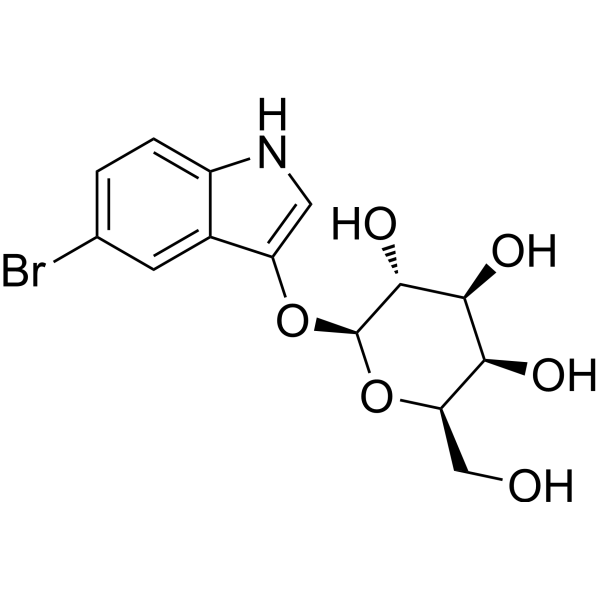
5-Bromo-3-indolyl β-D-galactopyranoside (Bluo-Gal) is a chromogenic substrate for β-galactosidase. 5-Bromo-3-indolyl β-D-galactopyranoside is hydrolyzed by the enzyme to generate a 5-bromoindole intermediate, which is further oxidized to form an insoluble blue precipitate. 5-Bromo-3-indolyl β-D-galactopyranoside can specifically recognize bacterial β-galactosidases (such as the product of the Escherichia coli lacZ gene) and reacts at pH 7.4, making it suitable for light and electron microscopic observations. 5-Bromo-3-indolyl β-D-galactopyranoside can be used in histochemical detection of reporter gene expression in transgenic organisms, such as the localization analysis of β-galactosidase activity in mouse embryos or muscle tissues .
loading...
    loading...
Cat. No.: HY-141466A
Purity:  97.85%
Crotonyl-CoA tetrasodium, a high-energy acyl donor, is an intermediate in the fermentation of butyric acid, and in the metabolism of lysine and tryptophan. Crotonyl-CoA tetrasodium is important in the metabolism of fatty acids and amino acids. Crotonyl-CoA tetrasodium acts as a substrate for p300’s histone crotonyltransferase activity, competing with acetyl-CoA for p300-mediated histone acylation reactions. Crotonyl-CoA tetrasodium regulates global and gene-specific histone crotonylation levels in cells, with cellular concentration changes altering histone crotonylation at regulatory elements of activated genes. Crotonyl-CoA tetrasodium serves as the substrate for crotonyl-CoA reductase/carboxylase (CCRC)-catalyzed NADPH-mediated reduction and carbon dioxide trapping to form unusual alkylmalonyl-CoA polyketide synthase extender units. Crotonyl-CoA tetrasodium can be used for the research of LPS-induced inflammatory response .
loading...
    loading...
Cat. No.: HY-153169R
CAS No.: 2754428-18-5
6PPD-Q (Standard) is the analytical standard of 6PPD-Q (HY-153169). This product is intended for research and analytical applications. 6PPD-Q (6PPD-Quinone) is an environmental pollutant that can be detected in human urine and is widely present in the environment. 6PPD-Q targets and binds to CNR2, CNR1, AA2AR, LCAT, and TRPA1, with CNR2 exhibiting the highest binding affinity, potentially acting as a CNR2 receptor agonist to activate cannabinoid receptors. 6PPD-Q induces intestinal inflammation and barrier damage by disrupting mitochondrial function, reducing neuronal glycolysis metabolites and TCA cycle intermediates, and exacerbating α-synuclein (α-syn) aggregation. 6PPD-Q is applicable in research on environmental toxicology, neurodegenerative diseases, and inflammation-related disorders .
loading...
    loading...
Cat. No.: HY-166309
CAS No.: 116912-55-1
Crotonyl-CoA tetralithium, a high-energy acyl donor, is an intermediate in the fermentation of butyric acid, and in the metabolism of lysine and tryptophan. Crotonyl-CoA tetralithium is important in the metabolism of fatty acids and amino acids. Crotonyl-CoA tetralithium acts as a substrate for p300’s histone crotonyltransferase activity, competing with acetyl-CoA for p300-mediated histone acylation reactions. Crotonyl-CoA tetralithium regulates global and gene-specific histone crotonylation levels in cells, with cellular concentration changes altering histone crotonylation at regulatory elements of activated genes. Crotonyl-CoA tetralithium serves as the substrate for crotonyl-CoA reductase/carboxylase (CCRC)-catalyzed NADPH-mediated reduction and carbon dioxide trapping to form unusual alkylmalonyl-CoA polyketide synthase extender units. Crotonyl-CoA tetralithium can be used for the research of LPS-induced inflammatory response .
loading...
    loading...
Cat. No.: HY-D1737
RADA is a fluorescent D-amino acid (FDAA) with high photostability and thermostability, which emits yellow-to-orange fluorescence. RADA shows low outer membrane permeability in wild-type Gram-negative Escherichia coli, but it targets penicillin-binding proteins and L,D-transpeptidases, mimics the interaction between acyl acceptors and enzyme intermediates, and integrates into peptidoglycan during biosynthesis. As a peptidoglycan labeling reagent, RADA metabolically integrates into the nascent peptidoglycan of live bacterial cells, labels the peptidoglycan at the poles and lateral walls of mycobacteria, and enables visualization of peptidoglycan synthesis and remodeling processes. RADA serves as a non-specific stain for fixed cells, is non-toxic to bacterial cells, and its red-shifted excitation/emission spectra reduce phototoxicity. RADA also supports virtual pulse-chase labeling experiments and stochastic optical reconstruction microscopy for sub-diffraction-limited imaging of bacterial cell walls .
loading...
    loading...
Cat. No.: HY-W008820R
CAS No.: 110-94-1
Glutaric acid (Standard) is the analytical standard of Glutaric acid. This product is intended for research and analytical applications. Glutaric acid, C5 dicarboxylic acid, is an intermediate during the catabolic pathways of lysine and tryptophan. Glutaric acid affects pericyte contractility and migration. Glutaric acid is an indicator of glutaric aciduria type I . In Vitro: Glutaric acid (GA) at concentrations of 1 and 2 mM is able to reduce TRAP measurement by up to 28% in a dose-dependent manner (β=0.77; P<0.001). Furthermore, a significantly inverse correlation is also verified between chemiluminescence and TRAP (β=0.81; P<0.001). Glutaric acid does not alter the activities of Cat and SOD, but strongly inhibits (up to 46%) the activity of GPx even at the lower concentration used (0.5 mM). It is observed that the metabolite inhibits this activity in a dose-dependent manner at concentrations as low as 0.05 mM .
loading...
    loading...
Cat. No.: HY-W016480
CAS No.: 943-80-6
Synonyms: H-Phe(4-NH2)-OH
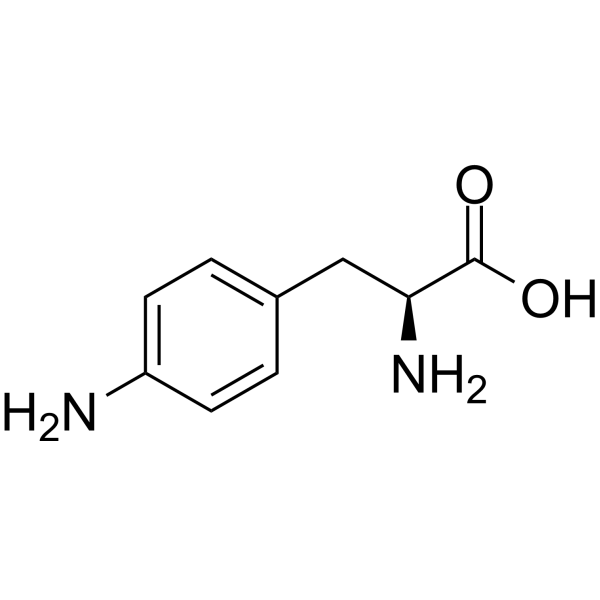
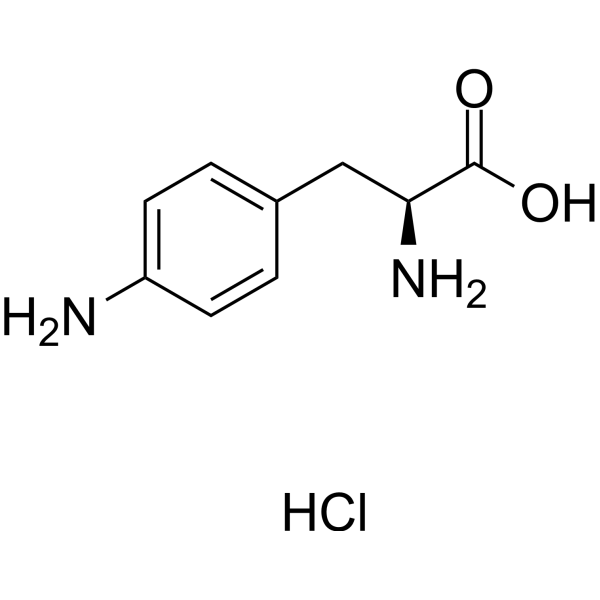
4-Amino-L-phenylalanine (H-Phe(4-NH2)-OH) is a metabolic intermediate and an α-carbonic anhydrase (TcCA) activator with a Ka value of 0.75 μM. 4-Amino-L-phenylalanine acts through active site cavity entrance binding and a proton shuttle mechanism to enhance the catalytic rate of CO2 hydration. 4-Amino-L-phenylalanine serves as a diamine monomer for bio-based polymer synthesis and is produced in Escherichia coli via the shikimate pathway. 4-Amino-L-phenylalanine constitutes a structural component of haptens used in immunoassay development. 4-Amino-L-phenylalanine is used for the production of Chloramphenicol (HY-B0239) and Pristinamycin I in Streptomyces venezuelae and S. pristinaespiralis, respectively. 4-Amino-L-phenylalanine is used in research related to Trypanosoma cruzi infection .
loading...
    loading...
Cat. No.: HY-W141810
CAS No.: 62040-55-5
Synonyms: H-Phe(4-NH2)-OH hydrochloride
4-Amino-L-phenylalanine hydrochloride (H-Phe(4-NH2)-OH) is a metabolic intermediate and an α-carbonic anhydrase (TcCA) activator with a Ka value of 0.75 μM. 4-Amino-L-phenylalanine hydrochloride acts through active site cavity entrance binding and a proton shuttle mechanism to enhance the catalytic rate of CO2 hydration. 4-Amino-L-phenylalanine hydrochloride serves as a diamine monomer for bio-based polymer synthesis and is produced in Escherichia coli via the shikimate pathway. 4-Amino-L-phenylalanine hydrochloride constitutes a structural component of haptens used in immunoassay development. 4-Amino-L-phenylalanine hydrochloride is used for the production of Chloramphenicol (HY-B0239) and Pristinamycin I in Streptomyces venezuelae and S. pristinaespiralis, respectively. 4-Amino-L-phenylalanine hydrochloride is used in research related to Trypanosoma cruzi infection .
loading...
    loading...
Cat. No.: HY-Y0496S
CAS No.: 3855-82-1
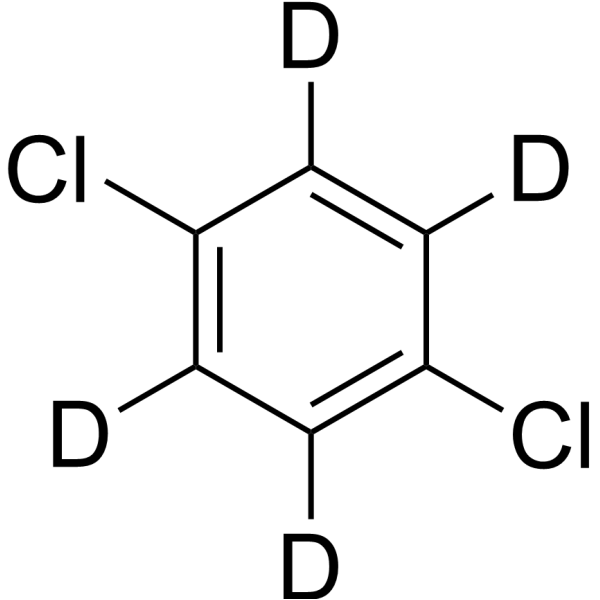
1,4-Dichlorobenzene-d4 is the deuterium labeled 1,4-Dichlorobenzene. 1,4-Dichlorobenzene is a non-genotoxic, orally active mitogenic/tumor-promoting carcinogen that is also widely used as a dye, resin intermediate, and deodorant, moth repellent/insecticide. 1,4-Dichlorobenzene induces liver tumors in mice and promotes the growth of spontaneous precancerous lesions, but shows no liver tumor-inducing activity in F344 rats. 1,4-Dichlorobenzene increases the levels of white blood cell count, serum alanine aminotransferase and blood urea nitrogen in occupationally exposed populations. 1,4-Dichlorobenzene is metabolized to 2,5-dichlorophenol and excreted in urine, and this metabolite can serve as a biomarker for 1,4-Dichlorobenzene exposure. Due to its specific hepatotoxic characteristics, 1,4-Dichlorobenzene is applicable to liver cancer-related research .
loading...
    loading...
Cat. No.: HY-L231
25 compounds

The TCA cycle (tricarboxylic acid cycle)—is also known as the Krebs cycle or the citric acid cycle (CAC). The TCA cycle is a series of chemical reactions that release stored energy through the oxidation of acetyl-CoA in carbohydrates, fats, and proteins.

For decades, the TCA cycle has been considered as the central pathway for cell oxidative phosphorylation to produce energy and biosynthesis. Research shows that TCA cycle is associated with many diseases, especially cancer. In colon carcinoma, liver cancer and other cancers, there are mutations that lead to the imbalance of TCA cycle metabolites, indicating that TCA cycle may be related to the occurrence of cancer. Understanding the role and molecular mechanism of TCA cycle in inhibiting or promoting cancer progression will promote the development of new metabolite-based cancer treatment methods in the future.

MCE supplies a unique collection of 25 key intermediates of the TCA cycle, which can be utilized for TCA-related research and metabolomics identification studies.

Cat. No.: HY-L060
2,313 compounds

The cytoskeleton is responsible for contraction, cell motility, movement of organelles and vesicles through the cytoplasm, cytokinesis, intracellular signal transduction, and many other functions that are essential for cellular homeostasis and survival. It accomplishes these tasks through three basic structures: F-actin, microtubules, and intermediate filaments (IFs). The cytoskeleton is a dynamic structure where the three major filaments and tubules are under the influence of proteins that regulate their length, state of polymerization, and level of cross-linking. Since cytoskeleton is involved in virtually all cellular processes, cytoskeletal protein aberrations are the underlying reason for many pathological phenotypes, including several cardiovascular disease syndromes, neurodegeneration, cancer, liver cirrhosis, pulmonary fibrosis, and blistering skin diseases.

MCE designs a unique collection of 2,313 cytoskeleton-related compounds mainly focusing on the key targets in the cytoskeleton signal pathway and can be used in the research of cytoskeleton signal pathway and related diseases.

