
2959 Results for "

channel complexe

" in MedChemExpress (MCE) Product Catalog:
Products (2959)

2959 Results for "channel complexe" in MCE Product Catalog:

Cat. No.: HY-46286
CAS No.: 352560-76-0
Synonyms: N-(4-tert-butyl-1,3-thiazol-2-yl)-3-fluorobenzamide
TTFB (N-(4-tert-butyl-1,3-thiazol-2-yl)-3-fluorobenzamide) is a selective, non-competitive zinc-activated channel (ZAC) antagonist. TTFB inhibits Zn 2+- and H +-induced ZAC currents with IC50 values of 3 μM and 8.5 μM, respectively, and has an IC50 of 4.7 μM against spontaneous activity. TTFB shows no significant agonistic, antagonistic or modulatory activity towards representative classical Cys-loop receptors including m5-HT3AR, hα3β4 nAChR, hα1β2γ2S GABAAR and hα1 GlyR. TTFB can be used to investigate the physiological and pathological functions of ZAC.
loading...
    loading...
Cat. No.: HY-B0561S4
Spironolactone-d6-1 is the deuterium labeled Spironolactone (HY-B0561). Spironolactone is an aldosterone antagonist that acts on the aldosterone mineralocorticoid receptor (IC50=24 nM) and androgen receptor (IC50=77 nM), promotes podocyte autophagy and regulates pain. Spironolactone improves hypertension-related vascular hypertrophy and remodeling by reducing angiotensin II (Ang II)-induced inflammation, reduces aldosterone-induced vascular and soft tissue calcification through PIT1-dependent signaling, and alleviates vascular dysfunction in type II diabetic mice by reducing oxidative stress and restoring NO/GC signaling; at low concentrations, it and its metabolites can interfere with aldosterone biosynthesis in the adrenal cortex and inhibit voltage-dependent Ca 2+ channels to exert antihypertensive effects .
loading...
    loading...
Cat. No.: HY-B1239A
CAS No.: 1679-76-1
Synonyms: Cycloadiphene; Hexahydroadiphenine
Drofenine (Cycloadiphene; Hexahydroadiphenine) is an brain-penetrant antispasmodic agent. Drofenine is a Kv2.1 channel inhibitor with human IC50 of 9.53 μM. Drofenine is a butyrylcholinesterase (BChE) inhibitor with Ki of 0.003 mM, and is a TRPV3 activator. Drofenine blocks Kv2.1-dependent potassium efflux, inhibits Kv2.1/JNK/NF-κB and IkBa/NF-kB signaling, suppresses Kv2.1 mRNA/protein expression. Drofenine suppresses oligomeric Aβ-induced microglial NLRP3 inflammasome activation and neuronal Tau hyperphosphorylation, improves cognitive impairment, promotes neurite outgrowth. Drofenine induces calcium influx in keratinocytes and exert cytotoxicity against keratinocytes. Drofenine ameliorates diabetic peripheral neuropathy -like pathology. Drofenine can be used for the researches of Alzheimer's disease, diabetic peripheral neuropathy and smooth muscle spasm .
loading...
    loading...
Cat. No.: HY-P2786A
CAS No.: 741738-57-8
Target:  

Potassium Channel

Research Areas:  

Neurological Disease

Phrixotoxin 2 is a Kv4 family potassium channel inhibitor, with Ki values in rats of 120 nM for Kv4.2, 110 nM for Kv4.3, and 230 nM for Kv4.1. Phrixotoxin 2 mediates voltage-dependent inhibition of Kv4.2 and Kv4.3 currents, and voltage-independent inhibition of Kv4.1 currents. Phrixotoxin 2 fails to inhibit A-type K + currents in visceral dorsal root ganglion neurons. Phrixotoxin 2 induces contraction of non-pregnant uterine smooth muscle and triggers orofacial cold hyperalgesia in rats. Phrixotoxin 2 can distinguish the contribution of Kv4 subunits to A-type K + currents in different subsets of sensory neurons. Phrixotoxin 2 can be used in research related to chronic pain and trigeminal neuropathic pain .
loading...
    loading...
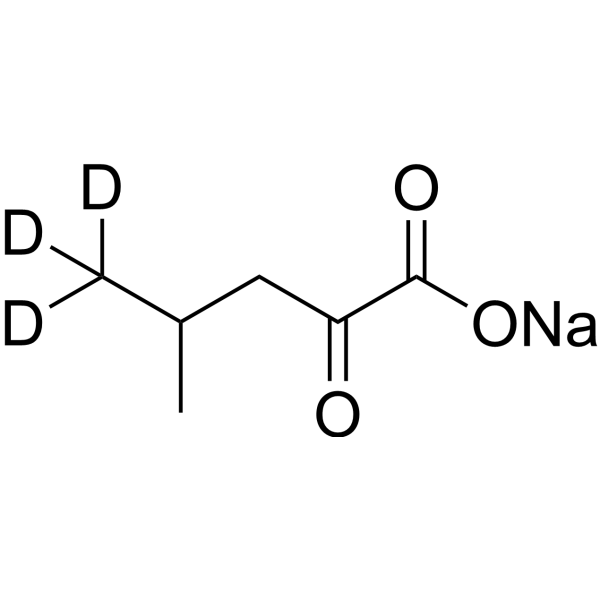
Cat. No.: HY-W017387S
CAS No.: 93523-67-2
Synonyms: Sodium 4-methyl-2-oxopentanoate-d3; 2-Ketoisocaproic acid-d3 sodium salt
Sodium α-ketoisocaproate-d3 (Sodium 4-methyl-2-oxopentanoate-d3; 2-Ketoisocaproic acid-d3 (sodium salt)) is the deuterated-labeled Sodium α-ketoisocaproate (HY-W017387). Sodium α-ketoisocaproate (Sodium 4-methyl-2-oxopentanoate) is an insulin secretagogue. Sodium α-ketoisocaproate undergoes transamination catalyzed by BCAT and BCATm to produce α-ketoglutarate and leucine; it also binds to the SUR1 site to inhibit KATP channel activity, but does not directly affect the Kir6.2 subunit. Sodium α-ketoisocaproate regulates Ca 2+ influx. Sodium α-ketoisocaproate exerts insulinotropic activity in pancreatic islets and intact mouse pancreata with sufficient BCATm expression. Sodium α-ketoisocaproate can be used in research related to type 2 diabetes .
loading...
    loading...
Cat. No.: HY-W027553R
CAS No.: 62732-44-9
Synonyms: NIK-247 free base (Standard); Amiridine free base (Standard)
Ipidacrine (Standard) is the analytical reference standard of Ipidacrine. This product is used for research and analytical applications. Ipidacrine is orally active and blood-brain-barrier-penetrant AChE and BuChE inhibitors with IC50 values of 1 μM and 1.9 μM, respectively, which is also a partial agonist of M2-cholinergic receptors and a reversible cholinesterase inhibitor. Ipidacrine has a stimulating effect on neuromuscular transmission and excitation along the nerve fibres with a moderately anti-pain effect. Ipidacrine is an aminopyridines and is structurally similar to Tacrine (HY-111338). Ipidacrine is effective in various amnesia models, improves erectile function and inhibits K + and Na +-channels in the neuronal membrane in diabetic rats. Ipidacrine is promising for research of Alzheimer’s disease, ischaemic stroke, idiopathic neuropathy of the facial nerve, diabetes mellitus-induced erectile dysfunction and other deficits in central or peripheral cholinergic deseases .
loading...
    loading...
Cat. No.: HY-W709349S
Synonyms: D 9998-d6 hydrochloride
Flupirtine-d6 (D 9998-d6) hydrochloride is the deuterium labeled Flupirtine hydrochloride (HY-W709349). Flupirtine hydrochloride is an orally active, blood-brain barrier-crossing non-opioid analgesic and neuroprotective agent. Flupirtine hydrochloride is a neuronal potassium channel opener (Kv7 activator), a NMDA receptor antagonist and a GABA receptor activator. Flupirtine hydrochloride stabilizes blood-brain-barrier integrity, reduces oxidative stress and brain leukocyte infiltration, enhances angioneurogenesis, suppresses calcium influx, stabilizes neuronal resting membrane potential, and counteracts focal cerebral ischemia. Flupirtine hydrochloride exhibits analgesic, muscle relaxant properties, protects neurons from excitotoxic, ischemic, or cytokine-mediated death. Flupirtine hydrochloride functions as a non-opioid analgesic without antipyretic or antiphlogistic properties, shows no relevant affinity to opiate receptor. Flupirtine hydrochloride can be used for the research of focal cerebral ischemia, pain, Alzheimer’s disease, or multiple sclerosis .
loading...
    loading...
Cat. No.: HY-L121
430 compounds

5-HT receptors, also called Serotonin receptors, are a group of G protein-coupled receptors (GPCRs) and ligand-gated ion channels (LGICs) found in the central and peripheral nervous systems. These receptors are now classified into seven families, 5-HT1–7, comprising a total of 14 structurally and pharmacologically distinct mammalian 5-HT receptor subtypes. The 5-HT receptors influence various biological and neurological processes such as aggression, anxiety, appetite, cognition, learning, memory, mood, nausea, sleep, andthermoregulation. The serotonin receptors are the target of a variety of pharmaceutical drugs, including many antidepressants, antipsychotics, anorectics, antiemetics, gastroprokinetic agents, antimigraine agents, hallucinogens, and entactogens.

MCE 5-HT Receptor Compound Library consists of 430 5-HT receptor inhibitors and activators, which can be used for neuropsychiatric disorders drugs discovery.

Cat. No.: HY-L145
930 compounds

The majority of hypertensive patients have primary (or essential) hypertension, that is, hypertension in which secondary causes are not present. Management aims to control arterial pressure, prevent end-organ damage (cerebrovascular, cardiovascular, and renal), and reduce the risk of premature death.

Antihypertensive drugs may be divided into two broad groups, the first group being those which directly or indirectly block the renin–angiotensin system (RAS), for example, ACEIs, angiotensin receptor antagonists (ARAs), direct renin inhibitors (DRIs), and to a lesser extent β-blockers. The second group of drugs works by increasing water and sodium excretion, thereby reducing intravascular volume, or by causing vasodilatation through non-RAS pathways, for example, diuretics and calcium channel blockers (CCBs).

MCE offers a unique collection of 930 compounds with identified and potential antihypertensive activity. MCE Antihypertensive Compound Library is critical for antihypertensive drug discovery and development.

Cat. No.: HY-10071R
CAS No.: 146986-50-7
Y-27632 (Standard) is the analytical standard of Y-27632 (HY-10071). This product is intended for research and analytical applications. Y-27632 is a ROCK inhibitor with Ki values of 220 nM and 300 nM for ROCK1 and ROCK2, respectively. Y-27632 exerts anti-inflammatory and immunomodulatory effects in systemic lupus erythematosus models by inhibiting the ROCK/NF-κB pathway. Y-27632 enhances autophagy by inhibiting the AKT/mTOR pathway, thereby inducing apoptosis apoptosis in oral squamous cell carcinoma. Y-27632 induces the formation of tunneling nanotubes in ARPE-19 cells and significantly enhances mitochondrial transfer through these channels. Y-27632 promotes neurite outgrowth in PC12 cells by activating the Rac1/NOX1/ROS/AKT/PAK1 signaling cascade .
loading...
    loading...
Cat. No.: HY-14744C
CAS No.: 865430-78-0
Synonyms: (S)-Amlodipine hydrobromide; Levoamlodipine hydrobromide
Target:  

Calcium Channel MMP

Research Areas:  

Cardiovascular Disease Others

Levamlodipine ((S)-Amlodipine; Levoamlodipin) hydrobromide is an orally active L-type calcium channel blocker and MMP-9 modulator with high permeability and retention properties. Levamlodipine hydrobromide significantly enhances plaque stability and improves lipid profiles by reducing blood pressure, decreasing systolic blood pressure variability, and inhibiting MMP-9 expression in atherosclerotic plaques. Levamlodipine hydrobromide not only alleviates cardiac and aortic hypertrophy and prevents renal atrophy, but also produces synergistic effects in blood pressure reduction and organ protection when combined with bisoprolol (HY-129029). Levamlodipine hydrobromide exerts no significant inhibitory effect on abdominal aortic intimal hyperplasia. When excessively accumulated in the epidermis, Levamlodipine hydrobromide may induce changes in keratin structure, impair the skin barrier and trigger inflammation; long-term use further exacerbates skin irritation caused by local administration. Levamlodipine hydrobromide can be used in research related to hypertension and atherosclerosis .
loading...
    loading...
Cat. No.: HY-14744D
CAS No.: 884648-62-8
Levamlodipine besylate Hemipentahydrate is an orally active L-type calcium channel blocker and MMP-9 modulator with high permeability and retention properties. Levamlodipine besylate Hemipentahydrate significantly enhances plaque stability and improves lipid profiles by reducing blood pressure, decreasing systolic blood pressure variability, and inhibiting MMP-9 expression in atherosclerotic plaques. Levamlodipine besylate Hemipentahydrate not only alleviates cardiac and aortic hypertrophy and prevents renal atrophy, but also produces synergistic effects in blood pressure reduction and organ protection when combined with bisoprolol (HY-129029). Levamlodipine besylate Hemipentahydrate exerts no significant inhibitory effect on abdominal aortic intimal hyperplasia. When excessively accumulated in the epidermis, Levamlodipine besylate Hemipentahydrate may induce changes in keratin structure, impair the skin barrier and trigger inflammation; long-term use further exacerbates skin irritation caused by local administration. Levamlodipine besylate Hemipentahydrate can be used in research related to hypertension and atherosclerosis .
loading...
    loading...
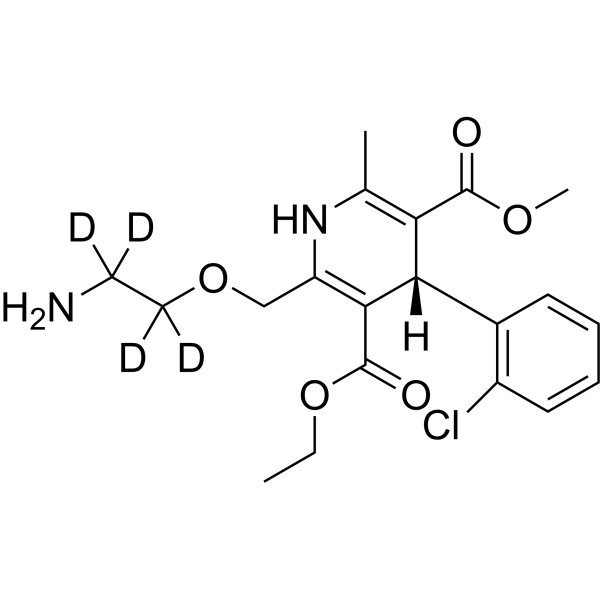
Cat. No.: HY-14744S
CAS No.: 1346617-19-3
Purity:  99.74%
Synonyms: (S)-Amlodipine-d4; Levoamlodipine-d4
Levamlodipine-d4 is the deuterium labeled Levamlodipine. Levamlodipine ((S)-Amlodipine; Levoamlodipin) is an orally active L-type calcium channel blocker and MMP-9 modulator with high permeability and retention properties. Levamlodipine significantly enhances plaque stability and improves lipid profiles by reducing blood pressure, decreasing systolic blood pressure variability, and inhibiting MMP-9 expression in atherosclerotic plaques. Levamlodipine not only alleviates cardiac and aortic hypertrophy and prevents renal atrophy, but also produces synergistic effects in blood pressure reduction and organ protection when combined with bisoprolol (HY-129029). Levamlodipine exerts no significant inhibitory effect on abdominal aortic intimal hyperplasia. When excessively accumulated in the epidermis, Levamlodipine may induce changes in keratin structure, impair the skin barrier and trigger inflammation; long-term use further exacerbates skin irritation caused by local administration. Levamlodipine can be used in research related to hypertension and atherosclerosis .
loading...
    loading...
Cat. No.: HY-15026
CAS No.: 915798-75-3
Target:  

Endogenous Metabolite

Research Areas:  

Inflammation/Immunology

ATB-429, a novel H2S-releasing derivative of mesalamine, demonstrates significant anti-nociceptive and anti-inflammatory effects in models of irritable bowel syndrome (IBS). By releasing hydrogen sulfide (H2S), ATB-429 modulates colorectal distension-induced hypersensitivity in both healthy and postcolitic rats. It attenuates abdominal withdrawal responses and suppresses spinal c-Fos mRNA expression, indicating its potential to alleviate pain associated with gastrointestinal inflammation. Moreover, ATB-429 down-regulates colonic cyclooxygenase-2 and interleukin-1β mRNA expression, effects not observed with mesalamine alone. The mechanism involves ATP-sensitive K+ (KATP) channels, as evidenced by reversal of ATB-429's effects with glibenclamide. These findings suggest ATB-429 could offer therapeutic benefits for managing painful intestinal disorders linked to inflammation .
loading...
    loading...
Cat. No.: HY-17001AR
CAS No.: 56995-20-1
Synonyms: D 9998 (Standard)
Flupirtine (Standard) (D 9998 (Standard)) is the analytical standard of Flupirtine (HY-17001A). This product is intended for research and analytical applications. Flupirtine is an orally active, blood-brain barrier-crossing non-opioid analgesic and neuroprotective agent. Flupirtine is a neuronal potassium channel opener (Kv7 activator), a NMDA receptor antagonist and a GABA receptor activator. Flupirtine stabilizes blood-brain-barrier integrity, reduces oxidative stress and brain leukocyte infiltration, enhances angioneurogenesis, suppresses calcium influx, stabilizes neuronal resting membrane potential, and counteracts focal cerebral ischemia. Flupirtine exhibits analgesic, muscle relaxant properties, protects neurons from excitotoxic, ischemic, or cytokine-mediated death. Flupirtine functions as a non-opioid analgesic without antipyretic or antiphlogistic properties, shows no relevant affinity to opiate receptor. Flupirtine can be used for the research of focal cerebral ischemia, pain, Alzheimer’s disease, or multiple sclerosis .
loading...
    loading...
Cat. No.: HY-183335
Research Areas:  

Cancer

Anticancer agent 321 is a Smoothened (SMO) inhibitor with a human IC50 of 0.12 μM, enhanced aqueous solubility, good plasma and metabolic stability, moderate therapeutic index, preliminary safety profile, and moderate oral bioavailability in rats.Anticancer agent 321 binds to SMO’s 7-transmembrane helical channel, forming hydrogen bonds with Asp384 and hydrophobic/π-π interactions with His470, Phe391, Tyr394, stabilizing SMO’s inactive conformation to inhibit Hedgehog/GLI signaling.Anticancer agent 321 inhibits proliferation, suppresses colony formation, induces apoptosis, and downregulates Hedgehog/GLI pathway target genes GLI1, GLI2, Ptch1, HHip in cancer cells.Anticancer agent 321 inhibits tumor growth, downregulates Ki67 and SOX2, and upregulates cleaved-caspase 3 in tumor tissues.Anticancer agent 321 can be used for the research of cutaneous squamous cell carcinoma .
loading...
    loading...
Cat. No.: HY-189235
CAS No.: 3078735-55-1
Target:  

5-HT Receptor

Research Areas:  

Cancer

IHCH-8110 is a peripherally restricted, non-brain-penetrant 5-HT2AR and 5-HT2CR agonist (Ki=47.86 nM) that antagonizes 5-HT2BR. IHCH-8110 induces CXCL10 and IL-18 expression by activating 5-HT2AR on enteric glial cells, thereby promoting CD8 + T cell recruitment and effector polarization, and avoids the risk of cardiac valvulopathy associated with 5-HT2BR activation. IHCH-8110 exhibits a low risk of hERG channel inhibition (IC50=5.96 μM) and is well tolerated, sensitizing immunologically cold colorectal cancer to PD-1 blockade therapy, making it suitable for research related to colorectal cancer .
loading...
    loading...
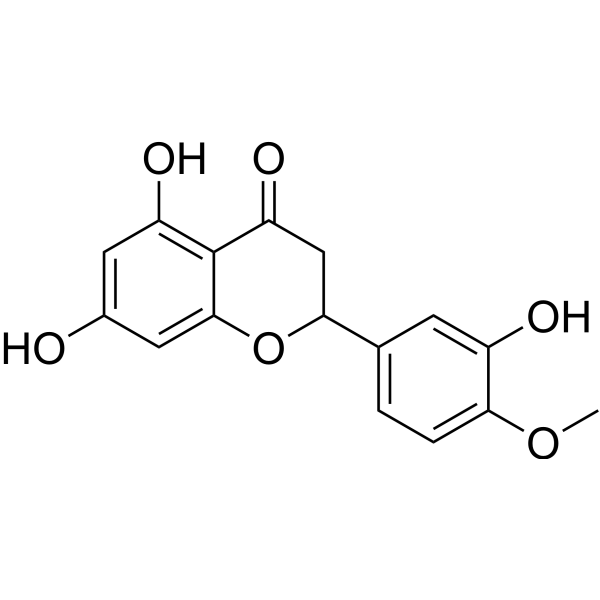
Cat. No.: HY-N0168A
CAS No.: 69097-99-0
(Rac)-Hesperetin is the racemate of Hesperetin (HY-N0168), an orally active multi-target inhibitor. (Rac)-Hesperetin exhibits significant anti-tumor and anti-inflammatory activities by blocking the TGF-β1-mediated Fyn/RhoA signaling axis and the TLR4-MyD88-NF-κB inflammatory pathway. (Rac)-Hesperetin inhibits the formation of actin stress fibers and the migration and invasion of cancer cells, and is suitable for triple-negative breast cancer research. In inflammation models, (Rac)-Hesperetin effectively alleviates lung injury by reducing the release of pro-inflammatory mediators and regulating the activity of oxidative stress enzymes, and is suitable for acute lung injury research. (Rac)-Hesperetin also interferes with the entry and early replication processes of channel catfish virus, inhibits viral gene expression and progeny virus production, thereby protecting cells from virus-induced cytopathic effects .
loading...
    loading...
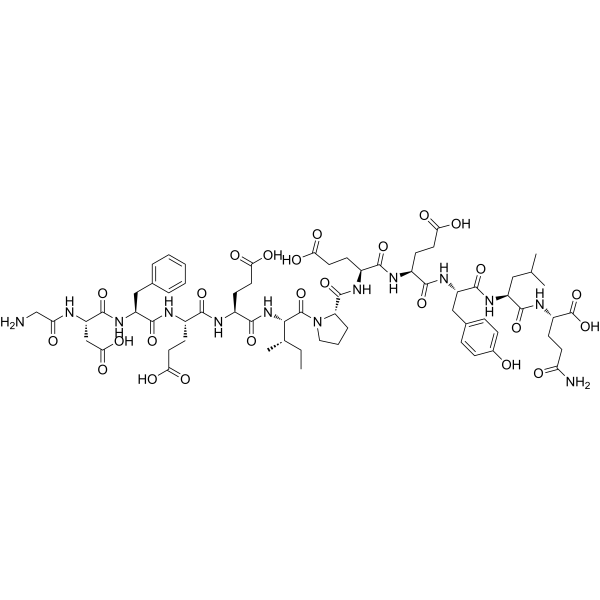
Cat. No.: HY-P1636
CAS No.: 113274-56-9
Research Areas:  

Metabolic Disease

Hirudin (54-65) is a thrombin antagonist and YAP suppressor with anticoagulatory properties.Hirudin (54-65) blocks thrombin's anion binding site, acts on soluble and thrombus-bound thrombin.Hirudin (54-65) suppresses thrombin-induced profibrotic YAP activity, reduces YAP expression, nuclear translocation, and downstream effector signaling in vascular endothelial cells.Hirudin (54-65) ameliorates obstructive cholestasis, attenuates liver fibrosis symptoms, fibrosis-associated angiogenesis, and endothelial-to-mesenchymal transition.Hirudin (54-65) reduces liver inflammation and tissue hypoxia.Hirudin (54-65) promotes extracellular calcium influx through L-type calcium channels in canine coronary artery smooth muscle, mediates contraction.Hirudin (54-65) induces endothelium-independent contraction of canine coronary arterial segments; this response is not affected by indomethacin pretreatment.Hirudin (54-65) can be used for the research of liver obstructive cholestasis, liver fibrosis .
loading...
    loading...
Cat. No.: HY-W027553S1
Synonyms: NIK-247-d9 free base
Ipidacrine-d9 (NIK-247-d9 (free base)) is the deuterium labeled Ipidacrine (HY-W027553). Ipidacrine is orally active and brain-penetrant AChE and BuChE inhibitors with IC50 values of 1 μM and 1.9 μM, respectively, which is also a partial agonist of M2-cholinergic receptors and a reversible cholinesterase inhibitor. Ipidacrine has a stimulating effect on neuromuscular transmission and excitation along the nerve fibres with a moderately anti-pain effect. Ipidacrine is an aminopyridines and is structurally similar to Tacrine (HY-111338). Ipidacrine is effective in various amnesia models, improves erectile function and inhibits K+ and Na+-channels in the neuronal membrane in diabetic rats. Ipidacrine is promising for research of Alzheimer’s disease, ischaemic stroke, idiopathic neuropathy of the facial nerve, diabetes mellitus-induced erectile dysfunction and other deficits in central or peripheral cholinergic deseases .
loading...
    loading...

