331 Results for "

Calcium Channel Blocker

" in MedChemExpress (MCE) Product Catalog:
Products (331)

331 Results for "Calcium Channel Blocker" in MCE Product Catalog:

Art. -Nr.: HY-106458
CAS. Nr.: 22609-73-0
Synonyms: Bay a 7168
Target:  

Calcium Channel

Forschungsgebiete:  

Cardiovascular Disease

Niludipine (Bay a 7168) is an orally active calcium channel blocker and vasodilator with antihypertensive effects. Niludipine can improve early fatal ventricular arrhythmias induced by acute myocardial ischemia in rats. Niludipine can reduce left ventricular systolic and diastolic loads during pacing-induced angina pectoris. Niludipine can be used in the research of cardiovascular diseases such as coronary heart disease and myocardial ischemia .
loading...
    loading...
Art. -Nr.: HY-N4323R
CAS. Nr.: 4176-97-0
14-Deoxyandrographolide (Standard) is the analytical standard of 14-Deoxyandrographolide. 14-Deoxyandrographolide is a diterpene with calcium channel blocking activity and acts as a uterine smooth muscle relaxant. 14-Deoxyandrographolide stimulates the release of nitric oxide (NO) in endothelial cells. 14-Deoxyandrographolide gradually desensitizes liver cells to TNF-α mediated apoptosis by inducing the release of TNFRSF1A .
loading...
    loading...
Art. -Nr.: HY-N3741
CAS. Nr.: 18296-45-2
Synonyms: Didrovaltratum
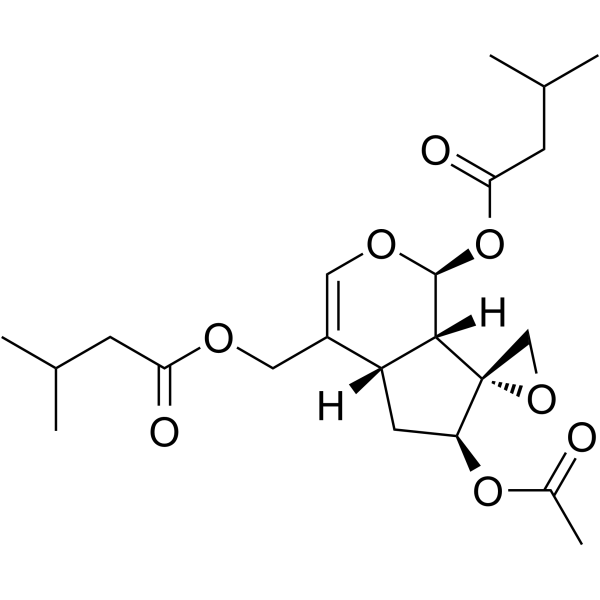
Didrovaltrate (Didrovaltratum) is an L-type calcium channel blocker, ROS scavenger, autophagy enhancer, and lipid accumulation inhibitor. Didrovaltrate blocks L-type calcium currents in a concentration-dependent manner, shifts the current-voltage curve upward, modulates steady-state inactivation kinetics, and inhibits the nuclear translocation of glucocorticoid receptors. Didrovaltrate reduces ROS levels, downregulates the expression of muscle atrophy-related genes, enhances autophagy via lipophagy, and decreases Oleic acid-induced lipid accumulation. Didrovaltrate exhibits cytotoxic activity against cancer cells. Didrovaltrate can be used in research related to skeletal muscle atrophy, non-alcoholic fatty liver disease, breast cancer, lung cancer, gastric cancer, and prostate cancer .
loading...
    loading...
Art. -Nr.: HY-L070
1,851 compounds

Neurodegenerative diseases are characterised by progressive dysfunction and death of neurons, such as Alzheimer’s disease, Parkinson’s disease, and multiple sclerosis (MS). Neuroprotection is an approach to preserve neurons so that neurons cannot be hurt by different pathological factors in neurodegenerative diseases. Neuroprotectors are some agonists and antagonists targeting some key targets in neuroprotactive signal pathways, such as calcium and sodium channel blockers, GABA receptor agonists, NMDA receptor Antagonists, etc. Current neuroprotectors cannot reverse existing damage, but they may protect against further nerve damage and slow down any degeneration of the central nervous system (CNS) and still play important roles in the treatment of neurodegenerative diseases.

MCE offers a unique collection of 1,851 compounds with potential neuroprotective activities. These compounds mainly act on some key targets in neuroprotetive signal pathways, such as calcium channel, sodium channel, adenosine A1 receptor, etc. MCE Neuroprotective Compopund Library is a useful tool in neuroprotective drug discovery.

Art. -Nr.: HY-12502B
CAS. Nr.: 111011-53-1
Synonyms: NZ-105 hydrochloride; (±)-Efonidipine hydrochloride
Forschungsgebiete:  

Cardiovascular Disease Cancer

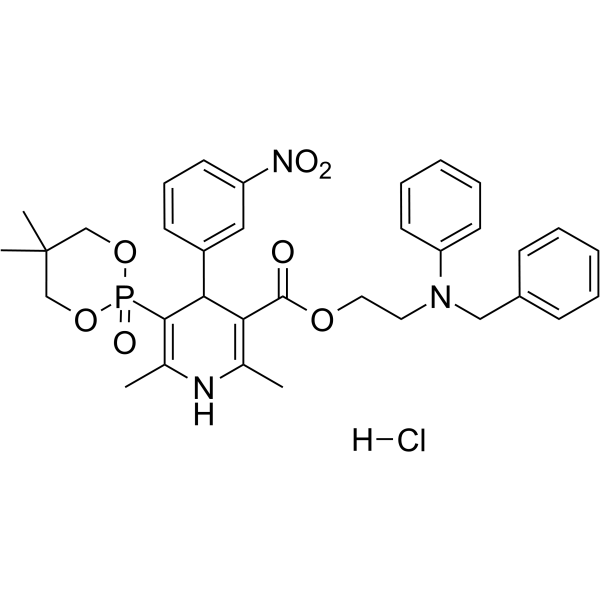
Efonidipine (NZ-105) hydrochloride is an orally active dual L-type and T-type calcium channel blocker (CCB) with IC50 values of 1.8 and 350 nM, respectively. Efonidipine hydrochloride inhibits SARS-CoV-2 main protease. Efonidipine hydrochloride modulates adrenal steroidogenesis by increasing the expression of steroidogenic acute regulatory protein (StAR), dbcAMP-or angiotensin II-induced StAR mRNA expression and DHEA-S production, while suppressing the biosynthesis of aldosterone and cortisol. Efonidipine hydrochloride reduces plasma aldosterone levels in vivo. Efonidipine hydrochloride improves cardiac function in heart failure models by inhibiting T-type calcium channels (via both tonic and use-dependent blockade), independently of blood pressure reduction. Efonidipine hydrochloride can be used for research in hypertension, heart failure, and disorders involving dysregulated steroid hormone synthesis .
loading...
    loading...
Art. -Nr.: HY-116500A
CAS. Nr.: 228123-15-7
Target:  

Calcium Channel

Forschungsgebiete:  

Cardiovascular Disease

AH-1058 is a newly synthesized antiarrhythmic agent that exhibits significant antiarrhythmic activity by delaying premature ventricular complexes and ventricular fibrillation in experimental arrhythmia models. AH-1058 effectively inhibits both ventricular tachycardia and ventricular fibrillation in the reperfusion-induced arrhythmia model in rats. AH-1058 demonstrates potent calcium channel-blocking effects, suppressing L-type Ca2+ currents in isolated cardiomyocytes.
loading...
    loading...
Art. -Nr.: HY-165341
CAS. Nr.: 1442559-20-7
SCR1693 is a selective, reversible, orally active and noncompetitive inhibitor of AChE (IC50 = 0.68 μM) as well as a calcium channel blocker. SCR1693 reduces tau phosphorylation levels, and inhibits the generation and release of . SCR1693 restores insulin signaling and improves cognitive deficits. SCR1693 can be used for the study of Alzheimer's disease, especially which complicated with type 2 diabetes mellitus .
loading...
    loading...
Art. -Nr.: HY-A0064S1
CAS. Nr.: 1185032-80-7
Synonyms: (±)-Verapamil-d6 hydrochloride; CP-16533-1-d6 hydrochloride
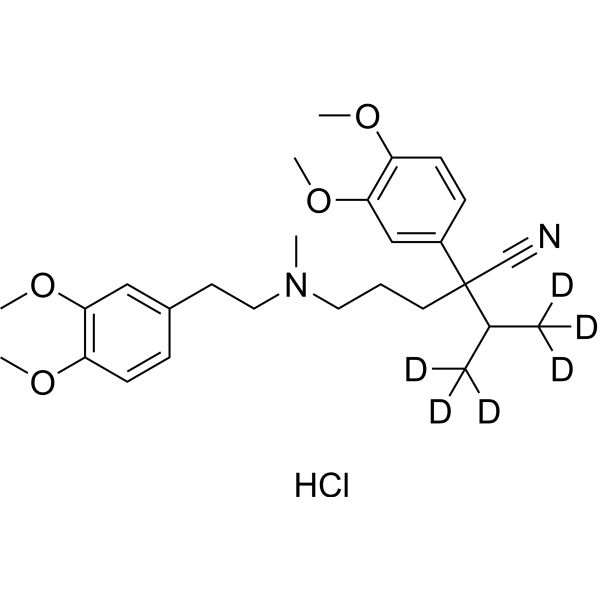
Verapamil-d6 (CP-16533-1-d6) hydrochloride is the deuterium labled Verapamil (hydrochloride) (HY-A0064). Verapamil hydrochloride ((±)-Verapamil hydrochloride) is a calcium channel blocker and a potent and orally active first-generation P-glycoprotein (P-gp) inhibitor. Verapamil hydrochloride also inhibits CYP3A4. Verapamil hydrochloride has the potential for high blood pressure, heart arrhythmias and angina research .
loading...
    loading...
Art. -Nr.: HY-102052R
CAS. Nr.: 60563-36-2
Forschungsgebiete:  

Metabolic Disease

DCEBIO (Standard) is the analytical standard of DCEBIO (HY-102052). This product is intended for research and analytical applications. DCEBIO is a small/medium conductance calcium-activated potassium (SKCa/IKCa) channel opener and primary neuron signal blocker. It hyperpolarizes the membrane potential of C2C12 myoblasts by activating IKCa channels, thereby promoting myogenic differentiation. The specific biological activity of DCEBIO is manifested in increased myotube formation, enhanced myosin heavy chain II protein levels and myogenin mRNA levels. DCEBIO can be applied in the field of muscle research, especially in muscle-related degenerative diseases such as sarcopenia .
loading...
    loading...
Art. -Nr.: HY-B1194
CAS. Nr.: 5086-74-8
Synonyms: (±)-Tetramisole hydrochloride; DL-Tetramisole hydrochloride; R-829
Forschungsgebiete:  

Infection Cardiovascular Disease

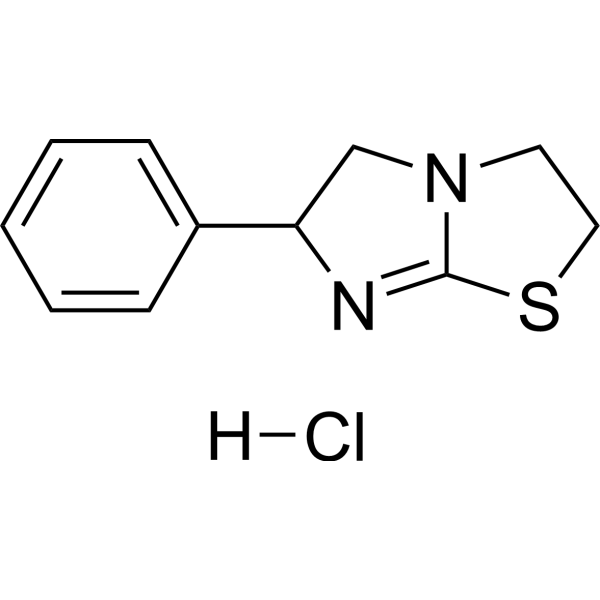
Tetramisole hydrochloride is an orally active, selective inward rectifier potassium channel agonist with an EC50 of approximately 30 μM for the Kir2.1 subunit. Tetramisole hydrochloride is also an anti-nematode agent that blocks neuromuscular transmission by non-competitive depolarization. Tetramisole hydrochloride promotes the forward transport of Kir2.1 channels, hyperpolarizes the resting potential (RP), shortens the action potential duration (APD), inhibits intracellular calcium overload and the PKA signaling pathway, and exerts anti-arrhythmic and anti-myocardial remodeling activities. Tetramisole hydrochloride can be used in cardiac electrophysiology research and research related to myocardial ischemia and heart failure .
loading...
    loading...
Art. -Nr.: HY-B1194A
CAS. Nr.: 5036-02-2
Forschungsgebiete:  

Infection Cardiovascular Disease

Tetramisole is an orally active, selective inward rectifier potassium channel agonist with an EC50 of approximately 30 μM for the Kir2.1 subunit. Tetramisole is also an anti-nematode agent that blocks neuromuscular transmission by non-competitive depolarization. Tetramisole promotes the forward transport of Kir2.1 channels, hyperpolarizes the resting potential (RP), shortens the action potential duration (APD), inhibits intracellular calcium overload and the PKA signaling pathway, and exerts anti-arrhythmic and anti-myocardial remodeling activities. Tetramisole can be used in cardiac electrophysiology research and research related to myocardial ischemia and heart failure .
loading...
    loading...
Art. -Nr.: HY-B0424R
CAS. Nr.: 39562-70-4
Synonyms: BAY-E-5009 (Standard)
Nitrendipine (Standard) is the analytical standard of Nitrendipine (HY-B0424). This product is intended for research and analytical applications. Nitrendipine (BAY-E-5009) is an orally active analog of Nifedipine (HY-B0284) and dihydropyridine calcium channel blocker. Nitrendipine induces Apoptosis. Nitrendipine has antihypertensive effects. Nitrendipine blocks alcohol and Morphine withdrawal symptoms. Nitrendipine reduces right ventricular hypertrophy and pulmonary vascular changes induced by intermittent hypoxia. Nitrendipine has anticancer effects on neuroblastoma .
loading...
    loading...
Art. -Nr.: HY-B0424S
CAS. Nr.: 2469554-26-3
Synonyms: AY-E-5009-d5
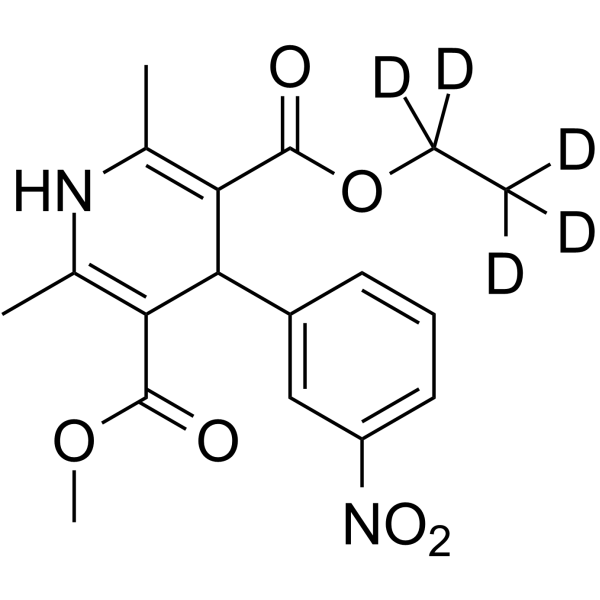
Nitrendipine-d5 is the deuterium labeled Nitrendipine (HY-B0424). Nitrendipine (BAY-E-5009) is an orally active analog of Nifedipine (HY-B0284) and dihydropyridine calcium channel blocker. Nitrendipine induces Apoptosis. Nitrendipine has antihypertensive effects. Nitrendipine blocks alcohol and Morphine withdrawal symptoms. Nitrendipine reduces right ventricular hypertrophy and pulmonary vascular changes induced by intermittent hypoxia. Nitrendipine has anticancer effects on neuroblastoma .
loading...
    loading...
Art. -Nr.: HY-N0081R
CAS. Nr.: 73069-25-7
(±)-Praeruptorin A (Standard) is the analytical standard of (±)-Praeruptorin A (HY-N0081). This product is intended for research and analytical applications. (±)-Praeruptorin A, a coumarin compound, is the main bioactive component in Peucedani Radix. As a calcium channel blocker, (±)-Praeruptorin A exhibits great antihypertensive effects. In addition, (±)-Praeruptorin A also has the effects of relaxing vascular smooth muscle, inhibiting airway inflammation and airway hyperresponsiveness. (±)-Praeruptorin A can be used for the research of allergic asthma, hypertension and other diseases .
loading...
    loading...
Art. -Nr.: HY-117542
CAS. Nr.: 16740-29-7
Forschungsgebiete:  

Neurological Disease

D595 is a phenylethylamine calcium channel blocker with potent negative inotropic activity. D595 has shown significant efficacy in its corresponding pharmacological studies, especially in inhibiting the uptake of monoamine neurotransmitters. D595 has high affinity in binding to the dopamine transporter (DAT), serotonin transporter (SERT), and norepinephrine transporter (NET). Structural adjustments of D595, especially changes in the hydroxyl stereochemistry, significantly affect its interaction with the transporters, showing a specific preference for stereoisomers .
loading...
    loading...
Art. -Nr.: HY-118472R
CAS. Nr.: 86541-78-8
Synonyms: CGS 14831 (Standard)
Benazeprilat (Standard) is the analytical standard of Benazeprilat. This product is intended for research and analytical applications. Benazeprilat is an orally active and the active metabolite of benazepril, a carboxyl-containing ACE inhibitor with antihypertensive activity. Benazepril is a well-established antihypertensive agent, both in monoresearch and in combination with other classes of drugs including thiazide diuretics and calcium channel blockers. Benazepril is a first-line research in reducing various pathologies associated with CV risk and secondary end-organ damage .
loading...
    loading...
Art. -Nr.: HY-128696R
CAS. Nr.: 400602-35-9
Synonyms: Amlodipine aspartate (Standard)
Amlodipine aspartic acid impurity (Amlodipine aspartate) (Standard) is the analytical standard of amlodipine aspartic acid impurity. This product is intended for research and analytical applications. Amlodipine aspartic acid impurity is the impurity of Amlodipine aspartic acid. Amlodipine aspartic acid is a calcium channel blocker with antihypertensive and antianginal properties. Amlodipine aspartic acid impurity can control blood pressure. Amlodipine aspartic acid impurity corrects gut dysbiosis and enhances taurine and hypotaurine metabolism. Amlodipine aspartic acid impurity can be studied in research for NAFLD and hypertension .
loading...
    loading...
Art. -Nr.: HY-N3103R
CAS. Nr.: 7362-39-2
Synonyms: Ethyl (E)-p-hydroxycinnamate (Standard); Ethyl trans-4-hydroxycinnamate (Standard)
Benazeprilat (Standard) is the analytical standard of Benazeprilat. This product is intended for research and analytical applications. Benazeprilat is an orally active and the active metabolite of benazepril, a carboxyl-containing ACE inhibitor with antihypertensive activity. Benazepril is a well-established antihypertensive agent, both in monoresearch and in combination with other classes of drugs including thiazide diuretics and calcium channel blockers. Benazepril is a first-line research in reducing various pathologies associated with CV risk and secondary end-organ damage .
loading...
    loading...
Art. -Nr.: HY-124940
CAS. Nr.: 446877-42-5
Forschungsgebiete:  

Cardiovascular Disease

CPU-228 is a complex class III antiarrhythmic agent. CPU-228 concentration-dependently blocks the activities of the rapid component 50 of the delayed rectifier potassium channel (IKr) and the L-type calcium channel (ICa,L), with an IC50 value of 0.909 μM for ICa,L current. CPU-228 produces negative inotropic effects and induces mild, non-frequency-dependent prolongation of the effective refractory period (ERP) in isolated left atria. CPU-228 reduces the incidence of torsades de pointes (TDP) in anesthetized rabbits and inhibits ischemia/reperfusion-induced arrhythmias in rats. CPU-228 can be used in studies related to torsades de pointes .
loading...
    loading...
Art. -Nr.: HY-183857
CAS. Nr.: 410080-55-6
Target:  

TRP Channel

Forschungsgebiete:  

Neurological Disease

DD-161515 is a TRPV1/VR1 inhibitor with an IC50 of 0.7 μM in rats. DD-161515 binds to an allosteric site of TRPV1 distinct from that of capsaicin, blocks channel opening, inhibits receptor-mediated calcium ion influx, reduces the excitability of peripheral sensory nerve fibers, and thereby inhibits nociception induced by heat and transmission of chemically induced pain signals. DD-161515 can be used in studies related to inflammatory pain .
loading...
    loading...

