358 Results for "

EGF-R kinases

" in MedChemExpress (MCE) Product Catalog:
Products (358)

358 Results for "EGF-R kinases" in MCE Product Catalog:

Cat. No.: HY-149099
CAS No.: 2918281-79-3
Target:  

RET

Research Areas:  

Cancer

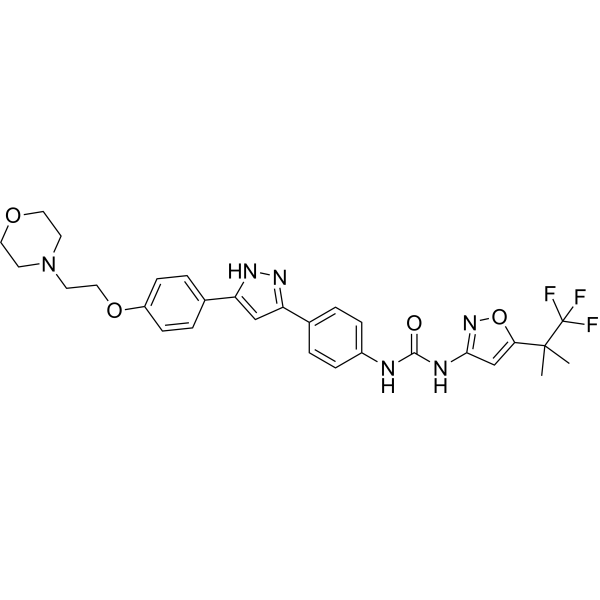
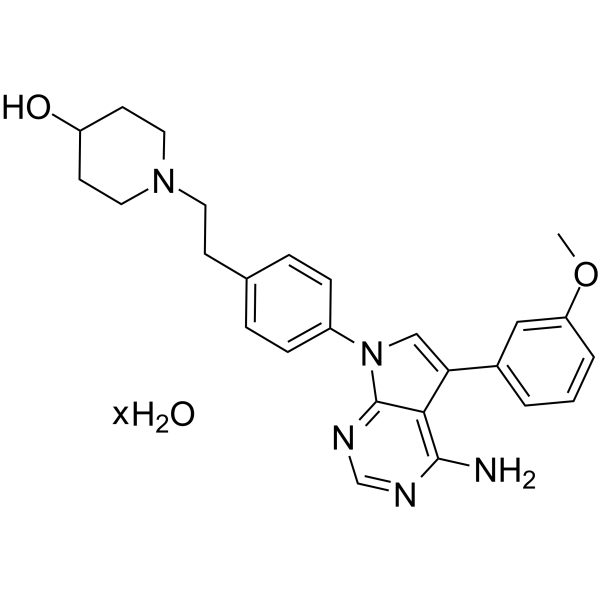
RET-IN-22 (compound 17b) is a potent, selective and orally active RET inhibitor with an IC50 of 20.9 nM and 18.3 nM for wild-type RET and RET-V804M, respectively. RET-IN-22 shows highly selective profile to most kinases, especially to EGFR and VEGFR2. RET-IN-22 has anticancer effects .
loading...
    loading...
Cat. No.: HY-15729AR
CAS No.: 1446700-26-0
Synonyms: CO-1686 hydrobromide (Standard); AVL-301 hydrobromide (Standard); CNX-419 hydrobromide (Standard)
Research Areas:  

Cancer

Rociletinib hydrobromide (Standard) is the analytical standard of Rociletinib hydrobromide. This product is intended for research and analytical applications. Rociletinib hydrobromide (CO-1686 hydrobromide) is an orally delivered kinase inhibitor that specifically targets the mutant forms of EGFR including T790M, and the Ki values for EGFRL858R/T790M and EGFRWT are 21.5 nM and 303.3 nM, respectively.
loading...
    loading...
Cat. No.: HY-162575
CAS No.: 128519-30-2
Target:  

ERK

Research Areas:  

Cancer

Anticancer agent 231 (Compound P5) is a tyrosine protein kinase inhibitor with a IC50 value of 3.95 μM. Anticancer agent 231 inhibits the cell viability, cell proliferation, cell migration and cancer dryness of triple negative breast cancer (TNBC) cells by targeting EGFR-ERK 1/2 signaling pathway, and is expected to play an important role in the field of TNBC disease therapy .
loading...
    loading...
Cat. No.: HY-175809
Target:  

CD44 Src EGFR MAPKAPK2 (MK2)

Research Areas:  

Cancer

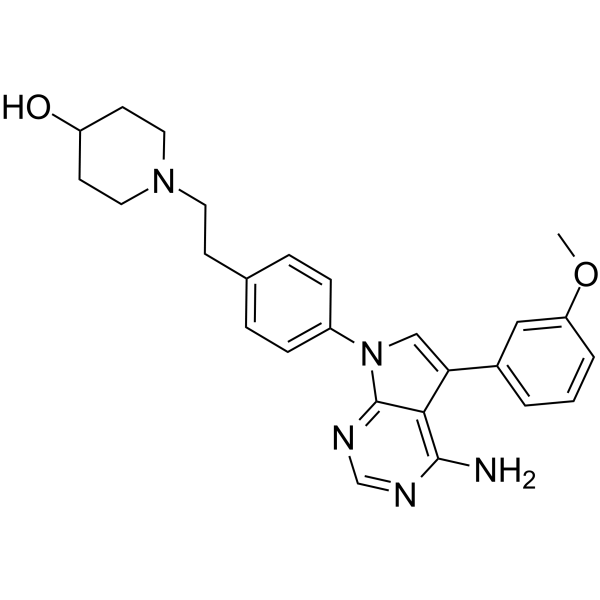
SRT6 is a CD44 inhibitor. SRT6 exerts antiproliferative activity in CD44 + breast cancer and lung cancer cells. SRT6 inhibits CD44-associated SRC kinase, as well as EGFR, ERBB2, ERBB4, MAP3K10 and MAPKAPK2. SRT6 can be used for the research of breast cancer and lung cancer .
loading...
    loading...
Cat. No.: HY-W062835
CAS No.: 234772-64-6
Target:  

Src

Research Areas:  

Cancer

CGP77675 is an orally active and potent inhibitor of Src family kinases. CGP77675 inhibits phosphorylation of peptide substrates and autophosphorylation of purified Src (IC50s of 5-20 and 40 nM, respectively), and also inhibits Src, EGFR, KDR, v-Abl, and Lck with IC50s of 5-20, 40, 20, 150, 1000, 310, and 290 nM, respectively. Anticancer activity .
loading...
    loading...
Cat. No.: HY-112823R
CAS No.: 1899921-05-1
Synonyms: HS-10296 (Standard)
Research Areas:  

Cancer

Almonertinib (Standard) is the analytical standard of Almonertinib. This product is intended for research and analytical applications. Almonertinib (HS-10296) is an orally available, irreversible, third-generation EGFR tyrosine kinase inhibitor with high selectivity for EGFR-sensitizing and T790M resistance mutations. Almonertinib shows great inhibitory activity against T790M, T790M/L858R and T790M/Del19 (IC50: 0.37, 0.29 and 0.21 nM, respectively), and is less effective against wild type (3.39 nM). Almonertinib is used for the research of the non-small cell lung cancer .
loading...
    loading...
Cat. No.: HY-179599
CAS No.: 1448757-02-5
Target:  

DYRK EGFR

Research Areas:  

Neurological Disease Cancer

Dyrk1A-IN-15 is a selective, brain-penetrant and ATP-competitive Dyrk1A inhibitor with a IC50 of 19 nM. Dyrk1A-IN-15 displays high selectivity across a broad kinase panel (specific for DYRK kinases) with nanomolar potency. Dyrk1A-IN-15 impairs neurosphere self-renewal, cell invasion, and EGFR stability in vitro. Dyrk1A-IN-15 inhibits tumor growth and prolongs survival in vivo. Dyrk1A-IN-15 has potential for glioblastoma (GBM) research .
loading...
    loading...
Cat. No.: HY-179600
CAS No.: 2805339-74-4
Target:  

DYRK EGFR

Research Areas:  

Neurological Disease Cancer

Dyrk1A-IN-16 is a selective, brain-penetrant and ATP-competitive Dyrk1A inhibitor with a IC50 of 53 nM. Dyrk1A-IN-16 displays high selectivity across a broad kinase panel (specific for DYRK kinases) with nanomolar potency. Dyrk1A-IN-16 impairs neurosphere self-renewal, cell invasion, and EGFR stability in vitro. Dyrk1A-IN-16 inhibits tumor growth and prolongs survival in vivo. Dyrk1A-IN-16 has potential for glioblastoma (GBM) research .
loading...
    loading...
Cat. No.: HY-185227
CAS No.: 1394837-94-5
Research Areas:  

Cancer

EphB4-IN-1 is a selective EphB4 tyrosine kinase inhibitor with IC50 values of 0.16-0.30 μM. EphB4-IN-1 binds to the ATP binding site of EphB4 in a DFG-in conformation, forming four stable intermolecular hydrogen bonds. EphB4-IN-1 also inhibits Src, Abl1, Lck, and EGFR kinases. EphB4-IN-1 inhibits EphB4 autophosphorylation. EphB4-IN-1 can be used for the research of cancer, such as non small cell lung cancer .
loading...
    loading...
Cat. No.: HY-108486
CAS No.: 70563-58-5
Purity:  99%
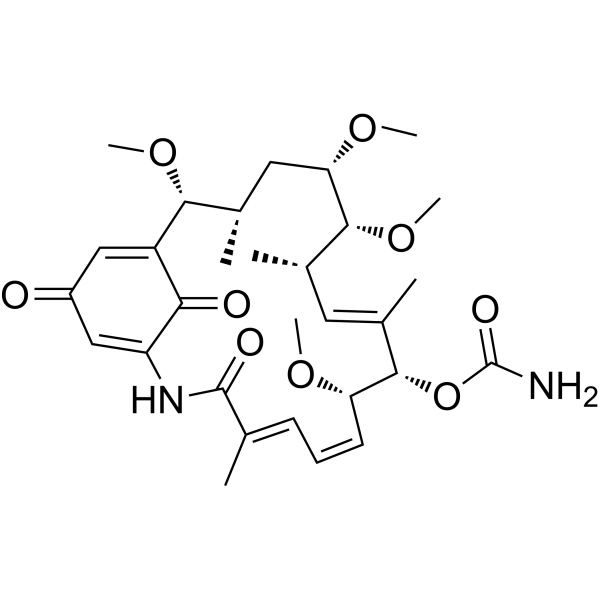
Herbimycin A is an antibiotic and protein tyrosine kinase inhibitor. Herbimycin A directly inhibits the autophosphorylation of p210 BCR-ABL with an IC50 of approximately 5 μM, and reduces Src kinase activity. Herbimycin A also induces the degradation of receptor tyrosine kinases such as insulin-like growth factor 1 receptor (IGF-1R), insulin receptor (IR) and epidermal growth factor receptor (EGFR) via the ubiquitin-20S proteasome pathway. Herbimycin A directly modifies NF-κB p50, with the main target site involving Cys62, thereby blocking the DNA binding of p50 and NF-κB-driven gene expression. Herbimycin A can be used in studies related to tyrosine kinase signaling, chronic myeloid leukemia, NF-κB signaling, osteoclast function, apoptosis and cellular stress .
loading...
    loading...
Cat. No.: HY-111138R
CAS No.: 916603-07-1
Synonyms: CZC-00008004 (Standard)
Research Areas:  

Cancer

CZC-8004 (Standard) is the analytical standard of CZC-8004 (HY-111138). This product is intended for research and analytical applications. CZC-8004 (CZC-00008004) is a pan-Kinase inhibitor. CZC-8004 has IC50 values of 650 and 437 nM for EGFR WT and VEGFR2 V916M, respectively. CZC-8004 can be used in the study of cancer .
loading...
    loading...
Cat. No.: HY-13256AS
CAS No.: 1216420-11-9
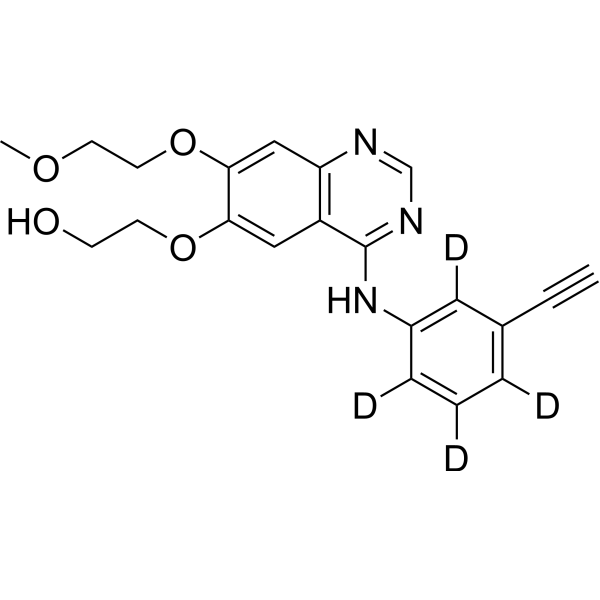
Desmethyl Erlotinib-d4 is the deuterium labeled Desmethyl Erlotinib. Desmethyl Erlotinib (OSI-420 free base) is an active metabolite of Erlotinib. Erlotinib is a potent EGFR tyrosin kinase inhibitor . Desmethyl Erlotinib-d4 is a click chemistry reagent, it contains an Alkyne group and can undergo copper-catalyzed azide-alkyne cycloaddition (CuAAc) with molecules containing Azide groups.
loading...
    loading...
Cat. No.: HY-W062835A
Target:  

Src

Research Areas:  

Cancer

CGP77675 hydrate is an orally active and potent inhibitor of Src family kinases. CGP77675 hydrate inhibits phosphorylation of peptide substrates and autophosphorylation of purified Src (IC50s of 5-20 and 40 nM, respectively),and also inhibits Src, EGFR, KDR, v-Abl, and Lck with IC50s of 0.02, 0.15, 1.0, 0.31, and 0.29 μM, respectively. Anticancer activity .
loading...
    loading...
Cat. No.: HY-107367
CAS No.: 908305-13-5
Synonyms: S-22611
Target:  

EGFR

Research Areas:  

Cancer

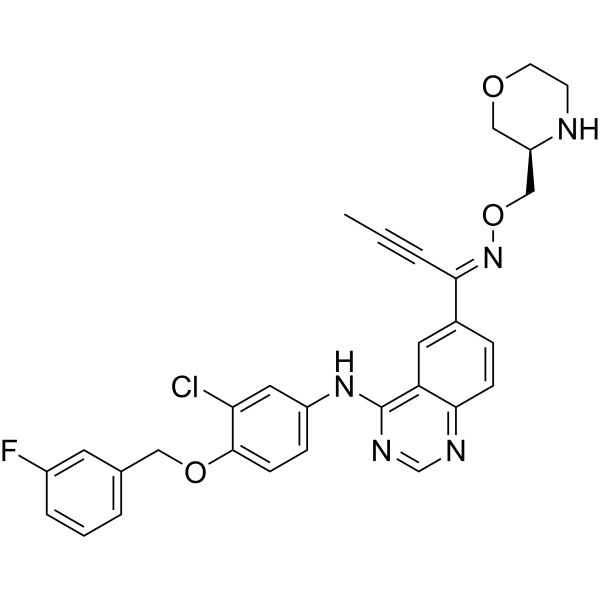
Epertinib (S-22611) is a potent, orally active, reversible, and selective tyrosine kinase inhibitor of EGFR, HER4 and HER2, with IC50s of 1.48 nM, 2.49 nM and 7.15 nM, respectively. Epertinib shows potent antitumor activity . Epertinib is a click chemistry reagent, it contains an Alkyne group and can undergo copper-catalyzed azide-alkyne cycloaddition (CuAAc) with molecules containing Azide groups.
loading...
    loading...
Cat. No.: HY-107367A
CAS No.: 2071195-74-7
Purity:  98.15%
Synonyms: S-22611 hydrochloride
Target:  

EGFR

Research Areas:  

Cancer

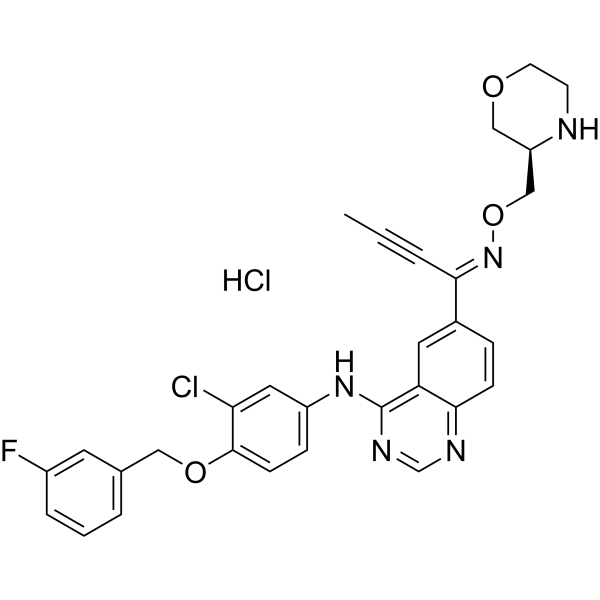
Epertinib (S-22611) hydrochloride is a potent, orally active, reversible, and selective tyrosine kinase inhibitor of EGFR, HER4 and HER2, with IC50s of 1.48 nM, 2.49 nM and 7.15 nM, respectively. Epertinib hydrochloride shows potent antitumor activity . Epertinib (hydrochloride) is a click chemistry reagent, it contains an Alkyne group and can undergo copper-catalyzed azide-alkyne cycloaddition (CuAAc) with molecules containing Azide groups.
loading...
    loading...
Cat. No.: HY-E70677
Target:  

CDK

Research Areas:  

Cancer

CDK3 is a major player driving retinoblastoma (Rb) phosphorylation during the G0/G1 transition and in the early G1 phase of the cell cycle. CDK3 interacts with various transcription factors involved in cell proliferation, differentiation, and transformation driven by the EGFR/Ras signaling pathway. CDK3/CycC Recombinant Human Active Protein Kinase is an ortholog of CDK3 .
loading...
    loading...
Cat. No.: HY-E70680
Target:  

CDK

Research Areas:  

Cancer

CDK3 is a major player driving retinoblastoma (Rb) phosphorylation during the G0/G1 transition and in the early G1 phase of the cell cycle. CDK3 interacts with various transcription factors involved in cell proliferation, differentiation, and transformation driven by the EGFR/Ras signaling pathway. CDK3/CycO Recombinant Human Active Protein Kinase is an ortholog of CDK3 .
loading...
    loading...
Cat. No.: HY-N20660
CAS No.: 752211-90-8
Synonyms: (+)-Dictyvaric acid
Dictyvaric acid ((+)-Dictyvaric acid) is a novel sesquiterpene-substituted benzoic acid-type marine secondary metabolite isolated from the brown alga Dictyopteris divaricata. Dictyvaric acid’s congeneric analogs exhibit anti-tumor and antibacterial biological potential, and sulfide and sesquiterpene hydroquinone derivatives from congeneric algae can target EGFR and VEGFR kinases. Dictyvaric acid can be used in research related to cancers such as liver cancer and breast cancer .
loading...
    loading...
Cat. No.: HY-N4201
CAS No.: 7415-78-3
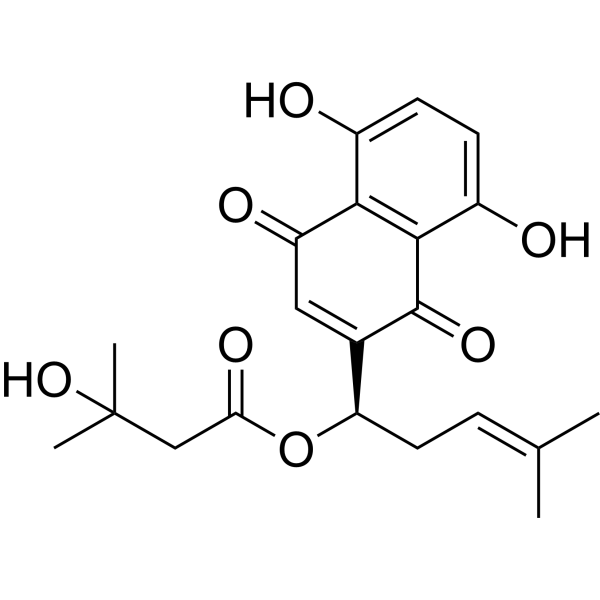
Beta-hydroxyisovalerylshikonin is a natural product isolated from Lithospermum erythrorhizon, acts as a potent inhibitor of protein tyrosine kinases (PTK), with IC50s of 0.7μM and 1μM for EGFR and v-Src receptor, respectively. Beta-hydroxyisovalerylshikonin is effective against a wide variety of tumor cell lines, and most efficiently induces cell-death in NCI-H522 and DMS114 cells .
loading...
    loading...
Cat. No.: HY-W259575
CAS No.: 70035-83-5
Research Areas:  

Cancer

CDKi free base is a CDK inhibitor. CDKi free base induces morphological changes, DNA fragmentation, and cell death in vestibular schwannoma cells. CDKi free base downregulates pRb, EGF-R, PI3K, NF-κB, and Shh levels, while upregulating JNK, ASK1, Caspase 3, and p21, and induces PARP-1 cleavage. CDKi free base can be used in research related to vestibular schwannoma .
loading...
    loading...

