337 Results for "

HIV reverse transcriptase

" in MedChemExpress (MCE) Product Catalog:
Products (337)

337 Results for "HIV reverse transcriptase" in MCE Product Catalog:

Cat. No.: HY-17396R
CAS No.: 101827-46-7
Synonyms: KP363 Hydrochloride (Standard)
Research Areas:  

Infection

Rilpivirine (hydrochloride) (Standard) is the analytical standard of Rilpivirine (hydrochloride). This product is intended for research and analytical applications. Rilpivirine (R278474) hydrochloride is a potent and specific diarylpyrimidine (DAPY) non-nucleoside reverse transcriptase inhibitor (NNRTI). Rilpivirine hydrochloride has high antiviral activity against wild-type HIV (EC50=0.4 nM) and mutant viruses (EC50=0.1-2.0 nM). Rilpivirine hydrochloride has a high genetic barrier to resistance development of HIV .
loading...
    loading...
Cat. No.: HY-N0165
CAS No.: 11013-97-1
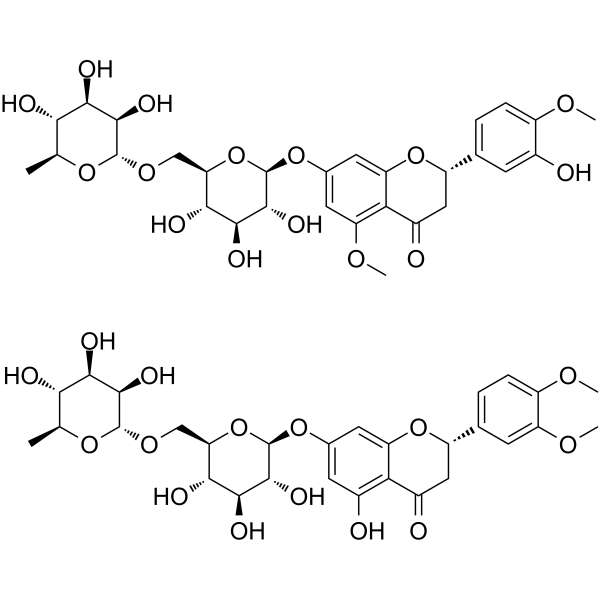
Methyl-Hesperidin is a glycoside compound. Methyl-Hesperidin has hypotensive, coronary dilating, smooth muscle relaxing, capillary stabilizing, choleretic, and anti-ulcer activities. Methyl-Hesperidin act as a competitive substrate to inhibit HIV-1 reverse transcriptase activity. Methyl-Hesperidin potentiates coronary dilating actions of adenine nucleotides and 3'-AMP, enhances depressant action on isolated atria, and prolongs adenosine- and ATP-induced heart block in guinea pigs .
loading...
    loading...
Cat. No.: HY-N14349
CAS No.: 60696-52-8
Synonyms: ARQ; Asterriquinone SU5504
Asterriquinone (ARQ), a Asterriquinone analog, is a Grb-2 binding inhibitor. Asterriquinone inhibits the Grb-2 binding activity to tyrosine phosphorylated EGFR, with an IC50 of 8.37 μM. Asterriquinone is a HIV1 reverse transcriptase inhibitor with a Ki of 2.3 μM. Asterriquinone also inhibits Grb-7 and PLC-γ binding activities. .
loading...
    loading...
Cat. No.: HY-14913
CAS No.: 160707-69-7
Synonyms: SPD754; AVX754
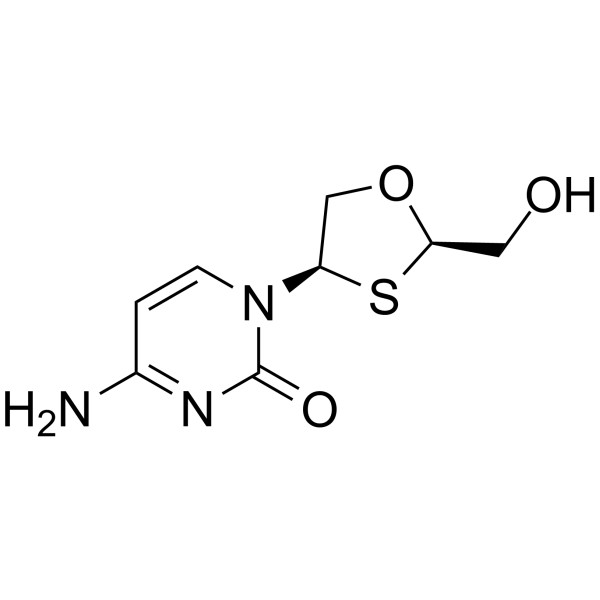
Apricitabine (SPD754; AVX754), the (-) enantiomer of 2′-deoxy-3′-oxa-4′-thiocytidine (dOTC), is a highly selective and orally active HIV-1 reverse transcriptase (RT) inhibitor (Ki=0.08 μM), as well as inhibits DNA polymerases α, β, and γ with Ki value of 300 μM, 12 μM, and 112.25 μM, respectively . Apricitabine (SPD754; AVX754) shows promising antiretroviral efficacy, good tolerability and a low propensity for resistance selection in antiretroviral-naive HIV infection .
loading...
    loading...
Cat. No.: HY-W719041
CAS No.: 23363-08-8
1,6-Di-O-galloyl-β-D-glucose is a compound found in the fruit of Phyllanthus emblica. 1,6-Di-O-galloyl-β-D-glucose has HIV-1 reverse transcriptase (RT) inhibitory activity with an IC50 value of 270 μM. 1,6-Di-O-galloyl-β-D-glucose shows competitive inhibition for the template primer and non-competitive inhibition for the substrate (dTTP). 1,6-Di-O-galloyl-β-D-glucose can be used in anti-HIV research .
loading...
    loading...
Cat. No.: HY-125810
CAS No.: 306305-07-7
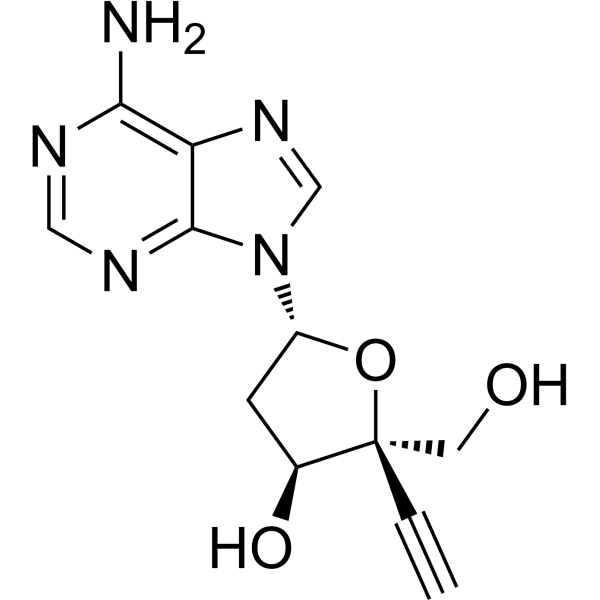
4'-Ethynyl-2'-deoxyadenosine (4'-E-dA), a nucleoside reverse transcriptase (RT) inhibitor, is an antiretroviral agent which is potent against drug-resistant HIV variants, with an EC50 of 98 nM in MT-4 cells for anti-HIV-1 activity . 4'-Ethynyl-2'-deoxyadenosine is a click chemistry reagent, it contains an Alkyne group and can undergo copper-catalyzed azide-alkyne cycloaddition (CuAAc) with molecules containing Azide groups.
loading...
    loading...
Cat. No.: HY-174303
Research Areas:  

Infection

NNRT-IN-9 (Compound EG28) is a non-nucleoside reverse transcriptase (NNRT) inhibitor. NNRT-IN-9 has potent antiviral and anti-resistance activity against wild-type (WT) HIV-1 and various clinically relevant mutations (E138K and K103N + Y181C) with EC50s of 55, 67 and 3910 nM, respectively. NNRT-IN-9 can be used for acquired immune deficiency syndrome (AIDS) research .
loading...
    loading...
Cat. No.: HY-W003486
CAS No.: 57489-77-7
Research Areas:  

Neurological Disease Cancer

5,7-Dichloropyrazolo[1,5-a]pyrimidine is a PDE10A inhibitor with a Ki of 24 μM. 5,7-Dichloropyrazolo[1,5-a]pyrimidine serves as a key intermediate in the synthesis of 5,7-disubstituted pyrazolo[1,5-a]pyrimidine derivatives (HIV-1 non-nucleoside reverse transcriptase inhibitors). 5,7-Dichloropyrazolo[1,5-a]pyrimidine can be used for the research of schizophrenia .
loading...
    loading...
Cat. No.: HY-L027
1,237 compounds

Viruses are much simpler organisms than bacteria, and they are made from protein substances and nucleic acid. Despite the fact that the exact mechanism of infection is extremely specific to each type of virus, the general scheme of infection can be represented in the following manner: A virus is absorbed at the surface of a host cell and then permeates through the membrane, where it releases nucleic acid from its protein protection. Then the viral nucleic acid begins to replicate, and transcription of the viral genome takes place either in the cytoplasm, or in the nucleus of the host cell. As a result of these events, a large amount of viral nucleic acid and protein are made to make new generations of virions. Therefore, one mechanism of action of antiviral drugs is to interfere with the ability of a virus to get into a target cell. A second mechanism of action is to target the processes that synthesize virus components after a virus invades a cell, such as nucleotide or nucleoside analogs.

MCE designs a unique collection of 1,237 anti-virus compounds that target several viruses, including SARS-CoV, HBV, HCV, HIV, HSV and Influenza Virus. It’s an effective tool for anti-virus drug discovery.

Cat. No.: HY-123330
CAS No.: 457635-65-3
Research Areas:  

Infection

GW695634 is an orally active prodrug of GW678248. GW695634 undergoes amidolysis in vivo to release the active ingredient GW678248, thereby inhibiting viral replication. GW678248 is a non-nucleoside reverse transcriptase inhibitor (NNRTi) with potent antiviral activity against Efavirenz (HY-10572)-resistant and Nevirapine (HY-10570)-resistant HIV and AIDS viruses .
loading...
    loading...
Cat. No.: HY-148191
CAS No.: 1030595-07-3
Purity:  99.32%
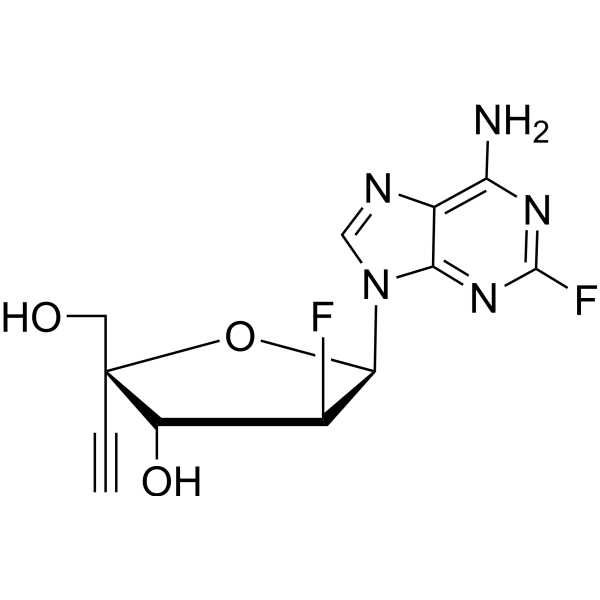
CL-197 is an orally active and long-acting purine anti-HIV nucleoside reverse transcriptase inhibitor (NRTI). CL-197 has potential effect on the research of viral, oncological and cerebrovascular diseases . CL-197 is a click chemistry reagent, it contains an Alkyne group and can undergo copper-catalyzed azide-alkyne cycloaddition (CuAAc) with molecules containing Azide groups.
loading...
    loading...
Cat. No.: HY-W074930R
CAS No.: 147127-19-3
Synonyms: (S)-GS 1278 (Standard); (S)-PMPA (Standard); (S)-TDF (Standard)
Research Areas:  

Infection

(S)-Tenofovir (Standard) is the analytical standard of (S)-Tenofovir. This product is intended for research and analytical applications. (S)-Tenofovir is the less active S-enantiomer of Tenofovir (HY-13910). Tenofovir is a nucleotide reverse transcriptase inhibitor to treat HIV and chronic Hepatitis B (HBV). (S)-Tenofovir has low activity to Orf virus. (S)-Tenofovir can be used for research on contagious pustular dermatitis .
loading...
    loading...
Cat. No.: HY-137697
CAS No.: 66004-77-1
ddCTP is a type of chain-terminating deoxynucleotide. ddCTP can be incorporated into the extension primer chain that lacks the 3'-hydroxyl group, thereby terminating primer extension, viral genome replication, and DNA synthesis. ddCTP can distinguish almost identical RNA through distinguishable extension products in primer extension inhibition experiments. ddCTP is the active metabolite of Zalcitabine (HY-17392), which can competitively inhibit HIV reverse transcriptase, terminate the synthesis of viral DNA chains, and thereby inhibit HIV replication .
loading...
    loading...
Cat. No.: HY-181034
Research Areas:  

Infection

NNRT-IN-15 (Compound 16a) is a potent non-nucleoside reverse transcriptase (NNRT) inhibitor. NNRT-IN-15 shows an EC50 of 3 nM for WT HIV-1 and inhibits seven mutant strains (L100I, K103N, Y181C, etc.) (EC50 = 8.2-43.4 nM). NNRT-IN-15 has low cytotoxicity against MT-4 cells (CC50 = 196.46 μM). NNRT-IN-15 also inhibit WTHIV-1RT and hERG with IC50 values of 0.7599 μM and 27.455 μM. NNRT-IN-15 can be used for research of HIV-1 infection .
loading...
    loading...
Cat. No.: HY-116973
CAS No.: 159565-60-3
Target:  

HIV

Research Areas:  

Infection

L-738372 is a non-competitive reversible inhibitor of HIV-1 reverse transcriptase (RT) with an inhibition constant (Ki) of 140 nM against dTTP. When combined with any nucleoside analogs (such as azidothymidine triphosphate, didexoyinosine triphosphate, or didexoycytidine triphosphate), L-738372 exhibits synergistic inhibition of RT activity. L-738372 has 2-3 times more inhibitory potency against the azidothymidine-resistant RT (D67N, K70R, T215Y, K219Q) compared to the wild-type RT. L-738372 holds promise for research in the field of HIV virus treatment .
loading...
    loading...
Cat. No.: HY-183663
CAS No.: 171744-42-6
Target:  

HIV

Research Areas:  

Infection

PD-159206 is an anti-HIV agent. PD-159206 inhibits early pre-integration steps of the HIV life cycle, and delays sequential progression of reverse transcription products. PD-159206 can be used for the research of HIV infection .
loading...
    loading...
Cat. No.: HY-17423AR
CAS No.: 188062-50-2
Synonyms: Abacavir Hemisulfate (Standard); ABC sulfate (Standard)
Abacavir (sulfate) (Standard) is the analytical standard of Abacavir (sulfate). This product is intended for research and analytical applications. Abacavir sulfate (Abacavir Hemisulfate) is a competitive, orally active nucleoside reverse transcriptase inhibitor. Abacavir sulfate can inhibits the replication of HIV. Abacavir sulfate shows anticancer activity in prostate cancer cell lines. Abacavir sulfate can trespass the blood-brain-barrier and suppresses telomerase activity .
loading...
    loading...
Cat. No.: HY-122058
CAS No.: 1097732-62-1
Target:  

HIV

Research Areas:  

Infection

KRH-3955 is a CXCR4 antagonist with good bioavailability and potent anti-HIV-1 activity. KRH-3955 can effectively inhibit the replication of X4 HIV-1, including clinical isolates from different donors. KRH-3955 also shows activity against recombinant X4 HIV-1 containing reverse transcriptase, protease and tyrosinase resistance mutations. KRH-3955 can inhibit the binding of SDF-1alpha to CXCR4 and calcium ion signaling through this receptor. KRH-3955 inhibits the binding of an antibody against CXCR4 to CXCR4, showing a potent antagonistic effect on CXCR4. KRH-3955 shows an oral bioavailability of 25.6% in rats and can inhibit the replication of X4 HIV-1 in vivo .
loading...
    loading...
Cat. No.: HY-137697A
ddCTP tetrasodium is a type of chain-terminating deoxynucleotide. ddCTP tetrasodium can be incorporated into the extension primer chain that lacks the 3'-hydroxyl group, thereby terminating primer extension, viral genome replication, and DNA synthesis. ddCTP tetrasodium can distinguish almost identical RNA through distinguishable extension products in primer extension inhibition experiments. ddCTP tetrasodium is the active metabolite of Zalcitabine (HY-17392), which can competitively inhibit HIV reverse transcriptase, terminate the synthesis of viral DNA chains, and thereby inhibit HIV replication .
loading...
    loading...
Cat. No.: HY-137697B
CAS No.: 93939-77-6
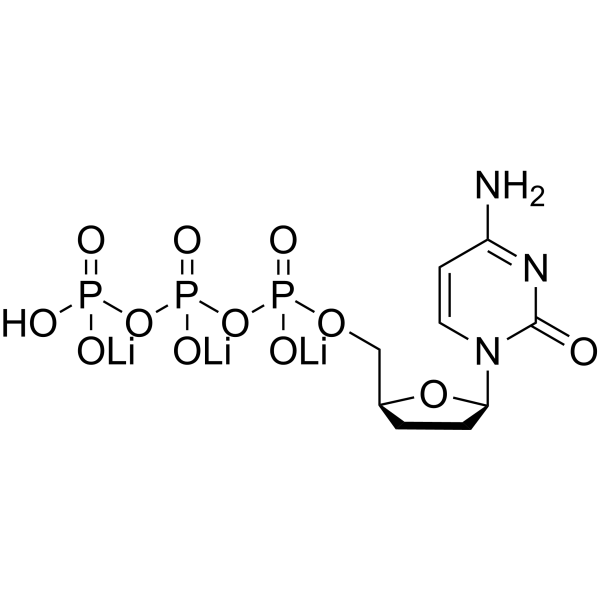
ddCTP trilithium is a type of chain-terminating deoxynucleotide. ddCTP trilithium can be incorporated into the extension primer chain that lacks the 3'-hydroxyl group, thereby terminating primer extension, viral genome replication, and DNA synthesis. ddCTP trilithium can distinguish almost identical RNA through distinguishable extension products in primer extension inhibition experiments. ddCTP trilithium is the active metabolite of Zalcitabine (HY-17392), which can competitively inhibit HIV reverse transcriptase, terminate the synthesis of viral DNA chains, and thereby inhibit HIV replication .
loading...
    loading...