
374 Results for "

side

" in MedChemExpress (MCE) Product Catalog:
Products (374)

374 Results for "side" in MCE Product Catalog:

Cat. No.: HY-L056
784 compounds

Terpenoids, also known as isoprenoids, are the most numerous and structurally diverse natural products found in many plants. Terpenoids are divided into monoterpenes, sesquiterpenes, diterpenes, sesterpenes, and triterpenes depending on its carbon units. Several studies, in vitro, preclinical, and clinical have confirmed that this class of compounds displays a wide array of very important pharmacological properties in the fight against cancer, malaria, inflammation, and a variety of infectious diseases. Naturally occurring terpenoids provide new opportunities to discover new drugs with minimum side effects.

MCE designs a unique collection of 784 terpenoid compounds that all come from natural products. MCE Terpenoids Library is a useful tool for drug discovery that can be used for high throughput screening (HTS) and high content screening (HCS).

Cat. No.: HY-107111R
CAS No.: 932373-87-0
Research Areas:  

Neurological Disease

GSK1034702 (Standard) is the analytical standard of GSK1034702 (HY-107111). This product is intended for research and analytical applications. GSK1034702 is an orally active and allosteric agonist of M1 mAChR (pEC50=8.1) that can cross the blood-brain barrier. GSK1034702 activates the Gq/11 protein-mediated signaling pathway, enhancing neuronal firing and long-term potentiation (LTP) in the CA1 region of the hippocampus. GSK1034702 can modulate hippocampal function, improve memory encoding in the nicotine withdrawal cognitive dysfunction model, and show pro-cognitive effects in rodents. GSK1034702 can be used for the study of the mechanisms of cognitive impairment diseases such as Alzheimer's disease, and has certain peripheral M receptor activation-related side effects (such as gastrointestinal reactions) .
loading...
    loading...
Cat. No.: HY-34611
CAS No.: 25691-37-6
Synonyms: N-Boc-L-2,4-diaminobutyric acid; Boc-Dab-OH
Target:  

Drug Intermediate ASCT

Research Areas:  

Neurological Disease Cancer

Boc-L-2,4-Diaminobutyric acid (N-Boc-L-2,4-diaminobutyric acid; Boc-Dab-OH) is a versatile synthetic starting material with a cleavable protecting group. Boc-L-2,4-Diaminobutyric acid not only reduces the backbone cleavage rate by protecting the side-chain γ-amino group, but also triggers intramolecular cyclization of self-immolative linkers under acidic cleavage conditions, thus constructing stimuli-responsive materials. Boc-L-2,4-Diaminobutyric acid is also an important building block for bioactive molecules. It can be used in the synthesis of ASCT2 (SLC1A5) inhibitors and carboxynorspermine, and can also serve as an internal standard to support the quantitative detection of specific intracellular amino acids by UPLC-QQQ-MS .
loading...
    loading...
Cat. No.: HY-D1320
CAS No.: 1267539-32-1
Target:  

Fluorescent Dye

Research Areas:  

Others

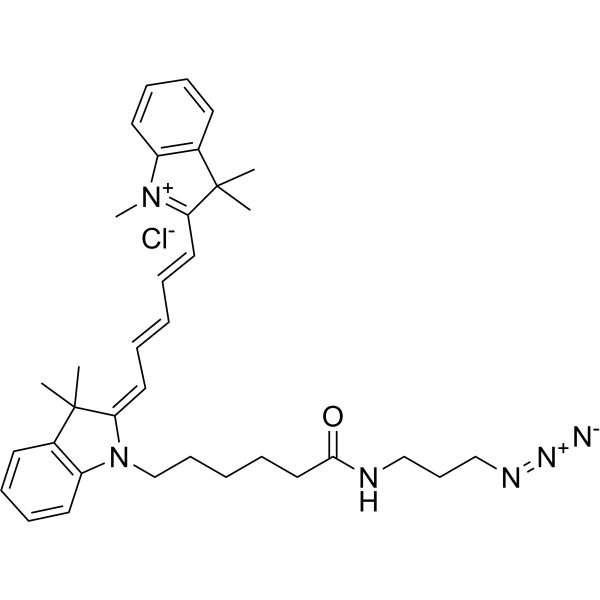
Cyanine5 azide chloride is a Fluorescent probe for cell-selective bacterial protein labeling, as well as a fluorescent dye for single-molecule imaging and dynamic tracking of intracellular organelles. Cyanine5 azide chloride can conjugate with the alkynyl side chain of propargylglycine incorporated into bacterial proteins by the engineered methionyl-tRNA synthetase variant PraRS via copper (I)-catalyzed azide-alkyne [3+2] cycloaddition reaction, thereby enabling in-gel fluorescent visualization of labeled proteins. Cyanine5 azide chloride can diffuse across cell membranes and undergo copper-free click reaction with DBCO-functionalized scAVD pre-bound to DBCO-functionalized biotin, forming fluorescent nanoprobes with enhanced brightness, photostability and localization accuracy, and exhibiting discrete photobleaching steps. The excitation wavelength of Cyanine5 azide chloride is Ex = 633 nm .
loading...
    loading...
Cat. No.: HY-E70115
CAS No.: 134712-49-5
Target:  

Fungal Bacterial

Research Areas:  

Infection

Feruloyl esterase is a subclass of carboxylesterases that hydrolyzes the ester linkages between hydroxycinnamic acids and arabinoxylan/pectin polysaccharides in plant cell walls. Feruloyl esterase can hydrolyze ethyl ferulate to release ferulic acid, disrupt plant cell wall structure, promote fiber swelling, and facilitate cellulase hydrolysis. Feruloyl esterase synergizes with xylanase by removing ferulic acid side chains, thereby promoting efficient hydrolysis of xylan into monomers. Feruloyl esterase acts as a virulence factor for Verticillium dahliae VdFAE and Magnaporthe oryzae Fae1, facilitating host infection and colonization. Feruloyl esterase promotes the degradation of cotton GhDFR through binding to its NADPH domain, thereby inhibiting flavonoid-mediated innate immunity and inducing cell death in Nicotiana benthamiana. Feruloyl esterase can be used in studies related to verticillium wilt and rice blast .
loading...
    loading...
Cat. No.: HY-N15721
CAS No.: 1630745-39-9
Synonyms: Trp-CA
Tryptophan-cholic acid (Trp-CA) is a microbial amino acid-conjugated bile acid that acts as an endogenous ligand and agonist (EC50=9.6 μM) for the orphan G protein-coupled receptor (GPCR) MRGPRE (Mas-related G protein-coupled receptor family member E). Tryptophan-cholic acid is orally effective but has poor oral absorption and does not cross the blood-brain barrier. Tryptophan-cholic acid promotes the secretion of glucagon-like peptide GLP-1, thereby improving glucose tolerance in diabetic mice. Tryptophan-cholic acid improves glucose tolerance, promotes insulin secretion, and alleviates high-fat diet-induced hepatic steatosis without causing pruritus side effects. Tryptophan-cholic acid is primarily used in research on type 2 diabetes (T2D) .
loading...
    loading...
Cat. No.: HY-N17773
CAS No.: 491-79-2
Hydrangeic acid is an orally effective stilbene-type glycolipid metabolism regulator that lowers blood glucose and lipids. It can be isolated from processed leaves of Hydrangea macrophylla var. thunbergii. Hydrangeic acid is associated with glycolipid metabolism and insulin sensitivity regulation. Hydrangeic acid does not directly activate PPARγ or PPARα, but instead upregulates the mRNA expression of adiponectin, PPARγ2, GLUT4, and fatty acid-binding protein aP2, and downregulates TNF-α mRNA expression, promoting adipogenesis, glucose uptake, and GLUT4 translocation in 3T3-L1 cells. Simultaneously, Hydrangeic acid inhibits inflammatory factor-induced NO production, exerting activity in improving insulin resistance. Hydrangeic acid can be used in research related to type 2 diabetes and does not cause liver weight gain as a side effect.
loading...
    loading...
Cat. No.: HY-P12350
CAS No.: 1261043-80-4
Research Areas:  

Others

Ac-I3K-NH2 is a surfactant-like peptide. Ac-I3K-NH2 self-assembles into β-sheet nanofibers through β-sheet hydrogen bonding, hydrophobic interactions, and electrostatic repulsion. Ac-I3K-NH2 forms ribbon-like nanofibers with nanoscale widths, adopting a β-sheet conformation, with lateral stacking driven by isoleucine side-chain contacts. Ac-I3K-NH2 templates the sol-gel condensation of tetraethoxysilane, producing silica nanotubes. Ac-I3K-NH2 templates the synthesis of one-dimensional Pt nanostructures with P7A as a capping agent .
loading...
    loading...
Cat. No.: HY-P1723A
Synonyms: Neuropeptide Q TFA
Spexin (Neuropeptide Q) TFA is a selective agonist of galanin receptors GAL2 and GAL3, and is a conserved peptide that functions as a neurotransmitter/neuromodulator and endocrine factor. Spexin TFA can function through both central and peripheral actions. Spexin TFA upregulates Beclin 1 to inhibit ferroptosis induced by excessive autophagy, reduces the uptake of long-chain fatty acids by adipocytes, and regulates energy metabolism by increasing lipid oxidation (e.g., reducing the respiratory exchange ratio in rodents). Spexin TFA improves cardiac function in the Doxorubicin hydrochloride (HY-15142)-induced cardiotoxicity model, protects mitochondrial membrane potential, and reduces iron accumulation and lipid peroxidation. Spexin TFA can be used to study obesity and its related metabolic disorders, cardiovascular diseases (e.g., cardioprotection), and side effects of tumor chemotherapy .
loading...
    loading...
Cat. No.: HY-W012166
CAS No.: 42014-51-7
Synonyms: NHS-Bromoacetate
Research Areas:  

Infection

N-Succinimidyl bromoacetate (NHS-Bromoacetate) is a heterobifunctional crosslinking reagent, mainly used to modify the ɛ-amino group of lysine side chains. By covalently linking its bromoacetyl moiety to the ɛ-amino group of lysine in peptidomimetics, N-Succinimidyl bromoacetate enables their conjugation with thiol-modified nanoparticles via thioether bonds. N-Succinimidyl bromoacetate also performs bromoacetylation modification on carrier proteins, which then forms stable thioether bonds with the thiol groups of cysteine in peptides, thus efficiently preparing soluble peptide-protein conjugates with high substitution ratios. N-Succinimidyl bromoacetate can be used to prepare activated Sepharose derivatives for affinity chromatography, protein affinity labeling reagents, and peptide-protein immunogen conjugates with non-immunogenic linkages. N-Succinimidyl bromoacetate is applicable to studies related to HIV-1 infection and glioblastoma multiforme .
loading...
    loading...
Cat. No.: HY-L080
106 compounds

Targeted cancer therapies are drugs or other substances that block the growth and spread of cancer by interfering with specific molecular targets that are involved in the growth, progression, and spread of cancer.

There are several different types of targeted therapy. The most common types are small-molecule drugs and monoclonal antibodies. Small-molecule drugs are small enough to enter cells easily, so they are used for targets that are inside cells, while monoclonal antibodies are usually used for targets that are located outside the cells. Because of high specificity, low side effect and potent anticancer activity, targeted therapy has become the mainstream of new anti-tumor drugs. Various targeted therapies have been approved by FDA and used in the treatment of diseases.

MCE carefully collects a unique of 106 targeted therapy drugs used in cancer treatment. MCE Targeted therapy drug library is a useful tool for the research of targeted therapy.

Cat. No.: HY-189129
Target:  

Ras

Research Areas:  

Cancer

RAS GTPase-IN-3 is a RAS GTPase inhibitor that targets multiple KRAS-Q61 mutant variants. RAS GTPase-IN-3 binds to the switch II pocket of GTP-bound KRAS-Q61R, positions its side-chain imidazole group near the GTP γ-phosphate, and accelerates GTP hydrolysis of KRAS-Q61. RAS GTPase-IN-3 inhibits Sos-catalyzed nucleotide exchange on GTP-bound KRAS. RAS GTPase-IN-3 only activates GTP hydrolysis of HRAS-Q61R/Q95H and NRAS-Q61R/L95H mutant proteins. RAS GTPase-IN-3 can be applied in research related to cancers driven by KRAS-Q61 mutations .
loading...
    loading...
Cat. No.: HY-L0119V
3,253 compounds

Protein protein interactions (PPI) have pivotal roles in life processes. The studies showed that aberrant PPI are associated with various diseases. However, the design of modulators targeting PPI still faces tremendous challenges, such the difficult PPI interfaces for the drug design, lack of ligands reference, lack of guidance rules for the PPI modulators development and high-resolution PPI proteins structures.

The PPI Library comprises molecules of various sizes, frameworks, and shapes ranging from fragment-like entities to macrocyclic derivatives designed as secondary structure mimetics or as epitope mimetics. The designs cover β-turn / loop mimetics and α-helix mimetics. Since helices present at the interface in 62% of all protein-protein interactions. This library focused on designs including mimics with the substitution geometry of an a-helices, as well as designs that mimic the location of “hot-spot” side chains in helix-mediated PPIs.

Cat. No.: HY-184620
Ferric oxide (Fe3O4) is widely used in magnetic resonance imaging (MRI), magnetic separation, targeted drug delivery, tumor hyperthermia, cell labeling and separation, and as a contrast agent and enhancement agent in retinal detachment repair surgery due to its stable material properties, good biocompatibility, high strength, and lack of toxic side effects. It is also used as a catalyst carrier, microwave absorbing material, and magnetic recording material. Xianfeng has developed numerous derivatives of ferric oxide, including oleic acid-modified ferric oxide, PEG-terminated ferric oxide, DMSA-modified ferric oxide, polylysine-modified ferric oxide, carboxylated dextran-modified ferric oxide nanoparticles, streptavidin-modified ferric oxide particles, thiol-modified ferric oxide magnetic nanoparticles, and polyethyleneimine (PEI)-modified magnetic ferric oxide nanoparticles, among others. This wide range of modifications provides numerous options for subsequent experiments.
loading...
    loading...
Cat. No.: HY-E70115A
Target:  

Fungal Bacterial

Research Areas:  

Infection

Feruloyl esterase, Acetivibrio cellulolyticus is a subclass of carboxylesterases that hydrolyzes the ester linkages between hydroxycinnamic acids and arabinoxylan/pectin polysaccharides in plant cell walls. Feruloyl esterase, Acetivibrio cellulolyticus can hydrolyze ethyl ferulate to release ferulic acid, disrupt plant cell wall structure, promote fiber swelling, and facilitate cellulase hydrolysis. Feruloyl esterase, Acetivibrio cellulolyticus synergizes with xylanase by removing ferulic acid side chains, thereby promoting efficient hydrolysis of xylan into monomers. Feruloyl esterase, Acetivibrio cellulolyticus acts as a virulence factor for Verticillium dahliae VdFAE and Magnaporthe oryzae Fae1, facilitating host infection and colonization. Feruloyl esterase, Acetivibrio cellulolyticus promotes the degradation of cotton GhDFR through binding to its NADPH domain, thereby inhibiting flavonoid-mediated innate immunity and inducing cell death in Nicotiana benthamiana. Feruloyl esterase, Acetivibrio cellulolyticus can be used in studies related to verticillium wilt and rice blast .
loading...
    loading...
Cat. No.: HY-L055
1,824 compounds

Medicine Food Homology (MFH) means that some food themselves are medicines and there is no absolute boundary between them. MFH theory combines the function of food and medicine together scientifically and MFH materials can be used both for food and medicine. Besides nutritional value, MFH materials also have the functions in the prevention and treatment of disease and many other healthcare effects. Food as medicines has many benefits because of their safety while taking drugs will bring inevitable side effect to people. In order to ensure the safe use of functional food, National Health Commission of People's Republic of China made specific provisions on MFH items. More than 100 kinds of widely used MFH materials have been released.

Based on MFH items released by National Health Commission, PRC, MCE carefully designs a unique collection of 1,824 Medicine Food Homology Compounds with high safety that can be used for high throughput and high content screening for drug discovery.

Cat. No.: HY-L139
3,530 compounds

Pain is a kind of distressing feeling caused by the stimulation of tissue damage. According to the International Association for the Study of Pain (IASP), pain is defined as ”An unpleasant sensory and emotional experience associated with actual or potential tissue damage, or described in terms of such damage”.

Pain is usually classified according to its location, duration, underlying causes, and intensity. For example, acute and chronic pain, muscle pain, and nerve pain. Pain is the main symptom of most diseases, which seriously affects the quality of life and body function of patients. In the medical treatment of pain, anti-inflammatory drugs and opioid analgesic agents have traditionally been used, but the side effects are serious. In recent years, targeted drugs targeting the ERK/MAPK pathway or other targets have gradually become a research hotspot.

MCE supplies a unique collection of 3,530 compounds targeting key proteins in the pain system. MCE Pain-Related Compound Library is a useful tool for pain related research and anti-pain drug development.

Cat. No.: HY-N17617
CAS No.: 70238-51-6
S-Petasin is a phosphodiesterase (PDE) inhibitor with IC50 values of 25.5 μM and 17.5 μM for PDE3 and PDE4, respectively. S-Petasin inhibits cholesterol side-chain cleavage enzyme, 11β-hydroxylase, PPAR-γ, and iNOS induction at RNA and protein levels. S-Petasin induces apoptosis, activates caspases, cleaves PARP, modulates mitochondrial membrane permeability, and regulates BCL2/BAX, p53, Bcl-XL, MMP-2, MMP-9, p21, CDK4, and cyclin D1 expression. S-Petasin reduces inflammatory cell accumulation, cytokine and IgE levels, and enhances serum IgG2a levels. S-Petasin relaxes isolated sensitized guinea pig trachealis and exhibits gastrointestinal anti-spasmodic activity. S-Petasin reduces tonsillitis severity and asthmatic attack frequency. S-Petasin can be used for the research of prostate cancer, obesity, melanoma, allergic asthma, asthma, and peritonitis .
loading...
    loading...
Cat. No.: HY-W145481A
CAS No.: 11078-30-1
Synonyms: Carob galactomannan
D-Galacto-D-mannan (Carob galactomannan) is an orally active Dectin-2 agonist. D-Galacto-D-mannan exerts antioxidant activity against hydroxyl radical generation. D-Galacto-D-mannan activates Dectin-2 to trigger downstream signaling pathways, promote the expression of immunoregulatory molecules, coordinate innate and adaptive immune responses, and inhibit excessive inflammatory responses by upregulating the expression of Sirtuin 1. When used as a vaccine adjuvant, D-Galacto-D-mannan induces cellular and humoral immune responses, promotes IFNγ secretion, increases antibody levels and virus neutralization titers, and elevates the levels of immunoglobulin G and A. D-Galacto-D-mannan can serve as an adjuvant for foot-and-mouth disease vaccines, enhance the vaccine-mediated ability of hosts to defend against viral infection in mice, and reduce local side effects at the inoculation site in pigs. D-Galacto-D-mannan can be used in the research of inflammatory and immune diseases, such as foot-and-mouth disease .
loading...
    loading...
Cat. No.: HY-117087
CAS No.: 1071544-43-8
Target:  

Phosphatase PANoptosis

Research Areas:  

Cancer

K103 is an inhibitor discovered from the screen that is an analog of the serotonin antagonist benzazocine. K103 exhibited inhibition of SHIP homologues, labelling it a pan-SHIP1/2 inhibitor, but the molecule had no effect on another 5' inositol phosphatase, OCRL. In line with the "two PIPs hypothesis", the molecule exhibited significant anti-tumour effects against a variety of cell lines, particularly breast cancer cells. Additional studies with K103 revealed that inhibition of SHIP1/2 in multiple myeloma cells resulted in G2/M cell cycle arrest followed by extensive apoptosis via activation of the caspase cascade. K103 fits the commonly used small molecule agent property profile, but while this work was being conducted, it was discovered that K103 caused psychoactive effects in mice, which limited the utility of the molecule in vivo. Therefore, certain synthetic studies were conducted on this tryptamine to identify the features that needed to be present in the molecule to maintain pan-SHIP1/2 inhibition in order to design an inhibitor with favourable pharmacodynamic properties and an improved side effect profile.
loading...
    loading...

