
385 Results for "

cortex

" in MedChemExpress (MCE) Product Catalog:
Products (385)

385 Results for "cortex" in MCE Product Catalog:

Cat. No.: HY-183403
CAS No.: 457075-21-7
Synonyms: CHF 2819 free base
Target:  

Cholinesterase (ChE)

Research Areas:  

Neurological Disease

Ganstigmine (CHF 2819 free base) is a potent, orally active, blood-brain barrier-permeable acetylcholinesterase (AChE) inhibitor, with an IC50 value of 65 nM against human AChE, 310 nM against human butyrylcholinesterase (BChE), and 5.12 μM against Torpedo californica AChE. Ganstigmine increases extracellular acetylcholine levels in the brain of rodents without altering the concentrations of other neurotransmitters, stimulates cholinergic transmission, and induces the release of soluble non-amyloidogenic amyloid precursor protein. Ganstigmine exhibits neuroprotective activity independent of cholinesterase inhibition, prevents neuronal death, alleviates β-amyloid-induced neurodegeneration, rescues cholinergic neuron loss, and reverses Scopolamine (HY-N0296)-induced amnesia and memory deficits. Ganstigmine shows cholinesterase inhibition-independent neuroprotective effects against growth factor deprivation and Aβ25-35 toxicity. Ganstigmine can be used in research on Alzheimer's disease, cholinergic dysfunction, and neuroprotection .
loading...
    loading...
Cat. No.: HY-187661
CAS No.: 42408-79-7
Target:  

5-HT Receptor

Research Areas:  

Neurological Disease

Pirandamine free base is a selective serotonin (5-HT) (HY-B1473A) uptake inhibitor with an IC50 of 250 nM. It exerts antidepressant-like effects by enhancing central serotonergic function, does not inhibit norepinephrine (HY-13715) uptake, and exhibits no central anticholinergic or monoamine oxidase inhibitory activity. Pirandamine free base is used in the study of depression .
loading...
    loading...
Cat. No.: HY-W004464
CAS No.: 20980-22-7
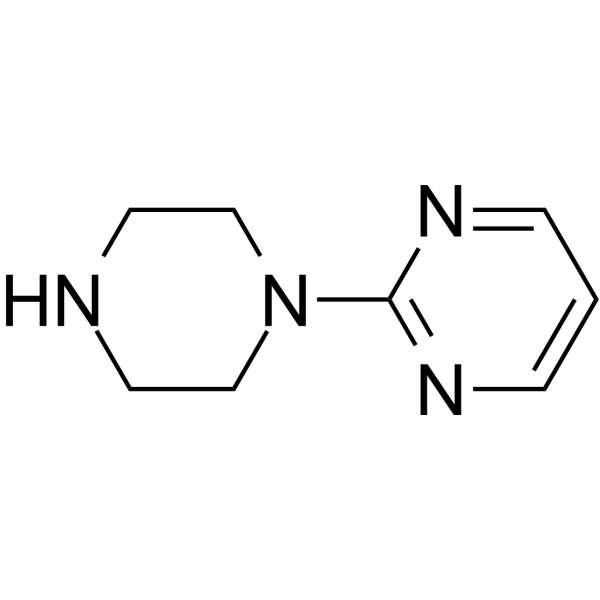
2-(1-Piperazinyl)pyrimidine is an orally effective α2-adrenoceptor antagonist and 5-HT1A receptor agonist. 2-(1-Piperazinyl)pyrimidine is an in vivo metabolite related to buspirone. 2-(1-Piperazinyl)pyrimidine modulates excitatory synaptic transmission in the hippocampus and the release of monoamine transmitters such as norepinephrine and 5-HT by blocking α2-adrenoceptor and activating 5-HT1A Receptor. 2-(1-Piperazinyl)pyrimidine is used in research on psychiatric disorders such as anxiety and depression .
loading...
    loading...
Cat. No.: HY-W004464R
CAS No.: 20980-22-7
2-(1-Piperazinyl)pyrimidine Standard is the analytical standard of 2-(1-Piperazinyl)pyrimidine (HY-W004464). This product is intended for research and analytical applications. 2-(1-Piperazinyl)pyrimidine is an orally effective α2-adrenoceptor antagonist and 5-HT1A receptor agonist. 2-(1-Piperazinyl)pyrimidine is an in vivo metabolite related to buspirone. 2-(1-Piperazinyl)pyrimidine modulates excitatory synaptic transmission in the hippocampus and the release of monoamine transmitters such as norepinephrine and 5-HT by blocking α2-adrenoceptor and activating 5-HT1A Receptor. 2-(1-Piperazinyl)pyrimidine is used in research on psychiatric disorders such as anxiety and depression .
loading...
    loading...
Cat. No.: HY-W004464S
CAS No.: 1309283-31-5
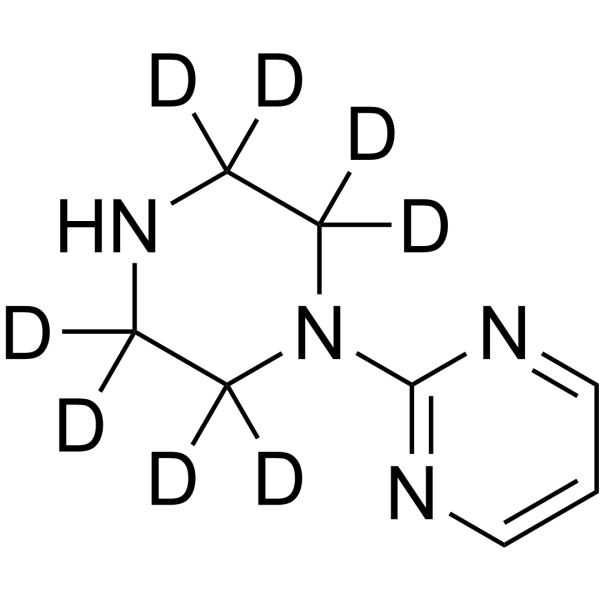
2-(1-Piperazinyl)pyrimidine-d8 is the deuterated-labeled 2-(1-Piperazinyl)pyrimidine (HY-W004464). 2-(1-Piperazinyl)pyrimidine is an orally effective α2-adrenoceptor antagonist and 5-HT1A receptor agonist. 2-(1-Piperazinyl)pyrimidine is an in vivo metabolite related to buspirone. 2-(1-Piperazinyl)pyrimidine modulates excitatory synaptic transmission in the hippocampus and the release of monoamine transmitters such as norepinephrine and 5-HT by blocking α2-adrenoceptor and activating 5-HT1A Receptor. 2-(1-Piperazinyl)pyrimidine is used in research on psychiatric disorders such as anxiety and depression .
loading...
    loading...
Cat. No.: HY-106584
CAS No.: 89419-40-9
Synonyms: Clospipramine
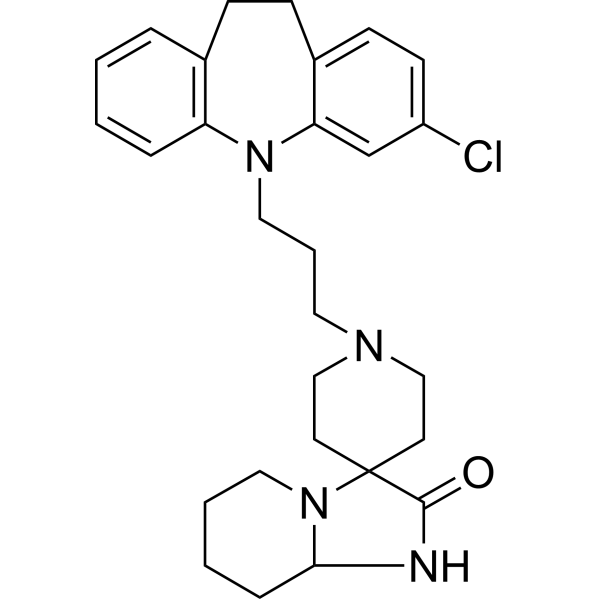
Mosapramine (Clospipramine) is an orally active antipsychotic agent and one of the metabolites of Clocapramine (HY-B2073) after oral absorption. Mosapramine exerts its effects by specifically binding to striatal dopamine D2 receptors and frontal lobe 5-HT2 receptors, with a D2/5-HT2 receptor occupancy ratio of 7.4. Mosapramine induces typical neuropharmacological responses in rat brain regions, including extrapyramidal symptoms, hyperprolactinemia, increased salivation, constipation, and upregulated Fos protein expression. Mosapramine also features a reduced incidence of weight loss. Mosapramine is applicable to research related to schizophrenia .
loading...
    loading...
Cat. No.: HY-12143
CAS No.: 168266-51-1
Purity:  99.11%
Synonyms: GR 205171A
Target:  

Neurokinin Receptor

Research Areas:  

Neurological Disease

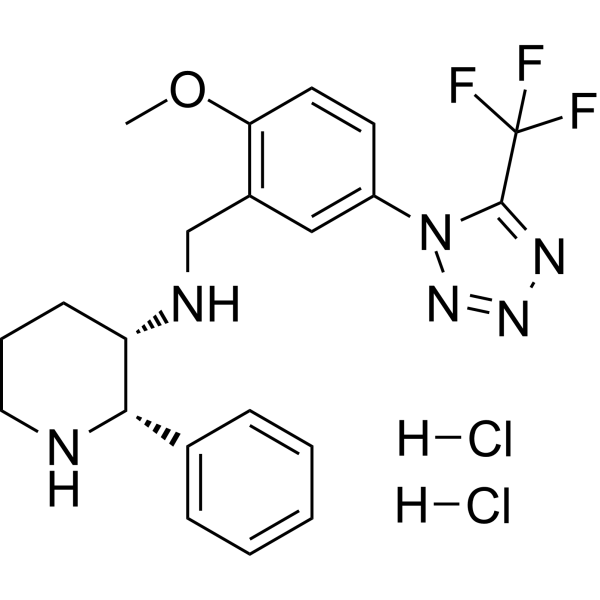
Vofopitant dihydrochloride (GR 205171A) is a blood-brain barrier-permeable NK1 receptor inhibitor with a pKi of 9.02 in mice. Vofopitant dihydrochloride blocks vomiting-related responses and inhibits pseudoptyalism. Vofopitant dihydrochloride exerts anxiolytic effects, regulates 5-HT receptor function and increases central 5-HT release. Vofopitant dihydrochloride improves hyperarousal symptoms of post-traumatic stress disorder. Vofopitant dihydrochloride can be used in research related to depression, anxiety, vomiting and postoperative nausea and vomiting .
loading...
    loading...
Cat. No.: HY-137243
CAS No.: 75431-54-8
Purity:  99%
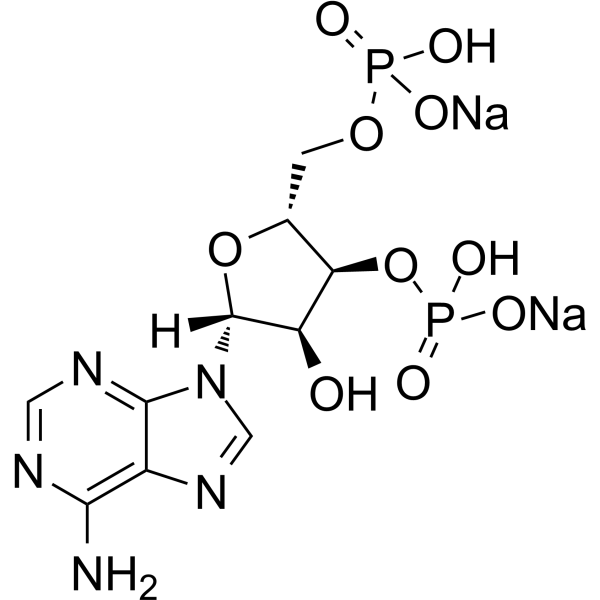
Adenosine 3',5'-diphosphate disodium is an endogenous purine nucleotide. Adenosine 3',5'-diphosphate disodium acts as an inhibitor of bovine adrenal estrogen sulfotransferase (EST) with a Ki value of 7.0 μM. It also serves as an indispensable specific cofactor for the pregnenolone-binding protein (PBP) steroid-binding complex, with an EC50 value of 1.5 μM in guinea pigs .
loading...
    loading...
Cat. No.: HY-183389
CAS No.: 135247-46-0
Tylogenin is a Na +/K + ATPase inhibitor with an IC50 of 93.3 μM against rabbit-derived targets. Tylogenin inhibits antigen-induced mediator release from rabbit basophils and IgE-dependent histamine release from human leukocytes. Tylogenin exhibits antiallergic activity. Tylogenin can be used in research related to allergic diseases .
loading...
    loading...
Cat. No.: HY-P2911
CAS No.: 9029-12-3
Synonyms: GLDH
Research Areas:  

Metabolic Disease

Glutamate dehydrogenase (NAD (P)) (GLDH) is a glutamate dehydrogenase . Glutamate dehydrogenase exists in all organisms and catalyzes the oxidative deamination of L-Glutamate (HY-W337739) to α-Ketoglutarate using NAD (P) + as a coenzyme. The glutamate dehydrogenase pathway is also associated with various cellular processes, including ammonia metabolism, acid-base balance, redox homeostasis, lipid biosynthesis, and lactate production .
loading...
    loading...
Cat. No.: HY-W743888
CAS No.: 65527-61-9
Synonyms: 6-Allyl-6-nor-LSD
Research Areas:  

Neurological Disease

AL-LAD is a 5-HT2A receptor ligand with rat Ki values of 8.1 nM and 3.4 nM. AL-LAD mediates behavioral responses characteristic of serotonergic psychedelics. AL-LAD induces the head-twitch response in male C57BL/6J mice in an inverted-U-shaped dose-dependent manner. AL-LAD exhibits LSD-like behavioral effects in male C57BL/6J mice .
loading...
    loading...
Cat. No.: HY-30004
CAS No.: 22059-21-8
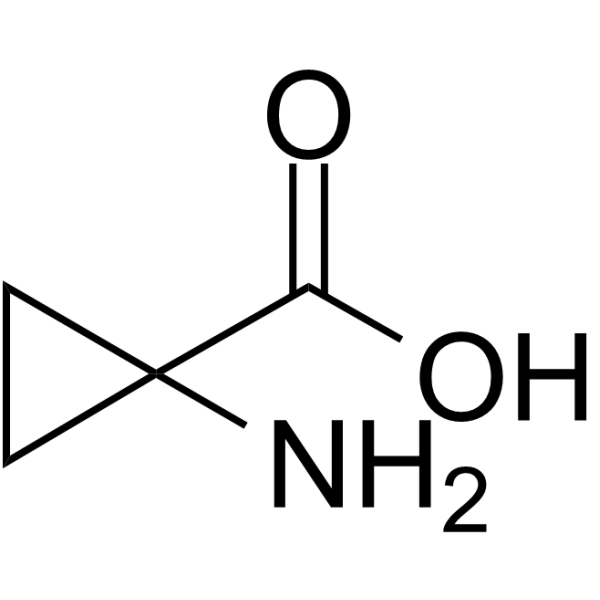
1-Aminocyclopropane-1-carboxylic acid is an endogenous metabolite. In the presence of low concentrations (1 μM) of glutamate, 1-Aminocyclopropane-1-carboxylic acid acts as a small molecule agonist of NMDA receptors with an EC50 of 0.7-0.9 μM. At high concentrations (10 μM) of glutamate, 1-Aminocyclopropane-1-carboxylic acid acts as a competitive antagonist of NMDA receptors with an EC50 of 81.6 nM. 1-Aminocyclopropane-1-carboxylic acid exerts neuroprotective activity by moderately activating NMDA receptors to prevent neuronal cell death in ischemic animal models. Additionally, 1-Aminocyclopropane-1-carboxylic acid is an antagonist of NMDA receptors, inducing blood pressure reduction and antioxidant effects in stroke-prone hypertensive rats. 1-Aminocyclopropane-1-carboxylic acid enhances object recognition memory and cognitive flexibility dependent on the prefrontal cortex, but does not affect impulsivity nor exhibit an antipsychotic-like profile. 1-Aminocyclopropane-1-carboxylic acid shows promise for research in the field of neurotoxicity. .
loading...
    loading...
Cat. No.: HY-15157
CAS No.: 72203-93-1
Purity:  99.86%
Synonyms: 1α, 24, 25-Trihydroxy VD3
Target:  

VD/VDR Drug Metabolite

Research Areas:  

Infection

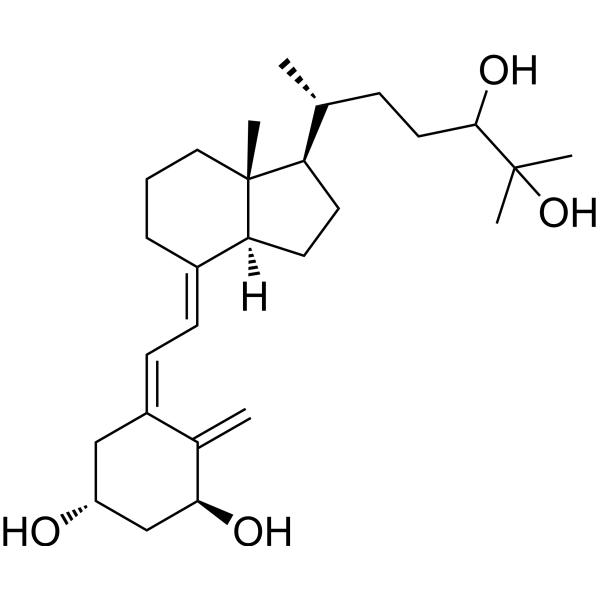
Calcitetrol (1α, 24, 25-Trihydroxy VD3), a Vitamin D3 (HY-15398) metabolite, is the hormonally active form of vitamin D. Calcitetrol participates in regulation of Treg cells. Calcitetrol can be used for the research of Toxoplasma gondii infection .
loading...
    loading...
Cat. No.: HY-P10638
Target:  

CaMK

TAT-CN21 is a potent CaMKII inhibitor with an IC50 of 77.2 nM. TAT-CN21 inhibits both calcium/calmodulin-dependent and autonomously activated CaMKII, blocks glutamate-induced translocation of CaMK IIα, and reverses the enhanced phosphorylation of CaMKII at Thr286 following excitotoxic injury. TAT-CN21 shows application potential in studies related to ischemic stroke by reducing neuronal excitotoxicity and exacerbating pre-existing long-term neuronal death prior to injury. TAT-CN21 improves definitive behaviors in rats with residual nerve injury without altering indicators such as mechanical/thermal hyperalgesia or spatial memory. TAT-CN21 can also be used in studies related to neuropathic pain .
loading...
    loading...
Cat. No.: HY-148977
CAS No.: 474943-18-5
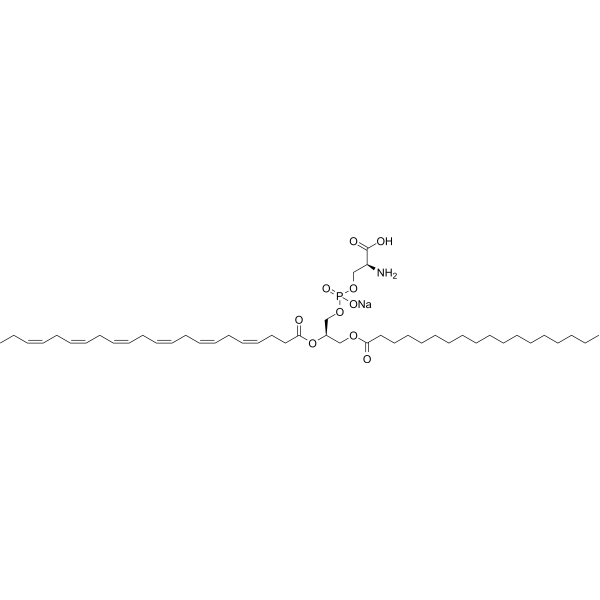
18:0,22:6 PS sodium is a sodium-form phosphatidylserine lipid. 18:0,22:6 PS sodium is found in rat brain and heart tissues, where it accounts for a considerable proportion of the total phosphatidylserine content in these tissues. 18:0,22:6 PS sodium contains 18:0 and 22:6 n-3 fatty acyl chains. 18:0,22:6 PS sodium is also used in research related to liposome preparation .
loading...
    loading...
Cat. No.: HY-P2647
CAS No.: 82131-82-6
Research Areas:  

Cardiovascular Disease

H-77 is a selective Renin inhibitor with an IC50 of 1.2 μM. H-77 causes dose-dependent decreases in plasma angiotensin I, plasma angiotensin II, and mean arterial pressure in sodium-depleted conscious beagle dogs. H-77 does not alter blood pressure or plasma angiotensin II levels in conscious chronically cannulated rats. H-77 can be used in studies related to the physiological and pathological states of the renin-angiotensin system .
loading...
    loading...
Cat. No.: HY-W985814
CAS No.: 17124-82-2
Research Areas:  

Neurological Disease Cancer

Nordimaprit is a reversible, non-competitive H3 receptor antagonist with a pKi value of 5.94. Nordimaprit exhibits essentially no activity against H1 receptors and only weak agonistic activity against H2 receptors. Nordimaprit induces selective chemotaxis of eosinophils in rabbit eyes, triggering severe eosinophilic uveitis and ocular symptoms such as corneal edema, opacity, and inflammation. Nordimaprit reduces melanin content and inhibits tyrosinase activity, and exerts toxic effects on melanoma cells. Nordimaprit can be used in studies related to anterior uveitis and melanoma .
loading...
    loading...
Cat. No.: HY-101745
CAS No.: 91833-49-7
Synonyms: AHR-11325
Target:  

Histamine Receptor

Research Areas:  

Inflammation/Immunology

Rocastine (AHR-11325 ) is an orally active H1-histamine receptor inhibitor that selectively binds to and functionally inhibits H1-histamine receptors. Rocastine protects guinea pigs from the lethal effect induced by Histamine (HY-B1204), prevents histamine-induced collapse, and protects guinea pigs from the falling reaction induced by nebulized antigens. Rocastine can be used in the research of allergic diseases .
loading...
    loading...
Cat. No.: HY-101745B
CAS No.: 91833-50-0
Synonyms: AHR-11325 fumarate
Target:  

Histamine Receptor

Research Areas:  

Inflammation/Immunology

Rocastine fumarate (AHR-11325 fumarate) is an orally active H1-histamine receptor inhibitor that selectively binds to and functionally inhibits H1-histamine receptors. Rocastine fumarate protects guinea pigs from the lethal effect induced by Histamine (HY-B1204), prevents histamine-induced collapse, and protects guinea pigs from the falling reaction induced by nebulized antigens. Rocastine fumarate can be used in the research of allergic diseases .
loading...
    loading...
Cat. No.: HY-121285
CAS No.: 6495-46-1
Dioxadrol is an uncompetitive NMDA receptor (PCP binding site) antagonist, with a Ki value of 10.9 nM in pigs. Dioxadrol binds to the phencyclidine (PCP) binding site within the cation channel associated with the NMDA receptor, thereby blocking cation influx. Dioxadrol possesses local anesthetic, spasmolytic and central nervous system activities, including phencyclidine-like dissociative anesthetic properties. Dioxadrol can be used in the research of Alzheimer's disease, Parkinson's disease, Huntington's disease, HIV-associated dementia, multiple sclerosis, amyotrophic lateral sclerosis, neuropathic pain, ischemic stroke, central nervous system trauma, and epilepsy .
loading...
    loading...

