66 Results for "

CXCL10

" in MedChemExpress (MCE) Product Catalog:
Products (66)

66 Results for "CXCL10" in MCE Product Catalog:

Cat. No.: HY-162675
CAS No.: 1862177-86-3
Target:  

GSK-3

COB-187 is a potent, ATP-competitive and selective inhibitor of GSK-3β. COB-187 inhibits GSK-3 through a reversible and Cysteine (Cys)-199-dependent mechanism. COB-187 inhibits LPS induced cytokine production and SARS-CoV-2 spike protein-induced CXCL10 production .
loading...
    loading...
Cat. No.: HY-158036
CAS No.: 3023095-61-3
Target:  

PROTACs STING IKK IFNAR CXCR

Research Areas:  

Inflammation/Immunology

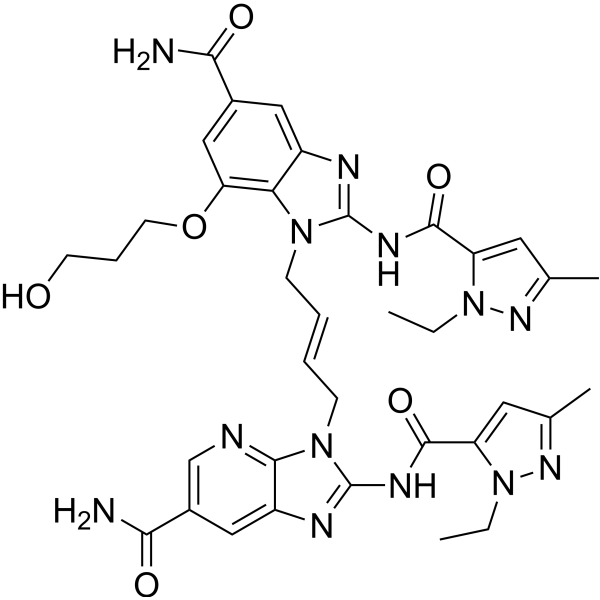
PROTAC STING Degrader-2 is a STING PROTAC degrader with a DC50 of 0.53 μM. PROTAC STING Degrader-2 reduces the phosphorylation levels of TBK1 and IRF3. PROTAC STING Degrader-2 decreases the mRNA expression levels of IFN-β, CXCL10 and TNF-α, and blocks luciferase secretion. PROTAC STING Degrader-2 can be used in the research of autoimmune diseases .
loading...
    loading...
Cat. No.: HY-P991208
Synonyms: human Flt3L; hFlt3L

Research Areas:  

Inflammation/Immunology

Flt-3L-Ig (hum/hum) (hFlt3L) is a Flt3 ligand. Flt-3L-Ig (hum/hum) enhances the release of inflammatory cytokines from myeloid cells and dendritic cells in BRGSF-CBC mice induced by OKT3. Flt-3L-Ig (hum/hum) increases the release of IL-2, CCL2 and CXCL10 in an OKT3-dependent manner. Flt-3L-Ig (hum/hum) can be used in studies related to cytokine release syndrome. Flt-3L-Ig (hum/hum) can be used in studies related to psoriasis-like skin inflammation .
loading...
    loading...
Cat. No.: HY-RS03384
Research Areas:  

Others

CXCL10 Human Pre-designed siRNA Set A contains three designed siRNAs for CXCL10 gene (Human), as well as a negative control, a positive control, and a FAM-labeled negative control.

loading...
    loading...
Cat. No.: HY-RS16518
Research Areas:  

Others

Cxcl10 Mouse Pre-designed siRNA Set A contains three designed siRNAs for Cxcl10 gene (Mouse), as well as a negative control, a positive control, and a FAM-labeled negative control.

loading...
    loading...
Cat. No.: HY-RS22949
Research Areas:  

Others

Cxcl10 Rat Pre-designed siRNA Set A contains three designed siRNAs for Cxcl10 gene (Rat), as well as a negative control, a positive control, and a FAM-labeled negative control.

loading...
    loading...
Cat. No.: HY-152961
CAS No.: 2868261-50-9
Target:  

STING

Research Areas:  

Infection

STING agonist-28 (CF510) is a non-nucleotide small-molecule STING agonist. STING agonist-23 activates STING, increases phosphorylation of STING, TBK1 and IRF3. STING agonist-23 promotes the levels of IFN-β, IL-6, CXCL-10, TNF-α, ISG-15, and CCL-5 in tumor cells. STING agonist-23 exhibits activity against SARS-CoV series strains .
loading...
    loading...
Cat. No.: HY-P991761

Target:  

CXCR

Research Areas:  

Inflammation/Immunology

Anti-Mouse CXCL10 Antibody (1F11) is a mouse CXCL10 antibody. Anti-Mouse CXCL10 Antibody (1F11) blocks the activity of CXCL10 and inhibits GPCR-dependent interstitial motility of Th1 cells in inflamed dermis. Anti-Mouse CXCL10 Antibody (1F11) can be used for research on inflammation-related diseases. Recommended isotype control: Polyclonal Armenian hamster IgG, Isotype Control (HY-P990305) .
loading...
    loading...
Cat. No.: HY-W062109S
CAS No.: 1231979-85-3
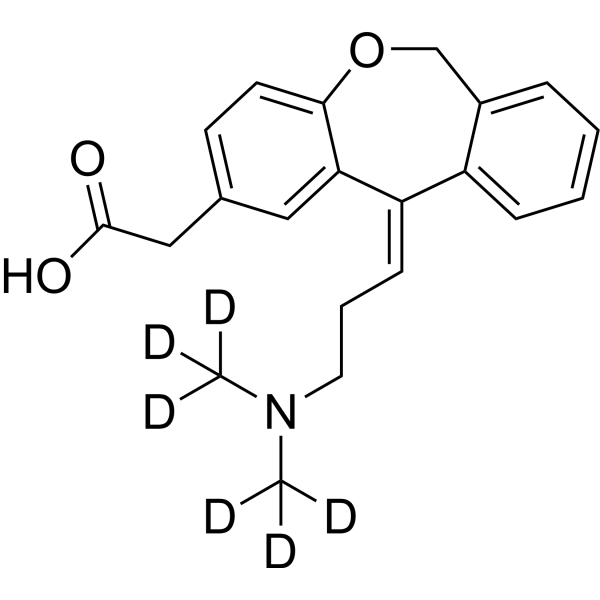
Olopatadine-d6 is the deuterium labeled Olopatadine. Olopatadine hydrochloride (ALO4943A; KW4679) is an orally active histamine H1 receptor antagonist and mast cell stabilizer. Olopatadine hydrochloride exerts antiallergic effects by blocking histamine H1 receptor-mediated activities. Olopatadine hydrochloride inhibits exocytosis, chemokine release, F-actin polymerization, CXCL10-induced calcium influx, and T cell chemotactic activity. Olopatadine hydrochloride also reduces the expression levels of CXCR3 on the surface of CD4 + and CD8 + T cells. Olopatadine hydrochloride inhibits scratching behavior, improves dermatitis scores, and suppresses intraepidermal neurite outgrowth. Olopatadine hydrochloride simultaneously decreases the levels of inflammatory markers, growth factors, histamine, and specific IgE, while increasing the expression of ErbB3A/HER3A. Olopatadine hydrochloride can be used in research related to seasonal pollinosis, chronic rhinitis, urticaria, allergic conjunctivitis, alopecia areata, and atopic dermatitis .
loading...
    loading...
Cat. No.: HY-15319A
CAS No.: 947536-03-0
Target:  

CXCR

Research Areas:  

Cancer

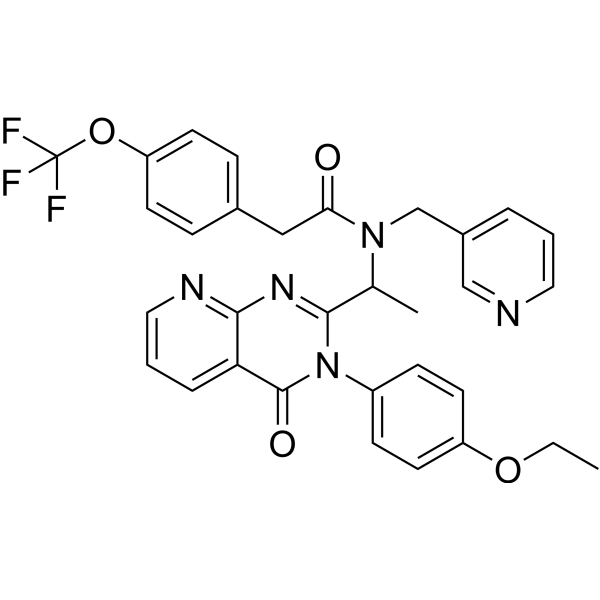
(±)-AMG 487 is a racemate of AMG 487. AMG 487 is an orally active and selective antagonist of CXC chemokine receptor 3 (CXCR3) which inhibits the binding of CXCL10 and CXCL11 to CXCR3 with IC50s of 8.0 and 8.2 nM, respectively .
loading...
    loading...
Cat. No.: HY-152957
CAS No.: 2408722-91-6
Target:  

STING

Research Areas:  

Infection

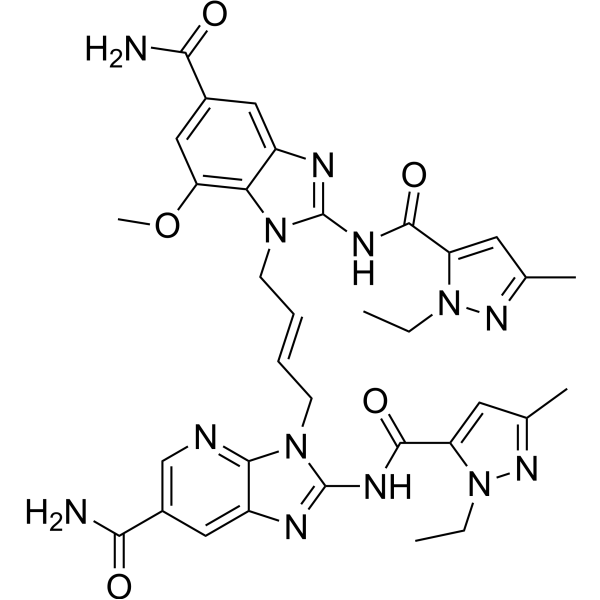
STING agonist-24 (CF504) is a non-nucleotide small-molecule STING agonist. STING agonist-23 activates STING, increases phosphorylation of STING, TBK1 and IRF3. STING agonist-23 promotes the levels of IFN-β, IL-6, CXCL-10, TNF-α, ISG-15, and CCL-5 in tumor cells. STING agonist-23 exhibits activity against SARS-CoV series strains .
loading...
    loading...
Cat. No.: HY-152958
CAS No.: 2408723-10-2
Target:  

STING

Research Areas:  

Infection

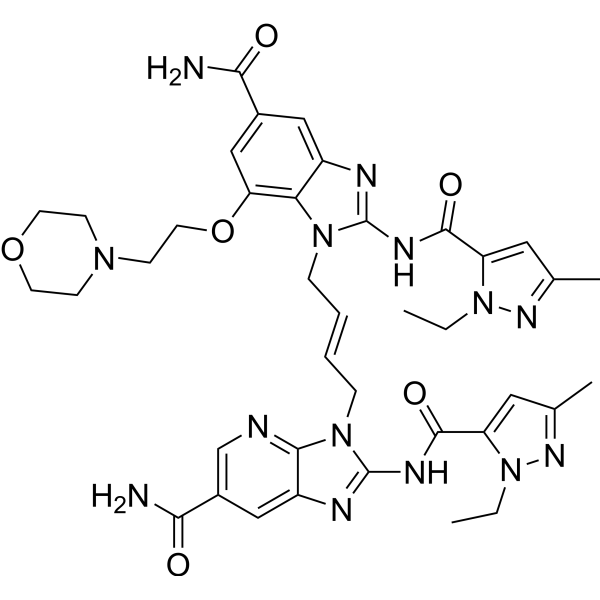
STING agonist-25 (CF505) is a non-nucleotide small-molecule STING agonist. STING agonist-23 activates STING, increases phosphorylation of STING, TBK1 and IRF3. STING agonist-23 promotes the levels of IFN-β, IL-6, CXCL-10, TNF-α, ISG-15, and CCL-5 in tumor cells. STING agonist-23 exhibits activity against SARS-CoV series strains .
loading...
    loading...
Cat. No.: HY-173404
VB-85247 is a STING agonist. VB-85247 induces upregulation of inflammatory cytokines IFNα/β, TNFα, IL6, and CXCL10, as well as maturation and activation of dendritic cells by activating the STING pathway. VB-85247 can achieve regression of intrabladder tumors and can be used in bladder cancer research .
loading...
    loading...
Cat. No.: HY-176257
CAS No.: 3078213-34-7
Target:  

STING

Research Areas:  

Cancer

STING agonist-44 (Compound 4) is a potent and selective STING agonist with an EC50 value of 5.68 for IRF induction in THP1 cells and 2.212 μM in RAW cells. STING agonist-44 activates the STING pathway, inducing the production of type I interferons and pro-inflammatory cytokines (e.g., CXCL10, TNFα). STING agonist-44 is promising for research of cancers .
loading...
    loading...
Cat. No.: HY-179288
Research Areas:  

Cancer

TPST2-IN-1 is a potent and selective TPST2 inhibitor with an IC50 of 946 nM and a Ka of 19.4 μM. TPST2-IN-1 increases the phosphorylation of Stat1 and upregulates the IFNγ-responsive gene CXCL10 by inhibiting TPST2 activity.TPST2-IN-1 exhibits anti-tumor activity and enhances T cell-mediated antitumor immunity characterized by increased infiltration of effector CD8 + T cells. TPST2-IN-1 can be used for the research of cancer, such as colon cancer .
loading...
    loading...
Cat. No.: HY-B0426AR
CAS No.: 140462-76-6
Synonyms: ALO4943A (Standard); KW4679 (Standard)
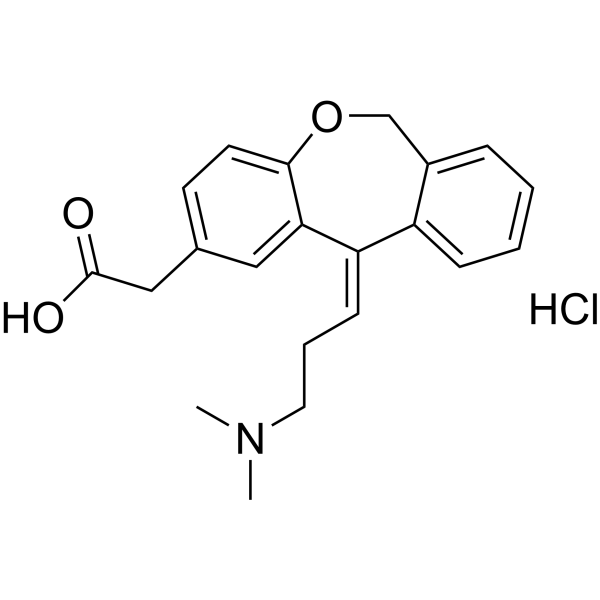
Olopatadine (hydrochloride) (Standard) is the analytical standard of Olopatadine (hydrochloride). This product is intended for research and analytical applications. Olopatadine hydrochloride (ALO4943A; KW4679) is an orally active histamine H1 receptor antagonist and mast cell stabilizer. Olopatadine hydrochloride exerts antiallergic effects by blocking histamine H1 receptor-mediated activities. Olopatadine hydrochloride inhibits exocytosis, chemokine release, F-actin polymerization, CXCL10-induced calcium influx, and T cell chemotactic activity. Olopatadine hydrochloride also reduces the expression levels of CXCR3 on the surface of CD4 + and CD8 + T cells. Olopatadine hydrochloride inhibits scratching behavior, improves dermatitis scores, and suppresses intraepidermal neurite outgrowth. Olopatadine hydrochloride simultaneously decreases the levels of inflammatory markers, growth factors, histamine, and specific IgE, while increasing the expression of ErbB3A/HER3A. Olopatadine hydrochloride can be used in research related to seasonal pollinosis, chronic rhinitis, urticaria, allergic conjunctivitis, alopecia areata, and atopic dermatitis .
loading...
    loading...
Cat. No.: HY-B0426AS
CAS No.: 1331635-21-2
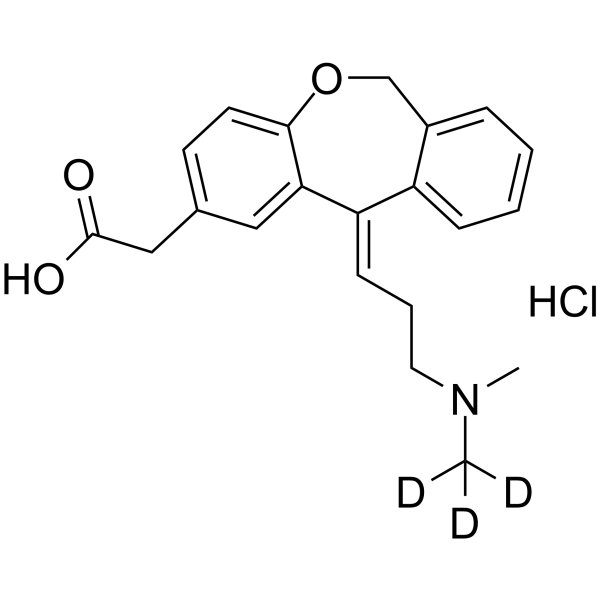
Olopatadine-d3 hydrochloride (ALO4943A-d3) is the deuterium labeled Olopatadine hydrochloride. Olopatadine hydrochloride (ALO4943A; KW4679) is an orally active histamine H1 receptor antagonist and mast cell stabilizer. Olopatadine hydrochloride exerts antiallergic effects by blocking histamine H1 receptor-mediated activities. Olopatadine hydrochloride inhibits exocytosis, chemokine release, F-actin polymerization, CXCL10-induced calcium influx, and T cell chemotactic activity. Olopatadine hydrochloride also reduces the expression levels of CXCR3 on the surface of CD4 + and CD8 + T cells. Olopatadine hydrochloride inhibits scratching behavior, improves dermatitis scores, and suppresses intraepidermal neurite outgrowth. Olopatadine hydrochloride simultaneously decreases the levels of inflammatory markers, growth factors, histamine, and specific IgE, while increasing the expression of ErbB3A/HER3A. Olopatadine hydrochloride can be used in research related to seasonal pollinosis, chronic rhinitis, urticaria, allergic conjunctivitis, alopecia areata, and atopic dermatitis .
loading...
    loading...
Cat. No.: HY-168554
STING Degrader-3 is a PROTAC-like STING degrader with a DC50 of 2.58 μM in THP-1 cells. STING Degrader-3 degrades STING protein via the lysosomal pathway. STING Degrader-3 functions as a non-degradative inhibitor in macrophages. STING Degrader-3 reduces the phosphorylation levels of TBK1 and IRF3, and downregulates the expression of IFN-β, CXCL10, IL-6, TNFα, IL-1β, ISG15 and ISG56. STING Degrader-3 exhibits renoprotective properties in a cisplatin-induced acute kidney injury model. STING Degrader-3 can be used in studies related to acute kidney injury. ((Pink: STING ligand (HY-168676); Blue: CRBN ligand (HY-126457); Black: linker (HY-W123015); CRBN ligand + linker: (HY-168677)) .
loading...
    loading...
Cat. No.: HY-178032
PARP1-IN-44, an Olaparib (HY-10162) derivative, is an orally active PARP1 inhibitor (IC50 = 0.6 nM), and also inhibits PARP2 (IC50 = 1.0 nM) and PARP7 (IC50 = 7.5 nM). PARP1-IN-44 has selective antiproliferative activity against BRCA-deficient cancer cells with minimal toxicity to normal cells. PARP1-IN-44 induces G2/M phase arrest, promotes apoptosis, elevates ROS levels, disrupts mitochondrial membrane potential. PARP1-IN-44 suppresses PARylation while increasing γH2AX accumulation. PARP1-IN-44 activates the cGAS-STING pathway, upregulating IFN-β and CXCL10 expression. PARP1-IN-44 enhancing CD8+ T cell infiltration in a CT26 tumor mouse model, demonstrating robust in vivo antitumor efficacy .
loading...
    loading...
Cat. No.: HY-P991582

Research Areas:  

Cancer

BI-1607 is a humanized monoclonal antibody targeting FcγRIIB/CD32b. BI-1607 selectively blocks inhibitory FcγRIIB signaling, abrogates its inhibitory function, redirects tumor cell-bound antibodies to activating FcγRs, and its modified Fc region prevents the binding of its own Fc segment to FcγRs. BI-1607 reduces αPD-1 trogocytosis, enhances the effector functions of anti-tumor antibodies (including ADCP and ADCC, promotes intratumoral regulatory T cell (Treg) depletion, myeloid cell reprogramming, induction of interferon-γ (IFN-γ) and CXCL10, and increases the number of activated effector CD8 + T cells. BI-1607 can be used in research related to colorectal cancer, HER2-positive advanced solid tumors, HER2-positive locally advanced or metastatic breast cancer, and HER2-positive metastatic gastric cancer .
loading...
    loading...

