46 Results for "

MSCs

" in MedChemExpress (MCE) Product Catalog:
Products (46)

46 Results for "MSCs" in MCE Product Catalog:

Cat. No.: HY-101611R
CAS No.: 1883423-59-3
Target:  

Reference Standards CDK

Research Areas:  

Cancer

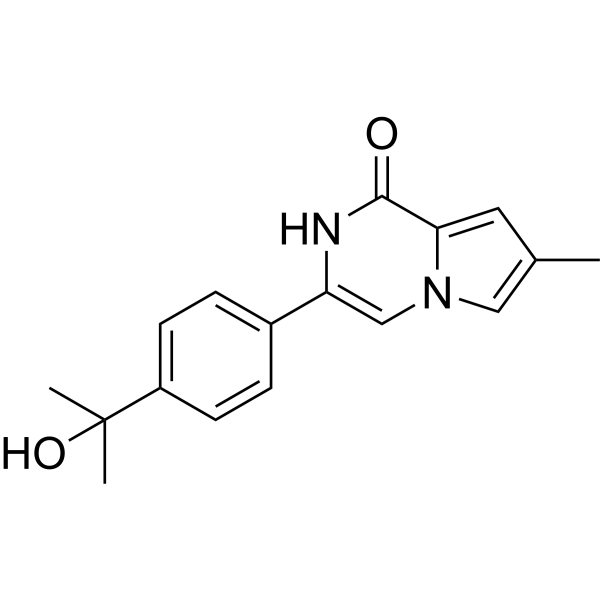
MSC2530818 (Standard) is the analytical standard of MSC2530818. This product is intended for research and analytical applications. MSC2530818 is a potent, selective and orally available CDK8 inhibitor with an IC50 of 2.6 nM for CDK8.
loading...
    loading...
Cat. No.: HY-126225
CAS No.: 1397255-09-2
Purity:  99.62%
Research Areas:  

Metabolic Disease

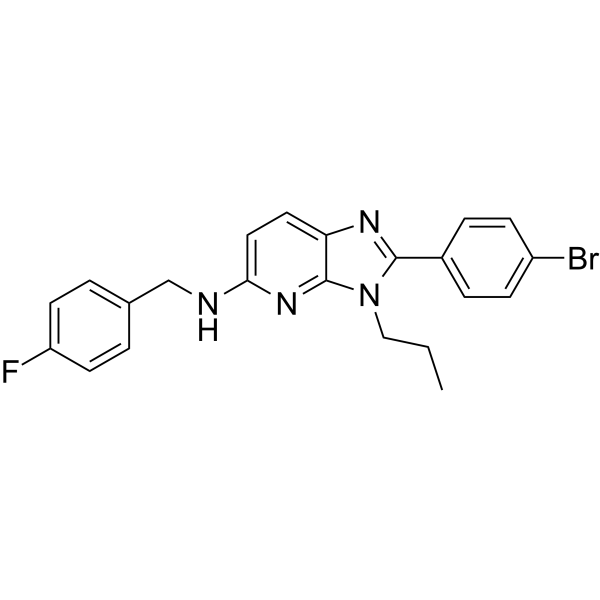
SJA710-6 is a small molecule able to selectively differentiate MSCs toward hepatocyte-like cells .
loading...
    loading...
Cat. No.: HY-160053
Target:  

PDGFR

Research Areas:  

Cancer

Gint4.T aptamer sodium is a nuclease-resistant RNA aptamer-based antagonist targeting platelet-derived growth factor receptor beta (PDGFRβ) (Kd: 9.6 nM). Gint4.T aptamer sodium inhibits PDGFRβ heterodimerization and EGFR transactivation. It can significantly inhibit cell migration and proliferation, induce differentiation and prevent tumor growth in vivo. Gint4.T aptamer sodium specifically inhibits PDGFRβ-mediated tropism of mesenchymal stem cells (MSCs) toward the tumor microenvironment .
loading...
    loading...
Cat. No.: HY-177058
Research Areas:  

Inflammation/Immunology

DSP30 is a phosphorothioate cpG-oligodeoxynucleotide and a TLR9 agonist. DSP30 can activate immune system cells, including B cells and dendritic cells, by inducing proliferation and cytokine production.DSP30 can enhance the immunosuppressive function of bone marrow-multipotent mesenchymal stromal cells (BM-MSC). DSP30 combined with interleukin 2 (IL2) is an effective mitotic stimulant in B-cell disorders. DSP30 can be used for the genetic characteristic research and analysis of chronic lymphocytic leukemia (CLL) .
loading...
    loading...
Cat. No.: HY-185057
CAS No.: 41656-56-8
Synonyms: S-Lactylglutathione; (R)-S-Lactoylglutathione
S-D-Lactoylglutathione (S-Lactylglutathione; (R)-S-Lactoylglutathione) is a multifunctional metabolic intermediate of the glyoxalase system. S-D-Lactoylglutathione activates K + efflux in bacteria by displacing inhibitory glutathione from KefGB channels, thereby acidifying the cytoplasm. In eukaryotic cells, S-D-Lactoylglutathione mediates S-glutathionylation as a substrate of glyoxalase 2. S-D-Lactoylglutathione serves as a sensitive metabolic biomarker for neodymium nitrate neurotoxicity; when used in combination with MSCs-exo, it upregulates glutathione levels, downregulates lactate dehydrogenase and Glo2 levels, and inhibits cellular inflammatory responses and pyroptosis. S-D-Lactoylglutathione can be used in research related to prostate cancer, breast cancer, non-small cell lung cancer, sepsis-associated encephalopathy, and neurotoxicity .
loading...
    loading...
Cat. No.: HY-P11346
CAS No.: 1830290-52-2
Target:  

Cadherin

Research Areas:  

Inflammation/Immunology

N-Cadherin mimic peptide is a N-cadherin agonist. N-Cadherin mimic peptide promotes N-cadherin homodimerization via enhancing β-catenin signaling, inducing early chondrogenesis and cartilage matrix production in mesenchymal stem cells (MSCs). N-Cadherin mimic peptide is promising for research of MSC-based cartilage regeneration .
loading...
    loading...
Cat. No.: HY-108438
CAS No.: 1201916-31-5
Target:  

Microtubule/Tubulin

Research Areas:  

Neurological Disease

TCS 2210 (compound 1) is a neuronal differentiation inducer in mesenchymal stem cells (MSCs). TCS 2210 increases expression of the neuronal markers β-III tubulin and neuron-specific enolase (NSE) .
loading...
    loading...
Cat. No.: HY-N0898AR
CAS No.: 18829-70-4
Synonyms: (-)-Cianidanol (Standard); (-)-Catechuic acid (Standard)
(-)-Catechin (Standard) is the analytical standard of (-)-Catechin. This product is intended for research and analytical applications. (-)-Catechin is Catechin's one kind of different structure. Catechin inhibitory enzyme-1 (COX-1), IC50 of 1.4 μM. (-)-Catechin promotes hBM-MSC adipose cell differentiation, increases fat cell differentiation, and PPARγ level .
loading...
    loading...
Cat. No.: HY-168506
Target:  

YAP

Research Areas:  

Cancer

MSC-1254 is a reversible, selective and covalent TEAD1 inhibitor. MSC-1254 can be used for the study of cancer .
loading...
    loading...
Cat. No.: HY-168505
Target:  

YAP

Research Areas:  

Cancer

MSC-5046 is a selective TEAD1 inhibitor .
loading...
    loading...
Cat. No.: HY-RS08707
Research Areas:  

Others

MSC Human Pre-designed siRNA Set A contains three designed siRNAs for MSC gene (Human), as well as a negative control, a positive control, and a FAM-labeled negative control.

loading...
    loading...
Cat. No.: HY-RS23460
Research Areas:  

Others

Msc Rat Pre-designed siRNA Set A contains three designed siRNAs for Msc gene (Rat), as well as a negative control, a positive control, and a FAM-labeled negative control.

loading...
    loading...
Cat. No.: HY-110262
CAS No.: 1124381-43-6
Target:  

MAP3K p38 MAPK

Research Areas:  

Inflammation/Immunology

MSC 2032964A is an orally active, selective inhibitor for apoptosis signal-regulating kinase 1(ASK1) with IC50 of 96 nM. MSC 2032964A preserves the visual responses in EAE mice model and exhibits potency in ameliorating the neuroinflammation .
loading...
    loading...
Cat. No.: HY-153332
CAS No.: 1460285-69-1
Target:  

PARP

Research Areas:  

Cancer

Tankyrase-IN-5 (Compound 30f), an analogue of MSC2504877 (HY-123851), is a tankyrase TNKS1 and TNKS2 inhibitor with IC50s of 2.3 nM and 7.9 nM, respectively .
loading...
    loading...
Cat. No.: HY-N8917
CAS No.: 1180504-64-6
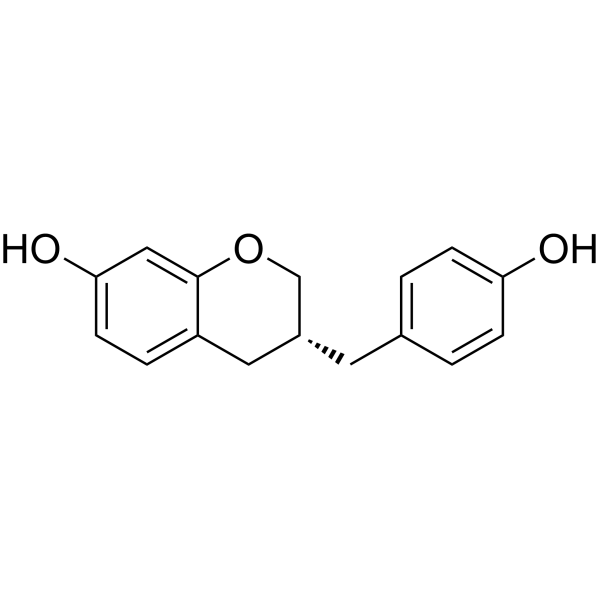
(3R)-7-hydroxy-3-(4-hydroxybenzyl)chromane is a homoisoflavonoid. (3R)-7-hydroxy-3-(4-hydroxybenzyl)chromane increases the level of alkaline phosphatase (ALP) activity. (3R)-7-hydroxy-3-(4-hydroxybenzyl)chromane promotes mesenchymal stem cells (MSCs) osteogenesis, but cannot enhance MSCs proliferation. (3R)-7-hydroxy-3-(4-hydroxybenzyl)chromane can be used for osteoporosis research .
loading...
    loading...
Cat. No.: HY-P3413
CAS No.: 683750-83-6
Target:  

Inhibitory Antibodies

Research Areas:  

Inflammation/Immunology

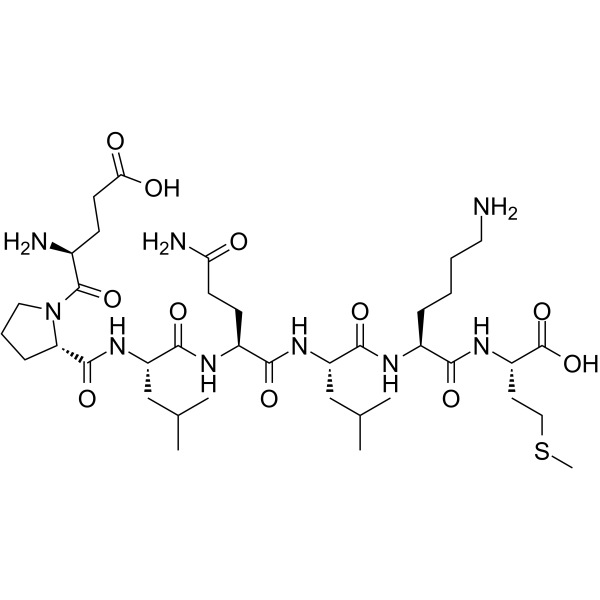
H-Glu-Pro-Leu-Gln-Leu-Lys-Met-OH (EM7) is a linear mesenchymal stem cells (MSC)-specific peptide. H-Glu-Pro-Leu-Gln-Leu-Lys-Met-OH can be used to prepare Gd-DOTA-peptide complexes .
loading...
    loading...
Cat. No.: HY-147511
CAS No.: 2569295-93-6
Target:  

PPAR

Research Areas:  

Others

PPARγ agonist 7 (Compound 3a) is a potent and selective agonist of PPARγ. PPARγ agonist 7 promotes adiponectin production in human bone marrow mesenchymal stem cells (hBM-MSCs) as a novel PPARγ full agonist (EC50, 4.34 μM) .
loading...
    loading...
Cat. No.: HY-N0008R
CAS No.: 21082-33-7
Orcinol glucoside (Standard) is the analytical standard of Orcinol glucoside. This product is intended for research and analytical applications. Orcinol glucoside (OG) is an active constituent isolated from Curculigo orchioides, with antidepressant effects. Orcinol glucoside facilitates the shift of MSC fate to osteoblast and prevents adipogenesis via Wnt/β-catenin signaling pathway .
loading...
    loading...
Cat. No.: HY-P0306A
Synonyms: Heparin Binding Peptide TFA
Target:  

Inhibitory Antibodies

Research Areas:  

Cardiovascular Disease

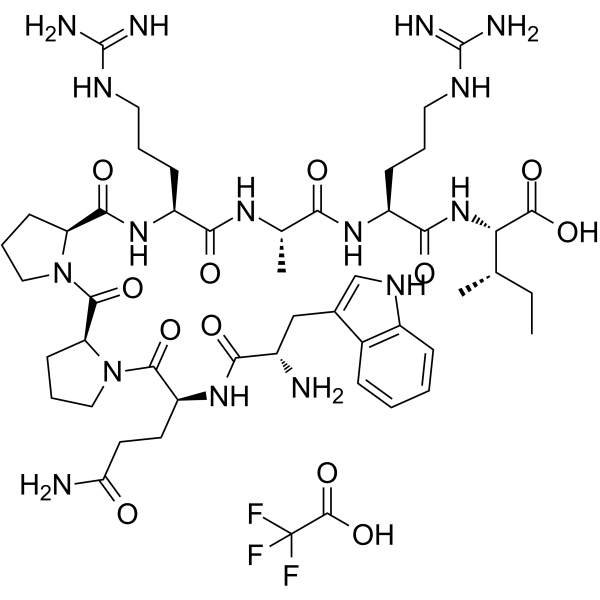
Fibronectin Adhesion-promoting Peptide (Heparin Binding Peptide) is one of the heparin-binding amino acid sequences found in the carboxy-terminal heparin-binding domain of fibronectin. It promotes assembly of mesenchymal stem cell (MSC) spheroids into larger aggregates. Fibronectin Adhesion-promoting Peptide directly promotes the adhesion, spreading, and migration of endothelial cells by reacting with heparin binding domains of cells .
loading...
    loading...
Cat. No.: HY-170581
CAS No.: 3116771-70-8
Target:  

PPAR

Research Areas:  

Metabolic Disease

PPARγ/δ modulator 2 (Compound 3h) is a PPARγ agonist and PPARδ antagonist. The Ki values for PPARγ and PPARδ are 2.8 μM and 43 nM, respectively. PPARγ/δ modulator 2 significantly enhances the production of Adiponectin and promotes adipogenic differentiation of human bone marrow mesenchymal stem cells (hBM-MSCs). PPARγ/δ modulator 2 can be used in the study of metabolic disorders associated with hypoadiponectinemia .
loading...
    loading...

