55 Results for "

PC-3cells

" in MedChemExpress (MCE) Product Catalog:
Products (55)

55 Results for "PC-3cells" in MCE Product Catalog:

Cat. No.: HY-175017
Target:  

Survivin

Research Areas:  

Cancer

Survivin-IN-2 is a survivin inhibitor. Survivin-IN-2 shows cytotoxicity in cells with IC50s of 0.53 μM (C4-2 cells) and 1.06 μM (PC-3 cells). Survivin-IN-2 effectively suppresses xenograft tumor growth without apparent toxicity and eliminates survivin in the tumors. Survivin-IN-2 can be used for the study of prostate cancer .
loading...
    loading...
Cat. No.: HY-175826
USP30-IN-20 is an orally active USP30 inhibitor (Kd = 1.61 μM, IC50 = 12.8 μM). USP30-IN-20 induces ferroptosis by promoting ubiquitination-mediated degradation of GPX4. USP30-IN-20 inhibits the proliferation, migration, invasion, and stemness of prostate cancer cells. USP30-IN-20 induces G0/G1 cell cycle arrest and ROS levels in prostate cancer cells. USP30-IN-20 exhibits significant anti-tumor efficacy in PC3 cell subcutaneous xenografts in mice. USP30-IN-20 can be used for the study of advanced prostate cancer .
loading...
    loading...
Cat. No.: HY-178133
Target:  

Pim Apoptosis Caspase

Research Areas:  

Cancer

Pim-1 kinase-IN-14 is a PIM-1 kinase inhibitor with an IC50 value of 94 nM. Pim-1 kinase-IN-14 shows broad-spectrum and high-efficiency anticancer activity against multiple human cancer cell lines, including liver cancer (HepG-2), colon cancer (Caco-2), myeloid leukemia (NFS-60), and prostate cancer (PC-3) cells. Pim-1 kinase-IN-14exerts its anticancer effects by inducing apoptosis and activating caspase 3/7. Pim-1 kinase-IN-14 can be used for the study of cancers associated with PIM-1 kinase overexpression .
loading...
    loading...
Cat. No.: HY-142958
CAS No.: 1821386-63-3
Target:  

NF-κB

Research Areas:  

Neurological Disease

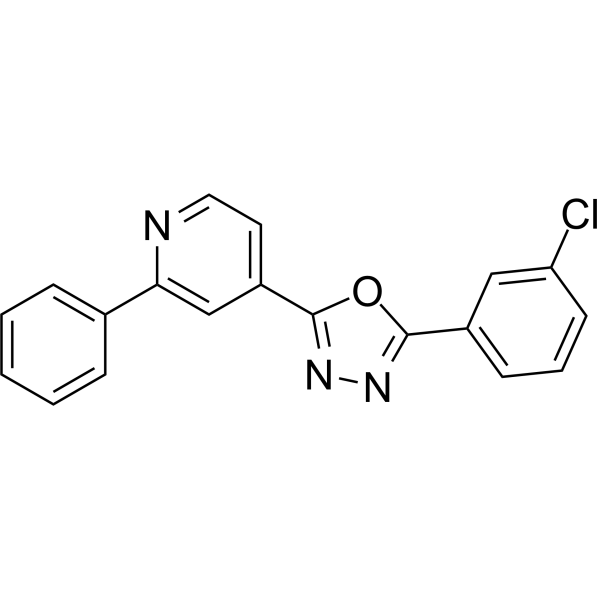
NF-κB-IN-2 inhibits TNF-α-induced canonical NF-κB signaling in PC-3 cells.
loading...
    loading...
Cat. No.: HY-179050
CAS No.: 401580-43-6
Research Areas:  

Cancer

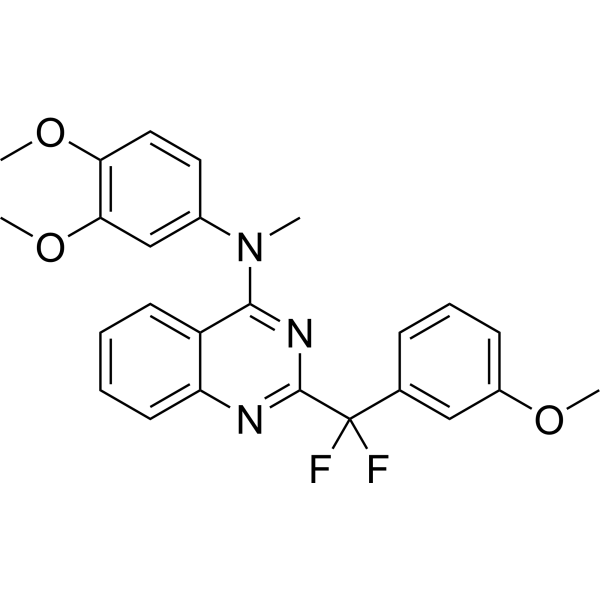
Androgen receptor-IN-7 is a potent androgen receptor (AR) inhibitor. Androgen receptor-IN-7 exhibits potent anticancer activity against PC-3 cells (IC50 =370.37 nM) and LNCaP cells via both AR-dependent and AR-independent pathways. Androgen receptor-IN-7 induces ROS production in PC-3 cells. Androgen receptor-IN-7 can be used for prostate cancer research .
loading...
    loading...
Cat. No.: HY-162304
CAS No.: 2770967-04-7
Target:  

MAGL

Research Areas:  

Neurological Disease

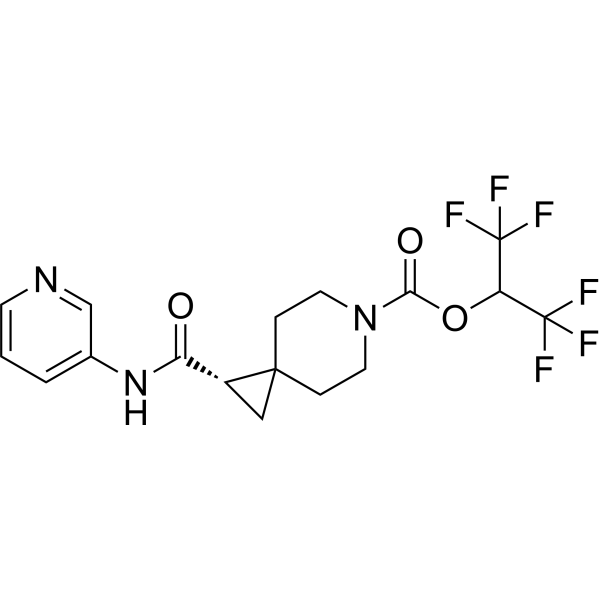
MAGL-IN-14 (compound 2) is a potent inhibitor of MAGL, with IC50 of 0.00289 μM and 0.002 μM in HEK293 and PC3 cells, respectively .
loading...
    loading...
Cat. No.: HY-149976
CAS No.: 3026670-71-0
Research Areas:  

Cancer

Pim-1 kinase inhibitor 4 (Compound 10f) is a Pim-1 kinase inhibitor (IC50: 17.01 nM). Pim-1 kinase inhibitor 4 also has antioxidant activity and inhibits DPPH. Pim-1 kinase inhibitor 4 induces apoptosis in PC-3 cell, and inhibits PC-3 cell growth with an IC50 of 16 nM. Pim-1 kinase inhibitor 4 can be used for research of prostate cancer .
loading...
    loading...
Cat. No.: HY-158025
Target:  

DNA/RNA Synthesis

Research Areas:  

Cancer

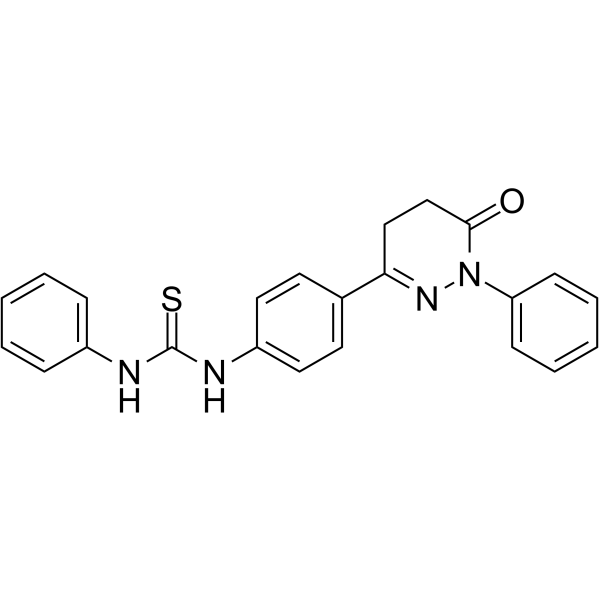
Anticancer agent 198 (compound 18b) is a potent anticancer agent and potential WRN protein inhibitor. Anticancer agent 198 was significantly toxic to K562 cells and WRN-overexpressing PC3 cells .
loading...
    loading...
Cat. No.: HY-179018
Topoisomerase II-IN-25 (Compound 6a) is a selective inhibitor of topoisomerase II and has no inhibitory activity on topoisomerase I. Topoisomerase II-IN-25 exhibits significant anti-PC-3 cell activity. Topoisomerase II-IN-25 significantly increases intracellular ROS levels, inducing oxidative stress. Topoisomerase II-IN-25 causes depolarization of mitochondrial membrane potential and promotes cell apoptosis. Topoisomerase II-IN-25 blocks PC-3 cells in the G2/M phase. Topoisomerase II-IN-25 can be used for the study of prostate cancer .
loading...
    loading...
Cat. No.: HY-173039
α-Tubulin polymerization-IN-1 (Compound 8l) is an inhibitor for α-Tubulin polymerization. α-Tubulin polymerization-IN-1 modulates the NRF2/KEAP-1 signaling pathway, induces ROS generation in PC-3 cell, thereby inducing apoptosis in PC-3. α-Tubulin polymerization-IN-1 inhibits the proliferation of PC-3 cell with a GI50 of 0.17 µM, arrests the cell cycle at G2/M phase. α-Tubulin polymerization-IN-1 exhibits antitumor efficacy in mouse model .
loading...
    loading...
Cat. No.: HY-141863
CAS No.: 2869125-43-7
Target:  

Apoptosis

Research Areas:  

Cancer

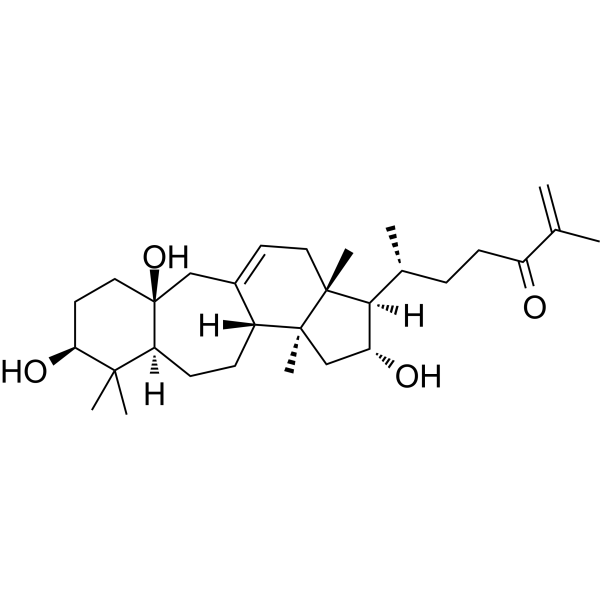
Lepidozin G inhibits the growth of a panel of cancer cell lines with IC50 values ranging from 4.2 ± 0.2 to 5.7 ± 0.5 μM. Lepidozin G induces PC-3 cell death via mitochondrial-related apoptosis.
loading...
    loading...
Cat. No.: HY-149715
Target:  

ICMT

Research Areas:  

Cancer

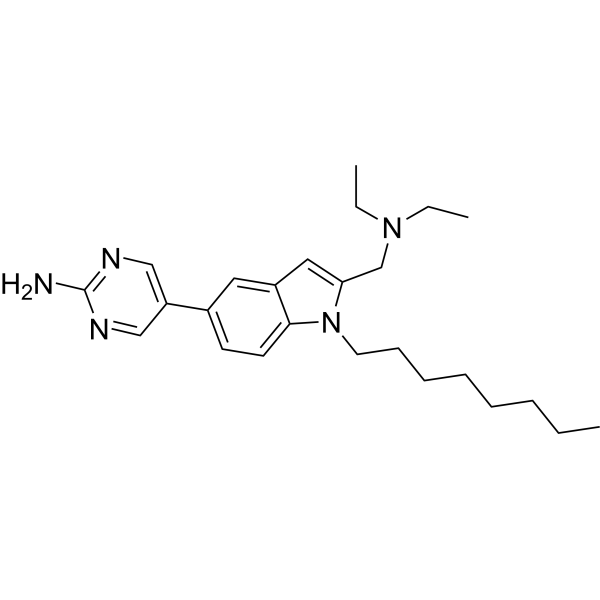
R1-11 is an indole ICMT inhibitor with an IC50 of 0.6 μM and has anticancer activity. R1-11 inhibits MDA-MB231 and PC3 cells with IC50s of 2.2 μM and 2.0 μM, respectively .
loading...
    loading...
Cat. No.: HY-154861
CAS No.: 864443-43-6
Research Areas:  

Cancer

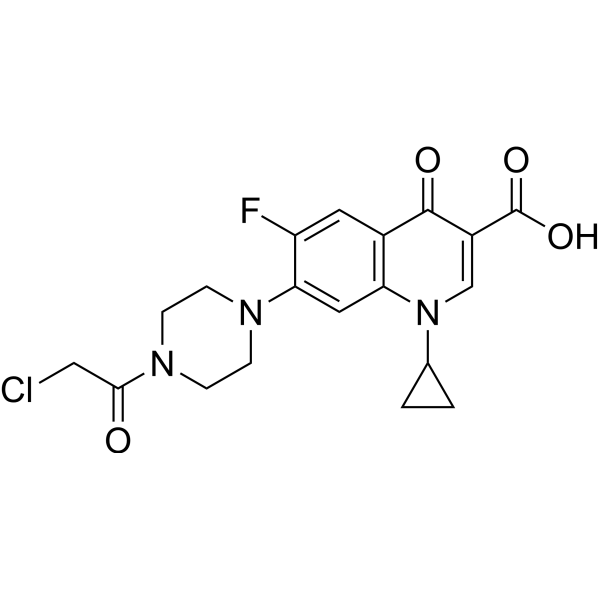
Anticancer agent 118, a N‑acylated ciprofloxacin derivative, has anti-bacterial and anticancer activities. Anticancer agent 118 shows high activity against Gram-positive strains and antiproliferative activities against prostate PC3 cells. Anticancer agent 118 can be used for antitumor research .
loading...
    loading...
Cat. No.: HY-155610
Target:  

VEGFR

Research Areas:  

Cancer

VEGFR-2-IN-32 (Comp 3a) is an inhibitor of VEGFR-2 with an IC50 of 8.93 nM. VEGFR-2-IN-32 has cytotoxic activity against PC-3 cells with an IC50 of 1.22 μM. VEGFR-2-IN-32 can be used for anti-prostate cancer research .
loading...
    loading...
Cat. No.: HY-162380
CAS No.: 2382959-65-9
Target:  

Topoisomerase

Research Areas:  

Cancer

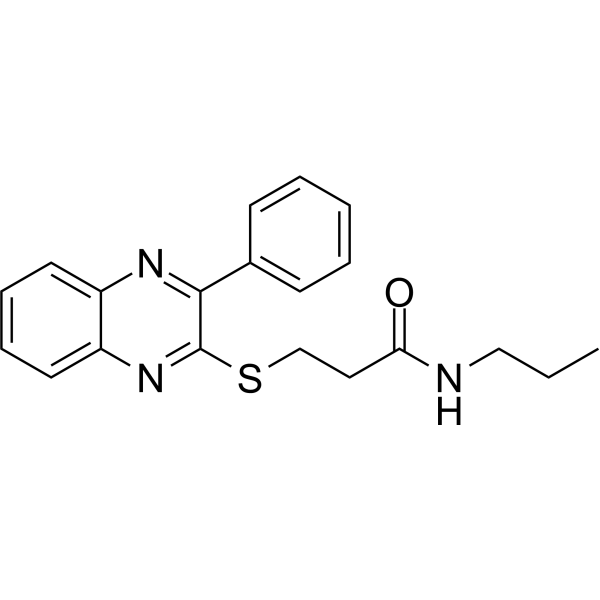
Topoisomerase II inhibitor 18 (Compound IV) is a Quinoxaline derivative, which inhibits topoisomerase II with IC50 of 7.5 μM. Topoisomerase II inhibitor 18 inhibits proliferation, cell cycle at S phase and induces apoptosis in PC-3 cells. Topoisomerase II inhibitor 18 reveals antitumor activity against cancer .
loading...
    loading...
Cat. No.: HY-155718
Target:  

Apoptosis

Research Areas:  

Cancer

fac-[Re(CO)3(L6)(H2O)][NO3] (compound 6), the rhenium(I) tricarbonyl aqua complex, is an anticancer agent associated with mitochondrial dysfunction. fac-[Re(CO)3(L6)(H2O)][NO3] is cytotoxic to prostate cancer cells, IC50=50 nM (PC-3 cells). fac-[Re(CO)3(L6)(H2O)][NO3] mainly accumulates in the nucleus, down-regulates ATP production in PC3 cells, and promotes apoptosis. However, fac-[Re(CO)3(L6)(H2O)][NO3] did not induce necrosis, pyrodeath and autophagy .
loading...
    loading...
Cat. No.: HY-147854
CAS No.: 2477725-18-9
Target:  

Raf Apoptosis

Research Areas:  

Cancer

B-Raf IN 9 (compound 8b) is a potent B-Raf inhibitor, with an IC50 of 24.79 nM. B-Raf IN 9 induces apoptosis and shows cell cycle arrest at G2/M phase. B-Raf IN 9 exhibits potent antitumor activity against human prostate cancer PC-3 cell line, with an IC50 of 7.83 µM .
loading...
    loading...
Cat. No.: HY-N3544R
CAS No.: 1139-30-6
Synonyms: (-)-Caryophyllene oxide (Standard)
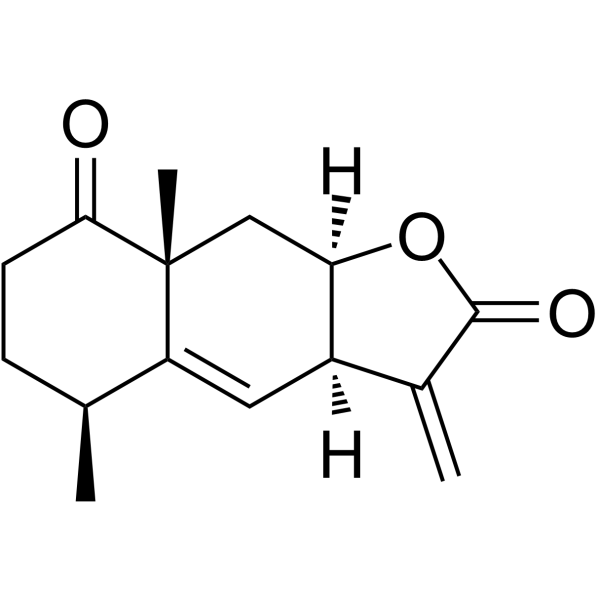
Caryophyllene oxide (Standard) ((-)-Caryophyllene oxide (Standard)) is the analytical standard of Caryophyllene oxide (HY-N3544). This product is intended for research and analytical applications. Caryophyllene oxide is a bicyclic sesquiterpene with anticancer effects. Caryophyllene oxide induces apoptosis of PC-3 cells. Caryophyllene oxide shows analgesic and anti-inflammatory activities. Caryophyllene oxide has insecticidal, antioxidant, antimicrobial, antifungal, and antiparasitic properties.
loading...
    loading...
Cat. No.: HY-155719
Target:  

Paraptosis

Research Areas:  

Cancer

fac-[Re(CO)3(L3)(H2O)][NO3] (compound 3), the rhenium(I) tricarbonyl aqua complex, is an anticancer agent associated with mitochondrial dysfunction. fac-[Re(CO)3(L3)(H2O)][NO3] is cytotoxic to prostate cancer cells with IC50=0.32 μM (PC-3 cells). fac-[Re(CO)3(L3)(H2O)][NO3] mainly accumulates in mitochondria, down-regulates ATP production in PC3 cells, and promotes paraptosis. However, fac-[Re(CO)3(L3)(H2O)][NO3] did not induce necrosis, apoptosis and autophagy .
loading...
    loading...
Cat. No.: HY-115959
CAS No.: 2379335-06-3
Target:  

Bacterial

Research Areas:  

Inflammation/Immunology Cancer

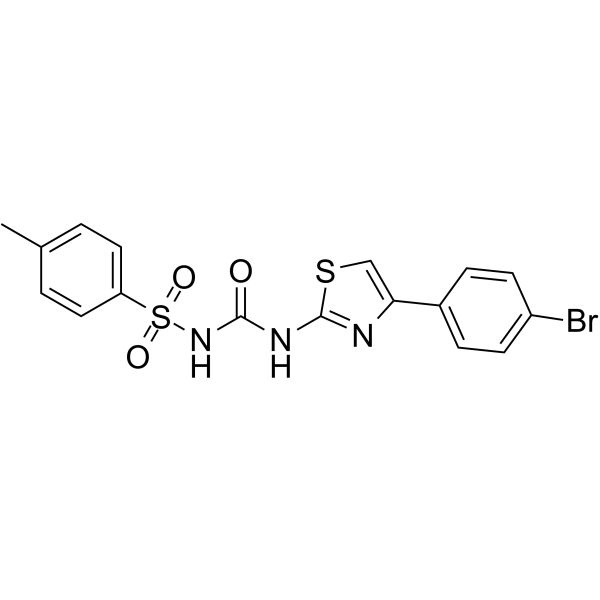
Anticancer agent 34 (compound 9), a sulfonylurea derivative, is a potent antimicrobial and anticancer agent. Anticancer agent 34 inhibits the microbial growth of B. mycoides, E. coli, and C. albicans with a MIC between 0.156 and 0.039 mg/ml. Anticancer agent 34 inhibits A549, PC3 cell growth with IC50s of 8.4 µg/ml, 7.8 µg/ml, respectively .
loading...
    loading...