96 Results for "

Urinary bladder

" in MedChemExpress (MCE) Product Catalog:
Products (96)

96 Results for "Urinary bladder" in MCE Product Catalog:

Cat. No.: HY-A0024
CAS No.: 124937-51-5
Synonyms: (R)-(+)-Tolterodine; (+)-Tolterodine; (R)-Tolterodine; PNU-200583
Target:  

mAChR Cytochrome P450

Research Areas:  

Neurological Disease Cancer

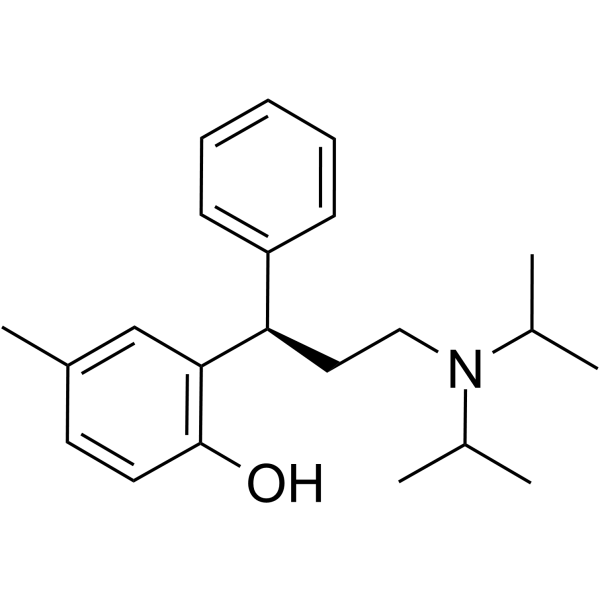
Tolterodine ((R)-(+)-Tolterodine) is a mAChR inhibitor and substrate for cytochrome P450 enzymes. Tolterodine competitively binds acetylcholine, reduces sympathetic excitation, and inhibits involuntary bladder muscle contraction. Tolterodine restores the Nrf2/NF-κB signaling pathway, mediates protection against inflammatory response and ferroptosis. Tolterodine ameliorates LPS (HY-D1056)-induced reactive oxygen species production and lipid oxidation. Tolterodine can be used for the research of urinary tract infections and overactive bladder .
loading...
    loading...
Cat. No.: HY-116408A
CAS No.: 54556-98-8
Purity:  99.89%
Target:  

mAChR Calcium Channel

Research Areas:  

Neurological Disease Cancer

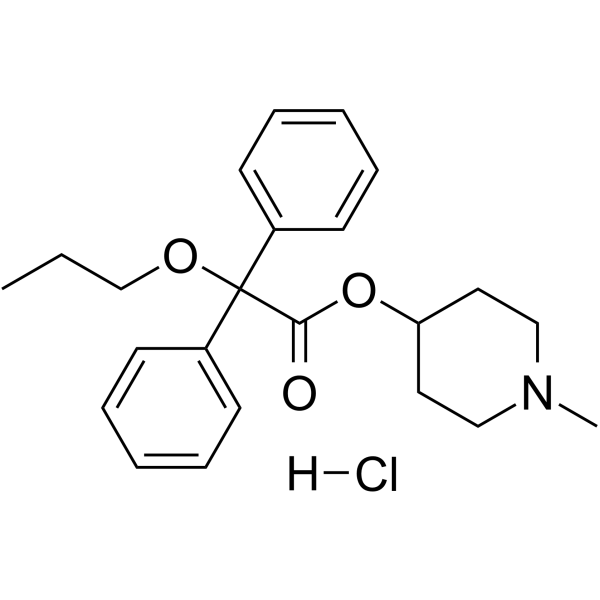
Propiverine hydrochloride is a bladder spasmolytic with calcium antagonistic and anticholinergic properties. Propiverine hydrochloride can be used for the research of overactive blaqdder and urinary incontinence .
loading...
    loading...
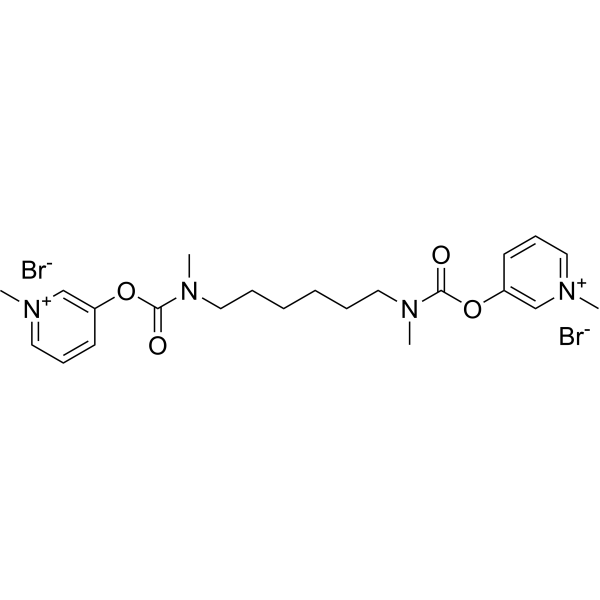
Cat. No.: HY-119577
CAS No.: 15876-67-2
Purity:  ≥99.0%
Synonyms: Distigmine dibromide
Target:  

Cholinesterase (ChE)

Research Areas:  

Neurological Disease

Ubretid is a potent inhibitor of plasma cholinesterase. Ubretid therefore delays the hydrolysis of suxamethonium and prolongs its action, similar to the effects shown by other anticholinesterase agents, such as pyridostigmine and donepezil. Ubretid has the potential for the research of urinary retention prolongs the effect of suxamethonium. Ubretid is commonly prescribed for the research of myasthenia gravis and for difficulty in emptying the bladder .
loading...
    loading...
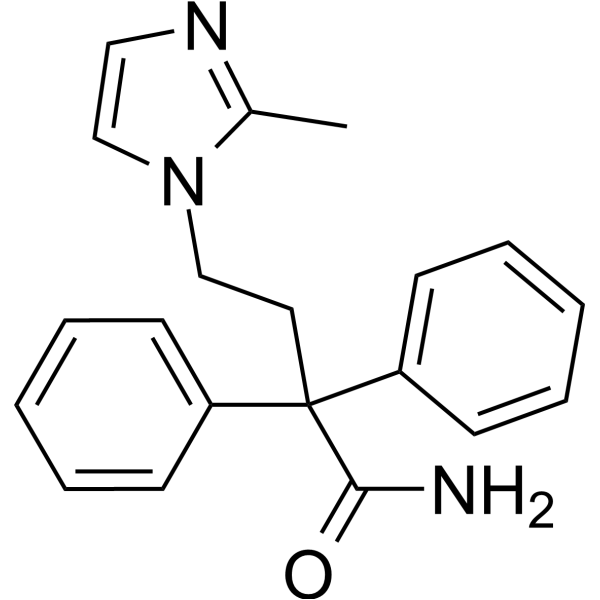
Cat. No.: HY-B0662
CAS No.: 170105-16-5
Synonyms: KRP-197; ONO-8025
Imidafenacin (KRP-197; ONO-8025) is an orally active inhibitor of muscarinic (mAChR) M1 and M3 receptors. Imidafenacin potently inhibits bladder contraction in vivo and exerts an antidiuretic effect by enhancing the signaling pathway of vasopressin (antidiuretic hormone). Imidafenacin can be used in research related to overactive bladder .
loading...
    loading...
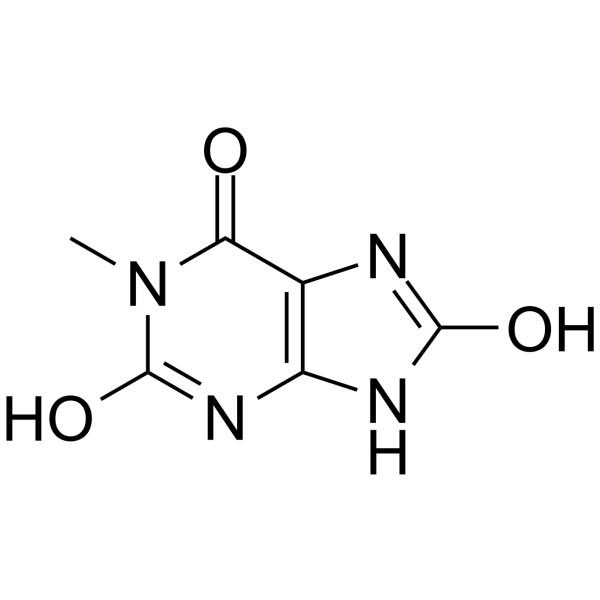
Cat. No.: HY-W010031
CAS No.: 708-79-2
1-Methyluric acid acts on the urinary bladder mucosa and increases the blood glucose, insulin, triglyceride, and cholesterol levels.
loading...
    loading...
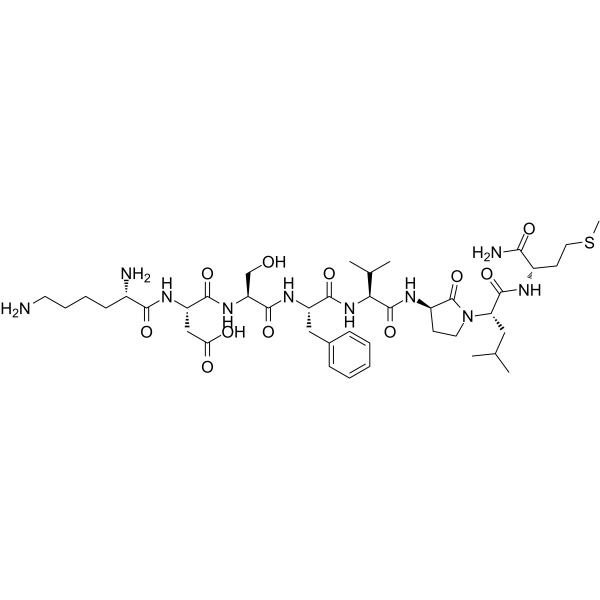
Cat. No.: HY-P1278
CAS No.: 137593-52-3
Target:  

Neurokinin Receptor

Research Areas:  

Neurological Disease Endocrinology

GR 64349 is a selective neurokinin 2 (NK2) receptor agonist. GR 64349 selectively activates the NK-2 receptor subtype. GR 64349 activates tonic and rhythmic bladder contractions of the micturition reflex. GR 64349 acetate does not inhibit rhythmic bladder contraction activation induced by normal saline. GR 64349 induces inward currents .
loading...
    loading...
Cat. No.: HY-B0461R
CAS No.: 10405-02-4
Research Areas:  

Neurological Disease

Trospium (chloride) (Standard) is the analytical standard of Trospium (chloride). This product is intended for research and analytical applications. Trospium chloride is an orally active, specific and competitive antagonist of muscarinic cholinergic receptors (mAChRs), with antimuscarinic activity. Trospium chloride binds to muscarinic receptors M1, M2 and M3 with high affinity, but not nicotinic, cholinergic receptors .
loading...
    loading...
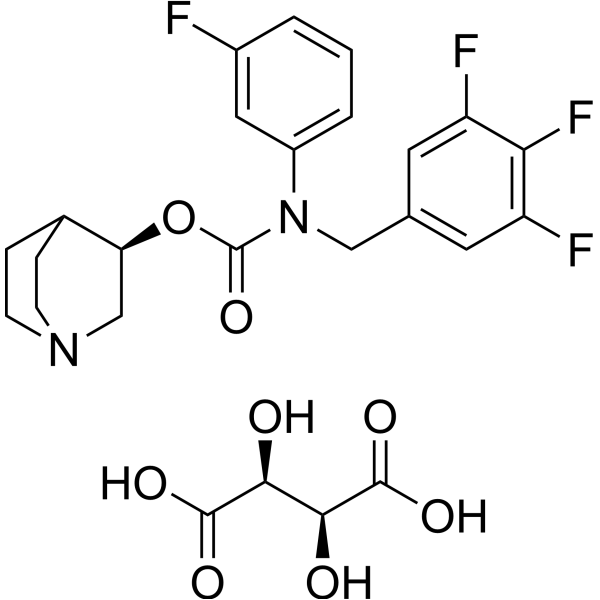
Cat. No.: HY-14825A
CAS No.: 1159101-48-0
Purity:  99.86%
Synonyms: SVT-40776 D-tartrate
Target:  

mAChR

Research Areas:  

Inflammation/Immunology

Tarafenacin (SVT-40776) D-tartrate is an orally active, selective M3 muscarinic receptor (M3 muscarinic receptor) antagonist with 203-fold selectivity over the M2 muscarinic receptor. Tarafenacin D-tartrate does not affect atrial contraction, arterial blood pressure or arterial pressure at high doses. Tarafenacin D-tartrate can be used in the research of overactive bladder .
loading...
    loading...
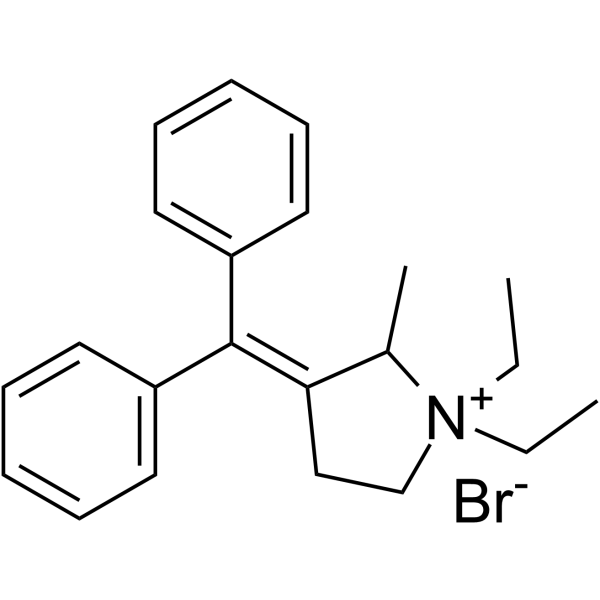
Cat. No.: HY-122086
CAS No.: 4630-95-9
Target:  

mAChR

Research Areas:  

Neurological Disease

Prifinium bromide is an anticholinergic drug with anticholinergic and antispasmodic activities, and it exhibits oral activity. Prifinium bromide competitively antagonizes cholinergic receptors and relieves symptoms of spasm or hypermotility in the digestive and urinary tracts, with its anticholinergic activity representing the core mechanism underlying the inhibition of bladder smooth muscle contraction. Prifinium bromide can be used in research related to spasms and diverticular disease .
loading...
    loading...
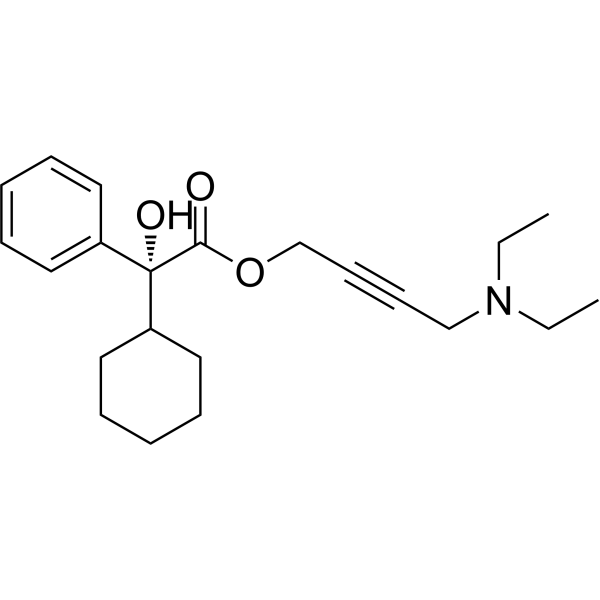
Cat. No.: HY-B0267C
CAS No.: 119618-21-2
Synonyms: Aroxybutynin
Target:  

mAChR

Research Areas:  

Neurological Disease

(R)-Oxybutynin (Aroxybutynin), an enantiomer of Oxybutynin, is an orally active muscarinic receptor antagonist. (R)-Oxybutynin exhibits antispasmodic and anticholinergic activities, and competitively antagonizes carbachol-induced contractions. (R)-Oxybutynin can be used in the research of urinary incontinence caused by neurogenic bladder dysfunction .
loading...
    loading...
Cat. No.: HY-P11162
CAS No.: 2758194-43-1
Target:  

FGFR Akt ERK mTOR Apoptosis

Research Areas:  

Inflammation/Immunology

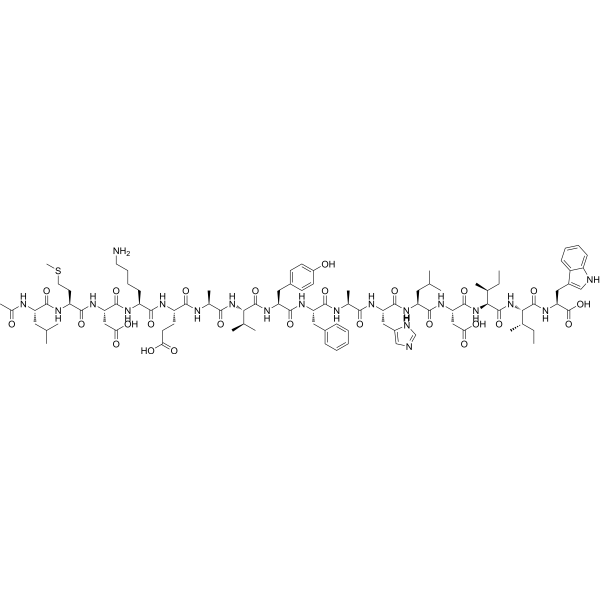
FGF7p is a small molecule peptide and a potential bladder protector. FGF7p can activate downstream signaling pathways of FGFR2 in the urinary tract epithelium (pFRS2α, pAKT and pERK). FGF7p alleviates cyclophosphamide induced apoptosis and tissue damage in urinary tract epithelial cells by activating AKT and its downstream anti apoptotic targets (pBAD, pS6/mTORC1). FGF7p is commonly used in the study of inflammatory conditions .
loading...
    loading...
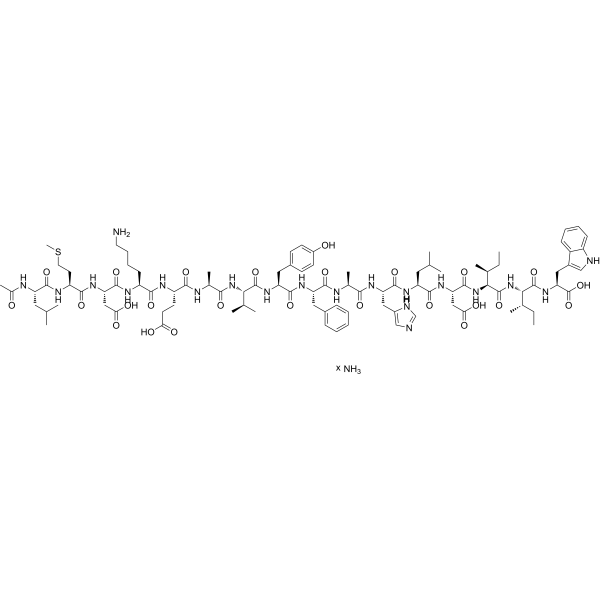
Cat. No.: HY-P1016B
Target:  

Endothelin Receptor

Research Areas:  

Cardiovascular Disease

BQ-3020 ammonium is a selective endothelin receptor (ETB receptor) agonist. BQ-3020 ammonium inhibits [ 125I] ET-1 binding to ETB receptors, with an IC50 value of 0.2 nM. BQ-3020 ammonium elicits vasoconstriction in the rabbit pulmonary artery. BQ-3020 ammonium makes relaxation of the pig urinary bladder neck and can be used for cardiovascular disease research . .
loading...
    loading...
Cat. No.: HY-101230
CAS No.: 89352-67-0
Purity:  99.97%
Target:  

Opioid Receptor

Research Areas:  

Neurological Disease

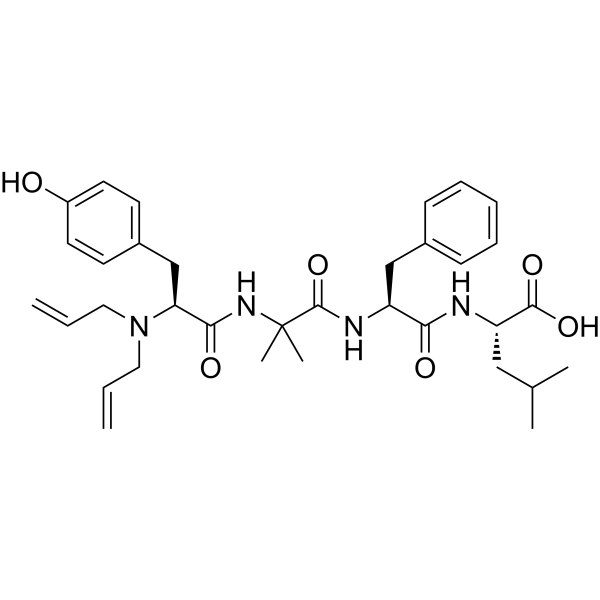
ICI 174864 is a selective and brain-penetrant δ-opioid receptor antagonist with Ke values of 22.0 nM to 30.6 nM at δ-opioid receptor in mouse vas deferens. ICI 174864 selectively blocks biological effects mediated by the δ-opioid receptor agonist DPDPE (HY-P1334) after central administration. ICI 174864 reverses hypotension in rats with endotoxic shock and inhibits acetic acid-induced writhing in mice. ICI 174864 can be used for the research of opioid receptor subtypes, endotoxic hypotension and analgesic pathways .
loading...
    loading...
Cat. No.: HY-W509797
CAS No.: 21618-92-8
5-(3',4'-Dihydroxyphenyl)-γ-valerolactone is an intestinal microbiota metabolite of (-)-Epicatechin (HY-N0001). 5-(3',4'-Dihydroxyphenyl)-γ-valerolactone downregulates TNF-α-stimulated phosphorylation of IKK and IκBα, inhibits the transcriptional activation of NF-κB, and suppresses the expression of adhesion molecules and chemokines. 5-(3',4'-Dihydroxyphenyl)-γ-valerolactone promotes autophagy, alleviates oxidative stress, maintains osteoblast differentiation, induces G1 phase arrest, inhibits adipogenesis, and scavenges ABTS free radicals. 5-(3',4'-Dihydroxyphenyl)-γ-valerolactone inhibits the adhesion of uropathogenic Escherichia coli to bladder epithelial cells; when used in combination with Curcumin (HY-N0005), it downregulates the NLRP3 and NOX2/Nrf2 signaling pathways, thereby reducing microglial activation. 5-(3',4'-Dihydroxyphenyl)-γ-valerolactone can be used in research related to diabetes, atherosclerosis, osteoporosis, obesity, neurodegenerative diseases involving microglial activation, and urinary tract infections .
loading...
    loading...
Cat. No.: HY-B0267B
CAS No.: 1207344-05-5
Synonyms: Aroxybutynin hydrochloride
Target:  

mAChR

Research Areas:  

Neurological Disease

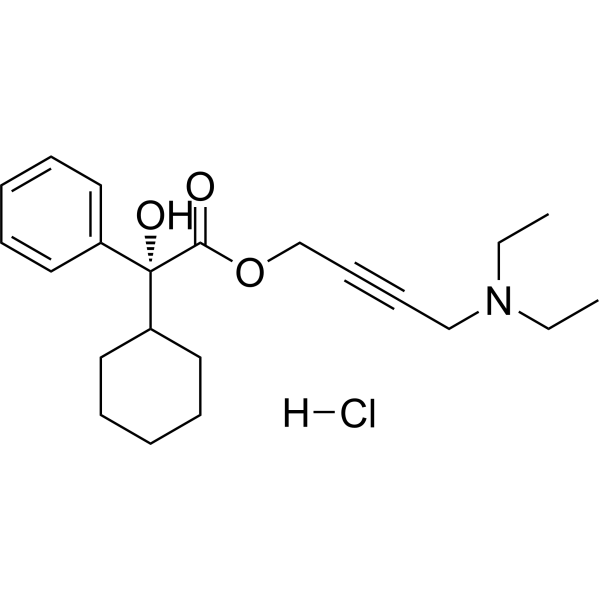
(R)-Oxybutynin hydrochloride (Aroxybutynin hydrochloride), an enantiomer of Oxybutynin hydrochloride, is an orally active muscarinic receptor antagonist. (R)-Oxybutynin hydrochloride exhibits antispasmodic and anticholinergic activities, and competitively antagonizes carbachol-induced contractions. (R)-Oxybutynin hydrochloride can be used in the research of urinary incontinence caused by neurogenic bladder dysfunction .
loading...
    loading...
Cat. No.: HY-P3799
CAS No.: 61123-13-5
Target:  

Neurokinin Receptor

Research Areas:  

Neurological Disease

[Glp6] Substance P (6-11) is an analogue of substance P (6-11). Substance P (6-11) stimulates [3H]-inositol monophosphate ([3H]-IP1) formation in rat urinary bladder by acting on the 'septide-sensitive' tachykinin receptors .
loading...
    loading...
Cat. No.: HY-P1016
CAS No.: 143113-45-5
Target:  

Endothelin Receptor

Research Areas:  

Cardiovascular Disease

BQ-3020 is a selective endothelin receptor (ETB receptor) agonist that displaces [ 125I] ET-1 binding to ETB receptors, with an IC50 value of 0.2 nM. BQ-3020 elicits vasoconstriction in the rabbit pulmonary artery. BQ-3020 makes relaxation of the pig urinary bladder neck and can be used for cardiovascular disease research 1 2.
loading...
    loading...
Cat. No.: HY-W039283
CAS No.: 345-24-4
Target:  

MCHR1 (GPR24)

Research Areas:  

Neurological Disease Cancer

MCH-1 antagonist 2 (l-BROMO-2,4-DIFLUORO-5-NITROBEN-ZENE) is a melanin concentrating hormone-1 (MCH1) receptor-selective 4-aryl piperidine. MCH-1 antagonist 2 can be used for the research of depression, anxiety, obesity, urge incontinence, urinary incontinence, major depression, bipolar disorder, agoraphobia, specific phobia, social phobia, obsessive-compulsive disorder, post-traumatic stress disorder, acute stress disorder, urinary frequency, urinary urgency, nocturia, enuresis, bulimia, bulimia nervosa, anorexia nervosa, major depressive disorder, dysthymic disorder, bipolar 1 and 2 disorders, schizoaffective disorder, cognitive disorders with depressed mood, personality disorders, insomnia, hypersomnia, narcolepsy, circadian rhythm sleep disorder, nightmare disorder, sleep terror disorder, sleepwalking disorder, panic disorder, social anxiety disorder, generalized anxiety disorder, overactive bladder .
loading...
    loading...
Cat. No.: HY-B0549
CAS No.: 15301-69-6
Synonyms: Rec-7-0040 free base; DW61 free base
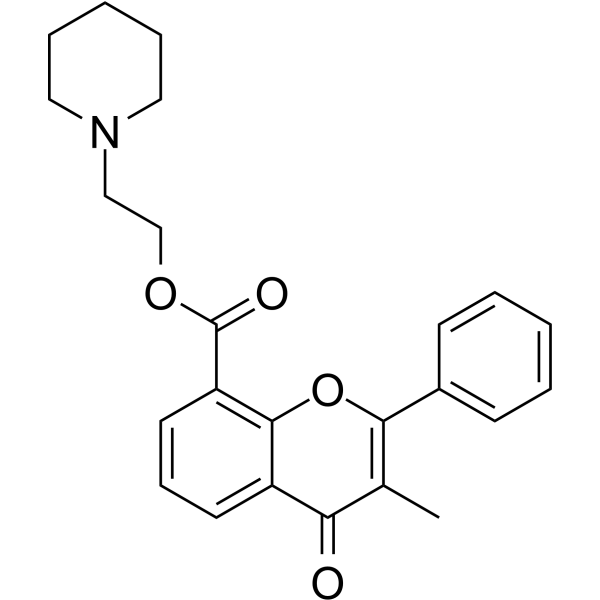
Flavoxate (Rec-7-0040 free base; DW61 free base) is an orally active L-type Ca 2+ channel inhibitor and antispasmodic. Flavoxate inhibits cyclic adenosine monophosphate production by blocking voltage-dependent inward Ba 2+ currents, regulating the brainstem micturition center, and stimulating G protein-coupled receptors. Consequently, Flavoxate induces relaxation of bladder smooth muscle and inhibits isovolumetric rhythmic contractions. Flavoxate effectively increases bladder capacity and alleviates symptoms of urgent urination frequency and pollakiuria caused by overactive bladder. Flavoxate can be used in research on overactive bladder and related voiding dysfunctions .
loading...
    loading...
Cat. No.: HY-B0549AR
CAS No.: 3717-88-2
Synonyms: Rec-7-0040 (Standard); DW61 (Standard)
Flavoxate (hydrochloride) (Standard) is the analytical standard of Flavoxate (hydrochloride). This product is intended for research and analytical applications. Flavoxate hydrochloride (Rec-7-0040; DW61) is an orally active L-type Ca 2+ channel inhibitor and antispasmodic. Flavoxate hydrochloride inhibits cyclic adenosine monophosphate production by blocking voltage-dependent inward Ba 2+ currents, regulating the brainstem micturition center, and stimulating G protein-coupled receptors. Consequently, Flavoxate hydrochloride induces relaxation of bladder smooth muscle and inhibits isovolumetric rhythmic contractions. Flavoxate hydrochloride effectively increases bladder capacity and alleviates symptoms of urgent urination frequency and pollakiuria caused by overactive bladder. Flavoxate hydrochloride can be used in research on overactive bladder and related voiding dysfunctions .
loading...
    loading...