36 Results for "

dinitroaromatic toxicant

" in MedChemExpress (MCE) Product Catalog:
Products (36)

36 Results for "dinitroaromatic toxicant" in MCE Product Catalog:

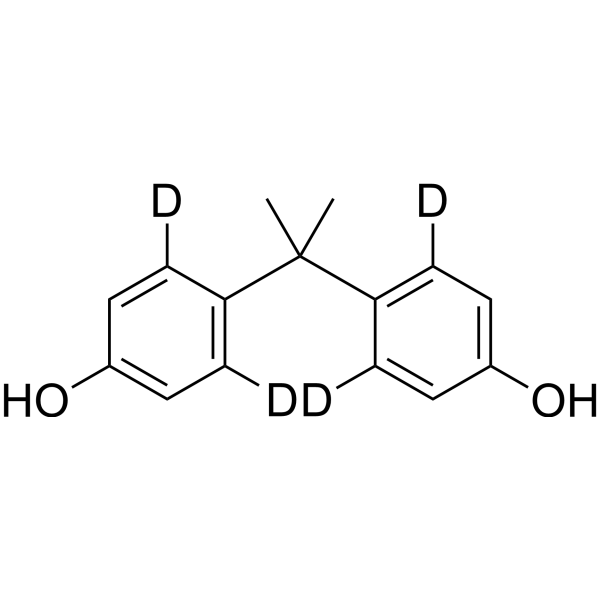
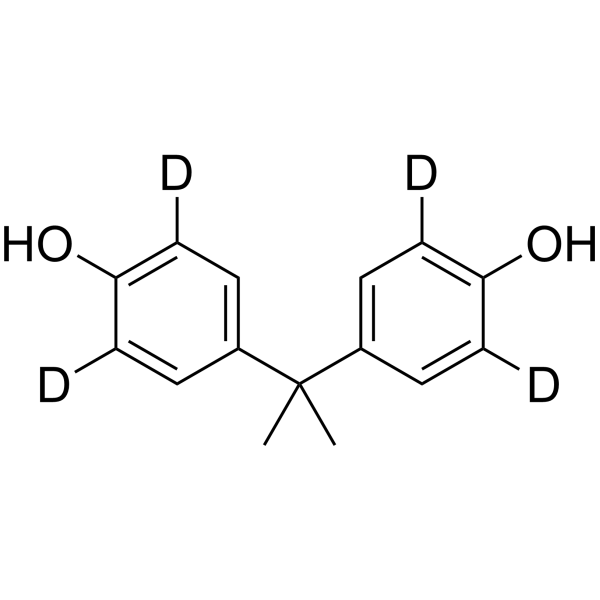
Cat. No.: HY-18260S4
CAS No.: 102438-62-0
Bisphenol A-d4 is the deuterium labeled Bisphenol A . Bisphenol A is a phenolic, organic synthetic compound widely used in the production of polycarbonate plastics and epoxy resins. Bisphenol A is a reproductive, developmental, and systemic toxicant, often classified as an endocrine-disrupting compound (EDC). Bisphenol A is associated with many diseases, including cardiovascular diseases, respiratory diseases, diabetes, kidney diseases, obesity, and reproductivedisorders .
loading...
    loading...
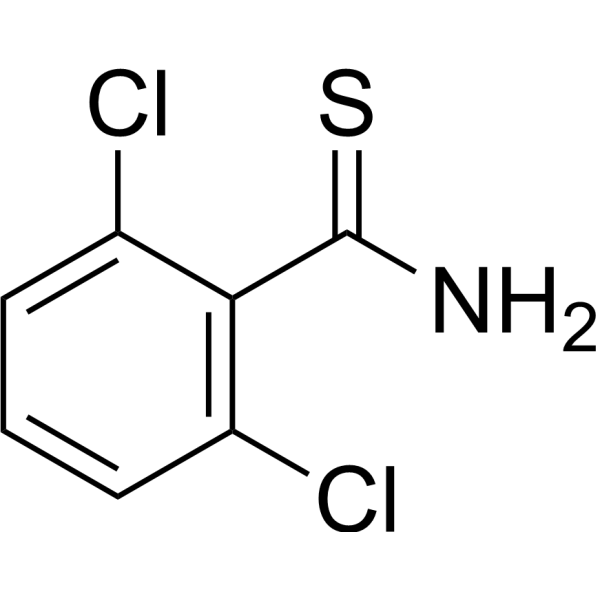
Cat. No.: HY-126152
CAS No.: 1918-13-4
Target:  

Herbicide

Research Areas:  

Others

Chlorthiamid is a broad-spectrum herbicide. Chlorthiamid is an olfactory toxicant with a high in vivo covalent binding in the olfactory mucosa of mice .
loading...
    loading...
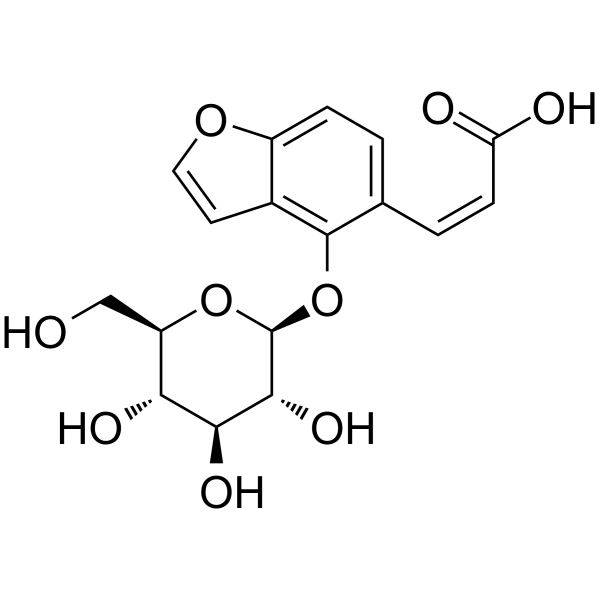
Cat. No.: HY-N7504
CAS No.: 905954-18-9
Isopsoralenoside is a benzofuran glycoside and coumarin-derived compound. Isopsoralenoside exists in the dried mature fruits of Psoralea corylifolia L., and acts as a metabolite precursor, toxicant and inducer, with estrogen-like, osteoblast proliferation-promoting, anti-tumor and antibacterial activities. Isopsoralenoside can be deglycosylated by intestinal flora to form isopsoralen. Isopsoralenoside induces oocyte death in zebrafish, activates oxidative stress and cell death-related pathways in zebrafish follicles, and is the main effector substance responsible for the reproductive toxicity induced by Fructus Psoraleae. Isopsoralenoside can be used in studies related to reproductive toxicity (ovarian dysfunction, follicular atresia, impaired fertility) .
loading...
    loading...
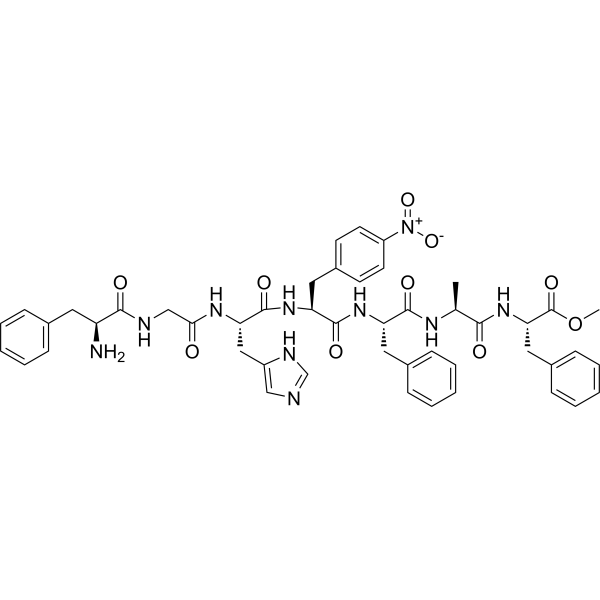
Cat. No.: HY-P4556
CAS No.: 50572-79-7
Research Areas:  

Others

H-Phe-Gly-His-p-nitro-Phe-Phe-Ala-Phe-OMe is a polypeptide that can be hydrolyzed by Rennin (HY-P2810). H-Phe-Gly-His-p-nitro-Phe-Phe-Ala-Phe-OMe is commonly used as a biochemical reaction reagent .
loading...
    loading...
Cat. No.: HY-W013816R
CAS No.: 131-18-0
Research Areas:  

Metabolic Disease

Dipentyl phthalate (Standard) is the analytical standard of Dipentyl phthalate. This product is intended for research and analytical applications. Dipentyl phthalate is an endocrine-disrupting phthalate plasticizer. Dipentyl phthalate increases AMPK phosphorylation and decreases AKT1 phosphorylation and SIRT1 levels. Dipentyl phthalate reduces adrenocorticotropic hormone levels. Dipentyl phthalate is a testicular toxicant .
loading...
    loading...
Cat. No.: HY-119902R
CAS No.: 201593-84-2
Research Areas:  

Infection

Bistrifluron (Standard) is the analytical standard of Bistrifluron. This product is intended for research and analytical applications. Bistrifluron is a benzoylphenylurea compound and orally active insecticide with activity against termites. At a concentration of 5,000 ppm, Bistrifluron acts as a bait toxicant against workers of the Formosan subterranean termite (Coptotermes formosanus), and also inhibits the grooming behavior of termites and impairs their motor ability prematurely .
loading...
    loading...
Cat. No.: HY-18260S5
CAS No.: 347841-41-2
Bisphenol A-d4-1 is the deuterium labeled Bisphenol A . Bisphenol A is a phenolic, organic synthetic compound widely used in the production of polycarbonate plastics and epoxy resins. Bisphenol A is a reproductive, developmental, and systemic toxicant, often classified as an endocrine-disrupting compound (EDC). Bisphenol A is associated with many diseases, including cardiovascular diseases, respiratory diseases, diabetes, kidney diseases, obesity, and reproductivedisorders .
loading...
    loading...
Cat. No.: HY-178290
CAS No.: 2766214-01-9
Research Areas:  

Cancer

MC-Gly-Gly-Phe-Exatecan analog 38 (Compound L-II-4) is part of an antibody-drug conjugate (ADC), consisting of an ADC toxicant molecule and an ADC linker. MC-Gly-Gly-Phe-Exatecan analog 38 can be used to synthesize ADCs (such as ADC-II-15 and ADC-III-13). MC-Gly-Gly-Phe-Exatecan analog 38 can also be used in cancer research (ADC Cytotoxin: HY-178315, ADC Linker: HY-44235) .
loading...
    loading...
Cat. No.: HY-126152R
CAS No.: 1918-13-4
Research Areas:  

Others

Chlorthiamid (Standard) is the analytical standard of Chlorthiamid. This product is intended for research and analytical applications. Chlorthiamid is a broad-spectrum herbicide. Chlorthiamid is an olfactory toxicant with a high in vivo covalent binding in the olfactory mucosa of mice .
loading...
    loading...
Cat. No.: HY-135450
CAS No.: 271241-14-6
Dimefluthrin is an insecticide. Dimefluthrin exhibits contact toxicity against large red imported fire ant workers. Dimefluthrin undergoes horizontal transfer among red imported fire ant workers, causing secondary mortality in recipient workers. Dimefluthrin is a neurodevelopmental toxicant, which can reduces acetylcholinesterase activity, impairing neurotransmitter .
loading...
    loading...
Cat. No.: HY-W778391
CAS No.: 263261-64-9
Bisphenol A- 13C2 is 13C labeled Bisphenol A. Bisphenol A is a phenolic, organic synthetic compound widely used in the production of polycarbonate plastics and epoxy resins. Bisphenol A is a reproductive, developmental, and systemic toxicant, often classified as an endocrine-disrupting compound (EDC). Bisphenol A is associated with many diseases, including cardiovascular diseases, respiratory diseases, diabetes, kidney diseases, obesity, and reproductivedisorders .
loading...
    loading...
Cat. No.: HY-W102349
CAS No.: 1534-08-3
S-Methyl thioacetate is a toxicant with fumigant activity, can be found in emissions from Bacillus oshimensis, Burkholderia gladioli, Burkholderia cepacia, and Pseudomonas oryzihabitans. S-Methyl thioacetate exerts fumigant toxicity against Caenorhabditis elegans and root-knot nematode Meloidogyne incognita. S-Methyl thioacetate functions as a bacterial volatile organic compound. S-Methyl thioacetate can be used for the research of plant-parasitic nematode infection .
loading...
    loading...
Cat. No.: HY-W072994
CAS No.: 1338-02-9
Target:  

Fungal Insecticide

Research Areas:  

Infection

Copper naphthenate is an organocopper compound with the properties of a fungicide, preservative, oil-borne protectant, and toxicant. Copper naphthenate increases serum and urine copper levels in exposed populations, causes skin irritation, and induces intraperitoneal toxicity in rats. Copper naphthenate inhibits the growth of decay fungi and molds on moso bamboo, kills the free-living stages of Ichthyophthirius multifiliis, and controls wood-boring insects and termites .
loading...
    loading...
Cat. No.: HY-W142457
CAS No.: 18479-58-8
Dihydromyrcenol is an orally active flavor ingredient and Antifungal agent. Dihydromyrcenol acts as a toxicant. Dihydromyrcenol induces phototoxicity-related growth inhibition in Bakers' Yeast. In pregnant rats, Dihydromyrcenol causes threshold maternal toxicity by reducing feed consumption and body weight gain, and also induces threshold developmental toxicity by decreasing fetal body weight, inhibiting ossification of metatarsal bones in the hind paws, increasing the number of extra thoracic vertebrae ribs, and altering vertebral counts .
loading...
    loading...
Cat. No.: HY-W982689
CAS No.: 6723-40-6
Research Areas:  

Metabolic Disease

Fluindarol is a phenylindandione derivative and an orally active anticoagulant. Fluindarol acts as a toxicant that induces organ and tissue haemorrhages and liver parenchymal necrosis in rats. Fluindarol exhibits acute and cumulative preclinical toxicity in rats, rabbits, and dogs, with higher toxicity in female rats than male rats. Fluindarol lacks analgesic action, produces only minor blood pressure effects, and does not alter circulation, respiration, CNS, or cardiac activity. Fluindarol is considered too toxic for clinical use based on preclinical data .
loading...
    loading...
Cat. No.: HY-W275882
CAS No.: 13179-98-1
Research Areas:  

Endocrinology

1,6-Dimethoxyhexane is an aliphatic ether that serves as a PROTAC linker and fuel additive. 1,6-Dimethoxyhexane is an orally active testicular toxicant. It has no direct toxicity on its own, but exerts toxicity after oxidative metabolism by liver/testicular microsomes to produce 2-Methoxyacetic Acid (MAA). 1,6-Dimethoxyhexane induces apoptosis/necrosis of pachytene spermatocytes, downregulates the expression of HSP70.2, HSP60 and ERp60/PDI A3, and causes spermatogenic tubule degeneration, testicular/thymic atrophy, a sharp decline in epididymal sperm density, and other effects. 1,6-Dimethoxyhexane can be used in studies related to testicular toxicity .
loading...
    loading...

