


99 Results for "

pyrethroid-resistant mosquitoes

" in MedChemExpress (MCE) Product Catalog:
Products (99)

99 Results for "pyrethroid-resistant mosquitoes" in MCE Product Catalog:

Cat. No.: HY-123805
CAS No.: 446826-86-4
Purity:  98.1%
Research Areas:  

Infection

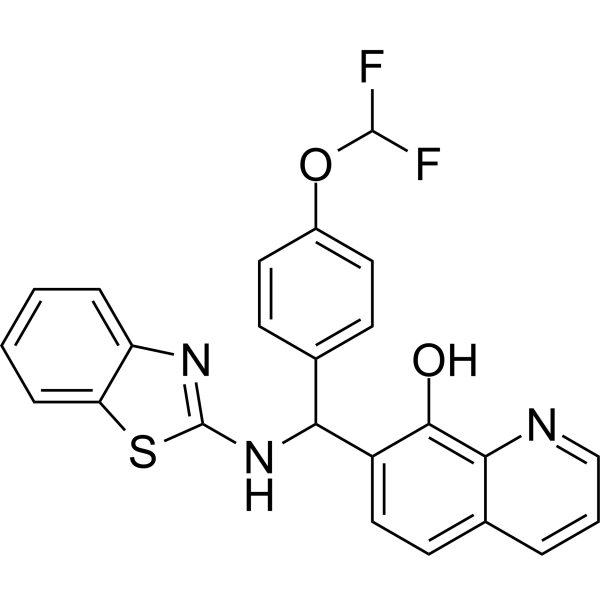
KIN1400 is a potent IRF3 activator. KIN1400 triggers IRF3-dependent innate immune antiviral genes (RIG-I, MDA5, IFIT1, and Mx1) and IFN-β expression. KIN1400 inhibits WNV and DV, two mosquito-borne members of the Flaviviridae and the genus Flavivirus. KIN1400 also inhibits HCV replication. KIN1400 induces innate antiviral immunity through a MAVS-IRF3 axis .
loading...
    loading...
Cat. No.: HY-116144R
CAS No.: 119515-38-7
Synonyms: Lcaridin (Standard)
Research Areas:  

Infection

Picaridin (Standard) is the analytical standard of Picaridin. This product is intended for research and analytical applications. Picaridin (Lcaridin) is a broad spectrum arthropod repellent. The repellent and deterrent activities of Picaridin involve olfactory sensing in mosquitoes, and ticks, via their interactions with odorant receptor proteins .
loading...
    loading...
Cat. No.: HY-B1559
CAS No.: 584-79-2
Research Areas:  

Infection Cancer

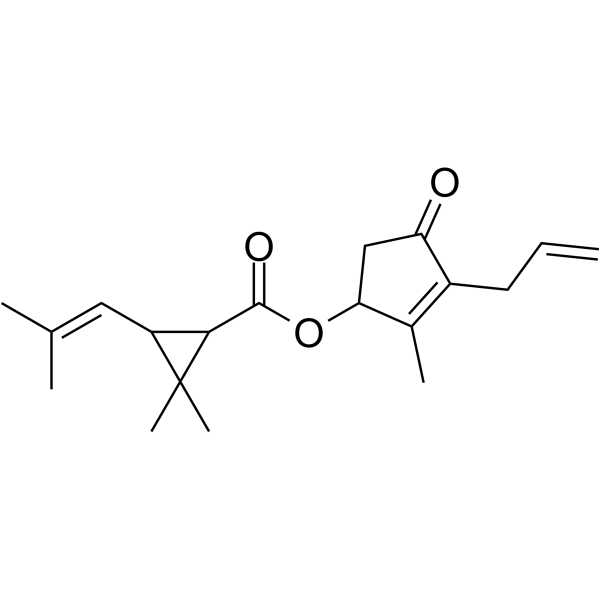
Allethrin, a pyrethroid insecticide is a major mosquito repellent agent. Allethrin induces oxidative stress, apoptosis and calcium release in rat testicular carcinoma cells (LC540). Allethrin induces BCL-2, caspase-3 activation and release of intracellular calcium .
loading...
    loading...
Cat. No.: HY-N16433
CAS No.: 163120-03-4
Nodulisporic acid A (Compound 1a) is an insecticidal agent. Nodulisporic acid A can isolated from fermentations of Nodulisporium sp. Nodulisporic acid A has a potent insecticidal activity against the larvae of the blowfly and mosquito with LC50s of 0.5 and 0.3 ppm against A. aegypti and L. seracata, respectively. Nodulisporic acid A can be used for the development of insecticide .
loading...
    loading...
Cat. No.: HY-B0978R
CAS No.: 134-62-3
Synonyms: DEET (Standard); N,N-Diethyl-m-toluamide (Standard)
Diethyltoluamide (Standard) is the analytical standard of Diethyltoluamide. This product is intended for research and analytical applications. Diethyltoluamide (DEET) is the most common active ingredient in insect repellents. It is intended to provide protection against mosquitoes, ticks, fleas, chiggers, leeches, and many other biting insects. Diethyltoluamide is toxic to hepatocytes and can lead to many physiological, pharmacological, and behavioral abnormal ities, particularly motor deficits and learning and memory dysfunction .
loading...
    loading...
Cat. No.: HY-W272217S
CAS No.: 16416-33-4
Synonyms: n-Octacosane-d58; NSC 5549-d58
Octacosane-d58 is the deuterium labeled Octacosane . Octacosane is an endogenous metabolite with antibacterial activity. Octacosane shows high cytotoxicity against murine melanoma B16F10-Nex2 cells besides inducing protection against a grafted subcutaneous melanoma. Octacosane has the larvicidal activity against mosquito Culex quinquefasciatus with the LC50 concentration of 7.2 mg/l .
loading...
    loading...
Cat. No.: HY-107864
CAS No.: 15905-32-5
Purity:  99.07%
Synonyms: Erythrosin extra bluish free acid; Tetraiodofluorescein
Research Areas:  

Infection

Erythrosine B free acid​ (Erythrosin extra bluish free acid; Tetraiodofluorescein) is a visible red dye and insecticide with colorimetric and fluorescent properties. Erythrosine B free acid serves as a membrane-impermeant live-cell dye for Gram-positive and Gram-negative bacteria, primarily staining dead cells with damaged plasma membranes. Erythrosine B free acid exhibits photosensitive larvicidal toxicity against Culex pipiens quinquefasciatus larvae. Erythrosine B free acid is used in live/dead bacterial assays in colorimetric and fluorescent measurements for low-, medium-, and high-throughput experiments, as well as in research related to mosquito-borne diseases and food coloring .
loading...
    loading...
Cat. No.: HY-P10862
Target:  

Exosomes Virus Protease

Research Areas:  

Infection Cancer

AH-D peptide is a brain-penetrant antiviral agent disrupting highly curved lipid membranes. AH-D peptide exhibits broad-spectrum antiviral activity against ZIKV, Dengue virus, Chikungunya virus, yellow fever virus and Japanese encephalitis virus, with
IC50
values of 11.9, 12.5, 35.7, 206 and 136 nM, respectively. AH-D peptide reduces the viral load in the brain, suppresses inflammation, protects neurons, and does not damage the blood brain barrier. AH-D peptide restores antitumor immunity by decreasing circulating PD-L1 + exosomes, reducing intratumoral immunosuppressive cells (regulatory T cells, myeloid-derived suppressor cells), and enhancing T cell function. AH-D peptide inhibits membrane-enveloped viruses and cancer cell metastasis in vivo. AH-D peptide exhibits no immunogenicity and has negligible effects on normal tissues. AH-D peptide can be used for research in Zika virus and other mosquito-borne viruses, cancer immunotherapy and metastasis .
loading...
    loading...
Cat. No.: HY-N10743
CAS No.: 54794-74-0
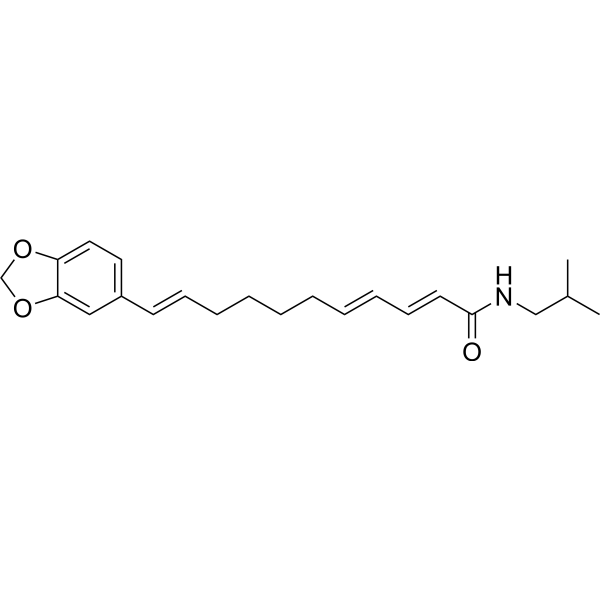
Pipercide is an amide of piper nigrum fruits. Pipercide has larvicidal activity to mosquito. Pipercide acts on the nervous system and induces repetitive discharge on the central nerve cord. Pipercide can be used as an insecticide .
loading...
    loading...
Cat. No.: HY-126323B
CAS No.: 2705545-47-5
Purity:  98.30%
Target:  

Parasite

Research Areas:  

Infection

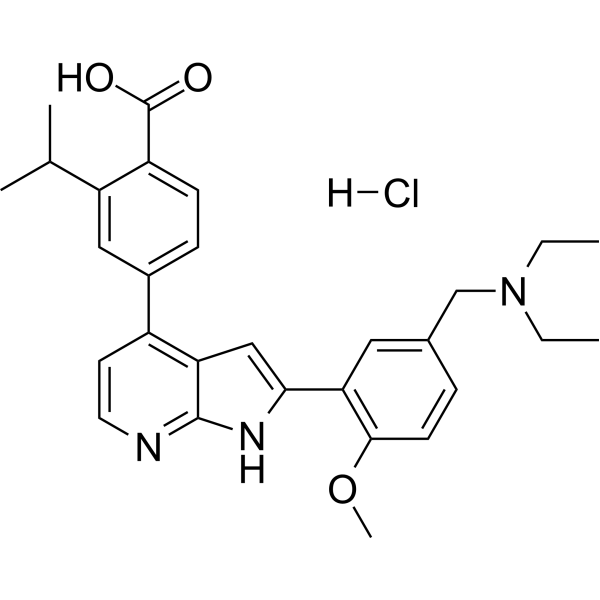
TCMDC-135051 hydrochloride is a highly selective and potent protein kinase PfCLK3 inhibitor with low off-target toxicity. TCMDC-135051 hydrochloride prevents trophozoite-to-schizont transition, disrupts transcription and reduces transmission to the mosquito vector. TCMDC-135051 hydrochloride has antiparasiticidal activity (EC50=320 nM) .
loading...
    loading...
Cat. No.: HY-B0601R
CAS No.: 209860-88-8
Synonyms: AFP-172 (Standard)
Tectoquinone (Standard) is the analytical standard of Tectoquinone. This product is intended for research and analytical applications. Tectoquinone (2-Methylanthraquinone) is a SARSCoV-2 main protease inhibitor against COVID-19. Tectoquinone exhibits strong mosquito larvicidal activity with the LC50 values of 3.3 and 5.4 μg/ml against A. aegypti and A. albopictus in 24 h, respectively .
loading...
    loading...
Cat. No.: HY-W272217
CAS No.: 630-02-4
Synonyms: n-Octacosane; NSC 5549
Octacosane is an endogenous metabolite with antibacterial activity. Octacosane shows high cytotoxicity against murine melanoma B16F10-Nex2 cells besides inducing protection against a grafted subcutaneous melanoma. Octacosane has the larvicidal activity against mosquito Culex quinquefasciatus with the LC50 concentration of 7.2 mg/l .
loading...
    loading...
Cat. No.: HY-W099479R
CAS No.: 52304-36-6
Synonyms: Ethyl butylacetylaminopropionate (Standard); IR-3535 (Standard)
Insect repellent M 3535 (Ethyl butylacetylaminopropionate) Standard is the analytical standard of Insect repellent M 3535 (HY-W099479). This product is intended for research and analytical applications. Insect repellent M 3535 (Ethyl butylacetylaminopropionate) is a broad-spectrum, mild insect repellent based on the structure of β-alanine. Insect repellent M 3535 exerts repellent effects by interfering with the olfaction of mosquitoes, but it poses risks of developmental and cardiac toxicity to aquatic organisms such as zebrafish embryos in aquatic environments, and can activate oxidative stress responses.
loading...
    loading...
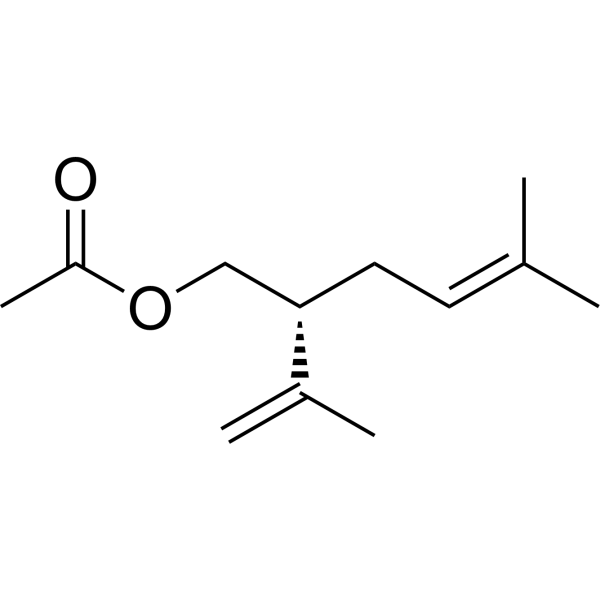
Cat. No.: HY-117419
CAS No.: 20777-39-3
(-)-Lavandulyl acetate is a nature product that can be found in Lavandula angustifolia. (-)-Lavandulyl acetate shows toxicity for mosquito vectors. (-)-Lavandulyl acetate can be used as mosquito larvicide .
loading...
    loading...
Cat. No.: HY-W004285
CAS No.: 1731-86-8
Methyl undecanoate is a synthetic undecanoic acid ester analog with biting deterrent and repellent activity against Aedes aegypti mosquitoes, with a biting deterrent index (BDI) of 0.88 and minimum effective dose (MED) of 25 µg/cm 2. Methyl undecanoate can be used for the research of mosquito-borne diseases transmitted by Aedes aegypti .
loading...
    loading...
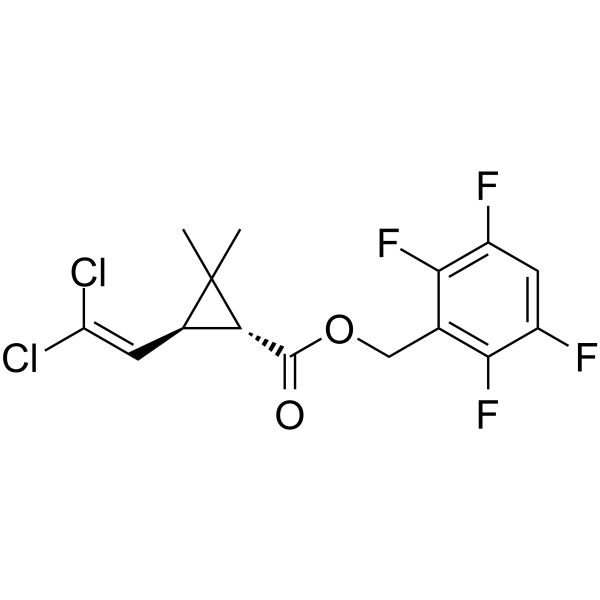
Cat. No.: HY-W075176
CAS No.: 118712-89-3
Target:  

Insecticide

Research Areas:  

Infection

Transfluthrin is an insecticide with extremely low acute toxicity to vertebrates. Transfluthrin acts as a mosquito repellent, exerts mosquito control effects via electric heating fumigators, and is widely used in studies related to malaria, bancroftian filariasis and mosquito-borne infectious diseases. Transfluthrin may also induce adverse reactions such as pulmonary sensory irritation, sensitization, genotoxicity and respiratory depression, and can increase the concentrations and activities of CYP2E1 and CYP3A2 in rat brains. Transfluthrin can be removed from wastewater through biodegradation and activated sludge adsorption, and can be degraded by microorganisms such as Azovibrio and Tauera .
loading...
    loading...
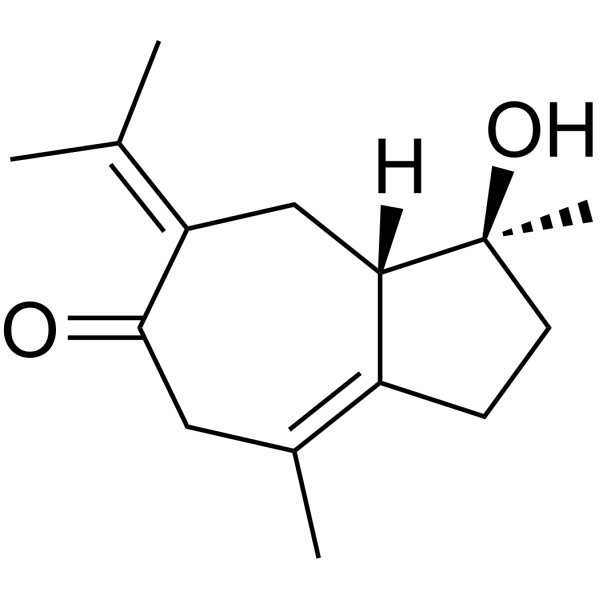
Cat. No.: HY-N8585
CAS No.: 102130-91-6
Neoprocurcumenol is a larvicidal compound that exerts significant toxicity on mosquito larvae with LC50 and LC 90 values of 13.69 and 23.92 ppm, respectively .
loading...
    loading...
Cat. No.: HY-W709825
CAS No.: 2387-78-2
(-)-Cyperene is a sesquiterpene hydrocarbon. (-)-Cyperene can be obtained from the n-hexane fraction of the smoke condensate of Goniothalamus andersonii. (-)-Cyperene can be used in the study of mosquitoes .
loading...
    loading...
Cat. No.: HY-W142258
CAS No.: 927-49-1
6-Undecanone is a ligand of Odorant-binding protein 22 (OBP22) with a weak bind capacity. -Undecanone can be used as a negative control for Aedes aegypti mosquito infection research .
loading...
    loading...
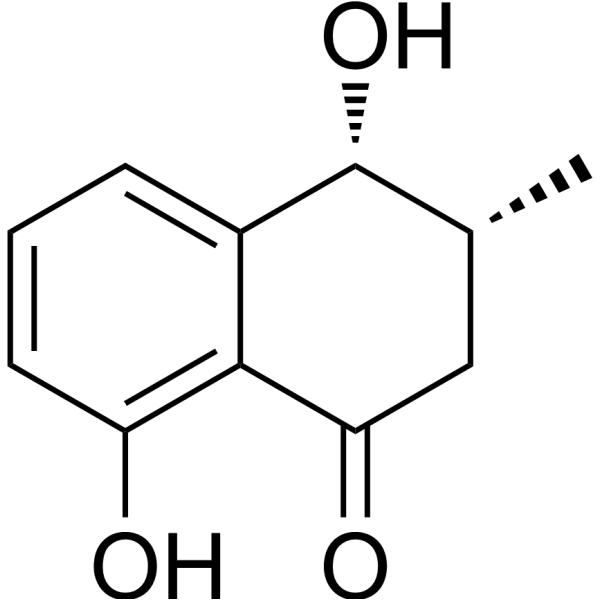
Cat. No.: HY-N8914
CAS No.: 39626-91-0
Isoshinanolone is a natural product that can be extracted from Plumbago capensis. Isoshinanolone has mosquito larvicidal activity against fourth instar larvae of A. aegypti, with an IC50 value of 1.26 μg/mL .
loading...
    loading...

