
193 Results for "

quantify

" in MedChemExpress (MCE) Product Catalog:
Products (193)

193 Results for "quantify" in MCE Product Catalog:

1
1 Cited Publications
Cat. No.: HY-164710
Synonyms: b-LMB
Target:  

CRM1

Research Areas:  

Others

Biotinylated leptomycin B is a compound used to quantify nuclear export protein 1 (XPO1) occupancy and is used to study the interaction of SINE compounds with XPO1 and the response of cancer cells to related compounds.
loading...
    loading...
1
1 Cited Publications
Cat. No.: HY-157916
CAS No.: 139585-03-8
Synonyms: Aldehyde reactive probe
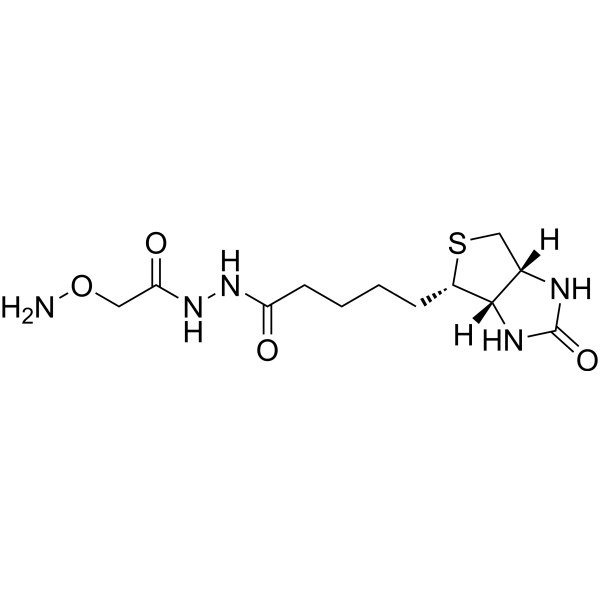
ARP (Aldehyde reactive probe) is an aldehyde-reactive probe . ARP specifically labels AP sites in DNA with biotin residues . ARP detects abasic sites induced by RNA oxidation . ARP is suitable for studies involving the quantification of AP sites, or the detection of other aldehyde-containing DNA damages and abasic sites induced by RNA oxidation .
loading...
    loading...
1
1 Cited Publications
Cat. No.: HY-128868I
CAS No.: 60842-46-8
FITC-Dextran (MW 2000000) is a compound belonging to the class of fluorescent dyes. It is commonly used in biomedical research as a tracer molecule to label and track cells or other biological matter. FITC-Dextran consists of fluorescein isothiocyanate (FITC) and dextran, a complex carbohydrate derived from starch. The combination of the two creates a stable fluorescent tracer that can be viewed under a microscope or quantified using specialized detection instruments.
loading...
    loading...
1
1 Cited Publications
Cat. No.: HY-D1261
CAS No.: 210292-65-2
Synonyms: Thiol-green 1
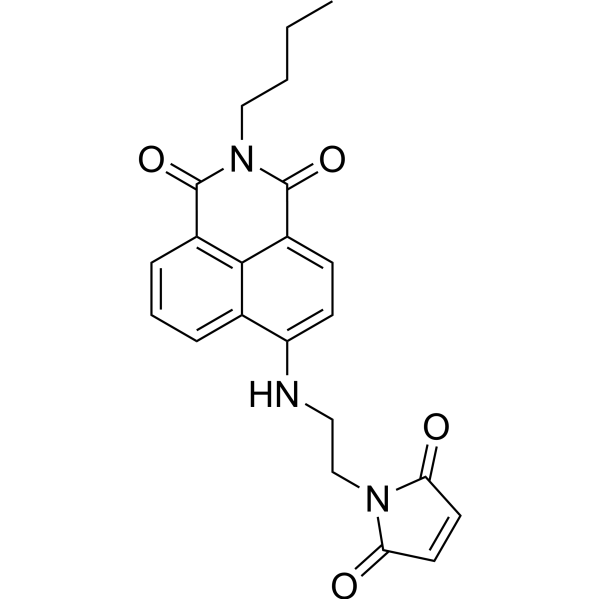
Naph-EA-mal (Thiol-green 1) is a rapid detect and ultrafast turn-on thiol fluorescence probe for protein labeling and bioimaging. Naph-EA-mal (Thiol-green 1) can be used to detect thiols in living cells, label the protein thiols, quantify the concentration of total thiols in cell lysate, and determine the reversible protein thiols oxidation in fixed cells . Ex: 488 nM; Em: 540 nM.
loading...
    loading...
1
1 Cited Publications
Cat. No.: HY-135136
CAS No.: 627090-10-2
Purity:  95.10%
Research Areas:  

Others

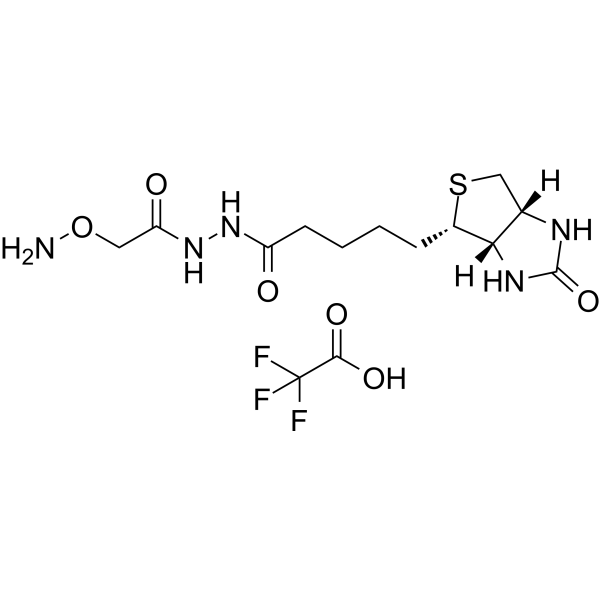
Aldehyde reactive probe TFA is an aldehyde reactive probe. Aldehyde reactive probe TFA specifically labels the AP site in DNA with biotin residues. Aldehyde reactive probe TFA can detect RNA oxidation-induced debasement sites. Aldehyde reactive probe TFA can be used to quantify AP sites or detect other aldehyde-containing DNA damage and RNA oxidation-induced debasement sites .
loading...
    loading...
1
1 Cited Publications
Cat. No.: HY-138995
CAS No.: 2383117-96-0
Purity:  98.01%
Target:  

Deubiquitinase

Research Areas:  

Others

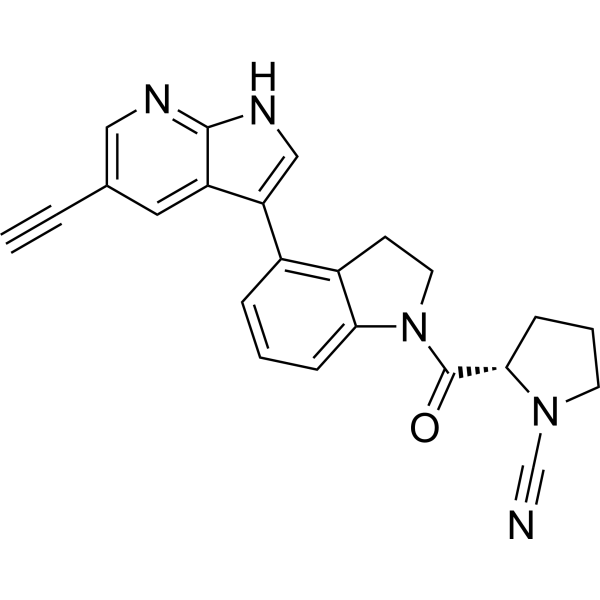
IMP-1710 is a potent and selective deubiquitylating enzyme UCHL1 inhibitor with an IC50 value of 38 nM. IMP-1710 has antifibrotic activity. IMP-1710 is a UCHL1 probe to identify and quantify target proteins in intact human cells . IMP-1710 is a click chemistry reagent, it contains an Alkyne group and can undergo copper-catalyzed azide-alkyne cycloaddition (CuAAc) with molecules containing Azide groups. IMP-1710 can be used in the research of idiopathic pulmonary fibrosis .
loading...
    loading...
1
1 Cited Publications
Cat. No.: HY-D2186
CAS No.: 2095485-22-4
BTD probe-1 is a benzothiazine-based chemoproteomic probe and selective protein S-sulfenic acid (Cys-SOH) labeling agent. BTD probe-1 labels protein S-sulfenic acids in vitro in cell and tissue samples, and in situ in intact cells, enabling detection or enrichment of modified proteins/peptides. BTD probe-1 exhibits no cytotoxicity in cells at concentrations ≤1 mM. BTD probe-1 enables global, site-specific mapping and quantification of cysteine S-sulfenylation in complex proteomes with lower input material .
loading...
    loading...
1
1 Cited Publications
Cat. No.: HY-D1428
CAS No.: 797785-10-5
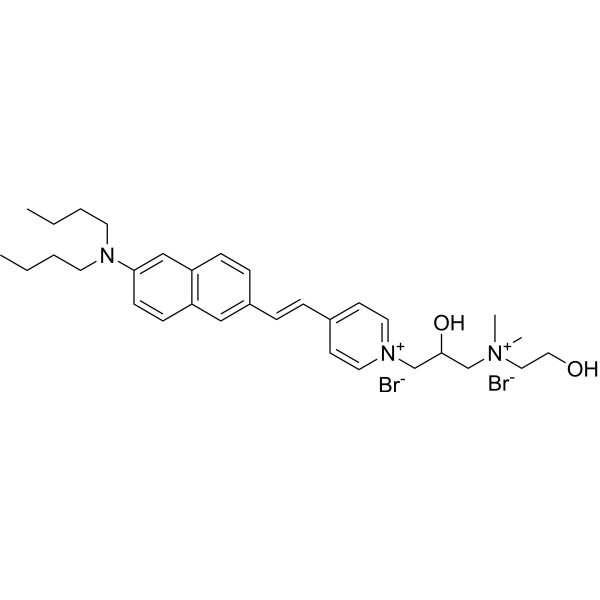
Di-4-ANEPPDHQ is a polarity-sensitive membrane probe with a doubly positive charge that can be used to visualize membrane microdomains in living Arabidopsis cells. Di-4-ANEPPDHQ produces a fluorescence spectrum shift by changing the polarity of the lipid environment after embedding into the cell membrane, thereby quantifying the degree of lipid accumulation. The excitation wavelength of Di-4-ANEPPDHQ is 488 nm, and the emission wavelengths are 560 nm and 650 nm in the liquid ordered and disordered phases, respectively. Di-4-ANEPPDHQ is often used for fluorescence imaging studies of membrane microstructure, lipid order, and membrane tension response in living cells[1][2][3].
loading...
    loading...
1
1 Cited Publications
Cat. No.: HY-Y0678
CAS No.: 621-23-8
Synonyms: TRIMETHYL PHLOROGLUCINOL
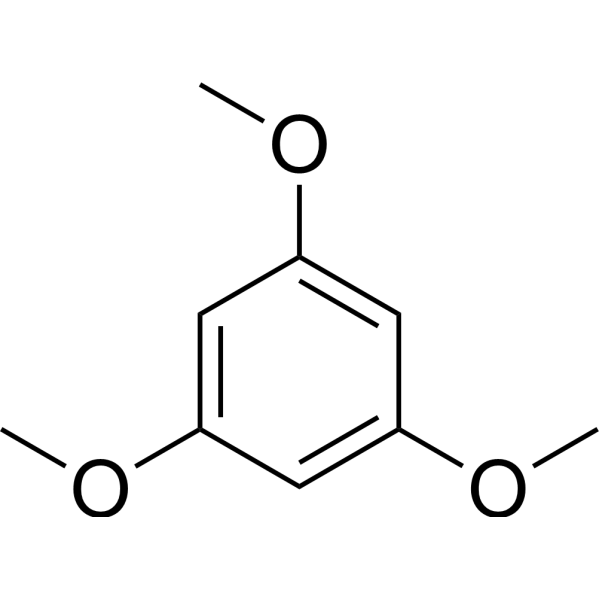
1,3,5-Trimethoxybenzene (TRIMETHYL PHLOROGLUCINOL) is an electrophilic substitution reaction substrate targeting free chlorine (Cl +) and free bromine (Br +). 1,3,5-Trimethoxybenzene has highly selective electrophilic addition characteristics. By capturing halogens, it undergoes specific substitution reactions to generate stable halogenated products. 1,3,5-Trimethoxybenzene can not only quench residual oxidants, but also quantify the halogen concentration by detecting the product without affecting the stability of redox-sensitive disinfection byproducts (DBPs). 1,3,5-Trimethoxybenzene is mainly used in water quality testing and quantitative analysis of free chlorine/bromine in water. At the same time, in phytochemistry, it is a key component of rose fragrance and participates in the study of pollination attraction mechanism .
loading...
    loading...
1
1 Cited Publications
Cat. No.: HY-W110883
CAS No.: 3618-43-7
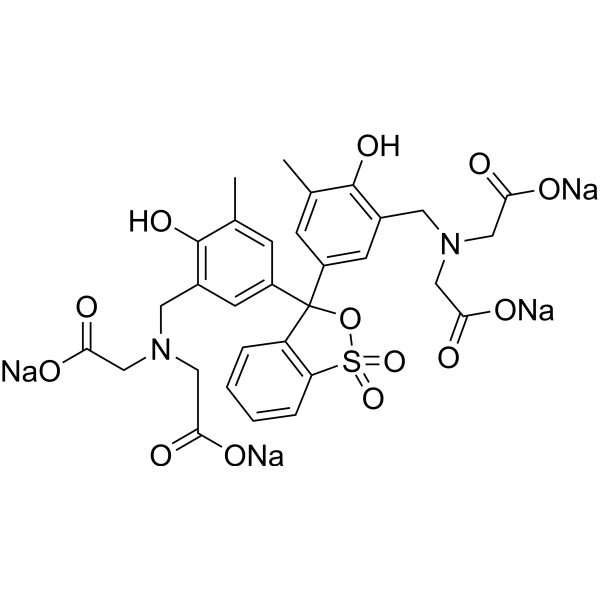
Xylenol orange tetrasodium salt, IND is commonly used as a colorimetric indicator for metal titration and possesses Zn 2+ chelating activity. Xylenol orange tetrasodium salt, IND binds Zn 2+ under physiological pH, and its Zn-XO complex allows visual differentiation between tartrate and malate ions. Xylenol orange tetrasodium salt, IND undergoes decolorization upon oxidation by hydrogen peroxide, undergoes a Co (II)-catalyzed pseudo-second-order reaction in a strong alkaline environment, and regulates the ferrous ion oxidation process mediated by peroxy radicals. Xylenol orange tetrasodium salt, IND forms colored ternary complexes with various anions, cations and iron-alanine, which is suitable for spectrophotometric quantification and can also be used for alanine irradiation dose detection. Xylenol orange tetrasodium salt, IND is applicable to EDTA metal titration analysis under acidic conditions .
loading...
    loading...
Cat. No.: HY-D0908
CAS No.: 485-47-2
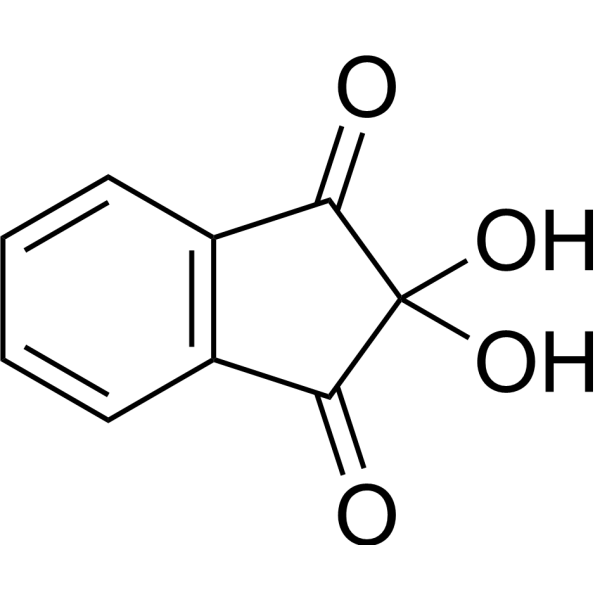
Ninhydrin can be used as a chromogenic analytical probe for the quantification of amino acids and proteins.
loading...
    loading...
Cat. No.: HY-77962
CAS No.: 504-17-6
2-Thiobarbituric acid is a commonly used colorimetric reagent for the detection of malondialdehyde (MDA), a marker of lipid peroxidation. 2-Thiobarbituric acid forms a complex with MDA that can be quantified by colorimetric detection at 532 nm as a measure of lipid peroxidation .
loading...
    loading...
Cat. No.: HY-136924
CAS No.: 259270-28-5
Purity:  99.84%
Target:  

FAAH

Research Areas:  

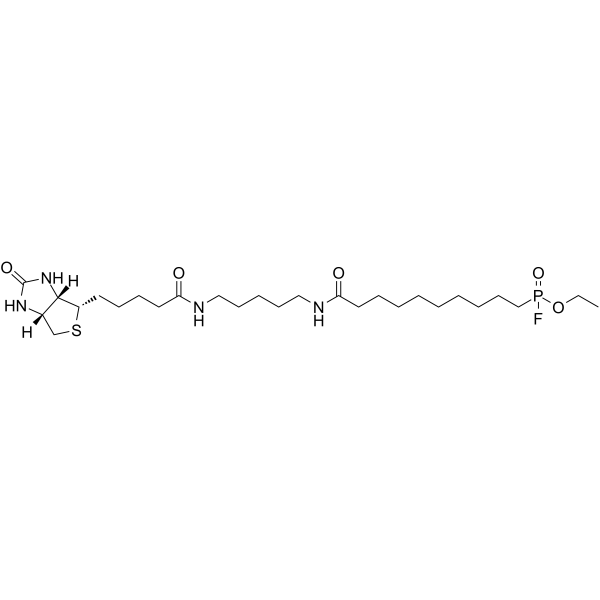
Others

FP-biotin is a potent organophosphorus toxicant, well-suited for searching for new biomarkers of organophosphorus toxicants exposure. FP-Biotin quantifies FAAH, ABHD6, and MAG-lipase activity. FP-biotin is used for studies with plasma because biotinylated peptides are readily purified by binding to immobilized avidin beads .
loading...
    loading...
Cat. No.: HY-W749411
CAS No.: 100683-54-3
Research Areas:  

Others

Malondialdehyde tetrabutylammonium is a quaternary ammonium salt formed by the decomposition of polyunsaturated fatty acids in plant cell membranes. Malondialdehyde tetrabutylammonium can be used for the quantification of malondialdehyde, a biomarker of lipid peroxidation .
loading...
    loading...
Cat. No.: HY-128746
CAS No.: 583-93-7
Purity:  99.96%
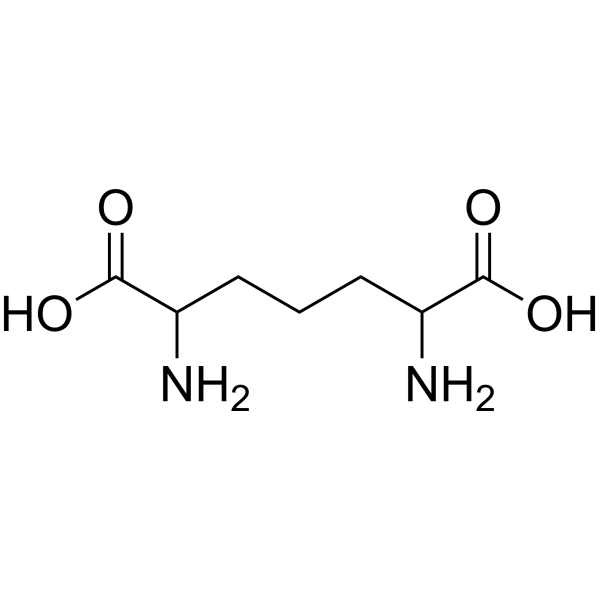
2,6-Diaminopimelic acid is a endogenous metabolite produced in bacteria and is a component of cell wall. 2,6-Diaminopimelic acid is essential for microbial metabolism and is a potential marker for quantification of microbial proteins .
loading...
    loading...
Cat. No.: HY-W009749A
CAS No.: 535-34-2
Target:  

Drug Intermediate

Research Areas:  

Others

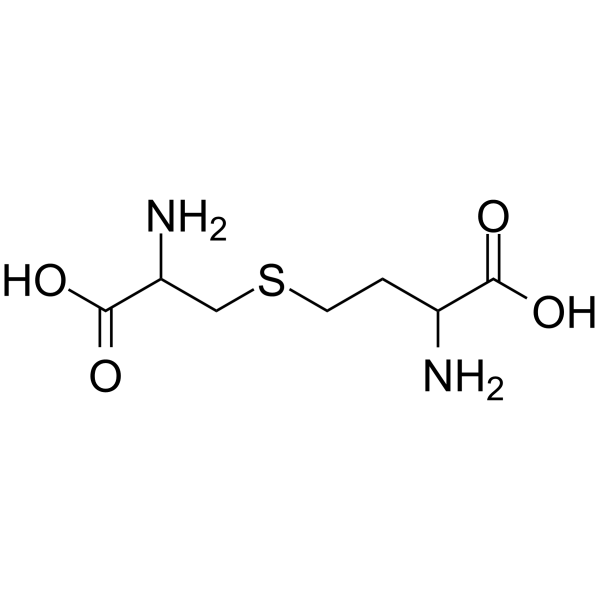
DL-Cystathionine is a mixture of 4 isomers of cystathionine and allocystathionine. DL-Cystathionine also is an intermediate in the biosynthesis of amino acid cysteine. DL-Cystathionine serves as a standard for quantifying tissue cystathionine .
loading...
    loading...
Cat. No.: HY-W019721
CAS No.: 63775-96-2
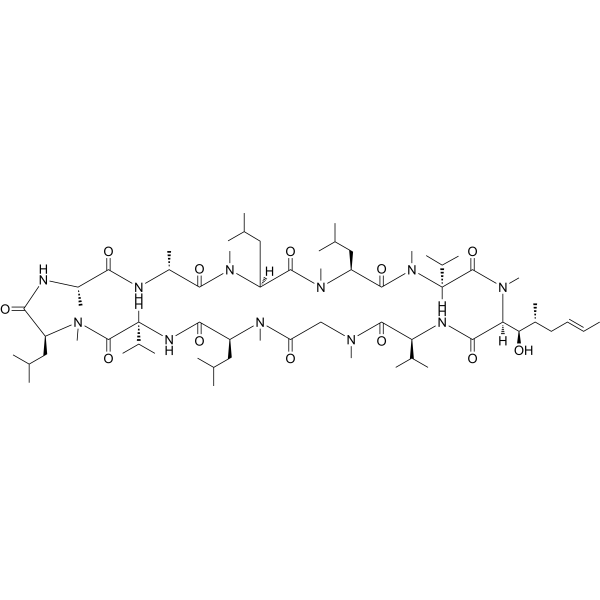
Cyclosporin D, a metabolite of Cyclosporin A, is a weak immunosuppressant. Cyclosporin D is used as internal standard for quantification of Cyclosporin A . Cyclosporin A is a potent immunosuppressant agent, suppress T cell activation by inhibiting calcineurin and the calcineurin-dependent transcription factors nuclear factor of activated T cells (NFAc) .
loading...
    loading...
Cat. No.: HY-160973
CAS No.: 147394-94-3
Synonyms: ELFP
Research Areas:  

Others

ELF97 phosphate (ELFP) is a phosphatase substrate, which can produced a fluorescent, water-insoluble product ELF97 alcohol after hydrolysis by phosphatases. ELF97 phosphate can be utilized to study and quantify the activity of extracellular phosphatases of algae in natural water .
loading...
    loading...
Cat. No.: HY-135070
CAS No.: 929903-87-7
Synonyms: Ac-Arg-Leu-Arg-AMC
Target:  

Proteasome

Research Areas:  

Others

Ac-RLR-AMC (Ac-Arg-Leu-Arg-AMC) is a fluorogenic substrate for the 26S proteasome (Ex/Em: 380/440-460 nm). AMC is released upon cleavage, and its fluorescence can be used to quantify the trypsin-like activity of 26S proteasomes .
loading...
    loading...
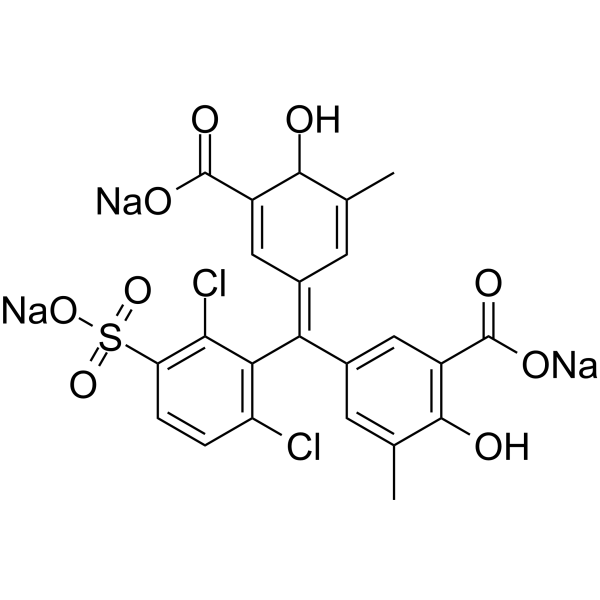
Cat. No.: HY-D0800
CAS No.: 1667-99-8
Chromeazurol S is a compound belonging to the class of azo dyes. It is often used as an indicator in analytical chemistry to detect metal ions such as copper, nickel, and cobalt. Chromeazurol S turns from yellow to blue in the presence of metal ions, allowing them to be detected and quantified. It can be applied to a test strip or added directly to a solution for analysis.
loading...
    loading...

