

109 Results for "

cellulose

" in MedChemExpress (MCE) Product Catalog:
Products (109)

109 Results for "cellulose" in MCE Product Catalog:

Cat. No.: HY-Y0703C
CAS No.: 9004-32-4
Synonyms: CMC-Na (Viscosity:300-800mpa.s)
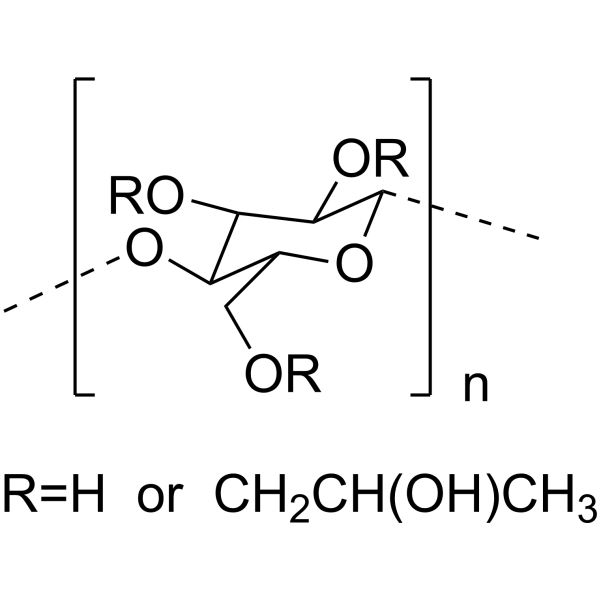
Sodium carboxymethyl cellulose (Viscosity:300-800mpa.s) is the sodium salt of cellulose arboxymethyl and frequently used as viscous agent, paste and barrier agent.
loading...
    loading...
Cat. No.: HY-B2220A
CAS No.: 9012-54-8
Research Areas:  

Others

Cellulase R-10 from Trichoderma Vride is an enzyme mixture that includes cellulase, hemicellulase, pectinase and protease, etc. Cellulase R-10 from Trichoderma Vride can act on the 1,4-β-D-glucosidic bonds in cellulose, catalyzing the hydrolysis of cellulose molecules and generating cellulose oligosaccharides, cellulose di-saccharides and glucose. Cellulase R-10 from Trichoderma Vride can be used in combination with lyase R-10 to break down the cell walls of plants, preparing protoplasts. Cellulase R-10 from Trichoderma Vride is widely applied in plant cell hybridization research .
loading...
    loading...
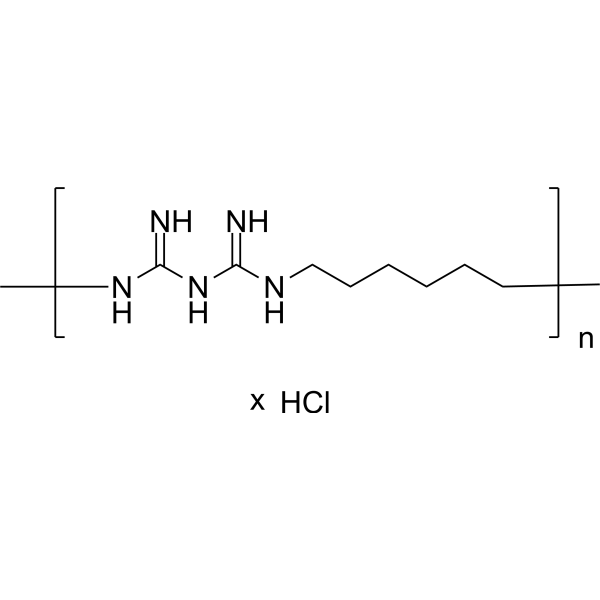
Cat. No.: HY-W017766
CAS No.: 32289-58-0
Synonyms: PHMB
Research Areas:  

Infection

Poly(hexamethylenebiguanide) hydrochloride (PHMB) is an antimicrobial and antiviral agent. Poly(hexamethylenebiguanide) hydrochloride is active against both Gram-positive and Gram-negative bacteria. Poly(hexamethylenebiguanide) hydrochloride works by adsorbing to the surface of cellulose, which can damage microbial cell membranes and interfere with metabolism. Poly(hexamethylenebiguanide) hydrochloride is widely used in medical, clothing and household textiles, and cosmetic fields .
loading...
    loading...
Cat. No.: HY-Y0703A
CAS No.: 9004-32-4
Synonyms: CMC-Na (Viscosity:1200-1400 mPa.s)
Sodium carboxymethyl cellulose (Viscosity:1200-1400 mPa.s) is the sodium salt of cellulose arboxymethyl and frequently used as viscous agent, paste and barrier agent.
loading...
    loading...
Cat. No.: HY-Y1889
CAS No.: 9004-32-4
Synonyms: CMC-Na (Viscosity:5000-15000 mPa.s)
Sodium carboxymethyl cellulose (Viscosity:5000-15000 mPa.s) is the sodium salt of cellulose arboxymethyl and frequently used as viscous agent, paste and barrier agent.
loading...
    loading...
Cat. No.: HY-Y0703D
CAS No.: 9004-32-4
Synonyms: CMC-Na (average Mw 90000, DS=0.7, Viscosity:50-200 mPa.s)
Sodium carboxymethyl cellulose (average Mw 90000, DS=0.7, Viscosity:50-200 mPa.s) is the sodium salt of cellulose arboxymethyl and frequently used as viscous agent, paste and barrier agent .
loading...
    loading...
Cat. No.: HY-100557
CAS No.: 9004-64-2
Purity:  ≥97.0%
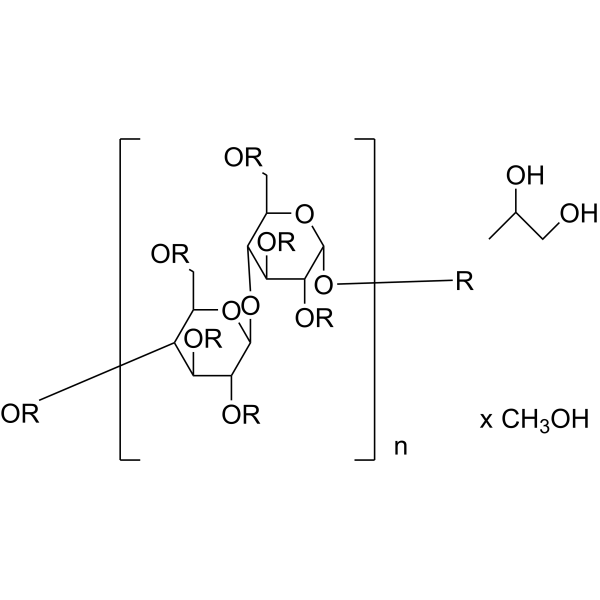
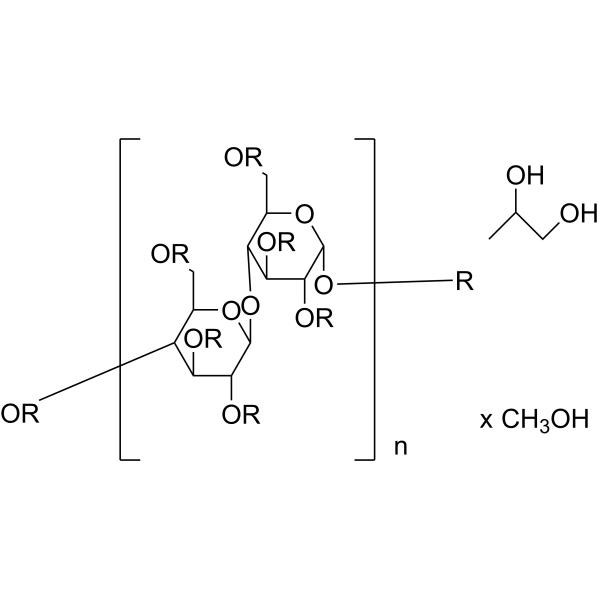
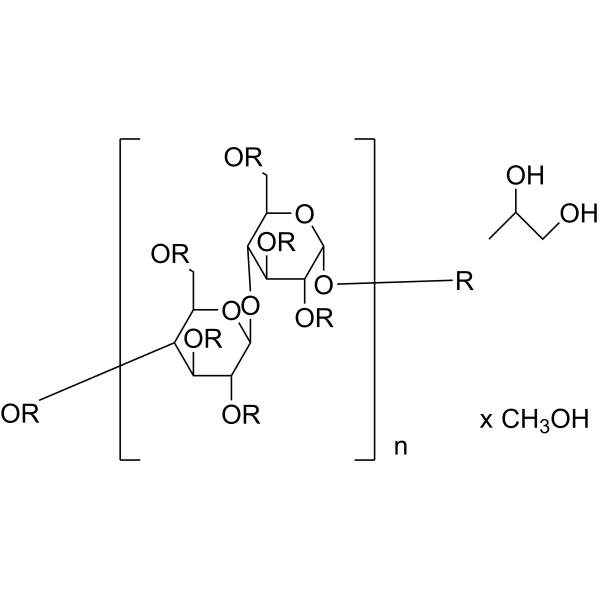
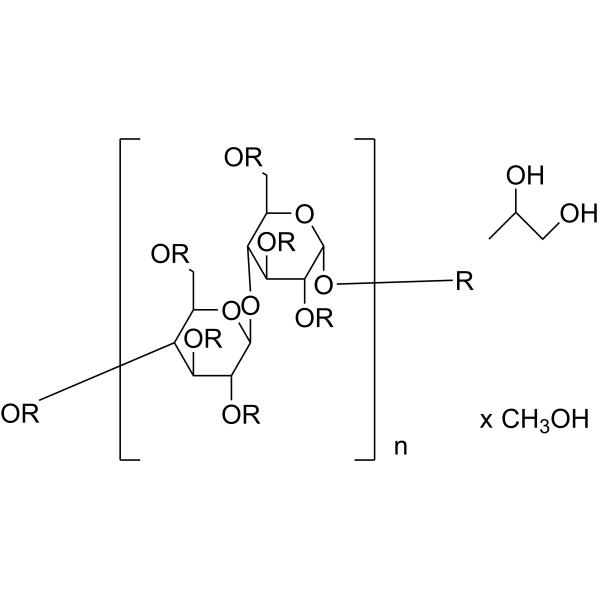
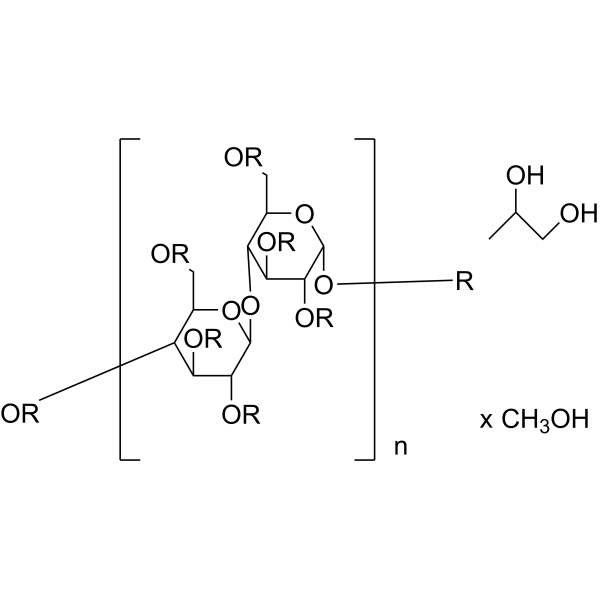
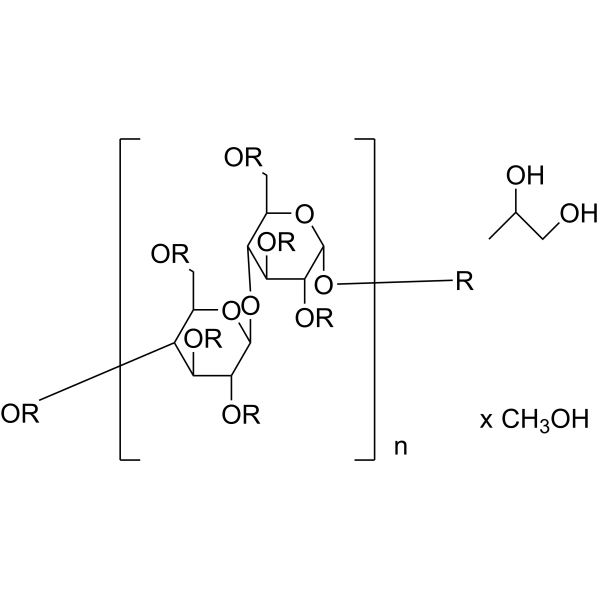
Hydroxypropyl Cellulose is an orally active cellulose ether and surfactant. Hydroxypropyl cellulose is divided into high-substituted HPC (HHPC) and low-substituted HPC (LHPC). Hydroxypropyl Cellulose reduces inflammatory mediators (IL-6, IL-1β). Hydroxypropyl Cellulose improves colitis and obesity. Hydroxypropyl Cellulose can be used as a pharmaceutical excipient, such as coating agent, emulsifier, suspension, tablet, thickener, viscosifier .
loading...
    loading...
Cat. No.: HY-B2221C
CAS No.: 9000-11-7
Synonyms: Carboxymethyl cellulose CM-32; CM-32
CM Cellulose CM-32 (Carboxymethyl cellulose) is a cellulose derivative. CM Cellulose CM-32 has a wide range of applications in the biomedical field, including tissue engineering, wound dressing, absorbent nonwovens, fabrication of 3D-scaffolds for biocompatible implants, artificial organs or mimics of extracellular polymeric matrix and diagnosis of various diseases. CM Cellulose CM-32 can decrease osteoclasts formation. CM Cellulose CM-32 can be used as a biological material or organic compound for life science related research .
loading...
    loading...
Cat. No.: HY-A0104D
CAS No.: 9004-65-3
Synonyms: Hypromellose (Type I,Viscosity:4000mPa.s); (Hydroxypropyl)methyl cellulose (Type I,Viscosity:4000mPa.s); Celacol HPM 5000 (Type I,Viscosity:4000mPa.s)
HPMC (Hypromellose) (Type I, Viscosity: 4000mPa.s) is a primary sodium alginate and controlled release hydrophilic polymer with an average viscosity of 4000mPa.s. The viscosity of HPMC may change due to concentration, pH, temperature or the presence of metal ions. When the pH is above 10, the viscosity decreases .
loading...
    loading...
Cat. No.: HY-W115746
CAS No.: 9004-57-3
Synonyms: Ethyl cellulose N-100
Research Areas:  

Others

Ethyl cellulose (viscosity 100 cP) is a non-toxic cellulose derivative with unique properties including oil gel formation, active ingredient delivery and film-forming ability. Ethyl cellulose (viscosity 100 cP) can serve as a pharmaceutical excipient, such as a coating agent, flavoring agent, tablet filler, etc. .
loading...
    loading...
Cat. No.: HY-152927
CAS No.: 71138-97-1
Purity:  ≥95.0%
Research Areas:  

Others

Hydroxypropylmethyl cellulose acetate succinate (Mw: 20-100k Da) is a cosolvent for preparing SDDs of low-solubility agents. Hydroxypropylmethyl cellulose acetate succinate (Mw: 20-100k Da) exhibits no acute/subchronic/chronic toxicity in rats, with oral activity and LD50 >2.5 g/kg .
loading...
    loading...
Cat. No.: HY-A0104E
CAS No.: 9004-65-3
Synonyms: Hypromellose (Type II,Viscosity:100mPa.s); (Hydroxypropyl)methyl cellulose (Type II,Viscosity:100mPa.s); Celacol HPM 5000 (Type II,Viscosity:100mPa.s)
HPMC (Hypromellose; (Hydroxypropyl)methyl cellulose; Celacol HPM 5000) (Type II,Viscosity:100mPa.s) is a non-ionic polymer obtained via synthetic modification of cellulose. As a hydrophilic matrix material, HPMC prolongs drug release through non-Fickian diffusion, including the diffusion of drugs in the hydrated matrix and the polymer relaxation process .
loading...
    loading...
Cat. No.: HY-A0104B
CAS No.: 9004-65-3
Synonyms: Hypromellose (Type I,Viscosity:100mPa.s); (Hydroxypropyl)methyl cellulose (Type I,Viscosity:100mPa.s); Celacol HPM 5000 (Type I,Viscosity:100mPa.s)
HPMC (Type I, Viscosity: 100 mPa·s) is a nonionic polymer obtained via synthetic modification of cellulose. As a hydrophilic matrix material, HPMC prolongs drug release through non-Fickian diffusion, including the diffusion of drugs within the hydrated matrix and the polymer relaxation process .
loading...
    loading...
Cat. No.: HY-A0104K
CAS No.: 9004-65-3
Synonyms: Hypromellose (Type II,Viscosity:3mPa.s); (Hydroxypropyl)methyl cellulose (Type II,Viscosity:3mPa.s); Celacol HPM 5000 (Type II,Viscosity:3mPa.s)
HPMC (Type II, Viscosity: 3 mPa.s) is a nonionic polymer prepared via synthetic modification of cellulose. As a hydrophilic matrix material, HPMC prolongs drug release through non-Fickian diffusion, which includes the diffusion of drugs in the hydrated matrix and the polymer relaxation process .
loading...
    loading...
Cat. No.: HY-A0104G
CAS No.: 9004-65-3
Synonyms: Hypromellose (Type II,Viscosity:4000mPa.s); (Hydroxypropyl)methyl cellulose (Type II,Viscosity:4000mPa.s); Celacol HPM 5000 (Type II,Viscosity:4000mPa.s)
Hypromellose (Hypromellose (Type II,Viscosity:4000mPa.s); (Hydroxypropyl)methyl cellulose (Type II,Viscosity:4000mPa.s); Celacol HPM 5000 (Type II,Viscosity:4000mPa.s)) is a biochemical reagent that can be used as a biological material or organic compound for life science related research.
loading...
    loading...
Cat. No.: HY-Y1078
CAS No.: 4637-24-5
Synonyms: N-Dimethoxymethyl-N,N-dimethylamine
Research Areas:  

Others

DMF-DMA (N-Dimethoxymethyl-N,N-dimethylamine) is a reagent with both condensation and alkylation functions. DMF-DMA can undergo condensation reactions with active methylene groups or amino groups to generate enamine and imino derivatives, and can also act as an alkylating agent to methylate nitrogen and oxygen atoms in heterocyclic structures. DMF-DMA is widely used in the synthesis of enaminones and dimethylamino imine intermediates, as well as in the construction of heterocyclic backbones such as pyridine, pyrimidine and pyrazole. DMF-DMA can also serve as a polar aprotic co-solvent; although DMF-DMA cannot dissolve cellulose alone, it can form an efficient cellulose dissolution system with diallylimidazolium methoxyacetate .
loading...
    loading...
Cat. No.: HY-W046325
CAS No.: 9013-34-7
Synonyms: Diethylaminoethyl cellulose
DEAE-Cellulose (Diethylaminoethyl cellulose) is a positively charged weakly basic cellulose anion exchanger. DEAE-Cellulose exhibits gold recovery activity as well as heparin binding/release activity. DEAE-Cellulose can also be used for the purification of proteins, enzymes and nucleic acids .
loading...
    loading...
Cat. No.: HY-A0104C
CAS No.: 9004-65-3
Synonyms: Hypromellose (Type I,Viscosity:400mPa.s); (Hydroxypropyl)methyl cellulose (Type I,Viscosity:400mPa.s); Celacol HPM 5000 (Type I,Viscosity:400mPa.s)
HPMC (Hypromellose) (Type I, Viscosity: 400mPa.s) is a first-grade sodium alginate with an average viscosity of 400 mPa.s. Typically, a 1% w/v HPMC aqueous solution has a viscosity of 20-400mPa.s (20-400cp) at 20°C. The viscosity of HPMC may vary depending on concentration, pH, temperature, or the presence of metal ions. Viscosity decreases at pH values above 10 .
loading...
    loading...
Cat. No.: HY-D0980
CAS No.: 138529-46-1
Synonyms: Biotinyl-3,6-dioxaoctanediamine; EZ-Link Amine-PEO2-Biotin
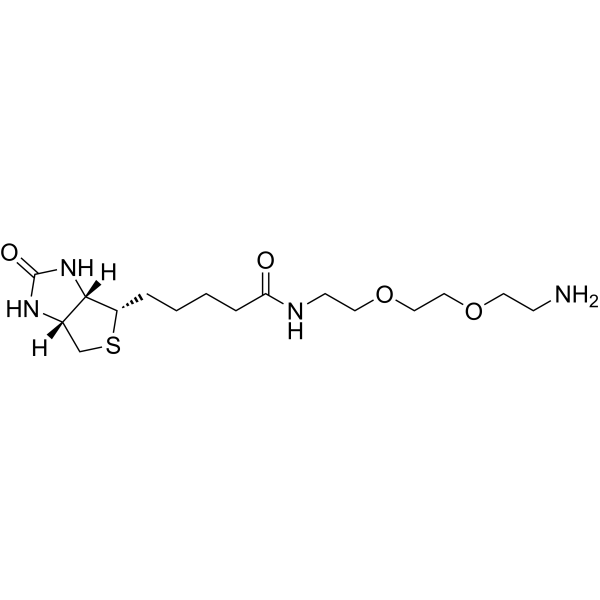
Biotin-DADOO (Biotinyl-3,6-dioxaoctanediamine; EZ-Link Amine-PEO2-Biotin) is a biotin-containing amine compound and a biotinylation reagent. As an amino component, Biotin-DADOO participates in the nucleophilic ring-opening reaction of epoxidized ω-double bonds during the synthesis of biotinylated inhibitor derivatives. Biotin-DADOO can be conjugated with carboxymethyl cellulose derivatives. Biotin-DADOO is involved in the synthesis of biotin-estradiol conjugates for enzyme immunoassays. Biotin-DADOO can be used in the research of influenza A .
loading...
    loading...
Cat. No.: HY-A0104I
CAS No.: 9004-65-3
Synonyms: Hypromellose (Type II,Viscosity:100000mPa.s); (Hydroxypropyl)methyl cellulose (Type II,Viscosity:100000mPa.s); Celacol HPM 5000 (Type II,Viscosity:100000mPa.s)
HPMC (Hypromellose; (Hydroxypropyl)methyl cellulose; Celacol HPM 5000) (Type II,Viscosity:100000mPa.s) is a non-ionic polymer obtained via synthetic modification of cellulose. As a hydrophilic matrix material, HPMC prolongs drug release through non-Fickian diffusion, including the diffusion of drugs in the hydrated matrix and the polymer relaxation process .
loading...
    loading...

