45 Results for "

normal cell lines

" in MedChemExpress (MCE) Product Catalog:
Products (45)

45 Results for "normal cell lines" in MCE Product Catalog:

Cat. No.: HY-172616
Target:  

Microtubule/Tubulin

Research Areas:  

Cancer

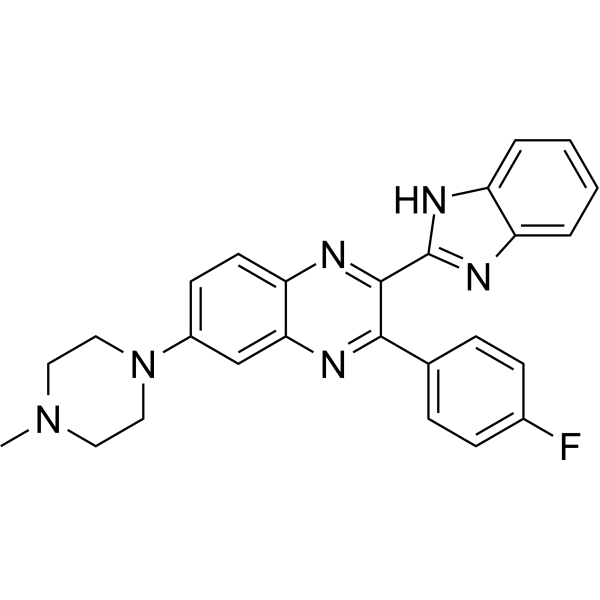
Tubulin inhibitor 50 (compound 07) is a tubulin inhibitor that increases the mitochondrial reactive oxygen species level. Tubulin inhibitor 50 has anti-cancer effect in HeLa cells with IC50 value of 0.46 μM. Tubulin inhibitor 50 shows low toxicity in normal cell lines .
loading...
    loading...
Cat. No.: HY-N10351
CAS No.: 1392820-18-6
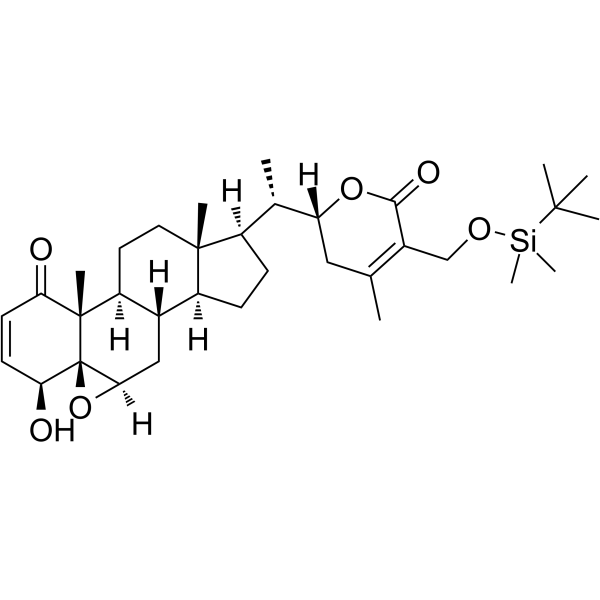
27-O-(tert-Butyldimethylsilyl)withaferin A (compound 9a), a natural withanolide, is an apoptosis inducer. 27-O-(tert-Butyldimethylsilyl)withaferin A shows antiproliferative activity against HeLa, A-549 and MCF-7 human cancer cell lines, and against normal Vero cells .
loading...
    loading...
Cat. No.: HY-174779
Target:  

mRNA

Research Areas:  

Cancer

Human AREG mRNA encodes the human amphiregulin (AREG) protein, a member of the epidermal growth factor family. AREG interacts with the EGF/TGF-alpha receptor to promote the growth of normal epithelial cells, and inhibits the growth of certain aggressive carcinoma cell lines. It also functions in mammary gland, oocyte and bone tissue development.
loading...
    loading...
Cat. No.: HY-N7161
CAS No.: 466663-11-6
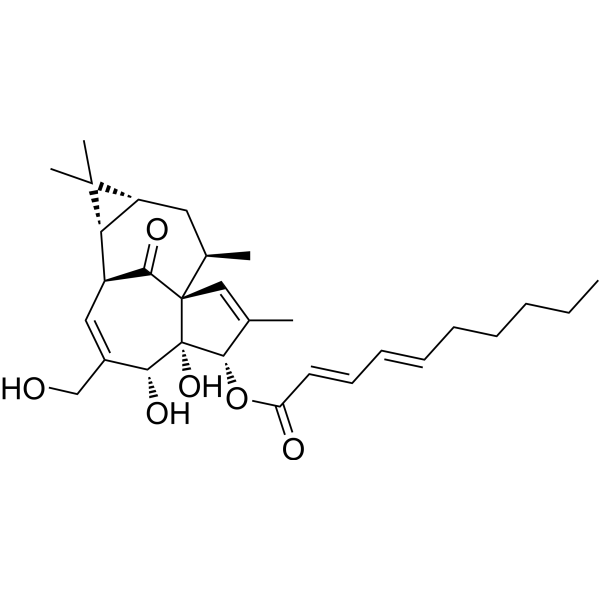
3-O-(2'E,4'E-Decadienoyl)-ingenol is a natural diterpenoid that shows cytotoxicity against human normal cell lines L-O2 and GES-1, with IC50s of 8.22 μM and 6.67 μM, respectively .
loading...
    loading...
Cat. No.: HY-176249
CAS No.: 2121990-04-1
Synonyms: TNBG
Target:  

Apoptosis

Research Areas:  

Cancer

Tetrazanbigen is a potent and selective antitumor agent. Tetrazanbigen exhibits strong antitumor efficacy against six human cancer cell lines with an IC50 range of 2.13-8.01 μg/mL and an IC50 of 11.25 μg/mL against normal hepatocytes. Tetrazanbigen induces S phase arrest and apoptosis in QGY-7701 cells. Tetrazanbigen exerts its antitumor activity by inducing lipid accumulation accumulation in cancer cells .
loading...
    loading...
Cat. No.: HY-155105
CAS No.: 2966859-35-6
Target:  

Glycosidase

Research Areas:  

Metabolic Disease

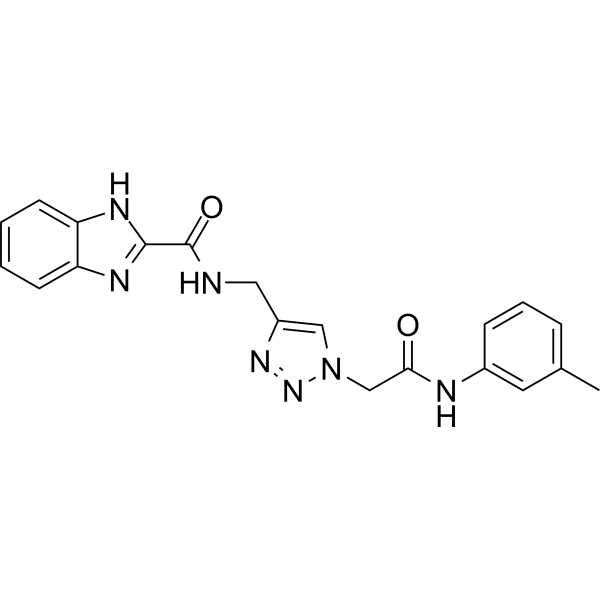
α-Glucosidase-IN-30 (compound 8c) is a potent, orally active, competitive inhibitor against α-glucosidase, with Ki  of 40.0 µM and IC50 value of 49.0 µM. α-Glucosidase-IN-30 is non-cytotoxic against the cancer and normal cell lines MCF-7 and HDF, and can be used for Type 2 diabetes study .
loading...
    loading...
Cat. No.: HY-151295
CAS No.: 2827065-29-0
Target:  

DNA/RNA Synthesis

Research Areas:  

Cancer

Antitumor agent-75 is a novel potent antitumor agent. Antitumor agent-75 has cytotoxic effects on cancer and normal human cell lines. Antitumor agent-75 shows a highly selective cytotoxic effect against human lung adenocarcinoma (cell line A549) when combined with Antitumor agent-74 (HY-151292), the IC50 value of 2.8 μM. Antitumor agent-75 can be used for the research of cancer .
loading...
    loading...
Cat. No.: HY-P10669
CAS No.: 2999646-19-2
Target:  

Caspase Apoptosis

Research Areas:  

Cancer

NDI-Lyso is a lysosome-targeted anticancer agent that induces the formation of rigid long fibers in cancer cell lysosomes through an enzyme-instructed self-assembly (EISA) mechanism catalyzed by cathepsin B. This process triggers lysosomal swelling, membrane permeabilization (LMP), and membrane disruption, ultimately leading to cancer cell apoptosis via a non-classical caspase-independent pathway. NDI-Lyso exhibits significant selective anticancer activity in various cancer cell lines and drug-resistant cancer cells (IC50 ~10 μM) while showing low toxicity to normal cells (IC50 > 60 μM) .
loading...
    loading...
Cat. No.: HY-123599
CAS No.: 1884209-98-6
Target:  

DNA/RNA Synthesis

Research Areas:  

Cancer

IACS-4619 (compound 4) is a highly selective 2-aminopyrimidine-based MTH1 (MutT homolog 1) inhibitor (IC50=0.2 nM). IACS-4619 inhibits MTH1 by blocking its hydrolysis of oxidized purine nucleotides such as 8-oxo-dGTP, thereby preventing MTH1 from inhibiting the incorporation of oxidized nucleotides into DNA. IACS-4619 significantly inhibits endogenous MTH1 activity in MTH1-overexpressing U2OS cells, but without antiproliferative or cytotoxic effects on various human cancer and normal cell lines. IACS-4619 can be used in oncology research related to the MTH1 target .
loading...
    loading...
Cat. No.: HY-D3158
LGP-CL is a chemiluminescent probe. LGP-CL can be used to evaluate elevated protease levels in both in vitro and in vivo systems, and to distinguish hepatocellular carcinoma cells from normal cells and other cancer cell lines. LGP-CL is applicable to liver cancer-related research .
loading...
    loading...
Cat. No.: HY-181756
CAS No.: 3061406-69-4
Research Areas:  

Cancer

LGF308 is a PROTAC degrader of BRD4 that exhibits selective cytotoxicity toward cancer cells over normal cells. LGF308 mediates the formation of a ternary complex between BRD4 and DCAF11 to achieve BRD4 degradation. LGF308 induces tumor cell apoptosis by upregulating apoptosis-related proteins. LGF308 inhibits tumor cell proliferation and migration in breast cancer and triple-negative breast cancer cell lines. LGF308 can be used for the research of breast cancer .
loading...
    loading...
Cat. No.: HY-108476R
CAS No.: 1169755-45-6
Research Areas:  

Cancer

INDY (Standard) is the analytical standard of INDY (HY-108476). This product is intended for research and analytical applications. INDY is a potent and ATP-competitive Dyrk1A and Dyrk1B inhibitor with IC50s of 0.24 μM and 0.23 μM, respectively. INDY binds in the ATP pocket of the enzyme and has a Ki value of 0.18 μM for Dyrk1A. INDY sharply reduces the self-renewal capacity of normal and tumorigenic cells in primary Glioblastoma (GBM) cell lines and neural progenitor cells .
loading...
    loading...
Cat. No.: HY-181577
Research Areas:  

Cancer

HDAC6-IN-73 is a highly potent and selective HDAC6 inhibitor with an IC50 of 0.007 μM ± 0.001, ~1771-fold selectivity over HDAC1, ~131-fold selectivity over HDAC8, and antiproliferative activity in hematological cancer cell lines.HDAC6-IN-73 can be used for the research of hematological malignancies .
loading...
    loading...
Cat. No.: HY-181611
CAS No.: 3068829-46-6
Research Areas:  

Cancer

Polθ-IN-10 is an orally active Polθ-pol inhibitor (with a human IC50 of 1.3 nM) that exhibits oral bioavailability in mice and rats. Polθ-IN-10 binds to the allosteric site of Polθ-pol, disrupts the microhomology-mediated end-joining DNA repair pathway, and inhibits CYP2C9 (IC50=1.63 μM). Polθ-IN-10 selectively inhibits the proliferation of HR-deficient cancer cells and induces apoptosis. Polθ-IN-10 is applicable to the research of HR-deficient cancers .
loading...
    loading...
Cat. No.: HY-189264
Target:  

Drug Derivative

Research Areas:  

Cancer

Anticancer agent-362 is a chimeric pyrrolidinedione-pyrrolidine-phthalazine-triazole (PPPT) heterocyclic derivative with antitumor activity. Anticancer agent-362 exhibits antiproliferative activity against breast adenocarcinoma and osteosarcoma cancer cell lines, with low toxicity to normal fibroblasts. Anticancer agent-362 is predicted to be a multi-target ligand that binds to the active sites of VEGFR-2, PARP-1, and others. Anticancer agent-362 can be used in research related to breast adenocarcinoma and osteosarcoma .
loading...
    loading...
Cat. No.: HY-19896A
CAS No.: 1204956-74-0
COTI-2 hydrochloride is an orally active thiosemicarbazone anticancer agent and p53 mutant activator. COTI-2 hydrochloride induces Apoptosis. COTI-2 hydrochloride triggers the activation of AMPK and the inhibition of the mTOR pathway. COTI-2 hydrochloride induces DNA damage and replication stress responses. COTI-2 hydrochloride binds to misfolded mutant p53 proteins, thereby inducing conformational changes that restore p53 to its normal state and reactivate its function. COTI-2 hydrochloride acts on a variety of cancer cell lines and xenografts. COTI-2 hydrochloride can be used in research related to colorectal cancer, small cell lung cancer, glioblastoma, breast cancer, and ovarian cancer .
loading...
    loading...
Cat. No.: HY-182368
Target:  

PI3K Akt Apoptosis

Research Areas:  

Cancer

PI3Kα-IN-30 is an orally active, selective PI3Kα inhibitor with an IC50 of 2.8 nM. PI3Kα-IN-30 inhibits cancer cell proliferation, as well as the phosphorylation of Akt (S473) and pS6 (S240/244). PI3Kα-IN-30 shows low growth inhibitory activity against normal somatic cell lines at a concentration of 30 μM. PI3Kα-IN-30 induces cancer cell apoptosis and exerts anti-tumor efficacy in xenograft models. PI3Kα-IN-30 can be used for the research of breast cancer .
loading...
    loading...
Cat. No.: HY-D3140
MB-m-borate is a double-locked near-infrared fluorescence-activated probe (Ex/Em ≈ 647 nm/684 nm). MB-m-borate undergoes cascade activation by hydrogen peroxide and tyrosinase to release the fluorophore methylene blue, thereby generating a fluorescence activation response. MB-m-borate enables precise detection of melanoma in melanoma cells and mouse models. MB-m-borate can be used for melanoma research .
loading...
    loading...
Cat. No.: HY-182745
Target:  

VEGFR Apoptosis

Research Areas:  

Cancer

VEGFR-2-IN-85 is a strong VEGFR-2 inhibitor, with an IC50 value of 0.23 μM. VEGFR-2-IN-85 exhibits potent cytotoxic activity against multiple cancer cell lines with minimal toxicity toward normal cells. VEGFR-2-IN-85 also impairs cancer cell migration, likely through modulation of the VEGFR-2/p-Akt pathway. VEGFR-2-IN-85 can induce apoptosis through modulation of Caspase-3, Bax and Bcl-2. VEGFR-2-IN-85 arrests cell cycle at the G2/M phase and has anti-angiogenic activity. VEGFR-2-IN-85 is a targeted radiosensitizer enhancing radiation-induced cytotoxicity. VEGFR-2-IN-85 can be used for research on cancers such as non-small cell lung cancer, breast cancer, and liver cancer .
loading...
    loading...
Cat. No.: HY-184737
TPP-C8-CO-DSG bromide is a derivative of Diosgenin (HY-N0177) and an anticancer agent. TPP-C8-CO-DSG bromide downregulates Bcl-2 expression and upregulates Bax expression. TPP-C8-CO-DSG bromide promotes the cleavage of Caspase 9, Caspase 3 and PARP-1. TPP-C8-CO-DSG bromide depolarizes mitochondrial membrane potential, reduces intracellular ATP production, and induces intracellular ROS accumulation. TPP-C8-CO-DSG bromide promotes Apoptosis. TPP-C8-CO-DSG bromide exhibits anticancer activity against prostate cancer, breast cancer, lung adenocarcinoma, cervical cancer and colorectal cancer. TPP-C8-CO-DSG bromide can be used in the research of cervical cancer .
loading...
    loading...

