




293 Results for "

tissue selectivity

" in MedChemExpress (MCE) Product Catalog:
Products (293)

293 Results for "tissue selectivity" in MCE Product Catalog:

4
4 Cited Publications
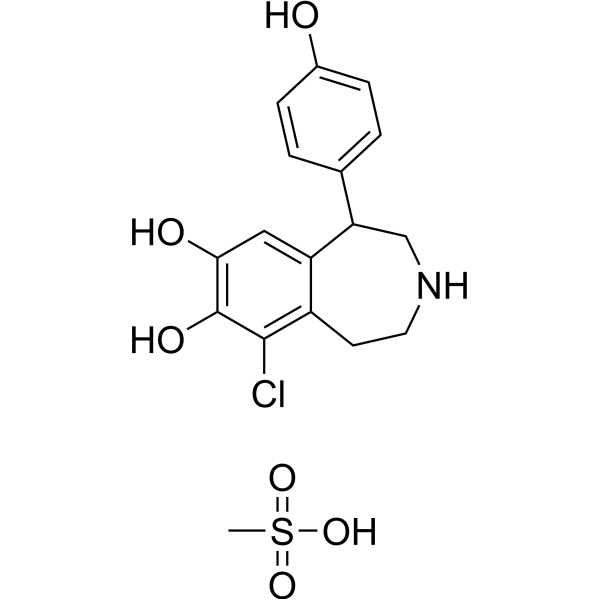
Cat. No.: HY-B0735A
CAS No.: 67227-57-0
Synonyms: Fenoldopam methanesulfonate; SKF-82526 mesylate
Fenoldopam (SKF-82526) mesylate is a selective dopamine D1 receptor agonist. Fenoldopam mesylate binds to rat D1B dopamine receptors (Kd = 11 nM) and human D1A receptors (Kd = 17 nM) in COS-7 cell membranes expressing the cloned receptors. Fenoldopam mesylate modulates dopamine receptor expression, induces vasorelaxation in vascular tissues, reverses glomerular hyperfiltration in rat models, increases intracellular cAMP levels, promotes DARPP-32 phosphorylation in small cell lung cancer (SCLC) cells, inhibits cytokine secretion, and downregulates T cell activation markers in activated human T cells. Fenoldopam mesylate can be used for research on hypertension, acute kidney injury, psoriasis, and small cell lung cancer .
loading...
    loading...
3
3 Cited Publications
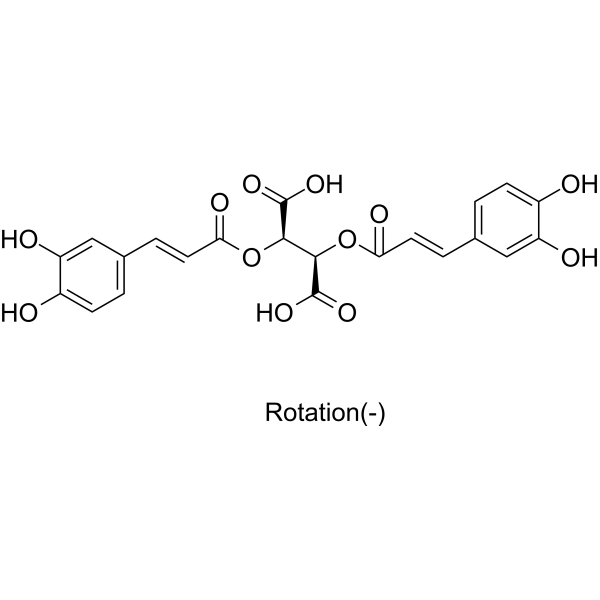
Cat. No.: HY-N0457A
CAS No.: 70831-56-0
Synonyms: (-)-Chicoric acid; trans-Caffeoyltartaric acid
L-Chicoric Acid ((-)-Chicoric acid) is a dicaffeoyltartaric acid and a potent, selective and reversible HIV-1 integrase inhibitor with an IC50 of ~100 nM. L-Chicoric Acid inhibits HIV-1 replication in tissue culture .
loading...
    loading...
3
3 Cited Publications
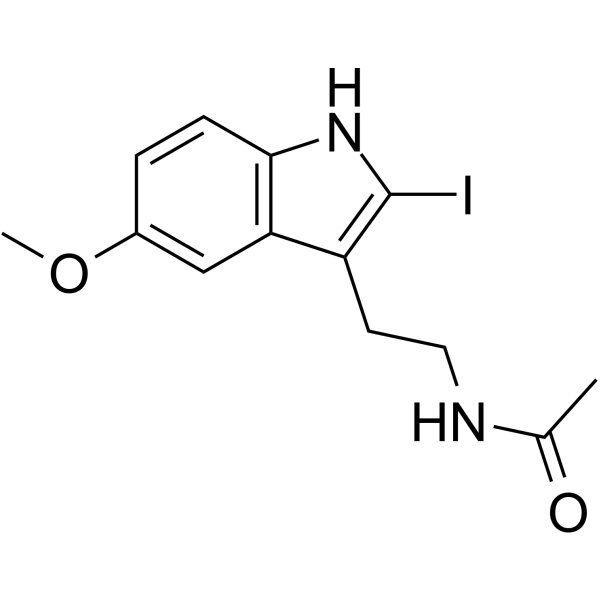
Cat. No.: HY-101176
CAS No.: 93515-00-5
Purity:  ≥99.0%
Target:  

Melatonin Receptor

Research Areas:  

Cancer

2-Iodomelatonin is a potent agonist of melatonin receptor 1 (MT1) with a Ki value of 28 pM, it is more 5-fold selective for MT1 over MT2 . 2-iodomelatonin can be used to identify, characterize and localize melatonin binding sites in the brain and peripheral tissues .
loading...
    loading...
3
3 Cited Publications
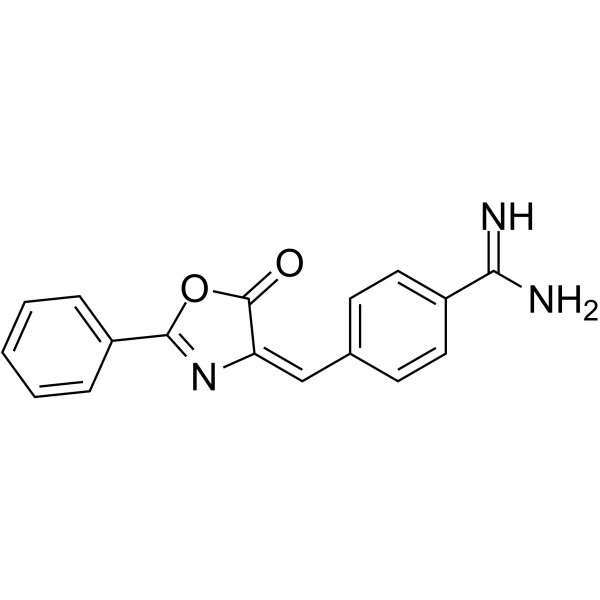
Cat. No.: HY-111056
CAS No.: 940290-58-4
Purity:  99.72%
Target:  

Ser/Thr Protease

Research Areas:  

Cancer

UK122 is a potent and selective urokinase-type plasminogen activator (uPA) inhibitor with an IC50 of 0.2 μM. UK122 shows no or little inhibition of tissue-type PA (tPA), plasmin, thrombin, and trypsin (all IC50>100 μM). UK122, 4-oxazolidinone analogue, is an anticancer agent and inhibits cancer cell migration and invasion .
loading...
    loading...
3
3 Cited Publications
Cat. No.: HY-111056A
Target:  

Ser/Thr Protease

Research Areas:  

Cancer

UK122 hydrochloride is a potent and selective urokinase-type plasminogen activator (uPA) inhibitor with an IC50 of 0.2 μM. UK122 hydrochloride shows no or little inhibition of tissue-type PA (tPA), plasmin, thrombin, and trypsin (all IC50s > 100 μM). UK122 hydrochloride, a 4-oxazolidinone analogue, is an anticancer agent and inhibits cancer cell migration and invasion .
loading...
    loading...
3
3 Cited Publications
Cat. No.: HY-P99575
CAS No.: 2307488-83-9
Synonyms: AMG-757

Target:  

Notch

Research Areas:  

Inflammation/Immunology Cancer

Tarlatamab (AMG-757) is a bispecific T-cell engager (BiTE) antibody targeting delta-like ligand 3 (DLL3). DLL3 is a target that is selectively expressed in small-cell lung cancer (SCLC) tumors, but with minimal normal tissue expression. Tarlatamab has the KDs of 0.64 nM and 0.50 nM for human and nonhuman primate (NHP) DLL3, respectively. Tarlatamab has the KDs of 14.9 nM and 12 nM for human and NHP CD3, respectively. Tarlatamab is a first-in-class HLE BiTE immuno-oncology therapy targeting DLL3 and has the potential for SCLC research .
loading...
    loading...
2
2 Cited Publications
Cat. No.: HY-103195
CAS No.: 299442-43-6
Purity:  99.76%
Target:  

Adenylate Cyclase

Research Areas:  

Metabolic Disease

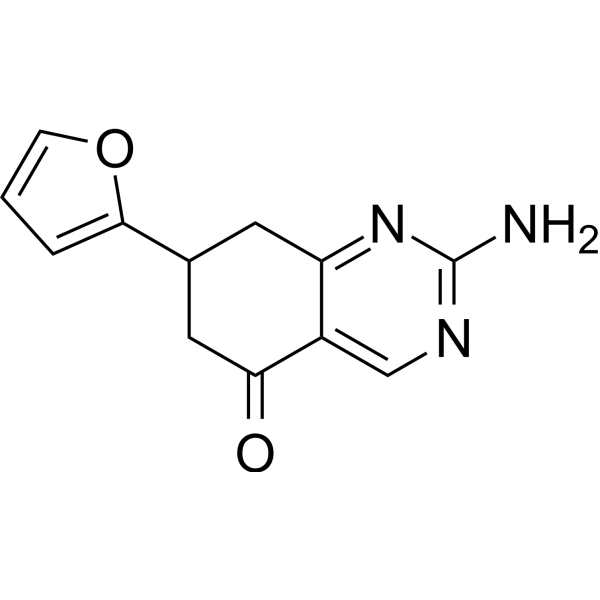
NKY80 is a potent, selective and non-competitive adenylyl cyclase (AC) type V isoform inhibitor with IC50s of 8.3 µM, 132 µM and 1.7 mM for type V, III and II, respectively. NKY80 is a non-nucleoside quinazolinone and regulates the AC catalytic activity in heart and lung tissues .
loading...
    loading...
2
2 Cited Publications
Cat. No.: HY-134194
CAS No.: 302939-48-6
Purity:  98.18%
Target:  

Cryptochrome

Research Areas:  

Metabolic Disease

KL201 a circadian clock modulator, is a isoform-selective cryptochrome 1 (CRY1) stabilizer. KL201 has no stabilizing effect on CRY2. KL201 lengthens the period of circadian rhythms in cells and tissues .
loading...
    loading...
2
2 Cited Publications
Cat. No.: HY-W020468
CAS No.: 105431-72-9
Synonyms: DuP 996
Research Areas:  

Neurological Disease

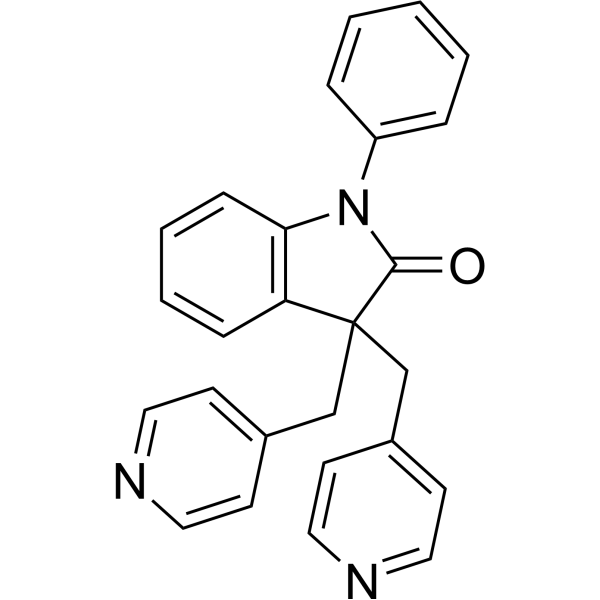
Linopirdine (DuP 996) is an orally active, selective M-type K + current (IM; Kv7; KCNQ Channels) inhibitor with an IC50 of 2.4 μM. Linopirdine is a TRPV1 agonist. Linopirdine, a putative cognition enhancing agent, increases acetylcholine release in rat brain tissue .
loading...
    loading...
2
2 Cited Publications
Cat. No.: HY-131881
CAS No.: 2369979-68-8
Purity:  99.98%
Target:  

mAChR

Research Areas:  

Neurological Disease

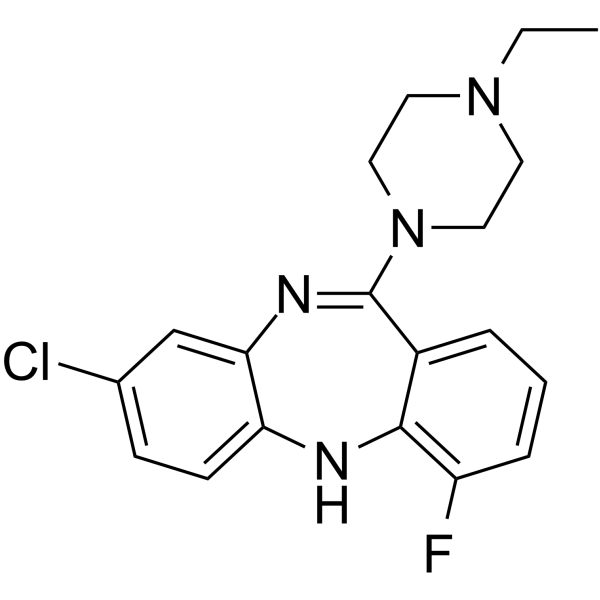
JHU37160 is a potent and brain-penetrant DREADD agonist, with EC50s of 18.5 nM and 0.2 nM for hM3Dq and hM4Di DREADDs in HEK-293 cells, respectively. JHU37160 exhibits selective [ 3H]Clozapine displacement from DREADDs and not from other Clozapine-binding sites in mice brain tissue .
loading...
    loading...
2
2 Cited Publications
Cat. No.: HY-P1821
CAS No.: 126768-94-3
Synonyms: MHP4-14
Target:  

PKC

Research Areas:  

Neurological Disease

Myelin Basic Protein (MHP4-14), a synthetic peptide comprising residues 4-14 of myelin basic protein, is a very selective PKC substrate (Km=7 μM). Myelin Basic Protein is not phosphorylated by cyclic AMP-dependent protein kinase, casein kinases I and II, Ca 2+/calmodulin-dependent protein kinase II, or phosphorylase kinase, and can be routinely used for the assay of protein kinase C with low background in the crude tissue extracts .
loading...
    loading...
2
2 Cited Publications
Cat. No.: HY-P1821A
Synonyms: MHP4-14 TFA
Target:  

PKC

Research Areas:  

Neurological Disease

Myelin Basic Protein (MHP4-14) TFA, a synthetic peptide comprising residues 4-14 of myelin basic protein, is a very selective PKC substrate (Km=7 μM). Myelin Basic Protein TFA is not phosphorylated by cyclic AMP-dependent protein kinase, casein kinases I and II, Ca 2+/calmodulin-dependent protein kinase II, or phosphorylase kinase, and can be routinely used for the assay of protein kinase C with low background in the crude tissue extracts .
loading...
    loading...
2
2 Cited Publications
Cat. No.: HY-13981
CAS No.: 1165910-22-4
Purity:  99.93%
Synonyms: LGD-4033
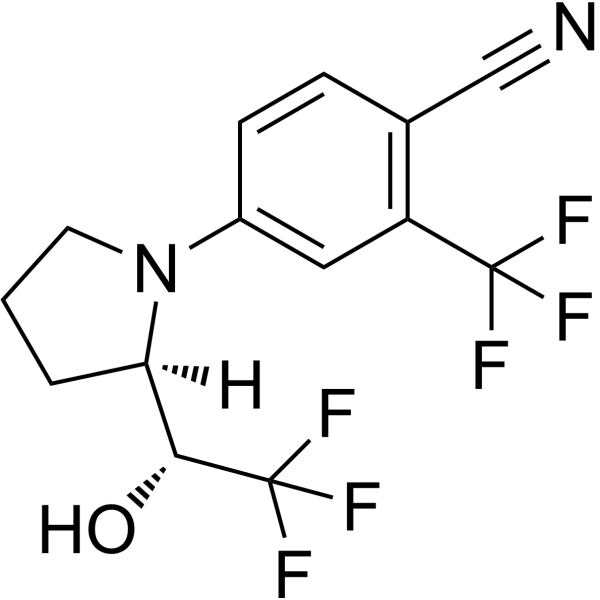
Ligandrol is an orally active, selective androgen receptor (AR) agonist. Ligandrol enhances protein synthesis, inhibits muscle breakdown and oxidative stress, improves muscle cell viability and bone tissue microstructure, and reduces Cisplatin (HY-17394)-induced muscle toxicity and apoptosis. Ligandrol promotes muscle growth, protects bone structure, and has anti-diabetic, anti-apoptotic and antioxidant effects. Ligandrol can antagonize Streptozotocin (HY-13753) damage to pancreatic islets and improve the symptoms of type 2 diabetes .
loading...
    loading...
2
2 Cited Publications
Cat. No.: HY-145801
CAS No.: 2582816-37-1
Purity:  99.48%
Target:  

NF-κB

Research Areas:  

Inflammation/Immunology

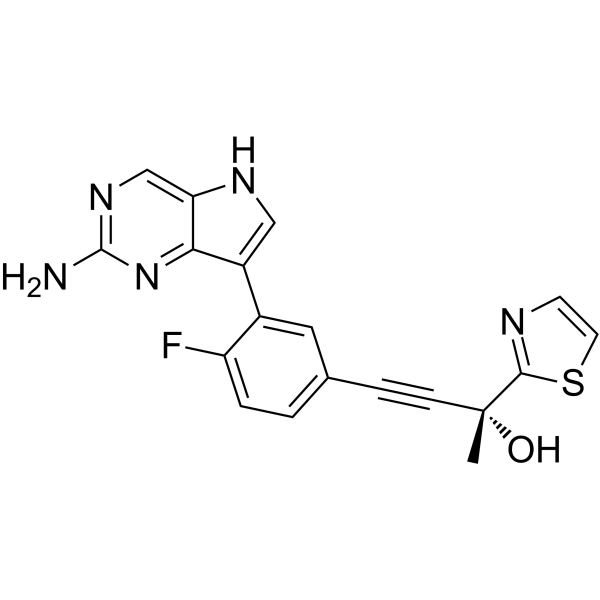
XT2 is a potent, orally active, and selective inhibitor of NF-κB-inducing kinase (NIK) with an IC50 of 9.1 nM. XT2 suppresses CCl4-induced upregulation of ALT, a key biomarker of acute liver injury. XT2 also decreases immune cell infiltration into the injured liver tissue. XT2 has the potential for the research of liver inflammatory diseases . XT2 is a click chemistry reagent, it contains an Alkyne group and can undergo copper-catalyzed azide-alkyne cycloaddition (CuAAc) with molecules containing Azide groups.
loading...
    loading...
2
2 Cited Publications
Cat. No.: HY-P4744
CAS No.: 597562-32-8
Research Areas:  

Infection Cancer

LL-37 amide is a selective agonist of formyl peptide receptor-like FPRL1, effectively inhibiting periodontal pathogens (ED99=8.5-8.7 μg/mL). LL-37 amide exerts its bactericidal effect by activating FPRL1-mediated immune cell chemotaxis and disrupting bacterial cell membrane integrity. It can also regulate inflammatory responses (inhibiting the release of factors such as TNF-α) and promote angiogenesis. Amidation modification reduces its sensitivity to serum inhibition and improves its stability. LL-37 amide possesses key activities in bactericidal action, immunomodulation, and wound healing, and is mainly used in research on infection-related diseases such as periodontal disease and deep tissue injuries (pressure ulcers), and wound healing .
loading...
    loading...
2
2 Cited Publications
Cat. No.: HY-P4744A
Research Areas:  

Infection Cancer

LL-37 amide TFA is a selective agonist of formyl peptide receptor-like FPRL1, effectively inhibiting periodontal pathogens (ED99=8.5-8.7 μg/mL). LL-37 amide TFA exerts its bactericidal effect by activating FPRL1-mediated immune cell chemotaxis and disrupting bacterial cell membrane integrity. It can also regulate inflammatory responses (inhibiting the release of factors such as TNF-α) and promote angiogenesis. Amidation modification reduces its sensitivity to serum inhibition and improves its stability. LL-37 amide TFA possesses key activities in bactericidal action, immunomodulation, and wound healing, and is mainly used in research on infection-related diseases such as periodontal disease and deep tissue injuries (pressure ulcers), and wound healing .
loading...
    loading...
1
1 Cited Publications
Cat. No.: HY-B1398
CAS No.: 83-07-8
Synonyms: 4-Aminophenazone
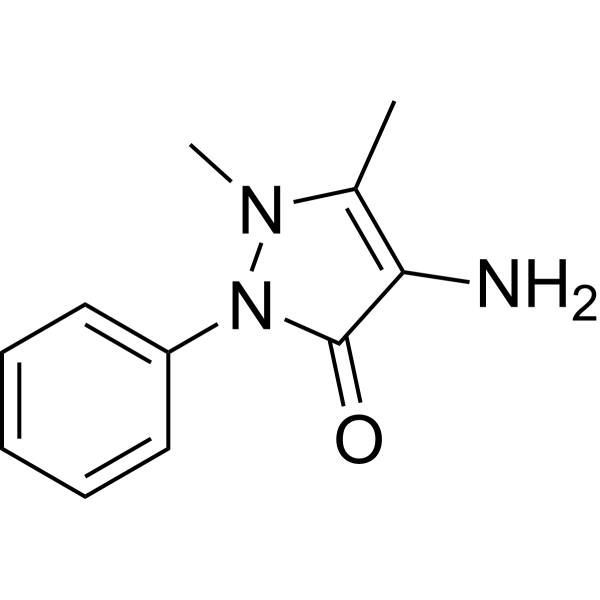
Ampyrone (4-Aminophenazone; 4-Aminoantipyrine) is a reversible and low-damage optical clearing agent and non-selective COX inhibitor based on UV absorption properties. Ampyrone can improve the optical transmittance of mouse skin and other tissues. Ampyrone can induce tissue refractive index matching by enhancing UV absorption, reduce light scattering, and achieve tissue transparency in vivo. Ampyrone reduces the synthesis of prostaglandin PGE2, thereby exerting anti-inflammatory, analgesic and antipyretic effects. Ampyrone inhibits DNA damage, cell apoptosis and immune cell phagocytosis induced by Doxorubicin (HY-15142A) and Cisplatin (HY-17394), etc., and participates in the regulation of toxicity in tumor chemotherapy .
loading...
    loading...
1
1 Cited Publications
Cat. No.: HY-13556A
CAS No.: 182133-27-3
Purity:  98.00%
Synonyms: LY353381 hydrochloride; SERM III hydrochloride
Target:  

Estrogen Receptor/ERR

Research Areas:  

Cancer

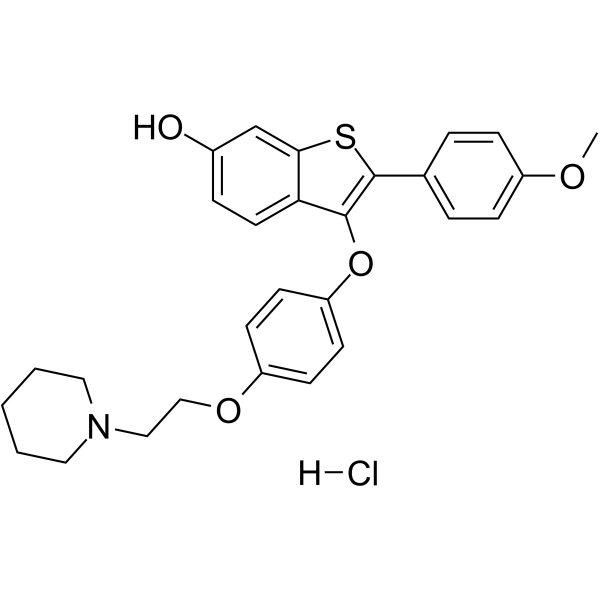
Arzoxifene (LY353381) hydrocloride is a selective estrogen receptor modulator that is a potent estrogen antagonist in mammary and uterine tissue while acting as an estrogen agonist to maintain bone density and lower serum cholesterol.
loading...
    loading...
1
1 Cited Publications
Cat. No.: HY-137976
CAS No.: 151937-76-7
Purity:  99.2%
Synonyms: Penequinine hydrochloride
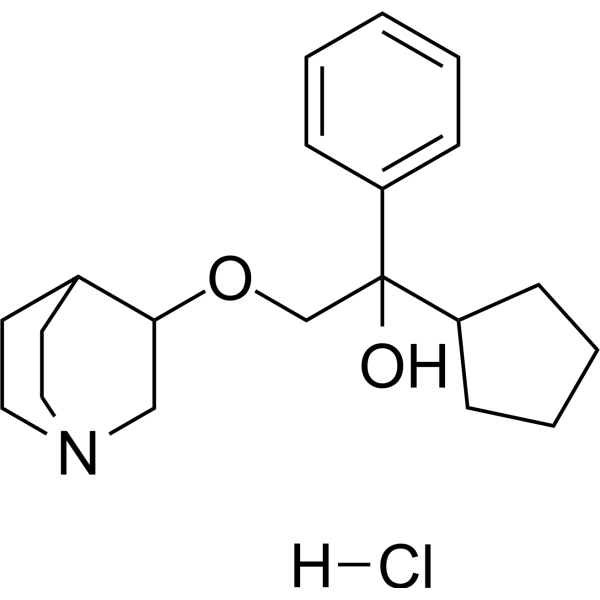
Penehyclidine (Penequinine) hydrochloride, a anticholinergic agent, is a selective antagonist of M1 and M3 receptors. Penehyclidine hydrochloride activates NF-kβ in lung tissue and inhibits the release of inflammatory factors. Penehyclidine hydrochloride can alleviate the pulmonary inflammatory response in rats with chronic obstructive pulmonary disease (COPD) undergoing mechanical ventilation .
loading...
    loading...
1
1 Cited Publications
Cat. No.: HY-15606
CAS No.: 304853-42-7
Purity:  99.87%
Synonyms: NSP-989
Target:  

Progesterone Receptor

Research Areas:  

Endocrinology

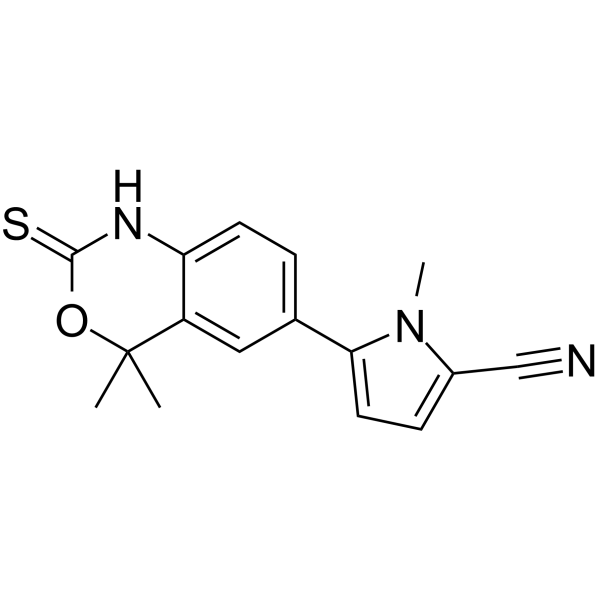
Tanaproget is an orally effective, selective nonsteroidal progesterone receptor (PR) agonist targeting human PR with an IC50 of 1.7 nM. Tanaproget promotes the interaction between PR receptors and coactivators (such as SRC-1), thereby inhibiting the secretion of matrix metalloproteinases (MMP-3/MMP-7) and reducing endometrial tissue invasion and angiogenesis. Tanaproget can be used for contraception and endometriosis inhibition research .
loading...
    loading...

