441 Results for "

her2

" in MedChemExpress (MCE) Product Catalog:
Products (441)

441 Results for "her2" in MCE Product Catalog:

Cat. No.: HY-10263
CAS No.: 468741-42-6
Research Areas:  

Cancer

BMS-554417 is an orally active inhibitor of insulin receptor and insulin-like growth factor-I receptor (IGF-1R) kinases, with IC50 values of 50.6 nM and 67.9 nM, respectively. BMS-554417 blocks downstream signal transduction via the ERK and PI3K/Akt pathways. BMS-554417 induces G0-G1 cell cycle arrest, prevents cyclin D1 accumulation in the nucleus, triggers mitochondrial pathway-mediated apoptosis, promotes HER2 phosphorylation, and inhibits the proliferation and growth of cancer cells. BMS-554417 can be used in research related to colon cancer, ovarian cancer, and breast cancer [2] .
loading...
    loading...
Cat. No.: HY-149407
Research Areas:  

Cancer

Multi-kinase-IN-4 (compound 5d) is multi-targeted kinase inhibitor, including VEGFR2, EGFR, HER2, and CDK2, with IC50 values of 0.33, 0.22, 0.18 and 2.09 μM, respectively. Multi-kinase-IN-4 shows broad-spectrum anti-cancer activities against HepG2, MCF-7, MDA-231, and HeLa cell lines (IC50 = 1.94–7.1 µM), but exhibits lower toxicity in the WI-38 cells (IC50 = 40.85 µM). Multi-kinase-IN-4 induces apoptosis and arrests cell cycle at S phase in HepG2 cells. Multi-kinase-IN-4 has the potential for the research of cancer .
loading...
    loading...
Cat. No.: HY-164399A
CAS No.: 1202920-93-1
Target:  

HSP ERK CDK Akt

Research Areas:  

Cancer

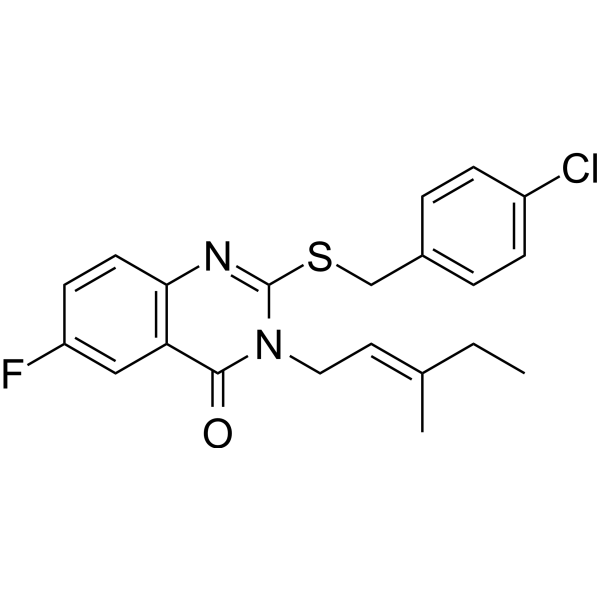
SST0116CL1 free base is a HSP90 inhibitor (IC50: 0.21 μM). SST0116CL1 free base binds to the ATP binding pocket of Hsp90, and interferes with Hsp90 chaperone function thus resulting in client protein (EGFR, CDK4 and AKT) degradation. SST0116CL1 free base induces degradation of Her2 in BT-474 cell (IC50: 0.2 μM). SST0116CL1 free base has antiproliferative activity and inhibits tumor growth. SST0116CL1 free base has antiproliferative activity and inhibits tumor growth. SST0116CL1 free base can be used for the study of leukemia, gastric and ovarian carcinoma .
loading...
    loading...
Cat. No.: HY-163099
CAS No.: 2928571-43-9
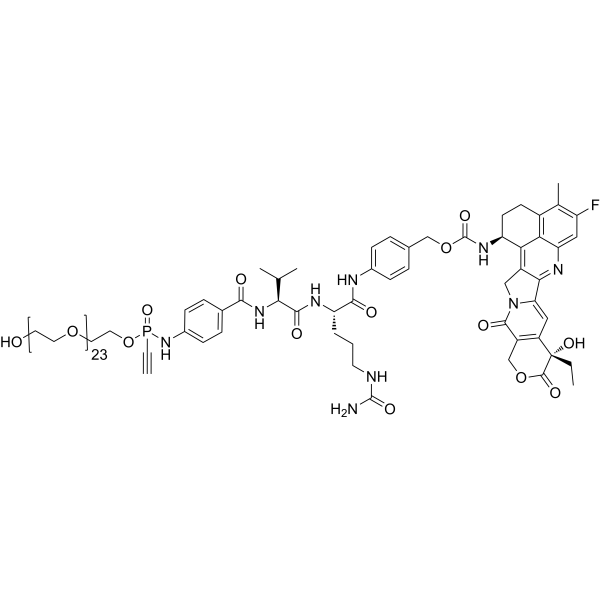
P5 (PEG24)-VC-PAB-Exatecan is a TOP1 inhibitor payload with antibody-conjugation-dependent activity. Conjugation of P5 (PEG24)-VC-PAB-Exatecan with Trastuzumab (HY-P9907) generates a DAR8 antibody-drug conjugate (ADCs) with antibody-like pharmacokinetic properties. P5 (PEG24)-VC-PAB-Exatecan induces S-phase and G2-M-phase cell cycle arrest, DNA damage and apoptosis in target-positive tumor cells, and releases damage-associated molecular patterns (DAMP) related to immunogenic cell death (ICD). The ADCs prepared from it exert bystander killing effects on non-target tumor cells. ADCs based on P5 (PEG24)-VC-PAB-Exatecan exhibit linker stability in vitro and in vivo, show in vivo efficacy, and can be used in research related to HER2-positive cancers .
loading...
    loading...
Cat. No.: HY-187035
CAS No.: 868066-26-6
Target:  

CDK STAT

Research Areas:  

Cancer

SNX631 is an orally active and selective CDK8/CDK19 inhibitor. SNX631 reduces the phosphorylation of STAT1/STAT3 S727, and upregulates miR-21-5p, miR-21-3p and miR-221 in cancer cells. SNX631 transcription-independently inhibits meiotic resumption in mouse oocytes, blocks nuclear envelope breakdown, first polar body extrusion and mitochondrial expansion and aggregation, with no cytotoxicity. SNX631, in combination with Lapatinib (HY-50898) or Trastuzumab (HY-P9907), synergistically inhibits cancer cell growth, upregulates the tumor suppressor BTG2, prevents Lapatinib-induced upregulation of oncogenic miRNAs, overcomes drug resistance, reduces the infiltration of αSMA+ stromal fibroblasts and ARG1+ M2 macrophages, and exhibits favorable biosafety. SNX631 can be used in studies related to HER2-positive breast cancer and cancer [2] .
loading...
    loading...
Cat. No.: HY-P991097
Synonyms: PM-8002; BNT-327

Target:  

VEGFR PD-1/PD-L1

Research Areas:  

Cancer

Pumitamig (PM-8002, BNT-327) is a bispecific antibody targeting PD-L1 and VEGF-A, with immune activation and anti-angiogenic activities. By binding to PD-L1, Pumitamig restores the function of effector T cells, while neutralizing VEGF-A in the tumor microenvironment to reverse its inhibition on the infiltration and activation of immune cells and normalize tumor blood vessels. Pumitamig can also be combined with various ADCs targeting TROP2, B7H3, HER2, HER3 for the research of advanced/metastatic solid tumors, including non-small cell lung cancer, ovarian cancer, triple-negative breast cancer, cervical cancer, etc. Pumitamig also exhibits potential efficacy in "cold" tumors with low PD-L1 expression that are insensitive to immunotherapy .
loading...
    loading...
Cat. No.: HY-155577
CAS No.: 2927489-95-8
Target:  

Monoamine Oxidase HSP

Research Areas:  

Cancer

MAO A/HSP90-IN-1 (4-b) is a MAO A/HSP90 dual inhibitor with IC50 value of 1.77 μM and 0.019 μM in Glioblastoma (GBM) GL26 cells and HSP90α, respectively. MAO A/HSP90-IN-1 (4-b) can inhibit MAO A activity, HSP90 binding and the expression of HER2 and phospho-Akt to inhibit the growth of GBM, they also reduce PD-L1 expression, which inhibits T cell activation. MAO A/HSP90-IN-1 (4-b) have potential to inhibit tumor immune escape. MAO A/HSP90-IN-1 (4-b) can be used for brain tumor-related diseases research .
loading...
    loading...
Cat. No.: HY-183246
CAS No.: 2143950-05-2
Research Areas:  

Cancer

Rac/Cdc42-IN-1, the major phase I metabolite of the oral Rac/Cdc42 inhibitor MBQ-167 (HY-112842) in vivo, is a selective Rac inhibitor. Rac/Cdc42-IN-1 functions by blocking the GTP-binding activation of Rac1, targeting the autophosphorylation of Thr 423/Thr 402/Thr 436 and Ser 141/Ser 144/Ser 154 in downstream PAK1/2/3, with an inhibitory effect superior to that of MBQ-167. Rac/Cdc42-IN-1 significantly inhibits cell migration, and suppresses tumor growth and distant metastasis to the lung, liver and kidney in HER2+ breast cancer mouse models. Rac/Cdc42-IN-1 can be used for targeted research on metastatic breast cancer .
loading...
    loading...
Cat. No.: HY-181687
Target:  

HSP CDK

Research Areas:  

Cancer

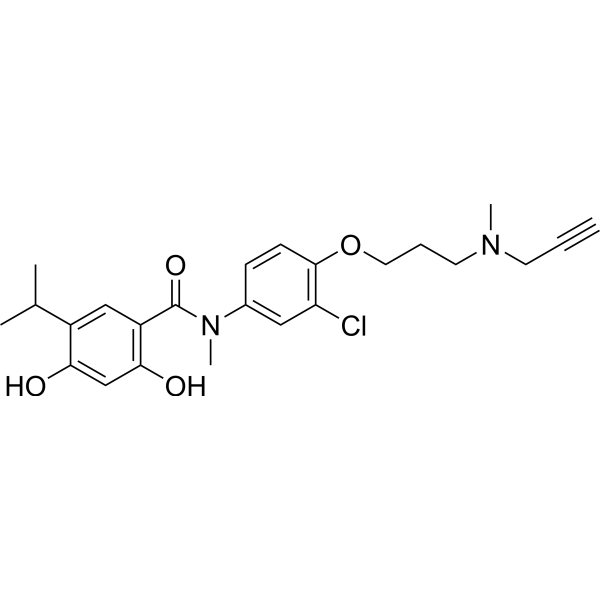
Hsp90-IN-46 is a Hsp90 inhibitor. Hsp90-IN-46 exhibits broad-spectrum antiproliferative activity against tumor cell lines. Hsp90-IN-46 inhibits breast cancer cell proliferation by reducing colony formation and downregulating the proliferation marker Ki-67. Hsp90-IN-46 inhibits Hsp90 and its ATPase activity, downregulates the downstream substrate oncoproteins HER2 and CDK4, and moderately induces the heat shock response. Hsp90-IN-46 shows significant antitumor activity in a mouse model of triple-negative breast cancer tumor xenografts. Hsp90-IN-46 can be used for research on various cancers including triple-negative breast cancer, leukemia, non-small cell lung cancer, colon cancer, ovarian cancer, renal cancer, prostate cancer .
loading...
    loading...
Cat. No.: HY-P992518

Target:  

VEGFR PD-1/PD-L1

Research Areas:  

Cancer

Pumitamig (Mouse IgG2a) is the Mouse IgG2a control antibody for Pumitamig (HY-P991097). Pumitamig (PM-8002, BNT-327) is a bispecific antibody targeting PD-L1 and VEGF-A, with immune activation and anti-angiogenic activities. By binding to PD-L1, Pumitamig restores the function of effector T cells, while neutralizing VEGF-A in the tumor microenvironment to reverse its inhibition on the infiltration and activation of immune cells and normalize tumor blood vessels. Pumitamig can also be combined with various ADCs targeting TROP2, B7H3, HER2, HER3 for the research of advanced/metastatic solid tumors, including non-small cell lung cancer, ovarian cancer, triple-negative breast cancer, cervical cancer, etc. Pumitamig also exhibits potential efficacy in "cold" tumors with low PD-L1 expression that are insensitive to immunotherapy .
loading...
    loading...
Cat. No.: HY-L184
1,203 compounds

Gastric Cancer (GC) is one of the most common malignant tumors in the world, ranking fourth in mortality rate globally. Because the early symptoms of stomach neoplasm are usually not obvious, are diagnosed with gastric cancer at terminal stage, and the relative survival rate within 5 years is very low. With the further understanding of the molecular characteristics of stomach neoplasm, many therapeutic targets for gastric cancer have been identified, and molecular targeted therapies such as CTLA-4, HER2 and immune checkpoint inhibitors have made rapid progress. Although survival rates for patients with gastric neoplasm have improved over the past few decades, the prognosis is still worrying. Therefore, there is an urgent need for new drugs to treat gastric cancer.

MCE designs a unique collection of 1,203 small molecules with definite or potential anti-gastric cancer activity, which is an important tool for studying the pathological mechanism of stomach neoplasm and developing drugs for stomach neoplasm.

Cat. No.: HY-164392
CAS No.: 1451370-01-6
Target:  

EGFR Apoptosis

Research Areas:  

Cancer

TAS-121 is an orally active, selective, covalent, third-generation mutant EGFR-tyrosine kinase inhibitor (EGFR-TKI). TAS-121 inhibits the L858R mutation (IC50=1.7 nM), Ex19del mutation (IC50=2.7 nM), L858R/T790M mutation (IC50=0.56 nM) and Ex19del/T790M mutation (IC50=1.1 nM) and wild-type EGFR (IC50=8.2 nM). TAS-121 inhibits HER2 and HER4 with IC50s of 110 and 2.6 nM, respectively. TAS-121 inhibits phosphorylation of EGFR and its downstream signaling targets to block cell proliferation. TAS-121 induces apoptosis and displays antitumor activity in SW48 (EGFR G719S) and NCI-H1975 (EGFR L858R/T790M) xenograft models .
loading...
    loading...
Cat. No.: HY-L074
3,404 compounds

Breast cancer is the most frequent cancer among women, impacting 2.1 million women each year, and also causes the greatest number of cancer-related deaths among women. Surgery is usually the first type of treatment for breast cancer, which is usually followed by chemotherapy or radiotherapy or, in some cases, hormone or targeted therapies, especially for metastatic breast cancer (MBC).

Breast cancer is a heterogeneous disease, which is categorized into 3 major subtypes based on the presence or absence of molecular markers for estrogen or progesterone receptors and human epidermal growth factor 2 (ERBB2; formerly HER2): hormone receptor positive/ERBB2 negative (70% of patients), ERBB2 positive (15%-20%), and triple-negative (tumors lacking all 3 standard molecular markers; 15%). Different intrinsic subtypes exhibit different tumor behavior with different prognoses, and may require specific targeted therapies to maximize treatment effectiveness. Otherwise, some signaling pathways also play important roles in the development of breast cancer, such as NF-κB Signaling Pathway, TGF-beta Signaling Pathway, PI3K/AKT/mTOR signaling pathway and Notch Signaling Pathway. These signaling pathways offer ideal targets for development of new targeted therapies for breast cancer.

MCE supplies a unique collection of 3,404 compounds with identified and potential anti-breast cancer activity. MCE Anti-Breast Cancer Compound Library is a useful tool for anti-breast cancer drugs screening.

Cat. No.: HY-P80500

Host:  

Rabbit

Application:  

WB, IHC-P, ICC/IF, FC, mIHC

Reactivity:  

Human

loading...
    loading...
Cat. No.: HY-RS04467
Research Areas:  

Others

Erbb2 Mouse Pre-designed siRNA Set A contains three designed siRNAs for Erbb2 gene (Mouse), as well as a negative control, a positive control, and a FAM-labeled negative control.

loading...
    loading...
Cat. No.: HY-RS04466
Research Areas:  

Others

ERBB2 Human Pre-designed siRNA Set A contains three designed siRNAs for ERBB2 gene (Human), as well as a negative control, a positive control, and a FAM-labeled negative control.

loading...
    loading...
Cat. No.: HY-10333R
CAS No.: 859853-30-8
Research Areas:  

Cardiovascular Disease Cancer

BMS-690514 (Standard) is the analytical standard of BMS-690514 (HY-10333). This product is intended for research and analytical applications. BMS-690514 is a potent and orally active inhibitor of EGFR and VEGFR; has IC50s of 5, 20 and 60 nM for EGFR, HER 2 and HER 4, respectively.
loading...
    loading...
Cat. No.: HY-138302
CAS No.: 2067281-52-9
Target:  

Drug Intermediate

Research Areas:  

Cancer

PF-06862309 is a PF-06843195 (HY-131972) phosphate ester prodrug. PF-06862309 can be hydrolyzed to PF-06843195 in the presence of alkaline phosphatase. PF-06843195 is a highly selective PI3Kα inhibitor. PF-06862309 can be used for the study of breast cancer with ER +, HER 2-, and PIK3CA mutations .
loading...
    loading...
Cat. No.: HY-178157
CAS No.: 301820-47-3
Target:  

CDK EGFR VEGFR

Research Areas:  

Cancer

Multi-target kinase-IN-7 (Compound 1e) is an orally active multi-target kinase inhibitor (IC50 values: CDK2=0.314 μM, EGFR=0.183 μM, HER-2=0.197 μM, VEGFR-2=0.235 μM). Multi-target kinase-IN-7 is promising for research of solid tumors (e.g., lung, breast, prostate cancer) .
loading...
    loading...
Cat. No.: HY-182468
CAS No.: 3056105-63-3
Synonyms: OP-3136
Research Areas:  

Cancer

Omvitrastat (OP-3136) is an orally active, highly selective inhibitor of KAT6A and KAT6B. Omvitrastat inhibits the proliferation of prostate cancer, ovarian cancer and non-small cell lung cancer cells that express or overexpress KAT6A. Omvitrastat reduces the proliferative capacity of cancer cells and suppresses cell growth in ER + breast cancer cell models with KAT6 overexpression. Omvitrastat induces tumor regression and inhibits tumor growth in an ovarian cancer xenograft model in immunodeficient mice. Omvitrastat inhibits tumor growth in a non-small cell lung cancer xenograft model in immunodeficient mice. Omvitrastat can be used in research related to HR +/HER 2- breast cancer, prostate cancer, ovarian cancer and non-small cell lung cancer (NSCLC) [2].
loading...
    loading...

