593 Results for "

Toxin

" in MedChemExpress (MCE) Product Catalog:
Products (593)

593 Results for "Toxin" in MCE Product Catalog:

Cat. No.: HY-P88031
Synonyms: ADPRT2, ADPRTL2, PARP2, Poly [ADP-ribose] polymerase 2, PARP-2, hPARP-2, ADP-ribosyltransferase diphtheria Toxin-like 2, DNA ADP-ribosyltransferase PARP2, NAD(+) ADP-ribosyltransferase 2, Poly[ADP-ribose] synthase 2, Protein poly-ADP-ribosyltransferase PARP2, ARTD2, ADPRT-2, pADPRT-2

Host:  

Rabbit

Application:  

WB, FC, ICC/IF

Reactivity:  

Human

loading...
    loading...
Cat. No.: HY-178690
CAS No.: 1801552-15-7
Target:  

MyD88 IFNAR

Research Areas:  

Infection Inflammation/Immunology

MyD88-IN-4 is a MyD88 inhibitor. MyD88-IN-4 exerts antiviral effects by up-regulating IFN-β, and anti-inflammatory effects by inhibiting pro-inflammatory cytokine production. MyD88-IN-4 prevents MyD88 homodimer formation and its interaction with IRF3/IRF7. MyD88-IN-4 demonstrates efficacy against encephalitic alphavirus infections by reducing viral replication and improving survival in VEEV TC-83-infected mouse models. MyD88-IN-4 can be used for the study of alphavirus infections, bacterial toxin-related diseases, and sepsis .
loading...
    loading...
Cat. No.: HY-DY1108
CAS No.: 38806-38-1
Synonyms: ε-NAD (solution)
Nicotinamide 1,N6-ethenoadenine dinucleotide (solution) (ε-NAD (solution)) is a fluorescent analog of NAD. Nicotinamide 1,N6-ethenoadenine dinucleotide can be cleaved by phosphodiesterase I (from C. adamanteus venom) and binds to bovine liver glutamate dehydrogenase. Nicotinamide 1,N6-ethenoadenine dinucleotide can serve as a substrate for G-ADP ribosylation of G proteins catalyzed by bacterial toxins. Nicotinamide 1,N6-ethenoadenine dinucleotide can be used as a fluorescent substrate for the study of ADP ribosylation reactions .
Solvent and concentration: ddH2O: 20 mM
loading...
    loading...
Cat. No.: HY-P992488
Synonyms: ZV0501 Antibody
Research Areas:  

Cancer

ZV05 (ZV0501 Antibody) is an anti-5T4 monoclonal antibody with an EC50 of 4.3 ng/mL against h5T4. ZV05 does not induce apoptosis or interfere with cell cycle progression. ZV05 accumulates specifically in 5T4-positive tumor xenografts. ZV05 can serve as the antibody component of antibody-active molecule conjugates (ADCs) to bind the 5T4 glycoprotein, thereby enabling targeted delivery of toxins. ZV05 is used in studies of 5T4-positive cancers, including triple-negative breast cancer .
loading...
    loading...
Cat. No.: HY-134800
CAS No.: 692744-81-3
Target:  

ATF6 IRE1 PERK

Research Areas:  

Infection

IBT21 is an endoplasmic reticulum stress inhibitor that binds to unfolded or misfolded proteins and prevents their aggregation. IBT21 inhibits UPR activation of the ATF6, IRE1 and PERK branches under ER stress, with IC50 values of 0.24 μM, 0.33 μM, and 0.46 μM, respectively. IBT21 protects cells from ER stress-induced death and mutant prion protein (protein toxin)-induced growth inhibition. IBT21 exhibits chemical chaperone activity distinct from UPR modulators, does not affect protein translation, moderately reduces DTT (HY-15917)-induced ER stress, and fails to inhibit the heat shock response. IBT21 is useful for research related to prion diseases .
loading...
    loading...
Cat. No.: HY-149125
CAS No.: 71965-57-6
Synonyms: Ceramide trihexosides (porcine)
Research Areas:  

Infection Endocrinology

Globotriaosylceramide porcine RBC (Ceramide trihexosides porcine) is a neutral glycosphingolipid belonging to the globoside series of erythrocytes, primarily isolated and extracted from porcine RBC. Globotriaosylceramide porcine RBC is a natural resistance factor against HIV-1 infection. Globotriaosylceramide porcine RBC blocks viral binding to CXCR4/CCR5 co-receptors through competitive binding to the V3 loop region of HIV-1 gp120, thereby inhibiting viral fusion and entry. Globotriaosylceramide porcine RBC is the major cell surface receptor for Shiga toxin. Globotriaosylceramide porcine RBC can be used for research on hemolytic uremic syndrome, HIV-1 infection, and Fabry disease .
loading...
    loading...
Cat. No.: HY-185816
TQB2102 is a bispecific epitope antibody-drug conjugate targeting HER2, composed of the antibody Rolditamig (HY-P992130) and the toxin molecule Deruxtecan-d2 (HY-13631ES3). TQB2102 binds to the ECD2 and ECD4 domains of HER2, promotes its own internalization by HER2-expressing cells, and delivers deuterated DXd payload to inhibit topoisomerase I. TQB2102 induces antibody-dependent cellular cytotoxicity, DNA damage, bystander killing activity, and inhibits cancer cell proliferation. TQB2102 can be used in research related to various cancers including metastatic breast cancer, colorectal cancer, and gastric/gastroesophageal junction adenocarcinoma .
loading...
    loading...
Cat. No.: HY-N6799
CAS No.: 36519-25-2
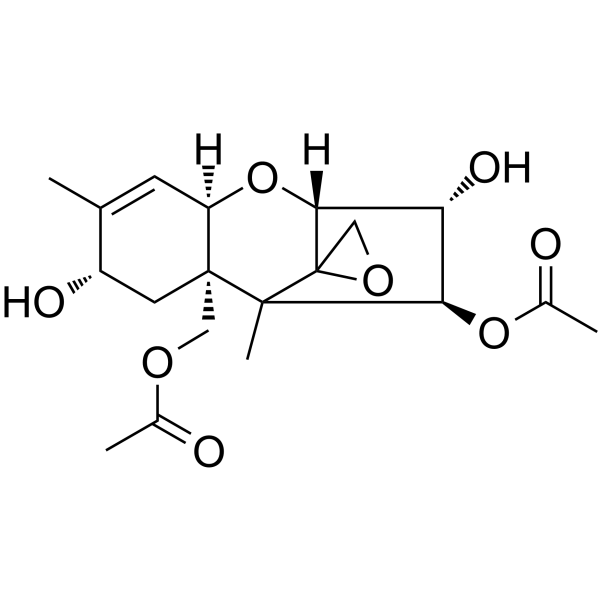
Neosolaniol is an orally active type A trichothecene mycotoxin, and it is a metabolite of T-2 Toxin (HY-N6792) in human cancer cells and renal epithelial cells. Neosolaniol targets Bax, Bcl-2, caspase 3, caspase 8, and cytochrome c, thereby inducing apoptosis, emesis and anorexia. Neosolaniol reduces intracellular ATP levels, elevates ROS levels, decreases mitochondrial membrane potential, induces mitochondrial damage, and exerts toxicity on Leydig cells. Neosolaniol downregulates the expression of intestinal tight junction proteins in broilers and increases the load of Salmonella enteritidis in the cecum of broilers. Neosolaniol can be used in research related to anorexia, lymphoma, Fusarium melonis rot, and Salmonella infection .
loading...
    loading...
Cat. No.: HY-W115727A
CAS No.: 9003-05-8
Synonyms: PAM,Anion,Mw 14-16 million
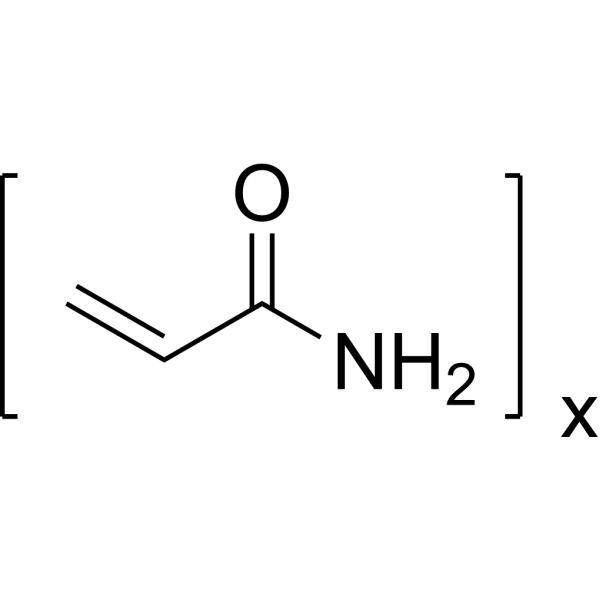
Polyacrylamide, Anion, Mw 14-16 million is a multifunctional high molecular weight anionic polyacrylamide copolymer. The anionic properties of Polyacrylamide, Anion, Mw 14-16 million enable it to be used as a flocculant to achieve charge neutralization and aggregation, while its high molecular weight properties provide viscoelastic properties for fluid applications. Polyacrylamide series materials can maintain enzyme activity in enzyme immobilization, achieve controlled release as a drug carrier, respond to temperature/pH stimulation as a smart material, and can also be used for in vitro toxin adsorption and soft tissue filling through mechanisms such as physical embedding, covalent bonding or chemical cross-linking. Polyacrylamide can be used in biomedical engineering, environmental management and industrial applications .
loading...
    loading...
Cat. No.: HY-W115727B
CAS No.: 9003-05-8
Synonyms: PAM,Anion,Mw 18 million
Polyacrylamide,Anion,Mw 18 million (PAM,Anion,Mw 18 million) is a multifunctional high molecular weight anionic polyacrylamide copolymer. The anionic properties of Polyacrylamide,Anion,Mw 18 million enable it to be used as a flocculant to achieve charge neutralization and aggregation, while its high molecular weight properties provide viscoelastic properties for fluid applications. Polyacrylamide series materials can maintain enzyme activity in enzyme immobilization, act as drug carriers to achieve controlled release, serve as smart materials responding to temperature/pH stimuli, and be used for in vitro toxin adsorption and soft tissue filling through mechanisms such as physical entrapment, covalent binding or chemical crosslinking. Polyacrylamide finds applications in biomedical engineering, environmental management and industrial applications .
loading...
    loading...
Cat. No.: HY-P811793
Synonyms: ADPRTL1, KIAA0177, PARPL, PARP4, Protein mono-ADP-ribosyltransferase PARP4, 193 kDa vault protein, ADP-ribosyltransferase diphtheria Toxin-like 4, PARP-related/IalphaI-related H5/proline-rich, Poly [ADP-ribose] polymerase 4, Vault poly(ADP-ribose) polymerase, ARTD4, PH5P, PARP-4, VPARP

Host:  

Rabbit

Application:  

WB, IHC-P, ICC/IF, IP, FC

Reactivity:  

Human

loading...
    loading...
Cat. No.: HY-113420
CAS No.: 67910-12-7
Purity:  ≥98.0%
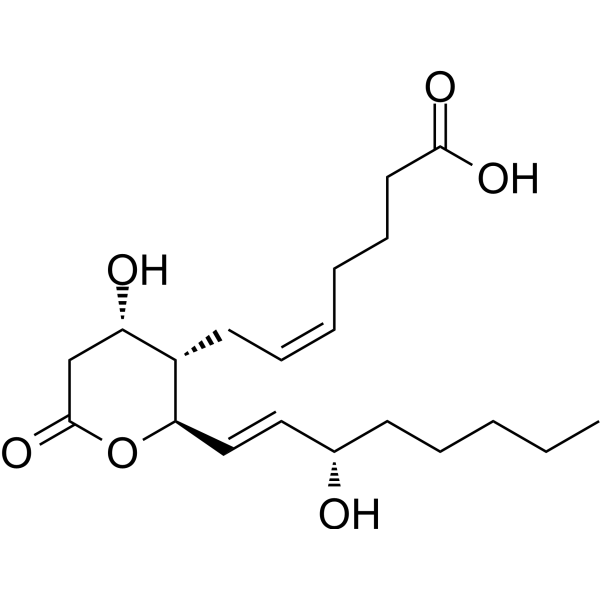
11-Dehydro-thromboxane B2 is a stable terminal metabolite of thromboxane A2 and an agonist of the CRTH2 receptor. 11-Dehydro-TXB2 activates human eosinophils, basophils, and CRTH2-transfected BaF/3 cells through a pertussis toxin-insensitive G protein-PLC pathway, inducing intracellular calcium mobilization, morphological changes, and chemotaxis, but does not affect platelet aggregation. 11-Dehydro-thromboxane B2 is involved in thrombosis and promotes eosinophil recruitment to the lungs in allergic inflammation, and its urinary levels are used to assess the inhibitory effect of Aspirin (HY-14654) on thromboxane production. 11-Dehydro-TXB2 serves as a biomarker for research related to asthma, atopic rhinitis, nephropathy, and coronary artery disease .
loading...
    loading...
Cat. No.: HY-178219
CAS No.: 3103526-19-5
Bis-sulfone-(PEG24)-Glu-Val-Cit-PAB-MMAE is a drug-linker conjugate for ADC. Bis-sulfone-(PEG24)-Glu-Val-Cit-PAB-MMAE contains a linker and bioactive small molecule toxins MMAE (HY-15162). Bis-sulfone-(PEG24)-Glu-Val-Cit-PAB-MMAE can conjugate with NN2101 (HY-P991293) (anti c-Kit) for synthesizing NN3201. NN3201 rapidly internalizes and inhibits SCF-driven signaling, thereby delivering its payload to induce cell cycle arrest and apoptosis. NN3201 exhibits significant c-Kit-dependent anti-tumor efficacies in various tumor models, such as small cell lung cancer (SCLC) and gastrointestinal stromal tumor (GIST) .
loading...
    loading...
Cat. No.: HY-P74608
Purity:  ≥ 95%, as determined by reducing SDS-PAGE.
Synonyms: RAC1; Ras-Like Protein TC25; Rac Family Small GTPase 1; Rho-Related GTP-Binding Protein RhoG; P21-Rac1; Pancreatic Ribonuclease; TC-25; Small Monomeric GTPase; Rac-1; MRD48; Ras-Related C3 Botulinum Toxin Substrate 1 (Rho Family, Small GTP Binding Protein
Species:  
Human
Source:  
Sf9 insect cells
loading...
    loading...
Cat. No.: HY-P811793A
Synonyms: ADPRTL1, KIAA0177, PARPL, PARP4, Protein mono-ADP-ribosyltransferase PARP4, 193 kDa vault protein, ADP-ribosyltransferase diphtheria Toxin-like 4, PARP-related/IalphaI-related H5/proline-rich, Poly [ADP-ribose] polymerase 4, Vault poly(ADP-ribose) polymerase, ARTD4, PH5P, PARP-4, VPARP

Host:  

Rabbit

Application:  

WB, IHC-P, ICC/IF, IP, FC

Reactivity:  

Human

loading...
    loading...
Cat. No.: HY-138298B
CAS No.: 1826843-81-5
Synonyms: T-DXd (DAR2); DS-8201 (DAR2); DS-8201a (DAR2)
Research Areas:  

Cancer

Trastuzumab deruxtecan (DAR2) (T-DXd (DAR2); DS-8201 (DAR2); DS-8201a (DAR2)) is a low-drug-load derivative control preparation of Trastuzumab deruxtecan (HY-138298A) with a drug-to-antibody ratio (DAR) of 2. Trastuzumab deruxtecan (T-DXd; DS-8201a; DS-8201) is an anti-human epidermal growth factor receptor 2 (HER2) antibody-drug conjugate (ADC). Trastuzumab deruxtecan is composed of a humanized anti-HER2 antibody, an enzymatically cleavable peptide-linker, a topoisomerase I inhibitor (a toxin component of Dxd), and the drug-linker conjugate for ADC is Deruxtecan (HY-13631E). Trastuzumab deruxtecan can be used for the research of HER2-positive breast cancer and gastric cancer .
loading...
    loading...
Cat. No.: HY-138298C
CAS No.: 1826843-81-5
Synonyms: T-DXd (DAR4); DS-8201 (DAR4); DS-8201a (DAR4)
Research Areas:  

Cancer

Trastuzumab deruxtecan (DAR4) (T-DXd (DAR4); DS-8201 (DAR4); DS-8201a (DAR4)) is a low-drug-load derivative control preparation of Trastuzumab deruxtecan (HY-138298A) with a drug-to-antibody ratio (DAR) of 4. Trastuzumab deruxtecan (T-DXd; DS-8201a; DS-8201) is an anti-human epidermal growth factor receptor 2 (HER2) antibody-drug conjugate (ADC). Trastuzumab deruxtecan is composed of a humanized anti-HER2 antibody, an enzymatically cleavable peptide-linker, a topoisomerase I inhibitor (a toxin component of Dxd), and the drug-linker conjugate for ADC is Deruxtecan (HY-13631E). Trastuzumab deruxtecan can be used for the research of HER2-positive breast cancer and gastric cancer .
loading...
    loading...
Cat. No.: HY-138298D
CAS No.: 1826843-81-5
Synonyms: T-DXd (DAR6); DS-8201 (DAR6); DS-8201a (DAR6)
Research Areas:  

Cancer

Trastuzumab deruxtecan (DAR6) (T-DXd (DAR6); DS-8201 (DAR6); DS-8201a (DAR6)) is a low-drug-load derivative control preparation of Trastuzumab deruxtecan (HY-138298A) with a drug-to-antibody ratio (DAR) of 6. Trastuzumab deruxtecan (T-DXd; DS-8201a; DS-8201) is an anti-human epidermal growth factor receptor 2 (HER2) antibody-drug conjugate (ADC). Trastuzumab deruxtecan is composed of a humanized anti-HER2 antibody, an enzymatically cleavable peptide-linker, a topoisomerase I inhibitor (a toxin component of Dxd), and the drug-linker conjugate for ADC is Deruxtecan (HY-13631E). Trastuzumab deruxtecan can be used for the research of HER2-positive breast cancer and gastric cancer .
loading...
    loading...
Cat. No.: HY-N19899
CAS No.: 910050-51-0
Phaeosphaeride A is a STAT3 inhibitor with an IC50 of 0.61 mM against human STAT3. It exhibits higher selectivity for STAT3 over STAT1 and STAT5. Phaeosphaeride A inhibits the binding of STAT3 to DNA, STAT3-dependent transcriptional activity, as well as IL-6-induced phosphorylation and signaling of STAT3. Phaeosphaeride A activates the JNK, p38, Akt, CREB and STAT5A/B signaling pathways. Phaeosphaeride A induces oxidative stress (ROS), exerts antiproliferative and growth-inhibitory effects in cancer cells, and shows low cytotoxicity toward non-cancerous cells. Phaeosphaeride A is a phytotoxin and a weak animal toxin, with no antimicrobial activity against tested bacteria and fungi. Phaeosphaeride A can be used in research related to conditions such as cervical cancer and multiple myeloma, as well as weed infestations .
loading...
    loading...
Cat. No.: HY-N6799R
CAS No.: 36519-25-2
Neosolaniol (Standard) is the analytical standard of Neosolaniol (HY-N6799). This product is intended for research and analytical applications. Neosolaniol is an orally active type A trichothecene mycotoxin, and it is a metabolite of T-2 Toxin (HY-N6792) in human cancer cells and renal epithelial cells. Neosolaniol targets Bax, Bcl-2, caspase 3, caspase 8, and cytochrome c, thereby inducing apoptosis, emesis and anorexia. Neosolaniol reduces intracellular ATP levels, elevates ROS levels, decreases mitochondrial membrane potential, induces mitochondrial damage, and exerts toxicity on Leydig cells. Neosolaniol downregulates the expression of intestinal tight junction proteins in broilers and increases the load of Salmonella enteritidis in the cecum of broilers. Neosolaniol can be used in research related to anorexia, lymphoma, Fusarium melonis rot, and Salmonella infection .
loading...
    loading...

