
90 Results for "

T Cell Infiltration

" in MedChemExpress (MCE) Product Catalog:
Products (90)

90 Results for "T Cell Infiltration" in MCE Product Catalog:

Cat. No.: HY-155959
CAS No.: 2975602-78-7
Purity:  99.57%
Target:  

PD-1/PD-L1

Research Areas:  

Cancer

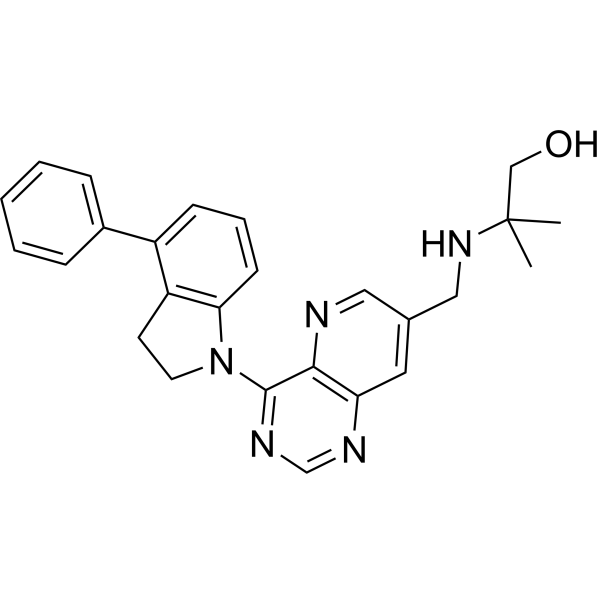
PD-1/PD-L1-IN-33 (Compound N11) is a PD-1/PD-L1 inhibitor. PD-1/PD-L1-IN-33 inhibits PD-1 and PD-L1 interaction with an IC50: 6.3 nM. PD-1/PD-L1-IN-33 promotes T-cell proliferation, activation, and infiltration into tumor spheres. PD-1/PD-L1-IN-33 has immunomodulatory and anticancer activity .
loading...
    loading...
Cat. No.: HY-P990250

Target:  

Wnt

Research Areas:  

Inflammation/Immunology

Anti-Mouse DKK3 Antibody (DKK3-4.22) is an anti-mouse DKK3 IgG1 monoclonal antibody. Anti-Mouse DKK3 Antibody (DKK3-4.22) can improve kidney function and increases T cell infiltration. Anti-Mouse DKK3 Antibody (DKK3-4.22) can reduce skin inflammation by blocking the immunosuppressive function of DKK3. Anti-Mouse DKK3 Antibody (DKK3-4.22) can be used for researches on inflammation conditions such as unilateral ureteral obstruction (UUO) and experimental autoimmune encephalomyelitis (EAE) .
loading...
    loading...
Cat. No.: HY-P99146
Anti-Mouse TCR gamma/delta Antibody (UC7-13D5) is an anti-mouse TCR gamma/delta IgG monoclonal antibody. Anti-Mouse TCR gamma/delta Antibody (UC7-13D5) can enter the blood-brain barrier. Anti-Mouse TCR gamma/delta Antibody (UC7-13D5) effectively depletes γδ T cells and reduces macrophage and neutrophil infiltration. Anti-Mouse TCR gamma/delta Antibody (UC7-13D5) can reduce the immune response of transplants. Anti-Mouse TCR gamma/delta Antibody (UC7-13D5) can be used for researches on inflammation conditions, virus infection and cancer such as arthritis, JHM virus and breast cancer .
loading...
    loading...
Cat. No.: HY-178914
CAS No.: 101264-90-8
Copper ionophore I is an efficient copper ion carrier. Copper ionophore I can regulate various intracellular copper levels to induce cuproptosis, such as 4T1 (IC50 = 0.45 μM) and MDA-MB-231(IC50 = 1.21 μM) cells. Copper ionophore I can induce an increase in ROS and cause mitochondrial dysfunction. Copper ionophore I can reduce the expression of FDX1, DLAT, and LIAS proteins. Copper ionophore I can activate immune related pathways and promote T cell infiltration. Copper ionophore I can be used for cancer research .
loading...
    loading...
Cat. No.: HY-178716
CAS No.: 3093350-55-8
Target:  

Phosphatase IFNAR STAT JAK

Research Areas:  

Cancer

PTPN2/1-IN-4 (Compound WS35) is an orally active, dual-functional inhibitor of PTPN1 and PTPN2 with IC50s of 12.8 and 5.8 nM for PTPN1 and PTPN2, respectively. PTPN2/1-IN-4 modulates the IFNγ-JAK-STAT signaling pathway and significantly augments CD8+ T-cell tumor infiltration. PTPN2/1-IN-4 has potent anticancer activity, robustly inhibiting tumor growth both as a monotherapy and in combination with an anti-PD-1 antibody in B16-OVA syngeneic mouse models .
loading...
    loading...
Cat. No.: HY-169859
CAS No.: 3035217-40-1
EP4 receptor antagonist 7 (Compound 14) is an antagonist of the prostaglandin E2 (PGE2) receptor subtype EP4 with an IC50 value of 1.1 nM. EP4 receptor antagonist 7 inhibits PGE2-induced β-arrestin recruitment in HEK293 cells with an IC50 value of 0.9 nM. EP4 receptor antagonist 7 decreases PGE2-induced expression of mRNA encoding IL-4, macrophage mannose receptor 1 (Mrc1), chitinase-like protein 3 (Chil3), chemokine (C-X-C) motif ligand 1 (Cxcl1), triggering receptor expressed on myeloid cells 2 (Trem2), and arginase-1 (Arg1), in RAW 264.7 macrophages. EP4 receptor antagonist 7 combined with an anti-PD-1 antibody inhibits tumor growth and increases infiltration of CD 8+ T cells into tumors in a CT26 murine colon cancer model .
loading...
    loading...
Cat. No.: HY-P991525
CAS No.: 2923542-55-4

Target:  

Fc Receptor (FcR)

Research Areas:  

Cancer

2141-V11 is an Fc-engineered agonistic antibody against human CD40 with selectively enhanced binding affinity for human FcγRIIB. 2141-V11 drives CD40 multimerization and agonistic signal transduction, activates dendritic cells, promotes antigen cross-presentation and CD8 + T cell priming, induces tertiary lymphoid structure formation, increases leukocyte infiltration, and mediates local and abscopal anti-tumor effects, systemic immune activation and immune memory. 2141-V11 exhibits extremely low systemic toxicity upon intratumoral or intravesical administration, with no dose-limiting toxicity observed at the tested intratumoral doses, whereas high-dose systemic administration induces thrombocytopenia and elevated transaminases. 2141-V11 can be used in research related to breast cancer, melanoma, BCG-unresponsive non-muscle invasive bladder cancer, and recurrent malignant glioma .
loading...
    loading...
Cat. No.: HY-177270
CAS No.: 2762488-97-9
Target:  

EGFR Drug Derivative

Research Areas:  

Cancer

CHNQD-01281, a derivative of Brefeldin A (HY-16592), is a EGFR modulator. CHNQD-01281 has strong antiproliferative activities against cancer cells (IC50: 0.079 and 0.081 μM for T24 and J82 cells, respectively). CHNQD-01281 regulates both EGFR/PI3K/AKT and EGFR/ERK pathways and mediates the chemotactic effect of chemokines on immune effector cells. CHNQD-01281 remarkably inhibits tumor growth in T24 xenograft mice model and prolongs the survival time in MB49 allogeneic mice model via inducing infiltration of cytotoxic T cells .
loading...
    loading...
Cat. No.: HY-16734
CAS No.: 942399-20-4
Synonyms: MT-1303
Amiselimod (MT-1303) is converted to its active metabolite Amiselimod phosphate by sphingosine kinases in vivo. Amiselimod is an orally active and high selectivity sphingosine 1-phosphate receptor-1 (S1P1) agonist, designed to reduce the bradycardia effects associated with fingolimod and other S1P receptor modulators. Amiselimod inhibits chronic colitis via inhibiting infiltration of colitogenic Th1 and Th17 cells into the colon. Amiselimod inhibits lupus nephritis by reducing the infiltration of autoreactive T cells into the kidneys. Amiselimodis promising for research of autoimmune diseases .
loading...
    loading...
Cat. No.: HY-179288
Research Areas:  

Cancer

TPST2-IN-1 is a potent and selective TPST2 inhibitor with an IC50 of 946 nM and a Ka of 19.4 μM. TPST2-IN-1 increases the phosphorylation of Stat1 and upregulates the IFNγ-responsive gene CXCL10 by inhibiting TPST2 activity.TPST2-IN-1 exhibits anti-tumor activity and enhances T cell-mediated antitumor immunity characterized by increased infiltration of effector CD8 + T cells. TPST2-IN-1 can be used for the research of cancer, such as colon cancer .
loading...
    loading...
Cat. No.: HY-P10371
CAS No.: 1505523-99-8
Synonyms: txCD47
PKHB1 (txCD47) is a CD47 agonist and Thrombospondin-1 peptide mimetic. PKHB1 activates CD47 and triggers Caspase-independent, calcium-dependent cell death via mitochondrial alterations, ROS production, endoplasmic reticulum morphological changes, and dissipation of mitochondrial membrane potential. PKHB1 induces the exposure of Calreticulin, HSP70, and HSP90, thereby driving immunogenic cell death. PKHB1 promotes intratumoral CD8 + T cell infiltration and inhibits breast tumorigenesis. PKHB1 reduces HSV-1 levels and alleviates the severity of herpes simplex keratitis. PKHB1 can be used in research related to breast cancer, herpes simplex keratitis, and T-cell acute lymphoblastic leukemia .
loading...
    loading...
Cat. No.: HY-P10947
Research Areas:  

Cancer

MACTIDE-V is an orally active and selective peptide-drug conjugate targeting CD206. MACTIDE-V delivers Verteporfin (HY-B0146) to CD206 + tumor-associated macrophages (TAM) to inhibit the YAP/TAZ signaling pathway, prompting YAP exclusion from the nucleus, inducing TAM polarization toward an anti-tumoral phenotype with enhanced phagocytosis and antigen presentation, and boosting T cell infiltration and NK cell activity. MACTIDE-V suppresses primary tumor growth and lung metastasis in triple-negative breast cancer (TNBC) mouse models .
loading...
    loading...
Cat. No.: HY-W795993
CAS No.: 10245-44-0
Research Areas:  

Inflammation/Immunology

TJU103 is a CD4 inhibitor. TJU103 inhibits autoreactive CD4 + T cells by disrupting the function of the CD4 during activation. TJU103 decreases mononuclear cell infiltration in brain and spinal cord tissue of experimental allergic encephalomyelitis (EAE) mice model. TJU103 downregulates Th1 and Th2 cytokine levels in response to proteolipid protein epitope 139-151 (PLPe) and exhibits inhibitory effects both after the appearance of EAE symptoms and upon rechallenge with Ag. TJU103 can be used for autoimmune diseases like EAE and sclerosis (MS) research .
loading...
    loading...
Cat. No.: HY-P9S0062
Rosnilimab (Mouse IgG2a) is a mouse-derived IgG2a antibody, Rosnilimab. Rosnilimab is a PD-1 agonistic monoclonal antibody. Rosnilimab (Mouse IgG2a) optimizes the inhibitory PD-1 signaling pathway without blocking PD-L1 binding; it also activates moderately activated PD-1 + T cells and eliminates PD-1 high cells, Tfh/Tph cells and Teff cells. Rosnilimab (Mouse IgG2a) reduces the secretion and gene expression of IFN-γ, CXCL13, IL-6 and TNF, decreases macrophage infiltration, and downregulates the gene expression of inflammatory myeloid cells. Rosnilimab (Mouse IgG2a) can be used in studies related to ulcerative colitis .
loading...
    loading...
Cat. No.: HY-P990149

Target:  

Tyrosinase

Research Areas:  

Cancer

Anti-Mouse/Human TYRP1 Antibody (TA99) is a mouse-derived IgG2a κ type antibody inhibitor, targeting to mouse/human TYRP1. Anti-Mouse/Human TYRP1 Antibody (TA99) binds to Tyrp1 (tyrosinase related protein-1) on tumor. Anti-Mouse/Human TYRP1 Antibody (TA99) enhances infiltration of the tumor by CD8 + T cells. Anti-Mouse/Human TYRP1 Antibody (TA99) can be used for the research of melanoma .
loading...
    loading...
Cat. No.: HY-179248
CAS No.: 2570904-69-5
Research Areas:  

Cancer

Adenosine receptor antagonist 7 is an orally active triple A1/A2A/A2B adenosine receptor antagonist with Ki values of 1.5, 0.6 and 21 nM. Adenosine receptor antagonist 7 shows potent inhibitory activity (IC50 = 0.8 nM) of cAMP production in A2AR-HEK293 cells. Adenosine receptor antagonist 7 can enhance infiltration of effector T cells and increase the CD8+/Treg ratio companied with Avelumab (HY-108730). Adenosine receptor antagonist 7can be used for the research of cancer, such as colon cancer .
loading...
    loading...
Cat. No.: HY-177414
BB-1701 is an anti-HER2 antibody-drug conjugate (ADC). BB-1701 consists of a humanized anti-HER2 antibody (Trastuzumab) (HY-P9907), a linker (Mal-PEG2-VCP), and a microtubule inhibitor (Eribulin) (HY-13442), with the drug-linker conjugate of the ADC being Mal-PEG2-VCP-Eribulin (HY-128870). BB-1701 exhibits potent cytotoxicity against various cancer cells, shows a remarkable bystander effect, and induces immunogenic cell death (upregulated cell surface expression of calreticulin, release of ATP/HMGB1, macrophage infiltration) and apoptosis. BB-1701 potently inhibits tumor growth in T-DM1/T-DXd-resistant tumor models. BB-1701 can be used in studies related to breast cancer, gastric cancer, non-small cell lung cancer, and heterogeneous mixed tumors .
loading...
    loading...
Cat. No.: HY-P990868

Target:  

CD2

Research Areas:  

Inflammation/Immunology Cancer

Anti-CD2 Antibody (CB.219) is an anti-human CD2 IgG2b monoclonal antibody. Anti-CD2 Antibody (CB.219) can reduce the infiltration of T cells, macrophages, and the number of Tregs in the colon. Anti-CD2 Antibody (CB.219) can be used for research on infection and inflammation such as toxoplasma infection and colitis. The recommend isotype control of Anti-CD2 Antibody (CB.219): Mouse IgG2b kappa, Isotype Control (HY-P99982) .
loading...
    loading...
Cat. No.: HY-178032
PARP1-IN-44, an Olaparib (HY-10162) derivative, is an orally active PARP1 inhibitor (IC50 = 0.6 nM), and also inhibits PARP2 (IC50 = 1.0 nM) and PARP7 (IC50 = 7.5 nM). PARP1-IN-44 has selective antiproliferative activity against BRCA-deficient cancer cells with minimal toxicity to normal cells. PARP1-IN-44 induces G2/M phase arrest, promotes apoptosis, elevates ROS levels, disrupts mitochondrial membrane potential. PARP1-IN-44 suppresses PARylation while increasing γH2AX accumulation. PARP1-IN-44 activates the cGAS-STING pathway, upregulating IFN-β and CXCL10 expression. PARP1-IN-44 enhancing CD8+ T cell infiltration in a CT26 tumor mouse model, demonstrating robust in vivo antitumor efficacy .
loading...
    loading...
Cat. No.: HY-162415
CAS No.: 2760585-35-9
Target:  

c-Fms Apoptosis

Research Areas:  

Cancer

CSF1R-IN-22 (Compound C19) is an orally effective CSF-1R selective inhibitor (IC50<6 nM). CSF1R-IN-22 enhances the secretion of CXCL9 from M2 macrophages, increases CD8 + T cell infiltration. CSF1R-IN-22 boosts anti-tumor immune responses of anti-PD-1, and induces apoptosis in tumor cells. CSF1R-IN-22 can effectively reprogram M2-like TAMs (tumor-associated macrophages) to the M1 phenotype and reshape the TME by inducing the recruitment of CD8 + T cells into tumors and reducing the infiltration of immunosuppressive Tregs and MDSCs .
loading...
    loading...

