90 Results for "

T Cell Infiltration

" in MedChemExpress (MCE) Product Catalog:
Products (90)

90 Results for "T Cell Infiltration" in MCE Product Catalog:

Cat. No.: HY-162264
CAS No.: 3032401-72-9
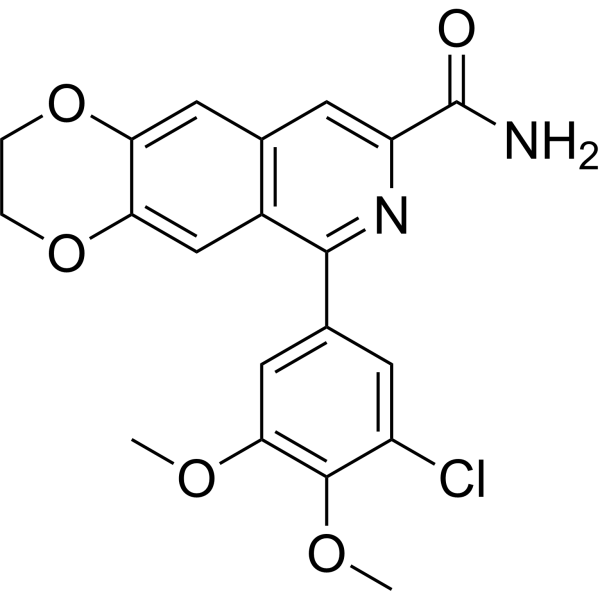
Tubulin polymerization/V-ATPase-IN-1 (compound F10) is a Tubulin polymerization/V-ATPase inhibitor. Tubulin polymerization/V-ATPase-IN-1 shows robust antiproliferation activity against four human cancer cell lines, and exerts antiproliferative activity by inhibiting tubulin and V-ATPase. Tubulin polymerization/V-ATPase-IN-1 induces immunogenic cell death in addition to apoptosis, and inhibits tumor growth in an RM-1 homograft model with enhanced T lymphocyte infiltration .
loading...
    loading...
Cat. No.: HY-175472
Target:  

Phosphatase Apoptosis

Research Areas:  

Cancer

(GalNAc)3-CPT is a glycoconjugate prodrug that targets the asialoglyco-protein receptor (ASGR) overexpressed on hepatocytes. (GalNAc)3-CPT exhibits significant antitumor activity (IC50 value of 3.07 μM in HepG2 cells) by activating the cGAS-STING pathway and promoting CD8+ T cell infiltration into tumors, thereby inducing tumor cell apoptosis .
loading...
    loading...
Cat. No.: HY-163958
CAS No.: 3024733-03-4
Target:  

PD-1/PD-L1

Research Areas:  

Cancer

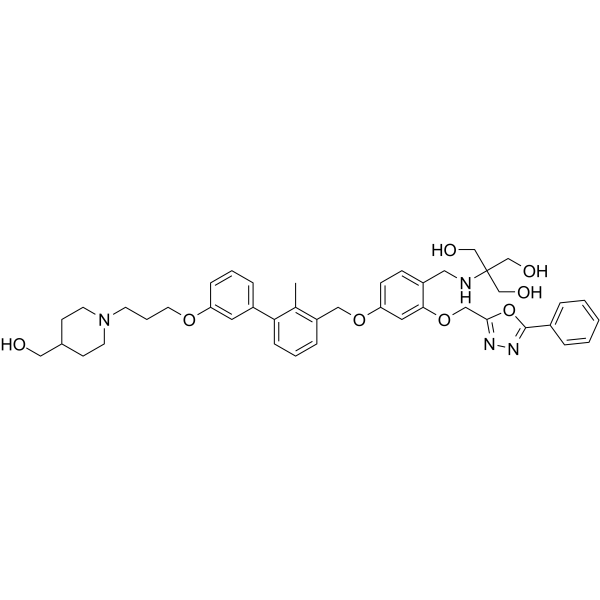
PD-L1-IN-7 (compound CB31) is an inhibitor of PD-L1, which can induce PD-L1 internalization and PD-L1 retention in cells. PD-L1-IN-7 can inhibit the interaction of PD-1/PD-L1 (IC50: 0.2 nM), change the glycosylation pattern, and promote PD-L1 degradation. PD-L1-IN-7 can also enhance T cell infiltration, amplify T cell function and the ability to kill tumor cells .
loading...
    loading...
Cat. No.: HY-P990160
Anti-Rat TCR alpha/beta Antibody (R73) is an anti-mouse TCR alpha/beta IgG1 monoclonal antibody. Anti-Rat TCR alpha/beta Antibody (R73) suppresses immune response by depleting α/β + T cells. Anti-Rat TCR alpha/beta Antibody (R73) can inhibit the expression of pro-inflammatory cytokines. Anti-Rat TCR alpha/beta Antibody (R73) can extend graft survival time by reducing infiltration of T cells and neutrophils. Anti-Rat TCR alpha/beta Antibody (R73) can be used for researches on inflammation, metabolic conditions and xenotransplantation such as arthritis, acute inflammatory peripheral neuropathy and diabetes .
loading...
    loading...
Cat. No.: HY-144746
CAS No.: 2966090-78-6
Target:  

PD-1/PD-L1

Research Areas:  

Cancer

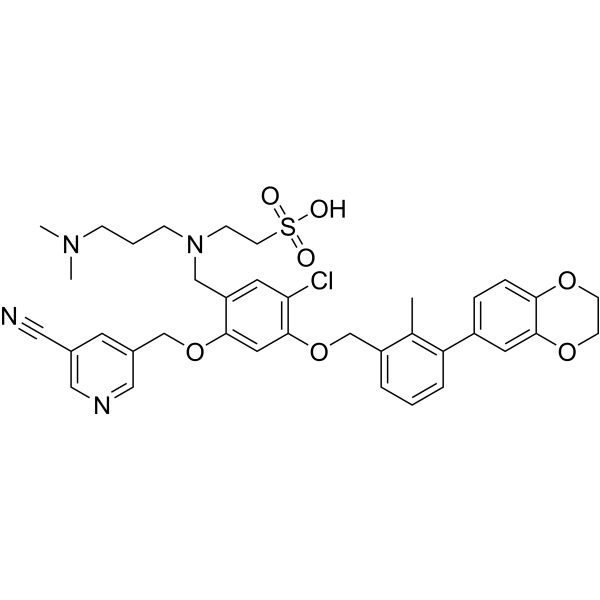
PD-1/PD-L1-IN-26 (Compound II-14) is a potent inhibitor of PD-1/PD-L1 with an IC50 of 0.0380 μM. PD-1/PD-L1-IN-26 activates the immune microenvironment by promoting the infiltration of CD4+ T cells into tumor tissues. PD-1/PD-L1-IN-26 has the potential for the research of cancer diseases .
loading...
    loading...
Cat. No.: HY-157569
CAS No.: 2566710-63-0
Target:  

PD-1/PD-L1

Research Areas:  

Cancer

PD1-PDL1-IN 2 (ZE132) is a potent and selective PD-1/PD-L1 inhibitor, which has robust anti-tumour activity in vivo. PD1-PDL1-IN 2 promotes cytotoxic T-cell tumour infiltration and induces IL-2 expression. In addition, PD1-PDL1-IN 2 elicits strong inhibitory effects on the mRNA expression of TGF-β .
loading...
    loading...
Cat. No.: HY-161778
CAS No.: 3049802-32-3
Target:  

HDAC VD/VDR

Research Areas:  

Inflammation/Immunology Cancer

ZG-126 is an agonist for vitamin D receptor (VDR) and an inhibitor for histone deacetylase (HDAC) (IC50=0.63-67.6 μM). ZG-126 exhibits cytotoxicity in cancer cells MDA-MB-231 and 4T1. ZG-126 exhibits antitumor and anti-metastatic efficacy against melanoma and triple-negative breast cancer (TNBC) in mouse models. ZG-126 also exhibits anti-inflammatory activity, through the reduction of macrophage infiltration and immunosuppressive M2-polarization .
loading...
    loading...
Cat. No.: HY-172167
CAS No.: 2923313-69-1
Target:  

PD-1/PD-L1 HDAC

Research Areas:  

Inflammation/Immunology Cancer

PD-L1/HDAC-IN-1 (Compound 14) is the inhibitor for PD-L1 and HDAC that inhibits PD-1/PD-L1 interaction, HDAC2 and HDAC3 with IC50 of 88.10, 27.98 and 14.47 nM, respectively. PD-L1/HDAC-IN-1 exhibits slight cytotoxicity in MCF-7 (IC50=19.34 μM). PD-L1/HDAC-IN-1 upregulates the expression of PD-L1 and CXCL10, promoting anti-tumour immune response by recruiting T-cell infiltration into TME .
loading...
    loading...
Cat. No.: HY-W015445R
CAS No.: 1670-87-7
Research Areas:  

Metabolic Disease

SD-169 is an orally active ATP-competitive inhibitor of p38α MAPK, with an IC50 of 3.2 nM. SD-169 also weakly inhibits p38β MAPK with an IC50 of 122 nM. SD-169 prevents the development and progression of diabetes by inhibiting T cell infiltration and activation .
loading...
    loading...
Cat. No.: HY-185701
CAS No.: 951968-89-1
Target:  

CD73

Research Areas:  

Cancer

W-GTF01 is a MGAT1 inhibitor. W-GTF01 blocks the MGAT1-catalyzed glycosylation of CD73, and inhibits CD73 dimerization, membrane translocation and adenosine production. W-GTF01 restores the function of IFNγ-producing CD8 + T cells, enhances tumor infiltration and activation of CD8 + T cells, and suppresses tumor growth. W-GTF01 can be used in research related to triple-negative breast cancer .
loading...
    loading...
Cat. No.: HY-P12140
CAS No.: 245092-22-2
Target:  

Myosin

Research Areas:  

Cardiovascular Disease

MyHC-α 614-629 is a specific polypeptide fragment of cardiac α-myosin heavy chain. MyHC-α 614-629 acts as an autoantigen to induce CD4 + T cell-mediated autoimmune responses in the immune system, thereby causing inflammatory infiltration and damage to myocardial tissue. MyHC-α 614-629 is applicable to the research of experimental autoimmune myocarditis .
loading...
    loading...
Cat. No.: HY-187370
Target:  

HDAC PAK PD-1/PD-L1

Research Areas:  

Cancer

YDH-704 is a PAK1/HDAC10 inhibitor, with IC50 values of 0.05 μM and 0.02 μM against human targets, respectively. YDH-704 blocks PAK1-mediated oncogenic signaling pathways, inhibits the proliferation and migration of tumor cells, suppresses the epigenetic regulatory function of HDAC10, downregulates PD-L1 expression, and regulates polyamine metabolism. YDH-704 reduces MDSC/Treg infiltration, enhances the infiltration and activation of CD8 + T cells, and inhibits tumor growth and lung metastasis. YDH-704 can be used for research on triple-negative breast cancer .
loading...
    loading...
Cat. No.: HY-182802
CAS No.: 3097756-33-4
Ferroptosis inducer-15 is a ferroptosis inducer. Ferroptosis inducer-15 downregulates GPX4 expression, triggers lipid peroxidation via ROS accumulation, and disrupts mitochondrial membrane potential to drive ferroptosis. Ferroptosis inducer-15 increases splenic CD4 + T cell proportion, promotes CD8 + cytotoxic T cell tumor infiltration, and activates antitumor immune responses. Ferroptosis inducer-15 exerts antiproliferative activity against colorectal cancer cells and inhibits tumor growth in xenograft mice models without significant body weight loss. Ferroptosis inducer-15 can be used for the research of cancer, such as colorectal cancer .
loading...
    loading...
Cat. No.: HY-P991911

Research Areas:  

Cancer

PLT012 is a humanized IgG4 antibody targeting CD36. PLT012 inhibits the lipid-binding domain of CD36. PLT012 blocks CD36-mediated metabolic adaptation in regulatory T cells (Tregs) and CD8 + tumor-infiltrating lymphocytes (TILs), thereby inhibiting tumor growth and shifting the tumor microenvironment from immunosuppressive to immunosupportive. PLT012 reduces intratumoral Tregs, enhances CD8 + T cell infiltration and cytotoxic function, and increases the abundance of progenitor-exhausted T cells. PLT012 exerts robust antitumor activity and synergizes with anti-PD-L1 or standard-of-care regimens (anti-VEGF + anti-PD-L1). PLT012 can be used for hepatocellular carcinoma, colorectal cancer and solid tumor research .
loading...
    loading...
Cat. No.: HY-150298R
CAS No.: 2226636-04-8
Synonyms: CPI-818 (Standard)
Soquelitinib (Standard) is the analytical standard of Soquelitinib (HY-150298). This product is intended for research and analytical applications. Soquelitinib (CPI-818) is an orally active and highly selective covalent interleuKin-2-inducible Kinase (ITK) inhibitor. Soquelitinib is active in six different models of T cell-mediated inflammatory and immune disease, including acute and chronic asthma, pulmonary fibrosis, systemic sclerosis (scleroderma), psoriasis, and acute graft versus host disease with Th2 cytoKine product inhibition. Soquelitinib increases tumor infiltration of normal CD8 + cells that possess enhanced T effector function .
loading...
    loading...
Cat. No.: HY-183570
CAS No.: 2813319-14-9
Research Areas:  

Cancer

Antitumor photosensitizer-11 is a type-I carbazole/benzindolium photosensitizer with antitumor activity. Antitumor photosensitizer-11 induces ROS generation via a type-I pathway, forming superoxide anions and hydroxyl radicals. Antitumor photosensitizer-11 triggers immunogenic cell death in cancer cells via enhanced oxidative stress. Antitumor photosensitizer-11 exhibits antiproliferative activity in normoxic and hypoxic environments, inhibits breast cancer tumor growth in vivo, and promotes dendritic cell maturation and T cell infiltration. Antitumor photosensitizer-11 can be used for the research of cancer, such as breast cancer .
loading...
    loading...
Cat. No.: HY-P992511

Target:  

PD-1/PD-L1 CTLA-4 VEGFR

Research Areas:  

Cancer

CS2009 is a trispecific antibody targeting PD-1, CTLA-4 and VEGFA. CS2009 blocks the interactions of PD-1/PD-L1, CTLA-4/CD80 and VEGFA/VEGFR2, mediates checkpoint inhibition, and suppresses tumor angiogenesis. CS2009 reactivates PD-1/CTLA-4 double-positive tumor-infiltrating T lymphocytes, induces T cell activation, enhances tumor growth inhibition, promotes vascular normalization, improves T lymphocyte infiltration, and converts the immunosuppressive tumor microenvironment into an immunocompetent one. CS2009 can be used for the research of various advanced solid tumors .
loading...
    loading...
Cat. No.: HY-184396
GR2-128 is a dual inhibitor targeting MLK3 and NAMPT with IC50 values of 84 nM and 14 nM, respectively. GR2-128 inhibits downstream JNK/c‑Jun signaling and reduces NAD + levels. GR2-128 exhibits antiproliferative and pro-apoptotic activities in triple-negative breast cancer cells without significant toxicity to normal cells. GR2-128 suppresses tumor growth, reduces macrophage and neutrophil infiltration, and increases tumor T-cell markers in a syngeneic mouse model, and can be used for triple-negative breast cancer research .
loading...
    loading...
Cat. No.: HY-181848
Target:  

DNA-PK Apoptosis

Research Areas:  

Cancer

DNA-PK-IN-16 is an orally active DNA-dependent protein kinase (DNA-PK) inhibitor with an IC50 of 10.2 nM. DNA-PK-IN-16 induces the upregulation of γH2A.X, a biomarker of DNA double-strand breaks. DNA-PK-IN-16 exhibits antiproliferative activity in various cancer cell lines. DNA-PK-IN-16 enhances the infiltration of CD8 + T cells in tumor tissues through synergistic action with anti-PD-L1 monoclonal antibody. DNA-PK-IN-16 is applicable for cancer research .
loading...
    loading...
Cat. No.: HY-P11928
CAS No.: 3121532-43-9
Target:  

CCR ERK

Research Areas:  

Cancer

TC6-D3 is a proteolysis-resistant peptide and also a CC chemokine receptor 7 (CCR7) inhibitor, with a Kd value of 403 nM against mouse targets. TC6-D3 blocks the interaction between CCR7 and its ligands CCL19 and CCL21, and inhibits the activation of the ERK1/2 pathway. TC6-D3 reduces the migratory capacity of tumor cells in vitro. TC6-D3 inhibits tumor growth and lymph node metastasis in vivo. TC6-D3 restores T cell cytotoxicity, promotes CD8+ T cell infiltration, and enhances anti-tumor immune responses. TC6-D3 can be used in studies related to lymph node metastasis .
loading...
    loading...

