101 Results for "

alterations

" in MedChemExpress (MCE) Product Catalog:
Products (101)

101 Results for "alterations" in MCE Product Catalog:

Cat. No.: HY-P10371
CAS No.: 1505523-99-8
Synonyms: txCD47
PKHB1 (txCD47) is a CD47 agonist and Thrombospondin-1 peptide mimetic. PKHB1 activates CD47 and triggers Caspase-independent, calcium-dependent cell death via mitochondrial alterations, ROS production, endoplasmic reticulum morphological changes, and dissipation of mitochondrial membrane potential. PKHB1 induces the exposure of Calreticulin, HSP70, and HSP90, thereby driving immunogenic cell death. PKHB1 promotes intratumoral CD8 + T cell infiltration and inhibits breast tumorigenesis. PKHB1 reduces HSV-1 levels and alleviates the severity of herpes simplex keratitis. PKHB1 can be used in research related to breast cancer, herpes simplex keratitis, and T-cell acute lymphoblastic leukemia .
loading...
    loading...
Cat. No.: HY-W020788R
CAS No.: 98730-04-2
Synonyms: CGA 154281 (Standard)
Benoxacor (Standard) is the analytical standard of Benoxacor. This product is intended for research and analytical applications. Benoxacor (CGA 154281) is a herbicide safener and xenobiotic metabolism regulator. Benoxacor protects maize from the toxicity of metolachlor mainly by inducing detoxifying enzymes such as Glutathione S-transferase. Benoxacor also activates FXR, PXR and ERRα, and inhibits aromatase (aromatase). However, Benoxacor exhibits potential subacute oral toxicity and a high risk of hepatotoxicity in animal models. Benoxacor induces reactive oxygen species accumulation, interferes with embryonic heart development, and causes increased liver and kidney weights as well as alterations in gut microbiota in mice. Benoxacor can be used in studies related to hepatic steatosis, infertility, breast cancer and developmental toxicity .
loading...
    loading...
Cat. No.: HY-145528
CAS No.: 162041-08-9
Target:  

Endogenous Metabolite

Research Areas:  

Metabolic Disease

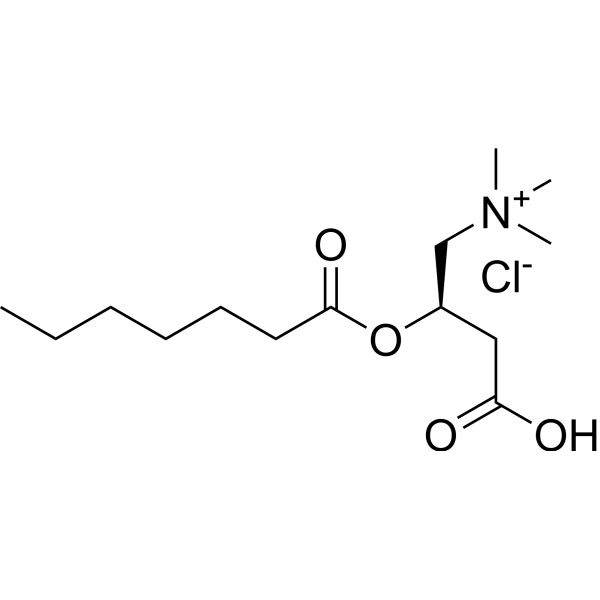
Heptanoyl-L-carnitine chloride (trans-3,4-methylene-heptanoylcarnitine) is an acylcarnitine. Heptanoyl-L-carnitine chloride causes exercise-induced alterations in the human metabolome in plasma and skeletal muscle tissue .
loading...
    loading...
Cat. No.: HY-W067572
CAS No.: 85202-17-1
Synonyms: (-)-Stobadine
Research Areas:  

Cardiovascular Disease

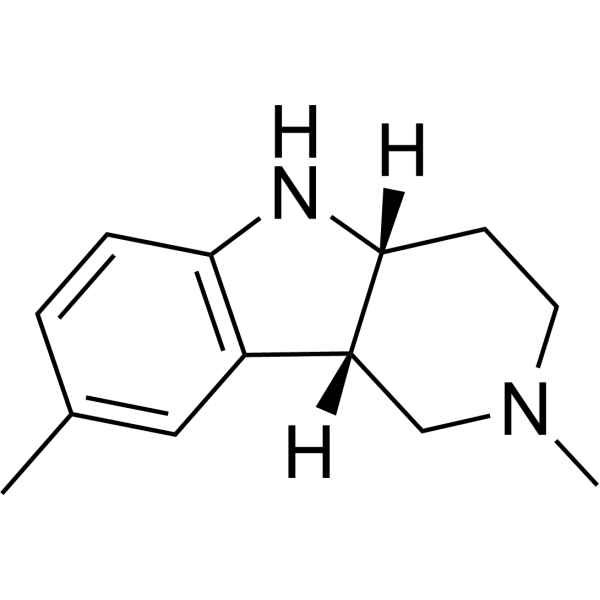
Stobadine is a potent antioxidant and prevents free radical induced alterations in ER membrane fluidity. Stobadine can be used for effective cardio- and neuroprotectants development based on antioxidant or free radical scavenging mechanisms of action .
loading...
    loading...
Cat. No.: HY-153057
CAS No.: 380192-76-7
Research Areas:  

Metabolic Disease Cancer

PRMT5-IN-46 (compound 278) inhibits PRMT5 with IC50s of 1-10 μM. PRMT5 is a methyltransferase which is associated with specific genetic alterations. PRMT5-IN-46 can be used for research of proliferative diseases, metabolic disorders, and blood diseases .
loading...
    loading...
Cat. No.: HY-N6036R
CAS No.: 98665-15-7
Ganoderic acid F (Standard) is the analytical standard of Ganoderic acid F. This product is intended for research and analytical applications. Ganoderic acid F is a ganoderic acid. Ganoderic acid F exhibits antitumor and antimetastatic activities through inhibition of angiogenesis and alteration of proteins involving cell proliferation and/or cell death, carcinogenesis, oxidative stress, calcium signaling, and endoplasmic reticulum stress .
loading...
    loading...
Cat. No.: HY-P10247
CAS No.: 201293-38-1
Research Areas:  

Neurological Disease

Amyloid precursor C-terminal peptide is cleaved from the C-terminus of Amyloid Precursor Protein (APP). Amyloid precursor C-terminal peptide accumulation causes mitochondrial morphology alteration and basal mitophagy failure, which indicates that amyloid precursor protein C-terminal peptide may correspond to an etiological trigger of Alzheimer’s disease (AD) pathology .
loading...
    loading...
Cat. No.: HY-P11205
CAS No.: 2378833-51-1
Synonyms: Cys-txCD47
Cys-PKHB1 (Cys-txCD47) is a peptide conjugated to PKHB1, a CD47 agonist peptide and a thrombospondin-1 peptide mimic with antitumor effects. PKHB1 induces mitochondrial alterations, ROS generation, intracellular Ca + accumulation, and calcium-dependent cell death in breast cancer cells. PKHB1 induces immune system activation in breast cancer cells through immunogenic cell death .
loading...
    loading...
Cat. No.: HY-E70776
Target:  

RET

Research Areas:  

Cancer

Rearranged during transfection (RET) is a transmembrane receptor protein tyrosine kinase (PTK) activated normally by forming ternary complexes with its cognate ligands and co-receptors. RET alterations by point mutations and gene fusions were found in diverse cancers. RET S891A is a mutant of RET. RET S891A Recombinant Human Active Protein Kinase is a recombinant RET S891A protein that can be used to study RET S891A-related functions .
loading...
    loading...
Cat. No.: HY-E70778
Target:  

RET

Research Areas:  

Cancer

Rearranged during transfection (RET) is a transmembrane receptor protein tyrosine kinase (PTK) activated normally by forming ternary complexes with its cognate ligands and co-receptors. RET alterations by point mutations and gene fusions were found in diverse cancers. RET V804L is a mutant of RET. RET V804L Recombinant Human Active Protein Kinase is a recombinant RET V804L protein that can be used to study RET V804L-related functions .
loading...
    loading...
Cat. No.: HY-117660S
Purity:  99.90%
Synonyms: U-10149-d3
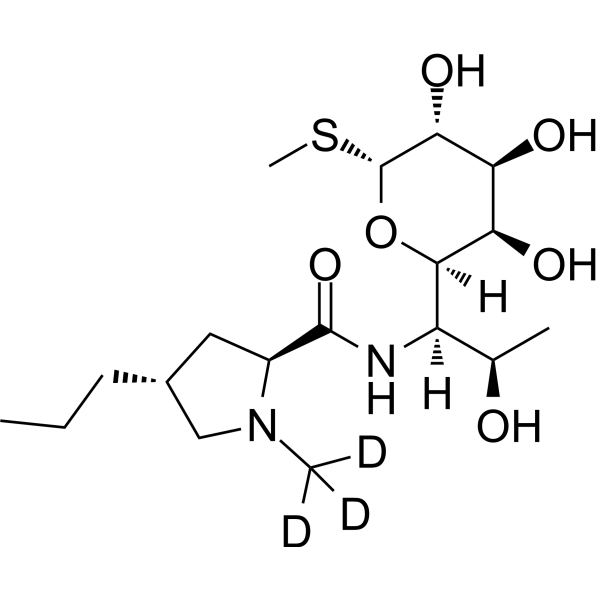
Lincomycin-d3 (U-10149-d3) is the deuterium labeled Lincomycin. Lincomycin is an orally active lincosamide antibiotic. Lincomycin binds to the ribosomes of Gram-positive bacteria to inhibit protein synthesis. Lincomycin can inhibit chloroplast translation, disrupt chloroplast integrity, and activate chloroplast-to-nucleus retrograde signaling in Arabidopsis thaliana seedlings. Lincomycin induces alterations in lipid profiles and liver injury, disrupts blood glucose and insulin levels, and increases growth rate in mice.
loading...
    loading...
Cat. No.: HY-117660R
CAS No.: 154-21-2
Synonyms: U-10149 (Standard)
Lincomycin (U-10149) (Standard) is the analytical reference standard of Lincomycin (HY-117660). This product is used for research and analytical applications. Lincomycin is an orally active lincosamide antibiotic. Lincomycin binds to the ribosomes of Gram-positive bacteria to inhibit protein synthesis. Lincomycin can inhibit chloroplast translation, disrupt chloroplast integrity, and activate chloroplast-to-nucleus retrograde signaling in Arabidopsis thaliana seedlings. Lincomycin induces alterations in lipid profiles and liver injury, disrupts blood glucose and insulin levels, and increases growth rate in mice.
loading...
    loading...
Cat. No.: HY-B1358R
CAS No.: 7179-49-9
Synonyms: U-10149 hydrochloride monohydrate (Standard)
Lincomycin (U-10149) hydrochloride monohydrate (Standard) is the analytical standard of Lincomycin hydrochloride monohydrate (HY-B1358). This product is intended for research and analytical applications. Lincomycin hydrochloride monohydrate is an orally active lincosamide antibiotic. Lincomycin hydrochloride monohydrate binds to the ribosomes of Gram-positive bacteria to inhibit protein synthesis. Lincomycin hydrochloride monohydrate can inhibit chloroplast translation, disrupt chloroplast integrity, and activate chloroplast-to-nucleus retrograde signaling in Arabidopsis thaliana seedlings. Lincomycin hydrochloride monohydrate induces alterations in lipid profiles and liver injury, disrupts blood glucose and insulin levels, and increases growth rate in mice.
loading...
    loading...
Cat. No.: HY-E70766
Target:  

RET

Research Areas:  

Cancer

Rearranged during transfection (RET) is a transmembrane receptor protein tyrosine kinase (PTK) activated normally by forming ternary complexes with its cognate ligands and co-receptors. RET alterations by point mutations and gene fusions were found in diverse cancers. RET E762Q is a mutant of RET. RET E762Q Recombinant Human Active Protein Kinase is a recombinant RET E762Q protein that can be used to study RET E762Q-related functions .
loading...
    loading...
Cat. No.: HY-E70767
Target:  

RET

Research Areas:  

Cancer

Rearranged during transfection (RET) is a transmembrane receptor protein tyrosine kinase (PTK) activated normally by forming ternary complexes with its cognate ligands and co-receptors. RET alterations by point mutations and gene fusions were found in diverse cancers. RET G691S is a mutant of RET. RET G691S Recombinant Human Active Protein Kinase is a recombinant RET G691S protein that can be used to study RET G691S-related functions .
loading...
    loading...
Cat. No.: HY-E70768
Target:  

RET

Research Areas:  

Cancer

Rearranged during transfection (RET) is a transmembrane receptor protein tyrosine kinase (PTK) activated normally by forming ternary complexes with its cognate ligands and co-receptors. RET alterations by point mutations and gene fusions were found in diverse cancers. RET G810C is a mutant of RET. RET G810C Recombinant Human Active Protein Kinase is a recombinant RET G810C protein that can be used to study RET G810C-related functions .
loading...
    loading...
Cat. No.: HY-E70769
Target:  

RET

Research Areas:  

Cancer

Rearranged during transfection (RET) is a transmembrane receptor protein tyrosine kinase (PTK) activated normally by forming ternary complexes with its cognate ligands and co-receptors. RET alterations by point mutations and gene fusions were found in diverse cancers. RET G810R is a mutant of RET. RET G810R Recombinant Human Active Protein Kinase is a recombinant RET G810R protein that can be used to study RET G810R-related functions .
loading...
    loading...
Cat. No.: HY-E70770
Target:  

RET

Research Areas:  

Cancer

Rearranged during transfection (RET) is a transmembrane receptor protein tyrosine kinase (PTK) activated normally by forming ternary complexes with its cognate ligands and co-receptors. RET alterations by point mutations and gene fusions were found in diverse cancers. RET G810S is a mutant of RET. RET G810S Recombinant Human Active Protein Kinase is a recombinant RET G810S protein that can be used to study RET G810S-related functions .
loading...
    loading...
Cat. No.: HY-E70771
Target:  

RET

Research Areas:  

Cancer

Rearranged during transfection (RET) is a transmembrane receptor protein tyrosine kinase (PTK) activated normally by forming ternary complexes with its cognate ligands and co-receptors. RET alterations by point mutations and gene fusions were found in diverse cancers. RET L730I is a mutant of RET. RET L730I Recombinant Human Active Protein Kinase is a recombinant RET L730I protein that can be used to study RET L730I-related functions .
loading...
    loading...
Cat. No.: HY-E70772
Target:  

RET

Research Areas:  

Cancer

Rearranged during transfection (RET) is a transmembrane receptor protein tyrosine kinase (PTK) activated normally by forming ternary complexes with its cognate ligands and co-receptors. RET alterations by point mutations and gene fusions were found in diverse cancers. RET L730M is a mutant of RET. RET L730M Recombinant Human Active Protein Kinase is a recombinant RET L730M protein that can be used to study RET L730M-related functions .
loading...
    loading...

