

1347 Results for "

high selectivity

" in MedChemExpress (MCE) Product Catalog:
Products (1347)

1347 Results for "high selectivity" in MCE Product Catalog:

12
12 Cited Publications
Cat. No.: HY-15764
CAS No.: 364042-47-7
Purity:  99.75%
Synonyms: RK-20449
Target:  

Src Apoptosis

Research Areas:  

Cancer

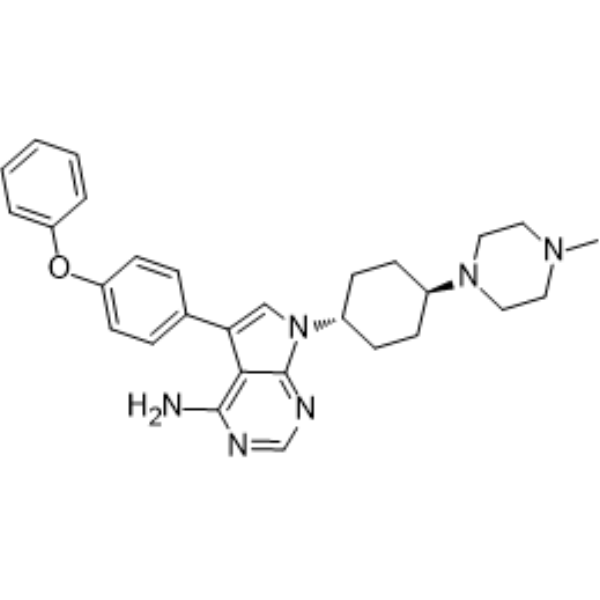
A 419259 is a broad-spectrum pyrrolo-pyrimidine inhibitor, has high selectivity towards the Src family. A 419259 shows inhibitory effect for Src, Lck and Lyn with IC50 of 9 nM, <3 nM and <3 nM, respectively .
loading...
    loading...
12
12 Cited Publications
Cat. No.: HY-120142
CAS No.: 2012591-09-0
Purity:  99.09%
Target:  

Apoptosis

Research Areas:  

Cancer

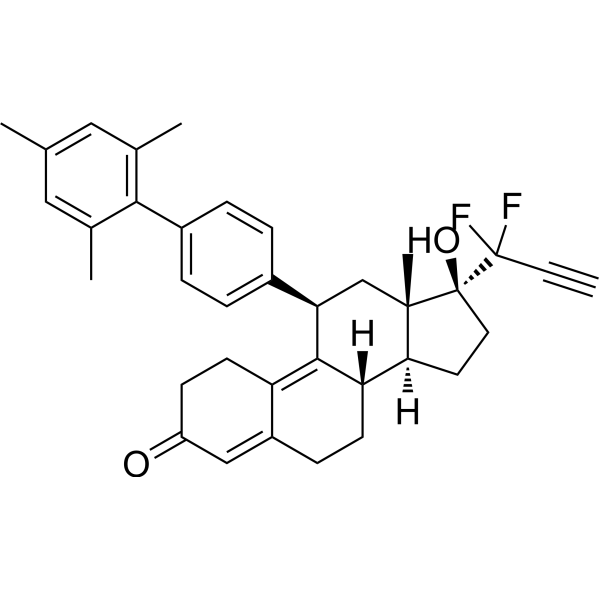
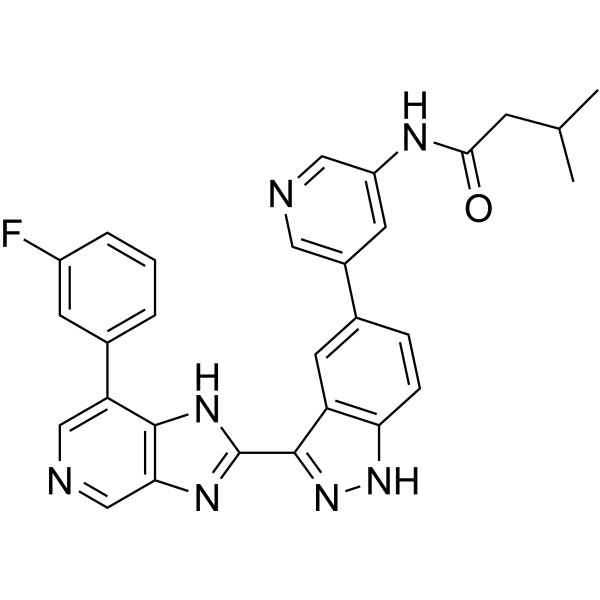
EC359 is a potent, selective, high affinity and orally active leukemia inhibitory factor receptor (LIFR) inhibitor with a Kd of 10.2 nM, which directly interacts with LIFR to effectively block LIF/LIFR interactions . EC359 is a click chemistry reagent, it contains an Alkyne group and can undergo copper-catalyzed azide-alkyne cycloaddition (CuAAc) with molecules containing Azide groups.
loading...
    loading...
11
11 Cited Publications
Cat. No.: HY-145817A
CAS No.: 2719793-90-3
Purity:  99.97%
Synonyms: RP-6306
Target:  

Wee1

Research Areas:  

Cancer

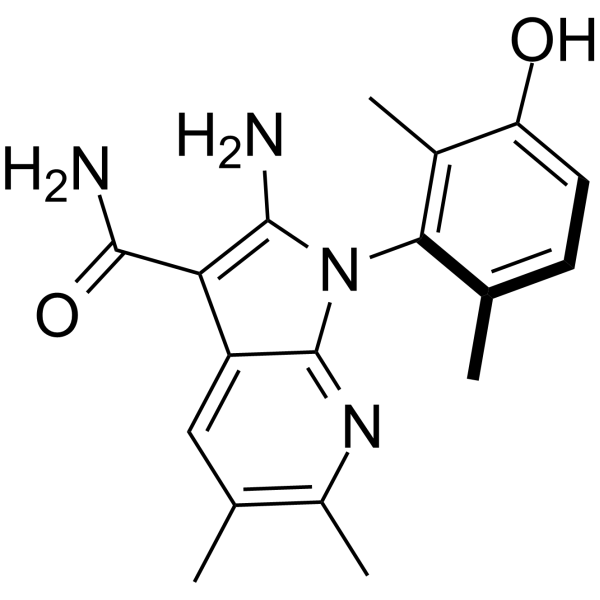
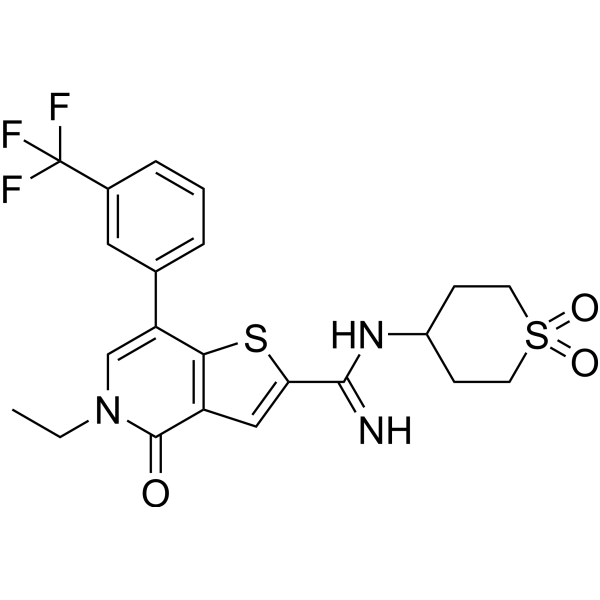
lunresertib (RP-6306) is a potent, selective and orally active PKMYT1 inhibitor with an IC50 of 14 nM. lunresertib shows a high degree of selectivity over other kinases in cellular binding assays. lunresertib shows anticancer effects .
loading...
    loading...
11
11 Cited Publications
Cat. No.: HY-16168
CAS No.: 934016-19-0
Synonyms: FE 200486
Target:  

GnRH Receptor

Research Areas:  

Cancer

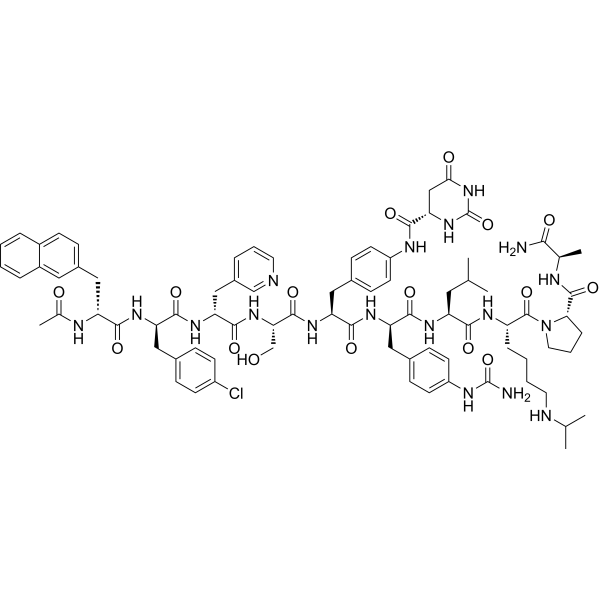
Degarelix acetate (FE 200486) is a decapeptide that shows high affinity/selectivity to human gonadotropin-releasing hormone (GnRH) receptor (IC50 = 3 nM). Degarelix acetate (FE 200486) is used for the research of prostate cancer .
loading...
    loading...
11
11 Cited Publications
Cat. No.: HY-16168A
CAS No.: 214766-78-6
Synonyms: FE 200486 free base
Target:  

GnRH Receptor Apoptosis

Research Areas:  

Endocrinology Cancer

Degarelix acetate (FE 200486) is a decapeptide that shows high affinity/selectivity to human gonadotropin-releasing hormone (GnRH) receptor (IC50 = 3 nM). Degarelix acetate Degarelix acetate (FE 200486) is used for the research of prostate cancer .
loading...
    loading...
10
10 Cited Publications
Cat. No.: HY-14652
CAS No.: 94497-51-5
Purity:  99.94%
Synonyms: Am 80
Research Areas:  

Cancer

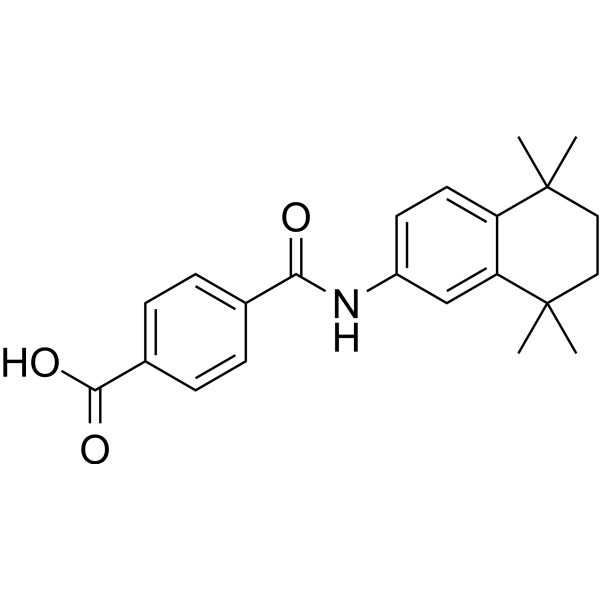
Tamibarotene is an orally active retinoic acid receptor α (RARα) agonist, showing high selectivity over RARγ.
loading...
    loading...
10
10 Cited Publications
Cat. No.: HY-109049
CAS No.: 1467093-03-3
Purity:  98.85%
Synonyms: SM04690; Lorecivivint
Target:  

Wnt

Research Areas:  

Inflammation/Immunology Cancer

Adavivint (SM04690; Lorecivivint) is a potent and selective inhibitor of canonical Wnt signaling, with an EC50 of 19.5 nM via a high-throughput TCF/LEF-reporter assay in SW480 colon cancer cells .
loading...
    loading...
10
10 Cited Publications
Cat. No.: HY-135425
CAS No.: 66990-30-5
Purity:  99.05%
Target:  

Acyltransferase

Research Areas:  

Metabolic Disease

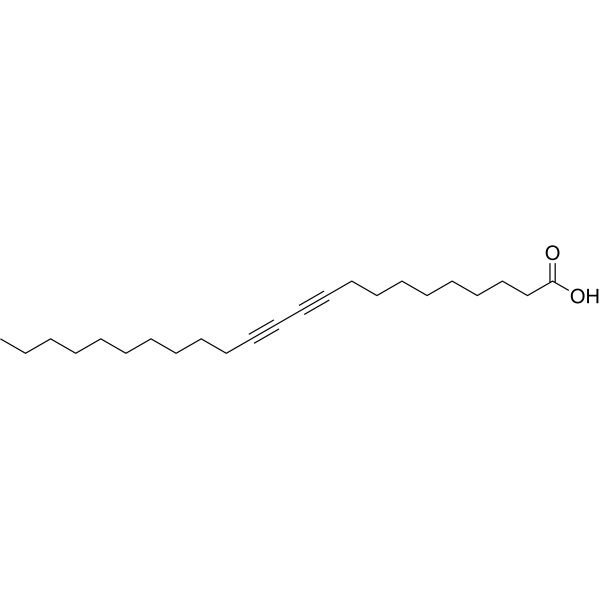
10,12-Tricosadiynoic acid is a highly specific, selective, high affinity and orally active acyl-CoA oxidase-1 (ACOX1) inhibitor. 10,12-Tricosadiynoic acid can treat high fat diet- or obesity-induced metabolic diseases by improving mitochondrial lipid and ROS metabolism . 10,12-Tricosadiynoic acid is a click chemistry reagent, it contains an Alkyne group and can undergo copper-catalyzed azide-alkyne cycloaddition (CuAAc) with molecules containing Azide groups.
loading...
    loading...
10
10 Cited Publications
Cat. No.: HY-18975
CAS No.: 1714146-59-4
Research Areas:  

Inflammation/Immunology Cancer

I-BRD9 is a selective cellular chemical probe of bromodomain-containing protein 9 (BRD9) with pIC50 value of 7.3 μM. I-BRD9 has high selectivity for bromodomain and extra terminal domain (BET) family and highly homologous bromodomain-containing protein 7 (BRD7). I-BRD9 can be used to identify genes regulated by BRD9 in Kasumi-1 cells involved in oncology and immune response pathways .
loading...
    loading...
10
10 Cited Publications
Cat. No.: HY-112823
CAS No.: 1899921-05-1
Purity:  99.83%
Synonyms: HS-10296
Target:  

EGFR

Research Areas:  

Cancer

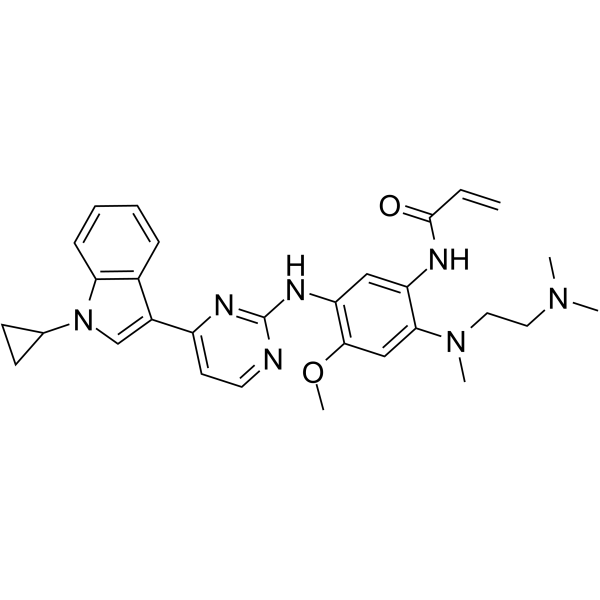
Almonertinib (HS-10296) is an orally available, irreversible, third-generation EGFR tyrosine kinase inhibitor with high selectivity for EGFR-sensitizing and T790M resistance mutations. Almonertinib shows great inhibitory activity against T790M, T790M/L858R and T790M/Del19 (IC50: 0.37, 0.29 and 0.21 nM, respectively), and is less effective against wild type (3.39 nM). Almonertinib is used for the research of the non-small cell lung cancer .
loading...
    loading...
10
10 Cited Publications
Cat. No.: HY-112823A
CAS No.: 2134096-06-1
Purity:  99.67%
Synonyms: HS-10296 mesylate
Target:  

EGFR

Research Areas:  

Cancer

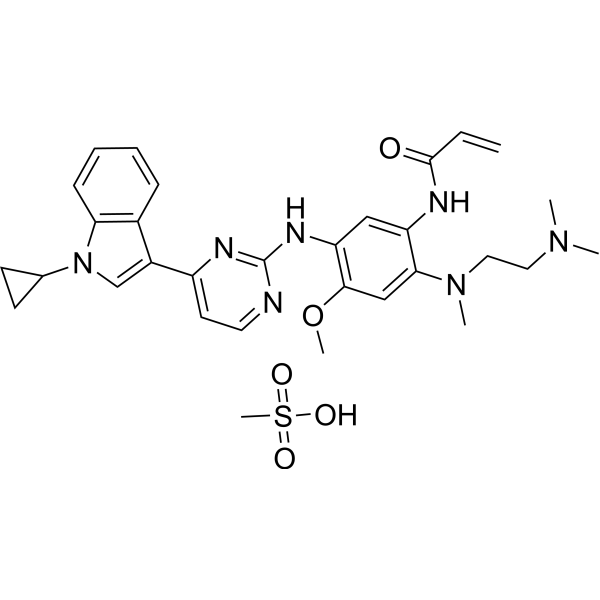
Almonertinib (HS-10296) mesylate is an orally available, irreversible, third-generation EGFR tyrosine kinase inhibitor with high selectivity for EGFR-sensitizing and T790M resistance mutations. Almonertinib mesylate shows great inhibitory activity against T790M, T790M/L858R and T790M/Del19 (IC50: 0.37, 0.29 and 0.21 nM, respectively), and is less effective against wild type (3.39 nM). Almonertinib mesylate is used for the research of the non-small cell lung cancer .
loading...
    loading...
10
10 Cited Publications
Cat. No.: HY-112823B
CAS No.: 2134096-03-8
Purity:  99.77%
Synonyms: HS-10296 hydrochloride
Target:  

EGFR

Research Areas:  

Cancer

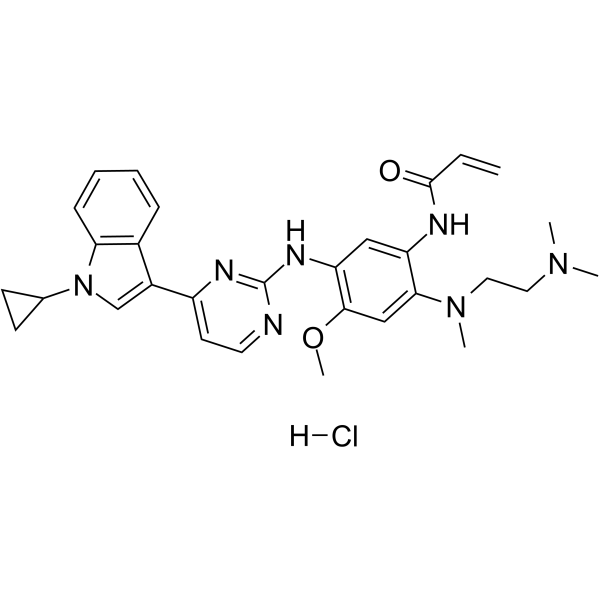
Almonertinib (HS-10296) hydrochloride is an orally available, irreversible, third-generation EGFR tyrosine kinase inhibitor with high selectivity for EGFR-sensitizing and T790M resistance mutations. Almonertinib hydrochloride shows great inhibitory activity against T790M, T790M/L858R and T790M/Del19 (IC50: 0.37, 0.29 and 0.21 nM, respectively), and is less effective against wild type (3.39 nM). Almonertinib hydrochloride is used for the research of the non-small cell lung cancer .
loading...
    loading...
9
9 Cited Publications
Cat. No.: HY-137207
CAS No.: 864388-65-8
Purity:  99.88%
Target:  

PERK

Research Areas:  

Neurological Disease

MK-28 is a potent and selective PERK activator. MK-28 exhibits remarkable pharmacokinetic properties and high BBB penetration in mice .
loading...
    loading...
9
9 Cited Publications
Cat. No.: HY-P2093
CAS No.: 1083433-49-1
Target:  

Insulin Receptor

Research Areas:  

Metabolic Disease

S961 is an high-affinity and selective insulin receptor (IR) antagonist with IC50s of 0.048, 0.027, and 630 nM for HIR-A, HIR-B, and human insulin-like growth factor I receptor (HIGF-IR) in SPA-assay, respectively .
loading...
    loading...
9
9 Cited Publications
Cat. No.: HY-P2093B
Target:  

Insulin Receptor

Research Areas:  

Metabolic Disease

S961 acetate is an high-affinity and selective insulin receptor (IR) antagonist with IC50s of 0.048, 0.027, and 630 nM for HIR-A, HIR-B, and human insulin-like growth factor I receptor (HIGF-IR) in SPA-assay, respectively .
loading...
    loading...
9
9 Cited Publications
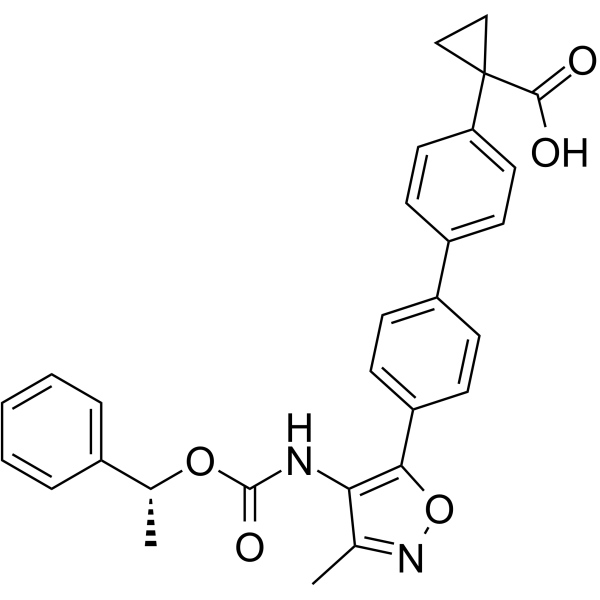
Cat. No.: HY-100619
CAS No.: 1257213-50-5
Purity:  99.91%
Synonyms: AM152
Target:  

LPL Receptor

BMS-986020 (AM152) is a high-affinity and selective lysophosphatidic acid receptor 1 (LPA1) antagonist . BMS-986020 inhibits bile acid and phospholipid transporters with IC50s of 4.8 μM, 6.2 μM, and 7.5 μM for BSEP, MRP4, and MDR3, respectively . BMS-986020 has the potential for the treatment of idiopathic pulmonary fibrosis (IPF) .
loading...
    loading...
8
8 Cited Publications
Cat. No.: HY-10680
CAS No.: 917910-45-3
Purity:  98.06%
Target:  

GPR109A

Research Areas:  

Cancer

MK-6892 is a potent, selective, and full agonist for the high affinity nicotinic acid (NA) receptor GPR109A. Ki and GTPγS EC50 of MK-6892 on the Human GPR109A is 4 nM and 16 nM, respectively.
loading...
    loading...
8
8 Cited Publications
Cat. No.: HY-14197
CAS No.: 17780-72-2
Purity:  99.76%
Synonyms: M&B 9302
Clorgyline (M&B 9302) is a selective, irreversible monoamine oxidase A (MAO-A) inhibitor that can cross the blood-brain barrier and exhibits activity against the 5-HT Receptor at very high doses. Clorgyline regulates monoamine neurotransmitter levels, the release of dopamine and acetylcholine, the uptake and effects of Tyramine (HY-W007606), noradrenergic function, circadian locomotor activity rhythms, feeding behavior, and body weight. Clorgyline induces tumor-suppressive transcriptional programs, secretory differentiation, androgen signaling regulation, Bcl-2 expression, and radioprotective effects in non-malignant cells. Clorgyline is used in the research of high-grade prostate cancer, Huntington's disease, major affective disorder, radiation-induced normal tissue toxicity, and obesity .
loading...
    loading...
8
8 Cited Publications
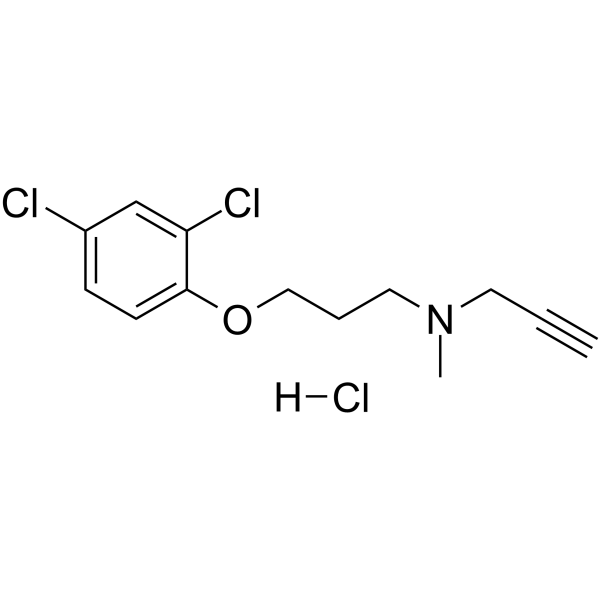
Cat. No.: HY-14197A
CAS No.: 17780-75-5
Purity:  99.92%
Synonyms: M&B 9302 hydrochloride
Clorgyline hydrochloride (M&B 9302 hydrochloride) is a selective, irreversible monoamine oxidase A (MAO-A) inhibitor that can cross the blood-brain barrier and exhibits activity against the 5-HT Receptor at very high doses. Clorgyline hydrochloride regulates monoamine neurotransmitter levels, the release of dopamine and acetylcholine, the uptake and effects of Tyramine (HY-W007606), noradrenergic function, circadian locomotor activity rhythms, feeding behavior, and body weight. Clorgyline hydrochloride induces tumor-suppressive transcriptional programs, secretory differentiation, androgen signaling regulation, Bcl-2 expression, and radioprotective effects in non-malignant cells. Clorgyline hydrochloride is used in the research of high-grade prostate cancer, Huntington's disease, major affective disorder, radiation-induced normal tissue toxicity, and obesity .
loading...
    loading...
8
8 Cited Publications
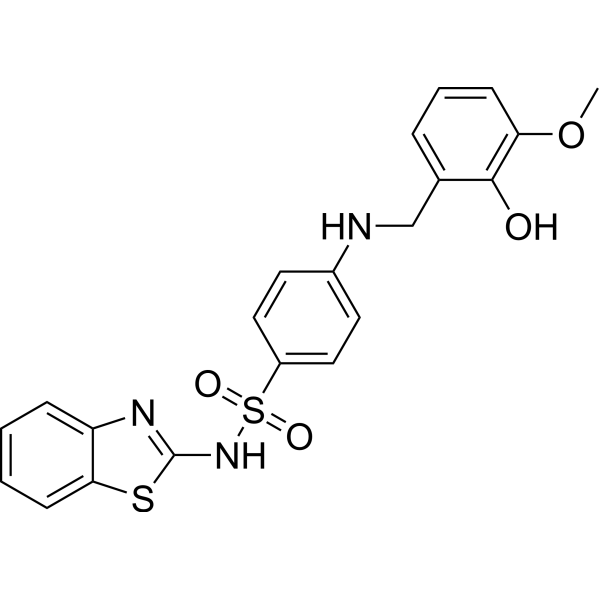
Cat. No.: HY-12341
CAS No.: 1532593-30-8
Purity:  98.11%
Synonyms: ML355
Onvoloxastat (ML355) is an orally active selective 12-LOX inhibitor with an IC50 of 0.34 μM. Onvoloxastat inhibits platelet activation by blocking thrombin- or thromboxane A2-induced phosphorylation of Akt, PI3K and Erk1/2. At low doses (1-20 μM), it mainly acts by reducing ROS levels, while at high doses (50 μM), it functions via activating the cAMP pathway. Onvoloxastat can be used in research related to thrombosis and diabetes .
loading...
    loading...

