595 Results for "

dNTPases/NUDIX hydrolases

" in MedChemExpress (MCE) Product Catalog:
Products (595)

595 Results for "dNTPases/NUDIX hydrolases" in MCE Product Catalog:

Cat. No.: HY-E71274
Research Areas:  

Others

The enzyme from the tropical tree Dalbergia nigrescens Kurz belongs inglycosyl hydrolase family 1. The enzyme removes disaccharides from the natural substrates dalpatein 7-O-β-D-apiofuranosyl-(1→6)-β-D-glucopyranoside and 7-hydroxy-2',4',5',6-tetramethoxy-7-O-β-D-apiofuranosyl-(1→6)-β-D-glucopyranoside (dalnigrein 7-O-β-D-apiofuranosyl-(1→6)-β-D-glucopyranoside) although it can also remove a single glucose residue from isoflavonoid 7-O-glucosides. Daidzin and genistin are also substrates.
loading...
    loading...
Cat. No.: HY-W040329S3
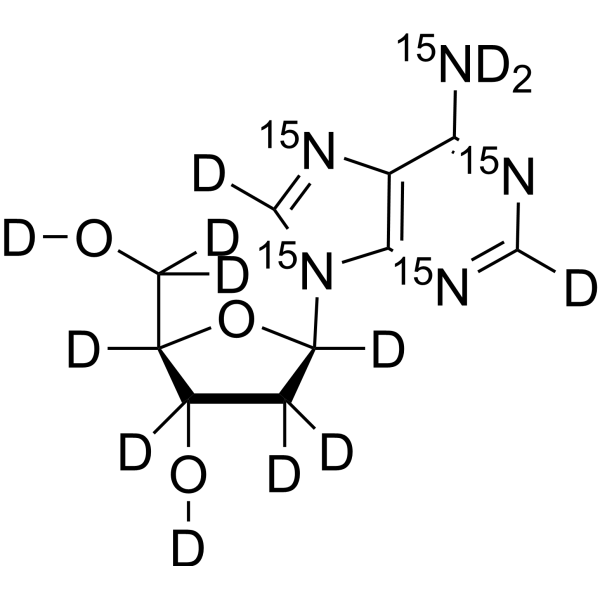
2'-Deoxyadenosine- 15N5,d13 is deuterium and 15N labeled 2'-Deoxyadenosine (HY-W040329) . 2′-Deoxyadenosine is an adenine nucleoside that inhibits glucose-stimulated insulin release. 2′-Deoxyadenosine inhibits glucose-stimulated increases seen in islet cyclic AMP (cAMP) accumulation. 2'-Deoxyadenosine activates caspase-3 and promotes apoptosis. 2'-Deoxyadenosine inhibits the activity of S-adenosyl-L-homocysteine hydrolase (SAHH). 2'-Deoxyadenosine inhibits the growth of various cells. 2'-Deoxyadenosine has an anticancer effect on colon cancer .
loading...
    loading...
Cat. No.: HY-107582
CAS No.: 1354359-53-7
Purity:  99.54%
Research Areas:  

Cancer

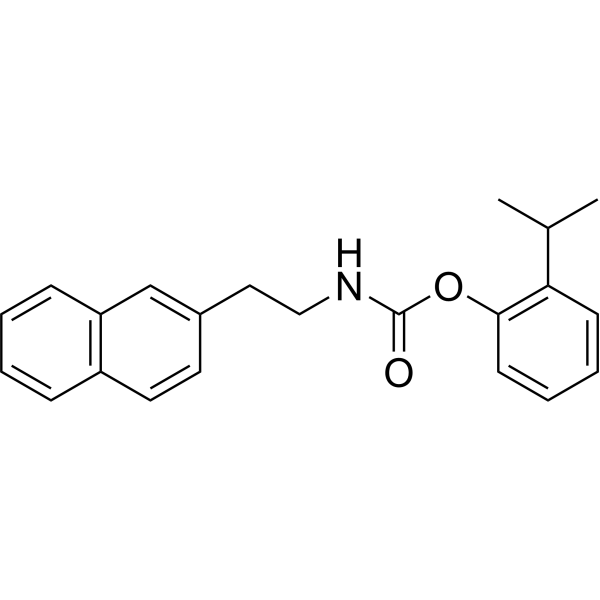
JW480 is a selective KIAA1363/AADACL1 inhibitor with oral activity, featuring IC50 values of 12 nM against human KIAA1363, 20 nM against mouse KIAA1363. JW480 blocks lipid deacetylase activity to restrain HAG metabolism and lowers retinyl ester hydrolase function in hepatic stellate cells. JW480 reduces MAGE lipid levels and inhibits migration, invasion, survival and tumor growth of prostate cancer cells. JW480 lowers PKCδ phosphorylation, facilitates HAGP accumulation, diminishes platelet aggregation, dense granule secretion and Ca 2+ flux, delays arterial thrombosis and prolongs tail bleeding time in rats. JW480 can be used for the study of prostate cancer and thrombosis .
loading...
    loading...
Cat. No.: HY-115500
CAS No.: 1206514-50-2
PL265 is an orally active dual enkephalinase inhibitor. PL265 is a prodrug of PL254, which can simultaneously and efficiently inhibit neutral endopeptidase (Neprilysin) and Aminopeptidase N. PL265 can effectively protect and significantly increase the local concentration of enkephalins (such as Met-Enkephalin and Leu-Enkephalin) released by cells at the pain or inflammation sites, thereby activating μ and δ opioid receptors to produce a potent analgesic effect. PL254 can also inhibit leukotriene A4 hydrolase (LTA4H), which may contribute to its additional anti-inflammatory effect by reducing the production of pro-inflammatory mediator leukotriene B4 (LTB4). PL265 can be used in non-addictive chronic pain research .
loading...
    loading...
Cat. No.: HY-E70104A
Target:  

Glycosidase Bacterial

α-Rhamnosidase, Penicillium sp. is a kind of glycoside hydrolase. α-Rhamnosidase, Penicillium sp. exhibits activity against Naringin (HY-N0153), 4-NRP, flavonoid glycosides and flavanone rhamnosides, and can hydrolyze the corresponding glycosidic bonds to release L-Rhamnose (Rhamnose) (HY-N1420) and other products. α-Rhamnosidase, Penicillium sp. promotes the release of total flavonoids, ginkgolides and aroma components from ginkgo tea, while also enhancing the free radical scavenging capacity of the leachate, inhibiting inflammatory cell activation and increasing its cytotoxicity against tumor cells. α-Rhamnosidase, Penicillium sp. can be used in research related to bacillary dysentery and cancer .
loading...
    loading...
Cat. No.: HY-N8279
CAS No.: 62213-14-3
Synonyms: Endo-β-1,3-1,4-glucanase
Target:  

Glycosidase

Research Areas:  

Metabolic Disease

β-1,3-1,4-glucanase (Endo-β-1,3-1,4-glucanase) is a glycoside hydrolase family 16 enzyme (some members belong to subfamily 25). β-1,3-1,4-glucanase shows high substrate specificity toward mixed‑linked β‑glucans and cleaves β‑1,4 glycosidic bonds adjacent to β‑1,3 linkages in an endo‑type pattern. β-1,3-1,4-glucanase can be used in industrial enzyme applications and monogastric animal feed supplementation .
loading...
    loading...
Cat. No.: HY-126720
CAS No.: 807370-75-8
Purity:  ≥99.0%
Target:  

Endogenous Metabolite

Research Areas:  

Metabolic Disease

N-Lignoceroyl Taurine is an arachidonoyl amino acid and taurine conjugate with a fatty acid that can be isolated from bovine brain. N-Lignoceroyl Taurine is one of several novel taurine-conjugated fatty acids discovered during mass spectrometry lipidomic analysis of the brain and spinal cord of wild-type and fatty acid amide hydrolase (FAAH) knockout mice. N-Lignoceroyl Taurine levels were 23-26-fold higher in FAAH -/- mice compared to wild-type mice, suggesting that FAAH utilizes N-Lignoceroyl Taurine as a substrate. However, in vitro experiments with purified FAAH showed that N-Lignoceroyl Taurine was hydrolyzed 2,000-fold slower in FAAH compared to oleoylethanolamide. N-Acyl Taurines with polyunsaturated acyl chains can activate members of the transient receptor potential (TRP) calcium channel family, including TRPV1 and TRPV4.
loading...
    loading...
Cat. No.: HY-132580S
Synonyms: BIIB067-d27; ISIS-SOD1Rx-d27; ISIS 333611-d27
Tofersen-d27 (BIIB067-d27) is the deuterium labeled Tofersen (HY-132580). Tofersen (BIIB067) is an antisense oligonucleotide and SOD1 mRNA inhibitor with an IC50 of 320 pM. Tofersen mediates RNase H-dependent degradation of SOD1 mRNA to reduce SOD1 protein levels in cerebrospinal fluid and serum. Tofersen downregulates cerebrospinal fluid neurofilament light chain, neurofilament heavy chain, amyloid-beta 1-40, amyloid-beta 1-42, neuropeptide Y, ubiquitin C-terminal hydrolase L1, neuropentraxins 1, 2, R, corticotropin-releasing hormone, IL-15, and serum neurofilament light chain, neurofilament heavy chain. Tofersen can be used for the research of superoxide dismutase 1-associated amyotrophic lateral sclerosis.
loading...
    loading...
Cat. No.: HY-N15826
CAS No.: 3077081-47-8
Research Areas:  

Cancer

RBM1-151, a 1-deoxy derivative and vinilog of RBM14-C12 (HY-150163), as a fluorogenic substrate of Amidases (HY-P2736) (Ex/Em). RBM1-151 is hydrolyzed by acid ceramidase (AC) (( appKm = 7.0 μM; appVmax = 99.3 nM/min), N-acylethanolamine-hydrolyzing acid amidase ( appKm = 0.73 μM; appVmax = 0.24 nM/min), and fatty Acid amide hydrolase (FAAH) ( appKm = 3.6 μM; appVmax = 7.6 nM/min) but not by other ceramidases. RBM1-151 is applicable for basic biological studies of lipid amidase function, as well as potential diagnostic/prognostic evaluations of diseases involving dysregulated AC, NAAA, or FAAH (Farber disease, cancer) .
loading...
    loading...
Cat. No.: HY-P2802B
CAS No.: 9001-42-7
Target:  

Glycosidase

Research Areas:  

Metabolic Disease

α-Glucosidase, rice is a GH31 glycoside hydrolase in rice seeds, with high selectivity for α-1,4-glycosidic bonds. α-Glucosidase, rice can be inhibited by rice husk extracts (IC50 = 1.25 μg/mL) and steroidal components (IC50 = 1.83 μg/mL). α-Glucosidase, rice exists in two major isoforms, among which isoform II is more sensitive to inhibitors. α-Glucosidase, rice can directly bind to and degrade starch granules in rice seeds. α-Glucosidase, rice can form ONG2-I and ONG2-II via post-translational proteolysis. α-Glucosidase, rice can be used in type 2 diabetes research .
loading...
    loading...
Cat. No.: HY-175816
5-HT6R/FAAH modulator 1 is a selective serotonin 5-HT6 receptor ligand and the fatty acid amide hydrolase (FAAH) enzyme inhibitor. 5-HT6R/FAAH modulator 1 shows a pKi of 6.33 (5-HT6) and a pIC50 valuesof 6.29 (FAAH). 5-HT6R/FAAH modulator 1 also slightly inhibits acetylcholinesterase (AChE) or butyrylcholinesterase (BChE) enzymes (pIC50 = 5.12). 5-HT6R/FAAH modulator 1 can inhibit apoptosis and reduce ROS levels. 5-HT6R/FAAH modulator 1 can be used for the research of neurological disease, such as Alzheimer’s disease (AD) .
loading...
    loading...
Cat. No.: HY-18542
CAS No.: 1402612-58-1
KT195 is a serine hydrolase inhibitor that targets ABHD6 (IC50 = 10 nM) and ABHD2, with no significant activity against DAGLβ. KT195 inhibits endoplasmic reticulum calcium release and mitochondrial calcium uptake by targeting ABHD2, thereby blocking A23187 (HY-N6687) and H2O2-induced necrotic cell death and apoptosis. By inhibiting ABHD6 activity, KT195 significantly induces 2-AG accumulation in Neuro2A cells and reduces IL-1β secretion in lipopolysaccharide-treated macrophages. KT195 has been used as a negative control probe for DAGLβ and can be applied in studies of ABHD6 and ABHD2 in calcium signaling, lipid metabolism, neuronal function, and inflammatory .
loading...
    loading...
Cat. No.: HY-188062
CAS No.: 138751-31-2
Target:  

VSV CMV VZV

Research Areas:  

Infection

2-Fluoroneplanocin A is an Antiviral agent. 2-Fluoroneplanocin A inhibits rabbit Adenosylhomocysteine hydrolase with an IC50 of 0.20 μg/mL. 2-Fluoroneplanocin A exhibits antiviral activity against vaccinia virus, vesicular stomatitis virus, parainfluenza virus, reovirus, Junín virus, Tacaribe virus, cytomegalovirus, measles virus, mumps virus, and thymidine kinase-deficient varicella-zoster virus; it shows no antiviral activity against herpes simplex virus, coxsackievirus B4, poliovirus type 1, Semliki Forest virus, or HIV at subtoxic concentrations. 2-Fluoroneplanocin A can be used in research related to vaccinia virus infection, vesicular stomatitis virus infection, parainfluenza virus infection, reovirus infection, Junín virus infection, Tacaribe virus infection, human cytomegalovirus infection, measles virus infection, mumps virus infection, and varicella-zoster virus infection .
loading...
    loading...
Cat. No.: HY-N0805AR
CAS No.: 18649-93-9
Alisol B (Standard) is the analytical standard of Alisol B (HY-N0805A). This product is intended for research and analytical applications. Alisol B is a triterpene with diverse biological activities. Alisol B binds human soluble epoxide hydrolase (sEH) with a Ki of 5.97 μM and reduces sEH activity. Alisol B inhibits RANKL-induced JNK phosphorylation, NFATc1 and c-Fos expression, osteoclast formation, mature osteoclast pit-forming and actin ring activity, and SERCA pump activity. Alisol B induces calcium mobilization, CaMKK-AMPK-mTOR pathway activation, autophagic flux, autophagosome formation, G1 phase cell cycle arrest, endoplasmic reticulum stress, unfolded protein responses, and cancer cell apoptosis. Alisol B can be used for the research of hypercalcemia, osteoporosis, rheumatoid arthritis, periodontitis, acute kidney injury, and breast cancer.
loading...
    loading...
Cat. No.: HY-159494
PROTAC sEH degrader-1 is a PROTAC degrader targeting soluble epoxide hydrolase (sEH) with a DC50 of 0.5 nM, and it also possesses sEH inhibitory activity. PROTAC sEH degrader-1 has an IC50 of 3.8 nM against human sEH and an IC50 of 210 nM against mouse sEH. PROTAC sEH degrader-1 relies on the ubiquitin-proteasome system to achieve target protein degradation, and it selectively degrades cytoplasmic sEH. PROTAC sEH degrader-1 rapidly reduces endoplasmic reticulum stress in cells, downregulates the phosphorylation levels of IRE1α, PERK and eIF2α, enhances cell viability, and alleviates Thapsigargin (HY-13433)-induced apoptosis. PROTAC sEH degrader-1 effectively degrades sEH in mouse liver and brown adipose tissue. PROTAC sEH degrader-1 can be used in studies related to metabolic disorders and inflammation .
loading...
    loading...

