
727 Results for "

blocking agents

" in MedChemExpress (MCE) Product Catalog:
Products (727)

727 Results for "blocking agents" in MCE Product Catalog:

Cat. No.: HY-B0420AR
CAS No.: 3160-91-6
Synonyms: ABOB hydrochloride (Standard)
Moroxydine (ABOB) hydrochloride (Standard) is the analytical standard of Moroxydine (ABOB) hydrochloride (HY-B0420A). Moroxydine (ABOB) hydrochloride is a broad-spectrum agent with multi-antiviral activities against DNA and RNA viruses, including influenza virus, herpes simplex, varicella zoster, measles, mumps disease, hepatitis C virus, etc. Moroxydine hydrochloride exhibits excellent antiviral activity and shows low cytotoxicity to cells infected by dsRNA viruses (grass carp reovirus, GCRV) and large DNA viruses (giant salamander iridovirus, GSIV). Moroxydine hydrochloride blocks the GCRV-induced cytopathic effects and eliminates nucleocapsids in ctenopharyngodon idella kidney (CIK) cells to keep the normal morphological structure. Moroxydine hydrochloride significantly inhibits the apoptosis, the caspase 3 activity, Bax expression and down-regulates Bcl-2 levels.
loading...
    loading...
Cat. No.: HY-N3387
CAS No.: 30508-27-1
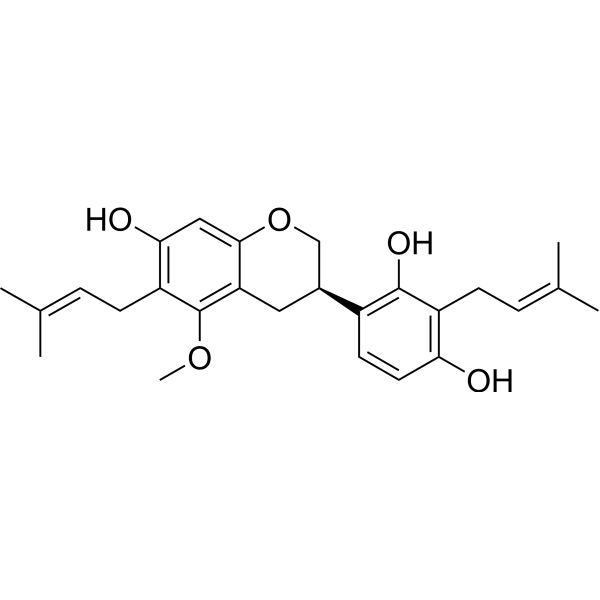
Licoricidin (LCD) is isolated from Glycyrrhiza uralensis Fisch, possesses anti-cancer activities. Licoricidin (LCD) inhibit SW480 cells (IC50=7.2 μM) by inducing cycle arrest, apoptosis and autophagy, and is a potential chemopreventive or chemotherapeutic agent against colorectal cancer . Licoricidin (LCD) inhibits Lung Metastasis by inhibition of tumor angiogenesis and lymphangiogenesis as well as changes in the local microenvironment of tumor tissues the anticarcinogenic effect . Licoricidin enhanced gemcitabine-induced cytotoxicity in Osteosarcoma (OS) cells by inactivation of the Akt and NF-κB pathways in vitro and in vivo . Licoricidin blocks UVA-induced photoaging via ROS scavenging, limits the activity of MMP-1, it can be considered as an active ingredient in new topically applied anti-ageing formulations .
loading...
    loading...
Cat. No.: HY-P992449
Synonyms: PRLR ADC antibody

Target:  

ADC Antibodies

Research Areas:  

Cancer

REGN2878 (PRLR ADC antibody) is a monoclonal antibody targeting the prolactin receptor (PRLR) and can block prolactin‑mediated activation of PRLR. REGN2878 exhibits an equilibrium dissociation constant (KD) of 1.05 nM and an IC50 of 0.344 nM for human PRLR. REGN2878 can be rapidly internalized and degraded in lysosomes by PRLR‑positive tumor cells, showing antigen‑specific binding and targeted enrichment properties. REGN2878 derivatives can be used as an immunoPET agent for antigen‑specific imaging of PRLR‑related tumors, and can also serve as a component of ADCs to exert anti‑tumor activity in breast cancer xenograft models. REGN2878 can be used in the research of breast cancer and prostate cancer. Isotype Comparison HY-P99001 .
loading...
    loading...
Cat. No.: HY-P99488
CAS No.: 2574591-89-0
Synonyms: JSP-191; AMG-191

Target:  

c-Kit

Research Areas:  

Inflammation/Immunology Cancer

Briquilimab (JSP-191 or AMG-191) is a humanized IgG1 monoclonal antibody that binds human CD117 (c-Kit). Briquilimab blocks the interaction between CD117 receptor and stem cell factor on various CD117 expressing tissues. Briquilimab can lead to inhibition of SCF/c-Kit signaling and MC apoptosis. Briquilimab is a non-toxic approach to target and deplete HSC, enabling blood and immune reconstitution with minimal toxicity with the other agents being used for transient immune suppression to prevent immunologic rejection. Briquilimab can be used in various disease research such as severe combined immunodeficiency (SCID), myelodyplastic syndromes (MDS), acute myeloid leukemia (AML), chronic spontaneous urticarial (CSU), chronic inducible urticarial (CIndU) and asthema .
loading...
    loading...
Cat. No.: HY-W008581
CAS No.: 1035-77-4
Synonyms: 3-O-Methyl estradiol; 17β-Estradiol 3-methyl ether; 3-Methoxyestradiol
Estradiol 3-methyl ether (EDME) is a highly selective TRPML1 ion channel antagonist and microtubule (microtubule) depolymerizing agent, with IC50 values of 0.22 μM and 3.8 μM against TRPML1 and TRPML2, respectively; it shows no activity against TRPML3. Estradiol 3-methyl ether induces the disruption of cytoplasmic microtubule networks in mammalian cells, with an EC50 of 9 μM. Independent of estrogen receptors, Estradiol 3-methyl ether blocks autophagy (autophagy), TFEB nuclear translocation, and inhibits the migration and invasion of triple-negative breast cancer cells by suppressing TRPML1. Estradiol 3-methyl ether is applicable for relevant research on triple-negative breast cancer .
loading...
    loading...
Cat. No.: HY-W778179
CAS No.: 1329840-53-0
Synonyms: LRCL 3794-13C,d3
Benoxaprofen- 13C, d3 is the 13C-labeled Benoxaprofen (HY-13568). Benoxaprofen (LRCL 3794) is a nonsteroidal anti-inflammatory agent that blocks the biosynthesis of inflammatory mediators such as leukotrienes and prostaglandins by inhibiting 5-LOX, PGH2 synthase and cytochrome P-450. Benoxaprofen exhibits significant toxicity: it not only alters cellular redox status, uncouples oxidative phosphorylation and disrupts calcium ion homeostasis, but also causes liver injury through the formation of covalent adducts between its active metabolites and hepatic proteins. Benoxaprofen shows strong phototoxicity under ultraviolet irradiation, and induces erythrocyte lysis, mast cell degranulation and histamine release. Benoxaprofen is widely used in studies of urticaria and related phototoxic mechanisms .
loading...
    loading...
Cat. No.: HY-Y1091
CAS No.: 923-27-3
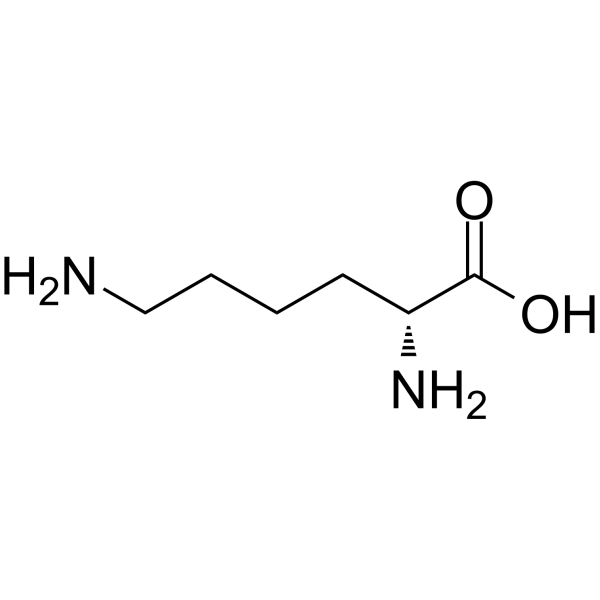
D-Lysine is the D-enantiomer of L-Lysine (HY-N0469). D-Lysine is metabolically inert and not utilized for protein synthesis by mammalian ribosomes. D-Lysine blocks renal uptake of 111In/ 90Y-Octreotide (HY-P0036)-based probes without inhibiting uptake by tumor/receptor tissues, and thus acts as a renoprotective agent in diagnostic imaging and peptide receptor radionuclide therapy (PRRT). D-Lysine specifically inhibits the early steps of non-enzymatic glycation by competing with glucose via its free amino group, theoretically, it can serve as a glycation competitor that "does not interfere with protein synthesis" under chronic hyperglycemia in diabetes. D-Lysine can be used in research related to cancer and diabetes .
loading...
    loading...
Cat. No.: HY-Y1804
CAS No.: 7274-88-6
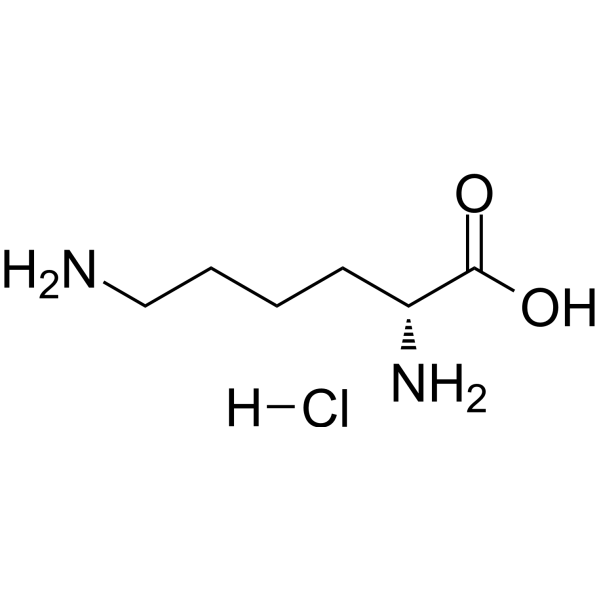
D-Lysine monohydrochloride is the D-enantiomer of L-Lysine (HY-N0469). D-Lysine monohydrochloride is metabolically inert and not utilized for protein synthesis by mammalian ribosomes. D-Lysine monohydrochloride blocks renal uptake of 111In/ 90Y-Octreotide (HY-P0036)-based probes without inhibiting uptake by tumor/receptor tissues, and thus acts as a renoprotective agent in diagnostic imaging and peptide receptor radionuclide therapy (PRRT). D-Lysine monohydrochloride specifically inhibits the early steps of non-enzymatic glycation by competing with glucose via its free amino group, theoretically, it can serve as a glycation competitor that "does not interfere with protein synthesis" under chronic hyperglycemia in diabetes. D-Lysine monohydrochloride can be used in research related to cancer and diabetes .
loading...
    loading...
Cat. No.: HY-118773
CAS No.: 22816-60-0
Purity:  99.3%
Synonyms: A22 hydrochloride
Target:  

Bacterial

Research Areas:  

Infection

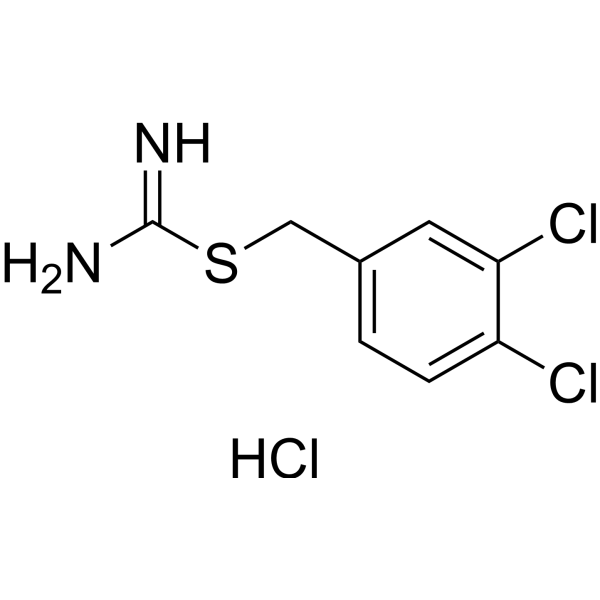
MreB Perturbing Compound A22 hydrochloride (A22 hydrochloride) is a reversible MreB inhibitor and antimicrobial agent that exhibits bacteriostatic activity against Escherichia coli, with low activity against Gram-positive bacteria. MreB Perturbing Compound A22 hydrochloride rapidly and reversally delocalizes MreB from the helical/circular structures in cells, impairs MreB function, and reduces the binding of MreB to the chromosomal region proximal to the replication origin. MreB Perturbing Compound A22 hydrochloride alters the cell morphology of caulobacters to round/lemon-shaped, slows caulobacter growth, blocks their cell division, and induces the formation of spherical morphology, asymmetric division, and anucleate cells in Escherichia coli. MreB Perturbing Compound A22 hydrochloride is used for studies related to bacterial rod-shaped morphology determination, chromosome segregation, and cell division mechanisms .
loading...
    loading...
Cat. No.: HY-135146G
CAS No.: 2170136-65-7
Synonyms: (R)-GSK3482364 (GMP)
GSK-3484862 GMP is GSK-3484862 (HY-135146) produced by using GMP guidelines. GMP small molecules works appropriately as an auxiliary reagent for cell therapy manufacture. GSK-3484862 is a highly potent non-covalent inhibitor and demethylating agent of DNMT1. GSK-3484862 induces genome-wide DNA demethylation, including the regulatory elements of DNMT3B and the promoter region of TERT, and significantly inhibits cell viability, growth, proliferation and self-renewal. GSK-3484862 blocks the transformation of young AT2 cells, induces apoptosis, and generates transcriptomic features similar to those of senescent cells. GSK-3484862 is widely used in studies related to lung cancer, oral squamous cell carcinoma and lung adenocarcinoma .
loading...
    loading...
Cat. No.: HY-16443
CAS No.: 173534-37-7
Target:  

OAT

Research Areas:  

Metabolic Disease

S-4048 is a glucose-6-phosphate translocase modulator and hypoglycemic agent. S-4048 is taken up by hepatocytes via OATP-1 and is rapidly eliminated via the hepatobiliary system in rats. S-4048 blocks glucose-6-phosphate translocase, prevents glucose-6-phosphate from entering the endoplasmic reticulum, and thereby interferes with the glucose-6-phosphatase system (i.e., the final step of hepatic gluconeogenesis and glycogenolysis) to regulate hepatic glucose production. S-4048 completely inhibits glucose production from pyruvate in GLUT2-deficient hepatocytes without affecting the release of cytoplasmic glucose. S-4048 effectively reduces blood glucose levels in rats and has been used in studies related to type 2 diabetes .
loading...
    loading...
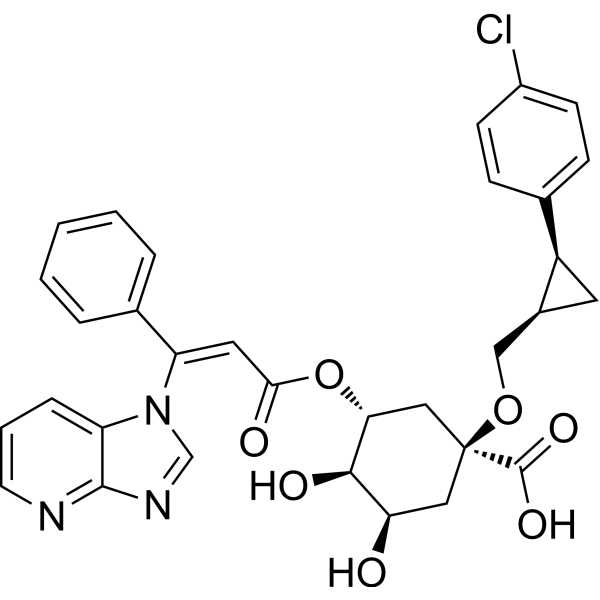
Cat. No.: HY-187930
CAS No.: 2965385-11-7
Target:  

MAP4K

Research Areas:  

Cancer

HPK1-IN-72 is an orally active and selective HPK1/MAP4K1 inhibitor with an IC50 of 52.4 nM against human targets. HPK1-IN-72 inhibits HPK1 activation, blocks the negative regulation of T cell receptor signaling, restores T cell receptor signal transduction and enhances T cell function. HPK1-IN-72 suppresses tumor growth, exhibits potent single-agent anti-tumor efficacy, and also produces synergistic effects with anti-PD-1 antibodies or anti-PD-L1/IL-15 immunocytokine prodrugs. HPK1-IN-72 can be used in research related to breast cancer, colorectal cancer and prostate cancer .
loading...
    loading...
Cat. No.: HY-P6300
CAS No.: 169062-92-4
Target:  

Bacterial Parasite

Research Areas:  

Infection

Cyclomarin A is an antibacterial agent with a Kd of 2.3 nM against Mycobacterium tuberculosis ClpC1, a Kd of 2.2 nM against ClpC2, and an IC50 of 0.004 μM against Plasmodium falciparum PfAp3Aase. Cyclomarin A binds to the N-terminal domain of ClpC1, stimulates ATPase and proteolytic activities, dysregulates proteolysis, and induces proteome imbalance; it also binds to ClpC2 and upregulates its transcription level. Cyclomarin A binds to PfAp3Aase in dimeric form, blocks the substrate-binding pathway, inhibits the growth of Plasmodium falciparum in the erythrocytic stage, and shows no activity against human cells. Cyclomarin A exhibits moderate cytotoxicity against a variety of cancer cell lines. Cyclomarin A can serve as a lead compound for the development of Homo-BacPROTAC. Cyclomarin A is applicable to research related to tuberculosis and malaria .
loading...
    loading...
Cat. No.: HY-W713297
CAS No.: 2469734-82-3
Synonyms: ABOB hydrochloride-d8
Moroxydine hydrochloride-d8 (ABOB hydrochloride-d8) is the deuterium labeled Moroxydine (ABOB) hydrochloride (HY-B0420A). Moroxydine hydrochloride is a broad-spectrum agent with multi-antiviral activities against DNA and RNA viruses, including influenza virus, herpes simplex, varicella zoster, measles, mumps disease, hepatitis C virus, etc. Moroxydine hydrochloride exhibits excellent antiviral activity and shows low cytotoxicity to cells infected by dsRNA viruses (grass carp reovirus, GCRV) and large DNA viruses (giant salamander iridovirus, GSIV). Moroxydine hydrochloride blocks the GCRV-induced cytopathic effects and eliminates nucleocapsids in ctenopharyngodon idella kidney (CIK) cells to keep the normal morphological structure. Moroxydine hydrochloride significantly inhibits the apoptosis, the caspase 3 activity, Bax expression and down-regulates Bcl-2 levels [1][2][3].
loading...
    loading...
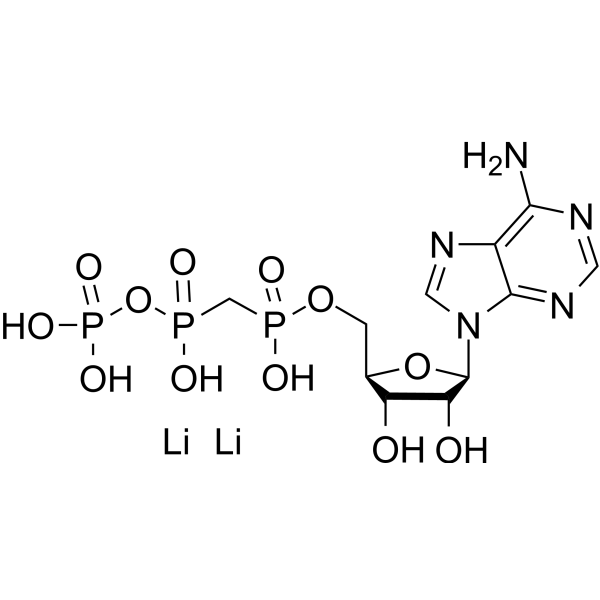
Cat. No.: HY-134440
CAS No.: 104809-20-3
Target:  

P2X Receptor

Research Areas:  

Inflammation/Immunology

α,β-Methylene-ATP dilithium is an agonist of P2X1 and P2X3 receptors and can cross the blood-brain barrier. α,β-Methylene-ATP dilithium can trigger a reflex pressor response by activating P2X receptors in peripheral muscles and the central locus coeruleus (LC); this effect can be blocked by the P2X antagonist PPADS (HY-108960). α,β-Methylene-ATP dilithium also activates noradrenergic neurons in the central locus coeruleus, mediating antinociceptive effects; this effect can be attenuated by the locus coeruleus damaging agent DSP-4 (HY-103210/HY-121602). α,β-Methylene-ATP dilithium can be used to study the pathological mechanisms of neuropathic pain, cardiovascular reflex regulation, and antinociceptive effects of the central nervous system .
loading...
    loading...
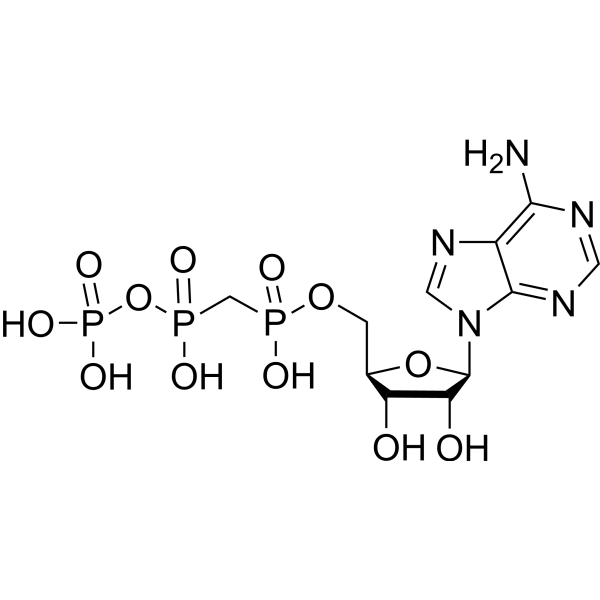
Cat. No.: HY-134440A
CAS No.: 7292-42-4
Target:  

P2X Receptor

Research Areas:  

Inflammation/Immunology

α,β-Methylene-ATP is an agonist of P2X1 and P2X3 receptors and can cross the blood-brain barrier. α,β-Methylene-ATP can trigger a reflex pressor response by activating P2X receptors in peripheral muscles and the central locus coeruleus (LC); this effect can be blocked by the P2X antagonist PPADS (HY-108960). α,β-Methylene-ATP also activates noradrenergic neurons in the central locus coeruleus, mediating antinociceptive effects; this effect can be attenuated by the locus coeruleus damaging agent DSP-4 (HY-103210/HY-121602). α,β-Methylene-ATP can be used to study the pathological mechanisms of neuropathic pain, cardiovascular reflex regulation, and antinociceptive effects of the central nervous system .
loading...
    loading...
Cat. No.: HY-B1239A
CAS No.: 1679-76-1
Synonyms: Cycloadiphene; Hexahydroadiphenine
Drofenine (Cycloadiphene; Hexahydroadiphenine) is an brain-penetrant antispasmodic agent. Drofenine is a Kv2.1 channel inhibitor with human IC50 of 9.53 μM. Drofenine is a butyrylcholinesterase (BChE) inhibitor with Ki of 0.003 mM, and is a TRPV3 activator. Drofenine blocks Kv2.1-dependent potassium efflux, inhibits Kv2.1/JNK/NF-κB and IkBa/NF-kB signaling, suppresses Kv2.1 mRNA/protein expression. Drofenine suppresses oligomeric -induced microglial NLRP3 inflammasome activation and neuronal Tau hyperphosphorylation, improves cognitive impairment, promotes neurite outgrowth. Drofenine induces calcium influx in keratinocytes and exert cytotoxicity against keratinocytes. Drofenine ameliorates diabetic peripheral neuropathy -like pathology. Drofenine can be used for the researches of Alzheimer's disease, diabetic peripheral neuropathy and smooth muscle spasm .
loading...
    loading...
Cat. No.: HY-W018798
CAS No.: 4005-51-0
1,3,4-Thiadiazol-2-amine is a 1,3,4-thiadiazole antitumor agent with the potential to penetrate the blood-brain barrier. 1,3,4-Thiadiazol-2-amine can induce hyperuricemia, and this effect is blocked by Nicotinamide (HY-B0150). 1,3,4-Thiadiazol-2-amine supports the simultaneous administration of Allopurinol (HY-B0219), and their combined use prevents hyperuricemia without reducing antitumor activity.\n1,3,4-Thiadiazol-2-amine is a condensation precursor for the synthesis of antibacterial Schiff bases and their Co/Cu/Ni/Zn (II) complexes. 1,3,4-Thiadiazol-2-amine is used in research related to tumors and bacterial infections .
loading...
    loading...
Cat. No.: HY-W031757R
CAS No.: 117-78-2
Anthraquinone-2-carboxylic acid (Standard) is the analytical standard of Anthraquinone-2-carboxylic acid (HY-W031757). This product is intended for research and analytical applications. Anthraquinone-2-carboxylic acid is an orally active anthraquinone compound and Antibacterial agent. Anthraquinone-2-carboxylic acid can be isolated from Bajitian. Anthraquinone-2-carboxylic acid inhibits the activation of DPP-IV, COX-2, NF-κB and AP-1. Anthraquinone-2-carboxylic acid blocks IAV-induced activation of the RIG-I/STAT1 pathway, alleviates IAV-mediated weight loss, and protects against lethal IAV infection. Anthraquinone-2-carboxylic acid inhibits the growth of various Staphylococcus strains. It possesses potent anti-inflammatory, immunomodulatory, analgesic and antibacterial activities .\n


loading...
    loading...
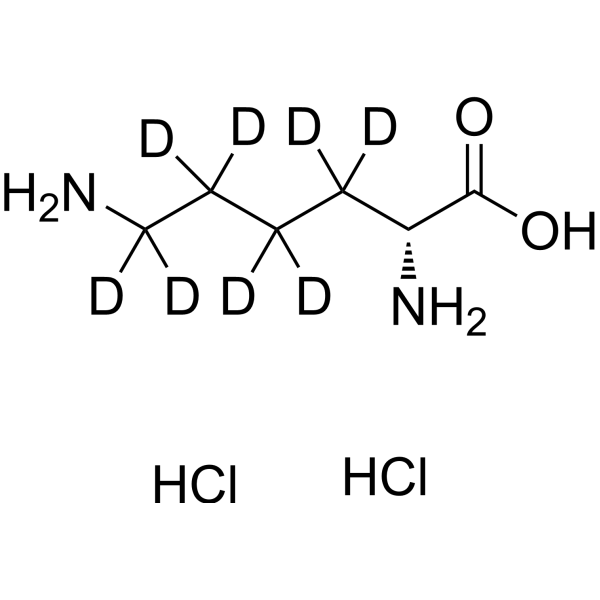
Cat. No.: HY-W035399S
D-Lysine-d8 dihydrochloride is the d8-labeled D-Lysine (HY-Y1091). D-Lysine is the D-enantiomer of L-Lysine (HY-N0469). D-Lysine is metabolically inert and not utilized for protein synthesis by mammalian ribosomes. D-Lysine blocks renal uptake of 111In/ 90Y-Octreotide (HY-P0036)-based probes without inhibiting uptake by tumor/receptor tissues, and thus acts as a renoprotective agent in diagnostic imaging and peptide receptor radionuclide therapy (PRRT). D-Lysine specifically inhibits the early steps of non-enzymatic glycation by competing with glucose via its free amino group, theoretically, it can serve as a glycation competitor that "does not interfere with protein synthesis" under chronic hyperglycemia in diabetes. D-Lysine can be used in research related to cancer and diabetes .
loading...
    loading...

