85 Results for "

electron-blocking layers

" in MedChemExpress (MCE) Product Catalog:
Products (85)

85 Results for "electron-blocking layers" in MCE Product Catalog:

Cat. No.: HY-P11221A
Target:  

Inhibitory Antibodies

Research Areas:  

Cardiovascular Disease

CLIKKPF acetate is a specific peptide segment. CLIKKPF acetate can bind strongly to phosphatidylserine (PS) on the inner layer of the cell membrane. CLIKKPF acetate can enhance the targeting ability of nanoparticles. CLIKKPF acetate can be used in the research of cardiovascular diseases .
loading...
    loading...
Cat. No.: HY-184639
Carboxylated magnetic microspheres (low nonspecificity) are functionalized nano- or micron-sized magnetic particles with abundant carboxyl functional groups on their surface. Special chemical treatments reduce the likelihood of nonspecific adsorption. This 1μm carboxylated magnetic microsphere features a core-shell structure: a PS core, an outer layer of iron oxide (Fe3O4), and an outermost encapsulation layer. The carboxyl groups are obtained through polymer modification. Exhibiting low nonspecific adsorption, these microspheres can covalently couple with bioligands such as peptides, proteins, antibodies, and oligonucleotides using specific chemical reagents (e.g., EDC), making them particularly suitable for cell sorting, affinity chromatography, and immunoassay.
loading...
    loading...
Cat. No.: HY-185128
CAS No.: 802981-98-2
Synonyms: PlsEtn 16:0/18:2
Target:  

Endogenous Metabolite

Research Areas:  

Neurological Disease Endocrinology

PE (P-16:0/18:2(9Z,12Z)) (PlsEtn 16:0/18:2) is a phosphatidylethanolamine that can be used as a metabolic biomarker for evaluating uterine muscle layer infiltration and Alzheimer's disease .
loading...
    loading...
Cat. No.: HY-N19790
CAS No.: 484-34-4
Croweacin is a phenylpropanoid compound found in Myristica fragrans Houtt and other species, with antibacterial and corrosion-inhibiting activities. Croweacin acts as a corrosion inhibitor by providing or donating electrons to the brass surface to form a protective layer that blocks aggressive ions. Croweacin can be used in research related to green corrosion inhibitors .
loading...
    loading...
Cat. No.: HY-DY2026
Target:  

Fluorescent Dye

Research Areas:  

Others

Nissl Staining Solution (Toluidine Blue Method) is an acidic histological staining labeling reagent based on Toluidine Blue (HY-D0220). Nissl Staining Solution (Toluidine Blue Method) stains brain nuclei, cells, and sections of brain tissues processed for in vitro autoradiography or perfusion. It consistently labels all neuronal somata and differentiates cell layers .
loading...
    loading...
Cat. No.: HY-W016174
CAS No.: 139-66-2
Research Areas:  

Others

Diphenyl sulfide is an additive for organic photovoltaic devices. Diphenyl sulfide modulates vertical composition distribution of PTB7-Th:PC71BM photoactive layers, promoting enrichment of PTB7-Th at the upper surface and PC71BM at the bottom. Diphenyl sulfide promotes ordered molecular packing and crystallinity of PTB7-Th:PC71BM photoactive layers, including more compact π−π stacking of PTB7-Th. Diphenyl sulfide improves exciton dissociation, charge transport, and charge collection in PTB7-Th:PC71BM-based inverted polymer solar cells. Diphenyl sulfide acts as a solvent additive to improve the photovoltaic performance of inverted organic photovoltaic devices .
loading...
    loading...
Cat. No.: HY-188004
Target:  

Liposome

Research Areas:  

Cancer

Decitabine-Cisplatin Liposome is a delivery system that encapsulates Decitabine (HY-A0004) and Cisplatin (HY-17394) within tiny liposomes. The liposomes act as a protective layer, enhancing the absorption and bioavailability of both Decitabine and Cisplatin. The combination of Decitabine and Cisplatin synergistically induces Sox2 DNA demethylation and promotes Sox2 gene expression, making it a useful tool for gastric cancer research .
loading...
    loading...
Cat. No.: HY-K0002

MCE Bacterial Protein Extraction Reagent integrates both lysozyme and nuclease activities and is specifically formulated for E. coli lysis. It efficiently disrupts the peptidoglycan layer under mild conditions to rapidly release intracellular proteins. Simultaneously, the incorporated nucleases degrade genomic DNA/RNA, significantly reducing lysate viscosity and minimizing nucleic-acid interference, thereby preserving the native conformation and functional integrity of target proteins to the greatest extent.

loading...
    loading...
Cat. No.: HY-172754
ICAAc is a solvatochromic fluorophore with reduced basicity. ICAAc demonstrates significant solvatochromic behavior across solvents of varying polarity, with a large dipole moment difference and low quantum yield in water, making it a tunable solvatochromic fluorophore. ICAAc enables pH sensing via UV-vis/fluorescence detection and in microenvironments including sodium lauryl sulfate micelle Stern layers. ICAAc acts as a supravital cell stain for epifluorescence imaging of live cancer cells .
loading...
    loading...
Cat. No.: HY-D3390
sCy5DA is a is a fluorescent D-amino acid . sCy5DA incorporates into bacterial peptidoglycan layers and cross-links via transpeptidase action, replacing peptidoglycan stem peptide D-amino acids. sCy5DA labels live bacterial cell walls, nascent peptidoglycan biosynthesis sites, and diverse bacterial species including Gram-negative, Gram-positive, and mycobacteria (Ex/Em = 646/665 nm) .
loading...
    loading...
Cat. No.: HY-182033
CAS No.: 2761081-10-9
Target:  

Bacterial ClpP

Research Areas:  

Infection

ClpP agonist 1 is a Staphylococcus aureus ClpP (SaClpP) agonist with an EC50 of 1.44 μM, Kd values of 2.95 μM (isothermal titration calorimetry) and 18 μM (bio-layer interferometry), and a low drug resistance frequency. ClpP agonist 1 reduces bacterial load, shrinks infected area and improves histopathological outcomes in a mouse skin infection model. ClpP agonist 1 can be used for the research of Methicillin (HY-121544)-resistant Staphylococcus aureus (MRSA) skin infections .
loading...
    loading...
Cat. No.: HY-D3430
PTPA-QM is a low-cytotoxicity Aβ protein probe that can be used for live-cell imaging and tissue section staining (Lys. Ex/Em = 385/615 nm). PTPA-QM can intercalate into the β-sheet layered structure of β-amyloid fibrils, form intermolecular interactions with amino acid residues, restrict intramolecular rotation and trigger fluorescence activation for imaging purposes. PTPA-QM is applicable to Alzheimer's disease-related research. Maximum excitation/emission wavelength: 448/605 nm .
loading...
    loading...
Cat. No.: HY-DY2036
Target:  

Fluorescent Dye

Research Areas:  

Others

Cellulose Staining Solution (Zinc Chloride-Iodine Method) is a cellulose-targeted staining agent. Cellulose Staining Solution (Zinc Chloride-Iodine Method) enables cellulose cell walls to turn blue-purple to blue by forming iodine-cellulose complexes between iodine and cellulose. Cellulose Staining Solution (Zinc Chloride-Iodine Method) can be used for the identification of plant phloem fibers, cellulose layers of algal cell walls, residual mineralized plant fibers from archaeological samples, and cellulose deposited on PET surfaces .
loading...
    loading...
Cat. No.: HY-141613S
Synonyms: (2S,8R,19Z)DOPS-d3 ammonium
(2S,8R,19Z)1,2-Dioleoyl-sn-glycero-3-phospho-L-serine-d3 ammonium ((2S,8R,19Z)DOPS-d3 ammonium) is the deuterium labeled (2S,8R,19Z)1,2-Dioleoyl-sn-glycero-3-phospho-L-serine ammonium (HY-141613). 1,2-Dioleoyl-sn-glycero-3-phospho-L-serine sodium (DOPS-NA) is a ubstitute for Phosphoserine/phosphatidylserine. 1,2-Dioleoyl-sn-glycero-3-phospho-L-serine sodium can be used together with DOPC and DOPE in lipid mixtures for the synthesis of liposomes. 1,2-Dioleoyl-sn-glycero-3-phospho-L-serine sodium can self-assemble into single-layer or double-layer membrane structures, similar to cell membranes, and possesses high membrane fluidity and flexibility. 1,2-Dioleoyl-sn-glycero-3-phospho-L-serine is widely applied in membrane biology, cell membrane research, lipid preparation, and drug delivery systems .
loading...
    loading...
Cat. No.: HY-184638
APTS Fe2O3 Nanoparticles (Aminated ferric oxide magnetic nanoparticles) are magnetic nanomaterials modified with amino functional groups using APTS. This material consists of a ferric oxide (Fe3O4) nanoparticle core and an amino (-NH2) surface modification layer. The aminated surface helps improve the biocompatibility of the nanoparticles and reduce cytotoxicity. The amino functional groups can be further chemically modified for coupling with biomolecules such as drugs, proteins, and nucleic acids. The amino functional groups undergo protonation at different pH values, resulting in different surface charges on the nanoparticles in different pH environments.
loading...
    loading...
Cat. No.: HY-D3047I
Target:  

Fluorescent Dye

Research Areas:  

Others

Rhodamine B-Dextran (chloride) (MW 500000) is a Rhodamine B (HY-Y0016)-labeled dextran with a molecular weight of 500000. Rhodamine B-Dextran (chloride) (MW 500000) is a fluorescent dye used to track the diffusion of macromolecules in ex vivo human skin. Rhodamine B-Dextran (chloride) (MW 500000) is delivered to skin layers via the Nanopatch microneedle array, which physically disrupts the stratum corneum and dermal-epidermal junction barriers to deposit the dye directly into epidermal and dermal regions; fluorescence is detected via multiphoton microscopy, and fluorescence intensity is assumed to be roughly proportional to dye concentration .
loading...
    loading...
Cat. No.: HY-DY2037
Target:  

Fluorescent Dye

Research Areas:  

Others

Lignin Staining Solution (Safranin Method) is a histochemical staining solution for lignin with Safranin O as the active component. Lignin Staining Solution (Safranin Method) enables lignified cell walls to appear red to deep red (pinkish in regions with low lignification) via the high affinity of the dye for lignin. Lignin Staining Solution (Safranin Method) can be used to visualize lignin distribution in ex vivo thick sections of annual shoots from woody plants and vibratome sections of stems from herbaceous plants (such as Arabidopsis and flax), as well as for in situ quantification of cell wall substructural regions (cell corners, intercellular layers, secondary walls) based on Safranin O ratiometric fluorescence .
loading...
    loading...
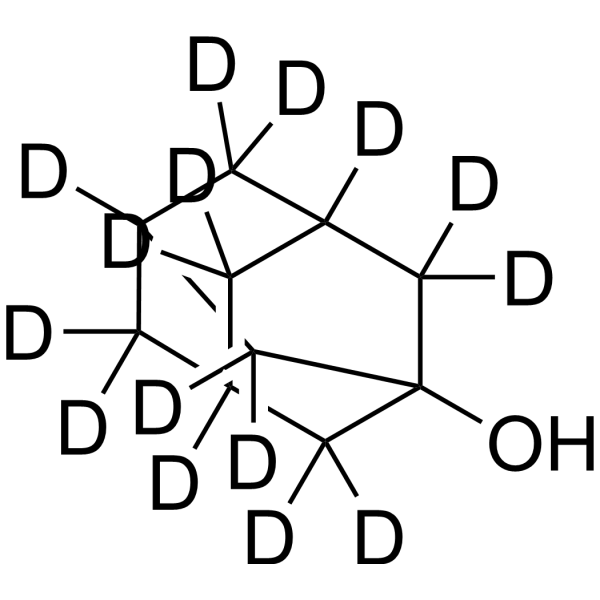
Cat. No.: HY-Y0531S
CAS No.: 33830-11-4
Synonyms: Tricyclo[3.3.1.1~3,7~]decan-1-ol-d15
1-Adamantanol-d15 (Tricyclo[3.3.1.1~3,7~]decan-1-ol-d15) is the deuterium labeled 1-Adamantanol (HY-Y0531). 1-Adamantanol (Tricyclo[3.3.1.1~3,7~]decan-1-ol) is a hydroxylated derivative of Adamantane (HY-N2427). 1-Adamantanol serves as a substrate for regioselective hydroxylation reactions in Streptomyces strain SA8. 1-Adamantanol can form acrylate derivatives, which are used as photoresist layer materials .
loading...
    loading...
Cat. No.: HY-W133968
CAS No.: 9003-04-7
Research Areas:  

Others

Polyacrylate sodium is a sodium polyacrylate salt with extremely strong hygroscopicity. Polyacrylate sodium serves as a gel excipient and can be used as a pharmaceutical excipient. Polyacrylate sodium can reduce permeability by modifying bentonite to form a cavity-containing microstructure, while improving the chemical resistance, cation exchange capacity, and free swelling index of bentonite. Polyacrylate sodium can enhance the water retention capacity, available water content, and top-layer water content of sandy soil, while reducing the saturated hydraulic conductivity, wetting front advance rate, and infiltration rate. Polyacrylate sodium can chelate Cu 2+ ions in aqueous solutions and has renewable adsorption capacity. Polyacrylate sodium is widely used in researches related to various fields such as consumer products, agriculture, and industry .
loading...
    loading...
Cat. No.: HY-117578
CAS No.: 131916-69-3
Target:  

Endogenous Metabolite

Research Areas:  

Neurological Disease

KB 5666 is a benzoxazine derivative with lipid peroxidation inhibitory activity. KB 5666 showed protective effects against post-ischemic neuronal death. KB 5666 effectively protected CA1 neurons when injected 5 minutes before or immediately after ischemia. KB 5666 also showed a dose-dependent protective effect when injected within 1 hour after ischemia. KB 5666 effectively prevented the significant decrease in microtubule-associated protein 2 immunoreactivity within the dendritic field of CA1 pyramidal cells. KB 5666 prevented the decrease in [3H]PDBu binding activity in different layers of the CA1 region after ischemia. The application of KB 5666 showed the ability to improve the cellular and functional consequences of ischemia .
loading...
    loading...

