135 Results for "

mouse tissues

" in MedChemExpress (MCE) Product Catalog:
Products (135)

135 Results for "mouse tissues" in MCE Product Catalog:

Cat. No.: HY-165072
CAS No.: 252846-08-5
Synonyms: C2 Sulfatide; N-Acetyl sulfatide
Research Areas:  

Others

C2 3'-Sulfo galactosylceramide (d18:1/2:0) (C2 Sulfatide) is one of the sulfatide class of glycolipids. C2 3'-Sulfo galactosylceramide (d18:1/2:0) can be used in the quantification of lysosulfatides in mouse brain tissue and plasma .
loading...
    loading...
Cat. No.: HY-B1398S
CAS No.: 1329792-51-9
Synonyms: 4-Aminoantipyrine-d3
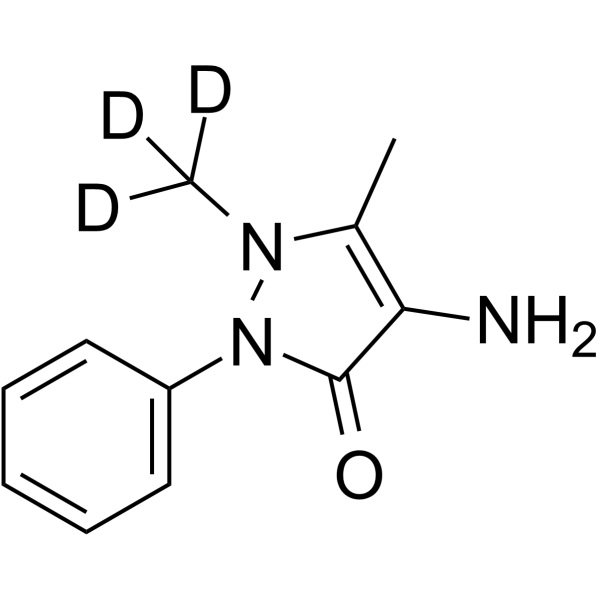
Ampyrone-d3 is the deuterium labeled Ampyrone (HY-B1398). Ampyrone (4-Aminophenazone; 4-Aminoantipyrine) is a reversible and low-damage optical clearing agent and non-selective COX inhibitor based on UV absorption properties. Ampyrone can improve the optical transmittance of mouse skin and other tissues. Ampyrone can induce tissue refractive index matching by enhancing UV absorption, reduce light scattering, and achieve tissue transparency in vivo. Ampyrone reduces the synthesis of prostaglandin PGE2, thereby exerting anti-inflammatory, analgesic and antipyretic effects. Ampyrone inhibits DNA damage, cell apoptosis and immune cell phagocytosis induced by Doxorubicin (HY-15142A) and Cisplatin (HY-17394), etc., and participates in the regulation of toxicity in tumor chemotherapy .
loading...
    loading...
Cat. No.: HY-103373
CAS No.: 1192750-33-6
Purity:  99.01%
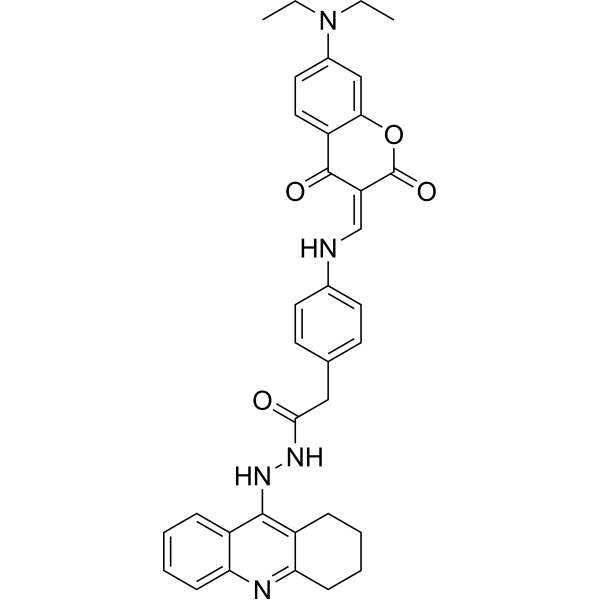
PE154 is a fluorescent probe that binds to Aβ plaques, as well as a potent fluorescent inhibitor of AChE and BChE, with an IC50 of 280 pM against hAChE and 16 nM against hBChE. PE154 is applicable for histochemical detection of Aβ plaques in mouse and human brain tissues. PE154 can be used in research related to Alzheimer's disease .
loading...
    loading...
Cat. No.: HY-149352
Target:  

Thymidylate Synthase

Research Areas:  

Cancer

DG1 (Compound 8Nc) is a Thymidylate Synthase (TS) inhibitor that affects cancer angiogenesis and metabolic reprogramming in NSCLC cells. DG1 can effectively inhibit the expression of CD26, ET-1, FGF-1 and EGF. DG1 also effectively inhibits the proliferation of cancer tissue in the A549 xenograft mouse model .
loading...
    loading...
Cat. No.: HY-13508R
CAS No.: 459168-41-3
Target:  

Histamine Receptor

Research Areas:  

Inflammation/Immunology

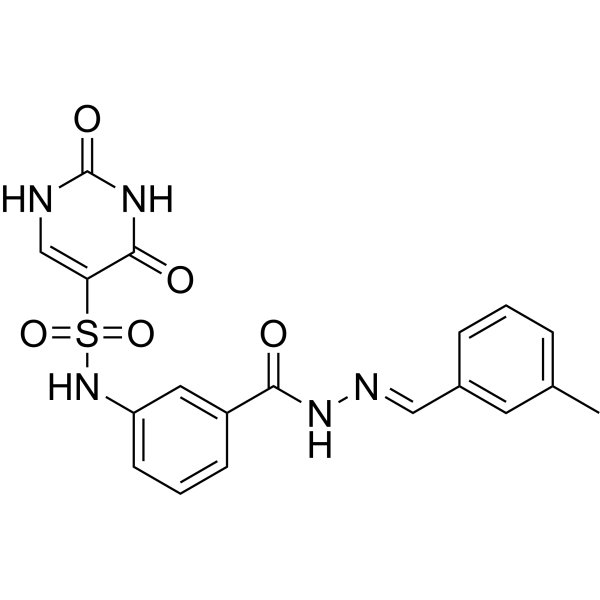
JNJ-7777120 (Standard) is the analytical standard of JNJ-7777120. This product is intended for research and analytical applications. JNJ-7777120 is a potent and selective histamine H4 receptor antagonist (Ki=4.5 nM). JNJ-7777120 effectively blocks histamine-induced migration of mouse tracheal mast cells from connective tissue to epithelial cells. JNJ-7777120 also significantly blocks neutrophil infiltration in a mouse Zymosan-induced peritonitis model. JNJ-7777120 has a good potential to study antipruritic and anti-inflammatory .
loading...
    loading...
Cat. No.: HY-169429
CAS No.: 2568903-91-1
Target:  

Flavivirus

Research Areas:  

Infection

CHIKV-IN-5 (Compound 26) is a CHIKV inhibitor (EC90 = 0.45 μM). CHIKV-IN-5 inhibits CHIKV replication at a late stage in the virus life cycle by blocking structural protein translation. CHIKV-IN-5 has great in vitro mouse microsomal stability. CHIKV-IN-5 reduces footpad swelling and decreases virus dissemination to other tissues in mice infected with CHIKV .
loading...
    loading...
Cat. No.: HY-171590
CAS No.: 2810809-10-8
Research Areas:  

Inflammation/Immunology

SIK2-IN-3 is an orally active SIK1/2 selective inhibitor (IC50: 0.128/0.084 μM). SIK2-IN-3 inhibits CRTC3 phosphorylation and myeloid cell pro-inflammatory cytokine production. SIK2-IN-3 ameliorates systemic and tissue inflammatory responses in a mouse anti-CD40 colitis model .
loading...
    loading...
Cat. No.: HY-171793
CAS No.: 195604-21-8
Target:  

PPAR

Research Areas:  

Metabolic Disease

DN-108, a thiazolidinedione derivative, is an orally active peroxisome proliferator-activated receptor γ (PPARγ) agonist with antidiabetic effects. DN-108 improves hyperglycemia, hypertriglyceridemia and hyperinsulinemia in diabetic mouse models. DN-108 enhances tissue glucose uptake (e.g., increasing 2-deoxyglucose uptake in L6 muscle cells) and inhibits fatty acid synthase activity. DN-108 is promising for research of type 2 diabetes .
loading...
    loading...
Cat. No.: HY-169059
Target:  

Ferroptosis

Research Areas:  

Inflammation/Immunology

Ferroptosis-IN-12 (Cpd-A1) is a ferroptosis inhibitor. Ferroptosis-IN-12 exhibits effective ferroptosis inhibition in Erastin (HY-15763)-treated mouse tubular epithelial cells (mTECs) and improves kidney function, alleviates renal tubular damage, and reduces inflammation in a dose-dependent manner in acute kidney injury (AKI) mouse models induced by ischemia/reperfusion (I/R) or cecal ligation and puncture (CLP). Ferroptosis-IN-12 demonstrates good plasma stability and high distribution in kidney tissues in pharmacokinetic studies in mice. Ferroptosis-IN-12 holds promise for research in the field of acute kidney injury (AKI) .
loading...
    loading...
Cat. No.: HY-170228
Target:  

c-Kit

Research Areas:  

Inflammation/Immunology

Kit-IN-9 (Compound D9) is an inhibitor of c-Kit. c-Kit-IN-9 inhibits the inflammatory responses in J774A.1, RAW264.7, MPMs cells and lung tissues by blocking the activation of the NF-κB pathway induced by LPS (HY-D1056). Meanwhile, c-Kit-IN-9 exhibits good anti-inflammatory activities in acute lung injury and sepsis mouse models. c-Kit-IN-9 can be used in the research of acute lung injury and related inflammatory diseases .
loading...
    loading...
Cat. No.: HY-170347
CAS No.: 3033588-00-7
Target:  

PROTACs SWI/SNF Complex

Research Areas:  

Cancer

PROTAC SMARCA2/4 degrader-36 is a bifunctional PROTAC degrader that degrades SMARCA2 and SMARCA4. PROTAC SMARCA2/4 degrader-36 hijacks the ubiquitin-proteasome system to mediate the degradation of SMARCA2/4 by binding to the VHL E3 ubiquitin ligase. PROTAC SMARCA2/4 degrader-36 downregulates SMARCA2/4 in tumor tissues in mouse xenograft models . PROTAC SMARCA2/4 degrader-36 can be used in studies related to non-small cell lung cancer .
loading...
    loading...
Cat. No.: HY-159494
PROTAC sEH degrader-1 is a PROTAC degrader targeting soluble epoxide hydrolase (sEH) with a DC50 of 0.5 nM, and it also possesses sEH inhibitory activity. PROTAC sEH degrader-1 has an IC50 of 3.8 nM against human sEH and an IC50 of 210 nM against mouse sEH. PROTAC sEH degrader-1 relies on the ubiquitin-proteasome system to achieve target protein degradation, and it selectively degrades cytoplasmic sEH. PROTAC sEH degrader-1 rapidly reduces endoplasmic reticulum stress in cells, downregulates the phosphorylation levels of IRE1α, PERK and eIF2α, enhances cell viability, and alleviates Thapsigargin (HY-13433)-induced apoptosis. PROTAC sEH degrader-1 effectively degrades sEH in mouse liver and brown adipose tissue. PROTAC sEH degrader-1 can be used in studies related to metabolic disorders and inflammation .
loading...
    loading...
Cat. No.: HY-K6143

MCE Mouse Fetal Brain Organoid (Expansion) Kit contains Mouse Fetal Brain Organoid Expansion Basal Medium and Mouse Fetal Brain Organoid Expansion Culture Supplement . This kit enables the efficient in vitro generation of mouse fetal brain organoids (mFBs). Within this culture system, mouse fetal brain tissue can spontaneously form organoid structures that faithfully recapitulate key features of in vivo cellular heterogeneity and complex tissue organization.

loading...
    loading...
Cat. No.: HY-K0536

MCE Mouse Tissue Direct PCR Kit – Pro (with Dye) is specifically designed for direct PCR amplification from tissue samples. It enables rapid, one-step release of genomic DNA from various mouse tissues (such as tail, ear, toe, and muscle), which can be directly used for downstream PCR amplification and analysis without the need for conventional DNA extraction and purification steps, thereby significantly simplifying the experimental workflow.

loading...
    loading...
Cat. No.: HY-K0534

MCE Mouse Tissue Direct PCR Kit (with Dye) is specifically designed for direct PCR amplification from tissue samples. It enables rapid, one-step release of genomic DNA from various mouse tissues (such as tail, ear, toe, and muscle), which can be directly used for downstream PCR amplification and analysis without the need for conventional DNA extraction and purification steps, thereby significantly simplifying the experimental workflow.

loading...
    loading...
Cat. No.: HY-K0535

MCE Mouse Tissue Direct PCR Plus Kit is specifically designed for direct PCR amplification from tissue samples. It enables rapid, one-step release of genomic DNA from various mouse tissues (such as tail, ear, toe, and muscle), which can be directly used for downstream PCR amplification and analysis without the need for conventional DNA extraction and purification steps, thereby significantly simplifying the experimental workflow.

loading...
    loading...
Cat. No.: HY-K0005

MCE Mouse Tissue Lysis Buffer formulated with a highly efficient lysis buffer system, enabling rapid disruption of various mouse tissue samples (e.g., tail, ear, toe, muscle) and efficient release of genomic DNA. The lysate can be directly used as a template in PCR reactions without the need for additional extraction or purification steps, ensuring a simple and streamlined workflow.

loading...
    loading...
Cat. No.: HY-K0308

MCE Mouse CD4+ Cells Positive Selection Kit is designed for the isolation of CD4+ cells from single cell suspensions of mouse spleen cells, lymph nodes or other tissues.

loading...
    loading...
Cat. No.: HY-K0538

MCE Animal Tissue Direct PCR Kit (with Dye) is specifically designed for direct amplification from a variety of animal tissue samples. It enables rapid release of genomic DNA from animal tissues (such as insect legs/wings, mouse tails, ears, toes, skin, and internal organs) in a single step, allowing the lysate to be used directly for downstream PCR amplification without the need for conventional DNA extraction and purification procedures, thereby significantly simplifying the workflow.

loading...
    loading...
Cat. No.: HY-K0355

MCE Mouse CD3 Cell Depletion Magnetic Beads (Positive Selection) are magnetic beads covalently coupled with anti-mouse CD3 antibodies, enabling the specific binding and magnetic removal of CD3+ cells from single-cell suspensions derived from mouse spleen and other tissues. This allows efficient enrichment of the non-CD3+ cell population.

loading...
    loading...

