
135 Results for "

mouse tissues

" in MedChemExpress (MCE) Product Catalog:
Products (135)

135 Results for "mouse tissues" in MCE Product Catalog:

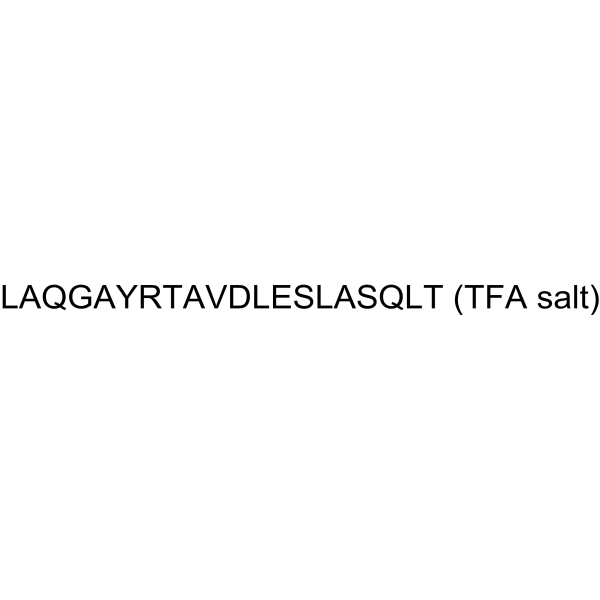
Cat. No.: HY-P1924A
IRBP (651-670) human, mouse TFA is an epitope and uveitis inducer naturally processed from the conserved region of native IRBP. IRBP (651-670) human, mouse TFA increases the levels of proinflammatory cytokines in ocular tissues (IL-1β, IL-6, TNFα, IL-17A and IL-17F). IRBP (651-670) human, mouse TFA is a IRBP fragment conserved among human, mouse and bovine species. IRBP (651-670) human, mouse TFA induces experimental autoimmune uveitis. IRBP (651-670) human, mouse TFA is applicable to research related to experimental autoimmune uveitis .
loading...
    loading...
Cat. No.: HY-126850
CAS No.: 6543-77-7
Target:  

EGFR

Research Areas:  

Cancer

4-Epidoxycycline is a liver metabolite of the antibiotic doxycycline (doxycycline, HY-N0565) and doesn't have antibiotic properties in mice. 4-Epidoxycycline’s ability to regulate HER2 gene expression in vitro and in live mouse models is similar to that of doxycycline, and it shows comparable high efficacy in tumor tissues, achieving over 95% tumor regression rates .
loading...
    loading...
Cat. No.: HY-170933
CAS No.: 3046378-98-4
Target:  

SGK

Research Areas:  

Cancer

SGK1-IN-6 is a selective SGK1 inhibitor with an IC50 of 0.39 μM, showing selectivity over SGK2/3. SGK1-IN-6 inhibits cancer cell migration and invasion, improves SGK1 protein thermal stability. SGK1-IN-6 decreases SGK1 protein levels in tumor tissues, suppresses tumor growth in mouse xenograft models. SGK1-IN-6 can be used for the research of prostate cancer .
loading...
    loading...
Cat. No.: HY-P10427A
Target:  

CXCR Dengue Virus

Research Areas:  

Infection

DV1 TFA is a CXCR4 inhibitor with anti-proteolytic properties that specifically blocks the binding of SDF-1α to its receptor. DV1 TFA inhibits the migration of breast cancer cells and enables the targeted delivery of avidin-PLGA nanoparticles to CXCR4-expressing cancer cells. DV1 TFA not only effectively suppresses the progression of metastatic breast cancer in mouse models, but also preferentially accumulates in brain tumor tissues rather than normal brain tissues, showing potential for inhibiting intracranial tumor metastasis. As a humoral immune stimulant, DV1 TFA induces the production of specific IgG, neutralizing antibodies and cellular immune responses, thereby providing the host with protection against lethal challenges. DV1 TFA has been applied to studies on CXCR4-expressing cancers, glioblastoma, dengue fever and other related diseases .
loading...
    loading...
Cat. No.: HY-P990123
Anti-Mouse ICOSL/CD275 Antibody (HK5.3) is an anti-mouse ICOSL/CD275 IgG2a monoclonal antibody. Anti-Mouse ICOSL/CD275 Antibody (HK5.3) can inhibit the adhesion between T cells and endothelial cells. Anti-Mouse ICOSL/CD275 Antibody (HK5.3) can reduce the expansion of tissue resident (TR) Treg cells. Anti-Mouse ICOSL/CD275 Antibody (HK5.3) can be used for researches on inflammation and infection conditions such as influenza virus infection and arthritis .
loading...
    loading...
Cat. No.: HY-P990143

Target:  

LDLR

Research Areas:  

Others

Anti-Mouse/Rat/Bovine VLDL-R Antibody (IgG-6A6) is an anti-mouse/rat/bovine VLDL-R IgG1 monoclonal antibody. Anti-Mouse/Rat/Bovine VLDL-R Antibody (IgG-6A6) can specifically recognize VLDLR type-I and type-II expressed in CHO cells. Anti-Mouse/Rat/Bovine VLDL-R Antibody (IgG-6A6) can be used to detect the expression of VLDLR in different cells and tissues. Anti-Mouse/Rat/Bovine VLDL-R Antibody (IgG-6A6) often used in western blot experiments .
loading...
    loading...
Cat. No.: HY-B1398R
CAS No.: 83-07-8
Synonyms: 4-Aminophenazone (Standard)
Ampyrone (4-Aminophenazone) (Standard) is the analytical standard of Ampyrone (HY-B1398). This product is intended for research and analytical applications. Ampyrone (4-Aminophenazone; 4-Aminoantipyrine) is a reversible and low-damage optical clearing agent and non-selective COX inhibitor based on UV absorption properties. Ampyrone can improve the optical transmittance of mouse skin and other tissues. Ampyrone can induce tissue refractive index matching by enhancing UV absorption, reduce light scattering, and achieve tissue transparency in vivo. Ampyrone reduces the synthesis of prostaglandin PGE2, thereby exerting anti-inflammatory, analgesic and antipyretic effects. Ampyrone inhibits DNA damage, cell apoptosis and immune cell phagocytosis induced by Doxorubicin (HY-15142A) and Cisplatin (HY-17394), etc., and participates in the regulation of toxicity in tumor chemotherapy .
loading...
    loading...
Cat. No.: HY-169057
Research Areas:  

Inflammation/Immunology

BI1543673 is an interleukin-1 receptor-associated kinase 4 (IRAK4) inhibitor. BI1543673 can reduce the inflammatory response stimulated by TLR4 and TLR7/8 in human lung tissue. BI1543673 can decrease inflammatory signaling in a mouse model of lung inflammation induced by LPS .
loading...
    loading...
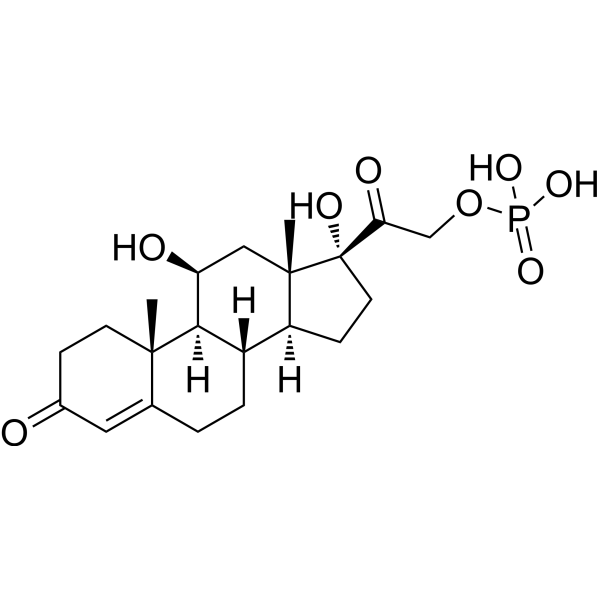
Cat. No.: HY-B1155
CAS No.: 3863-59-0
Synonyms: Hydrocortisone 21-phosphate; Cortisol 21-phosphate
Target:  

Phosphatase

Research Areas:  

Metabolic Disease Endocrinology

Hydrocortisone phosphate (Hydrocortisone 21-phosphate) is a derivative of the glucocorticoid Hydrocortisone hemisuccinate (HY-B1402) that increases serum luteinizing hormone (LH) levels. Hydrocortisone phosphate increases the activity of magnesium-dependent polymerases in the nucleolus. Hydrocortisone phosphate also serves as a substrate for alkaline phosphatase to localize phosphatases that hydrolyze steroid phosphates, and the role of alkaline phosphatase has been validated in adult mouse tissues .
loading...
    loading...
Cat. No.: HY-D2902
CAS No.: 2080332-70-1
SNOTRAP (SNO trapping by triaryl phosphine) is a chemical probe used for detecting S-nitrosylated (SNO) proteins. SNOTRAP selectively converts S-nitrosylated cysteines in proteins into stable disulfide-iminophosphorane intermediates, which are then enriched with streptavidin and detected by nanoLC-MS/MS. SNOTRAP enables global enrichment and label-free quantification of SNO proteins and their modification sites in complex biological samples such as mouse brain tissues. SNOTRAP can be applied to studies related to nitrosative stress-associated diseases, including neurodegenerative diseases, cancer, and multiple sclerosis .
loading...
    loading...
Cat. No.: HY-175769
Target:  

VSV

Research Areas:  

Infection

SMU-V18 is a vesicular stomatitis virus (VSV) inhibitor, with an EC50 of 6.2 μM. SMU-V18 inhibits VSV-GFP fluorescence intensity, viral mRNA/protein expression, and progeny virus replication. SMU-V18 interferes with early viral infection stages, also effective against wild-type VSV (VSV-WT). SMU-V18 inhibits VSV-GFP in mouse tissues and prolongs survival. SMU-V18 can be used for the study of vesicular stomatitis virus (VSV) infection .
loading...
    loading...
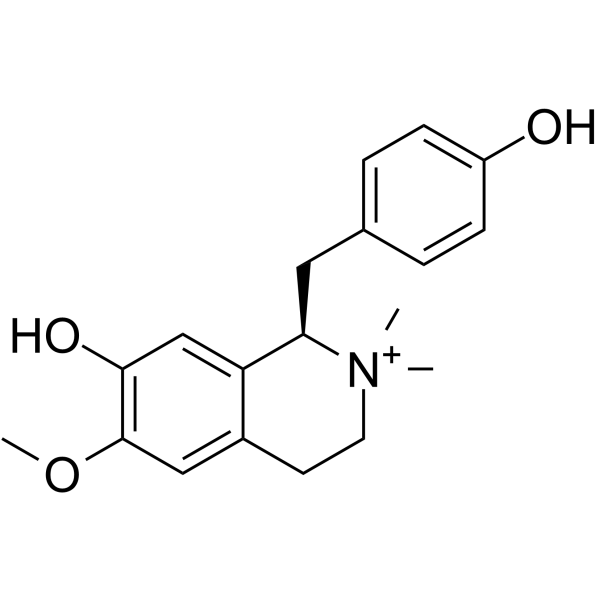
Cat. No.: HY-N6609
CAS No.: 6801-40-7
Magnocurarine is a neuromuscular junction blocker that inhibits muscle contraction by functionally blocking signal transmission without directly damaging nerve or muscle tissues. In frog, mouse and rabbit models, Magnocurarine exerts a dose-dependent paralytic effect, which progresses gradually from limb weakness and loss of righting reflex to respiratory depression and even cardiac arrest. Although high doses cause complete cessation of movement, Magnocurarine does not affect the spinal multineuronal reflex in frogs. Magnocurarine exhibits biological activity similar to that of tubocurarine (HY-125901) in various animal models .
loading...
    loading...
Cat. No.: HY-168087
CAS No.: 1893340-21-0
Target:  

Integrin

Research Areas:  

Inflammation/Immunology

GSK3335103 is an orally active non-peptidic αvβ6 integrin inhibitor with a pIC50 of 8 and a pKi of 9.96. GSK3335103 blocks αvβ6 integrin-mediated cell adhesion and TGF-β1 activation, induces integrin internalization, recycling and lysosomal degradation, attenuates TGFβ signaling and reduces collagen deposition. GSK3335103 decreases the level of pSmad2 in BAL cells and collagen deposition in lung tissues in a mouse model of pulmonary fibrosis. GSK3335103 can be used in research related to pulmonary fibrosis .
loading...
    loading...
Cat. No.: HY-W615095
CAS No.: 2227450-68-0
Target:  

PROTAC Linkers

Research Areas:  

Others

Biotin-PEG2-alkyne is a click chemistry PEG linker based on copper (I)-catalyzed azide-alkyne cycloaddition (CuAAC), as well as a biotinylation reagent. In solution-phase and click labeling systems, Biotin-PEG2-alkyne efficiently conjugates biotin groups to azide-functionalized streptavidin amplicons. Biotin-PEG2-alkyne is also widely applicable in fixed cells and mouse intestinal tissue sections to achieve specific biotinylation of various azide-labeled biomolecules (such as proteins, lipids, DNA, and Afatinib (HY-10261)), thereby effectively promoting signal amplification and precise detection of targets .
loading...
    loading...
Cat. No.: HY-103336
CAS No.: 1186195-59-4
Synonyms: T1117
Research Areas:  

Cancer

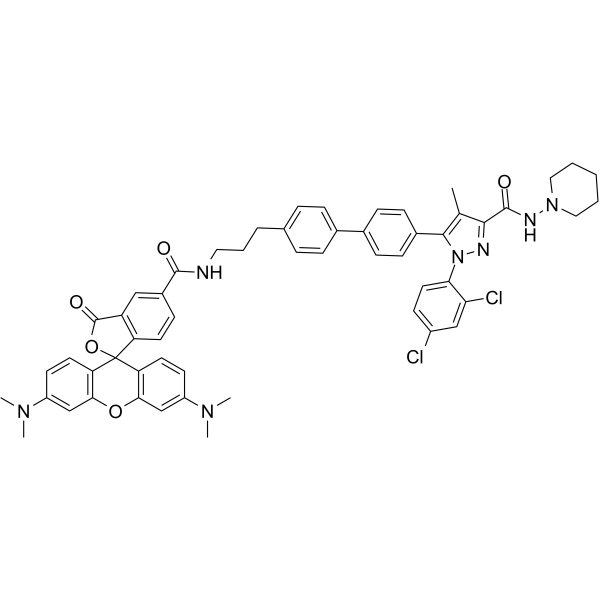
Tocrifluor 1117 is a selective GPR55 ligand and fluorescent probe. Tocrifluor 1117 shows extremely low affinity for mouse CB1 receptors (Ki >1000 nM) and only weakly displaces CB1 agonists. Tocrifluor 1117 specifically activates GPR55 to trigger intracellular calcium oscillations, and binds to vascular smooth muscle, endothelial and adventitial cells; all these binding effects are inhibited by pretreatment with unlabeled AM251 or O1602. Tocrifluor 1117 can clearly visualize the distribution of GPR55 in vascular tissues via confocal microscopy, while its uptake in cancer cells is completely dependent on GPR55 expression .
loading...
    loading...
Cat. No.: HY-139062
CAS No.: 486991-52-0
Synonyms: C6 Ceramide (d18:1/6:0) Urea; Cer(d18:1/6:0) Urea; D-erythro-Urea-C6-Ceramide
Research Areas:  

Cancer

C6 Urea Ceramide (Cer(d18:1/6:0) Urea) is an inhibitor of neutral ceramidase. C6 Urea Ceramide increases total ceramide levels in wild-type mouse embryonic fibroblasts (MEFs) and HT-29 colon cancer cells. C6 Urea Ceramide (5-10 μM) inhibits proliferation of HT-29 cells and induces apoptosis and autophagy, but is not toxic to non-cancerous cells. C6 Urea Ceramide decreases total and phosphorylated β-catenin levels in HT-29 and HCT116 cells, and induces colocalization of β-catenin with the 20S proteasome. C6 Urea Ceramide (1.25, 2.5, and 5 mg/kg) reduced tumor growth and increased C16, C18, C20, and C24 ceramide levels in tumor tissues in the HT-29 mouse xenograft model.
loading...
    loading...
Cat. No.: HY-177809
Target:  

TNF Receptor

Research Areas:  

Inflammation/Immunology

aptTNF-α sodium is a TNF-α-targeting aptamer that has tissue protective effect and systemic anti-inflammatory effect upon acute tissue injury using the mouse acute lung injury (ALI) and acute liver failure (ALF) models.
loading...
    loading...
Cat. No.: HY-152535
CAS No.: 2935937-67-8
Target:  

HSV

Research Areas:  

Infection Inflammation/Immunology

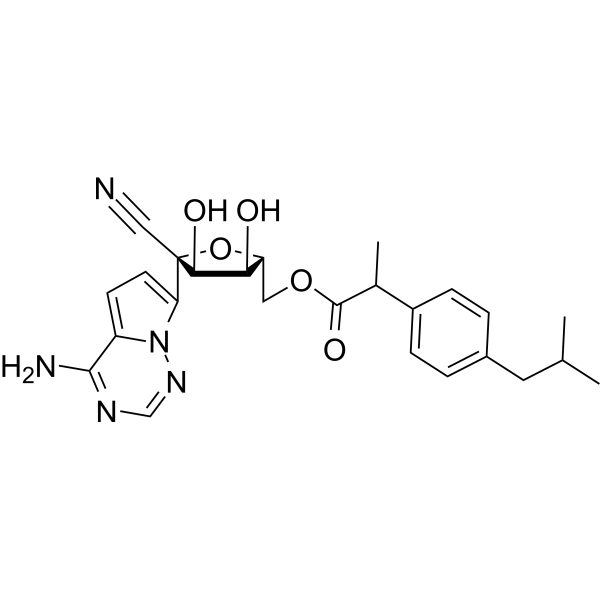
ATV041 is an orally active Ibuprofen (HY-78131) and nucleotide analogue. ATV041 improves oral pharmacokinetic (PK) profile and tissue distribution with anti-mouse hepatitis virus (MHV) activity. ATV041 reduces viral load, tissue damage and virus-induced inflammation in a dose-dependent manner .
loading...
    loading...
Cat. No.: HY-126969
CAS No.: 870095-15-1
Target:  

PPAR

Research Areas:  

Metabolic Disease

C333H is a selective PPARγ modulator with insulin-sensitizing and hypoglycemic activities. C333H exhibits similar insulin-sensitizing effects to thiazolidinediones (TZDs) in diabetic mouse models without significantly increasing body weight or adipose tissue weight. C333H increases circulating high molecular weight adiponectin isoform levels in diabetic db/db mice, reduces serine phosphorylation of PPARγ 273 in brown adipose tissue, and selectively modulates the expression of specific PPARγ target genes in adipose tissue. Express. C333H exhibits weak recruitment of co-activators and weak dissociation of co-repressors in vitro. These properties suggest that C333H may be a potential inhibitor of type 2 diabetes .
loading...
    loading...
Cat. No.: HY-157847
Target:  

STAT

Research Areas:  

Cancer

Phospho-STAT3-IN-2 (compound 4D) is a STAT3 inhibitor that effectively inhibits STAT3 phosphorylation. phospho-STAT3-IN-2 can significantly reduce tumor volume in mouse xenograft tumor models without drug toxicity to other organs and tissues .
loading...
    loading...

