
135 Results for "

mouse tissues

" in MedChemExpress (MCE) Product Catalog:
Products (135)

135 Results for "mouse tissues" in MCE Product Catalog:

Cat. No.: HY-184584
Research Areas:  

Infection

Antibacterial agent 358 is an antibacterial agent. Antibacterial agent 358 selectively interacts with PG on bacterial cell membranes, causing membrane damage. Antibacterial agent 358 induces bacterial cell membrane depolarization, increased membrane permeability and leakage of intracellular components. Antibacterial agent 358 inhibits biofilm formation and disrupts established biofilms. Antibacterial agent 358 reduces bacterial load and alleviates tissue inflammation in a mouse skin abscess model. Antibacterial agent 358 can be used in research related to Gram-positive bacterial infections and skin abscesses .
loading...
    loading...
Cat. No.: HY-N6609B
CAS No.: 75413-87-5
Magnocurarine chloride is a neuromuscular junction blocker that inhibits muscle contraction by functionally blocking signal transmission without directly damaging nerve or muscle tissues. In frog, mouse and rabbit models, Magnocurarine chloride exerts a dose-dependent paralytic effect, which progresses gradually from limb weakness and loss of righting reflex to respiratory depression and even cardiac arrest. Although high doses cause complete cessation of movement, Magnocurarine chloride does not affect the spinal multineuronal reflex in frogs. Magnocurarine chloride exhibits biological activity similar to that of tubocurarine (HY-125901) in various animal models .
loading...
    loading...
Cat. No.: HY-183148
CAS No.: 2237269-22-4
Target:  

NAMPT ATP Synthase

Research Areas:  

Neurological Disease

NAMPT activator-10 (Compound B11) is an orally active NAMPT activator with a target Kd value of 0.64 μM. NAMPT activator-10 activates the rate-limiting enzyme in NAD + biosynthesis and promotes intracellular NAD + synthesis. NAMPT activator-10 reduces lactate accumulation, enhances glycogen storage in the liver and muscle, increases tissue ATP production, improves exercise endurance and muscle strength, and exerts a protective effect against fatigue-induced muscle damage in mouse fatigue models. NAMPT activator-10 can be used in studies related to muscle fatigue .
loading...
    loading...
Cat. No.: HY-D3179
CAS No.: 1451048-96-6
CDg13 is a fluorescent probe that specifically detects living neural stem/progenitor cells. CDg13 localizes to the endoplasmic reticulum via its dihexyl moiety, with no interaction with endoplasmic reticulum biomolecules. CDg13 undergoes selective efflux by active ABCG2 transporters, with increased intracellular accumulation following ABCG2 inhibition or knockdown. CDg13 isolates and enriches self-renewable neural stem/progenitor cells from embryonic mouse brain tissue, stains neural stem/progenitor cells brightly, and sorts ABCG2low cell populations from heterogeneous populations . (Ex/Em = 520/553 nm)
loading...
    loading...
Cat. No.: HY-149010
CAS No.: 2254492-08-3
Purity:  98.18%
Target:  

Keap1-Nrf2

Research Areas:  

Neurological Disease

NXPZ-2 is an orally active Keap1-Nrf2 protein–protein interaction (PPI) inhibitor with a Ki value of 95 nM, EC50 value of 120 and 170 nM. NXPZ-2 can dose-dependently ameliorate Aβ[1-42]-Induced cognitive dysfunction, improve brain tissue pathological changes in Alzheimer’s disease (AD) mouse by increasing neuron quantity and function. NXPZ-2 can inhibit oxidative stress by increasing Nrf2 expression levels and promoting its cytoplasm to nuclear translocation, which is helpful for Keap1-Nrf2 PPI inhibitors and AD associated disease research .
loading...
    loading...
Cat. No.: HY-180557
Target:  

Folate Receptor (FR)

Research Areas:  

Cancer

4A-BFA-11 is a folate-targeted PEG-MMAE conjugate that exhibits specific binding affinity for the folate receptor α (FR-α) (KD = 106.7 nM). 4A-BFA-11 achieves tumor enrichment by combining PEG-mediated long circulation (EPR effect) and folate receptor targeting. 4A-BFA-11 undergoes enzymatic cleavage at the tumor site to release the active payload, enabling precise action. 4A-BFA-11 sefficiently carries, targets, and controls the release of MMAE in tumor tissues in a HeLa mouse model. 4A-BFA-11 can be used for cervical cancer, ovarian cancer, and lung cancer research .
loading...
    loading...
Cat. No.: HY-184206
Target:  

CD38

A-3190 is an orally active, blood-brain barrier permeable CD38 inhibitor, with an IC50 of 7.25 nM against human CD38 and 1.24 nM against mouse CD38. A-3190 is a derivative of A-8531 (HY-184021), and it forms covalent adducts with NAD + in the presence of CD38. A-3190 acts as an inducer of NAD + levels and an inhibitor of NAM and ADPR levels. A-3190 increases NAD + levels in the skin, lung, liver and brain of rodents, while reducing NAM and ADPR levels in brain tissues. A-3190 can be used in research related to multiple sclerosis, Parkinson's disease and Alzheimer's disease .
loading...
    loading...
Cat. No.: HY-N0507R
CAS No.: 84954-92-7
Rosavin (Standard) is the analytical standard of Rosavin. This product is intended for research and analytical applications. Rosavin, an orally bioactive phenylpropanoid from Rhodiola rosea L. (RRL), is an adaptogen that enhances the body’s response to environmental stress. Rosavin significantly influences bone tissue metabolism by inhibiting osteoclastogenesis and promoting osteoblast differentiation, also impacts various diseases, demonstrating antidepressant, adaptogenic, and anxiolytic effects in mouse models. Additionally, Rosavin improves survival, reducing intestinal damage in irradiated rats and Ischemia-reperfusion(I/R)-induced cerebral injury in vivo by regulating inflammation and oxidative stress, making it a promising candidate for research in radiation-induced intestinal injury, I/R-induced cerebral injury and osteoporosis .
loading...
    loading...
Cat. No.: HY-111355
CAS No.: 1256-86-6
Cholesterol sulfate is a naturally occurring, orally active cholesterol derivative that is widely distributed in various tissues and body fluids. Cholesterol sulfate acts as a DOCK2 inhibitor, with IC50 values of 2 μM and 2.9 μM against mouse and human targets, respectively. Cholesterol sulfate restricts excessive neutrophil infiltration and alleviates intestinal inflammation and damage. Cholesterol sulfate serves as an activator of protein kinase C (PKC), which promotes squamous cell differentiation and inhibits skin carcinogenesis. Cholesterol sulfate regulates cholesterol homeostasis and cellular metabolism by activating the AMPK-Sirt1 pathway. Cholesterol sulfate can be used in research related to actinic keratitis, ulcerative colitis, skin cancer, and other conditions .
loading...
    loading...
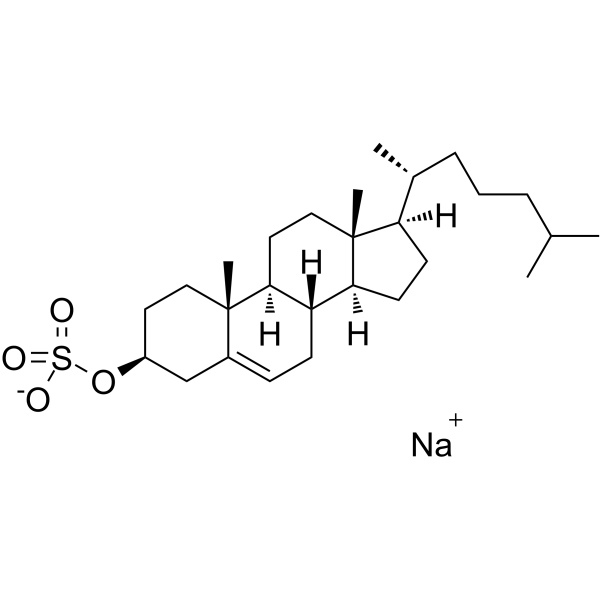
Cat. No.: HY-111355B
CAS No.: 2864-50-8
Purity:  98.22%
Cholesterol sulfate sodium is a naturally occurring, orally active cholesterol derivative that is widely distributed in various tissues and body fluids. Cholesterol sulfate sodium acts as a DOCK2 inhibitor, with IC50 values of 2 μM and 2.9 μM against mouse and human targets, respectively. Cholesterol sulfate sodium restricts excessive neutrophil infiltration and alleviates intestinal inflammation and damage. Cholesterol sulfate sodium serves as an activator of protein kinase C (PKC), which promotes squamous cell differentiation and inhibits skin carcinogenesis. Cholesterol sulfate sodium regulates cholesterol homeostasis and cellular metabolism by activating the AMPK-Sirt1 pathway. Cholesterol sulfate sodium can be used in research related to actinic keratitis, ulcerative colitis, skin cancer, and other conditions .
loading...
    loading...
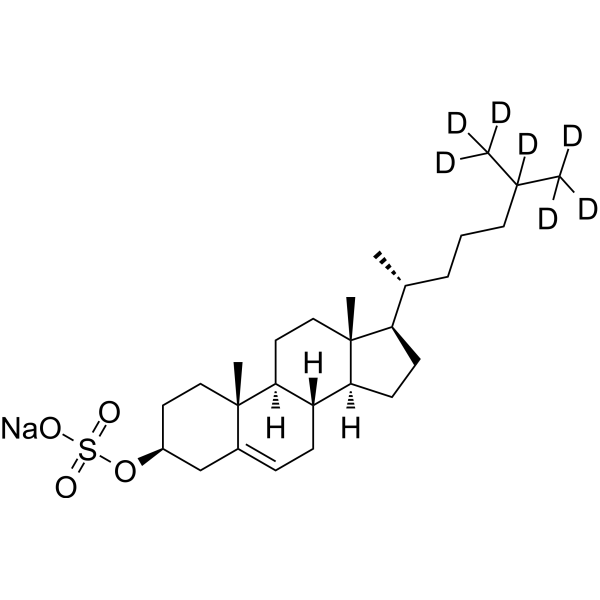
Cat. No.: HY-111355S
CAS No.: 2687961-01-7
Purity:  ≥98.0%
Cholesterol sulfate sodium-d7 is the deuterium labeled Cholesterol sulfate sodium. Cholesterol sulfate sodium is a naturally occurring, orally active cholesterol derivative that is widely distributed in various tissues and body fluids. Cholesterol sulfate sodium acts as a DOCK2 inhibitor, with IC50 values of 2 μM and 2.9 μM against mouse and human targets, respectively. Cholesterol sulfate sodium restricts excessive neutrophil infiltration and alleviates intestinal inflammation and damage. Cholesterol sulfate sodium serves as an activator of protein kinase C (PKC), which promotes squamous cell differentiation and inhibits skin carcinogenesis. Cholesterol sulfate sodium regulates cholesterol homeostasis and cellular metabolism by activating the AMPK-Sirt1 pathway. Cholesterol sulfate sodium can be used in research related to actinic keratitis, ulcerative colitis, skin cancer, and other conditions.
loading...
    loading...
Cat. No.: HY-159771
CAS No.: 3095069-75-0
Target:  

FAP

Research Areas:  

Cancer

FAP6-19 is a fibroblast activation protein (FAP) targeting radioligand with a Kd of 18.2 nM. FAP6-19 selectively delivers therapeutic radioactive nuclides (such as 177Lu) to the tumor site by targeting the overexpressed FAP protein in the tumor microenvironment, achieving precise killing of cancer cells while minimizing radiation damage to healthy tissues. FAP6-19 exhibits extremely high total cellular uptake and good intracellular retention ability in HT1080 cells. After being labeled with 111In, FAP6-19 produced extremely high tumor/kidney and tumor/liver dose ratios in the mouse model with 4T1 tumors. FAP6-19 can be used in the research of solid tumors expressing FAP.
loading...
    loading...
Cat. No.: HY-167939
CAS No.: 788821-30-7
Target:  

Adrenergic Receptor

Research Areas:  

Inflammation/Immunology

(R)-Bambuterol is a β2-receptor agonist with anti-asthmatic and colitis-improving activity. (R)-Bambuterol is indicated for the treatment of asthma and chronic obstructive pulmonary disease and has the advantage of a once-daily dosing and a favorable side effect profile. (R)-Bambuterol significantly reduced disease severity in a mouse model of colitis, more effectively than (RS)-Bambuterol or (S)-Bambuterol. (R)-Bambuterol can significantly reduce the levels of inflammatory cytokines and reduce the infiltration of macrophages in mice with colitis. (R)-Bambuterol also increases β2-adrenoceptor levels and reduces the expression of IL-6, IL-17 and other related proteins in colon tissue in a dose-dependent manner .
loading...
    loading...
Cat. No.: HY-184502
CAS No.: 3034295-80-9
Target:  

STING

DDO-88109 is a STING inhibitor with a Kd value of 317 nM for hSTING and 0.625 μM for mSTING. DDO-88109 competitively occupies the CDN-binding pocket of STING, thereby maintaining STING in an inactive state. It inhibits cGAS-STING signaling—including STING translocation from the endoplasmic reticulum to the Golgi apparatus, STING oligomerization, and the phosphorylation of IRF3, p65, TBK1, and STING—and attenuates the production of inflammatory cytokines and tissue inflammation in mouse models of TREX1-deficiency-driven autoinflammation and cisplatin (HY-17394)-induced acute kidney injury. DDO-88109 is suitable for research on inflammatory diseases, autoimmune disorders, and acute kidney injury driven by the cGAS-STING pathway .
loading...
    loading...
Cat. No.: HY-D3181
CyGbPF is a granzyme B-specific near-infrared fluorescent probe. CyGbPF can be cleaved by granzyme B to remove the peptide cage group, restoring near-infrared fluorescence. CyGbPF passively accumulates in mouse tumors, and its activated fluorescence correlates with granzyme B expression, CD8 + cytotoxic T lymphocyte populations, and CD4 + helper T lymphocyte populations in tumor tissues. CyGbPF is efficiently cleared by the kidneys, enabling the assessment of immune activation via optical urine analysis. CyGbPF allows real-time non-invasive evaluation of cancer immunotherapeutic efficacy in living animals. CyGbPF can be used in research on cancers such as breast cancer. Excitation wavelength/emission wavelength: approximately 658 nm/approximately 717 nm .
loading...
    loading...
Cat. No.: HY-D3190
CAS No.: 2173116-67-9
BODIPY-DOX is a conjugate composed of BODIPY and Doxorubicin (HY-15142A), as well as a pH-activated fluorescent probe for M1 macrophages and an apoptosis inducer. BODIPY-DOX undergoes pH-induced hydrazone bond cleavage in acidic M1 macrophage phagosomes, thereby releasing cytotoxic Doxorubicin (Dox) and inhibiting the function of pro-inflammatory M1 macrophages. BODIPY-DOX highly selectively inhibits the production of relevant pro-inflammatory cytokines by mouse and human monocyte-derived M1 macrophages, while exerting minimal effects on M2 or unactivated macrophages. Therefore, BODIPY-DOX enables simultaneous fluorescent tracing, differentiation and elimination of specific macrophage subsets, and exhibits the potential to regulate tissue regeneration in zebrafish models .
loading...
    loading...
Cat. No.: HY-P2917
CAS No.: 9030-66-4
Synonyms: GyK
Glycerol kinase, microorganism (GyK) acts as a NR4A1 inhibitor with enzymatic activity. It directly binds to and inhibits the transcription factor NR4A1, thereby negatively regulating hepatic gluconeogenesis and reducing blood glucose levels. Glycerol kinase, microorganism positively regulates UCP1 expression via partial dependence on the β-adrenergic receptor-cAMP-CREB pathway, promotes browning of white adipose tissue and thermogenesis, and further modulates intracellular fatty acid composition and energy metabolism. In diabetic mouse models, overexpression of Glycerol kinase effectively antagonizes NR4A1-induced hyperglycemia, demonstrating potential for improving glucose homeostasis. Glycerol kinase, microorganism can be used for studies on diabetes and obesity .
loading...
    loading...
Cat. No.: HY-N0469R
CAS No.: 56-87-1
L-Lysine (Standard) is the analytical standard of L-Lysine. This product is intended for research and analytical applications. L-lysine is an essential amino acid for humans with orally activity. L-lysine can inhibit the occurrence of HSV infections and is used in herpes research. L-lysine increases calcium absorption, reduces diabetes-related diseases, improves gut health, and alleviates pancreatic inflammation. L-lysine can be used in research on metabolism, infection, and inflammation . IC50 & Target:L-lysine (150 mg/kg) promotes, but not initiates, bladder cancer. The administration of L-lysine to rats submitted to colovesical cystoplasty accelerates the development of transitional metaplasia of the intestinal epithelium .
L-lysine (10 mg/kg) treatment attenuates pancreatic tissue injury induced by L-arginine by inhibiting the release of the inflammatory cytokine IL-6 and enhance antioxidant activity . In Vivo:L-lysine (10?mg/kg, p.o., pre-treated or post-treated, administration duration 15 days) treatment attenuates pancreatic tissue injury induced by L-arginine by inhibiting the release of the inflammatory cytokine IL-6 and enhance antioxidant activity in acute pancreatitis mice model . L-lysine (5 or 10?mg/kg, p.o., 45 days) ameliorates sepsis-induced acute lung injury in a lipopolysaccharide (HY-D1056)-induced mouse model .
loading...
    loading...
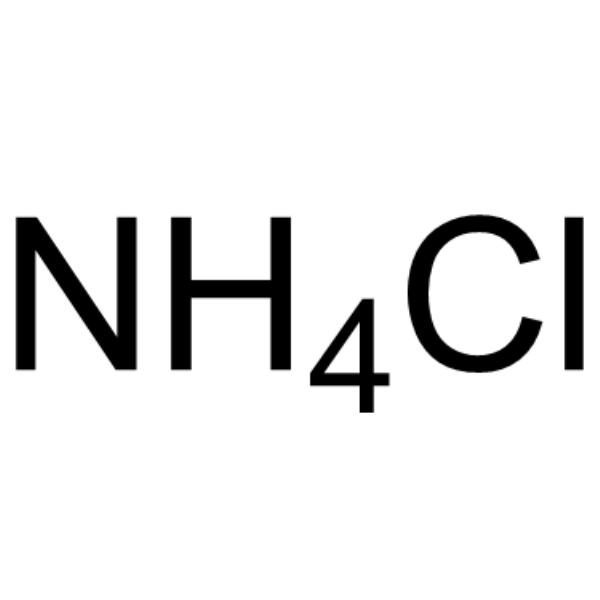
Cat. No.: HY-Y1269H
CAS No.: 12125-02-9
Synonyms: Salmiac, meets analytical specification of Ph. Eur. BP USP FCC
Ammonium chloride, meets analytical specification of Ph. Eur. BP USP FCC (Salmiac, meets analytical specification of Ph. Eur. BP USP FCC) is an inhibitor of Slc26a4 and SMAD2. Ammonium chloride, meets analytical specification of Ph. Eur. BP USP FCC reduces the protein expression level of Slc26a4 in lung tissue, and attenuates ozone-induced increases in proinflammatory cytokines, inflammatory cells, pulmonary resistance, goblet cell hyperplasia, peribronchial inflammation and thiocyanate levels in mouse tissues and bronchoalveolar lavage fluid. Ammonium chloride, meets analytical specification of Ph. Eur. BP USP FCC decreases the level of phosphorylated SMAD2, inhibits autophagy by reducing autophagy-related proteins, and enhances Cisplatin (HY-17394)-induced cancer cell apoptosis and DNA double-strand breaks. Ammonium chloride, meets analytical specification of Ph. Eur. BP USP FCC also inhibits the TCA cycle, reduces ATP production, increases glucose utilization, regulates the levels of lactic acid, glutamic acid and ATP, and induces morphological degeneration of neuroblastoma cells. Ammonium chloride, meets analytical specification of Ph. Eur. BP USP FCC can be used in studies related to ozone-induced airway injury, hepatocellular carcinoma, human cervical cancer, hepatic encephalopathy, Reye syndrome, epilepsy and neurodegenerative diseases .
loading...
    loading...
Cat. No.: HY-184389
Research Areas:  

Inflammation/Immunology

PROTAC HDAC6 degrader 10 is a highly efficient, safe and selective HDAC6 PROTAC degrader with a pIC50 of 8.75 and a pDC50 of 9.2 in BEAS-2B cells. PROTAC HDAC6 degrader 10 recruits cereblon to form a ternary complex with HDAC6, thereby achieving the degradation of HDAC6. PROTAC HDAC6 degrader 10 significantly induces hyperacetylation of α-tubulin without affecting the acetylation of H3, and achieves sustained HDAC6 knockdown in mouse lung tissues. PROTAC HDAC6 degrader 10 exhibits high bioavailability after subcutaneous administration in mice. PROTAC HDAC6 degrader 10 enables the study of HDAC6 pharmacology via chemical knockdown of HDAC6 in vitro and in vivo, and can be used for research on pulmonary diseases .
loading...
    loading...

