968 Results for "

solutions

" in MedChemExpress (MCE) Product Catalog:
Products (968)

968 Results for "solutions" in MCE Product Catalog:

Cat. No.: HY-W013159R
CAS No.: 33430-61-4
Synonyms: 5′-dGMP disodium (Standard)
2'-Deoxyguanosine 5'-monophosphate (disodium) (Standard) is the analytical standard of 2'-Deoxyguanosine 5'-monophosphate (disodium) (HY-W013159). This product is intended for research and analytical applications. 2'-Deoxyguanosine 5'-monophosphate (5′-dGMP) disodium is a mononucleotide having guanine as the nucleobase. 2'-Deoxyguanosine 5'-monophosphate disodium is a reactant involved in analysis of self-assembling in solution and nucleation/growth of G-qudruplexes, nucleophilic trapping and reductive alkylation. 2'-Deoxyguanosine 5'-monophosphate disodium can be used as an oxidizable target. 2'-Deoxyguanosine 5'-monophosphate disodium is a nucleic acid guanosine triphosphate (GTP) derivative and is a nucleotide precursor used in DNA synthesis .
loading...
    loading...
Cat. No.: HY-W583212
CAS No.: 14354-67-7
Synonyms: ZnMP
Zn (II) Mesoporphyrin IX (ZnMP) is a heme oxygenase inhibitor with photochemical substrate activity. Zn (II) Mesoporphyrin IX specifically inhibits the activity of bone marrow heme oxygenase. In vitro, Zn (II) Mesoporphyrin IX inhibits the growth of erythroid and myeloid progenitor cells in rabbit bone marrow, and blocks the rhG-CSF-induced mobilization of these progenitor cells into the peripheral blood, exhibiting toxicity to hematopoietic growth and progenitor cell production in rabbits. Zn (II) Mesoporphyrin IX undergoes irreversible photochemical decomposition conforming to first-order kinetic characteristics when irradiated with UV-B in 95% ethanol solution. Zn (II) Mesoporphyrin IX can be used in hematopoietic regulation research, but its photolability and toxic effects on the hematopoietic system require attention .
loading...
    loading...
Cat. No.: HY-L216
70 compounds

Polysaccharides are long chains of carbohydrate molecules, consisting of multiple smaller monosaccharides. Polysaccharides are found mainly in natural sources such as plants, microorganisms, algae and animals. Polysaccharides have a large number of active functional groups, different chemical compositions and different molecular weight ranges, which determines their diversity in nature and structure. Also in the field of medical research, polysaccharides act as a class of functional compounds and thus play a role. For example, nanocarrier construction, immunomodulation and vaccine development, new strategies for antitumor therapy, tissue regeneration engineering applications and disease diagnosis. With the advancement of glycomics and synthetic biotechnology, human beings are moving from “knowing polysaccharides” to “designing polysaccharides”, which will provide innovative solutions for materials science, precision medicine and sustainable development.

MCE offers 70 polysaccharides that can be used in biomedical studies.

Cat. No.: HY-D0233R
CAS No.: 603-48-5
Leucocrystal violet (Standard) is the analytical standard of Leucocrystal violet (HY-D0233). This product is intended for research and analytical applications. Leucocrystal violet is a cationic triarylmethane dye. Leucocrystal violet generates a colored purple product in the presence of hydrogen peroxide and horseradish peroxidase, or when oxidized by periodate under the catalysis of horseradish peroxidase. Leucocrystal violet serves as a chromogenic reagent for the determination of submicrogram-level hydrogen peroxide, with no interference from tryptophan, persulfate or chromate. Leucocrystal violet reacts with blood to produce a purple/violet color in the presence of hydrogen peroxide; it forms a very weak fluorophore when acting with whole blood in an unbuffered solution, with a maximum absorption wavelength of 630 nm and a maximum fluorescence emission wavelength of 665 nm upon excitation at 630 nm. Leucocrystal violet is widely used for staining blood residues on porous and non-porous materials.
loading...
    loading...
Cat. No.: HY-D1056I
Synonyms: LPS, from Akkermansia muciniphila
Lipopolysaccharides, from Akkermansia muciniphila (LPS, from Akkermansia muciniphila) are lipopolysaccharide endotoxins derived from Akkermansia muciniphila and are TLR-4 activators. Unlike typical LPS, Lipopolysaccharides, from Akkermansia muciniphila are R-type LPS or lipooligosaccharides (LOS), lacking the O-antigen domain and consisting only of a core oligosaccharide and a lipid A. Lipopolysaccharides, from Akkermansia muciniphila can activate TLR4 and TLR2, and may inhibit the TLR4/NF-κB pathway, thereby alleviating LPS-induced acute kidney injury .
It is recommended to prepare a solution with concentration ≥2 mg/mL. Vortex thoroughly for more than 10 minutes. Due to the adsorption characteristics of LPS, silanized container or low adsorption centrifuge tubes should be used for aliquoting and storage, and mix thoroughly before use.
loading...
    loading...
Cat. No.: HY-DY1097
CAS No.: 107091-89-4
Thiazole Orange (solution) is an asymmetric anthocyanin dye that can be coupled with oligonucleotides (ONs) to prepare fluorescent hybridization probes. Thiazole Orange has been widely used in biomolecular detection and staining of DNA/ RNA in gels and can be used for reticulocyte analysis. Thiazole orange generates a significant fluorescence enhancement and high quantum yield when it binds with nucleic acids, especially RNA. Thiazole orange can permeate living cell membranes. Thiazole orange can use UV light for detection, but can also be detected with blue light. The excitation and emission of Thiazole orange are λex = 510 nm (488 nm and 470 nm also show strong excitation) and λem = 527 nm, respectively .
Solvent and concentration: DMSO: 10 mM
The 1 mL volume is defined as the base specification. All larger sizes correspond to incremental volumes of this base.
loading...
    loading...
Cat. No.: HY-W013159S
Synonyms: 5′-dGMP-13C10,15N5 disodium
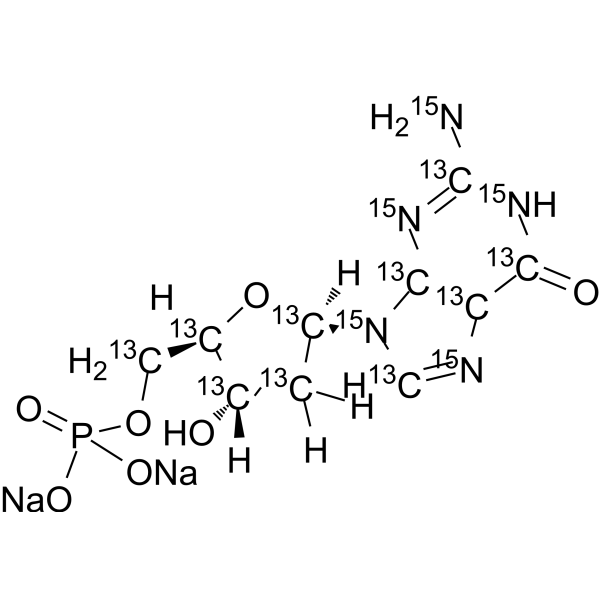
2'-Deoxyguanosine 5'-monophosphate- 13C10, 15N5 (dGMP- 13C10, 15N5) disodium is the 13C and 15N labeled 2'-Deoxyguanosine 5'-monophosphate disodium (HY-W013159). 2'-Deoxyguanosine 5'-monophosphate (5′-dGMP) disodium is a mononucleotide having guanine as the nucleobase. 2'-Deoxyguanosine 5'-monophosphate disodium is a reactant involved in analysis of self-assembling in solution and nucleation/growth of G-qudruplexes, nucleophilic trapping and reductive alkylation. 2'-Deoxyguanosine 5'-monophosphate disodium can be used as an oxidizable target. 2'-Deoxyguanosine 5'-monophosphate disodium is a nucleic acid guanosine triphosphate (GTP) derivative and is a nucleotide precursor used in DNA synthesis .
loading...
    loading...
Cat. No.: HY-W110910
CAS No.: 1787-61-7
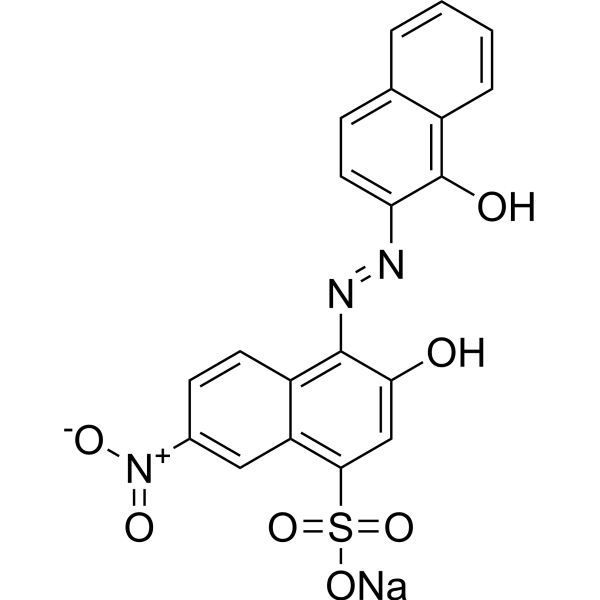
Eriochrome black T, Indicator is a complexing agent for metal ions (e.g., Ca 2+, Mg 2+) and is used as an indicator in complexometric titrations. Eriochrome black T, Indicator forms colored complexes with metal ions through covalent coordination bonds, and indicates the endpoint of the titration by color change. Eriochrome black T, Indicator can be used as an anionic azo dye in photocatalytic degradation studies to evaluate the performance of photocatalysts. The reaction solution of Eriochrome black T, Indicator combined with Mg 2+ is initially purple. During loop-mediated isothermal amplification (LAMP), the color changes from purple to sky blue due to the consumption of Mg 2+ by the formation of magnesium pyrophosphate, indicating a positive reaction. The optimal concentration of Eriochrome black T, Indicator in LAMP is 60 μM, and the detection limit for Mycobacterium tuberculosis is 1 pg DNA/reaction .
loading...
    loading...
Cat. No.: HY-W244412
CAS No.: 133081-27-3
Research Areas:  

Cancer

2,5-Dioxopyrrolidin-1-yl 6-hydrazinylnicotinate hydrochloride is an intermediate of a radionuclide molecular probe targeting the CD4 receptor. 2,5-Dioxopyrrolidin-1-yl 6-hydrazinylnicotinate hydrochloride serves as an imaging agent for heart transplant rejection. This CD4 probe is prepared by mixing leukocyte differentiation antigen 4 monoclonal antibody with a solution of 6-hydrazinylnicotinoyl succinimide ester hydrochloride, followed by extraction and reaction to obtain 6-hydrazinylnicotinate-leukocyte differentiation antigen 4 monoclonal antibody; this antibody is then mixed with N-tris (hydroxymethyl) glycine, stannous chloride and technetium for an oscillatory reaction. This CD4 probe exhibits high affinity for CD4 + T lymphocytes, along with the characteristics of high sensitivity and high specificity, enabling early diagnosis of acute rejection .
loading...
    loading...
Cat. No.: HY-D1056B2
Synonyms: LPS, from bacterial (Proteus mirabilis)
Lipopolysaccharides, from Proteus mirabilis are lipopolysaccharide endotoxins and TLR-4 activators derived from Proteus mirabilis, classified as S-type LPS, which can activate pathogen-associated molecular patterns (PAMP) of the immune system and induce cellular secretion of migrasomes. Lipopolysaccharides, from Proteus mirabilis exhibit a typical three-part structure: O-antigen, core oligosaccharide, and lipid A. Proteus mirabilis is a major pathogen causing urinary tract infections and may also contribute to rheumatoid arthritis. Lipopolysaccharides, from Proteus mirabilis also exhibit potential anti-tumor effects, demonstrating in vivo inhibitory activity against solid tumors such as meningosarcoma and Walker carcinosarcoma .
It is recommended to prepare a solution with concentration ≥2 mg/mL. Vortex thoroughly for more than 10 minutes. Due to the adsorption characteristics of LPS, silanized container or low adsorption centrifuge tubes should be used for aliquoting and storage, and mix thoroughly before use.
loading...
    loading...
Cat. No.: HY-D1056C1
Synonyms: LPS, from Salmonella enterica (Serotype enteritidis)
Lipopolysaccharides, from S. enterica (Salmonella enterica) serotype enteritidis are lipopolysaccharide endotoxins and TLR-4 activators derived from the enteritidis serotype of S. enterica, classified as S-type LPS, which can activate pathogen-associated molecular patterns (PAMP) of the immune system and induce cellular secretion of migrasomes. Lipopolysaccharides, from S. enterica serotype enteritidis exhibit a typical three-part structure: O-antigen, core oligosaccharide, and lipid A. Lipopolysaccharides, from S. enterica serotype enteritidis can induce systemic inflammatory responses, increasing levels of TNF-α, IFN-γ, IL-6, IL-10, and nitrate in plasma .
It is recommended to prepare a solution with concentration ≥2 mg/mL. Vortex thoroughly for more than 10 minutes. Due to the adsorption characteristics of LPS, silanized container or low adsorption centrifuge tubes should be used for aliquoting and storage, and mix thoroughly before use.
loading...
    loading...
Cat. No.: HY-D1056C4
Synonyms: LPS, from Salmonella enterica (Serotype abortus equi)
Lipopolysaccharides, from S. enterica (Salmonella enterica) serotype Abortusequi are lipopolysaccharide endotoxins and TLR-4 activators derived from the Abortusequi serotype of S. enterica, classified as a mutated R-type LPS, which can activate pathogen-associated molecular patterns (PAMP) of the immune system and induce cellular secretion of migrasomes. Lipopolysaccharides, from S. enterica serotype abortus equi consist of core oligosaccharide (core oligosaccharide) and lipid A (Lipid A). S. enterica serotype Abortusequi is a major pathogen causing abortion in mares and is also associated with neonatal sepsis, multiple abscesses, orchitis, and polyarthritis in equids. It is primarily grouped based on lipopolysaccharides (O-antigen) and flagellin (H-antigen) .
It is recommended to prepare a solution with concentration ≥2 mg/mL. Vortex thoroughly for more than 10 minutes. Due to the adsorption characteristics of LPS, silanized container or low adsorption centrifuge tubes should be used for aliquoting and storage, and mix thoroughly before use.
loading...
    loading...
Cat. No.: HY-D3075
CAS No.: 2490504-23-7
Target:  

Fluorescent Dye

Research Areas:  

Others

TPE-2E N-oxide is a fluorescent probe used for hypoxia detection and tumor hypoxia imaging. Due to its active intramolecular motion, TPE-2E N-oxide shows no fluorescence in aqueous solution. In hypoxic environments, its N-oxide group undergoes two-electron reduction by CYP450 reductase and other heme protein reductases expressed under hypoxia, forming hydrophobic aggregates that trigger aggregation-induced emission through the restriction of intramolecular motion. TPE-2E N-oxide exhibits selective lipid droplet localization in cells. The absorption wavelength of TPE-2E N-oxide in dichloromethane is 313 nm; in a 99% hexane/dichloromethane mixed system, its excitation wavelength is 330 nm and emission wavelength is 460 nm. For in vitro cell imaging, excitation is performed at 405 nm, with an emission wavelength range of 430-560 nm .
loading...
    loading...
Cat. No.: HY-DY1007
CAS No.: 3326-32-7
Target:  

Fluorescent Dye

Research Areas:  

Inflammation/Immunology

FITC (Fluorescein Isothiocyanate) (solution) , is one of the green fluorescein derivatives widely used in biology. FITC has the characteristics of high absorptivity and excellent fluorescence quantum yield. The isothiocyanate group of FITC can be combined with amino, sulfhydryl, imidazole, tyrosyl, carbonyl and other groups on the protein, so as to achieve protein labeling including antibodies and lectins. In addition to its use as a protein marker, FITC can also be used as a fluorescent protein tracer to rapidly identify pathogens by labeling antibodies, or for microsequencing of proteins and peptides (HPLC). The maximum excitation wavelength of FITC is 494 nm. Once excited, it fluoresces yellow-green at a maximum emission wavelength of 520 nm. In addition, FITC is also a hapten that can induce contact hypersensitivity (CHS) and induce an atopic dermatitis model .
Solvent and concentration: DMSO: 20 mM
The 1 mL volume is defined as the base specification. All larger sizes correspond to incremental volumes of this base.
loading...
    loading...
Cat. No.: HY-DY1081
CAS No.: 28718-90-3
Synonyms: 4',6-Diamidino-2-phenylindole dihydrochloride (solution)
DAPI (4',6-Diamidino-2-phenylindole) dihydrochloride (solution) is a DAPI dye. DAPI is a fluorescent dye that binds strongly to DNA. It binds to the AT base pair of the double-stranded DNA minor groove, and one DAPI molecule can occupy three base pair positions. The fluorescence intensity of DAPI molecules bound to double-stranded DNA is increased by about 20 times, and it is commonly observed with fluorescence microscopy, and the amount of DNA can be determined based on the intensity of fluorescence. DAPI cannot penetrate intact cell membranes and is commonly used for staining damaged and fixed cells . DAPI (Compound 3) is an acid-sensing ion channel 3 (ASIC3) inhibitor. DAPI binds to ASIC3 and blocks the channel function. DAPI can be used in the study of chronic pain treatment (Ex/Em = 356/451 nm).
Solvent and concentration: ddH2O: 5 mg/mL
loading...
    loading...
Cat. No.: HY-W099594
CAS No.: 7281-04-1
Synonyms: Benzyldimethyldodecylammonium bromide
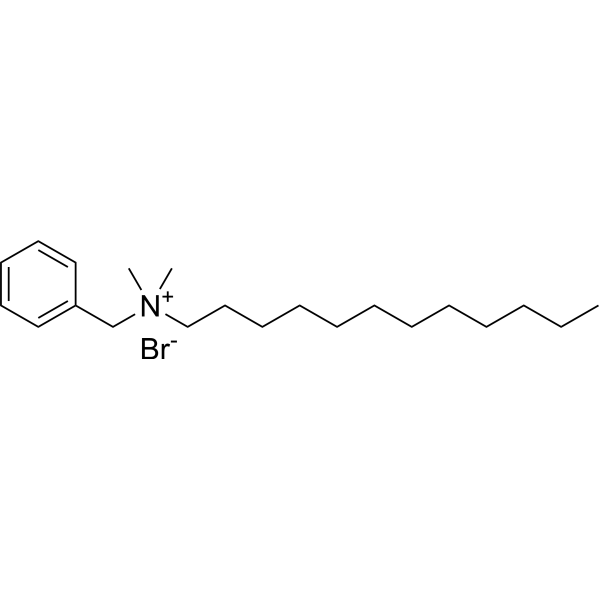
N-Benzyl-N, N-dimethyldodecan-1-aminium bromide, also known as Benzalkonium Chloride (BAC), is a quaternary ammonium compound widely used as an antimicrobial and surfactant in various industries. BAC is commonly used as a disinfectant and antiseptic in a variety of products including hand sanitizers, disinfectant wipes and eye drops. Its ability to kill bacteria, viruses and fungi makes it an effective tool in preventing the spread of infection. BAC is also used as a preservative and disinfectant in the food industry. It is added to food packaging and processing equipment to prevent the growth of microorganisms and increase the shelf life of foods. Additionally, BACs are found in many household products such as cleaning solutions, fabric softeners and personal care products. Its surfactant properties allow it to be used to reduce surface tension and increase the effectiveness of cleaning agents. Although BAC has many uses, ingestion or exposure to high concentrations of BAC can cause skin irritation and other adverse effects.
loading...
    loading...
Cat. No.: HY-Y0286
CAS No.: 506-87-6
Synonyms: Hartshorn salt, 99%
Ammonium carbonate (Ammonium carbonate), 99% is a solid amino compound that functions as a buffer, pH regulator, pore-forming agent, and electrocatalytic oxidation substrate. Ammonium carbonate, 99% is a GRAS-grade direct food additive with no restricted daily intake specified by FAO/WHO, and it shows no acute skin toxicity, clinical signs of toxicity, or effects on body weight in rats. Ammonium carbonate, 99% undergoes electrocatalytic oxidation in alkaline solutions with a Pt/C catalyst (carbonate adsorption interferes with activity). Ammonium carbonate, 99% can serve as a fuel for low-temperature polymer fuel cells and anion exchange membrane fuel cells (with performance superior to pure ammonia), and can also form pores in the carrier-free Pt cathode catalyst layer after low-temperature decomposition, thereby enhancing catalyst activity under low-humidity conditions and the performance of proton exchange membrane fuel cells .
loading...
    loading...
Cat. No.: HY-L026P
3,298 compounds

New drug development is a time-consuming and high-cost process. Drug repurposing (also called drug repositioning, reprofiling or re‑tasking) offers various advantages over developing an entirely new drug for a given indication, such as lower risk and less investment. Clinical drugs have confirmed bioactivities, clear mechanisms and high safety that are suitable for drug repurposing.

MCE owns a unique collection of 3,298 clinical compounds that refer to various research areas including anti-cancer, anti-infection, anti-inflammation, nervous disease. Those compounds are of detailed information on clinical development status, research area, targets, etc. Clinical Compound Library Plus, with powerful screening capability, further complements Clinical Compound Library (HY-L026) by adding some compounds with low solubility or solution stability (Part B) to this library. All those supplementary are supplied in powder form.

Cat. No.: HY-184600
Reactive oxygen species responsive hydrogels are a novel class of smart hydrogels, formed by the cross-linking of ROS-responsive modules through covalent, coordination, or supramolecular interactions. Due to the introduction of these ROS-responsive modules, these hydrogels exhibit a sensitive response to the oxidative stress microenvironment present in organisms. PVA-TSPBA hydrogel is a hydrogel formed by the cross-linking polymerization of polyvinyl alcohol (PVA) and the reactive oxygen species-sensitive cross-linking agent N1-(4-benzyl borate)-N3-(4-phenyl borate)N1,N1,N3,N3-tetramethyl-1,3-propanediamine (TSPBA). This hydrogel consists of two parts: a boric acid precursor (TSPBA) and an aqueous solution of PVA. The boric acid bonds on TSPBA and the hydroxyl groups on PVA rapidly cross-link to form borate ester bonds, thus forming the hydrogel.
loading...
    loading...
Cat. No.: HY-184603
Bovine serum albumin-modified gold nanoclusters (BSA-Au NCs) are nanomaterials combining gold nanoclusters and bovine serum albumin (BSA). Composed of several to dozens of gold atoms forming the core of the gold nanoclusters, BSA acts as a protective ligand, coating the surface of the gold nanoclusters. BSA-Au NCs are widely used due to their high luminescence properties and stability over a wide pH range. When Au(III) ions are introduced into a BSA solution, BSA acts as a scaffold protein, isolating and capturing Au ions, similar to the biomineralization behavior of inorganic ions in organisms in nature. The captured Au ions are then reduced in situ by BSA to form Au NCs. The synthesized Au NCs consist of 25-Au atoms and are stable in BSA as BSA-Au NCs, exhibiting strong red fluorescence. BSA-Au NCs possess good biocompatibility and their surface is easily modified or functionalized, making them attractive for many biomedical applications.
loading...
    loading...

