
1018 Results for "

Detection

" in MedChemExpress (MCE) Product Catalog:
Products (1018)

1018 Results for "Detection" in MCE Product Catalog:

Cat. No.: HY-W800696
CAS No.: 2644752-86-1
BP Fluor 430 Azide is a water-soluble, green-fluorescent, azide-activated probe that reacts with terminal alkynes via a copper-catalyzed click reaction (CuAAC). It also reacts with strained cyclooctyne via a copper-free click chemistry reaction to form a stable triazole and does not require a Cu-catalyst or elevated temperatures. BP Fluor 430 is a bright, photostable, green-fluorescent probe with excitation near its absorption maximum at 432 nm and emission maximum at 539 nm. This probe is water soluble and pH-insensitive from pH 4 to pH 10. A next generation probe, BP Fluor 430 Picolyl Azide, is also available for detection of low abundance alkyne-tagged biomolecules.
loading...
    loading...
Cat. No.: HY-137557A
Synonyms: (E/Z)-APN1607; (E/Z)-PM-PBB3
Target:  

Tau Protein

Research Areas:  

Neurological Disease

(E/Z)-Florzolotau ((E/Z)-APN1607) is a mixed configuration or unspecified configuration of Florzolotau (HY-137557). Florzolotau (APN1607) is a positron emission tomography (PET) ligand that can be used for the detection of Alzheimer's disease (AD) and other tau proteinopathies. Its binding sites are located in the β-sheet of paired helical filaments (PHFs) and straight filaments (SFs) of tau protein, as well as in the C-shaped cavity of SFs. In addition, APN-1607 binds to intraneuronal inclusions in Alzheimer's disease (AD), primary age-related tauopathy (PART) and posterior cortical atrophy (PCA). Florzolotau shows promise for PET imaging studies of neurological disorders, particularly tau proteinopathies .
loading...
    loading...
Cat. No.: HY-142117S1
CAS No.: 1309935-98-5
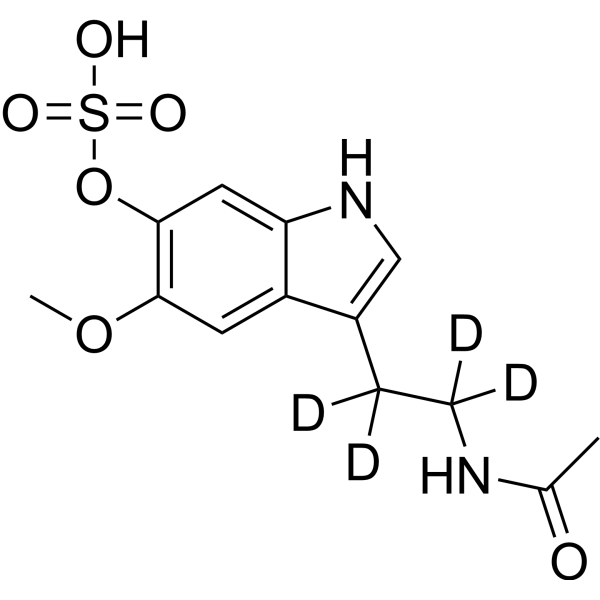
6-Sulfatoxymelatonin-d4 is the deuterated-labeled 6-Sulfatoxymelatonin. 6-Sulfatoxymelatonin is a metabolite of Melatonin (HY-B0075) and serves as a detection marker for Melatonin. 6-Sulfatoxymelatonin shows a decreasing trend with increasing age, and its urinary excretion is closely correlated with plasma Melatonin levels, which can reflect changes in the secretion phase of melatonin. 6-Sulfatoxymelatonin is associated with reduced risks of diabetic retinopathy and coronary heart disease, and can act as a biomarker for microvascular and macrovascular complications of type 2 diabetes mellitus. 6-Sulfatoxymelatonin can be used in studies related to type 2 diabetes mellitus and coronary heart disease .
loading...
    loading...
Cat. No.: HY-184641
Aminated magnetic microspheres are superparamagnetic magnetic particles with amino functional groups modified on their surface, widely used in biomedical and molecular biology research. This 1μm aminated magnetic microsphere is composed of polystyrene and nano-iron oxide, exhibiting hydrophilicity and good biocompatibility. The aminated magnetic microspheres possess superparamagnetism, fast magnetic response, good monodispersity, ensuring reaction uniformity and detection consistency. The unique rough surface structure and polymer modification give the aminated magnetic microspheres a high amino density, allowing them to covalently couple with bioligands such as peptides, proteins, oligonucleotides, drug molecules, and glycoproteins through the action of special chemical reagents (such as glutaraldehyde). They serve as excellent coating materials and are important carrier tools in medical and biomolecular research.
loading...
    loading...
Cat. No.: HY-184777
CAS No.: 94367-34-7
Target:  

Aminopeptidase

Research Areas:  

Others

Met-AMC is a fluorescent substrate used to detect the activity of methionine aminopeptidase (MetAP). Hydrolysis of the substrate releases the fluorophore AMC, with detection performed at an excitation wavelength of 360 nm and an emission wavelength of 460 nm. Met-AMC can distinguish the effects of different metal cofactors on the substrate preference of MetAP1: Zn (II)-MetAP1 barely hydrolyzes Met-AMC, while Co (II)-, Mn (II)-, and Ni (II)-MetAP1 can stably cleave this substrate. Met-AMC can be used to establish an intracellular MetAP activity cell-based assay system, which quantifies the intracellular MetAP inhibition level by monitoring the fluorescence signal from substrate hydrolysis in living cells .
loading...
    loading...
Cat. No.: HY-D1422
CAS No.: 1445108-32-6
Synonyms: BDNCA-346
Target:  

Fluorescent Dye

Research Areas:  

Others

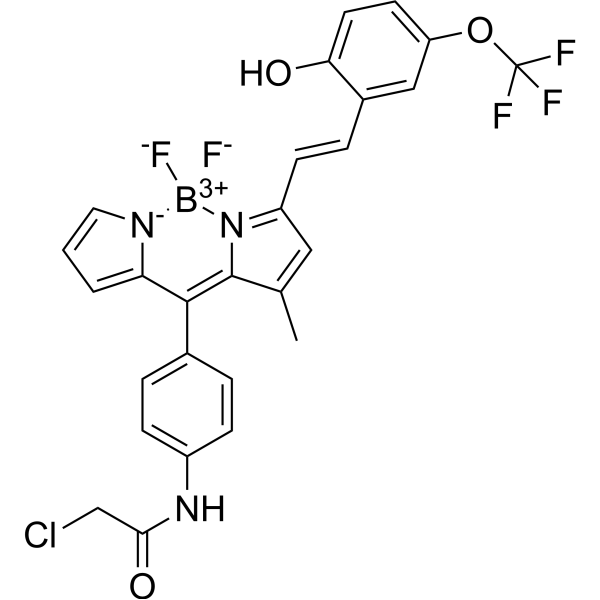
ER Tracker Yellow (BDNCA-346) is a Fluorescent probe for targeted visualization of temperature at the endoplasmic reticulum. Its detection mechanism depends on temperature, with fluorescence intensity decreasing at higher temperatures due to preferential non-radiative processes; this intensity reversibly returns to baseline when cooled, provided the probe does not precipitate or degrade. It localizes specifically to the endoplasmic reticulum, where it may covalently attach to biomacromolecules via a thiol-reactive moiety, and its fluorescence remains stable after cell fixation; its fluorescence intensity is unaffected by physiological pH ranges of 5.0–8.0 and free Ca²⁺ concentrations of 0–800 μM. Its excitation/emission wavelength is Ex/Em = 559/581 nm[1].
loading...
    loading...
Cat. No.: HY-D2768
CAS No.: 467233-93-8
BP Fluor 430 NHS Ester is a water-soluble, green-fluorescent dye that is often used in multi-color applications, including flow cytometry and super-resolution microscopy using STORM. Its excitation is ideally suited for the 407 nm spectral line of the krypton laser or the 408 nm violet laser diode. BP Fluor 405 conjugates are pH-insensitive from pH 4 to pH 10. The NHS ester (or succinimidyl ester) is the most popular amine reactive group for labeling the primary amines of proteins (Lys), amine-modified oligonucleotides, and other amine-containing molecules. Proteins can be labeled with BP Fluor 430 NHS Ester at high molar ratios without significant self-quenching, leading to brighter conjugates and more sensitive detection.
loading...
    loading...
Cat. No.: HY-D3146
CAS No.: 1418017-91-0
Target:  

Fluorescent Dye

Research Areas:  

Others

Di-4-AN (F) EPPTEA is a voltage-sensitive dye used for membrane potential imaging and optical recording of electrical activity in excitable cells and tissues. Its detection mechanism is based on electrochromism (also known as the molecular Stark effect). The single-photon excitation/emission wavelengths measured in ethanol solution are Ex/Em = 444/610 nm, and it can be excited via 1064 nm two-photon excitation in optical recording applications. Di-4-AN (F) EPPTEA can be used to record backpropagating action potentials in individual dendritic spines of brain cortical slices, map subcellular action potential characteristics of single cardiomyocytes, and perform real-time recording of multicellular action potentials in cerebellar slices .
loading...
    loading...
Cat. No.: HY-DY1073
CAS No.: 1392820-50-6
MitoPerOx (solution) is a mitochondrial-targeted, lipid peroxidation-indicating fluorescent probe with BODIPY581/591 fluorophores. The triphenylphosphine cation (TPP+) of MitoPerOx can be selectively enriched in mitochondria (depending on membrane potential) and can be used to detect lipid peroxidation in the inner mitochondrial membrane. Under the action of lipid peroxides, the BODIPY581/591 fluorophores of MitoPerOx shift their emission wavelength from 590 nm (reduced state) to 520 nm (oxidized state) , and ratiometric detection can be performed at an excitation wavelength of 488 nm. MitoPerOx can specifically monitor the peroxidation of mitochondrial phospholipids (especially cardiolipin) and is used in the study of oxidative stress-related diseases (such as aging, neurodegenerative diseases, and mitochondrial dysfunction) .
Solvent and concentration: DMSO: 2 mM
loading...
    loading...
Cat. No.: HY-P1576A
Target:  

AMPK SnRK

Research Areas:  

Others

AMARA peptide TFA is a synthetic peptide substrate of sucrose non-fermenting-1-related protein kinase 1 (SnRK1). AMARA peptide TFA contains residues required for SnRK1 phosphorylation, retains the minimal motif recognized by SnRK1, and when this substrate is recognized by cauliflower SnRK1 HRK-A, the hydrophobic residues at the relative positions P-5 and P+4 of the phosphorylated serine require a critical spacing. AMARA peptide TFA can serve as a control substrate in peptide phosphorylation assays for the detection of SnRK1 activity in Arabidopsis thaliana, potato tuber tissues, and during SnRK1 purification .
loading...
    loading...
Cat. No.: HY-P5292A
CAS No.: 2375849-11-7
Research Areas:  

Cancer

HYNIC-iPSMA TFA is a PSMA-targeted ligand for tumor molecular imaging, with a Ki value of 3.11 nM. HYNIC-iPSMA TFA consists of two components: HYNIC (6-hydrazinonicotinamide) and iPSMA (Inhibitor of Prostate-Specific Membrane Antigen). HYNIC serves as a chelating moiety to link radionuclides to the targeting molecule; iPSMA is a specific inhibitor that targets Prostate-Specific Membrane Antigen (PSMA). 68Ga-labeled iPSMA is used for prostate cancer detection via PET imaging, while the further developed 99mTc-EDDA/HYNIC-iPSMA TFA exhibits excellent specificity and sensitivity. HYNIC-iPSMA TFA can be used for the synthesis and research of radionuclide-conjugated drugs (RDC) .
loading...
    loading...
Cat. No.: HY-P990816

Target:  

SARS-CoV

Research Areas:  

Infection

Anti-SARS-CoV-2 S protein Antibody (NTD, SARS2-29) is a mouse-derived IgG1 κ type antibody inhibitor, targeting to SARS-CoV-2 S protein. Anti-SARS-CoV-2 S protein Antibody (NTD, SARS2-29) reacts with the N-terminal domain (NTD) in the spike (S) protein of SARS-CoV-2 (Severe Acute Respiratory Syndrome Coronavirus 2). Anti-SARS-CoV-2 S protein Antibody (NTD, SARS2-29) can be used for the detections of flow cytometry and ELISA in SARS-CoV-2 infection .
loading...
    loading...
Cat. No.: HY-P990849

Target:  

c-Fms

Research Areas:  

Others

Anti-CSF1R/CD115 Antibody (2-4A5-4) is a kind of rat IgG1 κ chimeric antibody inhibitor, targeting to human CSF1R/CD115. Anti-CSF1R/CD115 Antibody (2-4A5-4) can neutralize colony stimulating factor 1 receptor (CSF1R), also known as CD115. Anti-CSF1R/CD115 Antibody (2-4A5-4) can be used for the detections of immunohistochemistry, functional assays and flow cytometry .
loading...
    loading...
Cat. No.: HY-P990854

Research Areas:  

Cancer

Anti-CEACAM1/3/5/6/8 Antibody (6G5j) is a kind of mouse IgG1 κ chimeric antibody, targeting to human CEACAM1/3/5/6/8. Anti-CEACAM1/3/5/6/8 Antibody (6G5j) reacts with an antigen epitope shared by human carcinoembryonic antigen-related cell adhesion molecule (CEACAM) 1, 3, 5, 6, and 8. Anti-CEACAM1/3/5/6/8 Antibody (6G5j) can be used for the detections of western blot, ELISA, immunofluorescence immunohistochemistry and flow cytometry in cancer .
loading...
    loading...
Cat. No.: HY-P990862

Research Areas:  

Cancer

Anti-CD326/EpCAM Antibody (Ber-EP4) is a kind of mouse IgG1 κ chimeric antibody, targeting to human CD326/EpCAM. Anti-CD326/EpCAM Antibody (Ber-EP4) reacts with human CD326 also known as EpCAM (Epithelial Cell Adhesion Molecule). Anti-CD326/EpCAM Antibody (Ber-EP4) is useful to distinguish between cells of mesothelial and epithelial origin. Anti-CD326/EpCAM Antibody (Ber-EP4) can be used for the detections of immunohistochemistry, immunofluorescence and flow cytometry in cancer, such as colon cancer .
loading...
    loading...
Cat. No.: HY-128974R
CAS No.: 69227-93-6
Synonyms: Lauryl Maltoside (Standard)
Research Areas:  

Others

N-Dodecyl-β-D-maltoside (Standard) is the analytical standard of N-Dodecyl-β-D-maltoside (HY-128974). This product is intended for research and analytical applications. N-Dodecyl-β-D-maltoside (Lauryl Maltoside) is a non-ionic detergent. N-Dodecyl-β-D-maltoside has strong adsorption on alumina, titanium dioxide and hematite. N-Dodecyl-β-D-maltoside can promote the reactivation of various proteins. N-Dodecyl-β-D-maltoside can effectively stabilize photoactive reaction center complexes (RCs) and inhibit the degradation of Rhodopseudomonas spheroides R-26 reaction center in solution. N-Dodecyl-β-D-maltoside can be used for purification and stabilization of RNA polymerase and for detection of protein-lipid interactions .
loading...
    loading...
Cat. No.: HY-128974S
CAS No.: 849110-74-3
Synonyms: Lauryl Maltoside-d25
N-Dodecyl-β-D-maltoside-d25 (Lauryl Maltoside-d25) is deuterium labeled N-Dodecyl-β-D-maltoside (HY-128974). N-Dodecyl-β-D-maltoside is a non-ionic detergent. N-Dodecyl-β-D-maltoside has strong adsorption on alumina, titanium dioxide and hematite. N-Dodecyl-β-D-maltoside can promote the reactivation of various proteins. N-Dodecyl-β-D-maltoside can effectively stabilize photoactive reaction center complexes (RCs) and inhibit the degradation of Rhodopseudomonas spheroides R-26 reaction center in solution. N-Dodecyl-β-D-maltoside can be used for purification and stabilization of RNA polymerase and for detection of protein-lipid interactions .
loading...
    loading...
Cat. No.: HY-142117S
Purity:  99.25%
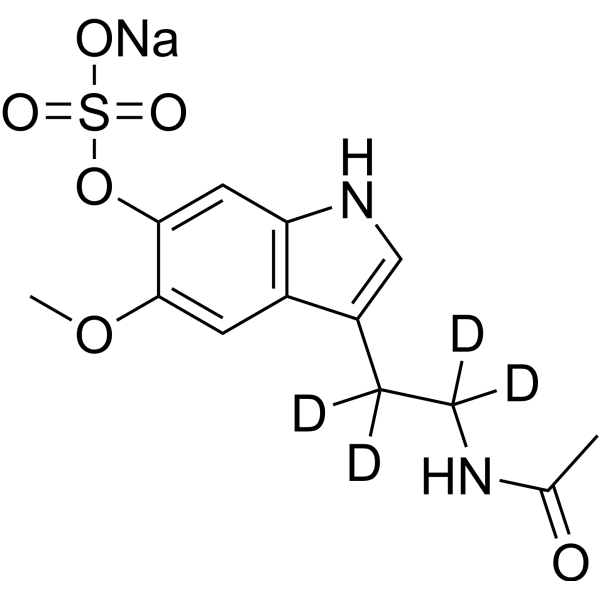
6-Sulfatoxymelatonin-d4 sodium is the deuterated-labeled 6-Sulfatoxymelatonin sodium (HY-W587817). 6-Sulfatoxymelatonin sodium is a metabolite of Melatonin (HY-B0075) and serves as a detection marker for Melatonin. 6-Sulfatoxymelatonin sodium shows a decreasing trend with increasing age, and its urinary excretion is closely correlated with plasma Melatonin levels, which can reflect changes in the secretion phase of melatonin. 6-Sulfatoxymelatonin sodium is associated with reduced risks of diabetic retinopathy and coronary heart disease, and can act as a biomarker for microvascular and macrovascular complications of type 2 diabetes mellitus. 6-Sulfatoxymelatonin sodium can be used in studies related to type 2 diabetes mellitus and coronary heart disease .
loading...
    loading...
Cat. No.: HY-160116
CAS No.: 1565797-17-2
α-Synuclein aggregate binder 1 (Compound C05-05) is a specific binder for α-synuclein aggregates and can inhibit α-synuclein aggregation. α-Synuclein aggregate binder 1 can be used as a fluorescent probe (excitation wavelength 900 nm, detection wavelength 500-550 nm) for optical imaging, and can also inhibit α-synuclein fibril formation by blocking the aggregation process. α-Synuclein aggregate binder 1 can be used for positron emission tomography (PET) imaging after being labeled with 18F. α-Synuclein aggregate binder 1 can be used for visual diagnosis of brain lesions and mechanism research of neurodegenerative diseases such as Parkinson's disease and Lewy body dementia .
loading...
    loading...
Cat. No.: HY-D0027R
CAS No.: 26093-31-2
Synonyms: Coumarin 120 (Standard); AMC (Standard)
7-Amino-4-methylcoumarin (Standard) is the analytical standard of 7-Amino-4-methylcoumarin. This product is intended for research and analytical applications. 7-Amino-4-methylcoumarin belongs to the coumarin class, can be isolated from the endophytic fungus Xylaria sp. and has a broad spectrum of antibacterial activity. 7-Amino-4-methylcoumarin is also commonly used as an important laser dye that emits in the blue region, capable of analyzing glycoprotein monosaccharides and N-linked oligosaccharides, and is also utilized in tissue pathology analysis, enzyme activity measurement, and copper ion detection. The excitation wavelength and emission wavelength are 351 nm and 430 nm, respectively. [4]
loading...
    loading...

