

1018 Results for "

Detection

" in MedChemExpress (MCE) Product Catalog:
Products (1018)

1018 Results for "Detection" in MCE Product Catalog:

Cat. No.: HY-P990002

Target:  

c-Kit

Research Areas:  

Inflammation/Immunology Cancer

Anti-Mouse CD117/c-Kit Antibody (2B8) is an IgG2b antibody, targeting to mouse CD117/c-Kit. Anti-Mouse CD117/c-Kit Antibody (2B8) reacts with mouse c-Kit (also known as CD117), which is expressed on hematopoietic progenitor cells, mast cells, and acute myeloid leukemia (AML) cells. Anti-Mouse CD117/c-Kit Antibody (2B8) can be used for the detection of flow cytometry, immunofluorescence and immunohistochemistry in cancer and inflammation .
loading...
    loading...
Cat. No.: HY-P990202

Target:  

LDLR

Research Areas:  

Neurological Disease

Anti-Mouse/Rat/Human LRP1/CD91 Antibody (11H4) is a mouse-derived IgG1 κ type antibody, targeting to mouse/rat/human LRP1/CD91. Anti-Mouse/Rat/Human LRP1/CD91 Antibody (11H4) binds to the β chain of LRP1. Anti-Mouse/Rat/Human LRP1/CD91 Antibody (11H4) can be used for western blot (WB) and other detections .
loading...
    loading...
Cat. No.: HY-W011654
CAS No.: 5094-33-7
Synonyms: 4-Aminophenyl-beta-D-galactopyranoside, 98%
4-Aminophenyl-β-D-galactopyranoside, 98% is a highly efficient substrate for β-galactosidase. It is specifically hydrolyzed by this enzyme to release galactose and electroactive p-aminophenol. 4-Aminophenyl-β-D-galactopyranoside, 98% is widely used in colorimetric and electrochemical assays for detecting β-galactosidase activity and determining enzyme kinetics, such as in biosensing fields including cellular senescence, pathogen and contaminant detection. In addition, since β-galactosidase is often overexpressed in primary ovarian cancer, 4-Aminophenyl-β-D-galactopyranoside, 98% can also be applied to related research on primary ovarian cancer .
loading...
    loading...
Cat. No.: HY-W615095
CAS No.: 2227450-68-0
Target:  

PROTAC Linkers

Research Areas:  

Others

Biotin-PEG2-alkyne is a click chemistry PEG linker based on copper (I)-catalyzed azide-alkyne cycloaddition (CuAAC), as well as a biotinylation reagent. In solution-phase and click labeling systems, Biotin-PEG2-alkyne efficiently conjugates biotin groups to azide-functionalized streptavidin amplicons. Biotin-PEG2-alkyne is also widely applicable in fixed cells and mouse intestinal tissue sections to achieve specific biotinylation of various azide-labeled biomolecules (such as proteins, lipids, DNA, and Afatinib (HY-10261)), thereby effectively promoting signal amplification and precise detection of targets .
loading...
    loading...
Cat. No.: HY-W750960R
CAS No.: 1377605-22-5
Biotinylated isoxazole (Standard) is the analytical standard of Biotinylated isoxazole (HY-W750960). This product is intended for research and analytical applications. Biotinylated isoxazole is a chemical probe that selectively precipitates proteins containing prion-like low-complexity domains and Cross-β prion-like polymers through recognition of Cross-β structure. Biotinylated isoxazole induces precipitation of proteins containing intrinsically disordered regions through microcrystal formation in solution. Biotinylated isoxazole enables enrichment of Amyloid oligomers for ELISA-based detection. Biotinylated isoxazole decreases Gems and increases misfolded PFN1 aggregates .
loading...
    loading...
Cat. No.: HY-165399
CAS No.: 145253-48-1
Research Areas:  

Others

RB104 is a highly selective neutral endopeptidase (NEP) inhibitor that exhibits extremely high affinity for Aplysia californica apNEP (Kd=0.16-0.26 pM) and rat NEP (Kd=7.0-26.8 pM). RB104 effectively blocks apNEP-mediated cleavage of Leu-enkephalin and shows minimal cross-reactivity with other zinc peptidases. Furthermore, RB104 can be iodinated or radiolabeled with 125I to serve as a probe, and is widely used in inhibitor gel electrophoresis, binding assays, Western blotting, and autoradiographic tissue localization, enabling sensitive detection of nanogram-level NEP in crude extracts and tissue sections .
loading...
    loading...
Cat. No.: HY-D3109
CAS No.: 148043-22-5
Target:  

Fluorescent Dye

Research Areas:  

Others

pH-Ap-1 is a fluorescent probe used for ratiometric monitoring of pH fluctuations during autophagy in living cells, and it can detect intracellular pH changes in the autophagy process. For fluorescence detection of pH-Ap-1, its excitation wavelength is 475 nm, with an emission wavelength of 538 nm under alkaline conditions and 645 nm under acidic conditions. For intracellular imaging, excitation is performed at 488 nm: the emission light ranging from 500-550 nm is collected via the green channel corresponding to 538 nm, while the emission light ranging from 625-750 nm is collected via the red channel corresponding to 645 nm. pH-Ap-1 exhibits excellent photostability and chemical stability .
loading...
    loading...
Cat. No.: HY-D3123
Target:  

Fluorescent Dye

Research Areas:  

Cardiovascular Disease

Ac-MtFluNox is a mitochondria-targeted Fluorescent probe that can be used for the selective detection of labile Fe (II). Ac-MtFluNox can enter living cells, where intracellular esterases cleave its acetyl protecting group to generate activated MtFluNox. Ac-MtFluNox functions through an Fe (II)-mediated deoxygenation mechanism of its amine N-oxide group, which eliminates the fluorescence quenching effect and oxidizes Fe (II) to Fe (III) to deplete the catalytically active Fe (II) pool. A FITC filter set (excitation 465-500 nm, emission 516-556 nm) is used for live-cell imaging. Ac-MtFluNox can be applied to studies related to myocardial ferroptosis .
loading...
    loading...
Cat. No.: HY-D3126
CAS No.: 2420449-92-7
Target:  

Fluorescent Dye

Research Areas:  

Others

IOPBA is a fluorescent probe that can be used for the detection and bioimaging of trivalent iron ions Fe 3+ and fluoride ions F - in living cells. IOPBA emits blue fluorescence in its native state, but upon the introduction of Fe 3+, it forms a Fe 3+-IOPBA π-complex, where Fe 3+ ions coordinate with two phenyl groups of IOPBA, resulting in fluorescence quenching. IOPBA returns to its free state and recovers its original fluorescence after F - sequesters Fe 3+ to form the more stable [FeF6] 3- and dissociates the Fe 3+-IOPBA complex. The excitation wavelength of IOPBA is 342 nm, and its emission wavelength is 458 nm .
loading...
    loading...
Cat. No.: HY-D3520
CAS No.: 2484683-99-8
HPsensor 2 is a fluorescent probe used to detect the surface hydrophobicity of proteins. The detection mechanism of HPsensor 2 relies on its amphipathic properties. The 2-methoxyethylamine substituents at positions 3 and 5 of its BODIPY core enhance water solubility, enabling it to interact with solvent-exposed hydrophobic regions on proteins. When it binds to these hydrophobic surfaces, the free rotation of the meso-aryl substituent is restricted, increasing molecular rigidity and reducing non-radiative deactivation, which results in a significant enhancement of fluorescence. HPsensor 2 exhibits weak but detectable fluorescence in aqueous environments, and its fluorescence is highly sensitive to changes in protein surface hydrophobicity (Ex/Em = 528/579 nm) .
loading...
    loading...
Cat. No.: HY-D3602
CAS No.: 2558211-88-2
Target:  

Fluorescent Dye

Research Areas:  

Others

Mito-CS1 is a fluorescent probe for imaging and reversible detection of the exchangeable mitochondrial Cu + pool in living cells. Mito-CS1 combines a Cu +-responsive fluorescent platform with a mitochondria-targeted triphenylphosphonium group, which localizes the probe to mitochondria via a proton gradient. Mito-CS1 contains a thioether-rich receptor for the selective recognition and binding of Cu +, triggering a fluorescence turn-on response by inhibiting photoinduced electron transfer. The apo-form of Mito-CS1 has excitation/emission wavelengths of 555/569 nm, while those of Mito-CS1 after binding to Cu + are 550/558 nm .
loading...
    loading...
Cat. No.: HY-DY1006
CAS No.: 25535-16-4
Propidium Iodide (PI) (solution) is a nuclear staining agent that stains DNA. Propidium Iodide is an analogue of ethidine bromide that emits red fluorescence upon embedding in double-stranded DNA. Propidium Iodide cannot pass through living cell membranes, but it can pass through damaged cell membranes to stain the nucleus. Propidium Iodide has a fluorescence wavelength of 493/617 nm and a wavelength of 536/635 nm after Mosaic with DNA. Propidium Iodide is commonly used in the detection of apoptosis (apoptosis) or necrosis (necrosis) , and is often used in flow cytometry analysis.
Solvent and Concentration: Sterile water: 1 mg/mL
The 1 mL volume is defined as the base specification. All larger sizes correspond to incremental volumes of this base.
loading...
    loading...
Cat. No.: HY-E71730
Synonyms: RNA m1G Demethylase (D135S)
Research Areas:  

Others

AlkB (D135S), Nuclease-free (RNA m1G Demethylase (D135S)) is a nuclease-free N1-methylguanosine (m1G) demethylase that specifically removes the methyl group from m1G residues in small non-coding RNAs. AlkB (D135S), Nuclease-free effectively promotes the reverse transcription of small non-coding RNAs and supports high-throughput sequencing methods such as CPA-seq. AlkB (D135S), Nuclease-free can be used for the precise detection and quantitative analysis of methylated small non-coding RNAs that are easily missed by conventional methods .
loading...
    loading...
Cat. No.: HY-P11933
Research Areas:  

Others

FAHF is a polypeptide-based dual-signal fluorescent colorimetric probe synthesized by conjugating the 5-carboxyfluorescein (5-FAM) (HY-66022) fluorophore to the Ala-His-Phe-NH2 tripeptide backbone. FAHF achieves highly selective recognition of Cu 2+ via fluorescence quenching and colorimetric change. The FAHF-Cu 2+ complex responds to Glyphosate (HY-B0863) based on the displacement effect, resulting in fluorescence enhancement and a visually distinguishable color change. FAHF can penetrate cell membranes to enable cascade detection of copper (II) and glyphosate in living cells, and it can also be combined with smartphone RGB analysis for semi-quantitative identification .
loading...
    loading...
Cat. No.: HY-P1576
CAS No.: 163560-19-8
Target:  

AMPK SnRK

Research Areas:  

Others

AMARA peptide is a synthetic peptide substrate of sucrose non-fermenting-1-related protein kinase 1 (SnRK1). AMARA peptide contains residues required for SnRK1 phosphorylation, retains the minimal motif recognized by SnRK1, and when this substrate is recognized by cauliflower SnRK1 HRK-A, the hydrophobic residues at the relative positions P-5 and P+4 of the phosphorylated serine require a critical spacing. AMARA peptide can serve as a control substrate in peptide phosphorylation assays for the detection of SnRK1 activity in Arabidopsis thaliana, potato tuber tissues, and during SnRK1 purification .
loading...
    loading...
Cat. No.: HY-P5292
CAS No.: 2192215-74-8
Research Areas:  

Cancer

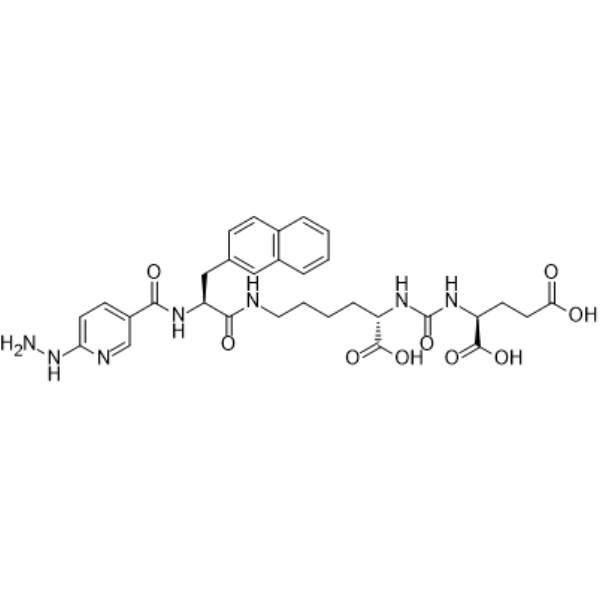
HYNIC-iPSMA is a PSMA-targeted ligand for tumor molecular imaging, with a Ki value of 3.11 nM. HYNIC-iPSMA consists of two components: HYNIC (6-hydrazinonicotinamide) and iPSMA (Inhibitor of Prostate-Specific Membrane Antigen). HYNIC acts as a chelating moiety to link radionuclides to the targeting molecule; iPSMA is a specific inhibitor that targets Prostate-Specific Membrane Antigen (PSMA). 68Ga-labeled iPSMA is used for prostate cancer detection via PET imaging, while the further developed 99mTc-EDDA/HYNIC-iPSMA TFA exhibits excellent specificity and sensitivity. HYNIC-iPSMA can be used for the synthesis and research of radionuclide-conjugated drugs (RDC) .
loading...
    loading...
Cat. No.: HY-W016352
CAS No.: 96-97-9
Synonyms: Anilotic acid, 99%
Research Areas:  

Others

2-Hydroxy-5-nitrobenzoic acid, 99% (Anilotic acid, 99%) is a basic chemical raw material and organic synthesis intermediate that can be used to synthesize Mesalamine (HY-15027). 2-Hydroxy-5-nitrobenzoic acid, 99% is a matrix for ultraviolet matrix-assisted laser desorption/ionization (UV-MALDI) mass spectrometry. 2-Hydroxy-5-nitrobenzoic acid, 99% can also serve as an HPLC analytical standard, pH indicator, and heavy metal detection agent. 2-Hydroxy-5-nitrobenzoic acid, 99% can also be used to study the oxidation of phenolic compounds .
loading...
    loading...
Cat. No.: HY-W067445
CAS No.: 122-85-0
Synonyms: 4-Acetamidobenzaldehyde
N-(4-Formylphenyl) acetamide (4-Acetamidobenzaldehyde) is an organic ligand bearing aldehyde and acetamide functional groups. N-(4-Formylphenyl) acetamide can be used to functionalize Fe3O4@SiO2 nanoparticles for selective fluorescence quenching detection of Hg 2+. N-(4-Formylphenyl) acetamide serves as a precursor for the synthesis of benzimidazole, benzothiazole and Schiff base derivatives, which exhibit antioxidant, AChE/BChE inhibitory and DNA-binding activities. N-(4-Formylphenyl) acetamide can be applied in studies related to Alzheimer's disease .
loading...
    loading...
Cat. No.: HY-W250147
CAS No.: 2580-56-5
Synonyms: Victoria blue B
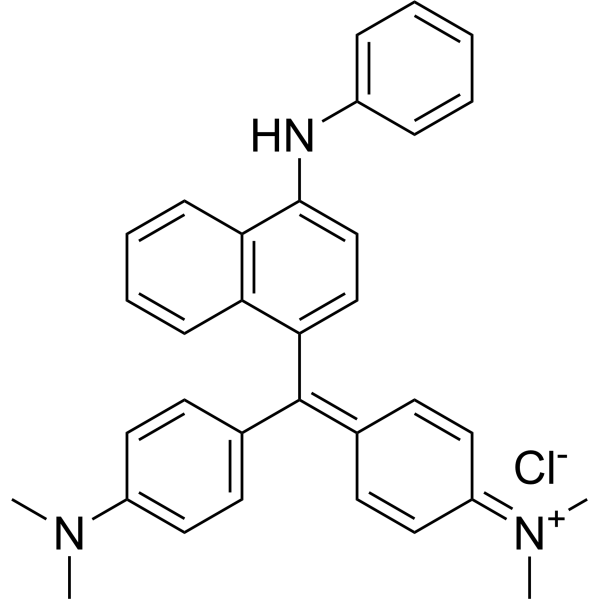
Basic blue 26 (Victoria blue B) is a synthetic cationic dye belonging to the class of triarylmethane dyes. It has a bright blue color and is commonly used as a colorant for a variety of applications, including textiles, paper and leather. Basic Blue 26 is also used as a biological stain for DNA and protein detection in laboratories. Due to its ability to bind negatively charged materials, it can be used as an indicator of the presence of specific molecules in biological samples. However, Basic blue 26 has been reported to have potentially harmful effects on human health and the environment and its use is regulated in some countries. Proper handling and disposal procedures are necessary to minimize its impact on the environment.
loading...
    loading...
Cat. No.: HY-W739372
CAS No.: 25704-18-1
Research Areas:  

Others

Poly (sodium 4-styrenesulfonate) is an anionic cation-exchange polyelectrolyte and metal ion binding/retention agent. It selectively retains Cr III and Fe II under pH 1 conditions, and its retention effect on all tested metal ions is enhanced under higher pH conditions. Poly (sodium 4-styrenesulfonate) inhibits nanosheet aggregation through edge-face interactions between aromatic rings and the graphite surface, thereby stabilizing the dispersion of reduced graphene oxide nanosheets. When incorporated into the mixed Nafion coating of bismuth film electrodes, Poly (sodium 4-styrenesulfonate) improves the reproducibility, stability, sensitivity, and anti-fouling capability for trace metal detection .
loading...
    loading...

