
1017 Results for "

Detection

" in MedChemExpress (MCE) Product Catalog:
Products (1017)

1017 Results for "Detection" in MCE Product Catalog:

Cat. No.: HY-D0920
CAS No.: 166196-17-4
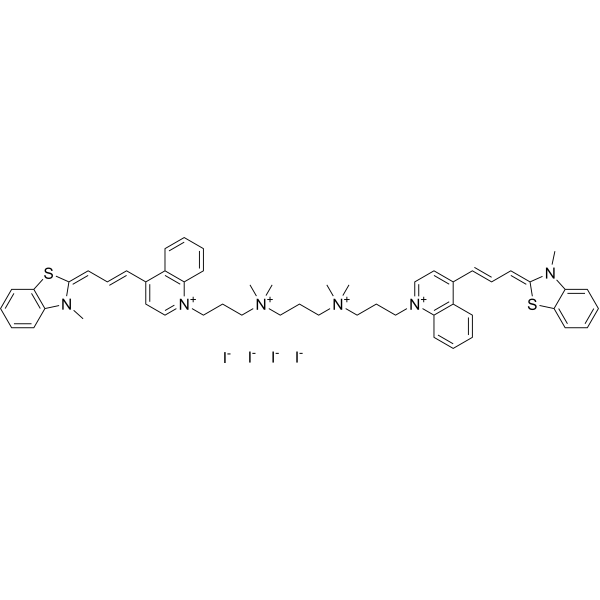
TOTO-3 is a cyanine nucleic acid intercalating fluorescent probe that binds to both RNA and DNA (Ex=642 nm, Em=660 nm). TOTO-3 cannot enter intact cells, but can penetrate cells with permeabilized plasma membranes, staining cytoplasmic RNA and nucleoli to distinguish intact cells from damaged ones. TOTO-3 is taken up by macrophages in an ultrasound-independent manner. TOTO-3 accumulates in tumor cells via ultrasound-mediated enhancement of plasma membrane permeability. TOTO-3 supports optical imaging for real-time assessment of plasma membrane integrity, nucleic acid detection, and monitoring of ultrasound-mediated intracellular delivery processes. TOTO-3 is applicable to studies related to rectal cancer .
loading...
    loading...
Cat. No.: HY-D3030
Target:  

Fluorescent Dye

Research Areas:  

Others Inflammation/Immunology

Concanavalin A-FITC is a FITC (HY-66019)-labeled Concanavalin A (HY-P2149). Concanavalin A-FITC is a fluorescent probe and dye used to detect cell surface sugar-binding sites, oligosaccharide changes and track cell localization. Concanavalin A-FITC binds to α-D-glucose, α-D-mannose and mannose residues on cell surface glycoproteins, glycolipids and glycoconjugates, with fluorescence signals provided by FITC. Concanavalin A-FITC accumulates in perinuclear endoplasmic reticulum-related regions via endocytosis and localizes to mitochondria. The excitation/emission wavelength of Concanavalin A-FITC is Ex/Em = 488/>510 nm, and its emitted green fluorescence can be collected with a 530/30 nm filter during flow cytometry detection .
loading...
    loading...
Cat. No.: HY-D3108
CAS No.: 2569032-08-0
Target:  

Fluorescent Dye

Research Areas:  

Others

BV-1 is a fluorescent probe for viscosity detection and imaging in living cells. BV-1 can be used to detect changes in intracellular viscosity and mitochondrial viscosity in living cells. BV-1 responds to environmental viscosity via a molecular rotor mechanism. In a low-viscosity environment, the centrally located unsaturated structure induces a twisted intramolecular charge transfer (TICT) state and promotes non-radiative transitions, resulting in fluorescence quenching; when viscosity increases, molecular rotation is restricted, the TICT state is attenuated, and fluorescence is enhanced with a red shift. BV-1 can be used for real-time monitoring of changes in cytoplasmic viscosity and the viscosity increase during cell apoptosis. Ex/Em = 480/570 nm .
loading...
    loading...
Cat. No.: HY-D3330
APC-Cy7 is an APC-tandem fluorochrome (allophycocyanin-cyanine 7) and degradable fluorochrome, with maximum absorption at ~650 nm, peak emission at 767 nm when excited by a 633 nm red laser, and cell-dependent degradation. APC-Cy7 undergoes time-dependent degradation (decoupling) when bound to peripheral blood leukocytes, leading to nonspecific APC channel signal, with degradation cell type-dependent. APC-Cy7 shows reduced degradation when immunolabeled cells have inhibited metabolic activity or are incubated with vitamin C. APC-Cy7 serves as a tandem fluorochrome in multiparametric flow cytometry for detection of leukocyte surface proteins when conjugated to specific antibodies (Ex/Em = 650 nm/778 nm) .
loading...
    loading...
Cat. No.: HY-D3370
CAS No.: 3114128-41-2
Target:  

Fluorescent Dye iGluR

Research Areas:  

Others

CL-NC is a chemiluminescent probe used for in vivo imaging of N-methyl-D-aspartate receptors (NMDARs), and its detection mechanism relies on bioorthogonal activation achieved via a tetrazine-triggered click-to-release reaction. The isonitrile group of CL-NC undergoes a click reaction with tetrazine, followed by hydrolysis and β-elimination to release a phenoxide anion, which induces the departure of adamantane and generates chemiluminescence. CL-NC has a maximum absorption wavelength of approximately 425 nm, a maximum fluorescence emission wavelength of approximately 670 nm, and a maximum chemiluminescence emission wavelength of 710 nm. When used in combination with Tz-IFDL (HY-D3369), an NMDAR ligand conjugated with tetrazine, CL-NC enables targeted imaging of NMDARs in living cells, as well as in the brain and spinal cord of living mice .
loading...
    loading...
Cat. No.: HY-D3441
Research Areas:  

Others

LumiPK is an environment-sensitive probe that specifically targets the liver isoform of pyruvate kinase (PKL). LumiPK exhibits high affinity for PKL with a Kd of 37 nM. LumiPK integrates the 4-sulfonamido-7-aminobenzoxadiazole (SBD) fluorophore into a phthalazine scaffold, and its fluorescence intensity changes with the polarity of the chemical environment, thereby directly reflecting protein occupancy. LumiPK binds only to the tetrameric form of PKL, with the binding site being an allosteric pocket formed at the subunit interface, and key water-mediated interactions enhance its potency; in polar environments such as buffer, its fluorescence is significantly quenched, whereas upon binding to the nonpolar allosteric pocket of PKL, its fluorescence is enhanced. In fluorescence detection, its excitation/emission wavelengths are Ex/Em = 450/550 nm .
loading...
    loading...
Cat. No.: HY-N11875S
6-Sulfatoxymelatonin-d4 ammonium hydrate is the deuterated-labeled 6-Sulfatoxymelatonin ammonium hydrate. 6-Sulfatoxymelatonin ammonium hydrate is a metabolite of Melatonin (HY-B0075) and serves as a detection marker for Melatonin. 6-Sulfatoxymelatonin ammonium hydrate shows a decreasing trend with increasing age, and its urinary excretion is closely correlated with plasma Melatonin levels, which can reflect changes in the secretion phase of melatonin. 6-Sulfatoxymelatonin ammonium hydrate is associated with reduced risks of diabetic retinopathy and coronary heart disease, and can act as a biomarker for microvascular and macrovascular complications of type 2 diabetes mellitus. 6-Sulfatoxymelatonin ammonium hydrate can be used in studies related to type 2 diabetes mellitus and coronary heart disease .
loading...
    loading...
Cat. No.: HY-P10792A
Target:  

EGFR

Research Areas:  

Cancer

HYNIC-H6F is a SPECT imaging probe with binding specificity for human epidermal growth factor receptor 2 (HER2) domain II (IC50 = 11 nM). HYNIC-H6F accumulates in HER2-positive breast cancer xenografts via receptor-mediated uptake, while shows low uptake in HER2-negative breast cancer xenografts. HYNIC-H6F enables non-invasive detection of HER2-positive breast cancer in mouse models and allows evaluation of HER2 expression levels without blocking interference. HYNIC-H6F can be used in breast cancer-related research .
loading...
    loading...
Cat. No.: HY-P990275

Research Areas:  

Cancer

Anti-Mouse CD326/EpCAM Antibody (G8.8) is a rat-derived IgG2a κ type antibody inhibitor, targeting to mouse CD326/EpCAM. Anti-Mouse CD326/EpCAM Antibody (G8.8) reacts with CD326 also known as EpCAM (Epithelial Cell Adhesion Molecule). Anti-Mouse CD326/EpCAM Antibody (G8.8) can be used for cancer research, such as lung carcinoma and colorectal carcinoma. Anti-Mouse CD326/EpCAM Antibody (G8.8) can be used for detections of western blot, immunohistochemistry, immunofluorescence and flow cytometry .
loading...
    loading...
Cat. No.: HY-W1061847
Research Areas:  

Others

5-VIC Phosphoramidite is a Fluorescent dye and a component of TaqMan probes for nucleic acid detection. 5-VIC Phosphoramidite serves as a 5' reporter dye, which is conjugated to probes targeting the conserved region of the S protein of porcine epidemic diarrhea virus genotype GII, and is used with Eclipse® Dark Quencher for duplex real-time quantitative PCR. 5-VIC Phosphoramidite-labeled probes targeting the Rv0222 gene in the RD4 region specific to Mycobacterium tuberculosis are applied in triplex droplet digital PCR to differentiate mycobacterial strains. During PCR amplification, the 5'→3' exonuclease activity of Taq polymerase mediates the separation of 5-VIC Phosphoramidite from the quencher, thereby generating a detectable fluorescent signal .
loading...
    loading...
Cat. No.: HY-W416298
CAS No.: 55520-64-4
Research Areas:  

Cancer

5-Vinyl-uridine is a fluorescent probe that can be used for intracellular RNA imaging, cell division stage imaging, and in vivo tumor imaging in mice. The detection mechanism of 5-Vinyl-uridine relies on metabolic incorporation into cellular RNA during RNA synthesis; after incorporation, it undergoes a bioorthogonal Diels-Alder reaction with Biotin (HY-B0511)-tetrazine. When paired with Streptavidin (HY-P3152)-Alexa Fluor 488, 5-Vinyl-uridine has an Ex/Em = 488/500-550 nm; when using Biotin-tetrazine, the emission peak is at approximately 510 nm, with the excitation/emission filter settings of 450-490/500-550 nm. 5-Vinyl-uridine can be used in tumor-related research .
loading...
    loading...
Cat. No.: HY-W800702
CAS No.: 2770422-53-0
BP Fluor 555 Azide is a water-soluble, bright orange-fluorescent dye with excitation ideally suited for the 532 nm or 555 nm laser lines and visualized with TRITC (tetramethylrhodamine) filter sets. BP Fluor 555 conjugates of antibodies, peptides, and proteins are pH insensitive from pH 4 to pH 10. AF 555 conjugates ideally suited for detection of low abundance targets. BP Fluor 555 Azide can be reacted with terminal alkynes via a copper-catalyzed click reaction (CuAAC). It also reacts with strained cyclooctyne via a copper-free “click chemistry” reaction to form a stable triazole and does not require Cu-catalyst or elevated temperatures. The brightness and photostability of this dye are best suited to direct imaging of low-abundance targets.
loading...
    loading...
Cat. No.: HY-W968308
CAS No.: 691-81-6
Research Areas:  

Metabolic Disease

H-Gly-D-Ala-OH is a dipeptide containing D-amino acid. H-Gly-D-Ala-OH can be specifically hydrolyzed by renal dipeptidase, which acts on peptide segments with a D-amino acid at the carboxyl terminus. H-Gly-D-Ala-OH enables highly specific detection of renal dipeptidase activity without interference from other serum or urine aminopeptidases. When used in combination with low-dose Sodium nitrite (HY-N11218), H-Gly-D-Ala-OH inhibits the initial spore growth of Clostridium botulinum in pork homogenate, whereas it has no such effect on its own. H-Gly-D-Ala-OH can be used in research related to chronic renal failure, diabetes mellitus and botulism .
loading...
    loading...
Cat. No.: HY-125863B
CAS No.: 9001-40-5
Synonyms: G6PD (yeast, recombinant)
Glucose 6-phosphate dehydrogenase (yeast, recombinant) (G6PD (yeast, recombinant)) is a recombinant enzyme requiring NADP + as a coenzyme. Glucose 6-phosphate dehydrogenase (yeast, recombinant) catalyzes the oxidative dehydrogenation of glucose-6-phosphate to form 6-phosphoglucono-δ-lactone, as well as the reduction of NADP + to NADPH. Glucose 6-phosphate dehydrogenase (yeast, recombinant) relies on the amino acid Arg-52 to bind NADP +. Glucose 6-phosphate dehydrogenase (yeast, recombinant) undergoes competitive inhibition by NADPH and strong inhibition by zinc ions (Zn 2+). Glucose 6-phosphate dehydrogenase (yeast, recombinant) is an enzyme in the pentose phosphate pathway, which is one of the glucose metabolic pathways. Glucose 6-phosphate dehydrogenase (yeast, recombinant) can be used for the quantitative detection of ATP, glucose and creatine kinase .
loading...
    loading...
Cat. No.: HY-131455A
Purity:  ≥98.0%
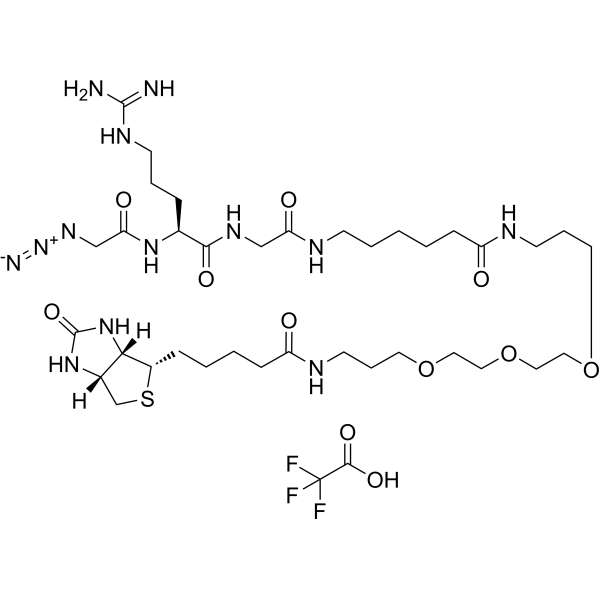
Biotin-C1-PEG3-C3-amido-C5-Gly-Arg-Gly-N3 TFA is used for detection of modification site for N-myristoylated and GPI-anchored proteins in blood-stage P. falciparum . Biotin-C1-PEG3-C3-amido-C5-Gly-Arg-Gly-N3 (TFA) is a click chemistry reagent, it contains an Azide group and can undergo copper-catalyzed azide-alkyne cycloaddition reaction (CuAAc) with molecules containing Alkyne groups. It can also undergo strain-promoted alkyne-azide cycloaddition (SPAAC) reactions with molecules containing DBCO or BCN groups.
loading...
    loading...
Cat. No.: HY-160841
CAS No.: 2567941-52-8
Research Areas:  

Others

Biotin-16-dCTP is a biotinylated deoxycytidine triphosphate that serves as an important DNA labeling substrate. Biotin-16-dCTP can be enzymatically incorporated into the 3' end of DNA probes via terminal deoxynucleotidyl transferase, forming a 1-3 nucleotide-long tail to achieve biotinylation of the probes. Biotin-16-dCTP enhances chemiluminescent detection of low-abundance targets such as specific tRNA isoacceptors through Northern blotting. Biotin-16-dCTP can also replace conventional dCTP to be integrated into single-stranded DNA generated by asymmetric polymerase chain reaction, which is applicable for bioconjugation or pull-down assays. Repeated freeze-thaw cycles of Biotin-16-dCTP should be avoided to prevent degradation of its function for probe biotinylation .
loading...
    loading...
Cat. No.: HY-184605
Metal nanoclusters, containing anywhere from a few to hundreds of atoms, bridge the gap between nanoparticles and molecular compounds, typically exhibiting molecular-like electrical and optical properties. Furthermore, metal nanoclusters possess advantages such as significant Stokes scattering and size- and ligand-dependent fluorescence characteristics, making them an emerging class of materials for constructing fluorescence platforms. Current research primarily focuses on the synthesis and application of noble metal nanoclusters like gold and silver. However, copper, belonging to the same group as gold and silver in the periodic table, is inexpensive, environmentally friendly, readily available, has a simple preparation process, and low toxicity, making it widely applicable in industry. In addition, copper nanoclusters exhibit better photostability than organic dyes and better environmental friendliness than semiconductor quantum dots, making them suitable for trace detection.
loading...
    loading...
Cat. No.: HY-34611
CAS No.: 25691-37-6
Synonyms: N-Boc-L-2,4-diaminobutyric acid; Boc-Dab-OH
Target:  

Drug Intermediate ASCT

Research Areas:  

Neurological Disease Cancer

Boc-L-2,4-Diaminobutyric acid (N-Boc-L-2,4-diaminobutyric acid; Boc-Dab-OH) is a versatile synthetic starting material with a cleavable protecting group. Boc-L-2,4-Diaminobutyric acid not only reduces the backbone cleavage rate by protecting the side-chain γ-amino group, but also triggers intramolecular cyclization of self-immolative linkers under acidic cleavage conditions, thus constructing stimuli-responsive materials. Boc-L-2,4-Diaminobutyric acid is also an important building block for bioactive molecules. It can be used in the synthesis of ASCT2 (SLC1A5) inhibitors and carboxynorspermine, and can also serve as an internal standard to support the quantitative detection of specific intracellular amino acids by UPLC-QQQ-MS .
loading...
    loading...
Cat. No.: HY-D0027S1
Synonyms: Coumarin 120-d4; AMC-d4
7-Amino-4-methylcoumarin-d4 (Coumarin 120-d4) is the deuterium labeled 7-Amino-4-methylcoumarin (HY-D0027). 7-Amino-4-methylcoumarin belongs to the coumarin class, can be isolated from the endophytic fungus Xylaria sp. and has a broad spectrum of antibacterial activity. 7-Amino-4-methylcoumarin is also commonly used as an important laser dye that emits in the blue region, capable of analyzing glycoprotein monosaccharides and N-linked oligosaccharides, and is also utilized in tissue pathology analysis, enzyme activity measurement, and copper ion detection. The excitation wavelength and emission wavelength are 351 nm and 430 nm, respectively .
loading...
    loading...
Cat. No.: HY-D3067
Target:  

Fluorescent Dye

Research Areas:  

Metabolic Disease Cancer

ASSI-Leu is a novel AIE fluorescent probe based on an asymmetric tetraaryl imidazole skeleton, which can be used for ratiometric imaging detection of endogenous leucine aminopeptidase. ASSI-Leu contains an L-leucine-based recognition group that blocks the excited-state intramolecular proton transfer (ESIPT) in its 2-(2'-hydroxyphenyl) benzothiazole (HBT) skeleton, thereby generating an enol-form emission signal at Ex/Em = 365/417 nm. ASSI-Leu undergoes cleavage of the L-leucine group mediated by LAP to form ASSI-OH, which further activates aggregation-induced emission (AIE) and ESIPT, generating a keto-form emission signal at Ex/Em = 365/554 nm and producing a ratiometric fluorescent signal. ASSI-Leu enables real-time tracking of LAP in cancer cells and zebrafish models .\n
loading...
    loading...

