285 Results for "

2D nanosheet morphologies

" in MedChemExpress (MCE) Product Catalog:
Products (285)

285 Results for "2D nanosheet morphologies" in MCE Product Catalog:

Cat. No.: HY-179287
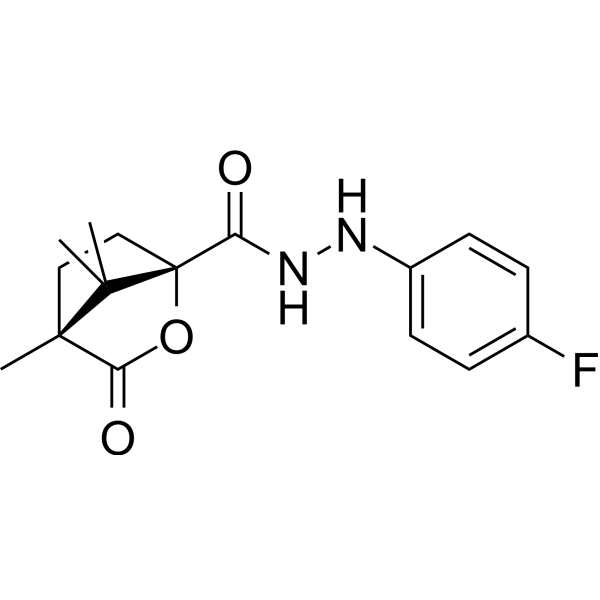
SDH-IN-42 (Compound D28) is a SDH (IC50: 5.38 μg/mL) inhibitor and antifungal agent. SDH-IN-42 exerts antifungal activity against R. solani by disrupting mycelial morphology, increasing cell membrane permeability, inducing the production and accumulation of ROS, and impairing mitochondrial function .
loading...
    loading...
Cat. No.: HY-146116
CAS No.: 1809167-48-3
Target:  

Fungal

Research Areas:  

Infection

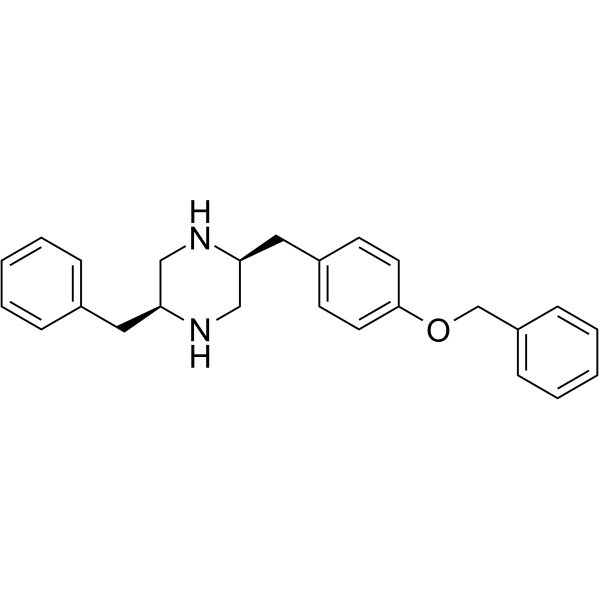
Antifungal agent 32 (compound 1a) is a potent antifungal agent. Antifungal agent 32 inhibits Candida albicans filamentation and biofilm formation. Antifungal agent 32 inhibits the morphological switching of Candida albicans and its adherence to epithelial cells. Antifungal agent 32 can be used for Candida albicans infections research .
loading...
    loading...
Cat. No.: HY-151544
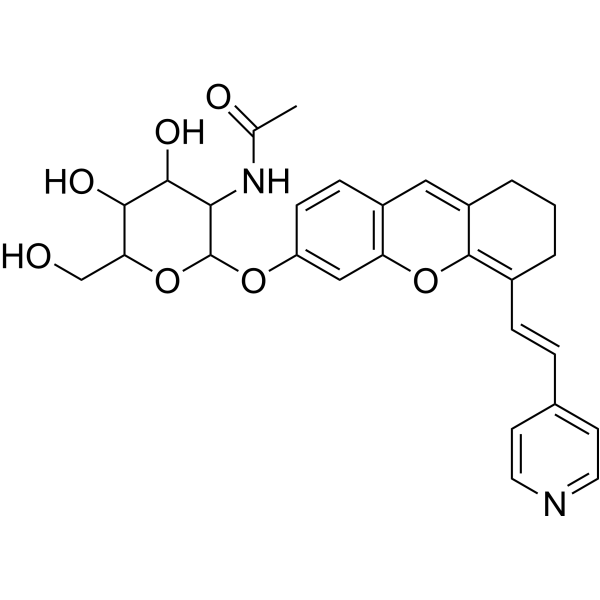
PNE-Lyso is a activatable fluorescent probe. PNE-Lyso can be used to detect intracellular pH and hexosaminidases with two kinds of fluorescence signals. PNE-Lyso can be used to distinguish apoptosis from necrosis through visualizing lysosome morphology. PNE-Lyso is capable of investigating the agent-induced cell death process .
loading...
    loading...
Cat. No.: HY-108553
CAS No.: 126463-64-7
Target:  

Proteasome Apoptosis

Research Areas:  

Cancer

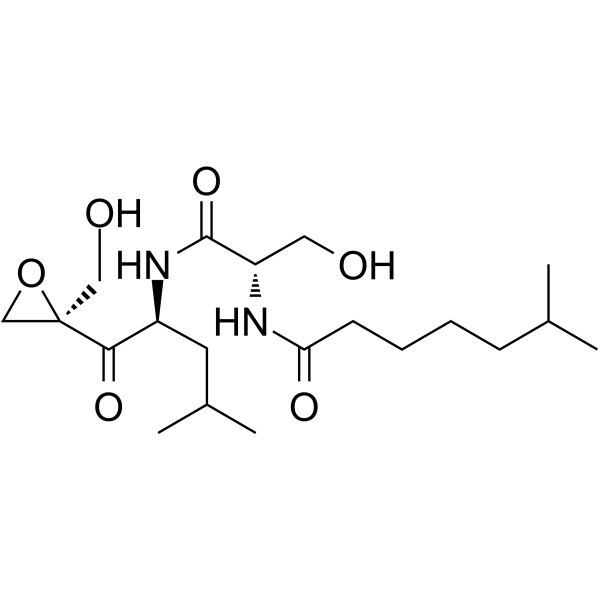
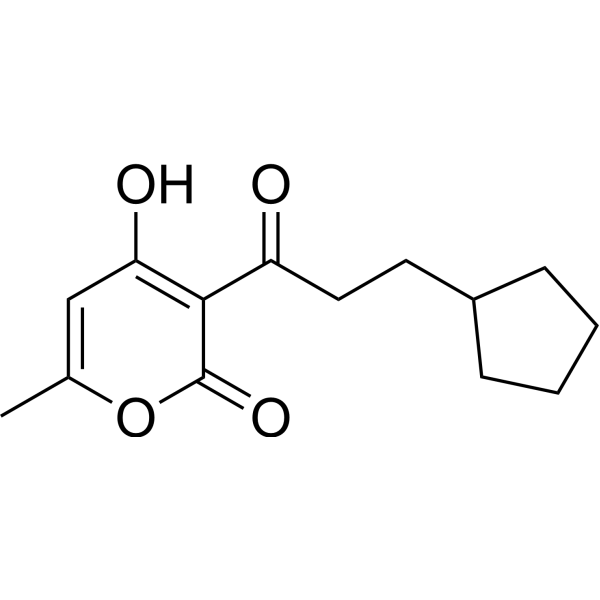
Dihydroeponemycin, an analogue of the antitumor and antiangiogenic natural product eponemycin, selectively targets the 20S proteasome. Dihydroeponemycin covalently modifies a subset of catalytic proteasomal subunits, binding preferentially to the IFN-gamma-inducible subunits LMP2 and LMP7. Dihydroeponemycin-mediated proteasome inhibition induces a spindle-like cellular morphological change and apoptosis .
loading...
    loading...
Cat. No.: HY-B0113AR
CAS No.: 95510-70-6
Synonyms: H 16868 sodium (Standard)
Omeprazole (sodium) (Standard) is the analytical standard of Omeprazole (sodium). This product is intended for research and analytical applications. Omeprazole sodium (H 16868) is an orally active H +,K +-ATPase inhibitor and a proton pump inhibitor. Omeprazole sodium competitively inhibits CYP2C19, CYP3A4, and CYP2C9 activity. Omeprazole sodium inhibits gastric acid secretion and can be used for acid-related gastrointestinal disorders. Omeprazole sodium inhibits pancreatic cancer cell proliferation, induces apoptosis, autophagosome accumulation (elevated LC3-I and LC3-II levels), oxidative stress, and cytogenetic imbalance, modulates lysosomal transport, reduces inflammatory cytokines. Omeprazole sodium alters small intestinal morphology and magnesium absorption, and induces gastric mucosa morphologic changes. Omeprazole sodium also has neuroprotective and antibacterial effects .
loading...
    loading...
Cat. No.: HY-B0113S4
Synonyms: H 16868-d3 sodium
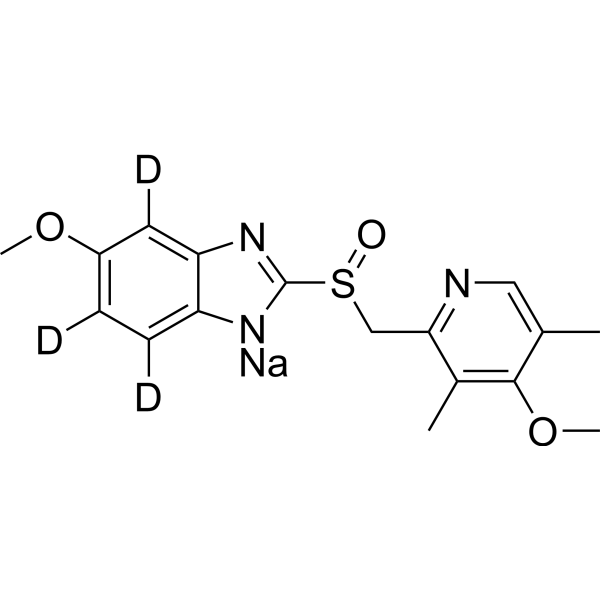
Omeprazole-d3 sodium is deuterated labeled Omeprazole (HY-B0113). Omeprazole sodium (H 16868) is an orally active H +,K +-ATPase inhibitor and a proton pump inhibitor. Omeprazole sodium competitively inhibits CYP2C19, CYP3A4, and CYP2C9 activity. Omeprazole sodium inhibits gastric acid secretion and can be used for acid-related gastrointestinal disorders. Omeprazole sodium inhibits pancreatic cancer cell proliferation, induces apoptosis, autophagosome accumulation (elevated LC3-I and LC3-II levels), oxidative stress, and cytogenetic imbalance, modulates lysosomal transport, reduces inflammatory cytokines. Omeprazole sodium alters small intestinal morphology and magnesium absorption, and induces gastric mucosa morphologic changes. Omeprazole sodium also has neuroprotective and antibacterial effects .
loading...
    loading...
Cat. No.: HY-144775
CAS No.: 2770832-90-9
Target:  

Cholinesterase (ChE)

Research Areas:  

Neurological Disease

AChE-IN-10 (Compound 24r) is a potent inhibitor of AChE (IC50 = 2.4 nM). AChE-IN-10 potently inhibits AChE, reduces tau phosphorylation at S396 residue, provides neuroprotection by rescuing neuronal morphology and increasing cell viability. AChE-IN-10 is also found to reduce amyloid aggregation in the presence of AChE .
loading...
    loading...
Cat. No.: HY-155249
CAS No.: 3018962-69-8
Target:  

Microtubule/Tubulin

Research Areas:  

Cancer

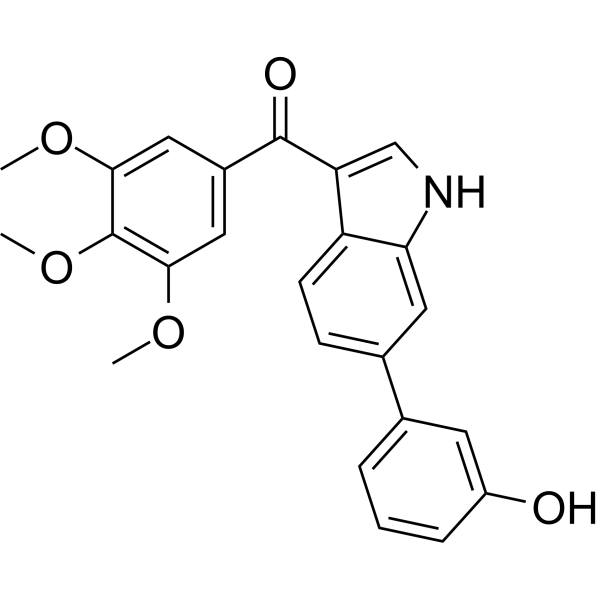
KGP591 is a tubulin polymerization inhibitor (IC50 0.57 µM). KGP591 induces significant G2/M stagnation, inhibits cell migration, disrupts microtubule structure and cell morphology in MDA-MB-231 cells. KGP591 shows antitumor activity in orthotopic model of kidney cancer (RENCA) .
loading...
    loading...
Cat. No.: HY-163337
CAS No.: 3020687-94-6
Target:  

Fungal

Research Areas:  

Infection

Antifungal agent 92 (Compound 21) is a potent antifungal agent with an EC50 of 4.4 μM against Sclerotinia sclerotiorum. Antifungal agent 92 can induce abnormal mitochondrial morphology, loss of mitochondrial membrane potential, and reactive oxygen species (ROS) accumulation in Sclerotinia sclerotiorum. Antifungal agent 92 is a moderate promiscuous inhibitor of mitochondrial complexes II and III .
loading...
    loading...
Cat. No.: HY-P10247
CAS No.: 201293-38-1
Research Areas:  

Neurological Disease

Amyloid precursor C-terminal peptide is cleaved from the C-terminus of Amyloid Precursor Protein (APP). Amyloid precursor C-terminal peptide accumulation causes mitochondrial morphology alteration and basal mitophagy failure, which indicates that amyloid precursor protein C-terminal peptide may correspond to an etiological trigger of Alzheimer’s disease (AD) pathology .
loading...
    loading...
Cat. No.: HY-W721681
CAS No.: 59875-58-0
Target:  

Amyloid-β

Research Areas:  

Neurological Disease

Dehydro nicardipine is a dihydropyridine metabolite of Nicardipine (HY-12515) and belongs to the dihydropyridine class of compounds. Dehydro nicardipine can selectively inhibit the aggregation of Aβ monomers, specifically regulate the extension and binding of Aβ soluble aggregates, change the morphology of Aβ aggregates, and inhibit the growth of aggregate length. Dehydro nicardipine can be used in the study of Alzheimer's disease (AD) .
loading...
    loading...
Cat. No.: HY-B0113S2
CAS No.: 1189891-71-1
Synonyms: Omeprazole sulphone (methoxy-d3)
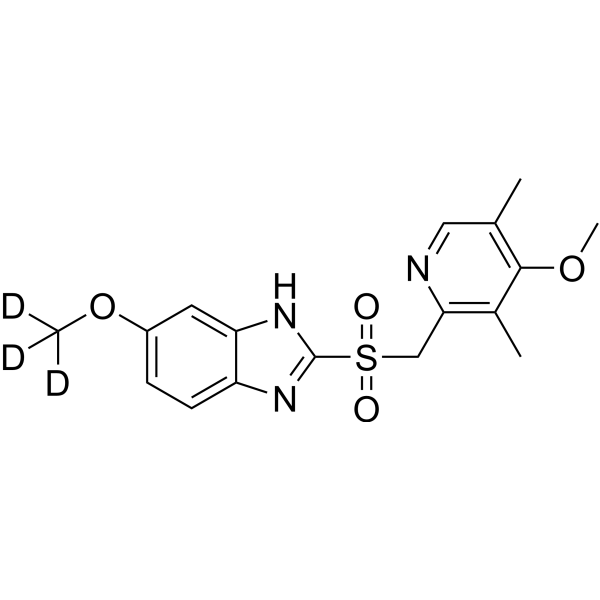
Omeprazole sulfone (methoxy-d3) is the deuterium labeled Omeprazole sulfone. Omeprazole sulfone (H 16868) is an orally active H +,K +-ATPase inhibitor and a proton pump inhibitor. Omeprazole sulfone competitively inhibits CYP2C19, CYP3A4, and CYP2C9 activity. Omeprazole sulfone inhibits gastric acid secretion and can be used for acid-related gastrointestinal disorders. Omeprazole sulfone inhibits pancreatic cancer cell proliferation, induces apoptosis, autophagosome accumulation (elevated LC3-I and LC3-II levels), oxidative stress, and cytogenetic imbalance, modulates lysosomal transport, reduces inflammatory cytokines. Omeprazole sulfone alters small intestinal morphology and magnesium absorption, and induces gastric mucosa morphologic changes. Omeprazole sulfone also has neuroprotective and antibacterial effects .
loading...
    loading...
Cat. No.: HY-B0113S5
CAS No.: 922731-02-0
Synonyms: H 16868-d6
Omeprazole-d6 (H 16868-d6) is deuterium labeled Omeprazole. Omeprazole (H 16868) is an orally active H +,K +-ATPase inhibitor and a proton pump inhibitor. Omeprazole competitively inhibits CYP2C19, CYP3A4, and CYP2C9 activity. Omeprazole inhibits gastric acid secretion and can be used for acid-related gastrointestinal disorders. Omeprazole inhibits pancreatic cancer cell proliferation, induces apoptosis, autophagosome accumulation (elevated LC3-I and LC3-II levels), oxidative stress, and cytogenetic imbalance, modulates lysosomal transport, reduces inflammatory cytokines. Omeprazole alters small intestinal morphology and magnesium absorption, and induces gastric mucosa morphologic changes. Omeprazole also has neuroprotective and antibacterial effects .
loading...
    loading...
Cat. No.: HY-149614
CAS No.: 2991094-41-6
Laccase-IN-1 (compound 4b) is an orally active inhibitor of laccase, with the IC50 of 11.3 μM. Laccase-IN-1 displays protective and curative effects on apple fruits infected by B. dothidea. Laccase-IN-1 enhances the cell membrane permeability, destroys the mycelial surface morphology and the cell ultrastructure, and reduces the ergosterol and exopolysaccharide contents of B. dothidea .
loading...
    loading...
Cat. No.: HY-162518
Research Areas:  

Cancer

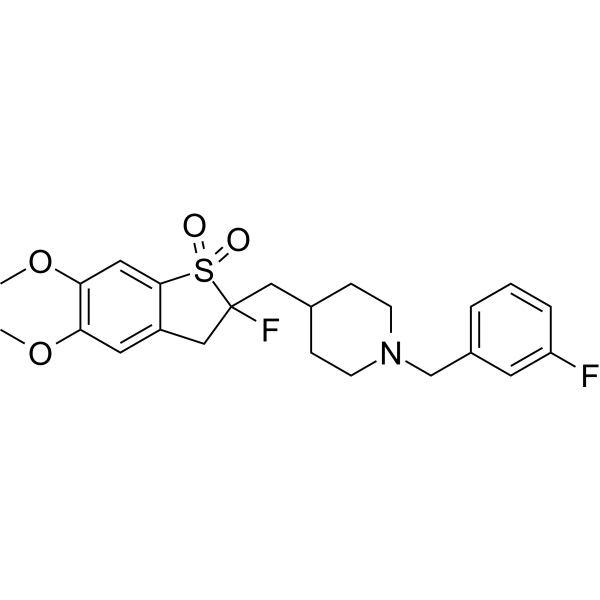
Eg5-IN-3 (5) is an Eg5 inhibitor that targets the novel allosteric pocket (α4/α6/L11). Eg5-IN-3 (5) causes tubulin assembly distortion with irregular morphology, resulting in a typical mitotic arrest similar to Monastrol (HY-101071A) .
loading...
    loading...
Cat. No.: HY-168260
Target:  

Apoptosis Ferroptosis MMP

Research Areas:  

Cancer

CQ-Mito is a Coumarin-Quinazolinone (CQ)-based derivative that targets mitochondria and exhibits profound phototherapeutic performances with an Phototoxic Index (PI) value of 167. CQ-Mito causes cell death by both apoptosis and ferroptosis. CQ-Mito mediates mitochondrial dysfunction, including mitochondrial morphology changed and the loss of MMP. CQ-Mito can efficiently inhibit the tumor growth in organoid tumor models .
loading...
    loading...
Cat. No.: HY-172259
Target:  

PI3K Akt mTOR

Research Areas:  

Cancer

Toyaburgine is a unique isoquinoline compound that exhibits anti-tumor activity. It packs a punch by disrupting the PI3K/AKT/mTOR signaling pathway, causing significant morphological changes and cell death in MIA PaCa-2 cells. On top of that, it puts the brakes on cell migration and colony formation. This compound is showing a lot of promise in the realm of pancreatic cancer research .
loading...
    loading...
Cat. No.: HY-K3119

MCE Exosome Preservation Solution (Chemically Defined) is a buffer specifically formulated for the storage of exosome samples, designed to maintain their morphological integrity and biological activity.

loading...
    loading...
Cat. No.: HY-117740
CAS No.: 1257083-94-5
Target:  

Others

Heronamide C is a polyketide macrolactam isolated from marine Streptomyces that has the activity of producing reversible non-cytotoxic effects on mammalian cell morphology.
loading...
    loading...
Cat. No.: HY-184632
Fe3O4 nanorods are a type of nanomaterial with a unique morphology, consisting of a rod-shaped structure with a specific ratio between length and diameter.
loading...
    loading...

