1130 Results for "

Two dimensional chromatography

" in MedChemExpress (MCE) Product Catalog:
Products (1130)

1130 Results for "Two dimensional chromatography" in MCE Product Catalog:

Cat. No.: HY-121143
CAS No.: 73711-18-9
Target:  

Cholinesterase (ChE)

Research Areas:  

Neurological Disease

Bis-Q is an acetylcholine (ACh) agonist that targets voltage-clamped muscle fibers of the fish Xenomystus nigris. Bis-Q exists in two forms: cis-Bis-Q (non-agonist) and trans-Bis-Q (agonist). Photoisomerization converts cis-Bis-Q to trans-Bis-Q, which induces agonist-induced currents. Channels activated by trans-Bis-Q and ACh have similar conductances and open times. Flashes increase the ratio of trans-Bis-Q to cis-Bis-Q until light equilibrium is reached. Further flashes transiently increase agonist-induced currents, indicating binding of trans-Bis-Q to desensitized receptors. Higher concentrations of cis-Bis-Q produce larger agonist-induced currents that decay exponentially. .
loading...
    loading...
Cat. No.: HY-133240
CAS No.: 1109241-72-6
trans-AzoTAB is a photoresponsive potassium/sodium/calcium channel modulator and DNA-binding agent. trans-AzoTAB undergoes trans-cis isomerization driven by light, with variable polarity and DNA affinity. trans-AzoTAB also enhances voltage-gated potassium currents and inhibits sodium and calcium currents in cardiomyocytes, thereby reducing spontaneous electrical activity and excitation conduction velocity. In addition, trans-AzoTAB induces compaction and frozen conformation of λ-phage DNA, and non-sequence-dependently inhibits transcription and translation processes in the dark; its activity can be reversed and restored by visible light after activation with ultraviolet irradiation. trans-AzoTAB can serve as a probe for two-photon optical regulation of myocardial excitability, and is used to construct photoresponsive interfacial polymer structures .
loading...
    loading...
Cat. No.: HY-135752
CAS No.: 99827-19-7
Target:  

Bacterial

Research Areas:  

Infection

Carbendazim mixture with flusilazole is a fungicide used to control sooty mold caused by Botrytis narcissicola. The disease is the most common foliar disease of daffodils (Narcissus cultivars) in the UK and causes significant losses in bulb and flower production. Carbendazim mixture with flusilazole was found to be effective in reducing lesion size and significantly reducing symptoms of secondary sooty mold after spraying when used in combination with several other fungicides. In field trials in Cambridgeshire and Lincolnshire, a spraying program using this fungicide mixture was effective in controlling sooty mold. In addition, alternating four to six sprays using two or three fungicides with different modes of action not only reduced disease damage but also increased bulb production. The study discusses the selection of appropriate fungicides and control methods that may reduce the number of spraying applications.
loading...
    loading...
Cat. No.: HY-150087
CAS No.: 2365532-65-4
Ctrl-CF4-S2 is a chemically modified control probe of the copper probe Copper Fluor-4 (CF4, HY-150086), in which two of the four thioether ligands in CF4 (HY-150086) are replaced with methylene groups. CF4 (HY-150086) is a fluorescent probe used for detecting the presence and distribution of copper ions, whereas Ctrl-CF4-S2 does not respond to copper ions. This allows it to eliminate background signals from copper, thereby helping to determine whether the signals from CF4 (HY-150086) accurately reflect the dynamic changes of copper ions in biological systems
loading...
    loading...
Cat. No.: HY-181599
XAN-5 is a mitochondrial DNA G-quadruplex (mtG4) ligand with a Kd of 3.8 μM. XAN-5 selectively binds and stabilizes mtG4 structures, disrupting mitochondrial gene transcription and DNA replication. XAN-5 triggers mitochondrial dysfunction, ROS overproduction, G0 phase arrest and caspase-dependent apoptosis. XAN-5 inhibits autophagy and induces immunogenic cell death. XAN-5 inhibits tumor growth in a mouse liver cancer model while enhancing tumor-infiltrating CD4 + and CD8 + T cells. XAN-5 targets two cancer resistance mechanisms simultaneously. XAN-5 can be used for the research of liver cancer .
loading...
    loading...
Cat. No.: HY-40178S
CAS No.: 2102057-88-3
NH2-C4-NH-Boc-d8 is the deuterium labeled NH2-C4-NH-Boc (HY-40178). NH2-C4-NH-Boc (compound 15) is a PROTAC linker, which refers to the Alkyl/ether composition. NH2-C4-NH-Boc can be used in the synthesis of a series of PROTACs. PROTACs contain two different ligands connected by a linker; one is a ligand for an E3 ubiquitin ligase and the other is for the target protein. PROTACs exploit the intracellular ubiquitin-proteasome system to selectively degrade target proteins .
loading...
    loading...
Cat. No.: HY-E70574
Research Areas:  

Others

Trypsin/Lys-C complex protease (MS grade) combines Trypsin and Lys-C, two recombinant proteases, to achieve efficient peptide bond hydrolysis. Trypsin specifically cleaves the C-terminal peptide bonds of arginine (R) and lysine (K), while Lys-C specifically cleaves the C-terminal peptide bonds of lysine (K). This combination overcomes issues such as the slower digestion rate of lysine and arginine by rTrypsin, PTM changes on lysine, or hydrophobic C-termini (such as proline) that can lead to missed cleavage. Trypsin/Lys-C complex protease (MS grade) can be used to process complex protein samples that are difficult to enzymatically digest. Trypsin/Lys-C complex protease (MS grade) can be used for protein characterization, single-cell proteomics and large cohort proteomics studies.
loading...
    loading...
Cat. No.: HY-N0508R
CAS No.: 85026-55-7
Rosin (Standard) is the analytical standard of Rosin (HY-N0508). This product is intended for research and analytical applications. Rosin is a natural oleoresin found in coniferous trees of the genus Pinus, such as Pinus massoniana. Rosin exhibits cholesterol-lowering, anti-gastric ulcer, anti-tumor, blood glucose-lowering, and anti-macrocyte aggregation activities. Rosin inhibits TPA (HY-18739)-induced EBV-EA activation and suppresses papilloma formation in a two-stage mouse skin carcinogenesis model. WBR, a processed product of Rosin, inhibits the IL-23/IL-17 inflammatory axis and reduces Th1 and Th17 cell infiltration. Rosin is used in research on psoriasis and skin cancer .
loading...
    loading...
Cat. No.: HY-P11231
CAS No.: 2780353-11-7
Synonyms: FUS(364-369)-TAT
Target:  

Inhibitory Antibodies

Research Areas:  

Cancer

β4-TAT is a kind of β-sheet peptide foldamer. β4-TAT is composed of two parts: the β4 sequence (derived from the β-sheet fragment of the RRM domain of fused in sarcoma (FUS)) and the TAT sequence (a nuclear localization signal peptide that helps the entire peptide penetrate the nuclear membrane). β4-TAT influences FUS aggregation by targeting its RNA recognition motifs (RRM). β4-TAT effectively induces FUS aggregation within cells, leading to the death of cancer cells. β4-TAT can be used for the study of FUS .
loading...
    loading...
Cat. No.: HY-P2200
CAS No.: 164802-68-0
Synonyms: BMY-29304
Target:  

HIV Antibiotic

Research Areas:  

Infection Inflammation/Immunology

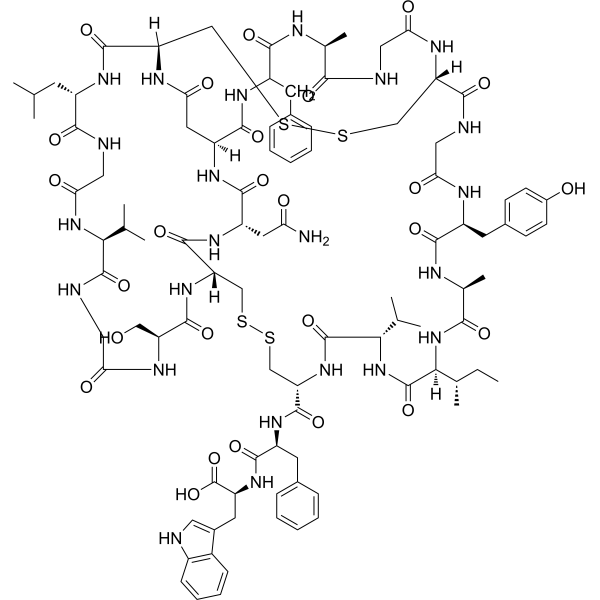
Siamycin I (BMY-29304), a 21-residue tricyclic peptide, is a secondary metabolite in actinomycetes. Siamycin I is a HIV fusion inhibitor with ED50s of 0.05 to 5.7 μM for acute HIV type 1 (HIV-1) and HIV-2 infections. Siamycin I inhibits the gelatinase and gelatinase biosynthesis-activating pheromone (GBAP) signaling via the FsrC-FsrA two-component regulatory system in a noncompetitive manner. Siamycin I suppresses the expression of both fsrBDC and gelE-sprE transcripts. Siamycin I, a lasso peptide, interacts with lipid II and inhibits cell wall biosynthesis. Siamycin I, an antibiotic, has the potential for enterococcal infections research .
loading...
    loading...
Cat. No.: HY-P3016A
CAS No.: 9000-97-9
Synonyms: EC 2.6.1.1, porcine heart; GOT, porcine heart; AST, porcine heart
Aspartate aminotransferase (EC 2.6.1.1), porcine heart is a metabolic regulator with the highest activity in the heart, liver and skeletal muscle. Aspartate aminotransferase, porcine heart comprises two isozymes: the cytoplasmic form (AST1) and the mitochondrial form (AST2). By catalyzing reversible transamination reactions between oxaloacetate, L-glutamate and other substances, it is deeply involved in key physiological processes such as amino acid metabolism, the tricarboxylic acid cycle and neurotransmitter synthesis. Aspartate aminotransferase, porcine heart also provides substrate support for the synthesis of urea and purines/pyrimidines. Aspartate aminotransferase, porcine heart is a serum marker reflecting cardiac and hepatic injury, and its abnormal levels are also closely associated with myocardial infarction, cardiovascular diseases and various cancers .
loading...
    loading...
Cat. No.: HY-P3016B
CAS No.: 9000-97-9
Synonyms: EC 2.6.1.1, Human liver; GOT, Human liver; AST, Human liver
Aspartate aminotransferase (EC 2.6.1.1), Human liver is a metabolic regulator with the highest activity in the heart, liver and skeletal muscle. Aspartate aminotransferase, Human liver comprises two isozymes: the cytoplasmic form (AST1) and the mitochondrial form (AST2). By catalyzing reversible transamination reactions between oxaloacetate, L-glutamate and other substances, it is deeply involved in key physiological processes such as amino acid metabolism, the tricarboxylic acid cycle and neurotransmitter synthesis. Aspartate aminotransferase, Human liver also provides substrate support for the synthesis of urea and purines/pyrimidines. Aspartate aminotransferase, Human liver is a serum marker reflecting cardiac and hepatic injury, and its abnormal levels are also closely associated with myocardial infarction, cardiovascular diseases and various cancers .
loading...
    loading...
Cat. No.: HY-P3016C
CAS No.: 9000-97-9
Synonyms: EC 2.6.1.1, Human; GOT, Human; AST, Human
Research Areas:  

Others

Aspartate aminotransferase (EC 2.6.1.1), Human s a metabolic regulator with the highest activity in the heart, liver and skeletal muscle. Aspartate aminotransferase, Human (HEK293) comprises two isozymes: the cytoplasmic form (AST1) and the mitochondrial form (AST2). By catalyzing reversible transamination reactions between oxaloacetate, L-glutamate and other substances, it is deeply involved in key physiological processes such as amino acid metabolism, the tricarboxylic acid cycle and neurotransmitter synthesis. Aspartate aminotransferase, Human also provides substrate support for the synthesis of urea and purines/pyrimidines. Aspartate aminotransferase, Human is a serum marker reflecting cardiac and hepatic injury, and its abnormal levels are also closely associated with myocardial infarction, cardiovascular diseases and various cancers .
loading...
    loading...
Cat. No.: HY-P4933
CAS No.: 2022995-68-0
Synonyms: Tau-F protein (255-314)
Target:  

Tau Protein

Research Areas:  

Neurological Disease

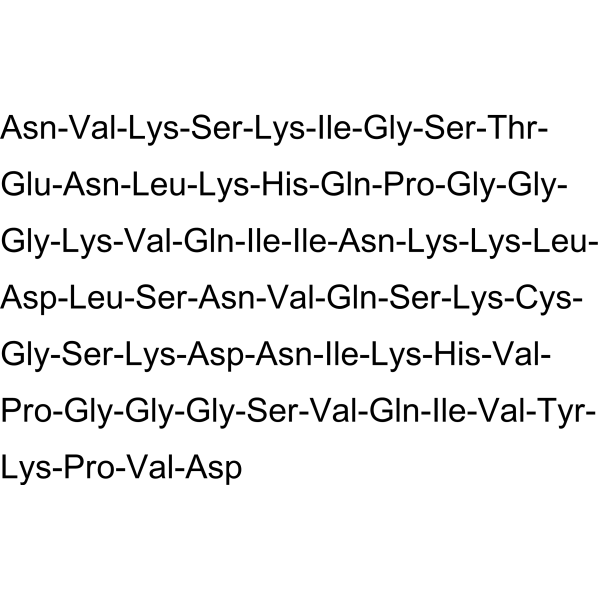
Tau Peptide (255-314) (Repeat 2 Domain) (human) (Tau-F protein (255-314)) is a polypeptide. Tau Peptide (255-314) (human) is the 255-314 fragment of Tau-F (also known as Tau-4, the 2N4 isoform), a major isoform of the Tau protein. Tau Peptide (255-314) (human) contains two core driving sequences for Tau aggregation, namely PHF6* (275-280, VQIINK) and PHF6 (306-311, VQIVYK), and spans the C-terminal half of repeat domain R1, the entire repeat domain R2, and the N-terminal half of repeat domain R3 within the microtubule-binding region (MTBR).
loading...
    loading...
Cat. No.: HY-P990735
CAS No.: 2765066-99-5
Synonyms: UCB-1381

Target:  

Interleukin Related

Research Areas:  

Inflammation/Immunology

Donzakimig is a trispecific anti-IL-13/IL-22/HSA antibody. Donzakimig adopts a Fab-scFv-scFv structural format (without an Fc region), in which the Fab domain is linked to the scFv domains via a S (G4S)2 linker. Donzakimig binds to and inhibits the activities of IL-13 and IL-22, thereby blocking the signal transduction of these two cytokines. Donzakimig can extend its serum half-life by binding to human serum albumin, enhancing its in vivo stability and achieving long-acting efficacy. Donzakimig can be used in research on moderate-to-severe atopic dermatitis, moderate-to-severe asthma (especially eosinophilic type), psoriasis, inflammatory bowel disease, and other conditions .
loading...
    loading...
Cat. No.: HY-W013078R
CAS No.: 998-07-2
Synonyms: DMPE (Standard)
1,2-Dimyristoyl-sn-glycero-3-phosphoethanolamine (DMPE) (Standard) is the analytical standard of 1,2-Dimyristoyl-sn-glycero-3-phosphoethanolamine (DMPE) (HY-W013078). This product is intended for research and analytical applications. 1,2-Dimyristoyl-sn-glycero-3-phosphoethanolamine (DMPE) is a zwitterionic saturated phosphatidylethanolamine bearing two myristoyl (C14:0) chains, and serves as a model membrane component, a neutral lipid component of lipid nanoparticles, and a cocoa butter crystallization nucleating agent. 1,2-Dimyristoyl-sn-glycero-3-phosphoethanolamine is used in nucleic acid delivery, construction of artificial cell membrane models, and research on urothelial carcinoma .
loading...
    loading...
Cat. No.: HY-W013078S
CAS No.: 326495-41-4
Synonyms: DMPE-d54
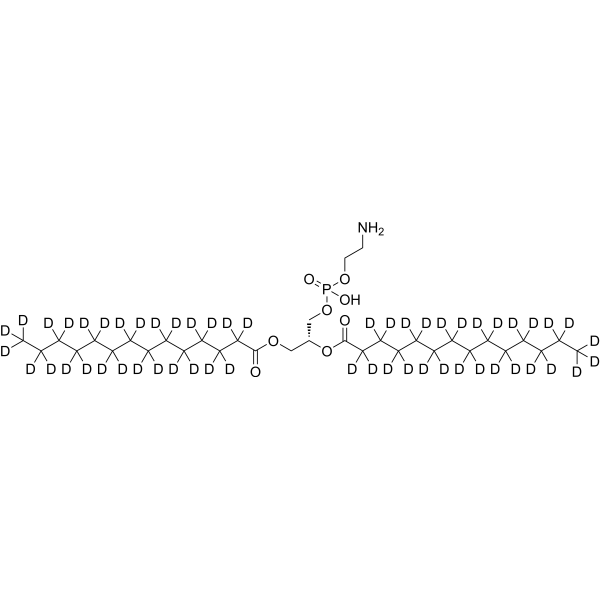
1,2-Dimyristoyl-sn-glycero-3-phosphoethanolamine (DMPE)-d54 is the deuterated-labeled 1,2-Dimyristoyl-sn-glycero-3-phosphoethanolamine (DMPE) (HY-W013078). 1,2-Dimyristoyl-sn-glycero-3-phosphoethanolamine (DMPE) is a zwitterionic saturated phosphatidylethanolamine bearing two myristoyl (C14:0) chains, and serves as a model membrane component, a neutral lipid component of lipid nanoparticles, and a cocoa butter crystallization nucleating agent. 1,2-Dimyristoyl-sn-glycero-3-phosphoethanolamine is used in nucleic acid delivery, construction of artificial cell membrane models, and research on urothelial carcinoma .
loading...
    loading...
Cat. No.: HY-W490804
CAS No.: 2971-36-0
Research Areas:  

Metabolic Disease

HPTE is the active in vivo metabolite of Methoxychlor (HY-B1873), and acts as an inhibitor of 3β‑HSD and 17β‑HSD3. HPTE binds to the substrate-binding pocket of 3β‑HSD in a non-competitive manner, but competitively occupies the coenzyme NAD +-binding site, thereby inhibiting the conversion of pregnenolone to progesterone. HPTE binds to the androstenedione-binding pocket (the substrate pocket) of 17β‑HSD3 in a non-competitive manner, and competitively occupies the coenzyme NADPH-binding site, thus blocking the conversion of androstenedione to testosterone. HPTE interferes with androgen biosynthesis in Leydig cells by inhibiting the activities of these two key steroidogenic enzymes. HPTE can be used in studies related to androgen biosynthesis .
loading...
    loading...
Cat. No.: HY-L149
7,999 compounds

A membrane protein is a protein molecule that is attached to or associated with the membrane of a cell or an organelle. Membrane proteins can be classified into two groups based on how the protein is associated with the membrane: integral membrane proteins and peripheral membrane proteins. In humans, about 30% genome encodes membrane proteins. Membrane proteins perform a variety of functions vital to the survival of organisms, for example, signal transduction, molecules or ion transportation, enzymatic catalysis, and intercellular communication. Membrane proteins also play important roles in drug discovery. As reported, more than 60% of current drug targets are membrane proteins.

MCE supplies a unique collection of 7,999 compounds targeting a variety of membrane proteins. MCE Membrane Protein-targeted Compound Library can be used for membrane protein-focused screening and drug discovery.

Cat. No.: HY-L187
2,196 compounds

Fragment-based drug development (FBDD) is a strategy for drug discovery that can be applied both academically and commercially to enhance the identification of some non-drug targets. Fragment-based drug development has identified low molecular weight molecules (<300 Da) capable of binding to related macromolecules. These fragments can cover a wide chemical space and are easy to optimize later. Currently, several fragment-based drugs have entered clinical trials, of which two drugs, Vemurafenib and Venetoclax, have been approved for marketing.

Based on Tanimoto coefficient, MCE uses similarity algorithm to carefully select 2,196 high-structurally diverse 'RO3' compliant fragment molecules from large-scale fragment molecules, which can be applied to fragment based drug development.

