
1218 Results for "

stem

" in MedChemExpress (MCE) Product Catalog:
Products (1218)

1218 Results for "stem" in MCE Product Catalog:

Cat. No.: HY-183516
CAS No.: 19220-35-0
Synonyms: OPG
Osteoprotegerin (OPG) belongs to the tumor necrosis factor receptor (TNFR) superfamily . Osteoprotegerin blocks the RANKL-RANK interaction as well as the binding of TRAIL to its receptor. Osteoprotegerin activates NF-κB to induce the expression of ICAM-1, VCAM-1 and E-selectin, and activates the phosphorylation of ERK1/2. Osteoprotegerin regulates osteoclast activity, inhibits osteoclast maturation and formation, bone lysis and bone resorption, and increases bone mass. Osteoprotegerin regulates vascular endothelial cell function. Osteoprotegerin can be used in the research of cardio-cerebrovascular and bone-related diseases .
loading...
    loading...
Cat. No.: HY-185169
CAS No.: 1639426-14-4
Synonyms: Quicaotong; Quinotrione; Y 13161
Target:  

Herbicide

Research Areas:  

Others

Benquitrione (Quicaotong) is a highly selective herbicide. Benquitrione is used to control several common harmful weeds in sorghum fields .
loading...
    loading...
Cat. No.: HY-19893
CAS No.: 1010081-09-0
Synonyms: (+)-Antroquinonol
Target:  

Keap1-Nrf2

Research Areas:  

Inflammation/Immunology Cancer

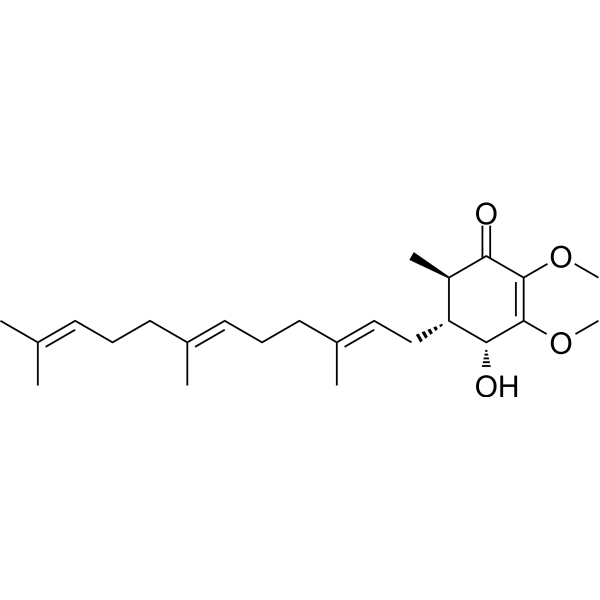
Antroquinonol ((+)-Antroquinonol), a ubiquinone derivative from the mushroom Antrodia camphorata, has hepatoprotective, anti-inflammatory, and anti-cancer effects . Antroquinonol can be used for the research of colon cancer . Antroquinonol reduces oxidative stress by enhancing the Nrf2 signaling pathway and inhibits inflammation and sclerosis in focal segmental glomerulosclerosis mice .
loading...
    loading...
Cat. No.: HY-E70115
CAS No.: 134712-49-5
Target:  

Fungal Bacterial

Research Areas:  

Infection

Feruloyl esterase is a subclass of carboxylesterases that hydrolyzes the ester linkages between hydroxycinnamic acids and arabinoxylan/pectin polysaccharides in plant cell walls. Feruloyl esterase can hydrolyze ethyl ferulate to release ferulic acid, disrupt plant cell wall structure, promote fiber swelling, and facilitate cellulase hydrolysis. Feruloyl esterase synergizes with xylanase by removing ferulic acid side chains, thereby promoting efficient hydrolysis of xylan into monomers. Feruloyl esterase acts as a virulence factor for Verticillium dahliae VdFAE and Magnaporthe oryzae Fae1, facilitating host infection and colonization. Feruloyl esterase promotes the degradation of cotton GhDFR through binding to its NADPH domain, thereby inhibiting flavonoid-mediated innate immunity and inducing cell death in Nicotiana benthamiana. Feruloyl esterase can be used in studies related to verticillium wilt and rice blast .
loading...
    loading...
Cat. No.: HY-E70115A
Target:  

Fungal Bacterial

Research Areas:  

Infection

Feruloyl esterase, Acetivibrio cellulolyticus is a subclass of carboxylesterases that hydrolyzes the ester linkages between hydroxycinnamic acids and arabinoxylan/pectin polysaccharides in plant cell walls. Feruloyl esterase, Acetivibrio cellulolyticus can hydrolyze ethyl ferulate to release ferulic acid, disrupt plant cell wall structure, promote fiber swelling, and facilitate cellulase hydrolysis. Feruloyl esterase, Acetivibrio cellulolyticus synergizes with xylanase by removing ferulic acid side chains, thereby promoting efficient hydrolysis of xylan into monomers. Feruloyl esterase, Acetivibrio cellulolyticus acts as a virulence factor for Verticillium dahliae VdFAE and Magnaporthe oryzae Fae1, facilitating host infection and colonization. Feruloyl esterase, Acetivibrio cellulolyticus promotes the degradation of cotton GhDFR through binding to its NADPH domain, thereby inhibiting flavonoid-mediated innate immunity and inducing cell death in Nicotiana benthamiana. Feruloyl esterase, Acetivibrio cellulolyticus can be used in studies related to verticillium wilt and rice blast .
loading...
    loading...
Cat. No.: HY-P10999
Synonyms: P55
Research Areas:  

Others

INF7TAT-P55 (P55) is a polypeptide derived from INF7TAT (HY-P11000) with G1K, G20L and Y22N mutations. INF7TAT-P55 serves as a delivery carrier to deliver preassembled CRISPR ribonucleases into cells for genome editing .
loading...
    loading...
Cat. No.: HY-L001
27,212 compounds

Bioactive compounds are a general term for a class of substances that can cause certain biological effects in the body, which are the main source of small molecule drugs. These compounds generally penetrate cell membranes, act on specific target proteins in cells, regulate intracellular signaling pathways, and cause some changes in cell phenotype.

MCE owns a unique collection of 27,212 compounds with confirmed biological activities and clear targets. These compounds include natural products, innovative compounds, approved compounds, and clinical compounds. These can also be used for signal pathway research, drug discovery and drug repurposing, etc.

Cat. No.: HY-L001V
34,325 compounds
A unique collection of 34,325 bioactive compounds including natural products, enzyme inhibitors, receptor ligands, and drugs for high throughput screening (HTS) and high content screening (HCS).
Cat. No.: HY-167851
CAS No.: 1226686-54-9
Target:  

CXCR

Research Areas:  

Neurological Disease Cancer

CCX662 is a selective CXCR7 inhibitor with human IC50 values of 9 nM (buffer) and 18 nM (100% human serum), and rat IC50 of 14 nM (100% rat serum). CCX662 blocks CXCL12 binding to CXCR7, inhibits CXCR4-directed trans-endothelial migration of CXCR4 +/CXCR7 + cells. CCX662 can be used for the research of glioblastoma multiforme .
loading...
    loading...
Cat. No.: HY-48813
CAS No.: 133429-88-6
Glycoursodeoxycholic acid 3-sulfate is a glycine-conjugated sulfated bile acid 3-sulfate, which is produced by SULT2A1-mediated sulfation of glycoursodeoxycholic acid (HY-N1424) in the liver. Glycoursodeoxycholic acid 3-sulfate attenuates the anti-inflammatory effect of glycoursodeoxycholic acid and impairs the inhibitory effect on the IL-17 and NF-κB signaling pathways. Glycoursodeoxycholic acid 3-sulfate shows a significant correlation with aortic flow velocity and BNP in patients with aortic stenosis. Glycoursodeoxycholic acid 3-sulfate is mainly used in related studies such as quantitative analysis, quality control and biochemical experiments; it often serves as a reagent for metabolomics analysis and can also be applied to research related to aortic stenosis .
loading...
    loading...
Cat. No.: HY-N4289R
CAS No.: 989-30-0
3-Epiursolic Acid (Standard) is the analytical standard of 3-Epiursolic Acid (HY-N4289). This product is intended for research and analytical applications. 3-Epiursolic Acid is a natural triterpenoid and a competitive inhibitor of Cathepsin L, with an IC50 of 6.5 μM and a Ki of 19.5 μM. 3-Epiursolic Acid acts through competitive inhibition of Cathepsin L. 3-Epiursolic Acid can be used in research on Cathepsin L inhibitors and tumor-associated proteases .
loading...
    loading...
Cat. No.: HY-P2044
CAS No.: 585535-37-1
Azumamide E is a HDAC inhibitor, with an IC50 of 0.064 μM against HDAC, 1.22 μM against HDAC1, and 2.28 μM against HDAC4. Azumamide E inhibits HDAC activity in nuclear extracts of leukemia cells and cervical adenocarcinoma cells. Azumamide E suppresses angiogenesis. Azumamide E is applicable for research on leukemia, cervical adenocarcinoma, and anti-angiogenesis .
loading...
    loading...
Cat. No.: HY-137910R
CAS No.: 335104-84-2
Research Areas:  

Others

Tembotrione (Standard) is the analytical standard of Tembotrione. This product is intended for research and analytical applications. Tembotrione is a drug that may reduce the productivity of carrots. Tembotrione has the activity of reducing carrot stem mass. Tembotrione can be used to study the total productivity of carrot . Tembotrione is a herbicide belonging to the HPPD (dioxygenase) inhibitor class with crop selectivity. Tembotrione effectively controls a variety of weeds including broadleaf and gramineous species by disrupting carotenoid synthesis, which leads to chlorophyll degradation and leaf whitening. Mixing Tembotrione with isoxaflutole or adding surfactants optimizes its efficacy and reduces phytotoxicity, with no residual impact on subsequent cruciferous crops, thus helping to increase maize grain yield. The activity of Tembotrione decreases under drought conditions, and under specific conditions (such as double-dose treatment), it may cause reversible yellowing and even yield reduction in crops such as poppy .
loading...
    loading...
Cat. No.: HY-16782R
CAS No.: 945614-12-0
Synonyms: ARRY-614 (Standard)
Pexmetinib (Standard) (ARRY-614 (Standard)) is the analytical standard of Pexmetinib (HY-16782). This product is intended for research and analytical applications. Pexmetinib (ARRY-614) is an orally active dual Tie-2 and p38 MAPK inhibitor. Pexmetinib binds to Tie-2 and p38 MAPK in a "DFG-out" conformation, attenuates the phosphorylation of p38, inhibits STAT3 activation, reduces the promoter-binding activity of NFATc1, and decreases the expression of MMPs. Pexmetinib inhibits leukemia cell proliferation, abrogates TNF-α-mediated myelosuppression of healthy hematopoietic stem cells, stimulates hematopoiesis in primary myelodysplastic syndrome (MDS) samples, inhibits RANKL-induced osteoclast formation and bone resorption, and suppresses migration, invasion and induced osteolysis of breast cancer cells. Pexmetinib can be used in research related to myelodysplastic syndrome, acute myeloid leukemia and breast cancer-induced osteolysis .
loading...
    loading...
Cat. No.: HY-D1072
CAS No.: 53213-81-3
Synonyms: 3,3′-Dipentyloxacarbocyanine iodide
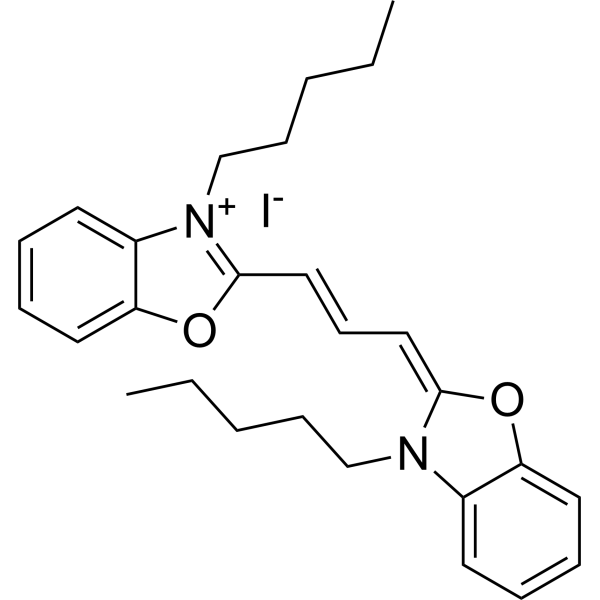
DiOC5(3) (3,3′-Dipentyloxacarbocyanine iodide) is a mitochondrial Fluorescent dye that alters membrane potential, and it also acts as an inhibitor of NADH-ubiquinone reductase (respiratory complex I). DiOC5(3) increases the NADH/NAD ratio and induces excessive production of ROS. DiOC5(3) induces Apoptosis. DiOC5(3) accumulates in the mitochondria of leukemia stem-like cells via organic anion-transporting polypeptides, specifically labels these cells, and inhibits their proliferation. DiOC5(3) enhances the cellular uptake of Hoechst 33342 (HY-15559), reduces Hoechst 33342-associated cytotoxicity, and improves the resolution of DNA content analysis by flow cytometry. DiOC5(3) shows no detectable fluorescence signal when excited in the 400-500 nm ultraviolet light range. DiOC5(3) is applicable to leukemia-related research .
loading...
    loading...
Cat. No.: HY-N0488R
CAS No.: 2068-78-2
Synonyms: Leurocristine sulfate (Standard); NSC-67574 sulfate (Standard); 22-Oxovincaleukoblastine sulfate (Standard)
Vincristine (sulfate) (Standard) is the analytical standard of Vincristine (sulfate). This product is intended for research and analytical applications. Vincristine sulfate (Leurocristine; NSC-67574; 22-Oxovincaleukoblastine) is a microtubule inhibitor that disrupts microtubule polymerization by binding to β-tubulin (with a Ki of 85 nM in bovine), arrests the cell cycle and induces apoptosis. Vincristine sulfate inhibits cell replication, tumor blood flow and the proliferation of various cancer cells, while triggering effects such as oxidative stress, inflammation, calcium overload, epithelial-mesenchymal transition and peripheral neuropathic pain. Vincristine sulfate upregulates the expression of various transporters and nuclear receptors, and enriches gastric cancer stem-like cells. Vincristine sulfate is used in research related to various tumors including acute lymphoblastic leukemia, lymphoma, melanoma, gastric cancer, solid tumors and sarcomas .
loading...
    loading...
Cat. No.: HY-N0488S1
CAS No.: 1217854-24-4
Synonyms: Leurocristine-d3-1 sulfate; NSC-67574-d3-1 sulfate; 22-Oxovincaleukoblastine-d3-1 sulfate
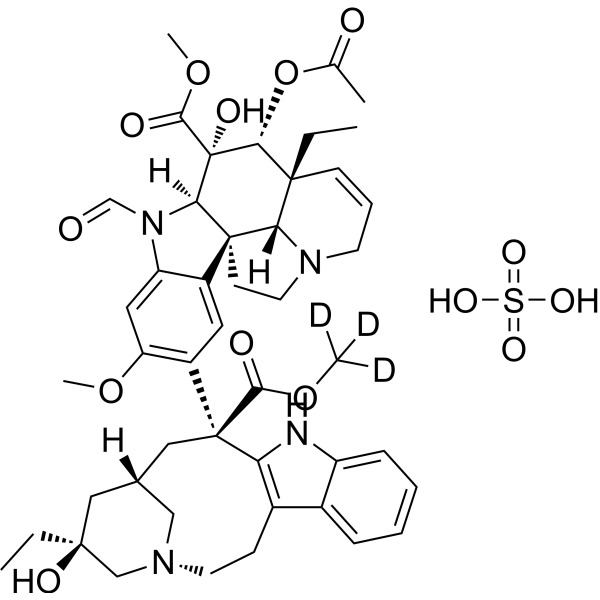
Vincristine-d3 sulfate is the deuterium labeled Vincristine sulfate. Vincristine-1 sulfate (Leurocristine; NSC-67574; 22-Oxovincaleukoblastine) is a microtubule inhibitor that disrupts microtubule polymerization by binding to β-tubulin (with a Ki of 85 nM in bovine), arrests the cell cycle and induces apoptosis. Vincristine-1 sulfate inhibits cell replication, tumor blood flow and the proliferation of various cancer cells, while triggering effects such as oxidative stress, inflammation, calcium overload, epithelial-mesenchymal transition and peripheral neuropathic pain. Vincristine-1 sulfate upregulates the expression of various transporters and nuclear receptors, and enriches gastric cancer stem-like cells. Vincristine-1 sulfate is used in research related to various tumors including acute lymphoblastic leukemia, lymphoma, melanoma, gastric cancer, solid tumors and sarcomas .
loading...
    loading...
Cat. No.: HY-N0772R
CAS No.: 24699-16-9
Isomangiferin (Standard) is the analytical standard of Isomangiferin (HY-N0772). This product is intended for research and analytical applications. Isomangiferin is an orally active xanthone C-glucoside, and its chemical structure is similar to Mangiferin (HY-N0290). Isomangiferin is an effective VEGFR-2 kinase inhibitor, which can induces cell apoptosis, inhibit the growth, metastasis and angiogenesis of breast cancer. Isomangiferin exerts anti-inflammatory effects by inhibiting the HMGB1/NLRP3/NF-κB signaling pathway, thereby improving the renal function indicators of diabetic mice. Isomangiferin exhibits inhibitory effects on various bacteria and herpes simplex virus type 1 (HSV-1). Isomangiferin promotes the migration and osteogenic differentiation of bone marrow mesenchymal stem cells (BMSCs) and reduces cell apoptosis and the production of ROS by activating the AMPK/ACC pathway, thereby facilitating fracture healing.
loading...
    loading...
Cat. No.: HY-N17896
CAS No.: 123564-49-8
Pinoresinol-4-O-β-D-apiosyl-(1→2)β-D-glucoside is a lignan compound and a melanogenesis inhibitor with low cytotoxicity. Pinoresinol-4-O-β-D-apiosyl-(1→2)β-D-glucoside is isolable from the stem bark of Acer buergerianum (Acer buergerianum). Pinoresinol-4-O-β-D-apiosyl-(1→2)β-D-glucoside effectively inhibits the melanogenesis process in α-MSH (HY-P0252)-stimulated B16 melanoma cells. Pinoresinol-4-O-β-D-apiosyl-(1→2)β-D-glucoside exhibits extremely high safety towards normal cells, and serves as an ideal tool molecule for studying melanoma mechanisms and developing related whitening products .
loading...
    loading...
Cat. No.: HY-W010713
CAS No.: 2669-65-0
Synonyms: Fimaporfin free base
Target:  

Photosensitizer

Research Areas:  

Cancer

Meso-tetraphenylchlorin (TPCS2a) is a photosensitizer with poor water solubility, which limits its use in the blood circulation. However, TPCS2a@NPs nanoparticles can be prepared based on polylactic-co-polyethylene glycol acid (PLGA) polymer core loaded with TPCS2. Such nanoparticles can be coated with mesenchymal stem cell-derived plasma membranes (mMSCs) to form mMSC-TPCS2a@NPs, which prolongs blood circulation time and improves tumor targeting ability. Compared with uncoated TPCS2a@NPs, mMSC-TPCS2a@NPs can reduce macrophage uptake by 54% to 70% under different conditions. Both nanoparticle forms are effectively accumulated in MCF7 and MDA-MB-231 breast cancer cells, while uptake in normal breast epithelial cells MCF10A is significantly lower .
loading...
    loading...

