156 Results for "

CD4 T-cell

" in MedChemExpress (MCE) Product Catalog:
Products (156)

156 Results for "CD4 T-cell" in MCE Product Catalog:

Cat. No.: HY-P991892A

Research Areas:  

Cancer

IT1208 (FUT8-KO) is a humanized anti-CD4 monoclonal IgG1 antibody that has knocked out the fucosyltransferase 8 gene (FUT8). It exhibits enhanced antibody-mediated cytotoxicity (ADCC) effect. IT1208 (FUT8-KO) can effectively eliminate CD4+ T cells in vivo and shows controllable safety. IT1208 (FUT8-KO) can be used in related research on colon cancer .
loading...
    loading...
Cat. No.: HY-P12140
CAS No.: 245092-22-2
Target:  

Myosin

Research Areas:  

Cardiovascular Disease

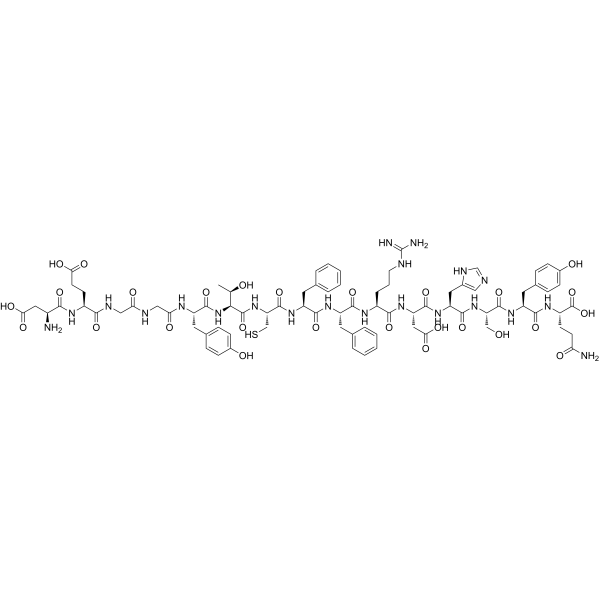
MyHC-α 614-629 is a specific polypeptide fragment of cardiac α-myosin heavy chain. MyHC-α 614-629 acts as an autoantigen to induce CD4 + T cell-mediated autoimmune responses in the immune system, thereby causing inflammatory infiltration and damage to myocardial tissue. MyHC-α 614-629 is applicable to the research of experimental autoimmune myocarditis .
loading...
    loading...
Cat. No.: HY-186205
CAS No.: 1299471-83-2
Target:  

Drug Metabolite

Research Areas:  

Cancer

(Rac)-EGC-M5 is an orally active metabolite of green tea Catechin (EGC) (HY-N0898). (Rac)-EGC-M5 enhances the activity of CD4 + T cells. (Rac)-EGC-M5 boosts the cytotoxic activity of NK cells in vivo. (Rac)-EGC-M5 can be used in cancer-related research .
loading...
    loading...
Cat. No.: HY-188104
Target:  

mRNA

Research Areas:  

Inflammation/Immunology

Human IL2 mRNA-LNP is a lipid nanoparticle (LNP) encapsulating Human IL2 mRNA. Human IL2 mRNA encapsulates human interleukin 2 (IL2) protein, which belongs to the interleukin 2 (IL2) cytokine subfamily. IL2 is produced by activated CD4+ and CD8+ T lymphocytes and is essential for the proliferation of T cells and B lymphocytes.
loading...
    loading...
Cat. No.: HY-P992030
Research Areas:  

Inflammation/Immunology

FB102 is an anti-human CD122 (IL-2Rβ) monoclonal antibody with selective activity. FB102 blocks the proliferation and activation of pathogenic NK cells and specific T cell subsets induced by IL-2 and IL-15, without affecting the proliferation of regulatory T cells. FB102 inhibits IL-2/IL-15-induced activation of CD4+ and CD8+ T cells in in vitro disease models. FB102 is applicable to research related to celiac disease .
loading...
    loading...
Cat. No.: HY-W387035
CAS No.: 2799-15-7
Target:  

MHC

D-α-Methyl DOPA is an inhibitor of the binding of DQ8 peptide to MHC class II molecules. D-α-Methyl DOPA occupies a pocket along the DQ8 peptide binding groove. D-α-Methyl DOPA inhibits the binding of a DQ8 peptide to an MHC class II molecule for presentation to CD4 + T cells, thereby slowing the development or progression of type 1 diabete or celiac disease .
loading...
    loading...
Cat. No.: HY-108136
CAS No.: 131848-97-0
Synonyms: BIM-X; Ro31-8425
Target:  

PKC CDK

Bisindolylmaleimide X (Ro 31-8425, BIM-X) is a cell-penetrating PKC inhibitor. Bisindolylmaleimide X is a potent cyclin-dependent kinase 2 (CDK2) antagonist with an IC50 of 200 nM. Bisindolylmaleimide X inhibits the proliferation of CD4 T cells in vitro. Bisindolylmaleimide X inhibits eNOS-Ser1177 phosphorylation in human embryonic vein endothelial cells. Bisindolylmaleimide X can be used for research on the immune system and cardiovascular diseases .
loading...
    loading...
Cat. No.: HY-P990264

Research Areas:  

Inflammation/Immunology

Anti-Mouse CD70 Antibody (FR70) is a rat-derived ant-mouse CD70 IgG2b κ type antibody inhibitor. Anti-Mouse CD70 Antibody (FR70) decreases CD4 +, CD8 + T cells and eosinophils. Anti-Mouse CD70 Antibody (FR70) shows potent anti-inflammatory and anti-immune effects on allergic lung inflammation and cardiac transplant mice models .
loading...
    loading...
Cat. No.: HY-146231A
Purity:  99.88%
Target:  

PROTACs MAP4K

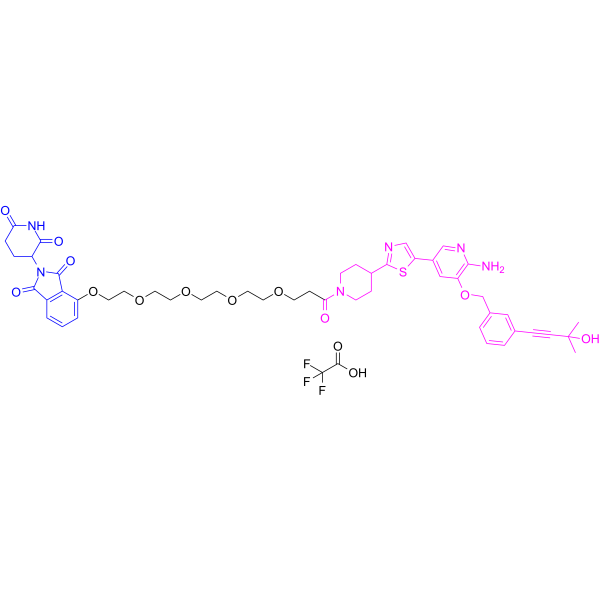
SS47 TFA is a hematopoietic progenitor kinase HPK1 PROTAC-class degrader and immune activator. SS47 TFA promotes the proliferation of CD4+ and CD8+ T cells as well as IFN-γ secretion, and enhances the anti-tumor cytotoxicity and in vivo efficacy of BCMA CAR-T cells. SS47 TFA also inhibits tumor growth in mouse models, and when combined with anti-PD-1 therapy, it improves the immune response of 4T1 tumor-bearing mice. SS47 TFA can be used in breast cancer-related research .
loading...
    loading...
Cat. No.: HY-161255
CAS No.: 2117759-07-4
Target:  

NO Synthase

Research Areas:  

Inflammation/Immunology

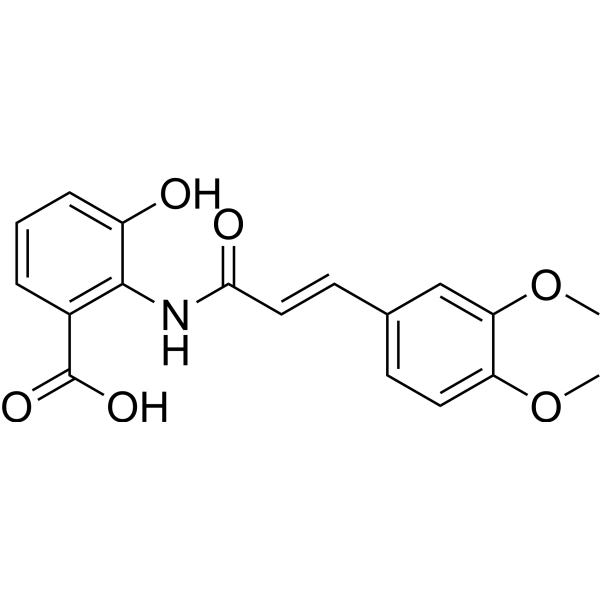
3,4-DAA is an orally active Anthranilic acid derivative with potent immunosuppressive activities. 3, 4-DAA can alleviate the severity of colitis through inhibiting Th1 cells response, promoting Th2 cytokines expression and inducing CD4 +CD25 + T cells expression . 3,4-DAA suppressed expression of inducible nitric oxide synthase (iNOS) and nitric oxide (NO) release from EOC20 cells induced by IFN-γ and Lipopolysaccharide .
loading...
    loading...
Cat. No.: HY-P992434

Research Areas:  

Cancer

OSE-279 is a high-affinity humanized monoclonal bivalent antibody targeting PD-1, the recommended isotype control is HY-P99003. OSE-279 blocks PD-1 ligand binding, inhibits PDL1-induced SHP1 phosphorylation, restores T cell activation, and promotes reactivation of primary T cell effector functions. OSE-279 binds hFcRn receptor, predicts long half-life, induces CD4 and CD8 T cell proliferation, and promotes interleukin 2 and interferon gamma secretion. OSE-279 can be used for the research of advanced malignancies, colon cancer, hepatocarcinoma, mesothelioma .
loading...
    loading...
Cat. No.: HY-144746
CAS No.: 2966090-78-6
Target:  

PD-1/PD-L1

Research Areas:  

Cancer

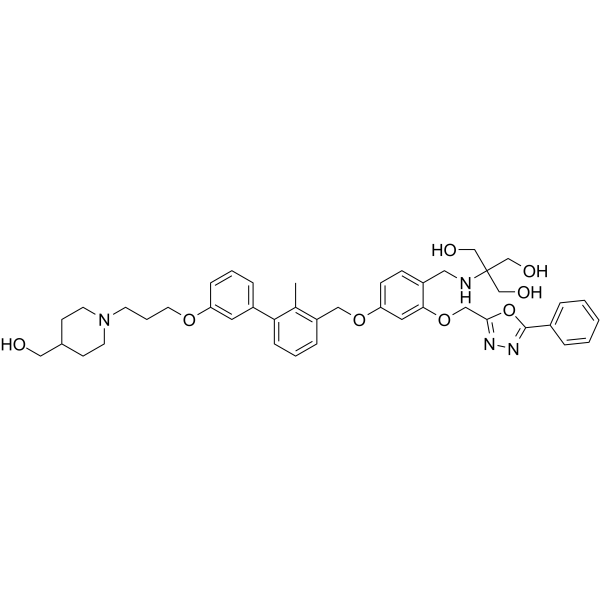
PD-1/PD-L1-IN-26 (Compound II-14) is a potent inhibitor of PD-1/PD-L1 with an IC50 of 0.0380 μM. PD-1/PD-L1-IN-26 activates the immune microenvironment by promoting the infiltration of CD4+ T cells into tumor tissues. PD-1/PD-L1-IN-26 has the potential for the research of cancer diseases .
loading...
    loading...
Cat. No.: HY-181841
CAS No.: 2796210-93-8
Research Areas:  

Infection

TLR8 agonist 10 is a selective TLR8 agonist with an EC50 of 0.019 μM in humans. TLR8 agonist 10 activates TLR8-mediated signaling pathways. As a latency-reversing agent, TLR8 agonist 10 reactivates latent HIV-1 reservoirs. TLR8 agonist 10 activates innate cytotoxic natural killer cells to target HIV-infected CD4 + T cells. TLR8 agonist 10 is applicable to research related to HIV-1 infection .
loading...
    loading...
Cat. No.: HY-182802
CAS No.: 3097756-33-4
Ferroptosis inducer-15 is a ferroptosis inducer. Ferroptosis inducer-15 downregulates GPX4 expression, triggers lipid peroxidation via ROS accumulation, and disrupts mitochondrial membrane potential to drive ferroptosis. Ferroptosis inducer-15 increases splenic CD4 + T cell proportion, promotes CD8 + cytotoxic T cell tumor infiltration, and activates antitumor immune responses. Ferroptosis inducer-15 exerts antiproliferative activity against colorectal cancer cells and inhibits tumor growth in xenograft mice models without significant body weight loss. Ferroptosis inducer-15 can be used for the research of cancer, such as colorectal cancer .
loading...
    loading...
Cat. No.: HY-176755
CAS No.: 943316-60-7
Research Areas:  

Inflammation/Immunology

CCL-34 is a Toll-like receptor 4 (TLR4) activator. CCL-34 significantly induced dendritic cell (DC) CD83 expression and IL-12p70 production in a dose-dependent manner, thereby inducing DC maturation. CCL-34 enhanced the allostimulatory activity of DC on naive CD4+CD45+RA+ T cell proliferation and IFN-γ secretion. CCL-34 further induced antigen presentation ability in mice inoculated with doxorubicin-treated colorectal cancer cells. CCL-34 can be used in studies of immune stimulation.
loading...
    loading...
Cat. No.: HY-157793
CAS No.: 3029695-07-3
Purity:  99.64%
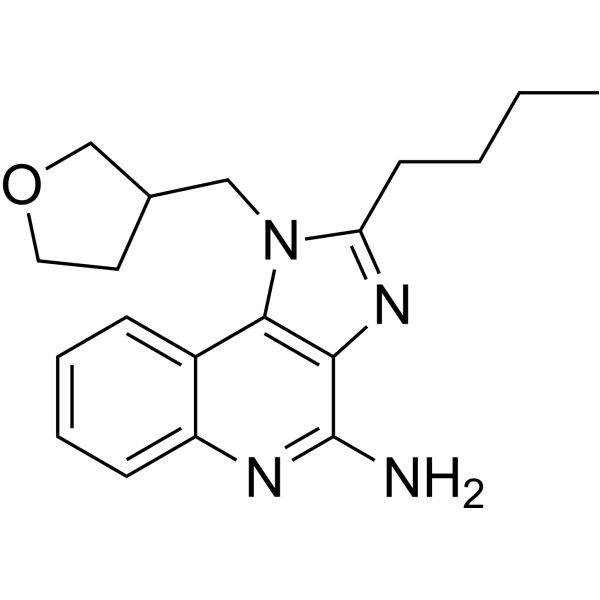
SMU-L11 is a specific TLR7 agonist (EC50=0.024 μM), which recruits MyD88 adapter protein and activates downstream NF-κB and MAPK signaling pathways. In murine models, SMU-L11 significantly enhances immune cell activation and promotes the proliferation of CD4 + T and CD8 + T cells, thereby directly killing tumor cells and inhibiting tumor growth. SMU-L11 can be used for cancer research, and also has the potential for studying immune system diseases .
loading...
    loading...
Cat. No.: HY-170948
CAS No.: 3007566-23-3
Target:  

Adenosine Receptor

Research Areas:  

Cancer

A2AR modulator-1 (Compound 45) is a selective negative allosteric adenosine A2a receptor (A2aR) modulator with an IC50 value of 9 nM. A2AR modulator-1 reduces the affinity of endogenous adenosine for the receptor and inhibits cAMP signaling pathway activation. A2AR modulator-1 potently restores pCREB phosphorylation in CD4 + T cells, reversing immunosuppression in the tumor microenvironment, and shows potential to suppress tumor growth and metastasis in triple-negative breast cancer models .
loading...
    loading...
Cat. No.: HY-P5448
CAS No.: 159507-82-1
MOG (92-106), mouse, rat is a 15-peptide encephalitogenic epitope composed of amino acid residues 92-106 of myelin oligodendrocyte glycoprotein (MOG). MOG (92-106), mouse, rat serves as an I-A s-restricted CD4 + T cell antigen. MOG (92-106), mouse, rat also induces extensive B cell responses against secondary myelin antigens such as MBP and PLP. MOG (92-106), mouse, rat is applicable to studies on multiple sclerosis, EAE, autoimmune demyelination, and antigen-specific T/B cell responses .
loading...
    loading...
Cat. No.: HY-P991424

Research Areas:  

Inflammation/Immunology

GSK2618960 is a human monoclonal antibody (mAb) targeting IL-7Ra/CD127. GSK2618960 inhibits IL-7-induced STAT5 phosphorylation. GSK2618960 enhances CD4 T cell proliferation response and increases CD83, CD86, and CD209 expression in PBMCs. GSK2618960 can be used for the research of autoimmune and allergic inflammatory diseases. Recommended isotype control: Human IgG1 kappa, Isotype Control (HY-P99001) .
loading...
    loading...
Cat. No.: HY-P992063
Research Areas:  

Inflammation/Immunology

Anti-Mouse CD8α Antibody (YTS 105.18) is a non-depleting rat IgG2a monoclonal antibody that binds to CD8α on mouse CD8 + T cells. When used in combination with a non-depleting anti-CD4 antibody, Anti-Mouse CD8α Antibody (YTS 105.18) does not deplete CD8 + T cells, but instead promotes the induction of peripheral tolerance in this cell subset. Anti-Mouse CD8α Antibody (YTS 105.18) can be used for research on graft rejection. The recommended isotype control is Mouse IgG2a kappa, Isotype Control (HY-P99978) .
loading...
    loading...

