123 Results for "

P-loop flexibility

" in MedChemExpress (MCE) Product Catalog:
Products (123)

123 Results for "P-loop flexibility" in MCE Product Catalog:

Cat. No.: HY-N7106S2
Synonyms: DMP-13C6,d4
Dimethyl phthalate- 13C6,d4 (DMP- 13C6,d4) is the deuterium labeled and 13C-labeled Dimethyl phthalate (HY-N7106). Dimethyl phthalate (DMP) can be used as a plasticizer to impart flexibility to rigid polyvinyl chloride (PVC) resin. Additionally, Dimethyl phthalate is an oral active endocrine disruptor that can cause ovarian dysfunction in mice. Dimethyl phthalate can also induce oxidative stress and apoptosis in cells, thereby affecting blood and red blood cell function in rats .
loading...
    loading...
Cat. No.: HY-W1048549H
Synonyms: HOOC-PEG1000-Thiol
HOOC-PEG1000-SH (HOOC-PEG1000-Thiol) is a reactive thiol PEG derivative with a terminal carboxyl group. The carboxyl group can react with amine or hydroxyl groups to form a stable amide bond or an unstable ester bond. The reaction of the carboxyl group allows the amine or hydroxyl group to be converted into a free thiol with a linear PEG linkage. The generated thiol group can be used to modify the surface of gold nanoparticles or participate in other PEGylation reactions. The PEG linkage between the thiol and carboxyl groups has good water solubility, flexible linker distance and higher stability .
loading...
    loading...
Cat. No.: HY-W1048549J
Synonyms: HOOC-PEG40000-Thiol
HOOC-PEG40000-SH (HOOC-PEG40000-Thiol) is a reactive thiol PEG derivative with a terminal carboxyl group. The carboxyl group can react with amine or hydroxyl groups to form a stable amide bond or an unstable ester bond. The reaction of the carboxyl group allows the amine or hydroxyl group to be converted into a free thiol with a linear PEG linkage. The generated thiol group can be used to modify the surface of gold nanoparticles or participate in other PEGylation reactions. The PEG linkage between the thiol and carboxyl groups has good water solubility, flexible linker distance and higher stability .
loading...
    loading...
Cat. No.: HY-W709755
Synonyms: MECPP-d9
Mono(5-carboxy-2-ethylpentyl) phthalate-d9 (MECPP-d9) is the deuterium labeled Mono(5-carboxy-2-ethylpentyl) phthalate (HY-133675). Mono(5-carboxy-2-ethylpentyl) phthalate (MECPP) is a metabolite of Di-(2-ethylhexyl) phthalate (DEHP). Di(2-ethylhexyl) phthalate is the predominant plasticizer added to rigid polyvinyl chloride (PVC) to impart flexibility, temperature tolerance, optical clarity, strength and resistance to kinking .
loading...
    loading...
Cat. No.: HY-151827
CAS No.: 2585653-12-7
Purity:  ≥98.0%
Target:  

ADC Linkers

Research Areas:  

Others

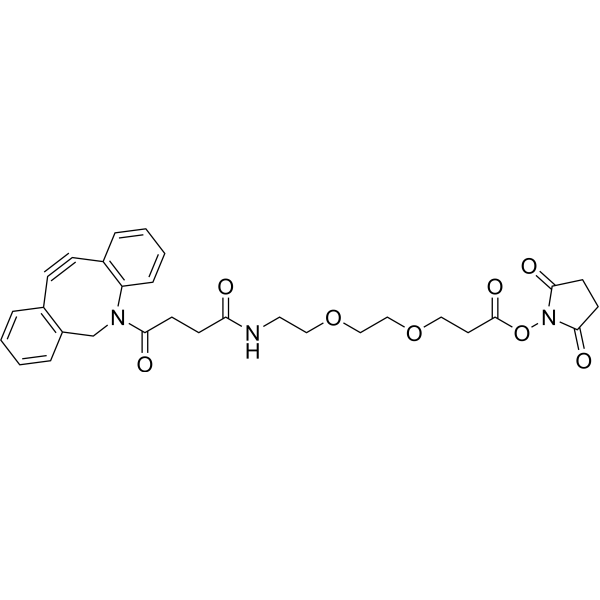
DBCO-PEG2-NHS ester is a click chemistry reagent containing an azide group. DBCO-PEG2-NHS ester is a click chemistry PEG reagent containing NHS ester that is able to react specifically and efficiently with primary amines (e.g. the side chain of lysine residues or aminosilane-coated surfaces) at neutral or slightly basic condition to form a covalent bond. The hydrophilic PEG spacer arm improves water solubility and provides a long and flexible connection that minimizes steric hindrance involved with ligation. DBCO is commonly used for copper-free Click Chemistry reactions. Reagent grade, for research use only .
loading...
    loading...
Cat. No.: HY-182702
CAS No.: 1214405-38-5
Target:  

TREM receptor Syk

Research Areas:  

Neurological Disease

As48 is a selective TREM2 agonist with a KD value of 12.48 μM in TRIC binding assay. As48 binds near the TREM2 cleavage region, forms hydrogen bonds with Gly68, reduces conformational flexibility in regions 58-102, restricts protease accessibility to the cleavage site. As48 activates SYK phosphorylation, enhances microglial phagocytosis, and induces downstream calcium signaling in TREM2-expressing cells. As48 inhibits TREM2 ectodomain shedding without affecting ADAM10/17 protease activities. As48 can be used for the research of Alzheimer's disease .
loading...
    loading...
Cat. No.: HY-181066
Research Areas:  

Infection

ACE2-SP PPI-IN-1 is an inhibitor of the interaction between the SARS-CoV-2 spike protein and ACE2, with an IC50 of 2162.77 nM. ACE2-SP PPI-IN-1 exhibits low cytotoxicity in human fibroblasts. ACE2-SP PPI-IN-1 binds to the interface region between the spike protein RBD and ACE2, reducing the flexibility of the critical receptor-binding loop and maintaining the structural compactness of the spike protein. ACE2-SP PPI-IN-1 can be used for research related to SARS-CoV-2 .
loading...
    loading...
Cat. No.: HY-172550
CAS No.: 3095336-10-7
Target:  

HCN Channel

Research Areas:  

Neurological Disease

MS7710 is a hyperpolarization-activated cyclic nucleotide-gated (HCN) channel inhibitor with blood-brain barrier permeability and an excellent brain/plasma concentration ratio. MS7710 inhibits HCN channel-mediated Ih current, and reduces the firing frequency and burst activity of dopaminergic neurons in the ventral tegmental area. MS7710 ameliorates chronic social defeat stress-induced deficits in social interaction and impairments in reward-related cognitive flexibility in mice. MS7710 exerts only limited effects on ventral tegmental area dopaminergic neuron activity, social interaction, exploratory behavior, locomotor activity or sucrose preference in control mice. MS7710 is applicable to the research of major depressive disorder .
loading...
    loading...
Cat. No.: HY-L0115V
10,091 compounds

ASINEX has elaborated a library of diverse macrocycles using an effective tool box of synthetic methods. The resulting scaffolds are novel, tremendously diverse, medchem-relevant, macrocyclic frameworks.

Macrocyles tend to be larger than traditional screening molecules which make them perfect discovery tools for targets with shallow or extended binding sites. At the same time, their unique character based on restricted flexibility and ability to form intra-molecular hydrogen bonds allows for design approaches effectively optimizing properties such asaqueous solubility and membrane permeability. Many of these macrocycles have been tested for aqueous and DMSO solubility with cut-offs applied at 10 mM in DMSO and 50 µM in PBS (pH 7.4) followed by PAMPA permeability assay.

Cat. No.: HY-141613
CAS No.: 90693-88-2
Purity:  ≥98.0%
Synonyms: DOPS-NA
Target:  

Liposome

Research Areas:  

Others

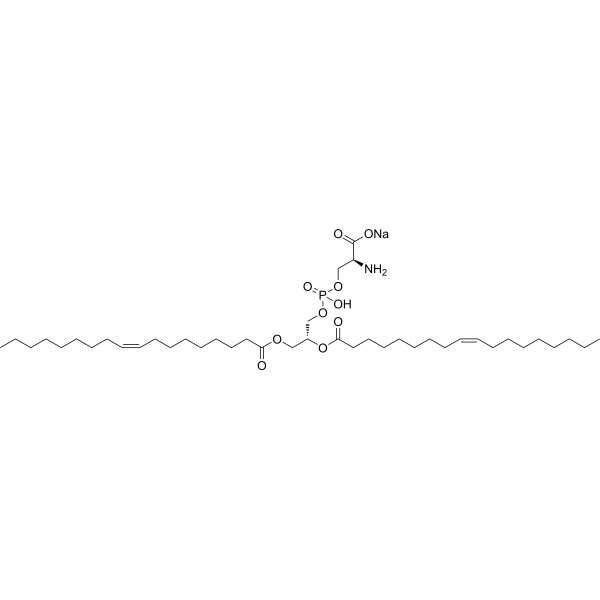
1,2-Dioleoyl-sn-glycero-3-phospho-L-serine sodium (DOPS-NA) is a ubstitute for Phosphoserine/phosphatidylserine. 1,2-Dioleoyl-sn-glycero-3-phospho-L-serine sodium can be used together with DOPC and DOPE in lipid mixtures for the synthesis of liposomes. 1,2-Dioleoyl-sn-glycero-3-phospho-L-serine sodium can self-assemble into single-layer or double-layer membrane structures, similar to cell membranes, and possesses high membrane fluidity and flexibility. 1,2-Dioleoyl-sn-glycero-3-phospho-L-serine is widely applied in membrane biology, cell membrane research, lipid preparation, and drug delivery systems .
loading...
    loading...
Cat. No.: HY-P11847
CAS No.: 3124030-35-6
Research Areas:  

Cardiovascular Disease

AT1R-agonist-1 is an angiotensin II type 1 receptor (AT1R) agonist with a Ki value of 1.4 nM. AT1R-agonist-1 exhibits low Gαq activity, retains β-arrestin recruitment function, and accesses the deep allosteric pocket inside AT1R via its flexible side chain. AT1R-agonist-1 possesses positive inotropic effects (enhancing cardiac contractile function) and causes almost no increase in blood pressure. AT1R-agonist-1 can be used for research on conditions such as refractory cardiogenic shock .
loading...
    loading...
Cat. No.: HY-121946
CAS No.: 35512-29-9
Synonyms: 4-(4-Chlorophenyl)imidazole
Target:  

Cytochrome P450

Research Areas:  

Others

4-CPI (4-(4-Chlorophenyl)imidazole) is a CYP2B4 inhibitor with an IC50 of 0.11 μM and a Kd of 0.043 μM. The Ks of 4-CPI for cytochrome P450eryF (S93C/C154S mutant) is 9.4 μM, with no allosteric cooperative effect of ligand binding . 4-CPI binds to CYP2B4 at a 1:1 ratio, which induces substantial conformational changes in the enzyme's active pocket to form a closed crystal conformation (PDB:1SUO). 4-CPI can be used to investigate the flexibility of P450 active pockets, protein-ligand binding thermodynamics, and the allosteric mechanisms of P450 .
loading...
    loading...
Cat. No.: HY-L110
100 compounds

Cyclic peptides are polypeptide chains taking cyclic ring structure, which exhibit diverse biological activities, such as antibacterial activity, immunosuppressive activity and anti-tumor activity. Cyclic peptides, with the features of good binding affinity, target selectivity and low toxicity, show great success as therapeutics. Multiple cyclic peptides are currently in clinical use, for examples, gramicidin and tyrocidine with bactericidal activity, cyclosporin A with immunosuppressive activity, and vancomycin with antibacterial activity. Furthermore, cyclic peptides usually have the sufficient size and a balanced conformational flexibility/rigidity for binding to flat protein-protein interaction (PPI) interfaces, which have potential to develop PPI drugs.

MCE offers a unique collection of 100 cyclic peptides, all of which have good bioactivities. MCE Cyclic Peptide Library is a powerful tool for drug discovery and PPI inhibitor screening.

Cat. No.: HY-L942
1,626 compounds

Unlike highly conserved orthosteric sites, allosteric sites exhibit low conservation, high hydrophobicity, weak polarity, confined geometry, and dynamic cryptic properties. Rather than rigid keyhole-like cavities, they typically appear as flexible grooves, subunit interface clefts, or shallow depressions formed by protein conformational changes.

Based on the dynamic, hydrophobic, and elongated nature of allosteric pockets, MCE has carried out targeted fragment modification and screening under strict physicochemical criteria: MW 120–280 Da, HBD ≤ 2, HBA ≤ 3, PSA 30–80 Ų, rotatable bonds ≤ 2, cLogP 1–3.5. High 3D diversity was further ensured by PMI analysis, yielding fragments with excellent shape complementarity to allosteric pockets.

This library contains 1,800 structurally diverse, drug-like fragments, this library supports allosteric drug development and pocket optimization. It significantly improves screening hit rates and enables efficient, precise early-stage R&D of allosteric drugs.

Cat. No.: HY-L257
0 compounds

Linkers, as key structural units in PROTAC molecules that connect the two functional ends, not only determine the overall molecular conformation and spatial compatibility but also directly influence the stability of the ternary complex, as well as cellular permeability and degradation efficiency. In recent years, with the widespread application of click chemistry in medicinal chemistry, the incorporation of bioorthogonal reactive groups such as azides (-N3) into PROTAC linker design has become an emerging research focus, providing an important tool for modular assembly and rapid structural optimization.

The MCE Azide PROTAC Linker Library contains 0 linkers specifically designed for targeted protein degradation molecule design and optimization. These linkers serve as efficient “click handles,” enabling rapid and highly selective covalent coupling with alkyne reaction partners, thereby facilitating modular assembly and structural diversification of PROTAC molecules. In drug development, this design not only improves the efficiency of molecular construction but also significantly accelerates the screening and optimization of lead compounds. Meanwhile, by tuning linker properties such as length, flexibility, and polarity, the ability to form ternary complexes and degradation activity can be optimized.

Cat. No.: HY-30004
CAS No.: 22059-21-8
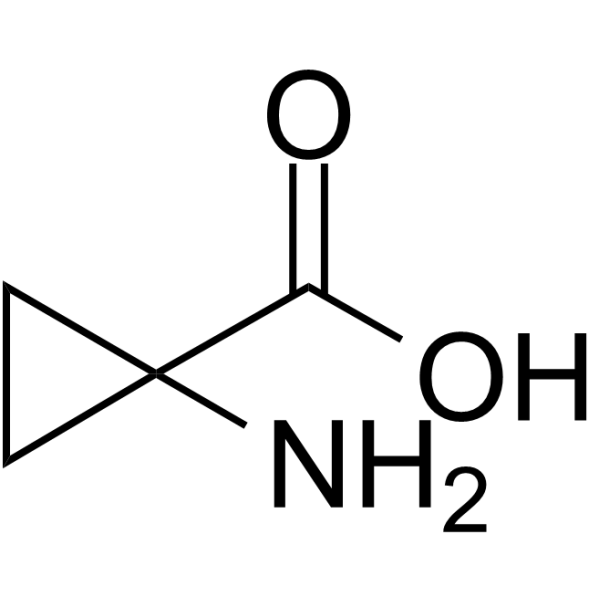
1-Aminocyclopropane-1-carboxylic acid is an endogenous metabolite. In the presence of low concentrations (1 μM) of glutamate, 1-Aminocyclopropane-1-carboxylic acid acts as a small molecule agonist of NMDA receptors with an EC50 of 0.7-0.9 μM. At high concentrations (10 μM) of glutamate, 1-Aminocyclopropane-1-carboxylic acid acts as a competitive antagonist of NMDA receptors with an EC50 of 81.6 nM. 1-Aminocyclopropane-1-carboxylic acid exerts neuroprotective activity by moderately activating NMDA receptors to prevent neuronal cell death in ischemic animal models. Additionally, 1-Aminocyclopropane-1-carboxylic acid is an antagonist of NMDA receptors, inducing blood pressure reduction and antioxidant effects in stroke-prone hypertensive rats. 1-Aminocyclopropane-1-carboxylic acid enhances object recognition memory and cognitive flexibility dependent on the prefrontal cortex, but does not affect impulsivity nor exhibit an antipsychotic-like profile. 1-Aminocyclopropane-1-carboxylic acid shows promise for research in the field of neurotoxicity. .
loading...
    loading...
Cat. No.: HY-L259
0 compounds

In PROTAC drug development, linkers are often one of the key variables determining drug-likeness and degradation efficiency. Since PROTAC systems must simultaneously satisfy target protein binding, E3 ligase recruitment, and intracellular spatial conformational matching, their structural design is essentially a multi-parameter optimization problem. Differences in linker rigidity, flexibility, and spatial extension can significantly influence the formation pathway and stability of the ternary complex, leading to substantial variations in degradation activity. Therefore, the development of linker systems with modular tunability and high structural expandability has become an important direction in PROTAC optimization.

The MCE Alkyne PROTAC Linker Library contains 0 linkers based on terminal and internal alkyne scaffolds, forming a highly derivatizable linker module system. These linkers serve as standardized building blocks for rapid assembly and iterative optimization of PROTAC molecules, and support efficient conjugation with azide-containing functional groups via click chemistry. In practical drug development, this type of structure not only facilitates the construction of diverse linker space libraries, accelerating lead compound screening, but also enables systematic tuning of molecular geometry and physicochemical properties, thereby improving ternary complex stability and targeted protein degradation efficiency.

Cat. No.: HY-L950
2,787 compounds

Seven-membered rings are privileged medium-sized scaffolds with distinct twist-chair conformations and greater 3D diversity than five- and six-membered rings. Their flexible conformations allow induced-fit protein binding and precise pharmacophore positioning. They also modulate Fsp³, pKa and logP to enhance solubility and permeability. Azepanes, oxepanes and benzodiazepines serve as bioisosteres for hit discovery against GPCRs, ion channels and kinases.

Widely found in plant and microbial alkaloids, seven-membered heterocycles show excellent biocompatibility and target affinity. They underpin many approved drugs for CNS, cancer and infectious diseases, including diazepam, imipramine and carbamazepine. Clinical candidates further highlight their unique value. However, high transannular strain and synthetic difficulty limit their availability, leaving them rare in standard screening libraries.

MCE 7 Membered Scaffold Library contains 2,792 structurally diverse, lead-like molecules covering azepanes, oxepanes, benzodiazepines and dibenzazepines. With varied substitutions, chiral centers and synthetic accessibility, it fills the shortage of medium-ring scaffolds. Ideal for HTS, virtual screening and SAR studies, these novel, patent-clear compounds offer a distinctive starting point for drug discovery in CNS disorders, oncology, antivirals and challenging targets such as PPIs.

Cat. No.: HY-141613S
Synonyms: (2S,8R,19Z)DOPS-d3 ammonium
(2S,8R,19Z)1,2-Dioleoyl-sn-glycero-3-phospho-L-serine-d3 ammonium ((2S,8R,19Z)DOPS-d3 ammonium) is the deuterium labeled (2S,8R,19Z)1,2-Dioleoyl-sn-glycero-3-phospho-L-serine ammonium (HY-141613). 1,2-Dioleoyl-sn-glycero-3-phospho-L-serine sodium (DOPS-NA) is a ubstitute for Phosphoserine/phosphatidylserine. 1,2-Dioleoyl-sn-glycero-3-phospho-L-serine sodium can be used together with DOPC and DOPE in lipid mixtures for the synthesis of liposomes. 1,2-Dioleoyl-sn-glycero-3-phospho-L-serine sodium can self-assemble into single-layer or double-layer membrane structures, similar to cell membranes, and possesses high membrane fluidity and flexibility. 1,2-Dioleoyl-sn-glycero-3-phospho-L-serine is widely applied in membrane biology, cell membrane research, lipid preparation, and drug delivery systems .
loading...
    loading...
Cat. No.: HY-30004R
CAS No.: 22059-21-8
1-Aminocyclopropane-1-carboxylic acid (Standard) is the analytical standard of 1-Aminocyclopropane-1-carboxylic acid. This product is intended for research and analytical applications. 1-Aminocyclopropane-1-carboxylic acid is an endogenous metabolite. In the presence of low concentrations (1 μM) of glutamate, 1-Aminocyclopropane-1-carboxylic acid acts as a small molecule agonist of NMDA receptors with an EC50 of 0.7-0.9 μM. At high concentrations (10 μM) of glutamate, 1-Aminocyclopropane-1-carboxylic acid acts as a competitive antagonist of NMDA receptors with an EC50 of 81.6 nM. 1-Aminocyclopropane-1-carboxylic acid exerts neuroprotective activity by moderately activating NMDA receptors to prevent neuronal cell death in ischemic animal models. Additionally, 1-Aminocyclopropane-1-carboxylic acid is an antagonist of NMDA receptors, inducing blood pressure reduction and antioxidant effects in stroke-prone hypertensive rats. 1-Aminocyclopropane-1-carboxylic acid enhances object recognition memory and cognitive flexibility dependent on the prefrontal cortex, but does not affect impulsivity nor exhibit an antipsychotic-like profile. 1-Aminocyclopropane-1-carboxylic acid shows promise for research in the field of neurotoxicity. .
loading...
    loading...

