138 Results for "

mice behavior

" in MedChemExpress (MCE) Product Catalog:
Products (138)

138 Results for "mice behavior" in MCE Product Catalog:

Cat. No.: HY-121675A
CAS No.: 2855123-30-5
Synonyms: BOL-148 D-Tartrate; Bromolysergide D-Tartrate
2-Bromo-LSD D-Tartrate (BOL-148 D-Tartrate) is a blood-brain barrier-permeable 5-HT2A partial agonist and competitive partial antagonist. 2-Bromo-LSD D-Tartrate acts as both a potent partial agonist (with an EC50 of 0.81 nM for Gq dissociation) and a potent partial antagonist (with a KB of 0.18 nM for Gq dissociation) at the 5-HT2A receptor. 2-Bromo-LSD D-Tartrate exhibits partial agonist activity at multiple aminergic GPCRs, including 5-HT2A. 2-Bromo-LSD D-Tartrate lacks 5-HT2B agonist activity. 2-Bromo-LSD D-Tartrate induces dendritogenesis and spinogenesis. 2-Bromo-LSD D-Tartrate reverses the behavioral effects of chronic stress and increases active coping behaviors in mice .
loading...
    loading...
Cat. No.: HY-181127
CAS No.: 2419700-58-4
Target:  

iGluR

Research Areas:  

Neurological Disease

GluN2B-NMDAR Allosteric modulator 1 is a selective GluN2B-NMDAR positive allosteric modulator. GluN2B-NMDAR Allosteric modulator 1 can increase glutamate- and aspartate-evoked GluN2B-NMDAR-gated currents with EC50 values of 43.7 and 18 nM. GluN2B-NMDAR Allosteric modulator 1 can reverse anxiety-like behavior and social cognition deficits in mice. GluN2B-NMDAR Allosteric modulator 1 can be used for the research of neurological disease, such as anxiety .
loading...
    loading...
Cat. No.: HY-16347
CAS No.: 290296-54-7
Synonyms: CID 6451149 hydrochloride
Target:  

Neurokinin Receptor

Research Areas:  

Neurological Disease Endocrinology

Netupitant hydrochloride (CID 6451149 hydrochloride) is a blood-brain barrier penetrable, orally active NK1 receptor inhibitor with a Ki of 0.95 nM (CHO cells) against the human receptor. Netupitant hydrochloride antagonizes the effects induced by Substance P, inhibits the maximal response of Substance P with a long-lasting action, and suppresses NK1 agonist-induced behaviors in mice and gerbils. Netupitant hydrochloride reduces the frequency of bladder contractions, prolongs contraction intervals, decreases basal pressure at high doses, and acts on the afferent branch of the micturition reflex. Netupitant hydrochloride can be used in research related to overactive bladder, chemotherapy-induced nausea and vomiting, post-operative nausea and vomiting, anxiety disorders, and depression .
loading...
    loading...
Cat. No.: HY-141582S
CAS No.: 1354806-91-9
Synonyms: N-Stearoyl phytosphingosine-d3
Ceramide 3-d3 (N-Stearoyl phytosphingosine-d3) is deuterium labeled Ceramide 3. Ceramide 3 is an orally active major component of intercellular lipids in the stratum corneum of the skin, and belongs to the ceramide family. Ceramide 3 inhibits c-jun and NF-κB activation induced by Histamine (HY-B1204), and suppresses the expression of IL-4 and TNF-α. Ceramide 3 inhibits scratching behavior and vascular permeability in mice, and exhibits antihistamine effects in guinea pig ileum. Ceramide 3 improves skin barrier function, reduces transepidermal water loss, erythema and the number of circulating epidermal cells, and accelerates barrier repair of irritated or dysfunctional skin.
loading...
    loading...
Cat. No.: HY-102086
CAS No.: 261717-23-1
Research Areas:  

Neurological Disease

MSX3 is an orally active, selective A2a adenosine receptor antagonist and a prodrug of MSX2 (HY-117184). MSX3 reduces hyperphosphorylation of Tau at specific epitopes in mice without altering total Tau levels, Tau fragments, or Tau aggregation in these animals. MSX3 enhances spatial memory. MSX3 regulates effort-related decision-making behaviors. MSX3 reverses D2 antagonist-induced suppression of lever pressing, increased Chow feed intake, reduced selection of high-barrier arms, and prolonged response latency, and also slightly attenuates effects induced by D1 antagonists. MSX3 can be used in the research of Tauopathies (Alzheimer's disease-related), depression, and Parkinsonism .
loading...
    loading...
Cat. No.: HY-108960
CAS No.: 149017-66-3
Research Areas:  

Neurological Disease

PPADS is a P2X receptor (P2X Receptor) antagonist and a reversible competitive antagonist of NAADP receptors, with IC50 values of 68 nM (P2X1) and 214 nM (P2X3), respectively. PPADS alleviates pain-related behaviors in the central and peripheral nervous systems of mice after peripheral neuropathy, inhibits the overproduction of IL-1β, IL-6, iNOS and nNOS, and suppresses the hydrolytic activity of extracellular ATPase. PPADS blocks ATP-mediated inward currents on recombinant rat P2X1 and P2X3 receptors, and inhibits purinergic nerve stimulation-induced contraction of rabbit bladder detrusor muscle. PPADS is applicable to research related to neuropathic pain .
loading...
    loading...
Cat. No.: HY-132187
CAS No.: 1670-26-4
Purity:  99.50%
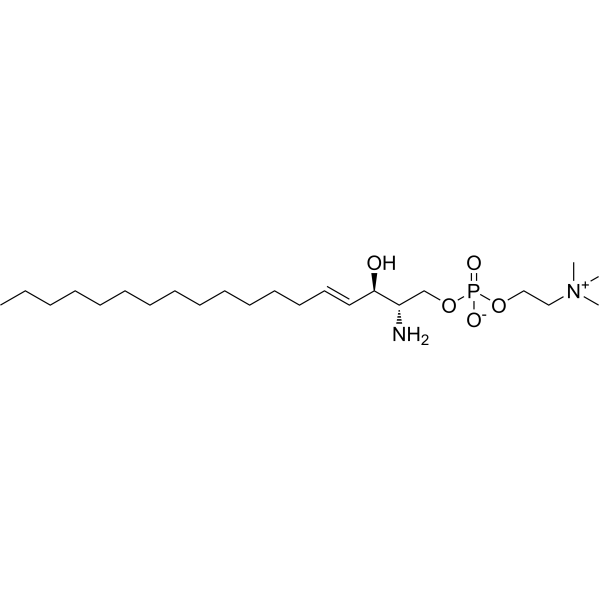
Sphingosylphosphorylcholine is a bioactive lipid and a major component of plasma high-density lipoprotein that binds to OGR1 with a Kd of 33.3 nM. Sphingosylphosphorylcholine triggers delayed phosphorylation of Smad2, upregulates α-SMA expression, and activates TRPM3. Sphingosylphosphorylcholine reduces Apoptosis and upregulates the expression of uPA and its receptor uPA-R. Sphingosylphosphorylcholine exerts anti-apoptotic, anti-cardiac hypertrophy and pro-wound healing effects. Sphingosylphosphorylcholine induces scratching behavior in mice. Sphingosylphosphorylcholine is used in studies related to atopic dermatitis, promyelocytic leukemia, heart failure, myocardial ischemia/reperfusion injury, ovarian cancer, breast cancer, pancreatic cancer, and skin wound healing disorders in genetically impaired healing diabetes .
loading...
    loading...
Cat. No.: HY-167856
CAS No.: 3034664-39-3
Target:  

GPR88

Research Areas:  

Neurological Disease

RTI-122 is a selective, blood-brain barrier-permeable GPR88 agonist (cAMP EC50=11 nM), with EC50 values of 11.5 nM and 155 nM for human and mouse GPR88, respectively ([ 35S]GTPγS assay). By activating the GPR88 receptor to regulate the cAMP signaling pathway and G protein activity, RTI-122 significantly attenuates Binge-like drinking, reduces alcohol intake, and decreases alcohol-seeking motivation. RTI-122 blocks the reinstatement of alcohol-seeking behavior without affecting water or sucrose intake. RTI-122 exhibits metabolic stability in mice (T1/2=5.8 h) and can be used to investigate alcohol use disorder .
loading...
    loading...
Cat. No.: HY-167856A
Target:  

GPR88

Research Areas:  

Neurological Disease

RTI-122 dihydrochloride is a selective, blood-brain barrier-permeable GPR88 agonist (cAMP EC50=11 nM), with EC50 values of 11.5 nM and 155 nM for human and mouse GPR88, respectively ([ 35S]GTPγS assay). By activating the GPR88 receptor to regulate the cAMP signaling pathway and G protein activity, RTI-122 dihydrochloride significantly attenuates Binge-like drinking, reduces alcohol intake, and decreases alcohol-seeking motivation. RTI-122 dihydrochloride blocks the reinstatement of alcohol-seeking behavior without affecting water or sucrose intake. RTI-122 dihydrochloride exhibits metabolic stability in mice (T1/2=5.8 h) and can be used to investigate alcohol use disorder .
loading...
    loading...
Cat. No.: HY-174215
CAS No.: 3063511-09-8
Target:  

Tau Protein

Research Areas:  

Neurological Disease

TAU-IN-3 (Compound 2) is an orally active TAU inhibitor. TAU-IN-3 inhibits the expression of MAPT exon 10 DDPAC mutant gene in HeLa cells (IC50: 0.6 µM). TAU-IN-3 reduces the 4R/3R MAPT mRNA ratio in HeLa cells transfected with WT or DDPAC minigenes. TAU-IN-3 inhibits the insertion of endogenous MAPT exon 10 and the production of 4R tau protein in cells. TAU-IN-3 modulates tau splicing in htau mice and improves the associated behavioral phenotypes. TAU-IN-3 can be used to study neurodegenerative diseases .
loading...
    loading...
Cat. No.: HY-B0937
CAS No.: 121-25-5
Research Areas:  

Infection

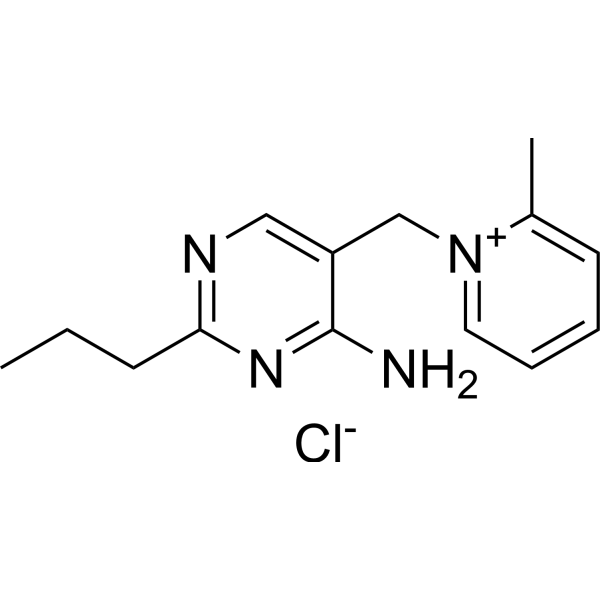
Amprolium is a thiamine transporter inhibitor and antiparasitic agent with oral activity and blood-brain barrier penetration. Amprolium blocks thiamine transport at the blood-brain barrier and intestine, and competitively inhibits thiamine pyrophosphokinase, inducing thiamine pyrophosphate deficiency and impairing carbohydrate synthesis. Amprolium induces oxidative stress, alters antioxidant enzyme activity, and inhibits acetylcholinesterase (AchE) activity. Amprolium disrupts reproductive organs and gametogenesis, and causes histopathological and ultrastructural damage to multiple organs. Amprolium induces thiamine deficiency, reduces body weight gain in mice, and causes psychomotor behavioral changes and nephropathy. Amprolium exhibits molluscicidal activity against the terrestrial snail Eobania vermiculata, and reduces the shedding of Eimeria meleagrimitis oocysts in feces and litter. Amprolium can be used for research on thiamine deficiency and coccidiosis .
loading...
    loading...
Cat. No.: HY-B0937A
CAS No.: 137-88-2
Research Areas:  

Infection

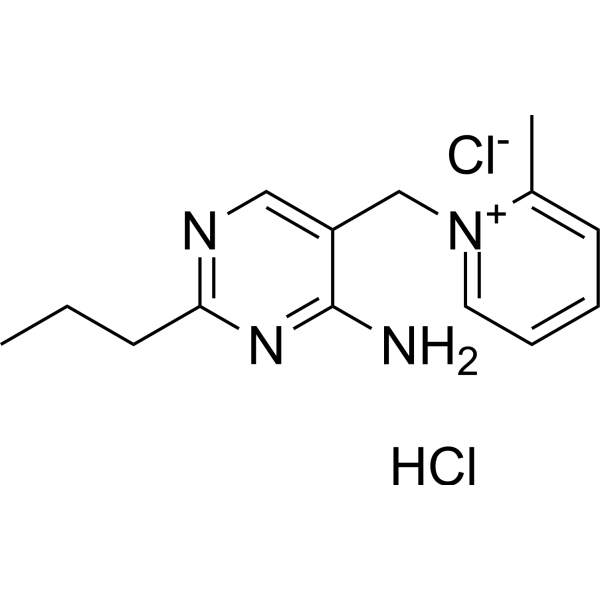
Amprolium hydrochloride is a thiamine transporter inhibitor and antiparasitic agent with oral activity and blood-brain barrier penetration. Amprolium hydrochloride blocks thiamine transport at the blood-brain barrier and intestine, and competitively inhibits thiamine pyrophosphokinase, inducing thiamine pyrophosphate deficiency and impairing carbohydrate synthesis. Amprolium hydrochloride induces oxidative stress, alters antioxidant enzyme activity, and inhibits acetylcholinesterase (AchE) activity. Amprolium hydrochloride disrupts reproductive organs and gametogenesis, and causes histopathological and ultrastructural damage to multiple organs. Amprolium hydrochloride induces thiamine deficiency, reduces body weight gain in mice, and causes psychomotor behavioral changes and nephropathy. Amprolium hydrochloride exhibits molluscicidal activity against the terrestrial snail Eobania vermiculata, and reduces the shedding of Eimeria meleagrimitis oocysts in feces and litter. Amprolium hydrochloride can be used for research on thiamine deficiency and coccidiosis .
loading...
    loading...
Cat. No.: HY-P11291
Research Areas:  

Metabolic Disease

NNC0165-1273 is a selective NPY Y2 receptor agonist with a Ki of 2 nM and an EC50 of 5.0 nM. NNC0165-1273 blocks Ghrelin-induced cFos expression. NNC0165-1273 reduces nocturnal food intake, attenuates feeding behavior, induces early satiety, and causes dose-dependent decreases in body weight and fat mass in diet-induced obese mice. When used in combination with Semaglutide (HY-114118), NNC0165-1273 reduces preference for high-fat diet, promotes body weight loss, and produces sustained weight loss effects in diet-induced obese rats. NNC0165-1273 can be used in studies related to diet-induced obesity .
loading...
    loading...
Cat. No.: HY-P11291B
Research Areas:  

Metabolic Disease

NNC0165-1273 acetate is a selective NPY Y2 receptor agonist with a Ki of 2 nM and an EC50 of 5.0 nM. NNC0165-1273 acetate blocks Ghrelin-induced cFos expression. NNC0165-1273 acetate reduces nocturnal food intake, attenuates feeding behavior, induces early satiety, and causes dose-dependent decreases in body weight and fat mass in diet-induced obese mice. When used in combination with Semaglutide (HY-114118), NNC0165-1273 acetate reduces preference for high-fat diet, promotes body weight loss, and produces sustained weight loss effects in diet-induced obese rats. NNC0165-1273 acetate can be used in studies related to diet-induced obesity .
loading...
    loading...
Cat. No.: HY-103117
CAS No.: 847871-78-7
Target:  

5-HT Receptor

Research Areas:  

Neurological Disease

S 32212 hydrochloride is an inverse agonist of 5-HT receptors 5-HT2(CINI) and 5-HT2(CVSV) (Kis=6.6, 8.9 nM) and an antagonist of 5-HT2A and α2β-adrenergic receptors (Ki=5.8, 5.8 nM). S 32212 hydrochloride can reduce the binding of GTPγS to Gαq, and reduce the activity of phospholipase C (PLC) in HEK293 cells expressing 5-HT2(CINI) receptor and CHO cells expressing 5-HT2(CVSV) receptor (EC50=38 and 18.6 nM, respectively). S 32212 hydrochloride (2.5 mg/kg) reduces 5-HT receptor agonist-induced head twitches and penile erections in mice and rats. S 32212 hydrochloride (10, 40 mg/kg) reduces immobility time in the forced swim test and marble burying behavior in mice and rats, exerting antidepressant and anxiolytic activities.
loading...
    loading...
Cat. No.: HY-106224AS
Synonyms: Hypocretin-1-13C6,15N (human, rat, mouse) TFA
Orexin A- 13C6, 15N (human, rat, mouse) (Hypocretin-1- 13C6, 15N (human, rat, mouse)) TFA is the 13C- and 15N-labeled Orexin A (human, rat, mouse) (HY-106224). Orexin A (human, rat, mouse) (Hypocretin-1 (human, rat, mouse)), a 33 amino acid excitatory neuropeptide, orchestrates diverse central and peripheral processes. Orexin A (human, rat, mouse) binds and activates two types of G protein-coupled receptors, the orexin-1 receptor (OX1R) and the orexin-2 receptor (OX2R). Orexin A (human, rat, mouse) has a role in the regulation of feeding behavior. Orexin A (human, rat, mouse) is an effective anti-nociceptive and anti-hyperalgesic agent in mice and rats .
loading...
    loading...
Cat. No.: HY-184698
CAS No.: 3072761-08-8
Nrf2/HO-1 activator 4 is a Nrf2/HO-1 activator. Nrf2/HO-1 activator 4 inhibits nitric oxide production and the expression of pro-inflammatory cytokines IL-1β, IL-6, TNF-α, as well as upstream inflammatory enzymes COX-2 and iNOS. Nrf2/HO-1 activator 4 reduces ROS accumulation, and restores GSH levels and SOD activity. Nrf2/HO-1 activator 4 ameliorates depression-like behaviors in mice. Nrf2/HO-1 activator 4 can be used for research on major depressive disorder .
loading...
    loading...
Cat. No.: HY-B1941R
CAS No.: 140-66-9
4-tert-Octylphenol (Standard) is the analytical standard of 4-tert-Octylphenol. This product is intended for research and analytical applications. 4-tert-Octylphenol, a endocrine-disrupting chemical, is an estrogenic agent. 4-tert-Octylphenol is also a biodegradation product of non-ionic surfactants alkylphenol polyethoxylates. 4-tert-Octylphenol induces apoptosis in neuronal progenitor cells in offspring mouse brain. 4-tert-Octylphenol reduces bromodeoxyuridine (BrdU), mitotic marker Ki67, and phospho-histone H3 (p-Histone-H3), resulting in a reduction of neuronal progenitor proliferation. 4-tert-Octylphenol disrupts brain development and behavior in mice, which is promising for reserch of immune response, neuro-related diseases and ethology .
loading...
    loading...
Cat. No.: HY-P11291A
Research Areas:  

Metabolic Disease

NNC0165-1273 TFA is a selective NPY Y2 receptor agonist with a Ki of 2 nM and an EC50 of 5.0 nM. NNC0165-1273 TFA blocks Ghrelin-induced cFos expression. NNC0165-1273 TFA reduces nocturnal food intake, attenuates feeding behavior, induces early satiety, and causes dose-dependent decreases in body weight and fat mass in diet-induced obese mice. When used in combination with Semaglutide (HY-114118), NNC0165-1273 TFA reduces preference for high-fat diet, promotes body weight loss, and produces sustained weight loss effects in diet-induced obese rats. NNC0165-1273 TFA can be used in studies related to diet-induced obesity .
loading...
    loading...
Cat. No.: HY-106224AS1
Synonyms: Hypocretin-1-13C18,15N3 (human, rat, mouse) TFA
Orexin A- 13C18, 15N3 (human, rat, mouse) ((Hypocretin-1- 13C18, 15N3 (human, rat, mouse)) TFA is the 13C- and 15N-labeled Orexin A (human, rat, mouse) (HY-106224). Orexin A (human, rat, mouse) (Hypocretin-1 (human, rat, mouse)), a 33 amino acid excitatory neuropeptide, orchestrates diverse central and peripheral processes. Orexin A (human, rat, mouse) binds and activates two types of G protein-coupled receptors, the orexin-1 receptor (OX1R) and the orexin-2 receptor (OX2R). Orexin A (human, rat, mouse) has a role in the regulation of feeding behavior. Orexin A (human, rat, mouse) is an effective anti-nociceptive and anti-hyperalgesic agent in mice and rats .
loading...
    loading...

