118 Results for "

Hypothalamic

" in MedChemExpress (MCE) Product Catalog:
Products (118)

118 Results for "Hypothalamic" in MCE Product Catalog:

Cat. No.: HY-W380450A
CAS No.: 52730-46-8
Synonyms: (S)-Viloxazin; (S)-Emovit
Research Areas:  

Neurological Disease

(S)-Viloxazine ((S)-Viloxazin) is the more pharmacologically active isomer of Viloxazine (HY-W380450). (S)-Viloxazine is an orally active, blood-brain barrier penetrant norepinephrine transporter inhibitor. It also acts as a 5-HT2C receptor agonist and a 5-HT2B receptor inhibitor. (S)-Viloxazine modulates serotonergic and noradrenergic activities, blocks norepinephrine reuptake, and elevates extracellular levels of serotonin, norepinephrine and dopamine in the prefrontal cortex, without inhibiting 5-HT or dopamine uptake into synaptosomes. (S)-Viloxazine can be used in research related to attention deficit hyperactivity disorder and depression .
loading...
    loading...
Cat. No.: HY-P1248
CAS No.: 99566-27-5
Synonyms: NPFF
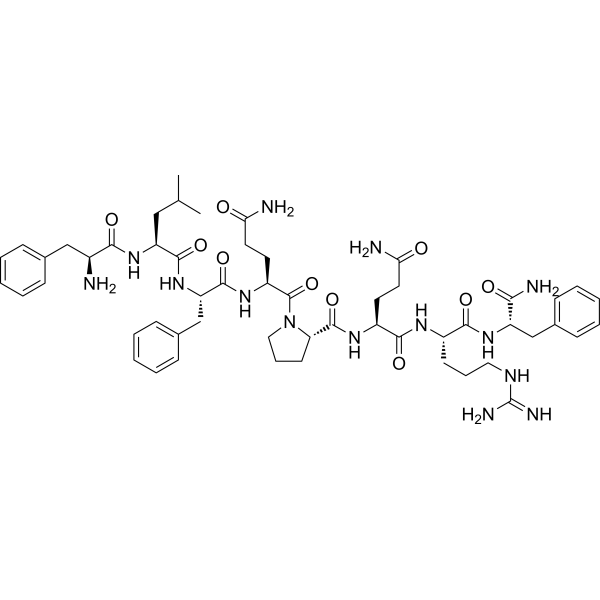
Neuropeptide FF (NPFF), an octapeptide belonging to the RF-amide family of peptides, is a NPFF1 and NPFF2 receptors agonist with Ki values of 2.82 nM and 0.21 nM, respectively. Neuropeptide FF induces abstinence syndrome, exerts antiopioid and analgesic effects, releases via calcium-dependent mechanisms from rat spinal cord, regulates memory, autonomic function, and neuroendocrine function, modulates pain and opioid antinociception, reduces food intake, stimulates water intake, alters cardiovascular parameters, and shows differential activity in hypothalamic paraventricular nucleus neurons. Neuropeptide FF is present in mammalian central nervous system and periphery, with NPFF-immunoreactivity increases in rat cerebrospinal fluid during opiate tolerance, and its NPFF gene and NPFF-R2 gene are up-regulated in rat spinal cord and dorsal root ganglia during peripheral inflammation. Neuropeptide FF can be used for the research of opioid tolerance, morphine-induced analgesia, abstinence syndrome, pain, hypertension, nociception, inflammatory pain, and neuropathic pain .
loading...
    loading...
Cat. No.: HY-108615
CAS No.: 186392-43-8
Purity:  98.58%
Synonyms: GPi 819
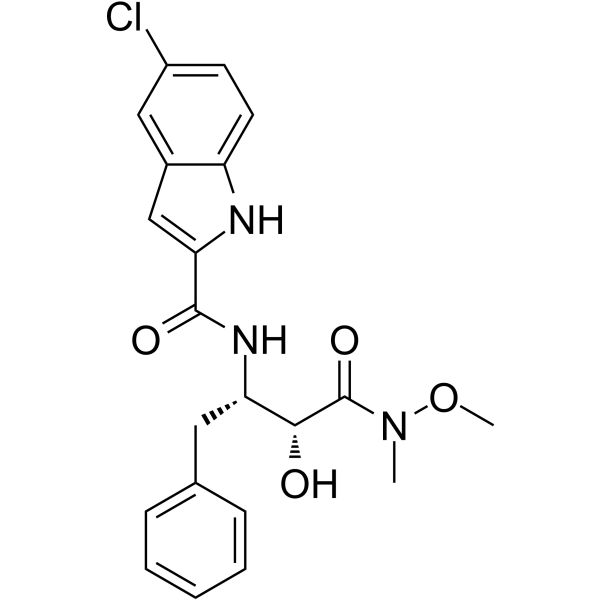
CP-316819 (GPi 819) is a blood-brain barrier permeable glycogen phosphorylase inhibitor. CP-316819 inhibits hepatic glycogenolysis, safely reduces blood glucose in type 2 diabetes, and rarely induces hypoglycemia. CP-316819 increases brain glycogen reserves, protects neurons, alleviates hypoglycemic brain injury, and inhibits excessive platelet activation, exerting both neuroprotective and vasculoprotective effects. CP-316819 can be used in research related to hypoglycemia, thrombosis, autoimmune inflammatory diseases, and type 2 diabetes .
loading...
    loading...
Cat. No.: HY-P10927
Synonyms: BRINP2-related peptide
Target:  

AP-1 PKA

Research Areas:  

Metabolic Disease

BRP is a 12-peptide derived from BRINP2 that can cross the blood-brain barrier. BRP induces the central activation of FOS in neuronal cells via the cAMP-PKA-CREB signaling pathway. BRP exerts anorectic and anti-obesity effects without triggering nausea or aversive responses. The action of BRP is independent of the leptin, GLP-1 receptor and melanocortin 4 receptor pathways. BRP is applicable to obesity-related research .
loading...
    loading...
Cat. No.: HY-P10927A
Synonyms: BRINP2-related peptide TFA
Target:  

PKA AP-1

Research Areas:  

Metabolic Disease

BRP (BRINP2-related peptide) TFA is a 12-peptide derived from BRINP2 that can cross the blood-brain barrier. BRP TFA induces the central activation of FOS in neuronal cells via the cAMP-PKA-CREB signaling pathway. BRP TFA exerts anorectic and anti-obesity effects without triggering nausea or aversive responses. The action of BRP TFA is independent of the leptin, GLP-1 receptor and melanocortin 4 receptor pathways. BRP TFA is applicable to obesity-related research .
loading...
    loading...
Cat. No.: HY-W585843
CAS No.: 132685-02-0
1,1′-Ethylidenebis[L-tryptophan] is an orally active amino acid analog. 1,1′-Ethylidenebis[L-tryptophan] promotes the release of adrenocorticotropic hormone and corticosterone in rat plasma, and transiently inhibits CRH mRNA in the paraventricular nucleus of the hypothalamus via glucocorticoid negative feedback. 1,1′-Ethylidenebis[L-tryptophan] induces multi-tissue inflammation and fibrosis in rodents and human cells, increases the number of degranulated mast cells, and activates the IL-5 pathway in lymphocytes. 1,1′-Ethylidenebis[L-tryptophan] is activated by tryptophanyl-tRNA synthetase and replaces L-tryptophan during translation; it also interferes with tryptophan metabolism in mice via the kynurenine pathway and dynamically alters their plasma quinolinic acid levels. 1,1′-Ethylidenebis[L-tryptophan] can be used for studies on metabolism-related mechanisms .
loading...
    loading...
Cat. No.: HY-P11321
Synonyms: acyl-GIP
Target:  

GLP Receptor

Research Areas:  

Metabolic Disease

IUB0271 (acyl-GIP) is a glucose-dependent insulinotropic polypeptide receptor (GIPR) agonist with blood-brain barrier permeability. IUB0271 activates the GIPR signaling pathway, inhibits food intake and weight gain, and induces cFos neuron activation in the area postrema. IUB0271 enhances lipid clearance and induces systemic fatty acid oxidation. IUB0271 improves dyslipidemia, reduces atherosclerotic plaque formation and decreases adipocyte volume. IUB0271 can be used in studies related to obesity, dyslipidemia and atherosclerosis .
loading...
    loading...
Cat. No.: HY-P11321A
Synonyms: acyl-GIP hydrochloride
Target:  

GLP Receptor

Research Areas:  

Metabolic Disease

IUB0271 hydrochloride (acyl-GIP hydrochloride) is a glucose-dependent insulinotropic polypeptide receptor (GIPR) agonist with blood-brain barrier permeability. IUB0271 hydrochloride activates the GIPR signaling pathway, inhibits food intake and weight gain, and induces cFos neuron activation in the area postrema. IUB0271 hydrochloride enhances lipid clearance and induces systemic fatty acid oxidation. IUB0271 hydrochloride improves dyslipidemia, reduces atherosclerotic plaque formation and decreases adipocyte volume. IUB0271 hydrochloride can be used in studies related to obesity, dyslipidemia and atherosclerosis .
loading...
    loading...
Cat. No.: HY-114557R
CAS No.: 1041-01-6
Synonyms: 3,5-Diiodo-L-thyronine (Standard)
NSC 90469 (Standard) is the analytical standard of NSC 90469. This product is intended for research and analytical applications. NSC 90469 (3,5-Diiodo-L-thyronine) is an orally active thyroid hormone derivative. NSC 90469 inhibits JNK phosphorylation and NF-κB acetylation, blocks SIRT1 protein expression, induces elevated PGC-1α levels, and stimulates COX activity. NSC 90469 enhances UCP1-mediated thermogenesis, increases hepatic Dio1 activity, inhibits TSH levels and hypothalamic-pituitary-thyroid axis function, enhances lipid metabolism, and regulates energy metabolism via the mitochondrial pathway. NSC 90469 prevents blood glucose reduction, reduces urinary albumin excretion, inhibits renal matrix expansion, decreases TGF-β1 expression, and reduces renal fibronectin and type Ⅳ collagen deposition. NSC 90469 also increases energy expenditure and prevents diet-induced overweight. NSC 90469 can be used in studies related to diabetic nephropathy, hypothyroidism, non-alcoholic fatty liver disease, and diet-induced obesity .
loading...
    loading...
Cat. No.: HY-23133
CAS No.: 961-45-5
Target:  

Adenosine Receptor

Research Areas:  

Neurological Disease

8-Phenyltheophylline is an adenosine receptor (adenosine receptor) antagonist. 8-Phenyltheophylline blocks adenosine-stimulated cAMP accumulation, inhibits tissue-selective cAMP hydrolysis, and antagonizes the inhibitory effects of adenosine. 8-Phenyltheophylline enhances apomorphine-induced rotational behavior in lesioned rats, reverses the analgesic effect of morphine in the rat hot plate test, and slightly enhances contractile responses of the atrium and ileum. 8-Phenyltheophylline can be used in studies related to unilateral nigrostriatal pathway injury .
loading...
    loading...
Cat. No.: HY-183910
CAS No.: 90685-01-1
Pitrazepin is a GABAA receptor antagonist and glycine receptor antagonist. Pitrazepin blocks synaptic GABA action, induces neuronal bursting and reduces inhibitory postsynaptic potentials. Pitrazepin can be used in research on depression and psychosis .
loading...
    loading...
Cat. No.: HY-110023
CAS No.: 60525-15-7
Purity:  98.27%
Target:  

Serotonin Transporter

Research Areas:  

Neurological Disease

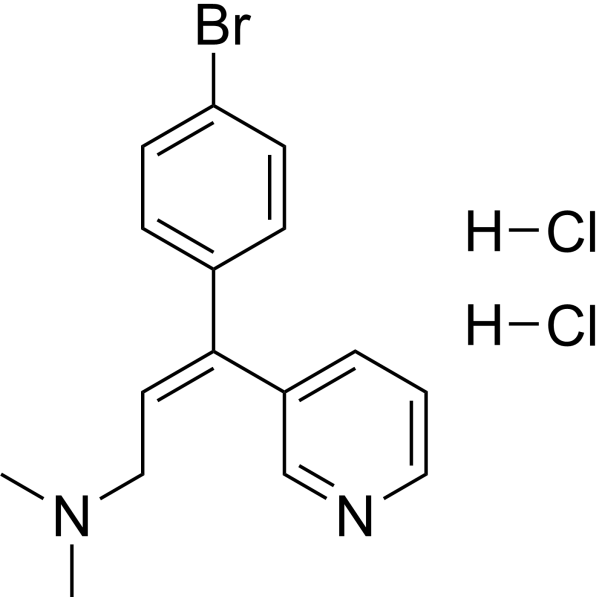
Zimelidine dihydrochloride is an orally active selective serotonin reuptake inhibitor. Zimelidine dihydrochloride competitively inhibits central 5-HT uptake and desensitizes 5-HT autoreceptors in dorsal raphe nucleus. Zimelidine dihydrochloride time-dependently modulates 5-HT neuronal firing and hippocampal CA3 responses. Zimelidine dihydrochloride strengthens central serotonergic neurotransmission and produces related behavioral changes. Zimelidine dihydrochloride exerts anxiolytic, analgesic, feeding-suppressive and tolerance-attenuating effects. Zimelidine dihydrochloride is used for the study of depressive disorders and analgesic tolerance .
loading...
    loading...
Cat. No.: HY-187708
CAS No.: 80349-58-2
Target:  

5-HT Receptor

Research Areas:  

Neurological Disease

Panuramine is a blood-brain barrier permeable, orally active selective 5-HT Receptor antagonist with an IC50 of 22 nM. Panuramine prevents 5-HT reuptake through non-competitive antagonism of 5-HT Receptor, but does not affect dopamine uptake. Panuramine can be used for research on depression .
loading...
    loading...
Cat. No.: HY-B1904
CAS No.: 5002-47-1
Target:  

Dopamine Receptor

Research Areas:  

Neurological Disease

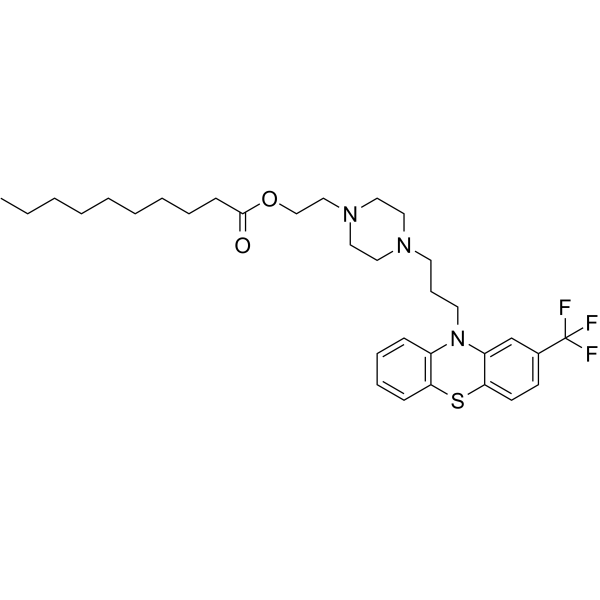
Fluphenazine decanoate is a CNS-penetrant dopamine D2 receptor inhibitor, is a long-acting phenothiazine neuroleptic. Fluphenazine can be used for schizophrenia research .
loading...
    loading...
Cat. No.: HY-B1904A
CAS No.: 2376-65-0
Target:  

Dopamine Receptor

Research Areas:  

Neurological Disease

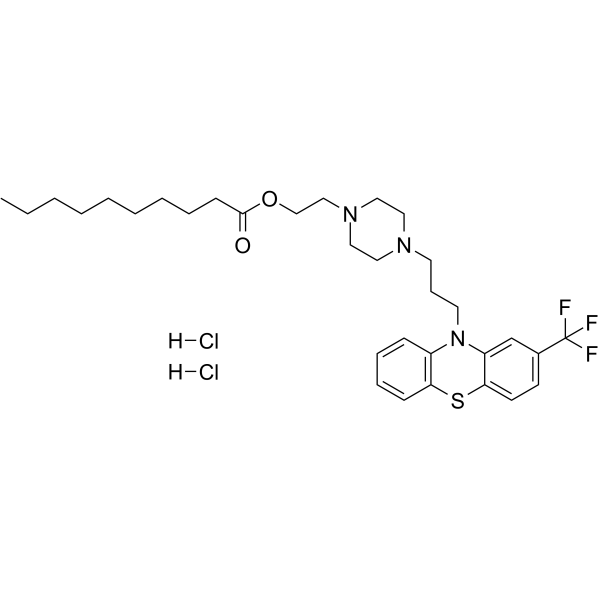
Fluphenazine decanoate dihydrochloride is a CNS-penetrant dopamine D2 receptor inhibitor, is a long-acting phenothiazine neuroleptic. Fluphenazine can be used for schizophrenia research .
loading...
    loading...
Cat. No.: HY-B1904R
CAS No.: 5002-47-1
Fluphenazine decanoate (Standard) is the analytical standard of Fluphenazine decanoate. This product is intended for research and analytical applications. Fluphenazine decanoate is a dopamine D2 receptor inhibitor, is a long-acting phenothiazine neuroleptic. Fluphenazine can be used for schizophrenia research .
loading...
    loading...
Cat. No.: HY-D1056A3
Synonyms: LPS, from Escherichia coli (O26:B6)
Lipopolysaccharides, from E. coli (Escherichia coli) O26:B6 are lipopolysaccharide endotoxins and TLR-4 activators derived from E. coli, classified as S-type LPS, which can activate pathogen-associated molecular patterns (PAMP) of the immune system and induce cellular secretion of migrasomes. Lipopolysaccharides, from E. coli O26:B6 exhibit a typical three-part structure: O-antigen, core oligosaccharide, and lipid A, and can be recognized by the core-specific monoclonal antibody MAb J8-4C10. Lipopolysaccharides, from E. coli O26:B6 can promote an increase in pro-inflammatory cytokines in plasma, thereby triggering hypothalamic-pituitary-adrenal (HPA) activation and leading to adrenal oxidative damage. The pathogenic effects of Lipopolysaccharides, from E. coli O26:B6 can be used to construct various models, such as cellular inflammation models, sepsis, acute lung injury models, adrenal dysfunction models, and bladder infection models, etc .
It is recommended to prepare a solution with concentration ≥2 mg/mL. Vortex thoroughly for more than 10 minutes. Due to the adsorption characteristics of LPS, silanized container or low adsorption centrifuge tubes should be used for aliquoting and storage, and mix thoroughly before use.
loading...
    loading...
Cat. No.: HY-180372
CAS No.: 581813-10-7
CSP-2503 is a potent and selective 5-HT1A receptor agonist , with an EC50 of 0.15 μM and a Ki of 4.1 nM. CSP-2503 exhibits excellent selectivity over α1-adrenoceptors (Ki > 1000 nM), 5-HT4 receptors, and benzodiazepine receptors. CSP-2503 inhibits cAMP increase in vitro and exhibits anxiolytic activity in vivo. CSP-2503 can be used for the research of anxiety-related disorders .
loading...
    loading...