

1234 Results for "

AC

" in MedChemExpress (MCE) Product Catalog:
Products (1234)

1234 Results for "AC" in MCE Product Catalog:

Cat. No.: HY-P10824
CAS No.: 1430219-69-4
Target:  

Amyloid-β

Research Areas:  

Neurological Disease

RI-OR2-TAT is a brain-penetrant inhibitor of β-Amyloid oligomerization, which is produced by adding the HIV protein transduction domain TAT to RI-OR2. RI-OR2-TAT binds to Aβ42 fibrils with a Kd value of 58-125 nM. RI-OR2-TAT reduces Aβ aggregation and plaque levels, reduces activation of microglia and oxidative damage, and increases the number of young neurons in the dentate gyrus .
loading...
    loading...
Cat. No.: HY-P10956
CAS No.: 2891912-36-8
Synonyms: LY3541105
Research Areas:  

Metabolic Disease

Colulintide (LY3541105) is an amylin-calcitonin dual receptor agonist with Amylin as its scaffold. Colulintide is applicable to research related to type 2 diabetes and obesity .
loading...
    loading...
Cat. No.: HY-P11584
Research Areas:  

Metabolic Disease

KBP-066A is a long-acting dual amylin and calcitonin receptor agonist. KBP-066A can activate the CTR and AMY-R potently, with no off-target activity. KBP-066A reduces fasting blood glucose levels, fasting insulin levels, and body weight in diabetic rat models. KBP-066A can be used for the research of type 2 diabetes mellitus, obesity .
loading...
    loading...
Cat. No.: HY-P1884
Target:  

Bacterial

Research Areas:  

Infection

LL-37, acetylated, amidated is a cathelicidin peptide LL-37 acetylated on the N-terminus and amidated on the C-terminus. The single human cathelicidin peptide LL-37 has antimicrobial and anti-biofilm activity against multiple Gram-positive and Gram-negative human pathogens, and has wound-healing effects on the host .
loading...
    loading...
Cat. No.: HY-P12219
Synonyms: OP449
COG449 (OP449) is a cell-penetrating peptide that binds to SET, prevents the formation of the SET-PP2A complex, and restores PP2A phosphatase activity. COG449 decreases the phosphorylation levels of AKT 308, ERK1/2, NFkB p65, and c-MYC S62, and reduces c-MYC stability and target gene expression. COG449 induces apoptosis, autophagy, and histone H3 hyperacetylation, and decreases the levels of SET, CIP2A, SETBP1, and Mcl-1. COG449 reduces cancer cell viability and decreases tumor mass in xenograft models. COG449 can be used for research on various cancers such as oral squamous cell carcinoma, T-cell acute lymphoblastic leukemia, B-CLL, non-Hodgkin lymphoma, and breast cancer .
loading...
    loading...
Cat. No.: HY-115443
CAS No.: 2089590-80-5
Target:  

FLT3

Research Areas:  

Cancer

MZH29 is a potent and orally active FLT3 inhibitor. MZH29 shows inhibitory effects on wild-type and mutant FLT3, including the FLT3-ITD, FLT3-D835H/Y/V and FLT3-K663Q mutants. MZH29 retains its potent inhibitory effect against the FLT3-ITD/F691L mutation, a drug resistance mutation against the well-known FLT3 inhibitor, AC220 (HY-13001). MZH29 can be used for the research of cancer, such as acute myeloid leukemia (AML) .
loading...
    loading...
Cat. No.: HY-124609
CAS No.: 2071209-49-7
Purity:  99.39%
Research Areas:  

Neurological Disease

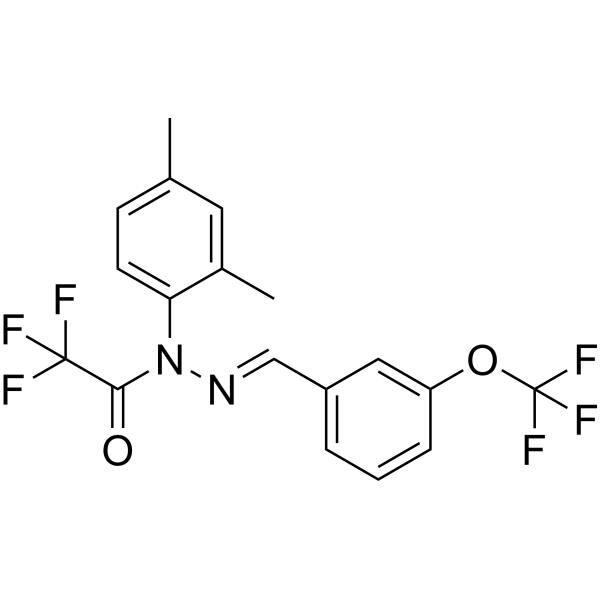
CAD031 is an orally active AMPK/ACC1 signaling pathway activator and a derivative of the Alzheimer's disease (AD) targeted agent J147 (HY-13779) (more active than J147 in human neural stem cell assays). CAD031 can cross the blood-brain barrier, activate AMPK and inhibit ACC1, thereby increasing ac-CoA levels, improving mitochondrial function and reducing free fatty acid synthesis. CAD031 has neuroprotective, neurogenesis-promoting and memory-improving activities and can be used in the study of Alzheimer's disease and aging-related neurodegenerative diseases. CAD031 effectively enhances the memory of mice, improves dendritic structure, and stimulates cell division in the germinal zone of the brain of elderly mice .
loading...
    loading...
Cat. No.: HY-145815
CAS No.: 2669785-76-4
Target:  

PROTACs HDAC Apoptosis

Research Areas:  

Cancer

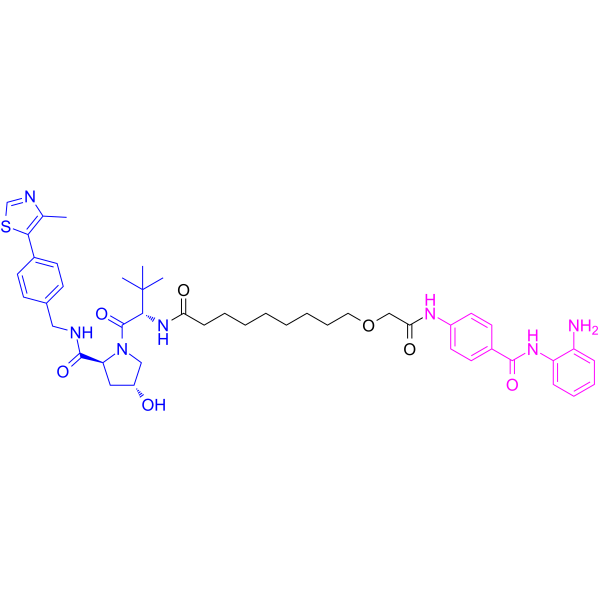
JPS014 is a PROTAC degrader targeting HDAC1, HDAC2 and HDAC3, with DC50 values of 0.91 μM, 4.19 μM and 0.64 μM, respectively. JPS014 recruits the VHL E3 ligase to mediate the ubiquitination and proteasomal degradation of HDAC1, HDAC2 and HDAC3. JPS014 acts as a submicromolar inhibitor of the HDAC1-CoREST, HDAC2-CoREST and HDAC3-SMRT complexes in vitro. JPS014 increases the level of H3K56ac, reduces the stability of LSD1 and SIN3A, and induces cell apoptosis (apoptosis). JPS014 can be used for the research of colon cancer .
loading...
    loading...
Cat. No.: HY-145815A
Purity:  98.40%
Target:  

PROTACs HDAC Apoptosis

Research Areas:  

Cancer

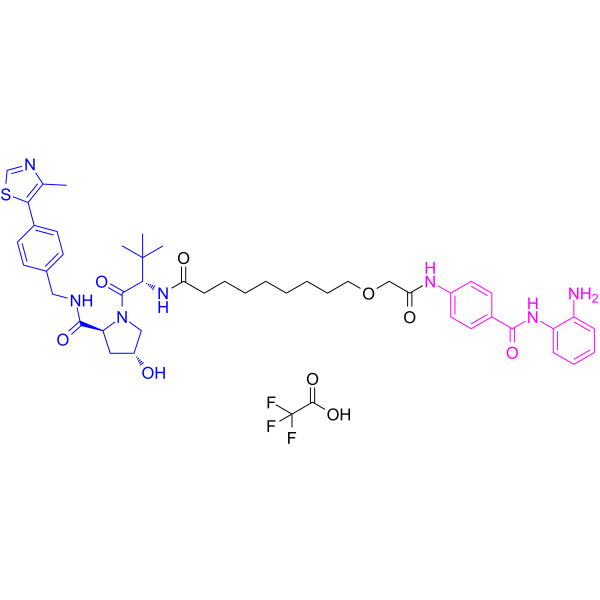
JPS014 TFA is a PROTAC degrader targeting HDAC1, HDAC2 and HDAC3, with DC50 values of 0.91 μM, 4.19 μM and 0.64 μM, respectively. JPS014 TFA recruits the VHL E3 ligase to mediate the ubiquitination and proteasomal degradation of HDAC1, HDAC2 and HDAC3. JPS014 TFA acts as a submicromolar inhibitor of the HDAC1-CoREST, HDAC2-CoREST and HDAC3-SMRT complexes in vitro. JPS014 TFA increases the level of H3K56ac, reduces the stability of LSD1 and SIN3A, and induces cell apoptosis (apoptosis). JPS014 TFA can be used for the research of colon cancer .
loading...
    loading...
Cat. No.: HY-168201
CAS No.: 3105406-14-9
MJP6412 is a p300 and CBP PROTAC degrader that potently degrades p300 and CBP in 22Rv1 cells with DC50 values of 1.6 nM and 1.2 nM, respectively. MJP6412 downregulates the expression of AR-FL, AR-V7 and c-MYC, as well as androgen receptor target genes (KLK3, FKBP5, TMPRSS2). MJP6412 completely abolishes p300/CBP-dependent histone acetylation (H3K27Ac and H2BNTAC) and induces G1 cell cycle arrest. MJP6412 inhibits cancer cell proliferation and tumor growth. MJP6412 can be used in prostate cancer-related research .
loading...
    loading...
Cat. No.: HY-183618
Research Areas:  

Cancer

DW-229 is a PROTAC degrader derived from Deferiprone (HY-B0568), targeting Fe(II)/α‑ketoglutarate‑dependent histone lysine demethylases (KDMs). DW-229 degrades KDM2A, KDM3A, KDM5B, KDM4A‑C, KDM5C, KDM6B in breast cancer cells. DW-229 shows IC50 < 0.5 μM against MCF‑7 cells and IC50 of 8.87 μM against MDA‑MB‑231 cells, with high cancer cell selectivity. DW-229 can be used for the research of breast cancer, liver cancer, prostate cancer, lung cancer .
loading...
    loading...
Cat. No.: HY-D2379
CAS No.: 1629965-68-9
Target:  

Fluorescent Dye

Research Areas:  

Others

HMRG is a fluorescent dye, which serves as the fluorescent active product generated by enzyme-activated fluorescent probes targeting proteases and glycosidases. Its detection mechanism relies on the intramolecular spirocyclization equilibrium: HMRG itself exists in an open non-spirocyclic structure under physiological pH, which maintains a conjugated π system and produces strong fluorescence; whereas its probe precursors (such as Leu-HMRG, Ac-GlyPro-HMRG and βGal-HMRG) exist in a closed spirocyclic form and show no fluorescence due to the disruption of the π-conjugated system; when the target enzyme cleaves the substrate fragment linked to the probe precursor, the closed spirocyclic structure converts to the open structure of HMRG, restoring the conjugated system and generating a strong fluorescent signal. Its detection wavelength is Ex/Em = 501/524 nm .
loading...
    loading...
Cat. No.: HY-P1242A
Research Areas:  

Inflammation/Immunology

NEP(1-40) TFA is a Nogo-66 receptor (NgR) antagonist peptide, reversing the injury-induced shift in distribution of microglia morphologies by limiting myelin-based inhibition .
loading...
    loading...
Cat. No.: HY-P10881
CAS No.: 2758595-29-6
Research Areas:  

Metabolic Disease

Ganipatide is a 1-31-Glucose-dependent insulinotropic polypeptide. Ganipatide is promising for research of diabetes .
loading...
    loading...
Cat. No.: HY-P12261
Research Areas:  

Cancer

AJICAP reagent 6b is an Fc-affinity peptide reagent that site-specifically modifies Lys288 of native antibodies via thiophenyl ester chemistry. AJICAP reagent 6b enables site-specific conjugation of native antibodies at Lys288 with high conversion yield and reduced aggregation. AJICAP reagent 6b can be used for the research of cancer .
loading...
    loading...
Cat. No.: HY-P87009
Synonyms: AC004383.6 antibody; BFLS antibody; BORJ antibody; CENP 31 antibody; Centromere protein 31 antibody; MGC14797 antibody; OTTHUMP00000024063 antibody; PHD finger protein 6 antibody; PHD like zinc finger protein antibody; PHD-like zinc finger protein antibody; AC004383.6 antibody; BFLS antibody; BORJ antibody; CENP 31 antibody; Centromere protein 31 antibody; MGC14797 antibody; OTTHUMP00000024063 antibody; PHD finger protein 6 antibody; PHD like zinc finger protein antibody; PHD-like zinc finger protein antibody; Phf6 antibody; PHF6_HUMAN antibody;

Host:  

Rabbit

Application:  

WB, IHC-P, ICC/IF

Reactivity:  

Human, Mouse, Rat, Monkey

loading...
    loading...
Cat. No.: HY-P11624
Target:  

Apoptosis

Research Areas:  

Cancer

PP-60 is an apoptosis inducer. PP-60 inhibits the proliferation of cancer cells and induces cancer cell apoptosis. PP-60 exerts anti-tumor effects in nude mouse liver tumor models. PP-60 is applicable to research related to cancers such as liver cancer, lung cancer, and prostate cancer .
loading...
    loading...
Cat. No.: HY-178485
Research Areas:  

Cancer

SJY26 is a PI3K/HDAC dual-target inhibitor with IC50s of 0.59 nM (PI3Kα and PI3Kδ), 2.02 nM (PI3Kγ), 12.69 nM (PI3Kβ) and 114 nM (HDAC1). SJY26 exhibits potent broad-spectrum anti-proliferative activity, and is particularly sensitive to Jurkat and PC9R cells. SJY26 inhibited the migration of PC9R cells, arrested the cell cycle and induced cell apoptosis. SJY26 reduces AKT phosphorylation, and decreases histone H3 deacetylation (Ac-H3). SJY26 can be used for the studies of non-small cell lung cancer and leukemia .
loading...
    loading...
Cat. No.: HY-179388
CAS No.: 3123329-68-7
Research Areas:  

Cancer

PROTAC Sirt2 Degrader-2 is a highly efficient and selective PROTAC degrader targeting SIRT2. PROTAC Sirt2 Degrader-2 demonstrates the most potent anti-proliferative activity both in vitro and in vivo. PROTAC Sirt2 Degrader-2 leads to a marked increase in H4K16Ac levels. PROTAC Sirt2 Degrader-2 significantly suppresses clonogenic formation and migration, induces cell cycle arrest, and promotes apoptosis. PROTAC Sirt2 Degrader-2 inhibits the AKT/mTOR signaling pathway by indirectly degrading SIRT2 and blocking downstream protein phosphorylation, thereby disrupting the signaling cascade and suppressing tumor development. PROTAC Sirt2 Degrader-2 can be used for the study of ovarian cancer .
loading...
    loading...
Cat. No.: HY-184897
CAS No.: 312724-83-7
Target:  

Chloride Channel NF-κB

Research Areas:  

Inflammation/Immunology

YS-01 is an inhibitor of pendrin (SLC26A4) with pulmonary protective activity. YS-01 inhibits pendrin-mediated anion exchange activity, reduces pendrin expression, and suppresses the activation of NF-κB and the production of proinflammatory cytokines. YS-01 alleviates lipopolysaccharide-induced and ventilator-induced lung injury. YS-01 attenuates ovalbumin-induced airway hyperresponsiveness, inflammatory infiltration, epithelial thickening and goblet cell hyperplasia, and reduces eosinophil and neutrophil counts. YS-01 decreases MUC5AC transcription levels induced by IL-4, reverses the reduction of airway surface liquid volume, and inhibits the increase of apical SCN − concentration in epithelial cells. YS-01 can be used in studies related to lung injury and allergic asthma .
loading...
    loading...

