
153 Results for "

protease substrate

" in MedChemExpress (MCE) Product Catalog:
Products (153)

153 Results for "protease substrate" in MCE Product Catalog:

Cat. No.: HY-W344383A
Research Areas:  

Others

Boc-Phe-Ser-Arg-AMC TFA is a fluorescence peptide substrate with specificity. Boc-Phe-Ser-Arg-AMC TFA can be cleaved by tryptase-like serine proteases (TLSPs) to generate fluorescent products, thereby enabling the detection of TLSPs activity. Boc-Phe-Ser-Arg-AMC TFA can be used in studies related to rosacea .
loading...
    loading...
Cat. No.: HY-187367
Research Areas:  

Infection

WJM590 is an orally active antimalarial agent that also exhibits inhibitory activities against renin, cathepsin D, BACE1, and plasmodial aspartic proteases. WJM590 inhibits substrate and protein maturation processing mediated by key proteases of Plasmodium falciparum, arrests asexual blood-stage parasites at the late schizont stage, inhibits merozoite release, and blocks malaria parasite transmission via vectors. WJM590 exerts selective inhibitory activity against multiple Plasmodium species and drug-resistant Plasmodium falciparum strains, and reduces parasitemia in infected mice. WJM590 can be used in malaria-related research .
loading...
    loading...
Cat. No.: HY-136887
CAS No.: 144110-38-3
Target:  

Bacterial

Research Areas:  

Infection

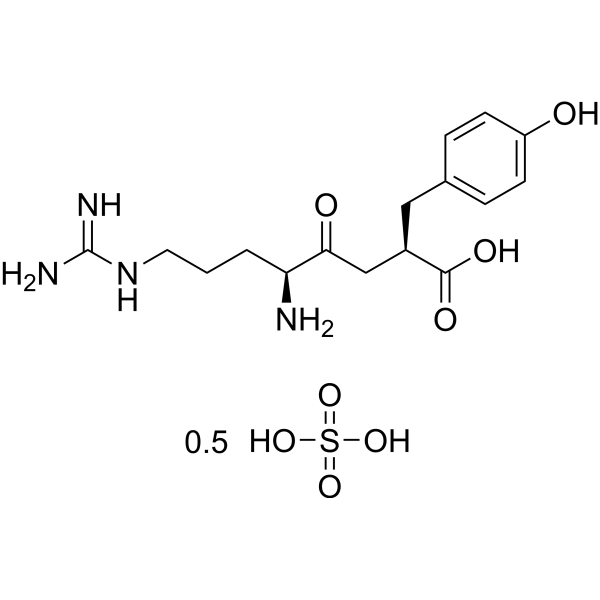
Arphamenine B hemisulfate is a Zn 2+-dependent exopeptidase that selectively removes arginine and/or lysine residues from the NH2-terminus of several peptide substrates. Arphamenine B hemisulfate is an inhibitor of aminopeptidase B that can be isolated from bacteria. Arphamenine B hemisulfate enhances the immune response and is used to characterize novel proteases .
loading...
    loading...
Cat. No.: HY-P5429
CAS No.: 146064-85-9
Target:  

Inhibitory Antibodies

Research Areas:  

Others

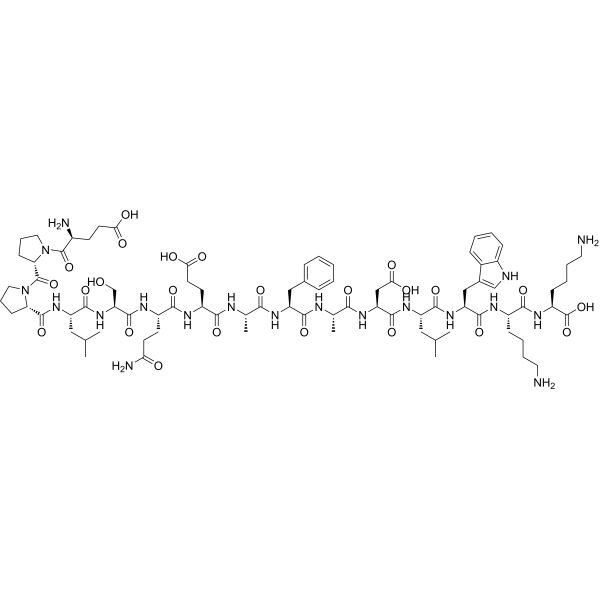
DNA-PK Substrate is a biological active peptide. (A substrate for DNA-dependent protein kinase (DNA-PK), phosphorylation. DNA-PK is essential for the repair of DNA double-strand breaks. This peptide corresponding to 11–24 amino acids of human p53 with threonine 18 and serine 20 changed to alanine is used as a substrate for the assay of DNA-PK activityPyroglutamyl (pGlu) peptides may spontaneously form when either Glutamine (Q) or Glutamic acid (E) is located at the sequence N-terminus. The conversion of Q or E to pGlu is a natural occurrence and in general it is believed that the hydrophobic γ-lactam ring of pGlu may play a role in peptide stability against gastrointestinal proteases. Pyroglutamyl peptides are therefore considered a normal subset of such peptides and are included as part of the peptide purity during HPLC analysis.)
loading...
    loading...
Cat. No.: HY-W001959
CAS No.: 24830-94-2
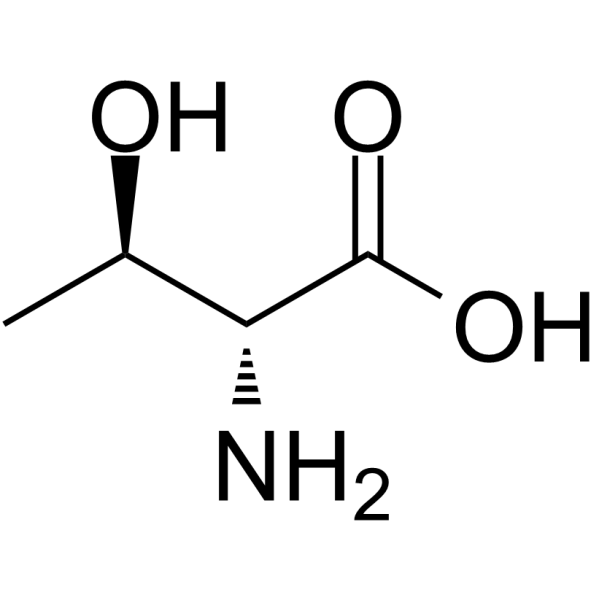
D-Allothreonine is a non-proteinogenic amino acid that serves as a substrate for Pyridoxal phosphate (HY-B1744)-dependent D-threonine aldolase, being cleaved into Glycine (HY-Y0966) and acetaldehyde, and acts as a constituent of bioactive peptidyl natural products such as callipeltins, conferring protease resistance. D-Allothreonine is used in natural product synthesis and metabolic research .
loading...
    loading...
Cat. No.: HY-P5344
Synonyms: Fluorigenic PEXEL peptide
Target:  

Parasite

Research Areas:  

Others

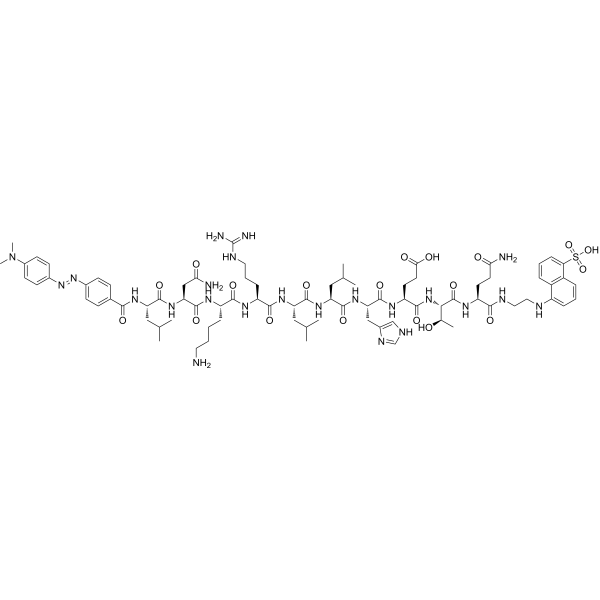
Dabcyl-LNKRLLHETQ-Edans (Fluorigenic PEXEL peptide) is a biological active peptide. (This FRET substrate peptide for Plasmepsin V (PMV) is derived from the conserved Plasmodium Export Element (PEXEL) motif of Histidine-Rich Protein II (HRPII). PMV is an ER aspartic protease that recognizes and cleaves the RXL sequence within the PEXEL motif of proteins exported by human malaria parasite Plasmodium falciparum, allowing them to translocate into host erythrocytes.)
loading...
    loading...
Cat. No.: HY-W027544S
Synonyms: 7-Methoxycoumarin-4-acetic acid-d3
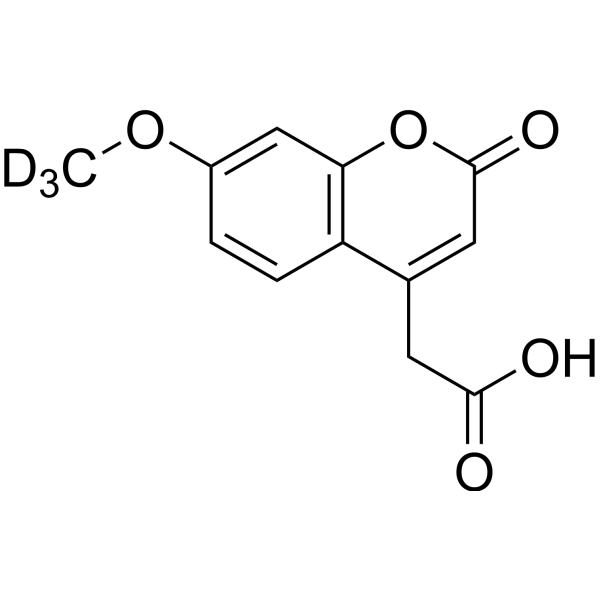
MCA-d3 (7-Methoxycoumarin-4-acetic acid3) is the deuterium labeled MCA (HY-W027544) . MCA is a Coumarin (HY-N0709) derivative. MCA quantitates platelet-activating factor (PAF) by high-performance liquid chromatography with fluorescent detection. MCA can modify FRET peptide substrates for analyzing protease activities .
loading...
    loading...
Cat. No.: HY-P4582
CAS No.: 110906-89-3
Synonyms: Suc-FAAF-pNA
Target:  

Ser/Thr Protease

Research Areas:  

Others

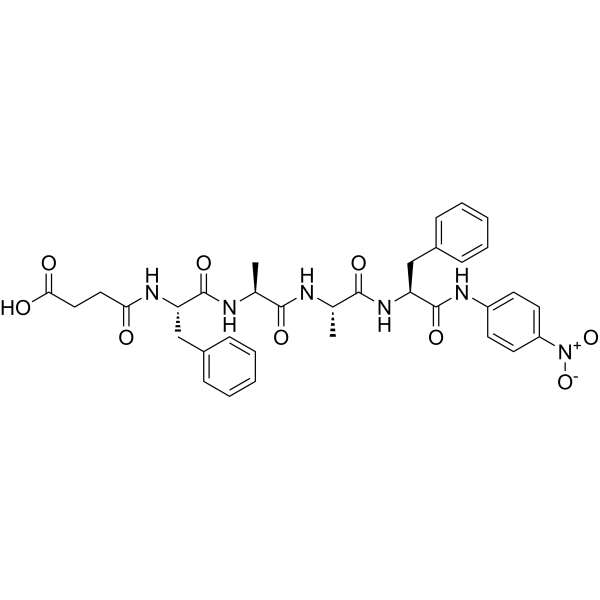
Suc-Phe-Ala-Ala-Phe-pNA (Suc-FAAF-pNA) is a chromogenic polypeptide substrate that can be used for the quantitative activity assay of intracellular subtilisin (ISP) and neutral metalloprotease (NPS) derived from Saccharomonospora canescens. Suc-Phe-Ala-Ala-Phe-pNA is hydrolyzed by the catalytic triad of mature proteases to release the chromophore pNA. Suc-Phe-Ala-Ala-Phe-pNA is applicable to enzymological studies .
loading...
    loading...
Cat. No.: HY-110210
CAS No.: 146616-66-2
Purity:  99.80%
Synonyms: BODIPY FL,SE
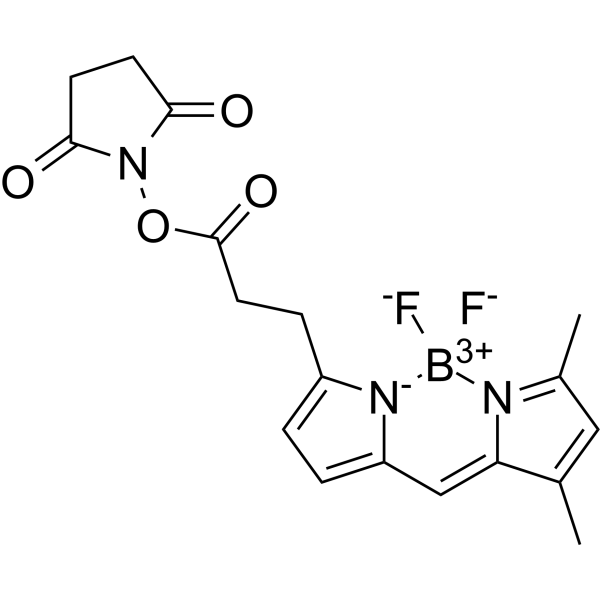
BODIPY FL NHS ester (BODIPY FL, SE) is a cell membranes-penatrable amine-reactive fluorescent probe. The maximum excitation/emission wavelength of the BODIPY-FL NHS ester are 502/511 nm, respectively. BODIPY-FL NHS ester has high stability and is insensitive to the polarity, pH and type of solvent, and can maintain stable fluorescence properties under different environmental conditions. BODIPY-FL NHS ester can be used for the synthesis of protease substrates, live cell imaging, protein labeling and immunoassay .
loading...
    loading...
Cat. No.: HY-W011425B
NTP 25 mM Solution, PCR Grade is a mixed solution composed of 25 mM ATP (HY-B2176), 25 mM CTP (HY-125818), 25 mM GTP (HY-113225) and 25 mM UTP (HY-107372), free of DNase, RNase, phosphatase and protease. NTP 25 mM Solution, PCR Grade serves as an energy substrate and raw material for nucleic acid synthesis (DNA/RNA), and can also regulate the advanced structure of DNA to turn transcription on or off .
loading...
    loading...
Cat. No.: HY-P3009
CAS No.: 9002-05-5
Bovine Factor Xa is a serine protease that plays a central role in blood coagulation, with prothrombin as its physiological substrate. Bovine Factor Xa catalyzes the conversion of prothrombin to thrombin, activates factor VIII, and hydrolyzes peptide, thioester, and amide substrates. Bovine Factor Xa cleaves protease-activated receptors 1 and 2 to activate intracellular signal transduction. Bovine Factor Xa regulates multiple cellular pathways, mediates various cellular activities, tissue remodeling and cancer cell migration, and inhibits apoptosis in some cancer cells. Bovine Factor Xa protects hippocampal neurons against glutamate-induced damage. Bovine Factor Xa participates in embryonic vascular development and regulates immune hematopoiesis; its activity is inhibited by soybean trypsin inhibitor, and cannot be enhanced by phospholipids. Bovine Factor Xa regulates immune responses and macrophage polarization, and participates in fibrosis, vascular remodeling and tumor progression through non-coagulant effects. Bovine Factor Xa can be used in research related to atherosclerosis, fibrosis, asthma, cancer, thromboinflammation, sepsis, etc .
loading...
    loading...
Cat. No.: HY-P3009A
CAS No.: 9002-05-5
Canine Factor Xa is a serine protease that plays a central role in blood coagulation, with prothrombin as its physiological substrate. Canine Factor Xa catalyzes the conversion of prothrombin to thrombin, activates factor VIII, and hydrolyzes peptide, thioester, and amide substrates. Canine Factor Xa cleaves protease-activated receptors 1 and 2 to activate intracellular signal transduction. Canine Factor Xa regulates multiple cellular pathways, mediates various cellular activities, tissue remodeling and cancer cell migration, and inhibits apoptosis in some cancer cells. Canine Factor Xa protects hippocampal neurons against glutamate-induced damage. Canine Factor Xa participates in embryonic vascular development and regulates immune hematopoiesis; its activity is inhibited by soybean trypsin inhibitor, and cannot be enhanced by phospholipids. Canine Factor Xa regulates immune responses and macrophage polarization, and participates in fibrosis, vascular remodeling and tumor progression through non-coagulant effects. Canine Factor Xa can be used in research related to atherosclerosis, fibrosis, asthma, cancer, thromboinflammation, sepsis, etc .
loading...
    loading...
Cat. No.: HY-P3009B
CAS No.: 9002-05-5
Porcine Factor Xa is a serine protease that plays a central role in blood coagulation, with prothrombin as its physiological substrate. Porcine Factor Xa catalyzes the conversion of prothrombin to thrombin, activates factor VIII, and hydrolyzes peptide, thioester, and amide substrates. Porcine Factor Xa cleaves protease-activated receptors 1 and 2 to activate intracellular signal transduction. Porcine Factor Xa regulates multiple cellular pathways, mediates various cellular activities, tissue remodeling and cancer cell migration, and inhibits apoptosis in some cancer cells. Porcine Factor Xa protects hippocampal neurons against glutamate-induced damage. Porcine Factor Xa participates in embryonic vascular development and regulates immune hematopoiesis; its activity is inhibited by soybean trypsin inhibitor, and cannot be enhanced by phospholipids. Porcine Factor Xa regulates immune responses and macrophage polarization, and participates in fibrosis, vascular remodeling and tumor progression through non-coagulant effects. Porcine Factor Xa can be used in research related to atherosclerosis, fibrosis, asthma, cancer, thromboinflammation, sepsis, etc .
loading...
    loading...
Cat. No.: HY-P3009C
CAS No.: 9002-05-5
Porcine Factor Xa is a serine protease that plays a central role in blood coagulation, with prothrombin as its physiological substrate. Porcine Factor Xa catalyzes the conversion of prothrombin to thrombin, activates factor VIII, and hydrolyzes peptide, thioester, and amide substrates. Porcine Factor Xa cleaves protease-activated receptors 1 and 2 to activate intracellular signal transduction. Porcine Factor Xa regulates multiple cellular pathways, mediates various cellular activities, tissue remodeling and cancer cell migration, and inhibits apoptosis in some cancer cells. Porcine Factor Xa protects hippocampal neurons against glutamate-induced damage. Porcine Factor Xa participates in embryonic vascular development and regulates immune hematopoiesis; its activity is inhibited by soybean trypsin inhibitor, and cannot be enhanced by phospholipids. Porcine Factor Xa regulates immune responses and macrophage polarization, and participates in fibrosis, vascular remodeling and tumor progression through non-coagulant effects. Porcine Factor Xa can be used in research related to atherosclerosis, fibrosis, asthma, cancer, thromboinflammation, sepsis, etc .
loading...
    loading...
Cat. No.: HY-P3009D
CAS No.: 9002-05-5
Rat Factor Xa is a serine protease that plays a central role in blood coagulation, with prothrombin as its physiological substrate. Rat Factor Xa catalyzes the conversion of prothrombin to thrombin, activates factor VIII, and hydrolyzes peptide, thioester, and amide substrates. Rat Factor Xa cleaves protease-activated receptors 1 and 2 to activate intracellular signal transduction. Rat Factor Xa regulates multiple cellular pathways, mediates various cellular activities, tissue remodeling and cancer cell migration, and inhibits apoptosis in some cancer cells. Rat Factor Xa protects hippocampal neurons against glutamate-induced damage. Rat Factor Xa participates in embryonic vascular development and regulates immune hematopoiesis; its activity is inhibited by soybean trypsin inhibitor, and cannot be enhanced by phospholipids. Rat Factor Xa regulates immune responses and macrophage polarization, and participates in fibrosis, vascular remodeling and tumor progression through non-coagulant effects. Rat Factor Xa can be used in research related to atherosclerosis, fibrosis, asthma, cancer, thromboinflammation, sepsis, etc .
loading...
    loading...
Cat. No.: HY-153575
Target:  

PROTACs Bacterial

Research Areas:  

Infection

BacPROTAC-1 is a BacPROTAC degrader that induces the degradation of the target protein mSA by recruiting ClpC/ClpC1. BacPROTAC-1 binds to mSA, Bacillus subtilis ClpCNTD and Mycobacterium smegmatis ClpC1NTD with Kd values of 3.9, 2.8 and 0.69 μM, respectively. BacPROTAC-1 forms a ternary complex between the substrate and ClpC, promotes ClpC reassembly and activation, and induces ATP-dependent degradation of mSA and mSA fusion model substrates via the ClpCP or ClpC1P1P2 protease system. BacPROTAC-1 can be used in studies on bacterial targeted protein degradation, bacterial protein homeostasis and antibacterial target discovery .
loading...
    loading...
Cat. No.: HY-17367R
CAS No.: 198904-31-3
Synonyms: BMS-232632 (Standard)
Atazanavir (Standard) is the analytical standard of Atazanavir. This product is intended for research and analytical applications. Atazanavir (BMS-232632) is a highly selective and orally active HIV-1 protease inhibitor . Atazanavir is a substrate and inhibitor of CYP3A4, and an inhibitor of P-glycoprotein (P-gp). Atazanavir is also a SARS-CoV 3CL pro inhibitor with an IC50 of 3.49 μM. Atazanavir inhibits cardiac fibrosis, hyperlipidemia and induces malignant glioma death .
loading...
    loading...
Cat. No.: HY-P5528
Target:  

Inhibitory Antibodies

Research Areas:  

Others

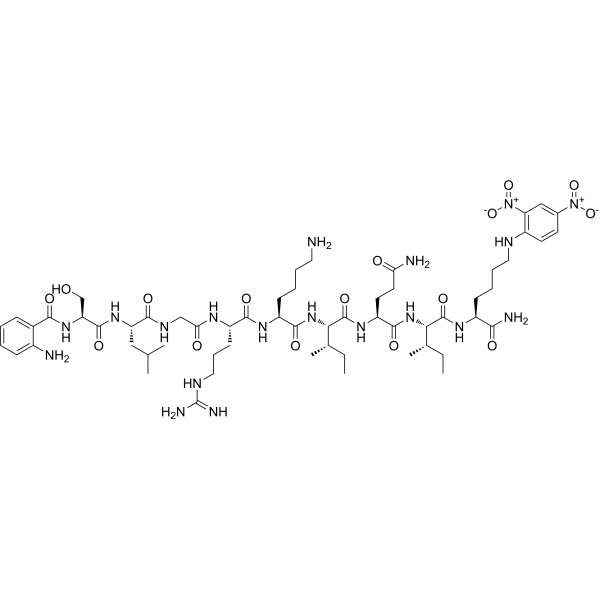
2Abz-SLGRKIQIK(Dnp)-NH2 is a biological active peptide. (This peptide is a second complement component (C2), the physiological substrate for the proenzyme Cls, first complement component. The complement system is a central component of host defense but can also contribute to the inflammation seen in pathological conditions. The C1s protease of the C1 complex initiates the host defense pathway. This peptide employs 2Abz/Dnp FRET pair for quantitation of complement enzyme activity.)
loading...
    loading...
Cat. No.: HY-17367S5
CAS No.: 1092540-58-3
Synonyms: BMS-232632-d24
Atazanavir-d24 (BMS-232632-d24) is deuterium labeled Atazanavir. Atazanavir (BMS-232632) is a highly selective and orally active HIV-1 protease inhibitor . Atazanavir is a substrate and inhibitor of CYP3A4, and an inhibitor of P-glycoprotein (P-gp). Atazanavir is also a SARS-CoV 3CL pro inhibitor with an IC50 of 3.49 μM. Atazanavir inhibits cardiac fibrosis, hyperlipidemia and induces malignant glioma death .
loading...
    loading...
Cat. No.: HY-W001959R
CAS No.: 24830-94-2
D-Allothreonine (Standard) is the analytical standard of D-Allothreonine (HY-W001959). This product is intended for research and analytical applications. D-Allothreonine is a non-proteinogenic amino acid that serves as a substrate for Pyridoxal phosphate (HY-B1744)-dependent D-threonine aldolase, being cleaved into Glycine (HY-Y0966) and acetaldehyde, and acts as a constituent of bioactive peptidyl natural products such as callipeltins, conferring protease resistance. D-Allothreonine is used in natural product synthesis and metabolic research .
loading...
    loading...

