


172 Results for "

immune cell function

" in MedChemExpress (MCE) Product Catalog:
Products (172)

172 Results for "immune cell function" in MCE Product Catalog:

Cat. No.: HY-151464
CAS No.: 2831230-38-5
Target:  

SHP2 Phosphatase HDAC

Research Areas:  

Inflammation/Immunology Cancer

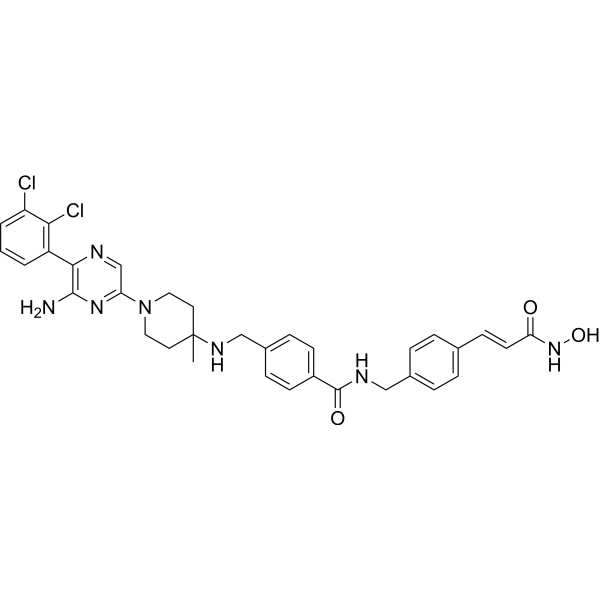
SHP2/HDAC-IN-1 is a dual allosteric SHP2/HDAC inhibitor with IC50 values of 20.4 nM (SHP2) and 25.3 nM (HDAC1) respectively. SHP2/HDAC-IN-1 triggers efficient antitumor immunity by activating T cells, enhancing the antigen presentation function and promoting cytokine secretion. SHP2/HDAC-IN-1 can be used in the research of cancer immunoresearch .
loading...
    loading...
Cat. No.: HY-P991458

Research Areas:  

Cancer

hu3S193 is a human IgG monoclonal antibody (mAb) targeting Lewis Y. hu3S193 has excellent immune effector function (complement-dependent cytotoxicity) (IC50: 1.0 μg/ml) and antibody-dependent cellular cytotoxicity (IC50: 5.0 μg/ml). hu3S193 can be used in small cell lung cancer (SCLC) research. Recommended isotype control: Human IgG1 kappa, Isotype Control (HY-P99001) .
loading...
    loading...
Cat. No.: HY-150298R
CAS No.: 2226636-04-8
Synonyms: CPI-818 (Standard)
Soquelitinib (Standard) is the analytical standard of Soquelitinib (HY-150298). This product is intended for research and analytical applications. Soquelitinib (CPI-818) is an orally active and highly selective covalent interleuKin-2-inducible Kinase (ITK) inhibitor. Soquelitinib is active in six different models of T cell-mediated inflammatory and immune disease, including acute and chronic asthma, pulmonary fibrosis, systemic sclerosis (scleroderma), psoriasis, and acute graft versus host disease with Th2 cytoKine product inhibition. Soquelitinib increases tumor infiltration of normal CD8 + cells that possess enhanced T effector function .
loading...
    loading...
Cat. No.: HY-187712
CAS No.: 3056281-16-1
Target:  

PD-1/PD-L1

Research Areas:  

Cancer

PD-1/PD-L1-IN-68 is a PD-L1 inhibitor based on a tetrahydroisoquinoline scaffold, with a KD of 21.31 μM for binding to hPD-L1, and it blocks the PD-1/PD-L1 interaction. PD-1/PD-L1-IN-68 restores T cell immune function, thereby promoting the death of PD-L1 + cancer cells. PD-1/PD-L1-IN-68 can be used in studies related to liver cancer .
loading...
    loading...
Cat. No.: HY-P992163
23ME-01473 is an anti-ULBP6/2/5 antibody with enhanced Fc effector function, with a Kd of 0.053 nmol/L against hULBP6, 0.23 nmol/L against hULBP2, and 1.92 nmol/L against hULBP5. 23ME-01473 restores anti-tumor immunity by activating NKG2D and FcγRIIIa. 23ME-01473 exerts anti-cancer activity in non-small cell lung cancer PDX models. 23ME-01473 can be used for the research of non-small cell lung cancer .
loading...
    loading...
Cat. No.: HY-137955
CAS No.: 1197030-56-0
Purity:  97.9%
MRS 2211 sodium hydrate is a competitive P2Y13 receptor antagonist (pIC50= 5.97). MRS 2211 sodium hydrate is highly selective to the P2Y13 receptor, showing more than 20-fold selectivity compared to the P2Y1 and P2Y12 receptors. MRS 2211 sodium hydrate can be used to further investigate the role of the P2Y13 receptor in different physiological and pathological processes, such as its function in blood cells, the nervous system and the immune system .
loading...
    loading...
Cat. No.: HY-A0129R
CAS No.: 51-74-1
Synonyms: Histamine diphosphate (Standard)
Histamine phosphate (Standard) is the analytical standard of Histamine phosphate (HY-A0129). This product is intended for research and analytical applications. Histamine phosphate is the agonist for histamine receptor and a vasodilator. Histamine phosphate is an organic nitrogen compound that participates in local immune responses, regulates intestinal physiological functions, and acts as a neurotransmitter. Histamine phosphate affects p38 MAPK/Akt signaling pathway, exhibits antitumor, antioxidant and anti-inflammatory activities. Histamine phosphate can be used in the research of acute myeloid leukemia, malignant melanoma, and renal cell carcinoma .
loading...
    loading...
Cat. No.: HY-B0722R
CAS No.: 56-92-8
Histamine dihydrochloride (Standard) is the analytical standard of Histamine dihydrochloride (HY-B0722). This product is intended for research and analytical applications. Histamine dihydrochloride is the agonist for histamine receptor and a vasodilator. Histamine dihydrochloride is an organic nitrogen compound that participates in local immune responses, regulates intestinal physiological functions, and acts as a neurotransmitter. Histamine dihydrochloride affects p38 MAPK/Akt signaling pathway, exhibits antitumor, antioxidant and anti-inflammatory activities. Histamine dihydrochloride can be used in the research of acute myeloid leukemia, malignant melanoma, and renal cell carcinoma .
loading...
    loading...
Cat. No.: HY-B1204R
CAS No.: 51-45-6
Synonyms: Ergamine (Standard)
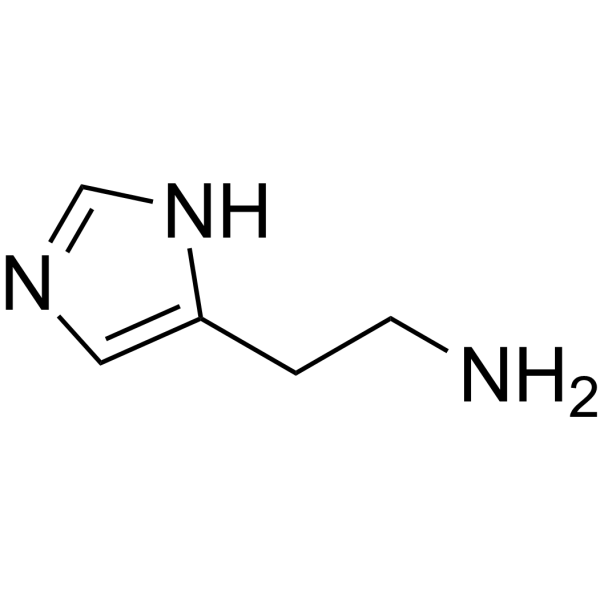
Histamine (Standard) is the analytical standard of Histamine (HY-B1204). This product is intended for research and analytical applications. Histamine is the agonist for histamine receptor and a vasodilator. Histamine is an organic nitrogen compound that participates in local immune responses, regulates intestinal physiological functions, and acts as a neurotransmitter. Histamine affects p38 MAPK/Akt signaling pathway, exhibits antitumor, antioxidant and anti-inflammatory activities. Histamine can be used in the research of acute myeloid leukemia, malignant melanoma, and renal cell carcinoma .
loading...
    loading...
Cat. No.: HY-B1204S1
CAS No.: 751471-48-4
Synonyms: Ergamine-d4
Histamine-d4 (Ergamine-d4) is deuterium labeled Histamine (HY-B1204). Histamine is the agonist for histamine receptor and a vasodilator. Histamine is an organic nitrogen compound that participates in local immune responses, regulates intestinal physiological functions, and acts as a neurotransmitter. Histamine affects p38 MAPK/Akt signaling pathway, exhibits antitumor, antioxidant and anti-inflammatory activities. Histamine can be used in the research of acute myeloid leukemia, malignant melanoma, and renal cell carcinoma .
loading...
    loading...
Cat. No.: HY-L014
1,801 compounds

Nuclear factor-κB (NF-κB)/Rel proteins include NF-κB2 p52/p100, NF-κB1 p50/p105, c-Rel, RelA/p65, and RelB. These proteins function as dimeric transcription factors that regulate the expression of genes and influence a broad range of biological processes including innate and adaptive immunity, inflammation, stress responses, B-cell development, and lymphoid organogenesis. NF-κB plays a key role in regulating the immune response to infection. In addition, activation of the NF-κB pathway is involved in the pathogenesis of chronic inflammatory diseases, such as asthma, rheumatoid arthritis, and inflammatory bowel disease. Incorrect regulation of NF-κB has been linked to cancer, inflammatory and autoimmune diseases, septic shock, viral infection, and improper immune development.

MCE owns a unique collection of 1,801 small molecule compounds that can be used in the research of NF-κB signaling pathway or high throughput screening (HTS) related drug discovery.

Cat. No.: HY-148511
CAS No.: 147063-80-7
Synonyms: CMP-001
Vidutolimod (CMP-001) is a virus-like particle containing a TLR9 activator . Vidutolimod induces human peripheral blood mononuclear cells to secrete IFNα, and upregulates the gene expression of CXCL10, PDL1, IDO and CD80. Vidutolimod activates TLR9, which in turn triggers plasmacytoid dendritic cell activation, production of IFNγ and TNFα, induction of CXCL10, and recruitment of antitumor T cells. Vidutolimod causes influenza-like symptoms, hypotension and tumor regression, and its activity depends on the presence of anti- antibodies. Vidutolimod modulates monocyte function, promotes CD4 T cell proliferation, and activates multiple immune cell types in an environment with anti-Qβ antibodies. Vidutolimod prolongs the survival of tumor-bearing mice. Vidutolimod is used in research related to advanced melanoma, head and neck squamous cell carcinoma, and advanced non-small cell lung cancer .
loading...
    loading...
Cat. No.: HY-N19083
Category:  

Extract

Target:  

Bacterial

Tecomella undulata Extract, also known as Rohida extract, is a valuable botanical extract derived from the bark and leaves of the Tecomella undulata plant native to the Indian Thar Desert and is rich in bioactive compounds such as flavonoids, quinones, triterpenoids, and other phytochemicals that contribute to its diverse therapeutic properties. This extract is widely recognized for its hepatoprotective effects demonstrated through its ability to protect against liver damage induced by toxins such as paracetamol and carbon tetrachloride by normalizing elevated liver enzyme levels reducing oxidative stress and improving liver function. Additionally, it exhibits significant anti-inflammatory activity comparable to standard drugs like indomethacin and has been used to treat conditions like ascites and hepatosplenomegaly while also showing immunomodulatory effects by enhancing both humoral and cell-mediated immune responses and possessing antimicrobial properties that make it effective against various pathogens. Recent research suggests that Tecomella undulata may have potential in managing nonalcoholic steatohepatitis (NASH) by reducing body weight insulin resistance and improving liver function markers making it a versatile natural remedy with significant applications in hepatoprotection anti-inflammation and immune support.
loading...
    loading...
Cat. No.: HY-P990237

Target:  

CD28

Research Areas:  

Inflammation/Immunology Cancer

Anti-Mouse ICOS Antibody (7E.17G9) is a mouse ICOS agonist IgG2b monoclonal antibody. Anti-Mouse ICOS Antibody (7E.17G9) can upregulate ICOS expression and enhance T cell function. Anti-Mouse ICOS Antibody (7E.17G9) can significantly inhibit the immune regulatory function of dendritic cells (DCs). Anti-Mouse ICOS Antibody (7E.17G9) can eliminate transplant tolerance. Anti-Mouse ICOS Antibody (7E.17G9) can be used for researches on inflammation conditions, cancer and xenotransplantation such as nephritis and pancreatic cancer .
loading...
    loading...
Cat. No.: HY-B1204S4
Synonyms: Ergamine-15N3
Histamine- 15N3 is the 15N3-labeled Histamine (HY-B1204). Histamine is the agonist for histamine receptor and a vasodilator. Histamine is an organic nitrogen compound that participates in local immune responses, regulates intestinal physiological functions, and acts as a neurotransmitter. Histamine affects p38 MAPK/Akt signaling pathway, exhibits antitumor, antioxidant and anti-inflammatory activities. Histamine can be used in the research of acute myeloid leukemia, malignant melanoma, and renal cell carcinoma .
loading...
    loading...
Cat. No.: HY-L204
582 compounds

Lactic acid metabolism is one of the key metabolic pathways within living organisms. It plays a crucial role not only in cellular energy conversion but is also closely related to a variety of physiological and pathological processes. The production and clearance of lactic acid are important indicators of cellular metabolic balance, and its abnormal regulation may lead to conditions such as lactic acidosis, muscle fatigue, and hereditary metabolic diseases. Moreover, lactic acid is closely related to the malignancy of tumors and is considered a biomarker for malignant tumors and poor prognosis. Lactic acid can serve as a metabolic substrate to support the metabolic needs of tumor cells under hypoxic conditions, and it can also cause acidification of the tumor microenvironment, suppress immune cell function to promote immune evasion, and induce drug resistance in tumor cells. Currently, targeting lactic acid-lactylation and its related metabolic pathways has become a new research avenue for cancer treatment. In-depth exploration of the molecular mechanisms of lactic acid metabolism can help in screening lead compounds that regulate the lactic acid metabolism.

MCE contains 582 small molecule compounds targeting enzymes involved in lactic acid metabolism. This library is of significant value for researching the role of lactate metabolism in the mechanisms of diseases.

Cat. No.: HY-N0534
CAS No.: 64820-99-1
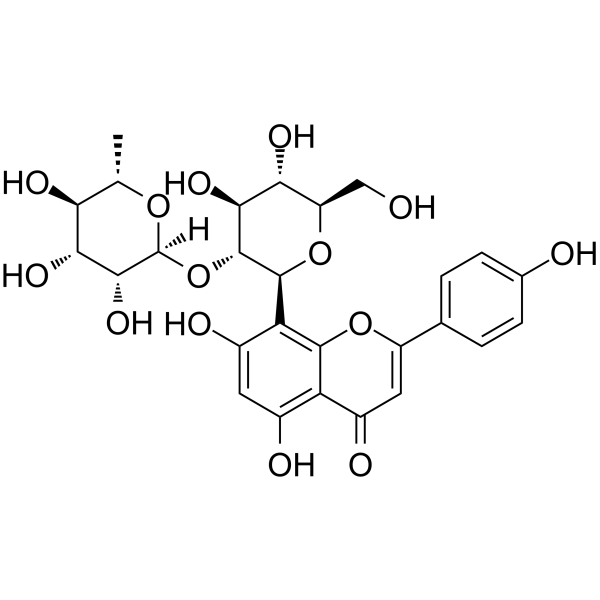
Vitexin-2"-O-rhamnoside is an orally active flavonoid glycoside. Vitexin-2"-O-rhamnoside inhibits Apoptosis, increases the phosphorylation levels of PI3K/Akt, inhibits caspase-3, SOD activity, and promotes cytokine (IL-2, IL-6, and IL-12) secretion. Vitexin-2"-O-rhamnoside strongly inhibits DNA synthesis in MCF-7 cells with an IC50 of 17.5 μM. Vitexin-2"-O-rhamnoside enhances immune function and improves the absorption of active compounds. Vitexin-2"-O-rhamnoside has antioxidant activity. Vitexin-2"-O-rhamnoside is used in the study of cardiovascular disease and immune-related diseases .
loading...
    loading...
Cat. No.: HY-150229
CAS No.: 2803699-70-7
Purity:  98.84%
Target:  

Liposome

Research Areas:  

Cancer

306-N16B is a selective lung-targeted lipid nanoparticle that reversibly targets lung endothelial cells and specific immune cells through selective adsorption of a protein corona mediated by differences in tail structure (such as fibrinogen β/γ chain). 306-N16B binds to specific plasma proteins in the blood to form a protein corona, which guides the particles to be enriched in the lungs, releases mRNA and promotes target cell gene expression, exerts efficient lung cell transfection activity, and can precisely regulate gene delivery of different cell types in the lungs (such as endothelial cells and macrophages). 306-N16B can be used in gene therapy technologies for hereditary lung diseases including pulmonary lymphangioleiomyomatosis (LAM), restoring tumor suppressor function by delivering Tsc2 mRNA, and can also be used for lung-specific mRNA vaccines and gene editing therapies .
loading...
    loading...
Cat. No.: HY-P990124
Anti-Mouse GITR Antibody (DTA-1) is a rat derived IgG2b monoclonal agonist antibody targeting mouse GITR. Anti-Mouse GITR Antibody (DTA-1) can activate T cells and B cells to enhance immune response. Anti-Mouse GITR Antibody (DTA-1) selectively enhances Th2 cell effector function through GITR signaling. Anti-Mouse GITR Antibody (DTA-1) may exacerbate allergic reactions. Anti-Mouse GITR Antibody (DTA-1) can be used for researches on cancer and allergic conditions such as colon cancer and allergic asthma. The recommed isotype control of Anti-Mouse GITR Antibody (DTA-1) is Rat IgG2b kappa, Isotype Control (HY-P990682) .
loading...
    loading...
Cat. No.: HY-107825R
CAS No.: 577-85-5
Flavonol (Standard) is the analytical standard of Flavonol. This product is intended for research and analytical applications. Flavonol is a cholinesterase (ChE) inhibitor, with an IC50 value of 120 μM and a Ki value of 74 μM. Flavonol has antioxidant, free radical-scavenging, antibacterial properties, and immune modulation functions. Flavonol inhibits the PriA helicase of Staphylococcus aureus. Flavonol can suppress the production of NO in LPS-activated RAW 264.7 cells by inhibiting the expression of the iNOS enzyme. Flavonol shows protective and analgesic effects in mice through various neuronal pathways. Flavonol can be used in research related to tumors and atherosclerosis diseases .
loading...
    loading...

